
Your Morning Drive · Hammerhead Creations
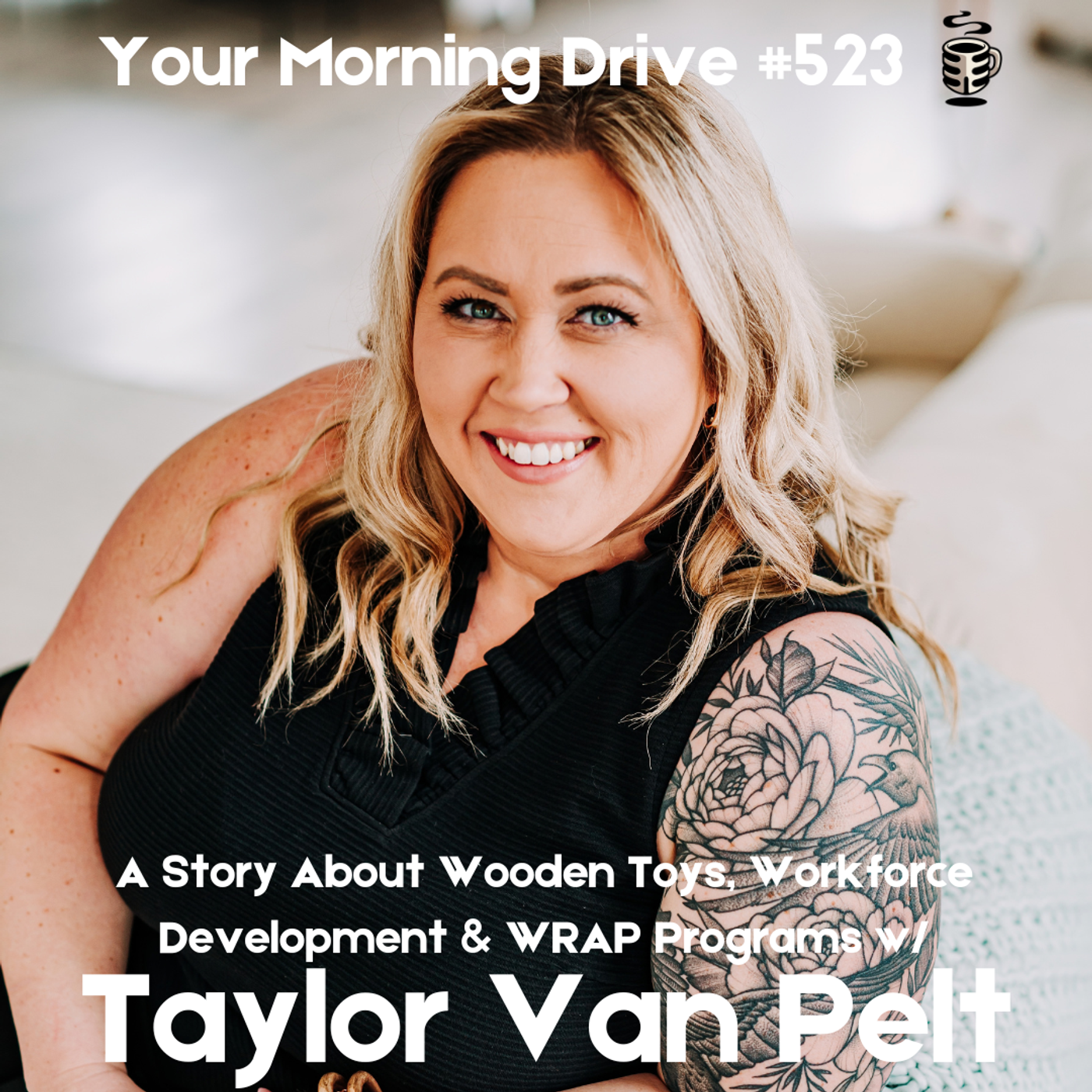
Welcome to Episode 523 of Your Morning Drive. In this episode of Your Morning Drive, host Logan Lewis welcomes Taylor Van Pelt. Taylor is a Workforce Development professional. She also helped create WRAP, the county's reentry program, connecting people coming out of jail with real jobs, and she and her husband even rent their own properties to formerly incarcerated tenants. In this episode they talk about: Workforce development and untapped talent Manufacturing industry opportunities and misconceptions Housing solutions for justice-impacted individuals Advocacy for paid parental leave and workforce policies & much more! Support Our Sponsors: 216 Coworking Drink Good Days - Locations Branded & Devoted Designs - 10% Off Cartersville Living Your Morning Drive is produced, edited & distributed by Hammerhead Creations in Cartersville, Georgia.
Logan & Taylor: Hello, everyone. Welcome back. We're back. This is your morning drive. You know that because you clicked on it. But I am Logan and you should know that by now. But if you didn't, if you're new, I am Logan. I am the host today. Thanks for tuning in. We're recording today's episode from the home of your morning drive, which is 216 coworking, which is located in downtown Cartersville. 216 offers private office suites, team suites and meeting rooms built for professionals, remote workers and growing teams with 24 seven access high speed internet furnished spaces in a polished business ready environment. It's a strong option for anyone working across Bartow County and beyond. Whether you need a dedicated office or flexible workspace near 75 216 has you covered to learn more. Visit their website, book a tour and join us at 216. Before we dive in for real, hit follow or subscribe wherever you're at right now. If you're listening on Apple, on Spotify or YouTube or any of the other places, if you're new, make sure you're hitting that subscribe button or that follow button so that when new episodes come out every week, they come straight to you and you won't miss an episode. We appreciate that very much. And of course, as well as following along on the listening platforms, follow on social. Anywhere you follow Riley Green or Sydney Sweeney, you should follow me too. Everything is just at your morning drive and that's how you stay up to date with everything going on. Guys, my guest today is the creator of Judge and Co. where she shares honest conversations about second chances, workforce reentry, ethical housing and life raising a blended family with six kids in Northwest Georgia. She works in workforce development and helped create the rap program and stuff inside the Bartow County Jail. helping incarcerated individuals gain life skills, certifications, and a path back into the community. Her work has earned national recognition and speaking opportunities across Georgia and beyond. She also serves on the boards of Good Neighbor Homeless Shelter and United Way of Bartow County. Please welcome my new friend, Taylor Van Pelt. Thank you for having me. Thanks for coming. Yeah. What an intro that is. It's a mouthful. I'm really not that cool. No, well. We'll see. I'd say you be the judge of that. will. I will. So stay tuned for that. Thanks for being here, Taylor. Yeah, thanks for having me. So fun. Before we kind of talk about everything that you've got going on now, I want to talk. I want to go. want to rewind. OK, let's go back. Let's go back to, you know. Young Taylor, let's go back to the origin story of Taylor. Where are you from originally? Parents, siblings? Were you cool in high school? Were you an athlete? Were you a nerd like me? All of the things, kind of an origin story. As much or as little as you want to go into it, it's up to you. Yeah, so I am the oldest of four. I grew up in Douglasville, sort of the Douglasville area. I did cheer in high school, but I do feel like I was probably also the nerd and the athlete. So kind of friends with everybody. I like everybody. I can talk to a brick wall. So yeah, that's who I was in high school. Went to University of West Georgia the first semester right out of high school, but it was just like being in high school because everybody from Douglasville went to West Georgia. Applied at the University of Memphis. I majored in hospitality management and at the time University of Memphis was the top school in the nation for hospitality management. Was really excited to get accepted and moved up there, but I didn't really know anybody. Went and nannied for a family so they kind of became my my home away from home while I was at school. And then I married my first husband. He was in the military, which is what brought me back to Georgia. So I ended up graduating from Georgia State after two semesters. He got stationed in Savannah. So that's where we went. I was working at the front office Marriott down there and their manager and training program. Absolutely loved it. I again, loved to be around people, could just talk to people all day. So I really thrived in that environment. But when we had our first daughter, it just wasn't conducive to having. that kind of schedule. I could be there till midnight and then have to be back at seven in the morning. We didn't have family close by. So I left Marriott, started a business, and that was sort of my origin story. Well, why, hospitality management? Why, why going into that? Was that something you grew up around? No, actually. So in high school, my dad used to joke. I always said I wanted to be an attorney. I did mock trial. So that's, know, the duality of my personality there that very much the nerd we were like, you know, went to state and mock trial. Um, and then also cheer. Um, so I loved that. I wanted to either be an attorney or I wanted to go into corporate events. So hospitality was sort of the pathway for that, but really just enjoy people and making people feel seen and connecting people. And, um, I thought that was the path that I wanted to take. Not, not realizing that hospitality is oftentimes, you know, 24 seven industry. Yeah. Sure. Sure. Yeah, my family had said similar things about me growing up. They said that that was going to either be a lawyer or a politician or something because I just would. They said I would talk to the cows come home. I was always the last one done eating because I was always talking. Yeah. they'd be signing the bill and I'd be half, not even halfway done with the meal at the restaurant. And they'd be like, shut up and eat before we go. My grandmother used to call me mouth of the South. I have now passed that nickname onto my youngest son, but yeah, that was me. Yeah, well, I feel seen now. you've done your job. I'm in good company. And then so what was college like? you were you real strict to your studies? Were you having a lot of fun? little too much of one too much of the other. What was what was your kind of college experience? No, it's funny because I really push my kids to apply themselves and, you know, we expect straight A's and B's. expect you to have an extracurricular. You know, we have high expectations for our kids. And my parents always had the same for me. But in college, I was I worked full time. and then was going to school full time. So I was really, to me, college was more of a, a hindrance. people are going to die here. Let me say that in workforce development. I was ready to get out and start my life. I wanted to start a business. I wanted to get to work, but I knew that it was something that, that I needed. So I did not have your typical, I'm going to go live in the dorm college experience. That wasn't, that wasn't what I wanted. I was ready to grow up and go and do things and just, jump into the work I was interested in. Yeah. I'm curious. Maybe it's an oldest kid syndrome. Cause maybe I have the same thing as I, I was in school, but while I was in school, I was just always working. And when I wasn't in a classroom, I was working somewhere and I always felt like, I was like, this school stuff is kind of dumb. Like, why can't I just go start working? and yeah, like the workforce development thing, it's, it's, it's ironic, but like, that's just the, kind of shows the go getter attitude though is like, well, this, this is all fun and games, but I'd rather go do the work. Yes. So that is one of my aptitudes. I've had to take one of the, you I'm sure we've all taken those. skill test, but learner is one of my aptitudes. And I love that. So I loved learning and being in the college experience, but you know, everybody going out to eat or going to a party afterwards, I'm like, no, I'm going to work. going, you know, I'm going to do something. Hanging out wasn't, wasn't my thing. So I don't know if that's a blessing or a curse to this day. I still can't sit still. So, it's funny because just like, I mean, college is important. Of course, if you're going into a field, I think that, you know, that makes sense for, for what you're trying to do. You know, doctors, lawyers, teachers, scientists. I want those people going to college. But, know, funny enough, and I'm sure you relate to this, is you get out of school and you learned way more about hospitality management on the job than you ever did in a classroom. Yeah, absolutely. And that's what I advocate for, even especially in workforce development. I get to work with the students and I think our generation, especially there was such a push and an urge. I for the longest time, and this is a true statement until seventh grade, I thought that college was a requirement. I thought you went elementary, middle, high school. Like by law, I thought it was required that you go to college because my family pushed that so much. My parents got their degrees later into adulthood and it was very important to them that I go straight into college. So I thought it was a requirement. And now I just advocate to students, don't do it just to do it. Cause I'm still paying off my student loans. After I left the Marriott and started a business, my business was in a trade and I will tell high school students every day of the week. I made more money in a trade than I ever did right out of college with my degree. And I think you can do both. I think it's important. I think you should have those experiences. there's, think students, and we're facing this with our own son, you he's a graduating senior. And I think people think with the expectation of who we are in workforce development and things that might have my husband's careers, like, you know, is Logan going to University of Georgia? You know, they have this anticipation that he's going, you know, to some big school and we're like, no, he's actually gonna stay local. he did work. based learning in high school and he's done such a great job there that they're allowing him to stay on. So he's going to continue to work there. And he did dual enrollment. So he's been at Georgia Highlands and he loves Georgia Highlands. We're nine minutes from the campus. I am not sponsored by Georgia Highlands in any way, but you know, a class is less than a hundred dollars. Why wouldn't we let him have that experience? Stay home, build up his savings a little bit. And then once he kind of figures out what he wants to do, then let's go and explore maybe one of these larger colleges that may have a bit more advantage for you for your credentialing. But why wouldn't we start at home and really set him up for success? think our generation was just set up that you wouldn't be successful unless you went to college and being in workforce development. It's predicted right now that by 2035 people in a trade will earn more than those with a master's degree. Wow. Yeah, that's wild. But it makes sense. Yeah, I grew up very similar. I grew up in a household where it was like you have no option. You're going like if you don't go. you're a loser. And and that sounds harsh. Saying it today, but like that was the mindset of like, well, like my parents were always about like, life's about choices. And you can either choose to go to college and be successful, or you can choose not to go to college and be a loser. And it was like, yeah. And I drank the Kool-Aid. Yep, me too. And I believed it. But then graduating and getting out into the real world, I was like, that's not true. Yeah. It's not true. like, but back, mean, it's so funny how things progress. Who knows where we'll be in 50 years. Like will college exist? Will it just be online schools only? Will there be full in-person universities? Who knows? And I still suffer from that drink in the cool light. You know, I have the opportunity to get my master's degree. I don't need it. I don't need it to advance. But you know, that same thing of like, well, most people my age have their masters, but I'm where I want to be in my career. I am successful with an employer that I adore. I don't need it. like, not that life is all about money, but like, is getting that master's degree going to make you more money at work? Absolutely not. And that's the wild thing with that, you know, that innate drive to still want to go. And it's funny, my great grandmother actually earned her master's degree, which was wild. used to go, she would pick cotton and watermelons in the summer to earn the money to pay for her master's degree. So yeah, in the fifties, she went and had her master's and I actually have it hanging up in our dining room. And it says my great grandfather's name on it and he was a truck driver. So it says Mrs. William Philip Blissett. wow. Which is so, but I think it's great motivation for me and my children. And just to see that, but to know I was having, we have twin boys that are sophomores. And so they're entering their junior year, talking to their counselors about dual enrollment and work-based learning and all these classes and what they're going to do. And one of them has gotten really into JROTC. So he's thinking that's the path that he wants to take. And the other one was about to have a nervous breakdown yesterday of like, I really don't know what I want to do still. I'm like, it's okay, buddy. Yeah. You're 15. I still don't. Right. I still feel like I'm figuring it out. Exactly. And I'm you know, I'll be 38 in June and I've had three careers and I've done well at all of them and that's OK. Like, you know, even at almost 40 years old, it's OK. And my what I'm doing might lead me into something else eventually. And it is OK to change. Which which kid of that is yours? one of our twin boys. Yeah. So if you were that kid and you're listening to this right now, have no fear, dude. I. was the same way. had no idea what I wanted to do. I did our JROTC in high school, thought I might have gone the military route, chose not to go the military route and was like, well, that was what I was going to do. Like I am doing things today in my own business that I never thought I was going to do in that business. And I've like I'm really gravitating, at least lately, towards like event planning and event management and project management. And like I never would have thought that that was going to be kind of something that I was gonna be ever interested in. But here I am like passionate about putting on events and bringing people together and stuff. like, you just never know where you'll be by the time you're 30, you'll probably have an entire different mindset. And that's how I got into workforce development. People ask me, is that what your degree is in? Like what degree did you get? No, I majored in hospitality management. And it's funny that I was at University of Memphis my junior year and my economics professor pulled me aside after class one night. And she said, have you ever thought about majoring in economics. And I remember the face that I made, can vividly, ew, I hate this glass. I mean, I hate to tell you that, but I don't even want to be here. No offense, but this is the bane of my This is horrible. I dress, no. That's what my face said. I was a little more polite in my response to her. But now I have a dual certification in workforce and economic development and I love it. I am so passionate. I don't feel like I work because I just love it and seeing the creative side to it. But I think that's why it's important for high schoolers or even middle school. Let's expose them to these careers because I had no knowledge of what real world application would be for economics. thought it was just old men sitting on CNN and Fox News just analyzing everything. I didn't know what it would be used for, how it would be applicable, or how it could actually work to help people or change their lives or to do the things I'm passionate about. So that's why I'm a staunch advocate for work-based learning. Get them out. Let's go take a tour. down to the manufacturing facility and look and see what that looks like. Cause there are so many options out there. You really don't have any idea until you just get in it and see what your strengths are. I completely agree. And I didn't even know this cause I still consider myself a Bartow newbie. I've only lived here for three, four years. But the other day I found out that besides leadership Bartow, which is the program that, you know, adults apply for, they also have a program for students as well. I did not know this and I thought, how cool of a county to be able to do a program and those who get into the program can go around to the different plants and different kinds of businesses just to again see the day to day. Because like when I was in high school what I ultimately majored in I majored in computer programming. Because every boy or every person in high school loved video games whether it was Call of Duty or Guitar Hero everybody loved video games back in the day and still do. And so I was like I want to be a game developer. these people came to my high school and said, if you're a coder, you're going to be a millionaire one day because everybody is going to have an app, a software. Were they wrong? Absolutely not. Because everybody has an app or a software of their own at this point. But after doing it on the job at an internship for two weeks, I was like, my God, I could not do this. I'm too much like I'm too much of a people person to be stuck behind a computer screen. know, those who do it do it well. happy that they're so successful doing it, but I just can't do it. Yeah. I've loved getting to go on tours, especially with high school students. I think growing up in Bartow County specifically where manufacturing has been one of the larger industries, their parents, their grandparents, you know, generationally have worked in manufacturing and there's this mindset that it's dark, dirty, dingy, you know, it's back breaking work. And so many of these folks now, when you walk into these plants, I mean, they're state of the art and some of them, I mean, you can eat off the floor. I mean, it's like a clean room going in there. and getting to watch those students just shift their mindset. mean, truly it is so cool. It's like you can see the light bulb go off over their head like, and so all these things that they were actually interested in because so much of manufacturing is automated now. So oftentimes, you know, it's not picking up heavy equipment or machinery. You know, you're monitoring a whole computer system or you're, know, you're listening for this. You're watching, you're making sure the person down the line has what they need. You know, you're just, you're just keeping up. You're in the flow, you're in the mix. And for a lot of these kids who don't want to go and sit at a desk all day, it's really exciting to get in there see that, like can actually be applying my love for computer skills and electronics and engineering, but also be up and moving and not sitting at a computer coding all day or doing graphics. Right. Yeah. Well, it's hilarious because I think a lot of kids and I did for the longest time, like if you picture working in a plant or a factory or a manufacturing building of some kind, everyone just pictures the industrial revolution. Yes. And it's like everybody has like the long johns on and they're wearing hard hats and they're just a smear of black grease and can see the light of their eyes. And people just as if they're coal miners. is still what I think when someone says manufacturer, it still comes to my mind and I've been in these facilities. You walk in, I've gone to tour at Doller, the food manufacturing and they're making food products. So of course it's clean and it's like, I don't know why that never crossed my mind. Or you go into the new Q-cells plant and there's these polite little robots that are, you know, driving around and saying, you know, excuse me, thank you. Like Toyo tires. Like it's clean as hell pristine as can be. Yeah. It's no, it's we're no longer in the coal mines guys. Like unless you're a coal miner, then it's still dirty. but yeah, I think they get that stigma in their head and they're just like, why would I want to do that? But working in a, like you said, like state-of-the-art facilities, some of them have the best amenities and break room. All of the things on site there are pristine because while yes, we're not in a time where they're having to do crazy heavy lifting or crazy backbreaking work, they still want to treat their people great. And those companies that you mentioned in Toyo too, they are known for that. So it's not a bad option. And manufacturing is one of the largest industries. not only in Bartow, but in Northwest Georgia and so many of these people, these plants, they don't have any way. It's all proprietary information. they'll say, I don't have any experience. Well, guess what? Nobody else does either. You know, when this factory comes over here from overseas, they don't have anyone trained in that proprietary equipment. They're willing to train you. And manufacturing is incredible for creating economic mobility. So starting wage is typically $18 an hour or higher, which is on par for economic mobility in our in our region. So you can be coming out of high school starting at $18, $20 an hour. Some of them with shift differential or even paying up to $30 an hour. is insane money for someone coming out of high school or college. think even when I was in college, I had a degree in hospitality management. was working for Marriott, such a pristine brand that has an incredible reputation. I was making $14 an hour with a college degree in their manager and training program. You know, now you've got these 18 year olds who can just roll out of high school. and go start making $30 an hour, which I just think is phenomenal. But I don't think that they are quite aware, despite all the best efforts of our incredible school systems to show them and make them see otherwise. I don't think they're aware of the opportunity that exists right here in our community. I'm with you. So, okay, so you're working down in Savannah and you quit Marriott, right? And you start your business. Was there a particular reason or was there like a breaking off point where you were just like, I'm done here? Oh yeah, I vividly remember it. Really? Oh yeah. You want to say it? So yeah. So I was on maternity leave with my daughter. She was, I had a whole six weeks. And like I said, we're down in Savannah. don't have any, you know, our family came to visit, but I don't have any consistent health. And my ex-husband was getting deployed. So I remember sitting on the sofa. My daughter was three weeks old and I was nursing her and My GM called and asked if I could come back to work early because they needed me. I'm like, I said, I'm not coming back. I didn't even ask my husband at the time. No, it was just a visceral maternal reaction. like, no, and if you, because if he can't respect, you know, my six weeks of maternity leave, which is such a precious and minimal amount of time, six weeks sounds like a lot of time until you're trying to figure out like how to take care of another human that is completely dependent on you. They're never going to respect that relationship. And the duality there when I... when I do return to work. So it was very much a, you know, jump and hope that the net appears. I mean, we we depended on my my income. So it was wild. Yeah. So in that moment, they're like, can you come back to work? And you're just like, I'm not coming back. And so was that like, OK, you're fired? Or is it like after your After your maternity leave, you're done. Yeah, so I got paid through my maternity leave and then that was it. And with about three weeks notice and fortunately, you know, all the stars aligned because my ex-husband was deploying. So we got, you know, that income's not taxed while he's gone. It's, know, it's a little bit different. So our financial situation looked a bit different while he was gone. But I started making toys for my daughter. I couldn't find wooden toys. was very much a, I had a hippie. I know you're not going to believe that, but you know, breastfed her, cloth diapered. I was so conscious of the food she was eating. Everything was organic. And I remember looking over one day and she's got a block and she's chewing on it and scraping the paint off on her teeth. And I just remember panicking like, what? I don't know what's in that. What is she eating? I've spent all this time and effort, by my sixth kid. You don't worry about those things anymore, but you know, the first, and that was kind of what inspired me to like, what's in her toys? What is she playing with? What, you know, all these other things I was concerned about now we're moving in this next phase of life. and so I started making toys for her. I was really interested in winning toys. love wooden toys. I loved the aesthetic. but they all looked old and ugly. Like your grandpa made them in his basement. They weren't cute. so I started making them for her, just really trendy, but still with that classic feel listed them on Etsy. and ended up being one of the top sellers on it. So just started growing a brand. I mean, it was, it was one of those things that was, you know, what do they say? Necessity is like the mother of all invention. just made a few things for her. I take them to the play groups and the other mom's like, my God, where can I buy those? And I'm like, well, I mean, I make them, I can sell them to you. And there was a local children's boutique down there. She said, I'd love to carry your stuff. And I'm like, that's awesome. But in full transparency, I've never sold wholesale to anybody. You know, I'm just selling on Etsy. You're to have to hold my hand. And so I started selling wholesale to her, which just word of mouth. And I grew it actually to an international brand and was in retail locations across Canada, Norway, Australia. It was truly crazy. I was selected to go to Etsy headquarters and got to pitch and meet with the buyers from Macy's and Whole Foods. It was crazy. I have lived like a hundred lives. telling you. What? I had no idea, Taylor. This is nuts. But I want, before we talk about that, like, Whoa. And I, and I say that you might be like, didn't you look up on me? I usually don't do a ton of research on my people so I can have authentic reactions like that. So I'm just flabbergasted, but I do want to go back real quick to the maternity leave thing. I just think it's so wild and I'm sure you have opinions of it now. then and now because of, because of that was the end of your full-time employment at the time was the fact that you, they didn't even want to respect the six weeks that they told you you were going to get. And I always just think it's crazy. I've never actually looked up the statistics, but I've got a couple friends that are very vocal and very like, I can't believe the US doesn't do this. the United States, in case anyone doesn't know, I just looked this up. So it's got to be true because it's on the Internet. The United States is the only developed nation on the planet without federally mandated paid parental leave. Nuts. The US offers zero national mandated leave, leaving 80 % of workers uncovered. Most employees, like one of my jobs, if I would have wanted to take, or if I were a woman and I had a baby and I wanted to take maternity leave, I would have had to take FMLA, which I was like, huh? Like, and as a guy, like someone told me that and I was like, isn't FMLA maternity leave like an idiot? And they're like, no, FMLA is like disability. I was like, huh? So this company doesn't do maternity leave? And they're like, no, none. And I was like, huh? And then like the year I left, they were like, okay, we'll give the girls two weeks. And it was like, huh? How is that not? It's shocking. And then when we say we have a workforce issue, so I am a staunch advocate that childcare is a workforce issue, transportation, housing, those are workforce issues. Women leave the workforce at an alarming rate in the age group and populations that we need it because of that. and they're not able to return. And so I advocate vehemently for employers, like look at alternative solutions. Do you have to have somebody that has to be here to work this shift? Because if your shift doesn't align with when those kids go to school or you have two parents that are working or it's a single parent household, sometimes it truly the obstacles for people are, and you have to figure it out, you have to make it work. But you can't say you got a workforce issue and a staffing issue if you're also not willing to be flexible because People have families. I you have to acknowledge that. You know, have to be willing. And I'm not saying, you know, they've got to be off, you know, every school holiday or, know, because my goodness with six kids, are, we're out of school like every other day, it seems, or there's an award ceremony or, you know, something. And I get that that's not feasible, but how can we meet that? Can you do a modified shift so that, you know, these working parents can work from the time they get to drop their kids off or can you offer onsite childcare? You know, what can you do to meet that need if you don't want women predominantly leaving the workforce. Yeah, I just wanted to hit on that real quick. But then I mean, just comparatively in Europe, this is very generalized, but most countries offer a comprehensive paid leave. For example, Estonia, which I've never heard of, provides over 82 weeks. Wow. Sweden gives 68 weeks. Bulgaria, they give you 410 days at 90 % salary. So that's just a couple of examples of like, that's That's a year and a half. That's insane. Or a year at least, which for the first year of your child's life, that sounds right. Like a good idea. Yeah. Maybe we don't need to give people a whole year, like six weeks. You can't even respect my six weeks. give me three months. It nuts nuts. anyway, OK. Toys. Yeah. Huh? Top seller for Etsy getting invited to their headquarters selling internationally. What were the toys like what kinds of toys were they very just like simple shot children's toys or? Yeah, so I started the very first product was the wooden blocks inspired by you know her chewing on some little alphabet blocks, but I just made blocks that just looked they were different shapes in different woods. They had different tones and they were just polished with coconut oil and beeswax just. completely safe. I learned more about wood than I ever cared to learn about what, know, wood can actually be toxic, certain dust particles. And then I had to get those products third party tested and certified. And so what started as just, you know, a little hobby very quickly, which is where my business degree did come in handy. You know, okay, how do I get this set up? How do I do this legally? How do I do this safely? And I mean, it truly grew beyond my wildest dreams. can't say that it was. Not without effort, but it was just wild. So started making like little baby play gems that the babies would lay under. Those went viral, Chip and Joanna Gaines ended up having one in their nursery. And the craziest thing to me is I just continue to sell them. So I'd continue to raise the price to hopefully slow some of it down. And it had the opposite effect because then it kind of created this scarcity mindset to people. All of sudden now it became elite because I was selling this teether for $7 and then... I'd to slow it down. I bumped it up to 14. Well, all of sudden now it's got this perceived value of like, this thing's really cool. We need it. So it's having the opposite effect as it gained popularity. You know, as it grew, I'd start working with professional photographers instead of me just, you know, taking pictures of stuff by myself in front of the window. And doing so landed. It was all of the doing of my wonderful friend in her photography, Barefoot Imagery. Her name is Brandy. She was incredible. I was working. She still does our family photos. Her images of my toys landed us in Southern Living Magazine of like. That's so cool dude. It's so crazy. Dang. It's so crazy. So is the toy thing still happening? No, so as my kids got older and they were the greatest inspiration to all of it. So, and I think that was the most fun part of it because it was really just this piece of my older daughter with the blocks or then my second daughter when Colin came along, she loved to watch the deer out our back window in the yard. And so I made a little deer teether and that product went viral. So it was this really fun, just it was this piece of sharing my family with my customers. All of these toys were inspired by my kids. As they got older, I made a hammock that was just so simple and very Instagram aesthetic. And I think that's where a lot of my growth came from is the toys had a very particular look and then with the photography. And so they just caught on like wildfire on social media, especially. And as my kids got older, it's kind of hard to keep making, you know, baby toys when I've got a six foot three grown man standing in my house that's asking what's for dinner. And so it just became very different. during the, during the pandemic, I noticed that European brands are very big on wooden toys. They were not able to get their products obviously shipped over here and everything's on hold. So all these boutiques are like freaking out that have online sales ramping up as people are ordering online. They can't get their product. And I thought, well, I have all the certifications in the United States to make these. What if I just private label made them for these other brands? So I started doing that and I switched all of my employees that I had to contractors instead of making them employees. So they could come to my house to pick up a crate of the toys that I had cut on the bandsaw myself and take them to their home and sand them and prep them and then bring them back to me and just drop the crate off. So another way where I encourage employers to just be creative in your workforce needs because I don't care if you're up sanding toys at three o'clock in the morning while your kids are asleep, as long as you know, they meet the same standards and of safety, you don't need to be here at my warehouse, sanding them like sit in your garage and sand them, you know, because I've already made them. I've already met the specification requirements and I'll get to test them again before they go out. So it was really just a win-win, but it was awesome because I was able to employ moms that were just like me that they didn't necessarily want or need a full-time job, but they wanted to you know, make a little bit of grocery money or take some of that burden off. They didn't need the two incomes. And so that's that's what I did. I employed other moms, other women, and it just grew so much. we sort of grew out of it as a family. So I ended up selling off the certifications and just kind of parting out the business to other businesses overseas. But they already had an established brand. So I got to keep all of my social media accounts and and all of that. So it was just a a lovely little dissolution of what I had created. Whoa. Okay. So then around what time did that stuff kind of come to a close? What year? I ran that business for 12 years. that was probably four years ago. Wow. So that just recently concluded. Yeah. And then I got on the Chambers website and was looking for a business. and happened to see the position posted for workforce development, which again, I had no formal training in, but just reading about it and my own applicable skills and stories. And I thought, like, that sounds like everything I've done. I could do that. And I would love to go share my real life experience with the high school students about, here's where I worked in a trade or here's some skills-based hiring. And thankfully, they felt the same when I interviewed with the panel and thought that it was all relevant and it's... It's fun. I love getting to go talk to the high school students and especially share with, you know, the female students. You know, I was in many, I was out there running the bandsaw and you can do both. And that's really cool. And females actually tend to do better in a trade. Every welding instructor I've talked to said his their best students are women that women have a higher attention to detail. And for some reason, they will always test exceptionally over men. You know, and that's all anecdotal. But I hear that as the resounding. feedback from welding instructors. Yeah, but just different skills and take your skills. And so that's what I tell people when you ask how I started out in hospitality and now I'm in workforce development and did woodworking, it's like what? But workforce development is that perfect just culmination of all of the skills that I have developed and the things that I've done. So, and so we were talking about earlier just transitioning careers or moving into things you didn't think you would be doing. So now I get to take all that life experience and share it with others. And I'm just so passionate about getting to do that. And then so what kind of role did you, is that when you entered, like, so at what point did you work at the chamber? Is this the job we're talking about? that was the job at chamber. So yeah, I solar business and then went to go work at the chamber. Yeah. Okay. And I was there for about two and a half years. Okay. And then it took the exact same role with a private company now that allows me to start the chamber. Of course, only serve in Bartow County. Sure. But this other organization serves a lot. bigger. Yeah. So I'm responsible for 19 counties. Whoa. In my current role. Yeah. Doing the same thing. That's exciting. You're always on the move. Yes. I'm technically considered a field employee. But just kind of go where the need is just get to help facilitate and convene and so many of these counties. Bartow was unique in that the chamber had a specific workforce development person. So you go to a lot of chamber economic development events and Sometimes that role will live with economic development. Sometimes it lives at the Convention of Visitors Bureau. Sometimes all three of those organizations are in one. Sometimes they're separate. It's a really unique dynamic. But workforce is kind of a new role in the state of Georgia. We've been number one state for business for going on 13 years now. And so there's a need and there is a shortage in workforce. So there is a big shift to having someone specifically kind of oversee that and those. concentrated efforts because people are doing it. Your high schools are doing workforce development, your CTE directors, your work-based learning coordinators, they're doing the work. have Toyo Patlins is incredible and innovative in the space. They're doing the work, but having someone that is out representing the entirety of the community to sort of help facilitate and convene, it's just a really cool position to be in. And no two days look the same. One day it might be a conversation with Pat of, can you help connect me at the high school? Here's what our need is. You know, one day it might be going to a community and they've gotten a grant money for a study and they get the study back and they're like, well, this is great, but this is all Greek to us. We don't know how to implement the data that they've shared with us. So I get to kind of come in and help dig in and say, here's what this actually means. Here's what it looks like in action steps and here's how we can help connect all the pieces. Wow. Yeah, it's fun. It's a puzzle every day and every community looks different. You know, it's neat. I truly enjoy it. So then at what point in this whole entire journey did the rap program start to originate? And why did it begin? And it was that during your time at the chamber? was in my time at the chamber. So the funny thing when you ask that if you ask any of the main partners, they're all going to give you a different story because they'd all been working on it and some capacity. When I stepped in from my perspective, Matthew Thomas, is at economic development, was in my role at the chamber before I was and had done a phenomenal job trying to, we call it untapped talent. So that looks like justice impacted folks, folks with a disability, veterans, folks that are in the workforce, but you don't typically consider your optimal workforce. But it's untapped talent. If you're having a problem meeting your talent needs, look into those other populations that you generally would not have considered. So Matthew had had a folder full of conversations that was passed on to me and notes and things that were going on in the community and trying to bring all those resources together. And I was fortunate enough to connect with Janet Queen and she kind of became my right hand lady of, all right, let's go meet with the sheriff. And Janet has just kind of made this her life's work. She had retired from the sheriff's office and just has a heart for, you know, she had been in the sheriff's office and she is from Taylorsville. She has grown up. She's in her 70s. I don't want to make her mad, so I'm not going to tell you her exact age. You don't want to upset Janet. But I mean, this is her community. This is her town. So she has seen incarceration cycle just generationally and has such a heart for helping these folks to break out of that cycle or, you know, to kind of change what their future looks like. So it was heavy on her heart. And we are so fortunate that Sheriff Millsap felt the same and was supportive of that and kind of gave us his blessing to to see what we could do. And he'll tell the guys, you're always welcome here, but I'm tired of seeing you back here. So it was kind of one of those things of, what could it hurt to give it a shot? And of course, the sheriff's a busy man. So we put Major Maitin over the Special Operations Task Force, kind of in charge of all of us to head it up. And just those partnerships with community partners, course, Kevin Harris and Recovery Bartow, that's such an important aspect of this work. We've all sort of got our origin stories of how we came into this, but they were all already parts of the conversation. And it was just all of us at the right place at the right time getting to come together. And everybody kind of has their own lane of what we're experts in and just getting to sort of put it all together. So workforce obviously is my side of that. The statistics are just shocking of how we can reduce recidivism based on employment and all those basic needs just being met before they get out. But so many of these folks are struggling with addiction, which is why the Recovery Bartow and Kevin and his ministry are just so important to have a hand in that mix. I can get them a job or get them set up with an employer or have those conversations with employers to even be willing to consider hiring these folks. But if they get out and they're going back to the same environment, or they don't have the tools to deal with their addiction, or they don't have a mentor, they don't have somebody to call, we're just going to end up in the same place that we were. It is really just an incredible community effort to just tackle the problem at all sides, because not one piece of this puzzle is going to fix the whole puzzle. And so what kind of things I went with Kevin one time to the jail to see that and experience that. And he brought or we brought Big Rich with us and he performed a show for the guys and they really loved it. So I wasn't actually there for like a like an actual like learning session or whatever. What kind of things are taught to these guys? Yeah, so, you know, we always say that we're kind of building this in the air. have gone major, Maiden, Janet, Kevin, myself, we have gone across the state. There's programming and other jails, but everybody just has a piece of it. Nobody is doing the full comprehensive part. Washington County is probably doing the closest to what we went down there to see their program. Phenomenal program. They were so welcoming. We went back to their graduation. But really, I mean, we kind of went on a state tour to like, what is best practice? Why are some of these things not being done? Is it just nobody has the bandwidth to do it in their community or is it not successful if they do? And so we start with really the cognitive rehabilitation training, teaching them anger management classes. And a lot of them that's required for their sentencing or probation or parole. But another thing that we encountered was great. So we get them a job when they get out, but they're still on probation or parole. And then they have all these court mandated requirements like you know, community service or their anger management class. Well, if I go and I just get a job and now I'm on probation and I'm on probation at work, know, because I'm probationary period and then with the state, but I have to be, you know, at the probation office at three o'clock on a Friday to go take an anger management class. You know, now I'm getting docked attendance for being at work. Right. And we all just, you know, we're sitting there think, why aren't we doing this while they're sitting in jail? So all these things are going to be required when they get out. to set them up for success for their employers when they leave. So. Yeah, why not do it now? mean, they're not doing anything. They're not going anywhere. to say they're just sitting there. are, yeah. So why not make their time valuable? Yeah. Or why not enrich it a little bit more? Absolutely. And let's get some of this stuff knocked out. mean, we hold them accountable. I mean, they are there for a reason. They are doing their time. But if we truly want to reduce recidivism and to welcome them back into our community and have them be successful, let's have them being taxpayers again instead of tax burdens. Let's help them get there instead of just faulting them for starting at zero over and over and over. And so so many of them will leave and they're expected as a condition of their parole or probation to have a job. Okay, well, that's great, but they don't have a car to get there to interview. We don't have really a strong system of public transportation in Bartow County. barter transit, but you need to request that within 48 hours to get to your appointment. And that runs eight to five or nine to five every day. Well, we've got all these manufacturers that run a 24 hour shift. So that's great if you can get there from nine to five, but if your shift starts at three, then one, how are you getting back home? So all of these obstacles that it really just took all of us, and we're still learning every day. We graduated a cohort, we had a pilot group first, and every time we sit with them, there's a new obstacle, there's a new this, something like, oh gosh, why didn't we think about that yet? Housing, our shelter here is phenomenal. I'm on the board, I get to see behind the scenes of all the work and thought and effort that goes into those programs. But they can only take so many people. So how can we really dig in and just help reduce these barriers for these folks? Because they're part of our community and I think everybody has this misconception, like, they're a felon, they're this. I don't want to employ these people because of that. They're at your kid's school. You're talking to them in the grocery store. know, they're sitting next to you at the ball field at the Little League games. they are part of our community and they're and they're coming back whether you like it or not. especially, you know, as a parent, I'd rather them come back and be successful and their kids be successful and not face that generational cycle of incarceration and trauma so that when they're sitting next to my kid in class, we're all succeeding. It's you know, we're not creating that furthering that gap. And a lot of them just made a mistake. to get caught with drugs or, you know, to drink and drive and cause an accident that was non-fatal to anybody. I mean, why are we going to just blacklist these people for the rest of their lives when a lot of them made these mistakes probably when they were 18 or 19 or maybe in high school, maybe a little after high school? It just makes no sense, especially for the... It might be a different situation for the violent criminals, the ones that have done true... irreparable harm to others. for folks that have made silly mistakes in the past and are just trying to get past it, why is the reentry into society so difficult? It makes no sense. I think people get confused in the the differentiation between jail and prison. They're like, oh, you he was in jail. Yeah. OK. Jail. You know, those are low level offenses or they are sitting there waiting for, know, their sentencing, their trial. They're kept separate from the population. But. those folks are going to be sentenced to prison. There's a lot more programming in prisons and things available because people are willing to invest resources because they're going to be there longer. But I argue, why wouldn't we invest the resources now while they're in the county jail to maybe prevent them from offending again so that we don't end up down the line going to prison? Like, let's invest now. Let's see if we can stop the cycle. Let's give them a job skill. Let's get them set up. Let's get them set up so they know. You know, they've got a mentor, they can call Kevin, they know that they can go to Recovery Barto, they know that their community is here to prevent. And so many of them are struggling with addiction. That's a disease. It's not, you know, it causes them to commit crimes. But that, you know, the addiction itself is not is not the crime. They're struggling. They're not they're not trying to go out there and hurt anybody intentionally. So let's connect them with those resources. There was a guy in our last cohort and I will forever share this story because I think it's just so impactful. My daughter was in seventh grade at the time and I'm talking to him and I'm reading through his interview and it says he has a seventh grade education. I'm like, okay, we only hear about that when, you know, like our great grandparents or something, right? So I'm like, yeah, because you had to. I'm like, it was so jarring to me. And I think especially because my daughter was in seventh grade and I said, how do you only have a seventh grade education? Like if she told me she wasn't going to school, I'd be like, get your butt in the car, like we're going. And he said, that's when he got his first felony charge. And I said, for what? Like how? How do you get a felony charge at 12 years old? Right. He took marijuana to school and he said it wasn't a felony amount, but because he had it at school and was trying to sell it at school, it became a felony charge. And so said, okay, my next question is, you know, my kids can't find the milk in the refrigerator if it's not right in of their face. did the seven year old find marijuana? Where do you find marijuana? And he said, my mom gave it to me. and that was so eye opening for me, even someone who's been in that space and chatted with so many of these folks, it was I think a hard realization for me of not everybody has the same start, not, you know, it's one thing for me in my 40s to make a conscious decision to go and do that. It's, another thing for a 12 year old, you trust your parents. So when your mom says, here, need you to go sell this for me, you know, you're going to do what she says. And he didn't really, he didn't have a chance to make another choice. So we went to juvenile and he was there until 11th grade. He never completed his GED. So we got out and that... That's why he only has a seventh grade education. But that pattern continued because he spent those formative years, you know, in juvenile detention. You know, there's there were opportunities for him to go and do dual enrollment or work based learning or to get all these other opportunities that he would have had had he stayed in high school. And that's of no fault of his own. Yeah, I just think so. It was was an eye opening thing for me, too, when I went because, you know, I have all these expectations in the back of my head of what I think I'm going to see. or what I think that these guys are going to behave like. And like when I get there and they're just dudes. Yep. And they're just like you said, the guy at the grocery store, the guy at the gas station. It's it's so wild, like how comfortable I felt in such an uncomfortable environment. Of course, I had Kevin and Rich, I who I trust very much. like, I just felt like I was sitting at a table when Rich was doing his set with two other inmates and like Rich would, of course, hit a punch line and they'd laugh and look over and fist bump or whatever. And I was just like, man, I've had this this vision of what these people are going to be like. And it just really was eye opening for me. So I'm thankful to have gotten to do that, because I think most people probably have that. I don't know the statistics. I'd say 65, 70 percent of people think that everybody in jail is like the Joker, like I'm just a mad man. drug kingpin, just the worst of any possible sentence. Like, he was a druggie, not that he just got caught with as in seventh grade selling marijuana. No, he was a, he was growing it and dealing it and selling it. And it, think a lot of people just assume the worst. And that moment, I, I pretty sure I called my parents afterwards and I was like, guys, I've, I've just gone through something. It was crazy. I'm so big on using that language on my social media page. And I had someone reach out to me and say, you know, please stop calling them felons. And I said, I get it. I appreciate that. I want to use humanizing language. However, I think we constantly refer to people as felons in society and assume that it means they've done one of like the seven deadly. Yeah. Right. So I do it intentionally. You know, I don't want to just do it in an echo chamber to other people who are like me and, you know, conscious of that humanizing vocabulary. I want people to know that he's a felon and he's a felon because his mom made him sell marijuana at 12 years old at school, not because of a choice that he made, something that he was made to do. Yeah. or somebody wrote a bad check or they had a felony violation of their probation. It might not be a new charge. It might be a charge from five years ago, but you made a dumb mistake and we're driving without your license or your insurance lapped and now you're sitting back in jail on a violation of probation. So people are frequently, they'll ask my husband, don't you get scared for your wife to go to the jail? And we always joke like, we both know I'm the meanest thing in that jail. he's like, no, the guys love her and they... They are protective over her. like you said, I mean, is truly like just that you'll forget that you're talking to them or that you're sitting in jail. know, the weirdest thing about it is you've got 12 grown men sitting there wearing the same outfit. But other than that, it's, you know, you forget, you know, it's like going in there and teaching an adult education class or, you know, they know what they've done. They're accountable for that. But we can still also have grace that they are their people. That's somebody's son, their brother, somebody's father. Yeah, it's it's really powerful stuff. So I'm glad that exists. Besides some of these other counties, is this something that is like a nationwide thing or a lot of jail systems doing this? Or is it still feel like it's very little? I think it feels like it's very little in the difference there. So I get the federal level, you know, prison, you're going to have state and federal regulations for programming what can be done in the county jails. I mean, they're each independently run by the sheriff. So that's when We sing Sheriff Millsop's praises. mean, truly they, he is literally and figuratively the gatekeeper. You know, if he didn't want to allow it, I can't just walk into another county jail and say, Hey, I'd like to duplicate this program. You know, if you don't have the buy-in from the sheriff's office, I mean, you're not getting, you're not getting anywhere. Cause he is ultimately responsible for them and their care while they are there. So we've just been really blessed that our sheriff said, Hey, what we're doing is not working. Let's try something else. And you know, leadership from major Maitin just being all in anytime we've called him with any, you know, crazy idea within, you know, parameters, if we can justify it, of, this would really be for the benefit of these guys, you know, he's, he's all for trying whatever we can come up with and support, you know, within healthy boundaries to help them succeed. And so then are you, since leaving the chamber, are you still doing some of this work in these jails? Still, I know that you guys, I've seen a lot of your tech talks, you guys have a home, right? That you let felons rent out after they're released just as kind of temporary housing. Yeah, so at my private employer now that was sort of the goal. They supported this work while we were at the chamber and joining them to be able to go and serve 19 other counties is taking this program to the other counties that I serve. Of course, as it makes sense with the sheriff's blessing, you know, we have don't quote me on this, but you know, between four and six hundred inmates in Bartow County typically. And then you go to other counties where I serve and there may be 120 programming might look really different there than it is here. Some of those communities don't have the support partners like, you know, Kevin or recovery Bartow to come in. And so it might be a modified program, but the workforce reentry part of it is truly something that we aim to do to just replicate and other in other counties. So the work is still going on. And yeah, so TikTok and Instagram about a house that we bought for felons. It's sort of always been on my goal to have an income property. We have six kids. They all do activities. They're very expensive. And that was just sort of like a goal down the road. Like that's something we wanted to add to our portfolio. My dad had some rental properties growing up and my brothers and I were responsible for cutting the grass or cleaning out the house after a move out. And so it was always very interesting to me. But I think with the housing crisis like it is, or you go and just... just get on Facebook Marketplace and explore. You you've got a one bedroom house renting for 16, $1,700 and it's like, for what? You know? And there's, there's just not access to housing. as I'm sitting talking to our drug court and accountability court coordinators and just, Hey, what are your obstacles? As these folks are coming back in housing, that is the same thing I hear over and over as we're sitting in, you know, the jail talking to the guys, what is your biggest obstacle when you leave? They're not necessarily worried about getting a job, they know we're going to get them set up, but it's housing. And of course, like I said, good neighbor does incredible, but they there's only so many they can only hold so much. Yeah. Yeah. And, you know, they also serve families. So if you've got someone coming in with children, that's, know, more beds than than we have space for. And so there's just this huge need, but people aren't willing to rent to them because they have a background. And the more I got to know these folks and talk to the accountability court coordinators and, you know, they'd even shared that they've rented a home and just sort of, think social media was calling it, know, rental arbitrage where they're going and leasing a property and then subleasing it. And I had the opportunity to do that. I heard about a private apartment coming available for rent and reached out and I was just really honest. The gentleman who owns the house does not live in Georgia. He has a property management company, so they take care of everything. And I said, here's what I'm trying to do. I will rent it, I will guarantee that the rent will be paid. I just need you to allow me. to sublease it to folks and do you care if they have a background? And he said, as long as you don't, I've verified your income, your things, if you choose to take on that risk, then I will leave that up to you. I was like, okay, bet. So then I have to, as my kids say, and then I have to call my husband because he's in risk management, loss prevention. So he is very risk averse where I'm like, what's the worst that could happen? So we can balance each other out, but we are polar opposites in that way. And he's like, I don't know. I said, look, It's kind of, if we're gonna talk about marginalized groups as if they were a business, you don't have, I mean, I have a guarantee, have backing from their parole or probation officer that they've been vetted, that they've been going through this program, that they are doing well. These folks required to be drug tested. They are under surveillance by community supervision so they can stop by at any point in time. And it was kind of like, my risk truly is a little more, minimal than others. You you can't stop by at just any tenant's property and go, you know, just knock on the door just because you want to. And, you know, we don't do that. live that that's up to their probation or parole officer. But we are in constant communication with those folks. So it's almost like we have this insurance that other people don't. And these folks are so grateful for somebody to give them the opportunity like they are. They really are exceptional, exceptional tenants. We thought that we would. likely be turning the property over a little faster than we are. Like they'll come, they'll get on their feet, they'll go. We've only had one tenant leave, which is incredible. And also I think really just speaks to the need for housing. was more than she could afford to be on her own. She had just regained custody of her kids and then went and moved in with a family member was the only reason she left. once we've gotten these folks, we offered them lease terms for three months, six months, nine months or 12 months. We were anticipating that people would leave around, you know, the three to six month mark and Nobody's going anywhere, which is great because we have these stable tenants. But, you know, when I share about it on social media, it almost breaks your heart because I'm inundated every time with, do you have any vacancies? Like, do you have any availability? And it's like, no, nobody's leaving. And we only have, you know, the four, the four units we started with the one. And then the owner said, Hey, I have a second unit becoming available. Would you be interested in that? We're like, sure, why not? And when the third unit became available, he offered, us the option to do a lease to purchase on the property. He said just because of where it sits, he gets so many inquiries from folks that want to just buy it to tear it down and build because it's downtown in the city. he said he loves what we're doing for the community so much. He gave us the option to do a lease to purchase, which purchase in a income property was probably three to five years down the road on our financial plan. But with the option to do the lease to purchase, it became super attractive. do it, but we were hoping to get our high schoolers, you know, graduated and until we did that. there's such a need in our community and it's worked out so well for us and our tenants are so grateful. So now, you know, the pressure's on us to, to purchase the house so that we can continue to serve the community in that way. Yeah. I really like, because I'm sure there's people that might be listening. They're just like, why the hell would you rent to tenants like that? Yeah. And I actually liked it a couple of weeks ago or a few weeks ago, I guess at this point you posted a video on TikTok. It was like a screenshot of a comment that someone let, I'm a landlord and you know what, I would never do this. And like, what would, what do you just like say to those people that are just like, huh, are you really sure? Like basically to the haters, what do you say to the haters on that? I have to be careful for my employer too, cause I have to give these like really graceful, but yeah, kind of snarky remarks. So I try to keep it classy. Sure. Of course. But I just want y'all to know that that is not what is going through my head. Some of them are just hateful and ugly for no reason. I try to take the opportunity to educate. I've built a really wonderful and supportive community of followers. so typically I don't have to say anything. They'll kind of come in and attack for me. I really use that platform to just to educate other landlords. Like I do think so often we all just fall victim to, okay, we're going to have a rental house and what are the, what are the standards? What do we need to do? And everybody just does what they've always done without. kind of challenging and look at, why is that a requirement? And so to the haters, I think that one in particular that you're referencing said that I have horrible business sense. And so I just went and kindly posted a screenshot of where my former business was featured on Forbes online. so just try to be very Southern passive aggressive with it. Yeah. And sometimes that's, that's all they need because yeah, like you said, some people just want to be hateful and they don't even really have a reason. They might not even really care. Yeah. About what you're doing. They just want to be hateful. And that's fine. Y'all go do that and drive my engagement up and then, you know, our supporters come in and give it right back to them. um, yeah, that's really, that's really cool, dude. That's really cool that you get to do it still, even after leaving the chamber. And when you went to this new organization, is this something that you pitched to them? Like wanting to continue or I'm sorry, you had said that they were already a fan of what you were doing. Supported and donated, um, substantially when we were. when you got to them and they were like, yeah, we want you to. We want you to keep this going. That's awesome. so it's fun. You know, people often ask if my work pays for the house or, you know, they're completely separate. think. Yeah. I think one of the ways that Taylor chose to do. Yeah. Yeah. Taylor and well, I Taylor and my husband chose. I drug him along. He's a supporter now, but he's always the holdout. But he is wonderfully supportive of whatever, you know, off the wall idea that I have. But we had one of the guys from the last cohort. My husband was his mentor. We had him coming over, helping to do some work on the property. I mean, we really do try to put our money where our mouth is. If I'm going to hire somebody to come pressure wash the house, I want it to be someone that is justice impacted, that maybe did start their own business. And let's try and support and pour money back into that community so that they don't have to fall back into old habits. Like, let's make them successful so we all rise together kind of things. But I've been blessed that I think I'm able to excel in those areas because there is so much overlap. So one supports the other and helping them find a job. You know, that's great if my tenant comes to me and says, I'm really struggling because I have two part-time jobs and I'm having to pay my rent, you know, a couple of days late every month. And it's like, well, here, I have all these connections. I know who will hire you because you have a background. Let's go get you one full-time job and take some of that pressure off of you. But just trying to have grace with them and meet them where they are. There's no need for there to be these unrealistic expectations. know, grace can still coexist with accountability. So if... that tenant in particular, she messages me, I'm going be a couple days late on rent. Communicate. That's what I asked. Don't wait till the day of. You knew you were going to be late five days before rent was due. And they've all been exceptional at that. But we try really hard to lay the boundary. I don't want it to become the normal. Let's let it be the exception. But if you're trying, and my question is always, need to pay rent late. Do you have enough for groceries? I want to make sure that your basic needs are met before I get my money. because we're going to pay the mortgage at the end of the day, no matter what, because that part falls back on us. So I'm to make sure it's paid, but I want to make sure that you have have groceries to eat instead of paying me before. Yeah, that makes sense. And so then doing this work, is that what kind of got you the opportunity to speak about this nationwide, but also get to like serve on boards of other local nonprofits like the United Way and Good Neighbor? Is that kind of how all those opportunities came as well? Yeah. So more through my role in workforce development and just because the goal in workforce development and overarching is to create economic mobility for the folks and communities that you that you serve. And that's just so relevant to, you know, somewhere like Good Neighbor who is so passionate again about the grace and the accountability, you know, we're going to clothe you and house you and feed you and make sure your basic needs are met. But we're also going to hold you accountable and have expectations that you do need to be going to work. You do need to be able to pass a drug test. You do need to be searching for work that, know, they are it's not just bringing people in and giving them a handout. is trying to give them a hand up to hold their hand while they are while they are moving themselves out of those situations. And the same with United Way. They're just wonderful and a wonderful convener of all of these great resources in our community. So I think just my position and and thought for how all those different areas work together is how I've landed myself on those boards. Sure, sure. That makes a ton of sense. Taylor, there comes a point in every conversation I have with my guests where I asked them some questions that have nothing to do with what we just talked about. just kind of got to know your journey and the work that you do. But now we're just going to get to know Taylor as a person. Okay. What is your favorite movie, Taylor? Oh my gosh. Probably Grease. Oh, that's a good choice. know. Yeah, Grease or Dirty Dance or The Lion King. Oh, I have a lot of kids. We don't watch a lot of TV, but that's why all my choices are old. Good choices though. Taylor, you get to organize a music festival and you have an unlimited budget. Who are your three headliners? my, okay. This is going to be embarrassing because I love all genres of music. I pro on the way over here, I was listening to little Wayne to probably be somebody like little Wayne. I also love like Dolly Parton, just old like classic Southern country. And then probably somebody. fun and maybe a little indie vibe like a Noah Khan or something. Yeah. Yeah. Something for everybody. A indie, little country and then rap. Right. it? That's stupid. Dad joke. Taylor, you guys are going out to eat and you're at a restaurant and you're looking at the appetizer menu. What are three of y'all's go-to appetizers? my gosh. I'm pretty sure the only place that we ever eat because there are so many of us. We love El Dorado. They seed us quickly and my children have become like best friends with everyone. So we love guacamole. They like a good dip, all of my kids. So a spinach artichoke dip or some pretzel bites that they can dip in something. Or my husband will always order meatballs if it's an option. Okay, good choices. Taylor, on a day that you have zero responsibility, how often does that happen? Did I mention I have six kids? You did mention you have six kids. But on a day you have no response, let's just pretend it's all taken care of. Everything's taken care of. Full time job is good. Anything you got on the side is good. Husbands got the kids. How is Taylor taking care of herself? I love to thrift and yard sale and antique and I like plants. We have a lot of plants and animals, so I'm probably doing something with one of those. Digging through Goodwill. Love that. But everything, like I said, the entrepreneur spirit, if I'm at Goodwill, I'm like, oh, I'm to buy one of these for me. And then I know that I can flip this because I know the value of it. know, brains never really at rest. No, it never is. Even when it's resting. the life of an entrepreneur. You know. do. What would be something that people would be shocked to find out about you? Typically people now are shocked. The six kids thing always just throws people for a loop and I always get like in this economy, like, yeah, we are going through it. Gosh, I think people are always shocked to learn about the woodworking thing. And then more so now, but if you put my little thumbnail picture up, they'll see, but I have a half a sleeve tattoo and people never ever assume that I do or even the guys at the jail like that is, they are just so taken aback. I know they're like Miss Taylor. And then before I ask you this though, I do want to ask, I forgot to hit on that earlier, the six kids thing, how the hell do you do it? Oh, we are well caffeinated. Yeah, people ask us that all the time, especially when like, oh my God, you both work full time. You have the rental prep, like it's a lot. And so to cut you off, how old is the oldest and how old is the youngest? So our oldest Logan is 18. Logan shouts. Yeah. he's a senior and then Chance and Gunner are twins. are 15. They'll be 16, in August. they're sophomores and then Carden is 13. She's in eighth grade. Colin is 11. She's in fifth grade. And then Gabriel is eight going on 18. And so he's in second grade. So eight to 18. What a fun range. Whoa. They're all close enough in age too, that it kind of just works well, but they're also far enough in age that they probably fight here and there. It's so we are always asked that they'll assume that it's like the girls do fight a lot. cause there's only two of them. Yeah. But it's the eight and the 18 year old that are constantly just back and forth. And it's the funniest little thing when you've got this tiny little eight year old roasting our six foot three 18 year old. then, I mean, he gets them pretty good sometimes. So yeah, cool. And then yeah. Lastly, Taylor, what is, what keeps you going? What gets you out of bed every morning? What motivates you to do the good work that you do? And what is your morning drive? my gosh, what keeps me going is probably... I just want to use my privilege for good. I feel like I went through such a time in my life after my divorce and just now having this blended family and there was so much just trauma and sadness before that. And I remember being in that season of life, think like literally standing in the dollar store, having $3 to my name and needing to buy, you know, toiletries for me and my kids. And I remember standing there thinking just vividly like, God, I swear, if you ever just let me be in a position where I don't have to check my checking account to buy groceries for them. Like I promise to use that privilege for good. And I'm trying to keep good on that promise. My husband and I struggle a lot that our kids are well provided for. We are very fortunate. I don't have to check my checking account to buy groceries. And again, in this economy with six kids, that's a lot. Amen. We're really blessed by that, but we want to make sure that we aren't. raising children that that is their expectation. That they just see all the hard things that we've worked for and that we have and that, you know, my girls and my youngest son were young enough that they don't really remember us struggle like they thought it was sure cool. Yeah. They never knew. I don't want that. It's just a weird, weird balance. You know, I don't want to constantly remind them like you should be thankful for the things. Right. But you also don't want them to expect everything. handed to them. Yeah. So I, you know, we try to point out like, Hey, look at our house. Like we're really like blessed, you know, when we pull up to see that, or if my daughter gets in the car fussing about, know, a classmate was ugly and it's like, I'm so sorry that, you know, they were rude to you. Like that's not justified, but also what might, you know, what might they be going through at home? Or when she finds out that that student is, you know, we see them getting in the, the transportation vehicle at school that we know, belongs to the city schools because that student is experiencing homelessness and they're trying to keep them as much stability for them as possible and say, you know, have a little empathy if maybe that's why they're having a hard time and lashing out. Just trying to find that balance. That's what keeps me going is we want to raise our children so that they don't struggle or have to work as hard as we did, but also still keep them humble and grounded. And hey, it's cool that we've got two houses, but we're going to use that privilege for good. And we're going to help people who don't have that same opportunity. And guess what? You're going to come over here and help me take. trash out and replace the blinds and, you know, put in the work too. We're not just going to, you know, pay somebody to do it and let it be passive income. We want it to be, we want to be active and loving in our communities and instill those same values in them and hopefully other people. Very good. Very good. Taylor, now I want you to go ahead and promote and plug whatever you want to plug. If you want to plug anything. Yeah. Do you have anything to plug or promote? No, I would just say, I say it on my social media. accounts all the time, use your privilege for good. When I share about our landlord experience and folks say, well, I never thought about that. We've got a rental house, maybe we can start doing this. I don't think people, I sincerely, I like to believe that people are good. I don't think people do things always to, for their own good or own benefit. think sometimes we just fall into patterns of habit. if you find yourself in a situation of privilege, how can you share that with somebody else? Use your privilege for good. So that's what I would promote. And if you do want to go follow me on all of my million socials to keep up with that, it's Judgenco on TikTok, Instagram and Facebook. Very good. Taylor, thanks for coming in and hanging out with me. for telling me all about your journey and the story and the work that you do. It is good work. As somebody who went to the jail, like I said earlier, and saw what just, you know, and I was just there on a fun, basically like a recess day, like a field day, the guys got to watch a stand up comedy set from a local comedian. So I wasn't even there for like a real programming day. But I just just to get to see the guys in there laughing and having a good time was really, really sweet and really inspiring to just the good work that that Kevin and you and so many others around Cartersville and beyond do for these guys at the jails and give them that second chance. I just think it's really awesome. So keep up the good work. Well, thank you. Thank you for being willing to come and see them. That does so much for them to know that the community does not shun them, that people are willing to meet them where they are. And our community will never know what it truly does for them when you guys leave. I mean, they think it is so neat that... my gosh, they can't, he's got a podcast. He has a comedy show or, know, it's the COO of this organization came to see me. Like it truly, it truly is changing their lives. Just, you know, it's nice for you, you know, for one second, you're like, my gosh, this is cool. But to them, it is truly life-changing. Yeah. That's awesome. Guys, if you're new here, thank you for tuning in. Thanks for listening to Taylor's story. It is a great one. I hope you enjoyed it. If you enjoyed it, please share it with a friend in your life that needs a new show to start their day, or maybe they have some kind of interest in any of the subjects that Taylor and I discussed. Thank you for tuning in. Thanks for being with us and we'll see you next time. See ya.