
Your Morning Drive · Hammerhead Creations
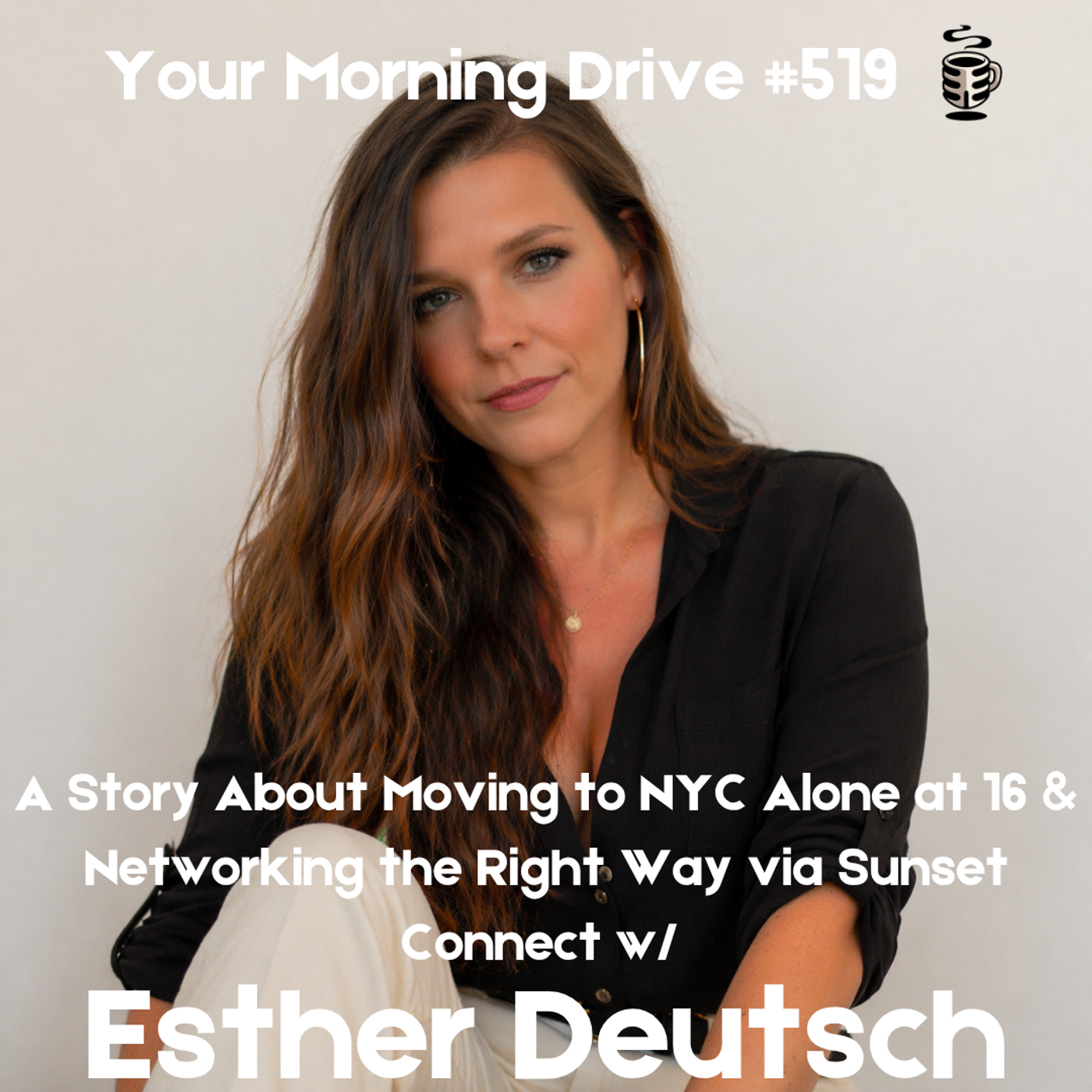
Welcome to Episode 519 of Your Morning Drive. In this episode of Your Morning Drive, host Logan Lewis welcomes Esther Deutsch. Esther is a Enterprise Program & Client Success Leader, Keynote Speaker, Adjunct Professor & Founder of Sunset Connect. In this episode we talk about: Esther's background and journey from Pennsylvania to Florida The origin and evolution of Sunset Connect Balancing social media and in-person engagement Lessons learned from starting nonprofits and community groups & much more! Learn More about Sunset Connect Support Our Sponsors: 216 Coworking Drink Good Days - Locations Branded & Devoted Designs - 10% Off Cartersville Living Your Morning Drive is produced, edited & distributed by Hammerhead Creations in Cartersville, Georgia.
Logan & Emily: Hello, everybody. We are back for another Your Morning Drive. Thanks for tuning in. Let's go ahead and roll right into it. I'm recording my show today from the home of Your Morning Drive, which is 216 Coworking. Located in downtown Cartersville, 216 offers private offices, team suites, a recording studio now, for remote workers, growing teams, or people that just want to get out of the house. With 24-7 access, high-speed internet furnished spaces and a polished business ready environment. It's a strong option for anyone working across Metro Atlanta. Whether you need a dedicated space of your own or just a home away from home, 216 has you covered. To learn more, go to their website, book a tour, and join us here at 216 Coworking. Before we dive in, do me a favor and hit follow or subscribe so that you never miss an episode. Share this with a new friend who needs a new show to start their day. listen on Apple, Spotify, YouTube, all of the places. No matter where you are listening, make sure you're subscribed so that when new episodes come out, they are delivered straight to your phone and you'll never miss a beat. And you'll be happy because we're putting out absolute heaters this year. And I wouldn't want you to meet. Wouldn't want you to miss any of the episodes. And of course, follow along on social media, LinkedIn, Instagram, all the places, anywhere you follow Riley Green or Sydney Sweeney, you can follow me too. Everything is your morning drive, of course. Guys, my guest today is the strategic leader who has built her career at the intersection of people, purpose, and business with a master's in social work and a bachelor's in business. She brings a unique lens to partnership development, community building, and organizational transformation, working in a senior leadership role in the payments and technology space, where she's known for turning strategy into real outcomes. Beyond her corporate work, she's a published author, educator, and startup advisor, nonprofit board member in a multi-year DEI top 101 honoree by channel futures. She's the kind of person that shows up for her community in every way possible. Please welcome my new friend, Esther. How are we, Esther? Esther Deutsch: Hi Logan, I'm doing so good. Thank you for having me. So excited to be here. Logan & Emily: I know, right? Thank you for doing this with me. Thanks for jumping on. We this is fun. We've talked about doing this for a solid maybe two years, it feels like. Esther Deutsch: I was gonna say I was like months, and then I'm like, no, it's years, I think, at this point, and here we are, Logan & Emily: It's been years. I don't know. I right around the time to give to give the people and I guess you kind of some background on like why why. So like I I'd never really taken LinkedIn seriously. I just at the time I was working corporate and I think I was fresh out of school. And I think my first boss was like, You need to make a LinkedIn profile just to like establish yourself in the in the world. Esther Deutsch: Yeah. Logan & Emily: And so I did and I Posted things on there, but never really took it seriously. But for whatever reason, like I guess maybe just based on either mutual connections or proximity, I I don't know. We you popped up on my feed as like a suggested person to follow. And I was just like, This she seems cool. She seems like she knows what she's doing. Esther Deutsch: That's it. Logan & Emily: so I followed along, and then I think I shortly after that messaged you and said, We should chat sometime and we just never did because schedules are nuts. and then here we are, like probably year and a half, two years later. fast forwarded because when I first got out of school, that was like seven years ago. But I think then there was a gap. And then when I switched the format of the show to be more interview based, I think I reached back out and then we've been trying to put it together ever since. so I'm glad we're here. Esther Deutsch: seeing. Thank you for sharing that background because I actually feel like I already know you. I'm like has it been that long and all And I feel like that's exactly like we're exhibit A of what we're gonna talk about. Like this is how it's supposed to happen. So we kind of entered each other's worlds. I'm learning more and more. I've actually not intentionally schedule has made it this way, but it's I'm learning that it's actually a benefit to not meet somebody like have this conversation initially because the conversation ends up being so much better after you get to know them. I feel like I know you already. I'm like, have we never met that's wild, but that's the power and also the opportunity in social these days that I think people miss. So just to give Logan & Emily: Yeah. Esther Deutsch: a little teaser to what's to come. Logan & Emily: Yeah, I'm glad you say that too, because o more often than not, and I'm sure you've experienced this too, is like I'll connect with someone online, either Facebook, Instagram, LinkedIn, wherever. And they're I'm like, We'll use the podcast as a perfect example. We'll just say, Hey, like, I'd love to chat with you about being on the or I'd love to have you. That's the way I word it is, I'd love to have you on. And people are like, Okay, cool. Do you want to book like a a 30 minute meeting and we talk about it? And it's like Esther Deutsch: You're like, no. Yeah. I get it. Logan & Emily: No, not really. Because I I I tell people a lot that I prefer to to have the introduction the first time we actually meet. So it's a genuine like conversation. and that that Esther Deutsch: Totally. Logan & Emily: applies to all kinds of things. Like even when I'm meeting clients, like I don't want to hear your story. I don't want to hear nothing. I just want to know when we're meeting and where. So that Esther Deutsch: Yeah. Logan & Emily: when we connect and meet in person finally, I know exactly that it's a genuine conversation. Esther Deutsch: I love that, it's raw. Logan & Emily: Yeah, exactly. And it just especially for the podcast too. Like if if we had jumped on the phone, you know, two months ago and you had given me your entire story, like, whoa, is that a good fit for your and it's like, yeah, but like now I'm not interested. Like it it sounds dramatic, but it's it's it it it I don't know, it Esther Deutsch: No, it's true. Logan & Emily: just kinda doesn't flow as well when it's not the first time I'm meeting someone. Esther Deutsch: Raw is real, real is rare, right? So the more real the better, that's me. I actually, yeah again we could just dive right in, but I wrote a post about this recently. I was like, please just tell me what you want when you reach out. Just tell it to me right away. I don't need an introduction or like a let's get to know each other. Just tell me what you want, because if I could deliver it, I'd like to do it now. And if I can't, I'd like to tell you that now as well. So I have a whole post about this. I love transparency. Logan & Emily: Yeah, can we please w before we even go into you who you are and your story, I just kinda want to let's let's let's chat about the LinkedIn world real quick. Can we stop? And I think, in my opinion, maybe Esther Deutsch: Mm-hmm. Logan & Emily: it's gotten a little better over the years, Esther Deutsch: videos. Logan & Emily: but I like to think that I don't get as many like cold as soon as I connect with someone, I get a DM immediately. I still do, but I feel like it's gotten better. Would you say the same? Esther Deutsch: 100%. I think it's a trend in the world that I saw starting out. Honestly, I've been on LinkedIn since I was 16, so over 10 years. I think it's a trend that the world is shifting towards understanding that relationship building. And I'm not just saying this because this is what I do. It is a trend, and I think that it's reflecting on LinkedIn in that way. To say it shortly, people are realizing that community is critical and that sending someone a DM doesn't create community, like a cold outreach on the first outreach. It's a beautiful thing. Like, yes, welcome to the new world. We saw it coming, at least I did, 10 years ago, but finally the world is catching up. So, I agree with you. Logan & Emily: Yeah, I'm I'm I totally agree. I I think that it's it's interesting that because I I still do want to send people a DM, but I I do everything I can when I do send someone. I send someone one this morning and like I made it Esther Deutsch: Same, by the way. Yeah. Logan & Emily: as I tried to make it as personable and not like do you wanna book a discovery call with me? Like, no, I don't. I immediately don't. So Esther Deutsch: Yeah. Nothing wrong with the DM. Nothing wrong with the DM. Yep. No, there's nothing wrong. I did the same by the way, just to put it out there. It's not about the DM. It's how, what, why, context, all the things. Logan & Emily: Yeah. Yeah. You'd be you'd be surprised on what Esther Deutsch: Yeah. Logan & Emily: y how genuine transparency comes across versus the sales pitch that we Esther Deutsch: Yep. Yep. Logan & Emily: all have gotten a hundred thousand times. Esther Deutsch: That's right. No, I do the same. Sometimes I send, I immediately connect and I'm like, here's what I want. It's okay if you can't deliver it, but here's why I connected with you. Can you do it? Like I get those. I'm okay with that. I just don't like when they put the wrong company name in, like just don't do any info. Like that's the type of stuff that kind of annoys me. Logan & Emily: Yeah. I've we all make mistakes sometimes, but I've definitely Esther Deutsch: Yeah. Logan & Emily: received the message where it's like, Hey Logan, we love what you're doing with Target. And it's like, I haven't done anything with Target except spend too much money at Target. Esther Deutsch: So I'll tell them. Like I'll tell them, you know, I don't like just ignore. I'll tell them, be like, I don't really work for Target, but here's how I can help or I can't. I have a thing too. I'll never not answer a message. So that's why I'm so busy. Like it's hard, but I don't know. Logan & Emily: Yeah. How d how do you have an assistant? Esther Deutsch: No, I would, probably never will outsource that. It's like something that is part of my brand and I'm, it takes time, but I invest in it. So, you know, I know it's controversial, but no, people think I'm AI, like never, ever, ever. It's all me. Logan & Emily: Yeah, I Esther Deutsch: Thank Logan & Emily: I love that you said that because I've been toying around with this thought lately of like I spend so much time emailing and DMing and texting and stuff, but I kinda Esther Deutsch: Yeah. Logan & Emily: like it. Esther Deutsch: Listen, it's like anything else and I'm not no disrespect to people who get one like I think there's a way to integrate technology too, but like Yeah, I there's different approaches. I I don't I think everyone has their way of doing it Whatever works for you is generally how I speak no judgment on anyone. But yeah, I don't use it and it's like anything else to me It's like I go to the gym to get fit and I invest time and I give time to things that are important to me and I feel that I use LinkedIn to make an impact and that's important to me So I'm happy to invest the time, you know while I can and maybe that'll change down the line or it has there has been times in my life where it hasn't been possible and then I didn't but for now that's what I'm doing. Logan & Emily: Yeah, I agree completely. I like it. especially I think you touched on it there for a second, the AI assistant thing is Esther Deutsch: Mm-hmm Logan & Emily: like I can't stand it. and I and you know, I I'm close with people that use it and and Esther Deutsch: I'm close to people that use it. Logan & Emily: you know, again, like you said, kudos to you for for figuring out what works best for you and your company or whatever. But I I just nah. Like it you know, it it's just When I was talking about a human assistant for for the record there, folks, like I I I would want an actual person that I could call and talk Esther Deutsch: and Logan & Emily: to and have a real emotional conversation rather than Jenny, your AI assistant. Like I Esther Deutsch: Yeah. Logan & Emily: I don't want that. Esther Deutsch: Yeah. Logan & Emily: so who knows? But before we talk about kind of what you've got going on today and right now, let's kind of go and get the origin story. Where are you from originally? Parents, siblings, were you cool in high school? Kinda give me the little Esther origin. Esther Deutsch: I don't know. There's actually such a long origin story. like, which part of Esther do you want to hear about? But I grew up in a small town in Pennsylvania, large Jewish family, I'm one of seven. Not a lot of money at all. Farmland, very quiet and peaceful in that sense. I dropped out of school in eighth grade due to bullying. I never graduated eighth grade. I went on to high school in Pennsylvania where I grew up. And then by choice, I moved to New York City on my own when I was 16. I did my last two years of high school in New York City solo. lived at my grandma, that's why I went to New York for two years. And then she got dementia while I was living with her. So I took my first apartment when I was 18 in New York City and had been on my own since. I lived in New York City for 11 years and then during COVID I went remote, so I road tripped around the country. And then eventually on that road trip down Florida, I decided I needed a change and wanted to get out New York once COVID hit. And so I've been living in South Florida ever since. When I was 19, I had something called alopecia, you may have heard of it. form of hair loss. It could happen to anybody. There's no genetic proven genetic like I think it was a response to stress and other things that were going on in my life at the time but there's no like direct correlation so I lost almost all of my hair. I was lucky and clearly it's grown back. This is all real. But anyway so I guess that's like a little piece of my story. While I was in New York City so I said I dropped out of eighth grade ended up graduating high school and then I went to undergrad in New York City, studied business and I got my master's in social work strictly out of passion and a desire to help people more in grad school. And then I'll also just say that I founded my first not-for-profit when I was like 18 or 19 living in New York. And then last year I founded my first LLC which is a networking community which I'm sure we can talk about called Sunset Connect as well. So really exciting and excited for what's to come. Logan & Emily: Whoa. Whoa. What the heck, man? You see, this is this is why it's this is why it's best to do it this way, dude, because I didn't know at least from the personal obvious I've seen like Sunset Connect and stuff like that online, but like I didn't know any of that. So you so you've really y you Esther Deutsch: Yeah. Logan & Emily: said you've like officially been on your own since eighteen, but you really kind of been your on your own since sixteen. Like you got you Esther Deutsch: Yeah. Logan & Emily: you left home and you went of course with grandma, but like you're s you you are living with Esther Deutsch: You're speaking, you are living. Logan & Emily: grandma, but you're still figuring a lot out on your own. Esther Deutsch: Yes. Yes. Logan & Emily: what was that like? Esther Deutsch: It was amazing and it was hard. And those two things can coexist. I was, so everyone always asks me, like the normal question I get when people hear about my background of that is like, why did you leave home so young? Like how did you, and I was like if I had it my way, I would have been out at 12. Like I was so ready and my parents were like, you can't leave at 12, you can leave at 16. Like wait till you're 16. So that was actually pushing, pushing it for me. Like I was ready. And I just remember, honestly it gave me such a like beautiful perspective because, so I went from a school of like eight people, right? Like really small town. left our doors open everyone was friends knew everyone's names still do like you know everyone in the town mostly people over 90 I was definitely the youngest and I went to a high school of like hundreds of people in my class in my grade and I like just loved it I clearly was like more of a people person but something people don't know too it's like I said nothing when I was younger to answer your question no I was least popular I was on the bullied side of the bullying and I always say like I make up for it now when I moved to New It was like just a fresh new start to answer your question and I was like just I think I just embraced all of it and because I didn't have it growing up I was able to appreciate it more and I still do I still have that city like mindset that I so love Because there's so many opportunities and I didn't have access to that and I always wanted it when I was a child like that was my dream was to like make it to New York City and Make it and I did I lived that life for so long and it was every day was a gift and a lot of my connections and friends are still from that time period in New York so Logan & Emily: Wow. Esther Deutsch: It was great and it was hard. Logan & Emily: Yeah, geez, I can only imagine. but then so like you immediately you you went to school and you got out of school and then you immediately kind of went into self starter mode. Do you think doing that kind of self starter thing at sixteen slash eighteen, wherever you want to actually officially put the flag in, but like, do you think that attitude is what helped you become this like starter of things in the professional world? Esther Deutsch: It's a really good question and these are things I'm always thinking about. You know how as you get older, things start to make sense in a different way and looking back, pieces kind of fall to, that's why I had to go through that or that's why I did that and every day more things are coming to light and I'm like, get it now. I would say that moving to New York City, I think I didn't choose entrepreneurship, I think it chose me. Starting my first not-for-profit, I actually, this is another thing people don't really know, I tend to know a lot of people, there's nothing. I hate more than being in the spotlight. I hate being known. I just want to do my own thing. I want people to leave me alone. Not in a negative way. I am actually kind of introverted. People don't really realize that. The part of me that wants to make an impact and feels if I have that opportunity that I have to is stronger than me needing to retreat, which often comes up. I I need both. So I would say that the way that I started the nonprofit is I haven't have been in an environment. I was looking for a certain type of organization and I couldn't find it. And I was like, you know what? I can do this. I can start it. And it doesn't exist. So there was a need. I like I had to feel it. feel like if I'm in a position to do something and I don't then like that's not okay, right? And so that's how it happened. Same with Sunset Connect, same with In This Together Roundtable, which I started during COVID. Like if there's a need and I was given certain gifts in this world, which I had to learn and a lot of that came through my time alone in New York and just figuring out who I was. And for me, like moving to New York City was an opportunity and I'll always be grateful to New York for giving me that. It was like, okay, like now my past isn't in the past. Like those people are behind me. Like when I was 12, know, I think I even called them up and I just forgave them all and I was like, just want to move on. You're not me, I'm not you. That happened and it happened for however it happened. And I think I was even stronger then in some ways, but I was like, I want to be me and figure out who I am. I knew that I had a lot to offer and I just hadn't gotten the opportunity yet to develop it. I think that it's long-winded way to say, to answer your question, it found me and I found it. I think it was kind of organic, but I would say something that I also learned in retrospect that I would share is a takeaway for people. I didn't realize at the time how much like I actually did things to create the life that I have now and now I'm more intentional about that and I do take actions to create a life but like there's luck but there's finding and creating opportunities for yourself and being courageous and not being afraid to take chances and risks and I still do it every day consciously like yesterday I went to do a stand-up routine I love crowds I love public speaking I do it all the time doing comedy scares the shit out of me I don't know why it's illogical and I was like I'm just gonna do it I don't care like I suck it's fine I need a practice and people need to hear me suck. Like it's okay. So I think I've always been doing things like that. You I went skydiving one day because I was just like I just need to challenge myself. So I think putting yourself in situations where you feel fear and doing it anyway because I realize that everybody feels fear. The difference between the people that are successful and those that aren't are the ones who still take action anyway. So I've learned to just embrace chaos, embrace fear. Maybe that's where entrepreneurship came into play but it's actually like it's still liberating once you get to the other side of that and you're actually not afraid of disorganization because you know that it's part of the path to success. It's such a like liberating and free feeling and almost like then the sky's the limit, you know, so I found it but it found me and then I think it was kind of like this big spinning, you know thing and I'm still trying to create and continue that momentum that I feel like is part of what has helped me be successful is just I always said yes to everything even at 16 always want to know what's out there and I think all of these pieces and also character traits I try to develop daily in whatever way I can are what contribute to success. So it's not just what happens to you, it's what you make happen to it, if that makes sense. Logan & Emily: Yeah, that makes total sense. I love so much of what you said, but what you did say that really got me that I want to echo is that like, you know, a lot of people will say, like, well, the things will come to you in time, or you know, things will fall into your lap in time. And Esther Deutsch: Yeah. Yeah. Yeah. Logan & Emily: I don't fully believe that. I I believe Esther Deutsch: Yeah. Logan & Emily: that anything that you that I've got, it's because I made a choice or I took a leap or I did a thing. Esther Deutsch: Yeah. Yeah. Yeah. Logan & Emily: and I think there's a lot of people out there that are just waiting for things to happen in their life and then they'll die Esther Deutsch: Yeah. Logan & Emily: wondering where all those things or how it missed them or whatever. And I just don't subscribe to that. So I'm glad you said that. Esther Deutsch: I think it's both because I also, and this stuck with me, heard like think Mark Cuban or someone said like how did you get rich? I worked in the other Wall Street as they call it New York City for a lot of years with a lot of very wealthy people to put it mildly in. They say it's luck. Again, you create your luck. I think it's a piece of it, right? Like not everyone has the same opportunities but at end of the day, and you see it all the time, people that come from nothing that make it big is right. A lot of it is also what you do and there are a lot of things you can do to change your luck. It's not all in your control. but a lot of it is in your control and that's part of what you know I took away from just learning social work skills and things it's just like you know giving people that empowerment to say like there's so much I can control but there's so much I can and I'm still like working on this too I'll be honest like my life now looks nothing like I would have thought it would or wanted it to in some ways in some ways it's even better but in some ways it's just different and I'm constantly like trying to reconcile that and accept that some things are not in my control and I might have one plan but also be so aware of the fact that Like for me, what drives me is my desire to make an impact. And for me to make an impact, it doesn't matter what my life circumstances are. I can do my life mission, what I believe is my life mission, no matter where I am. So that's very empowering, because it's like, it doesn't matter what happens around me. Like who I am and what I do is the same. So I think there's a balance, you know, of like acceptance. And I'm always working on this, because I'm also someone who always wants to understand and do and make things, tie them up in a nice clean bow. And that's just not how life works from what I've seen. So it's just a constant work. But I think taking, I think not enough people to your point Logan, like take that ownership and say like I'm in one place now, where am I going, what am I doing within my reach to get to where I want to go and I've been doing that since I was five and so that's how I got to New York when I was 16. That's how I did some of the things I did or many of the things I did and I'm never gonna stop doing that. So here we are. Logan & Emily: And then so y during COVID when you went remote with your job at the time, you road tripped and why Florida? Was there any other place besides Florida that was like a close second that you could have easily moved to just as much as Florida? Or was it was there just like again, like you just kinda had this aha moment of like, I've gotta come here. This has gotta be my life. Esther Deutsch: Such a good question, I don't think anyone ever asked me this and it's the same, there is like a strong answer to this, yes. I was like just warmth and sunshine. I actually broke up, so I traveled with my ex on the road trip. I broke up with him here in Florida. And I remember thinking like, right place, wrong person. Like I'm gonna come back alone. I think before I decided to like break up, like just my head was already like realizing it subconsciously, which tends to happen to me. And so I loved Florida, I had visited a lot, but I just wanted warmth and sunshine and I was debating between like Vegas and Young people at that time too I was seeing also like young people so I was looking at Vegas or California as other options of cities with warmth and young people but they were different time zones and further away from my family because everyone in my family was in the Northeast is where I grew up so I was just like let me try Florida because it was easy I literally packed my car up one night drove down the next day with whatever I could fit in my car it took a month to month and I was like let me just try it and that's another lesson for people just do it like amazing book The Motivation Myth by Jeff Hayden who's a wonderful person by the way, I love him and follow him on LinkedIn and he writes how action people think you have to be motivated and then you take action. You first take action then motivation comes. It's it's counterintuitive but that's how it is so if you're feeling frozen or stuck in your life which happens to all of us at different pieces of our life, you hit a pot tell you need to do something. Now what to do is the hard part but you got to take action. Doing nothing isn't gonna help you become more motivated no matter what you think or learn. So yeah I was like let me just try it so I just went down here and then just never look back I fell in love. So thank you. Logan & Emily: Wow. That's really cool. That's really cool. And it's really admirable because like for the longest time I grew up moving around the country a lot because of my parents' job. And Esther Deutsch: How are you? Logan & Emily: so it was always a forced thing. And so Esther Deutsch: Mm-hmm. Logan & Emily: but at the same time I can thank it because like when it comes time to like move or to pack up a box, like back when I was like moving apartments or when we were moving into our house that we're in now, like it's like Esther Deutsch: Thank Logan & Emily: like this is easy for me. I've done this dozen a dozen times. Like if it It's it it makes change for me and maybe for you too real simple. Like Esther Deutsch: Yeah. Yeah. Logan & Emily: you just do it. Like the more you think about it, the less you're gonna want to do it. So you just change. And no one likes to hear that because Esther Deutsch: It's so healthy. Logan & Emily: no one wants to change because everyone loves being comfortable. But Esther Deutsch: Yeah. I mean, it's Logan & Emily: every Esther Deutsch: our body's natural response. Like, that's also something I'm always reminding myself. Like, the comfortable route is where your body wants to go. So you're going to be fighting if you're going to be open to growth. Like, that's what growth means. It's almost like you have to be uncomfortable to get there, you know? So I think becoming comfortable with the uncomfortable is such an underrated life skill, which I was forced to learn in my upbringing, you know, having a lot of adversity at a young age. I didn't have a choice, but in retrospect, it was one of the greatest things that happened to me in so many ways. And it totally shaped who I am, you know? Logan & Emily: Mm-hmm. Esther Deutsch: Not despite but because of So would I do it again that way? Of course not, but I'm grateful now that I'm here, you know Logan & Emily: Yeah. Yeah. So you're working full time and obviously we love we we love our full time jobs. Esther Deutsch: Yeah. Logan & Emily: so shout out to them. but you did something a year or so ago, or God, longer, longer than that, several years ago. twenty twenty two, I think. you started Sunset Connect. which until this very moment, dude, it's crazy that That you did that and now we're having this conversation because I just did that myself. Not Sunset Connect, of course, but I just started something as well. But we'll talk about that in a second. I wanted to kind of ask, like, first of all, like tell me and everybody what Sunset Connect is. but then go into like why why does it exist? Why did you get this hunch to to do something like this? Esther Deutsch: Yeah. No, thanks for asking. I'll just also give you a little context. People think like, I just started Sunset Connect. I've been running communities again since I was 18. The nonprofit I mentioned was running events for people from all over the world, way older than me, in person and virtual for like five a week. So I've been doing this and I was doing it before when I was young. So it's in my blood. So this is not my first rodeo. It's just my first LLC. I just want to say that. So I got like life experience on it. And then in this together, just to go back a little, Cause Luke Van Every who you may know and PJ Ewing who are my co-founders who still run in this together every single day and enable it to continue. So I have to mention them cause I feel like they gave me so much training. But that was like one of the first or the first maybe virtual group, know, when COVID hit they weren't yet really a thing. And we started the first one that was, it was actually a call. People don't realize this. started as a call. Luke always used to say we were the first, what's that app where people call in? There was Clubhouse. He's like, we came before Clubhouse. He's like, this is going to be a thing. beautiful the reason I mentioned it was beautiful about that is we actually weren't seeing people we were only hearing voices so I believe that it gave us an ability to connect with people outside of our maybe like race culture whatever things that we would normally first even subconsciously like judge here's the social worker in me like visibly visually we were breaking barriers that way because we didn't see the people we were talking to we didn't know their ages we didn't know other things about them by looking so it was a beautiful thing some of my closest friends to this day are from that group so that's a little bit of the history and then fast forward to me moving me down to South Florida and one of my longtime networking friends Jason Gonzalez from DGA Security in New York City we used to do a lot of networking together and we both coincidentally I don't believe in coincidences but moved down here around the same time and he called me up and he's like this is how it always starts somebody I know like and trust calls me up see they send me a cold outrage no just kidding and said I want to start a group I want to get some people together from our New York these that also moved down here you know we were all kind of looking for community at the same time will you help me and get involved and I said sure I got a full-time job Jason but I'm happy to help, always offer to bring the people because it's something that I can do if you do organizing. That was like four years ago when I moved down here and then we started with like 12 of us on a rooftop, just found a place, got together and then people started telling people and it just organically grew and now I was like you know what let me just make this official. I was also putting in so many hours in the beginning like more than my job almost. Just in organizing it does take a lot of time contrary to popular belief sometimes too. Even for these informal gatherings. So we wanted to create we didn't want to create it happened organically and my thing again is like if people clearly there's a need and if there's a need and we could fill it and let's do it so Fast forward we started a sunset social now. We're sunset connect. That's our LLC And I think I always like wonder like I know there's so many groups and so many communities and I'm always like Why do people keep coming to ours and I think that's something that's gonna continue to develop? But I think for me and I've also been it's been a journey for me of like figuring out my why with it and like why it's working and what we're doing differently I would say that it's like I call it like the scene community It's almost like I want to create an environment of like I don't know if you're into like yogi yoga or breath work Or some of those like movement meditation wellness communities, which are very popular and cropping up like crazy here in South, I'm not I can't stand any of that I like and I've had to learn this the hard way and accept it recently like chat GPT helped me understand my home thing here and it's like for you it's like for me I Create I connect to like meditation and slowing down through movement and through people in a soft setting. So that's kind of what we're creating with Sunset Connect organically is a place for people to come, be themselves, drop their shoulders, but in a professional setting with no agenda, just be you, be seen, come as you are, and maybe leave with a new connection or a new friend or something that turns into more. So it's almost like a feeling, that was a good night, that I realized that I was looking for. feel, but it's hard to explain. It's like you kind of just feel it. So I want people to come and just be them. Just be who they are, bring their business, but also bring themselves. And be able to make good connections that eventually will turn into more, but don't start that way. So they're more transformational and transactional. And that's really the theme in everything that I've created. And I think it's what people really like. And again, there's B &Is, there's other types of networking events that I think are so necessary, and each one has a place. But like we're filling a certain role within that ecosystem that I think is special and I want to keep driving forward. So I don't know if that kind of gives an overview, but so I see it. Logan & Emily: Yeah. No, yeah, it it totally gives an overview. I I really like it. because like you said, there there's a need for it. It happened naturally. and so why not put a label on it and make a thing and organize it and turn it into what it could be? because I I I have been public. I haven't ever used the name, I don't think, but I've been pretty critical of certain types of networking groups and certain kinds of this and agenda this, guest speaker that, where like half Esther Deutsch: and Logan & Emily: the time it doesn't land where I think that people intend it to. Esther Deutsch: Yeah. Logan & Emily: and so I similarly just was like, well, I love, I love doing things and I love doing things with groups of people. I can't ever just do a double date. Like it's gotta be like all of our friends that we've ever met ever have to be there. Like, Esther Deutsch: Yeah. Logan & Emily: My bachelor party Esther Deutsch: Yeah. Logan & Emily: on my wedding had like 25 people at it. Like total just the fact that I had to take Esther Deutsch: I love that. Logan & Emily: those 25 people and limit it down to like six groomsmen was the toughest decisions I've ever had to make. Like Esther Deutsch: Yeah. Where was it? Logan & Emily: it I I just love doing things with people. And I love events and I love that kind of stuff. And I didn't realize that until the last couple of years. I didn't realize that I was such a big fan of like events and and stuff, but I am. And now I'm Thinking all the time, like, well, I want to start a, you know, I want to do an annual fundraiser golf tournament for a nonprofit, or you know, I want to do this, I want to do that, I want to start this, start that. And it all revolves around people and Esther Deutsch: Mm. Logan & Emily: people being them, like you've said, themselves, and people coming with their shoulders down and maybe that top button unbuttoned, and they're just kind of there to hang out and enjoy themselves. And so that's why I started my. networking group. I say networking because I hate that term. Esther Deutsch: Yeah. Logan & Emily: but I call it not working because so much of networking isn't working for so many people. So I said, networking is not working, so not working. Esther Deutsch: Yeah. Logan & Emily: and I I'm I'm I've got this I've got this issue, dude, because I I struggle with I don't want to become the networking groups that I hate. Esther Deutsch: Mmm. Logan & Emily: But I also want it to be the best version that it of itself that it could be. Esther Deutsch: Mm-hmm. Logan & Emily: but in order for that to happen, I feel like I'm I'm not a hundred percent yet, but I feel like some of the lines have to be blurred. Like I've been critical of like like the B and I thing with like you know, you've you've gotta meet this quota of people or you can't refer anybody to anybody unless they're in our group. I've always said that that was complete BS. if Esther Deutsch: Mm-hmm. Logan & Emily: if if I know a plumber, if I if my best friend needs a plumber and I'm in that group Esther Deutsch: Yeah. Logan & Emily: and they're not in B and I, why the hell would I withhold that information from them? That seems Esther Deutsch: Yeah. Yeah. Logan & Emily: selfish and kind of criminal. not criminal, but you know what mean. Esther Deutsch: Yeah. Yeah. Logan & Emily: so that's why that's why I started my group just like you said, like I idea first, motivation later. So now I've had a couple meetings Esther Deutsch: Yeah. Logan & Emily: and they haven't been as grand as I've wanted them to be. So I guess all of this is leading to the question of like How do you encourage people, dude, where there are, at least here in the Atlanta area, dozens and dozens and dozens of groups that meet, you know, here or there, evenings, mornings, whatever. How do you convince Esther Deutsch: Yeah. Logan & Emily: people to spend their time at your event? Esther Deutsch: So I love that you asked this question, because I'm gonna say something kind of radical, but that's also what people, I think, mistake. that's two things I wanna say that came to mind when you were speaking. First of all, not related exactly, but intention matters. Like you saying you wanna create a certain thing, and I don't think people realize that. Like my groups, a lot of times people will think, I think in my not-for-profit too, I dealt with a lot of young people, and my team was very young, and I made a ton of mistakes. I was a horrible leader probably. But I think that I always, and part of the reason I stepped away is started to feel that the intention wasn't moving in the direction I wanted from a value standpoint and ego was getting in way and other things. It may look the same on the outside but the reason you're doing what you're doing and what drives you to me always comes out and it's what creates the direction of the group. Leadership matters and your intentions matter. So I know they don't really think they teach you that in school because it's all about outcome and output but for me, me knowing what I'm doing is helping and impact and what drives me every single day and it's pure is for me what maintains and creates and what I'm unsure. I'm gonna making decisions that guides everything and it has to be strong and I always am constantly not always constantly trying to check myself and I'm sure I mess up but at least I care about it and I try to always keep that in mind. So that's number one I wanted to say because I think you mentioned a couple things where I think that if your intentions are right and even if you need to do things that may look like a BNI and I'm nothing against BNI I actually think there's a place for all these different groups and it's for the right person in the right time and the more the merrier right everyone has different ways of doing networking or not working. and they should exist. So I have nothing against them. I'm just saying that it's not the model we're using. So I think just knowing your intention and what you're trying to do is also sometimes enough. So I just want to say that. The second thing I'll say is that I'm not trying to get people into my group. Even my business. Like I never was and that's another thing I don't think I'll ever do. The reason I have the business is because I'm trying to serve a need. And I think that's also what founders need to constantly do is survey, is ask, is never lose touch. Even you'll see this even in the biggest companies. if you know where to look. I'm fascinated by the Jeff Bezos. I've been studying entrepreneurship and big companies forever and how they got started and looking back at the roots and the ones that failed to, I forget. I think, okay, I don't want to say this off online, but like I have my theories about Disney and the varying away from what they originally started out to do. And if it's going to last and maybe like Starbucks, for example, whatever, a lot of companies, I think that you could actually see where they went downhill because they straight away from what they originally intended to start out. I'm not judging them. It's hard as hell. I'm just saying that, Logan & Emily: No, no, you're so right. Esther Deutsch: yeah, I just think that again, my philosophy in not-for-profit and profit seem is you're there to serve a goal or to offer a product or something that people need. And if you're not, what are you really doing? and like I always want to be serving me. That's just what I want to be doing. So if I'm serving a need, maybe if people aren't coming because they don't know about it, that's a different story. That's what I work on in my marketing is just letting people know it exists. But if they are not raising their hand once they know it exists and saying I want to be there or I'm going to give my time to it, like them coming and giving their time tells me that I'm onto something, tells me that there's need. That's why I started it, not the other way around. So I think if you're ever convincing, then you might need to switch your model or your offering in some way, shape or form. It's bad. It just means that you're not hitting the mark in my opinion to me That's what modern-day marketing is it's a combination of filling a need and then building a community around it It's how I've always operated it even in selling like services. I sold IT like different things commodities. It's all the same really I mean if someone doesn't think they need you even if it's like you're selling I also I've watched every episode of short tink can you tell forever? But like if somebody isn't saying like I need that even if it's just a gag item because it brings them joy right that's filling a need or like a not-for-profit my thing is like not-for-profit exist for a certain amount of time, fill a need, not all of them, homelessness will always be around. But if they're not constantly monitoring how they're impacting and affecting in a positive way the people they're serving, then in my opinion, they're doing nothing and I don't want to give my money there. So I think that it works the same all the way across the board. again, long answer for a short question, but that's how I see it. I never want to be convincing people to come. If I am, then I'm just going to close it down and start something new. I think people also get married to the idea and I understand it as entrepreneurs. Is it something I've seen over and over that I promised myself I will never do? I'm not married to an idea. I'm married to impact. And so if it isn't at Sunset Connect, I will do it some other way. And if that's not where it's happening, and I've always felt that way, that's why I've jumped to different projects. You know, not because I'm a jumper, actually. I actually can stick with something forever. It's just that I want to be able to help serve need. And like, This Together, for example, is able to do that without me now. It doesn't need me. So I could be filling another need while it continues to fill the need that it's filling with the amazing leadership that's still there. other organization than I started. yeah, I think if you're focused on serving your customer or client or offering your product, whatever your end user is, even if that's a business, you'll never lose and you'll always have customers. It's just getting the word out. So I think that's a little bit of like the intention and mindset that I have when I operate things. Logan & Emily: Yeah, I like that. I like that a lot. It's it helps because there's there's days that I think, you know, should I do this or should I do that or the other or Esther Deutsch: Yeah. Yeah. Logan & Emily: whatever? Like and and the other thing that I that I've been on the fence about that I think I just need to bite the bullet and just do it is that at this moment the the networking the the not working group meets twice a month. And that Esther Deutsch: Mm-hmm. Logan & Emily: in my head isn't enough. Because I I if it's every week, then at least it's at least in my head, the way I think, constantly atop people's minds. Whereas like if it's twice a month, people could easily say, I'll go to this one, but not the next one, or I'll, you know, one way or the other, like I I just get in my head too much about like how How I think, how versus other people think. Like again, because there's, you know, people have lives, people have kids, they have sports, they have Esther Deutsch: Yeah. Logan & Emily: other jobs, they have second, third, fourth jobs, school, that you know, how do you Esther Deutsch: Totally. Yeah. Logan & Emily: convince people and you know, marketed marketing events like yours Esther Deutsch: Yeah. Logan & Emily: too, where you know, and maybe I misread this or or misinterpreted this, but do do people pay to come to yours? Do they have to register and buy a ticket to come to yours? Esther Deutsch: So that's another thing, this is my first paid community, so that's also new for me and something that I was a little hesitant to do, which I've totally gotten over and that's a whole other conversation, but yes they do now. It's the first paid community I've ever run. I'm actually a big proponent of free and I actually intend to go back to free at some point when we have, I like when there's a free option, again, I like to inclusiveness. I like everyone to be able to join and then you have premium upgrade levels. Given that we're not there yet and I don't have capacity, I'm not looking to build it out that much right now. Think that we need to have the paid option for other things for buy-in and people coming in I can't plan without knowing and then people sign up they don't come whatever there's so many reasons I have no regrets. I'm not ashamed. It's another philosophy I have is like I'm not interested in being cheap never was never will be Understand that some people can't afford it totally get it. No problem Not the right group then or or we could figure out a way to get you to come like it's no issue I've never turned anyone down for money to be honest. So like of course we could figure it out But I just I don't want to be cheap. I want to be valuable I want to charge for something that people find meaningful because that's a win-win win for me and that's also a thing I think that people make mistake of like you should be able to charge whatever it is it's just they don't see the value if they're not willing to pay and pay could be an investment of time too by the way But you make a really good point. I like what you said about charging and the frequency. That's another thing that I do that I think to your point is so important. I only do them once a quarter. So that's also a contributor because everyone's busy and I think that that creates an excitement. And I've thought about also not dropping future dates. We don't really drop future dates. We drop one location at a time per, because like you said, think mentally then people go to like, well, I'll just attend the next one or the next one, which they still do. But like that's an example of where it's not necessarily that you're doing the wrong thing. just be like the way that you're operating or there needs to be tweaks in how frequent or where you meet or how you meet. But the only way you really know that is by asking the people that come and really being in touch with who you're serving. And another thing is like not everyone's going after mass market. Like that's what I've talked to my co-founder too in this instance with Sunset Connect. We're not actually looking like we actually are after the last few events we were actually we want to charge because we don't want as many people here. We were having 150 people and we're like it's nice for them but it's not contributing to the best outcome for people to connect meaningfully which Logan & Emily: Mm-hmm. Esther Deutsch: is our goal. So again, if you know what you're trying to do, it's not always numbers. We actually want it to be smaller, very targeted, so that the people that actually come, the 75 people, get what they want. And that will contribute to its longevity, in my opinion. And if your goal is get numbers, then maybe you're gonna give up something else, or it's a different model. But that's what I'm saying, just knowing your goals and who you're serving and how it's hitting them and why should then inform how you do what you're doing. So first is the what, and the who, I say. And then how. last you know. Logan & Emily: Yeah. Yeah, I do. It's all it's all good conversation because I think people like people I think most people, and I'm like you, dude. I I'm an introvert too. I just know when to turn on and off the switch. Esther Deutsch: Yeah. Logan & Emily: I I want nothing more, not in this very moment, but you know what I mean? Like in this moment to go home, Esther Deutsch: Yeah. Logan & Emily: turn the lights off and sit in a dark room and play video games for eight hours straight. Like I would love that's that's how I fill my cup. Esther Deutsch: We're the same. Logan & Emily: So Esther Deutsch: Yeah. Logan & Emily: like I I I just know how to turn it on. And I think most people are in that mindset of like they like being around people, they like doing things with people, but it's just a matter of when and where and how. And how does it fit into my already crazy schedule? So it's just all of those thought processes. Esther Deutsch: Yes. Logan & Emily: you know, people people might ask you this too. People ask me all the time, like, what's it like to be up in your head? And I'm like, dude, it's a horrible place. It's Esther Deutsch: Bumper Logan & Emily: There's constant fighting Esther Deutsch: down. Logan & Emily: going on between two people up there. The angel and the devil will call them, like, this is how we should do Esther Deutsch: the party. Logan & Emily: it. No, this is how we should do it. We should charge. We should make it free. We should do this. Start that company. Start that nonprofit. Like, it's the busiest place. And somehow every day I'm okay. Like Esther Deutsch: Yeah. Logan & Emily: it's it's just chaos, but it's just having the I have these conversations with myself as you and you, I'm sure your co-founders do too. Like, you just have these conversations with yourselves and then together of like, What's the right way to do this? And like Esther Deutsch: Thank you. Logan & Emily: you said, what's the best way to bring as much impact as we can? Esther Deutsch: Yeah. Logan & Emily: And if we find ourselves in a place where we're not doing as much impact as we want, we close it, start something different. Like it's Esther Deutsch: Hold on. Logan & Emily: it's it's just that that mindset of being able to pivot on a dime. Like, okay, it's not working, cool. Like people somebody the other day was just like, Hey, you should do this and then I did it like that afternoon and sent them the flyer or whatever I made. And they're like, Esther Deutsch: Good night. Logan & Emily: damn, dude, you really do it. If you have an idea, you really just do it. I'm like, Yeah, that's how my brain works. If I if I don't do it, then it's just gonna sit in the back of my head until it's done. Esther Deutsch: Totally, a thousand percent well said. Logan & Emily: Sorry, said like 50 different things in in one sentence, one long, very long run-on sentence. Esther Deutsch: No, No, it's great. Logan & Emily: and so the then the next piece of it, I I'm curious to just pick your brain about this too. how do you see because you have clearly you guys have you've you've you've done X amount of events since 2022. You've you've got an audience, you've got a group of people that enjoy to come. Have Esther Deutsch: Mm-hmm. Logan & Emily: you ever thought about taking it and making it an online community too or is there an online community? Like, cause then I think like, my God, there's we have so many tools, Esther, at our fingertips now where we can Esther Deutsch: Yeah. Logan & Emily: use Claude Code to create an app and and start something in your bedroom. Like you can do anything in 2026 truly if you put your mind to it. Like I've I've I was raised in like that, that's always true. If you want something, you gotta go get it and you can get it. You just gotta apply yourself. Esther Deutsch: Yes. Yeah. 100 % and next to right out the door and I'll tell you I mean I again in this together is all online So I have that community already So maybe that's part of it where I feel like I've already kind of tackled that we have that for people that want it And there's many advantages to that like which geographies for example I have friends from all over the world now and time zones and all that but for in the first ones that connect part of the reason we created it is because I feel that as the world gets more Technological and again, I've seen this I saw this trend ten years ago But it's just people are starting to realize it as well like that. We're craving connection more than ever before. The more ways there are to connect, the more online. And again, I'm someone who's a heavy social media user, so I'm not bashing it at all. I'm just saying that what it isn't giving us is more connection. it's not that we have a hard time meeting people. It's we have a hard time, in my opinion, we're struggling to create meaningful connection quickly. Like that's such a lack. And I feel that the in-person component of Sunset Connect is part of what's contributing to that. It's because it's not just about like the digital or interaction, but it's about people feeling seen, understood, being remembered, like real deep conversation and the environment. Part of what we're creating at Sunset Connect is this like we put intention into the venues, like things that might be considered little, but the structure of the room, like the noise level, the you mentioned like the agenda, we don't have any talks. It's actually it's supposed to be like intentionally loose, like it's super loose, but it's very intentionally loose. And there's a lot of intention. in the way that the night flows and that's part of two why I started it because yes there are a lot of groups and a lot of communities but I didn't want to do just another one like it's purposely not frequent it's in person it's a very intentional experience that I don't want to replicate online at least not now and I don't really think it's what we're trying to do so we don't actually call ourselves like a networking group we're an events company intentionally like that's how we're registered on purpose because we want to create experiences through business networking not a network event or community and people pitch me all the time on like apps and stuff I just don't think we need another one I could be wrong but that's what I'm saying I don't need another app I don't need another place to connect I mean maybe if I met more Logan's I would but I'm just saying like it doesn't seem to me to be the need and again back to like what need are we filling so I mean we have people fly in for it which to me is crazy because another thing we're really doing is targeting local and it's part of my belief of like locals should support local and we have coffee shops and local we had on the assistant city council assistant mayor came to one event of just kind of us, like that's what I'm really going for is local. And so that's another reason it's in person. And people fly in and I find that mind blowing and I'm like, it's an honor. Every single event we have people flying from other states, but that just tells me that we're onto something and that there's an opportunity here that we're capturing. I'm still, we're still learning what that is. It will continue to evolve. have no doubt, but I don't see it moving to online because I don't think that's the niche that we're trying to fill. So. Logan & Emily: And I'm as immediately as I asked the question and let you start talking, I immediately Esther Deutsch: What? Logan & Emily: started beating myself up for it because I completely agree in that, like in this day and age where everything is being increasingly impersonal, Esther Deutsch: Yeah. Logan & Emily: I think people are really hungry for more in-person things. and so, and like you said, Esther Deutsch: there. And it's neat. Logan & Emily: like thinking about apps, like we don't need another app. Every, every base has been covered. We we don't need another. Esther Deutsch: No. No. Yeah. No. No. Logan & Emily: Twitter or another even th when threads came out from Instagram, I was like, who's this for? Anyone who wants this is on Twitter. Esther Deutsch: It's not and we need more like people I think I see it and dating and everything they want real deep meaningful connection and though you can get a lot of good interaction again heavy social media user here online that that piece of it is what we're missing is what sunset connect is filling like that deep like proximity and Learning and like just by being around that energy again. That's what I was seeking That's what I'm looking for. So I know it's a need and I'm a huge social media user as you know, so yeah, it's different in person and something that I mean, we're human, like, again, as an introvert, I hate to admit it, but we really do need each other and that's the best opportunities come from. I mean, you see, like, look at us. Again, we're exhibit A. We're like the exhibit A of this. And I heard recently just through the grapevine, which blows my mind, because it means there's more, that we made a marriage already through our events. Apparently somebody Logan & Emily: Whoa. Esther Deutsch: at their vows said that they met at Sunset Connect. I was like, why did you not invite me? But that makes me so happy. Like, I love that I didn't know, because it means there's others that I don't know about. And that is what drives me. That's what gets me up in the morning and makes me keep doing this because like they're gonna have they'll they know like it's who knows the impact you just don't know so yeah I mean it's not my first Logan & Emily: That's insane. That's so cool. Esther Deutsch: one I've made many marriages through the events that I've hosted in the past I've know of many of them but yeah it's my first one that I know of from Sunset Connect so it's so fun thank you Logan & Emily: Wow, that is incredible. you know, you mentioned the nonprofit that you'd started Esther Deutsch: about talking. Logan & Emily: and I skipped that kind of cause I was just eager to get to Sunset Connect. But what you you Esther Deutsch: Yeah. Logan & Emily: mentioned it was an events company. How how was that how did that work? How why did you start it? And how did it work being in the nonprofit space versus versus being a for profit business? Esther Deutsch: Yeah, great question. A lot of people also don't know about this. So I just like long story short again, it was something where I I saw a need. was post college. was felt like I was missing community and this was pre-COVID again. So a little bit very different like New York City scene. I was living in Brooklyn at the time, Brooklyn, New York and I had friends and they were seeking the same thing. And so I started the same way. I had a mentor at the time that was running community in a different way. And I was like, would you help us here? He was like, absolutely. And he's one of the first people that I would say really like showed me my strength and believed in me and helped me understand that I have power. And he really backed me and I'll forever be grateful. And he's only one of many of which there's too many to write. This part of the magic of New York. There's such great people there, but or too many to speak about here But anyway, he did like give his time for free as well and helped me like start the nonprofit create a board like do all the like legal things Over time, but the reason it started is like there was just five of us to begin with and then people started hearing about it And then they told their friend and just grew and grew and grew and we had to just keep up with the demand So we were running events for to help build community for young professionals in New York way older than me at the time I was like 18 and it was a great experience. I was also interning. I was working because I was supporting myself. I mean, I was running like 25 hour days for years of my life. Also, people don't realize that. I'm semi-retired now comparatively. Like people think I'm busy now. I'm like, you don't even know. But I would run it. I was running it out of my basement. I had like a two by two in New York City and it was some of the best days of my life. And I also used that as an example to say that you don't need a lot of money to make an impact. I did it with zero budget. That's another thing I take pride in. Having grown up with very little money and knowing how to be scrappy. Like it was, I mean, would just send money to me for almost a lot of the things that I was involved with. People would mail it. Strangers, I didn't even know. They just wanted to be involved. So I always say too that if you have something of value, people will give of their own accord. Again, these are just philosophies of mine that I like proving through action. but it was self, you know, I paid for like the first few events myself and that was it. I never had to ask for money again. So there's more to say. I feel like we're running out of time, but like I also have strong opinions about how surprising I know about how not-for-profits need to be run like businesses and businesses. need to be run like not-for-profits and long story short I'll just say that having that background and having exposure to some of the challenges and opportunities and not-for-profit in the profit world has been incredibly powerful and motivating and hopefully something that I bring to the profits that I work with is that lens that's unique because they both have strengths I would say and areas for improvement both of them need to learn from each other from what I've seen so it's nice to have both you know and hopefully bring best of both Logan & Emily: Yeah, yeah, I hear you. so Esther, the last question I usually ask people is you know, you get you gave me all the information, you know, you we we looked at your story as like a very, you know, overhead, you know, Sunset Connect, nonprofit, community, early struggles. It all gets you to where you are today. What is what's your morning drive at the end of the day? What kits what keeps you going? You've you've overcome a lot, it seems. You've you've gone on, you've created things, you've started things, you've pivoted, you've done what you've had to do to keep on giving and to keep on doing and providing an impact for people. what what keeps you going? What gets you out of bed every morning? Esther Deutsch: Yeah, thanks so much. actually recently went back to be like, what is my why? And I think that the reason that I care like so deeply about community and connection is because At my core, I really want to make people's lives a little bit easier and lighten some of the load that people carry. I think about this a lot, and if I could, I would, you know, heal, take away all the pain, heal the world, but I can't do that, right? I'm one person. But what I can do, and what I think for me the closest thing to do to be able to get towards that goal is to create a or place where people, even if it's just for 15 minutes or an hour in the evening, people can let their shoulders drop. They can feel seen, they can feel accepted, they can feel supported, and like just a little bit less alone. And I think that that is what's behind everything that I'm involved with is just giving that space. It doesn't even have to be physical to people. I, like ideally I would be healing the world and removing everyone's pain. I can't do that. So if I could do what for me is second best and just in that moment give them a place to come and feel elevated and uplifted and supported and seen, that's why Sunset Connect. That's what I want to do. So. Logan & Emily: Amazing. Esther, thank you so much for your time. I know you've got to run. Guys, I'll make sure that Esther Deutsch: Thank you, Daddys. Logan & Emily: the the link to Sunset Connect's website is in the description of the episode so that you guys can go and check out what they're got what they've got going on. And if you're in that area, you can get involved and you can attend some of the events and and you can kind of get to know get to know her and her co founders and and everything in between. It's it's a really great thing that they're doing. And again, thank you, Esther, so much for your time. Esther Deutsch: Thank you. Logan & Emily: Thanks everybody for tuning in. If you're new here, thank you. I love you. Thanks for tuning in and listening. Hip follow or subscribe so that you never miss an episode. Take care, everybody. We'll see you next time. Esther Deutsch: Thanks Logan.