
You Call That Radio? · Mark McG
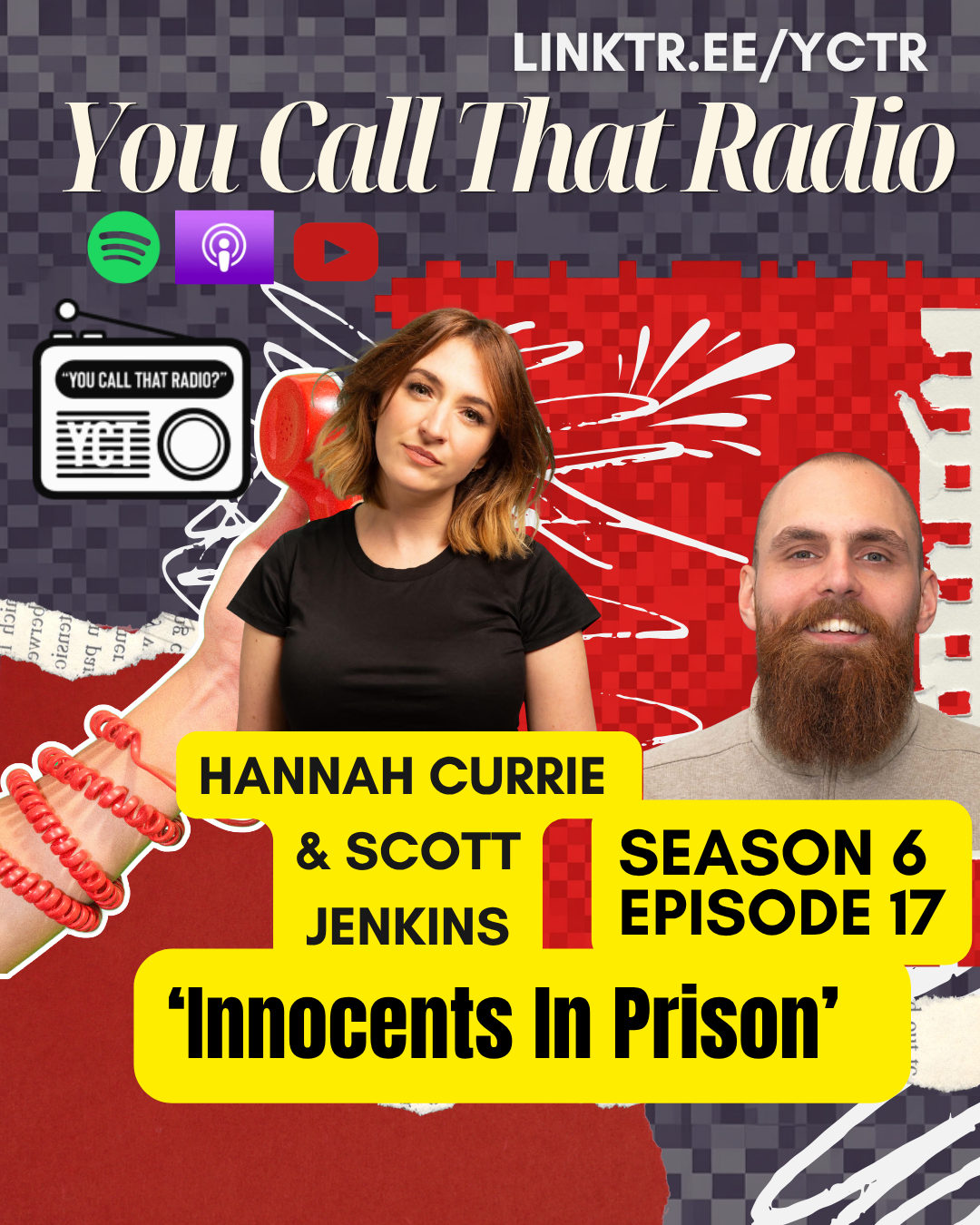
We speak to BAFTA award winning film-maker Hannah Currie and CEO of MOJO Scott Jenkins about their new film 'Innocent: Trial and Error' , a debut feature set in Glasgow to the backdrop of injustices of people being wrongly set up and/ or convicted. A tale of outrageous injustice committed on innocent people by the state, told through the ‘stranger than fiction’ stories of victims of miscarriages of justice. You Call That Radio is powered by our patreons here: http://patreon.com/YouCallThatRadio Thank you to Maco for mixing the audio nice and smooth. Support the film here: https://www.crowdfunder.co.uk/p/innocent-1 With exclusive access to the Miscarriage of Justice Organisation (MOJO), a unique victim support agency based in Glasgow, the film hands back power to those whose stories have been warped by a flawed system, and gives them the opportunity to re-tell their stories in the pursuit of truth. As our contributors recreate scenes from their past, the audience are invited to question truth as we play with the concept of reality: in doing so, we reveal how assumptions can be formed by a jury and how information can be manipulated. This film is part of a wider impact campaign to reform the justice system which results in innocent people staying guilty. Joining the call alongside Hannah will be Scott Jenkins, CEO of the Miscarriage of Justice Organization.
0:00Speaker AYou call that radio? 3, 2, 1. And we are live with BAFTA winning filmmaker Hannah Curry. Hello, Hannah.
0:13Speaker BHello, Mark, how are you?
0:15Speaker AI'm good, I'm good. And a CEO of Mojo Scotland, Scott Jenkins. And we are having a chat about hopefully a forthcoming piece of media. I don't know if it's going to be a film or a TV show, it could be anything. But at the moment it's called Got the working title, Innocent Trial and Error. So we're going to go in and talk about miscarriages of justice and some stuff like that. But before that, Hannah, do you want to just give us a wee introduction to yourself and sort of your background?
0:48Speaker BYeah. I'm Hannah, I'm a documentary filmmaker from Glasgow. I've been making documentaries for maybe five or six years, mostly for television, but I've done a short which was funded and won a lot of awards or was nominated for a few as well. And I'm really keen to get back to like cinematic documentary and independent film. I guess I'm less enamored with the way that broadcast is going to, going at the moment and I want with my first feature film to have the freedom to really tell the story that needs to be told. And then the idea would be that after it has its kind of cinema and festival run, hopefully it would be cut down for broadcast. So that's the idea with this film. And yeah, I'm ready to make this film. Like I'm a new mum now, my time is very precious so I'm really prioritizing getting this off the ground and getting it made. And it is going to be a difficult and long process because of the nature of the, the topic and the sensitivity of it and also the creative process of, you know, making something what like watchable and captivating and shocking, but also lovely and hopefully funny at times as well as a long process. But I believe this is a story that needs to be told and I've known that for a few years, since I first met Scott at the Miscarriage of Justice Organization and some of their clients. So I feel that, you know, in the absence of anybody else telling this story, I would like to tell it and I have my own reasons why I would like to tell it. But yeah, first and foremost it's a really, it could happen to anyone. It's a really human story and there's, there's really lovely people at the centre of it who should be living the lives that they were supposed to live, but instead have been living under the shadow of this conviction that wasn't even supposed to be theirs.
2:59Speaker AIt's absolutely terrifying the thought of being accused of something you didn't do. Obviously Scott, you're going to hear about this stuff all the time with Moja Scotland who I'm very familiar with from a lot of great work you've done and Alabama three after parties as well always stand out as as big nights. So how did you get involved Scott and what kind of attracted you to Mojo?
3:25Speaker CSo I went right from high school to do my undergrad LLB in Scott's Law. The plan at that stage at 17 was to work hard and go into practice. It was always criminal law that interested me and the plan was to go and qualify as a solicitor and try and make loads of money and hopefully get to the bar and the journey trying to get there. I joined Strathclyde Dinosis Project at the University of Strathclyde Law Clinic and kind of first few months my studies and really sort of caught a pit between my teeth and done nothing else ever since. Worked my way up through that student run Innocence Project being the project coordinator which led me to our partner organization, the Miscarriage of Justice Organization. Joined as a legal casework volunteer at 18 years old and then never left at the point of graduating having been kind of disillusioned with the legal profession and at that point having only really worked in services where the principal goal was to help people and provide access to justice. Realizing that that isn't the goal when you get into practice and issues like keeping the lights on and being driven by money and status or whatever was was no longer of interest to me. So thankfully and gratefully I was offered the Aftercare project coordinator role as soon as I graduated. Role within the organization where the rewards are far less subtle and trying to achieve access to justice for our user groups where getting any kind of results few and far between I've been able to help people deal with consequences of wrongful conviction. They re enter an environment upon release the prison that they did no training for and they're not equipped to deal with by way of the damage done to them by their wrongful conviction. Worked really hard for that for five years and was offered the charity chief executive role in December 2024.
5:41Speaker ASo yeah so congratulations. Is that. Was that. Was that the role Kathy did before or.
5:47Speaker CYeah, Kathy was co project manager for a number of years and then when that role was no longer divided into she was. She was charity chief executive from. From about 2019 to 2024. So yeah huge shoes to Phil and and Kathy as We touched on before we started. Yeah. Irreplaceable person to. To have about the organization. Uh, so, yeah, Kathy's brilliant.
6:15Speaker AI did see. I did see her briefly.
6:16Speaker BThe.
6:17Speaker AThe bun supper night. The friction bun supper night. And she. She was looking good for retirement. So shout out to Kathy. Well, well earned. She. She worked really hard. So. Yeah, so how. So you sort of touched on it briefly. Hannah, how did you. So how did you get the mojo? I know that you're saying it was something that you wanted to keep to yourself. Why. Why it's important to you, but is there a how. How do you first come across mojo? And how do you. You feel like you want to document this?
6:46Speaker BSomebody reached out to me. Like, it might have even been like three years ago, maybe two and a half. My concept of time is just so warped. They reached out to me and they said that they had a friend who did 15 years for a murder that they didn't do and would I speak to him. And I sort of started reading up on that and I kind of read, you know, what the newspaper said about that person, the tabloid, newspaper papers, and they were very, very harsh. Like, you know, like, you. Like if I just read that about that person, I would be like, no way that I want to do a film about them. But then I sort of read some kind of like, legal review type papers on. On what had happened. And then I learned that I won't say who, but that another journalist was. Was. Had been looking into this case, but had had to drop it at the last minute. And so I knew there was a complexity there. So I was like, sure, I'll meet. I'll meet the guy. And I found. I'm. Found him to be like a really interesting guy, like, but. But not typical of. Of a victim of miscarriage of justice. And that like, I would say he's done amazingly since he got out of prison and rebuilding his life and helping other people and building a family life, you know, and in sort of like moving. Yeah, just. Yeah, just the way that he parented his kids, even with like, with such sort of gentleness, was like, you know, it was testament to me of the type of person that he. He was. And it wasn't what the tabloids were representing. So I think that definitely intrigues me at the time because. Yeah, I guess I started thinking about, like, well, one thing they said to me was like, you know, the thing about injustice is it's like this is like the. It's the best way to hurt somebody because, like, it's there's nothing that they can kind of like, they're just like, scrabbling around, they can't do anything about it. And especially at that level, when it's something like murder or serious sexual assault and it's making headlines in the newspaper and everyone thinks this about you, and then a court of law, you know, says that you are. That the majority of society are going to believe that about you. And. And I just was like, really kind of disturbed about that. And also this idea that while you were serving that prison sentence, somebody else who actually was guilty of the crime was. Was living, I suppose, again, that life that you should be living because everything is like, taken away from you and it's not just taken away for you for the time that you're in prison. And this is something Kenneth Scott's explained to me. It's like, if you are guilty of a crime and you do your prison sentence and you finish it, you can move on with your life because you, you, you broke the law, you did a sentence and now you can, you know, move. But if you didn't do it and that's. That mistake hasn't been corrected and you're living with the consequences of that conviction in terms of not being able to gain employment, you know, like. Yeah. Not having any idea how to sort of, like, work in society, having PTSD from prison, which means you don't want to leave, like, your bedroom all day. That just was, like, really was, to me, like, very troubling. That, like, that can happen.
10:02Speaker AYeah. I hadn't even. I was just. I hadn't even been thinking about the fact that there is a guilty person still walking around. And Scott, when you, obviously, you've been dealing with people who have been wrongly convicted and then it's been overturned, I don't know if I'm using the right. Sorry, any legal jargon. Feel free to connect me at any point. How rare is it for somebody to get overturned even if after they've done the sentence in that case, do they find the person? There's a. Technology DNA is. Anything changes. So the person who got away with it for get. Get brought to justice.
10:46Speaker CYeah, that's one of the kind of principal issues that Hannah and I together are trying to highlight when we're looking to showcase the plight of the clients and the, and the working mojo is. That's the kind of principal issue affecting the. The clients that have been convicted most recently. We were founded in 2001 by Paddy Hill of the Birmingham Six, who had made a pledge to campaign for. For Those who left banks and, and
11:13Speaker Afor, for people that don't know a Paddy Hill legend because you just got explained briefly the Birmingham Six story for people that might not be aware.