
You Call That Radio? · Mark McG
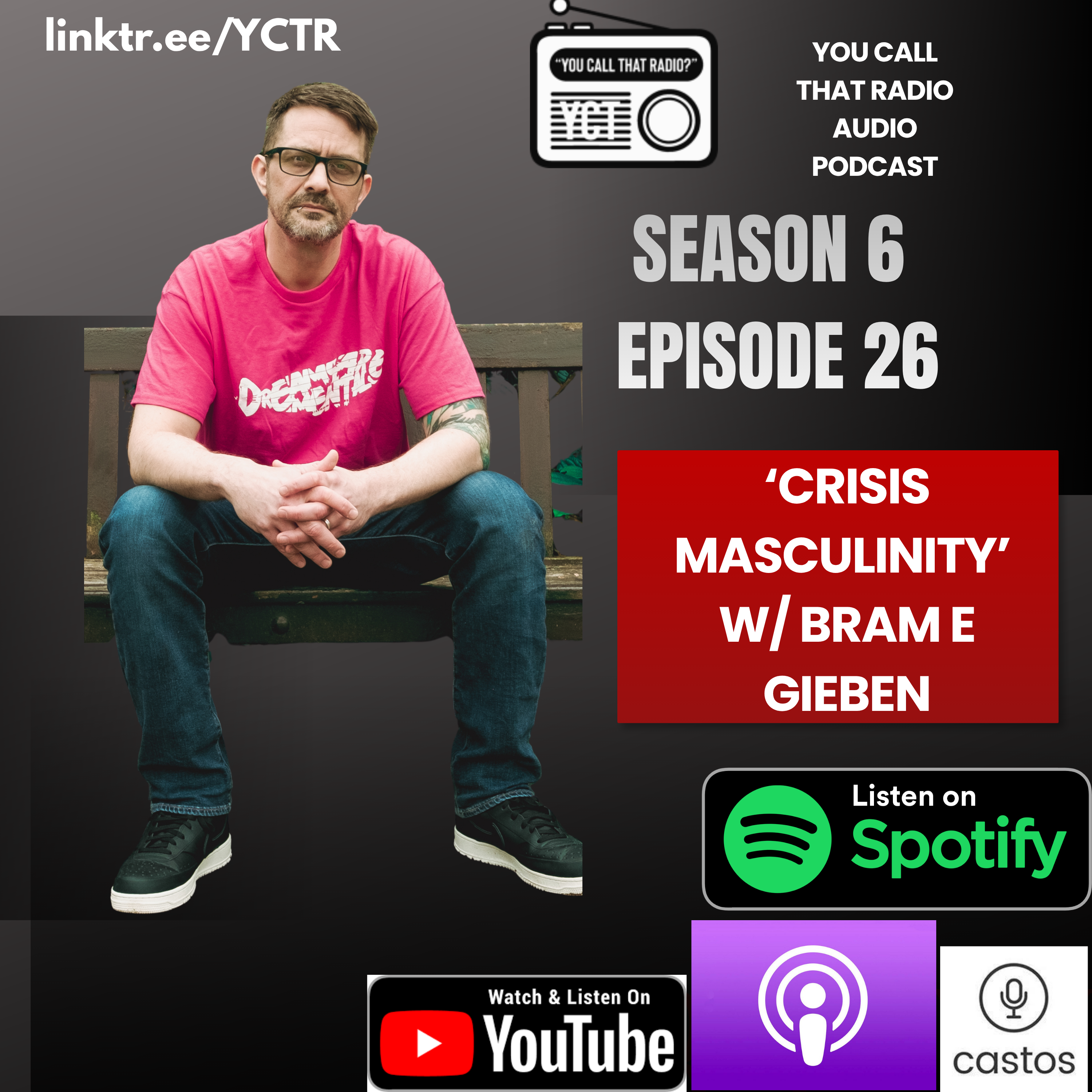
We are joined by Bram E Gieben aka T3xtur3 to discuss his new book about male identity under capitalism , his career as a writer , musician and poet plus his upcoming fringe show 'Performative Male' with Darren McGarvey on August 8th . Bram E. Gieben is the author of the nonfiction book The Darkest Timeline (Revol Press, 2024). A writer and performer, he was the 2015 Scottish Slam Poetry champion. He is the host of the philosophically curious podcast Strange Exiles, and has devised performances for the Edinburgh Fringe and Book Festivals, Hidden Door, Verve Festival Birmingham, and the World Slam Championships in Paris. His writing has been published by Red Squirrel, Timid Pirate, Neu Reekie, The Quietus, io9, Bella Caledonia, Mishka NYC, Glasgow Review of Books and other places. He releases music under the name Texture on labels including Black Lantern, This Is Not Pop and Darkfloor Sound. This show only exists thanks to the support of our patreons at http://patreon.com/YouCallThatRadio and you can pre-order Bram's new book here: https://bramegieben.bigcartel.com/product/crisismasculinity Crisis Masculinity explores how male identities are shaped, influenced and expressed under late-stage capitalism. Analysing films, literature, theory and society at large, Bram E. Gieben offers an incendiary, insightful and often deeply personal account of how it feels to be a man, and what is to be done about the so-called crisis of masculinity. Drawing on feminist, Marxist and heterodox analysis of male identity, misogyny and toxic masculinity, he offers a hopeful prescription for young men — that navigating crisis after crisis is what we do best… and we can always do better.
0:01Speaker AZero sum games in a hall of our future. Fight to the death. Fight to the last breath. Fight to the second. You're the last one left. Non zero open that tightly Last gasp of a dream well, it might be Stay present. Stay in that breath don't let go. We're the last ones left.
0:19Speaker BWelcome to. You call that radio. It's an honor to welcome Bram E. Gibbon on the show who, who you have probably some of you have done the show before or you will know as the author, poetry slam champion, host of the Strange Exiles podcast, which is excellent as well. And also. And the artist that we just had a snippet of there, which is your alter ego texture. Thank you for coming back on the show, Bram. You have a new book and in fact I think you've got physically got it in your hand.
0:57Speaker CIt's such a pleasure to be back, man. I really enjoyed the interview we did about my first book, the Darkest Timeline. And we had like the Wheel of Dystopia.
1:04Speaker BThe Wheel of Dystopia.
1:04Speaker CI was wondering if you were gonna whip out a Wheel of Misogyny today.
1:08Speaker BBut I mean, I don't even. I think that was off. Off the cuff. And I'll be honest, I'm not, I'm not 100% super prepared because I was trying to catch up with all the. The. I think it was 11 essays you did in Substack that you also. It was. Thankfully it was also some. There was. I was listening to the. The Chill Guy one on about adolescence and stuff on the audio version on Substack. So that was quite good because I was just. I was getting that again. I got my hair done because it's my birthday.
1:36Speaker CNice. Happy birthday, man.
1:38Speaker BYeah, I thought it was tomorrow. That's why I asked you to come on the show tonight. But what could be better than spending your birthday drinking tea and talking about toxic masculinity?
1:53Speaker CYeah.
1:54Speaker BAlthough we don't like that word we like. Tell us your book. Sorry? Tell us your book.
1:59Speaker CNo problem. So, yeah, I do have a single copy of it just now. I'm going through the stages of getting it proofed and, and sent out, but it's. It's very soon going to be available for pre order. So.
2:10Speaker BYeah.
2:10Speaker CWhat's the book about? I mean it's. It's quite a personal book. There's a lot of stuff that's about sort of experiences that I've gone through growing up and trying to figure out who I am and what my place is in the world. It's also Kind of sort of connects back to what I used to do at the Skinny in terms of being quite a lot of essays about film and culture, a little bit about music. So, yeah, it's. It's. It's a. It's as is. As is my custom. It's a weird mix of sort of theory and criticism and personal stuff all mixed up together. But the basic thesis, I would say is. Is. Is that masculinity itself is a form of crisis. This is maybe something that we can unpack a bit. I think growing up as a man, there are various forces at play on you that try to shape your identity. And as a result, you're always facing some sort of crisis or issue or problem that you're trying to resolve. So the book is an attempt to sort of lean into that and think about how we could turn that into a positive formation, rather than it being the formation of toxic masculinity, where that pressure sort of buckles you and you become one kind of misogynist or another.
3:20Speaker BAnd was. Where does the term crisis masculinity come in? Is that a deliberate attempt to move away from the phrase toxic masculinity, which obviously everyone recognizes?
3:31Speaker CYeah, I think, you know, like, language is so important here, isn't it? And. And when you say our toxic masculinity, it's like a big box which you can chuck any kind of behavior that you see out there in the real world into, and then you can kind of write it off. You don't have to think about it anymore. You know, these terms are really important. I think the same is true of positive masculinity. You know, while we would all probably like to build a more positive form of masculinity. And while aspects of masculinity are indisputably toxic, if you frame the opposite of toxic masculinity as positive masculinity, you're kind of putting everything else that isn't what you've modeled as positive masculinity into the toxic box. So I think those terms are a little bit problematic in terms of the boxes and the walls that they put up around, you know, different discussions of this. So I think, you know, people talk about, is masculinity in crisis? That's always the question. Is there a crisis of masculinity? Are young men in crisis? I would say that the very experience of being a man is itself a series of crises that you kind of try and navigate as you grow up, the different pressures on you. And obviously the same is true for women as well, you know, there's different pressures on women to form their own identities, some of them, you know, with dire consequences if you fail to measure up. But feminism has been very, very good at talking about those issues, addressing those issues, unpacking them, thinking about places to meet or organize or discuss these aspects of the challenges that women face in the world. Men really have never had something similar, you know, like a culture of theory or discussion or, you know, ways of speaking about masculinity or spaces where men can kind of explore these things. So these are all questions I kind of wanted to explore a little bit in these essays.