
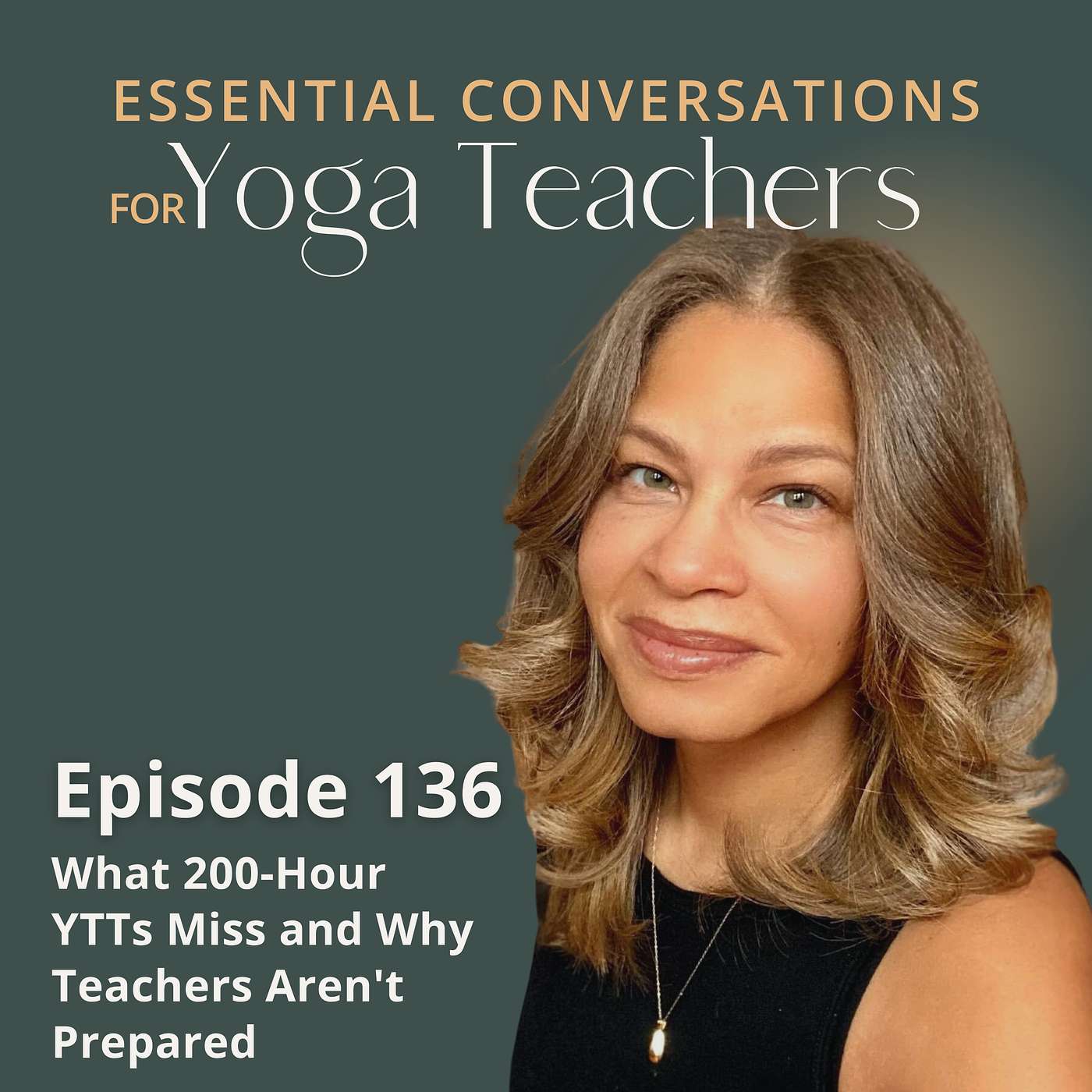
Yoga Teacher Tips: Essential Conversations for Yoga Teachers · Monica Bright, Yoga Teacher Trainer
Most yoga teachers graduate from their 200-hour training with a solid foundation in philosophy, history, sequencing, and anatomy, and almost no preparation for the injured, painful, complex students who are in their classes every day. This episode examines the specific gaps in how teacher trainings currently approach injury education, what those gaps cost teachers, and three foundational changes that would make a meaningful difference without requiring yoga teacher trainings to overhaul their entire curriculum. I'll cover the following problems that need to be addressed: The Way Anatomy Is Taught Why Current Practice Teaching Doesn't Prepare Teachers The Amount Of Classes Trainees Take & What Happens In Those Classes Why Props and Modifications Aren't Always The Solution Three Things Trainings Could Do Differently How Continuing Education Helps Book a Strategy Call Monica facilitates anatomy trainings for yoga teachers and mentors teachers who want to build a practice grounded in real anatomical understanding. Book a strategy call to talk about what deeper anatomy education could look like for you. Click HERE to send me a text & let me know your thoughts on this episode! Support the show Let's connect: Check out my website: Enhanced Body Connect with me on Instagram & Threads @monicacbright Wanna work together? Book a Discovery Call YouTube: Yoga with Monica Bright Join my Newsletter for teachers below! Want me to discuss a topic? Click HERE to submit it! Become a supporter of the Essential Conversations for Yoga Teachers Podcast! Starting at $3/ month.
3:59MonicaWelcome back to the podcast.
4:00MonicaI'm Monica, and I'm so glad you're here.
4:03MonicaHere is where we talk about the anatomy, the injuries, the nervous system insights, and answer many of the real-life questions you wish had been included in your yoga teacher training.
4:15MonicaIf you are new here, I'm a yoga teacher who specializes in helping teachers work confidently with students who have pain and injuries.
4:22MonicaI facilitate anatomy trainings for yoga teachers, and I mentor teachers inside my six-month mentorship.
4:29MonicaAnd I wanna be very clear about something before we get into this episode.
4:34MonicaI am not here to criticize teacher trainings across the board.
4:40MonicaThere are excellent YTT programs, and there are teachers who graduate with a strong foundation to build upon.
4:48MonicaBut what happens when you graduate from your training, you go to teach your classes with real students, not the trainees you've been practicing on, and one of them, one of those students, mentions that they have a shoulder injury or a herniated disc or chronic hip pain, and in those moments, you realize that everything you just spent months learning has not actually prepared you for these specific moments.
5:18MonicaWe have to be honest and admit that there is a significant gap in how most 200-hour programs prepare teachers to work with injured students and students with pain, and honestly, these students deserve for us as teachers to get more educated.
5:36MonicaBefore I talk about what is missing, I do want to acknowledge what trainings do cover because it matters in this conversation.
5:45MonicaMost 200-hour programs teach philosophy and history.
5:49MonicaThey cover sequencing, at least at a foundational level.
5:53MonicaThey introduce pranayama and meditation.
5:56MonicaThey cover the Sanskrit names of poses and some level of anatomy.
More Yoga Teacher Tips: Essential Conversations for Yoga Teachers episodes →