
Wise Divine Women Podcast: Menopause • Libido • Breast Care • Oh MY! The unfiltered truth for Women · Dana Irvine FDNP - Menopause Support • Functional Nutrition • Thermography
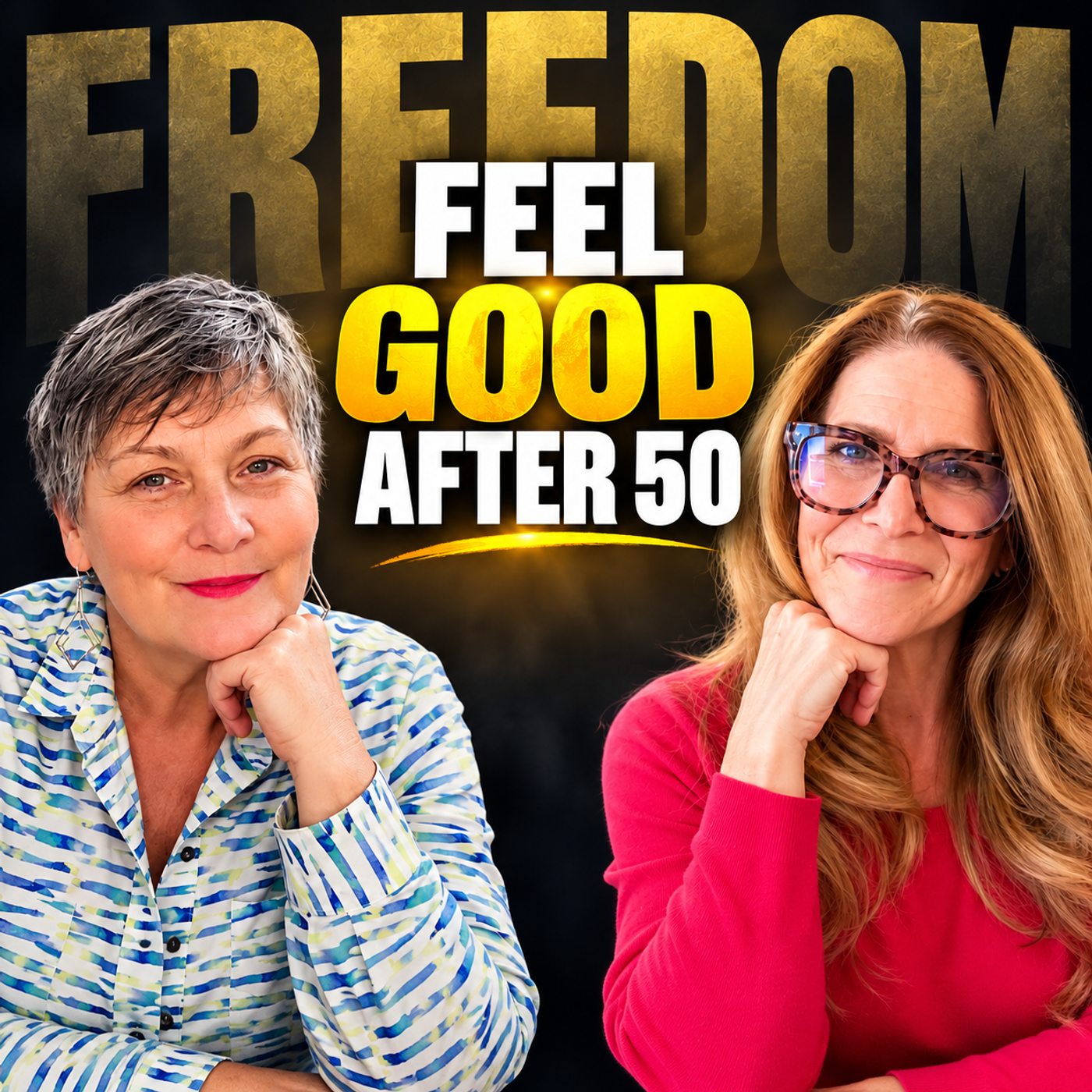
Dana Irvine sits down with health coach Jill Gordon to talk about women’s health after 50, why food sensitivities can drive symptoms that get mislabeled as “just aging,” and how mindset changes the way the body responds to healing. Jill also shares the story behind her book and her practical framework for making health feel simpler and more doable. We discuss how Jill’s work with women over 50 grew out of her daughter’s Crohn’s disease journey, why real food often creates dramatic changes fast, and how stress can block digestion and recovery even when diet is solid. The conversation also covers her FREEDOM framework, NLP, and the importance of choosing curiosity over panic when symptoms show up. Key topics Jill shares why she wrote You’re Over 50, Not Effing Dead after helping more than a thousand women and wanting to reach more people with her approach. In this episode: the origin of her health coaching journey, which began with her daughter’s Crohn’s diagnosis and a shift toward real food and holistic care. Jill explains how a week of real food changed her daughter’s health and how four months later she was off medication. We discuss NLP, how language shapes behavior, and why the body responds to the messages you repeatedly send it. Jill breaks down her FREEDOM framework as a simple health guide for women over 50:Find what you want Rest, relax, release Eat real food Engage in community Dig deep Own it Mindset. Timestamps 00:00 - Dana introduces Jill Gordon and her mission for women over 50 00:56 - Why Jill wrote a book to help more women at scale 02:34 - The Crohn’s disease crisis that started Jill’s food and health journey 03:30 - A real-food reset that changed Jill’s daughter’s health in one week 05:03 - Why symptom panic makes healing more complicated than it needs to be 05:33 - Eliminating inflammatory foods and discovering hidden triggers like corn 06:32 - Get curious instead of assuming symptoms are random 07:05 - Challenging the idea that symptoms are just “old age” 07:31 - Why this life stage needs a different approach to stress and recovery 08:15 - Corn, wheat, carrageenan, and other hidden inflammatory ingredients 09:47 - Why Jill’s book uses a guidebook style instead of a complicated rulebook 10:40 - Why community support is part of real healing 11:09 - Mold toxicity, brain fog, and digging for root causes 11:39 - The “own it” part of taking action in small daily steps 12:38 - How the FREEDOM framework helps rewire habits and thinking 13:45 - Menopause as a new chapter, not a dead end 15:37 - Why doing everything at once usually fails 16:07 - Test, don’t guess, but start with simple food experiments first 17:02 - A family example of congestion improving after air quality changes 18:35 - Why reintroducing trigger foods often brings symptoms back 19:34 - Why lactase does not make dairy safe for everyone 20:25 - Jill’s daughter and the long-term reality of gluten and dairy sensitivity 23:40 - Why wheat in Europe can feel different...
Dana Irvine: So as we were talking about in, in trying to recognize or help women recognize the fulfillment of things and removing or eliminating some simple foods can be really effective even over drugs and over supplementation. It's understanding those food sensitivities and or the body's responses to things. And that's what your, like your reboot is about. Welcome back to the wise divine women podcast where we help you go from fed up to faith fueled, helping you to become the wise divine women that you've been called to be. Today I have my friend Jill Gordon and it's a health coach, Jill. I can't remember, but it's Jill, the health coach. And I think it's just been amazing. And I've been coaxing her into coming on and get going cause she's just ⁓ finished a book and she offers, I already know she offers so many great things to her. Jill: Mm-hmm. ⁓ yeah. Still the health coach. Yeah, I mean, well, I actually have another story about this one woman, and this was so interesting to me. ⁓ She ate pretty clean and everything. We're trying to figure it out. And she's Portuguese and she ate a lot of pork. And I was like, ⁓ you know, I don't know if you know this, but pigs don't have sweat glands. And a lot of times, you know, they hold a lot of toxins. You know, let's, how about we do an experiment and take away, know, portion. ⁓ my God, no way. There's no way it could be that. Dana Irvine: ⁓ Her audience and her people that she coaches for over many years. And today is the first day that we're going to Facebook live because why not? I love it. I love being on the edge of excitement always. So Jill, welcome to the show. Jill: Thank you so much for having me. Dana Irvine: Thank you. So what brought you on this journey and why, writing? Jill: but okay, I'll do it. and ⁓ so her symptom was she had terrible eczema all up and down her arms. I mean, it was so bad she wouldn't even wear short sleeve shirts. It was that bad. So she was desperate. And then once she took away the pork, it was completely resolved. So again, it's just experimenting. You know, you have to take my word for it. Try for yourself. And I've had just amazing, amazing results from people. ⁓ well, I've always wanted to write a book. I mean, always. And quite frankly, you know, I've been working with women over 50 for a while and it's just one of those, ⁓ feeling like I've been able to help over a thousand women so far. I'm like, you know, how can I get it to the masses and really help more people? So I decided to write my book. ⁓ you're over 50, not effing dead. And that way we can, you know, help more people and, ⁓ help. It's been amazing. So yeah, just the food itself, but, but then it's not just the food. was happening was, so I originally, ⁓ was doing this ruby reboot that I'm not currently doing right now. And, ⁓ although it was very successful, ⁓ but the, happened was people were getting results, but then some people wouldn't stick with it. And I'm like, ⁓ there's gotta be something going on. So then I added a mindset. you people just feel as good as they can because, you know, let's face it, with this stage of life, sometimes people are feeling a little insecure. I get that all the time. So I just want them to kind of reclaim their health or energy and confidence so that they can just feel good about themselves again. Dana Irvine: That's awesome. And it is so true in this stage of our lives. It is the age of wisdom and it's becoming great sages. So writing a book makes perfect sense because you're trying to share the wisdom that you've collected over many years and the experiences that you've gained with the different women that you've coached and probably men. But it always still drives back to the point that people sometimes still don't get it and they still reach out for one on one. It never connects to that. Jill: element component to the whole program. And I will tell you that made such a shift because so often if we're just not in the right state of mind to do these things, you know, it's just not going to happen. And especially the language that we use for ourselves and the stories we tell ourselves, you know, I'm just too old. This isn't going to work. Nothing works for me. But if we make these shifts, then, ⁓ you know, then things move forward. So I was Dana Irvine: personal one-on-one coaching, regardless of how much passion you put into a book. it's so, and it's, and you can't see everybody. So you have to sage it forward with all your wisdom and all your love and passion. So yeah, I get it. Yeah. So what type of coaching, what, what women do you coach? Like what is your philosophy with it? Jill: so into the mindset thing that then I started getting into neuro-linguistic programming. And I went through all these trainings and everything and I was just amazed at what I learned and just all the shifts that you can make. And if you're not familiar with neuro-linguistic programming or NLP, it's Well, women over 50. mean, it's funny, it's evolved. kind of always kind of coached women around my age, but I coach a lot of different people. And it all kind of started when I was helping my daughter through a health journey. She had a health crisis and she had Crohn's disease. And this was back in 2005. And that's when I learned the power of food. Neura, which is the mind, and that's how we experience our world. Linguistic is the language we use to give our experiences meaning. And then the programming are the patterns and the strategies we run in our mind to achieve goals or get results that we want. So basically, it's how we use the basic language of our mind to consistently achieve the results that we want in life. because all the doctors were, you know, the drug, drug, drug, drug, drug, and she was getting sicker and sicker and sicker. And basically, it wasn't until they said, okay, nothing's working, so let's start around chemotherapy drugs. The kids 12 years old by this point were like, okay, there's gotta be a better way. So we brought her to a holistic doctor and he said, did you ever consider it was the food that she was eating? And we were just like, well, it makes sense, but the doctors always said, no, there's never anything that proves that. You know, a true example is this Dana. So you've got, let's say you had, and there are studies on this, right? Two women, same cancer, same age, same prognosis, but very different results. So one woman was like panicked. ⁓ my God, I know people die of this. This is never gonna work. I'm so scared. Nothing's gonna work and blah, blah. The other woman on the other hand was like, hell no. Dana Irvine: You Jill: So we were like, but we were willing to try anything. And if I could tell you just one week, just one week, just real food, protein, vegetables, just real, real food. She was a different kid. if ⁓ four months later, she was off all of her drugs. And from that point on, it's just been one big healing journey and she's done amazing. Now she's 32 years old, completely independent, living on her own. I'm a grandmother, I'm gonna be there for my grandchildren and watch them grow up. I'm gonna do whatever I have to do. And we see this time and time again that the messages that we send to our mind, our body is listening and the body will make adjustments based on what we believe will happen. And ⁓ that's why I got so into ⁓ NLP and it's been very, very helpful for my clients. hasn't been on any medications in over decades and she's thriving and it just goes to show when you give the body a chance ⁓ it can heal itself. So and that's where my journey started about eating real food and just making that huge difference there. So yep, yep. So. Dana Irvine: you That's it. Jill: And obviously I put it in my book too, because it's just so helpful with so many of the techniques and everything. Dana Irvine: Yeah. Yeah. Yeah. So it's like affirmations 2.0, right? But it's this reprogramming of the mind because we know there's so much research out there that the emotional or the mindset can manifest disease in the body just as much as healing opportunities, right? You need to have those positive healing opportunities, but it works just the way you have to recognize that your emotions Jill: Yeah. Yes. Dana Irvine: It is. And it's always just, sometimes it is a simpler idea, right? It is just about kind of dumbing things down for ourselves so that we realize things can be basic and simple and it's the awareness and sort of intuitiveness of ourselves, how everything is connected, mind, body, nutrition and spirit. And just if those simple things are changed, Jill: Bye. Dana Irvine: or trauma or mindset can play a role in healing opportunities. So that's this whole mind-body connection. And it's imperative, imperative for everyone to understand that all the healing opportunities, not just in food, of course, and in movement and breath, but mind as well. And there's still symptoms that are lingering then of course medication makes perfect sense. Right. But when we're not taking care of ourselves and not being thoughtful and intuitive to ourselves, then that is where that, that sense of loss or chaos ensues. Right. Jill: 100%. And that's why I was so amazed at how the results catapulted. You they really started getting so much better. And, and also it made it easier because now when you're coming from the lens of using willpower and it's like, oh, this is so hard, but I'll do it because I have to, and it's going to struggle and blah, blah, blah. To now all of a sudden you're shifting your whole mindset and saying, Hmm, absolutely. And then, you know, and I find this a lot too, where it's like, then a lot of them, start to panic and it's like, well, what do I do? What do I do? And then they tend to make things so complicated. And it's like, well, well, well, let's hold on. Let's just take one step at a time and let's just start with basics. And the basics is eating real food. I mean, I cannot tell you the stories I have. And a lot are actually in my book about women who had migraines for years. Dana Irvine: and Jill: I am looking forward to being where I am and this is gonna be easy. And you're telling yourself over and over again, and guess what? It becomes a lot easier when you send your body these different messages. And I always say, know, when you are, it's when you're depending on willpower alone, it's stressful, right? And a big part of my book is ⁓ it's rest, relax, release. And that's about... They took out wheat, gone. I've had women who, ⁓ this one woman, it was really profound. She had terrible arthritis in her hips and she traveled across the country to all these different doctors and everything and nobody could help her. And she was just like ready to give up. She does my 14 day reboot, which is really just eliminating inflammatory foods. And she found out when she reintroduced some of the foods that it was corn. She loved corn chips. obviously calming down the nervous system. I that's what we need to do, right? Because when we're in a stressed state, what does our body do? It's all clenched up, but it's not just our physical body like that. It's everything in our body, right? Think about it, your colon tightens up. So are you going to digest food just as effectively? I don't think so. Are you going to get nutrients to your body the way they need to? I don't think so. Even if you eat the best diet in the world, if you are so stressed out, it's just not going to happen. Even less blood goes. And once she went off the corn chips, all of her symptoms were completely gone. And throughout the whole reboot, they were gone. And it was just an amazing realization. And she really couldn't wrap her head around it because she's like, was tens of thousands of dollars. I went to all these doctors and all it was was corn. Like, you kidding me? So it's the simple things that we just have to dig deep. It's just, you know, instead of panicking, you know, I always say, get curious. through your bodies and everything into your cells, nothing can happen effectively when you are in a stressed state. And that's why mindset is so integral to shift yourself into a more calm and relaxed state and a more positive state. And it just feels so much better. Just get curious and start thinking about what you can look at to dig deeper and then try to uncover what's going on. Because there's a reason for everything. There is a reason for everything. I hate when a lot of times some practitioners will say, well, sometimes things are just unexplainable. And I'm like, maybe because you haven't figured it out yet, but there's always a reason. There's a reason for everything. Dana Irvine: Right. There is. Yeah. Yeah, it's so true. I often joke with clients that it doesn't matter how much organic food you eat. You know, if you're, if you're coming to the table stressed out, it doesn't matter. Right. And it is this sort of trying to get them to recognize how their eating patterns are and how the rest cycle is and where does that stress and mindset play a huge role in it. Right. Yeah. Jill: Yes. Dana Irvine: Either or you're a woman or you're menopausal. just, just. Jill: You're just old and that's just old. And ⁓ my gosh, I get that so often. Like, well, you're just old and this is what happens when your body gets old. And I say, challenge that, challenge that. Cause I have a lot of women who feel better now in their 50s and 60s than they did in their 40s and 30s. So, and it's just by getting your body back to balance naturally. Dana Irvine: You're just old. Yeah. It's a lot. seems to be a lot, but when you have a really nice, decisive plan or a plan of action like NLP, it becomes easy to adopt as a practice. Right. Yeah. Jill: Yes, absolutely. And that's just one of the elements. ⁓ Like, for example, in my book, what I tried to do is make it easier, right? So what I was trying to do, make it more of like a guidebook and a handbook. And curiously enough, I've had a lot of my husband's friends who actually read it because they were supporting me during my big launch and everything. And they started reading it they're like, ⁓ my God, this is really useful stuff, like for everybody, right? Dana Irvine: Yeah, I totally agree. I totally agree. is that, that, you know, we don't have the, we do have stress and there's, and the stress changes, but it's not that raising children, high career, you know, mortgage, all this stuff that we have in our twenties, thirties and forties, but it's a different type. And when you're entering or moving into that retirement stage or this, you know, this beautiful journey that we want. Yeah, bye everybody. Jill: So I wanted it to become that type of a handbook, guidebook. So anyway, what I tried to do is make it simple by using a fun acronym because everything, you know, when I got older, everything was about freedom, right? I was like, I just want the freedom to feel good. I want the freedom to do this or that or whatever. Everything was about freedom. And I'm like, oh, I wonder if I can make that into a fun acronym. So I did. Dana Irvine: it can simplify, can, once we dummy things down and understand, you know, our sensitivities and our stressors better, I think in maturity we can respond better, right? Yeah. Jill: And that way, it just made things so much easier. So what does freedom stand for? Because it's never just the one thing, because the stress is huge, but that is just one element. So I find that one of the most important things that's really overlooked is the F, which is find what you want. We need to take a step back. Find what you want, not what you don't want, right? Don't find what you don't want because you're just going to go towards what you don't want. because your body only, your mind only listens to the actual words, not the negative. So if you say, want, I don't want to weigh 180 pounds, all your body or your mind hears is 180 pounds. So what you say is, do want to weigh 130 pounds. And everything is about what you want. And it's not just weight. I mean, it's everything, relationships and in career, everything. Define what you want. That is the first and foremost thing because women our age are busy. Right, we're so busy taking care of everybody else, we never take the time to take care of ourselves. And that's why I always say, okay, start with find what you want. And then the R in freedom is the rest, relax, release. This is all how to de-stress so your body can then do what it's supposed to do and in a nice relaxed state. And in a relaxed state, it's the only way it's really gonna do things really effectively. And then I move into... ⁓ E, the first E, which is eat real food. And we already talked about that, which is huge. And I get menus and all this stuff and things, know, reasons why you might want to avoid certain foods. Because sometimes, you know, we need a reason for all this stuff, right? Like, ⁓ my God, I didn't know that this does this or whatever. So anyway, it's about eat real food. And I always say, if it grows out of the ground, if it walks, if it swims, those are the foods that you want to eat. Dana Irvine: Yes. Jill: Not the stuff out of a box, because those are processed and your body just doesn't know what to do with that. So eat real food. And then the second one, and I know this is near and dear to your heart, Dana, is engage in community. And it's just so important. You know, we were not designed as human beings to live life alone. We just weren't. We were designed to get support and we need support and we actually thrive on support. And I talk about that a lot and the difference that it does make in everyone's lives. ⁓ And then the D in freedom is dig deep. And that's where we start to look at. I wonder if this food could be a sensitivity. I wonder if this crazy symptom that I've been having is driving me crazy, this terrible fatigue, Is it a side effect of the drugs I'm taking? Is maybe... I mean, I experienced mold toxicity and that destroyed me for a while. You know, I was so fatigued, so much brain fog, all these things, but I didn't know about it. And then I found out and then I did all the things that I had to do and I was like, I felt so much better. So there's so many things that you just, again, look at it from a lens of not panic, but curiosity and digging deeper to figure out that yes, there is root cause to this stuff. And then the O in freedom is own it. And what I mean by that is, okay, now we've got all these things that you know you should do, time to own it and take action and how we take action. And it's just, because so many of us, right? And I'm guilty too. We all are of, we know what to do, but then we're not doing it. So what I try to do is make it in bite-sized chunks. You know, you don't have to do everything and you shouldn't do everything. Dana Irvine: Mm-hmm. Jill: just do at least one thing every single day, but keep it consistent in terms of doing at least one thing every day. So taking that action. And then the sandwich that, you know, just kind of closes out the freedom, the ⁓ is of course the mindset. And that's how we make taking action easier. So, you know, we just give different meanings to the words that we tell ourselves or the things that we believe in. We just give them different meanings and it just... to rewire those little things are not so little and it's a fact and it just helps you get so much further. So yeah, so that's the freedom system in a nutshell. Dana Irvine: I love it. love it. Yeah. It's nice to have the acronyms because it makes it easier for us to remember a day to day. And I love how you've broken them down in order of importance because it's the actions, right? It's the identification and then it's the rewiring of the nervous system. Right. And so you just can't, yes, you can do one before the other, but if you're still eating the Snickers bar, right? Not going to work, but Jill: Yeah. Dana Irvine: And it doesn't even have to be Snickers bar. can be the beautiful sourdough bread, it's hidden. Yeah. Hidden in that. It's sourdough. It's pre-fermented. Oh my goodness. But yeah, I think that's amazing. And I absolutely love the title. Like it's like enough is enough. Like stop it. Stop saying you're 50. This is the whole next journey of your life. Like pull it together, girl. We got this. Right? Yeah. Jill: Yes, but having loaves at a time. Yeah, yeah, yeah. it is. And it's true because we can, you know, and that's the whole thing. It's giving hope. It's giving, you know, just it's just a new chapter. I mean, when you think about it, we all went through puberty. I mean, was that like a bigger time in our lives? I mean, come on, all of a sudden we've got boobs, we've got hair where we never did before. And all of sudden we're feeling these different things and we're getting, you know, some, you know, attention from maybe the other sex or whatever it is. And it's like, Dana Irvine: you Jill: All these different things are happening and we adjusted and we evolved because that's what we do. So right now, even though, yeah, your hormones are acting up and maybe you're having the same diet that you've always had for the last 10 years and all of a sudden the scale is creeping up. Well, guess what? Look through it with a new lens and again, out of, okay, maybe certain things are shifting and now let's just address them. Dana Irvine: Yeah. Yeah, I know. it's funny, it's just sitting here like, I don't even remember what it was like as a teenager. just getting in a lot of trouble, but it's so true, right? It's that first hormone leap that we have to take and then pregnancy, second hormone leap that we have to take. And then, you know, is it postpartum? Is it just hormonal recovery? Is it just lack of sleep, sleep deprivation? They all look the same. Jill: Yeah. Yes! Dana Irvine: And then now as in menopause, that final journey, it's again, the last loop where all those things come back into play. You know, like maybe we're not growing hair, but we're losing hair. Maybe it's fatigue, maybe it's memory, maybe it's hormone adjustment. All these things come flooding back, but it's again, looking at it through the different lens to identify those healing opportunities when you break it down into simple steps like you've done. Right. Jill: Mm-hmm. Yeah. Yeah. And that's the goal. Cause listen, that's one of the biggest mistake that women our age is like, we'll do because they, they, they overcomplicate things. Right. And like I said before, you know, it's just, okay, let's do everything all at once. And then after three days, like, can't do this. No, let's start with the basics, slow and steady and start with the basics. And, know, start with the easy stuff. That's why I always say, start with the easy stuff. The easy stuff is food because Dana Irvine: Can't do it. Yeah. Slow and steady. Yep. Yeah. Yeah. Jill: You know, I know there's like a ton of labs that you can do and I am a big believer in test, don't gas. I'm also a believer in let's do the simple stuff first. You know, what if it is wheat all along? You know, and that's so easy. You just eliminate it for a week and all of a sudden you're just like this huge difference that you have in your life and all, you know, all these other foods, just try and you know, don't take my word for it. You see, and everybody's different. Everybody's... Dana Irvine: Right. Jill: body is different, they respond differently, and everyone's environment's quite different. ⁓ Listen, I have like story with my mom. I actually think I share in the book about how she was congested. And to be honest, I was just, I was getting a new air purifier and I'm like, you know what, I think it's a good idea if you get a new air purifier or get ⁓ an air purifier. So put this air purifier in a bedroom living room where she spends a lot of time. And if I could tell you, we noticed that two weeks after they have an air purifier, she's no longer congested. And when you think about it, I was like, okay, so my mom's in a situation, she's in a, it's independent living, but she's in a unit and it's just within one building. She doesn't really go outside a lot. So we're talking recirculated air that she's breathing all the time and God knows what's in it. So it needs to be cleaned. So, and that was her room. Dana Irvine: Hmm. Jill: root cause. So it was just so interesting and it's constant. You find these things that maybe are unexpected. Dana Irvine: Right? No, it can be as simple as that. And if it doesn't work, then of course, then there's further investigation. Like you said, with starting with something as simple as the elimination diet costs a heck of a lot less than jumping into a food sensitivity testing, right? When you haven't put out the fire of the body, right? And you'll have a million things you'll be sensitive to when you haven't stopped, calm the body down. Jill: Mm-hmm. Mm-hmm, mm-hmm. Right. Dana Irvine: kind of reprogrammed it a little and things then continue, then it makes perfect sense. Then do your food-sensitive testing. Let's look at the true picture, right? But sometimes it is just as easy as either removing milk, removing wheat. We do question corn quite a bit, right? And then it's again nightshades. So there's all these different things that we know can be sensitive to people, right? And people who can respond poorly to the digesting those foods. And... then at least if we simple it down and then we'll understand as practitioners or even as the woman you're trying to encourage her to understand deeper is, is the response a certain food group? Is it this? Is it that? And then if they feel fantastic, then you you begged them not to go back to wheat. It's very hard, very hard. Jill: Right. Well, that's happened so often, right? I'm sure you experienced that as well, where I feel great. So now I can go back and it's like, no, don't do that. Dana Irvine: No, don't do it. Yeah. I think milk's like that. It's the cheese and we're such a ⁓ cheese society and there's something very exotic about it as well and luxurious. So it's hard to get out of it when you're having these responses. So not testing if you have a true allergy to milk or not, right, is difficult sometimes because it's you remove it. Okay, great. And then you want to add some back in. So you take a digestive enzyme. Jill: we are. Bye. Dana Irvine: And then you still eat it, but then you're ending up with arthritis and stiff joints and all these different things. So then you're like, would have been better just not taking it at all, even though you're taking, you know, the lactase to break it down better in the digestive system, but the body just hates it. And now you're getting all these new symptoms again. Right. So it's, yeah, there's a. Yeah. Jill: get that all the time. ⁓ I just take my little lactate pill and I'm good to go. And it's like, no, your body every time you have it, you're inflaming and inflaming and inflaming and it's going to come up in different symptoms that just like you said, you can't even think would be related. But that's what it is. And especially if you know you're sensitive, guess what? You're sensitive to this. So your body is telling you screaming at you, it doesn't want it in your body. Dana Irvine: Right. Right. My daughter's the same. a lot of this health journey, again, was trying to answer questions for her. so she, know, gluten for her would cause her feet to burn or stiff joints and cracking joints and then milk, dairy products would, she would have loose stool, crazy. And so, you know, we remove them or we get the gluten free products or the dairy free or lactose free things, but it's still there. Jill: of out. Dana Irvine: Right? That reactiveness is still there. She supports herself with digestive enzymes and probiotics, but now she has a cauliflower allergy. Like her tongue goes numb. So it's just like, okay, someday we are going to have to investigate this much further. You've got to look at your gut. Right? So yeah. Jill: I was just going to say, you know, sometimes it's already done the damage. So you have to start repairing and just, you know, and it doesn't have to be for such a long time. I mean, I will tell you, my daughter was 12 when we put her on, you know, this type of a diet. And I don't even like to say restrictive. It's just, it was, it was just clean. It was just such a clean, you know, diet. And here's the thing. She was able to heal. So she was able to introduce a lot of things back. Now she did find out though that wheat, gluten, absolutely not. She will never have that. And that's an easy one, quite frankly. But what was happening was when she would have cheese, ⁓ she would gain a lot of weight. And she knew that, and it wasn't like she felt terrible, but she always gained a lot of weight when she had, and she cut it out, boom, just gone. It just came off like nothing. And so now she just chooses, nope, no more cheese. And you know. and always is no wheat. And that's an easy one with, you know, the way it is. It really. Dana Irvine: Nowadays, because of celiac, everything has to be identified. So it's not hidden as much as it used to be. And a lot of manufacturers have had to ⁓ find or use different fillers or things like that instead of wheat, like even in shampoo, right? In conditioner, wheat can be found as well. So it's a difficult situation for a lot of people. And I love how, as we're both talking about dieting, to a lot of women 50 plus who have done Atkins and done fasting and done, you know. whole bunch of different diets. It's just not so many things. If you start listing them out, the things that we've done to ourselves, I know it's crazy, but even the word diet has a negative connotation or a negative response emotionally in the body as well. It is a very restrictive word. And if you've been down that road, it creates that little response of stress. And even in Jill: ⁓ and I've done a zillion of them. Dana Irvine: that NLP, it is sort of even reframing that word and language for ourselves as lifestyle and journey and healing and those types of things when it comes to the new look at food, right? We have to change our mindset and change our thought process that this is not restrictive. This is glorifying, right? Jill: Yes. Absolutely. couldn't agree more. I will also say just with things like wheat, you know, I've had clients, And total wheat sensitivity, can't have any wheat over here. They go to Europe though, and they're fine. And so it's the chemicals that are put on the wheat, not really the wheat itself. you know, glyphosate is just such a huge toxin. And guess what? It's illegal in Europe. Dana Irvine: Yeah. Jill: They don't, because they actually care about their citizens, but it's actually illegal because it's toxic. And that's the big thing. And that's why also people are having more and more corn sensitivities because glyphosate is also sprayed on corn. So it's all these toxins that so many people aren't aware of that are infiltrating our food. So you got wheat, corn, soy are the biggest ⁓ food. First of all, they're used in every processed food. Dana Irvine: like this. user. Jill: and every oil and all that, they're all broken down and everything, but all processed food uses them. So your body is under this constant assault if you eat packaged foods using those ingredients. Dana Irvine: Mm-hmm. Yeah, it's so true. It's so true. And I know that, you know, here in Canada and the United States and other people are actively, ⁓ campaigning to remove that. And then it's going to be a long process because it does stay around. It is in the water and the different plants have been modified to survive through the spraying of it. Right. So it is the breaking down of that membrane so that different plants can of course die when you're, that's why they use it. So it's breaking down cell membrane and the glycosates then in your own body break down that membrane. So it's just a ⁓ very vicious cycle that we get ourselves into when we're not making sure that it's non-GMO or that we're trying to eat organic and even organic food still has that cross contamination with drifting. So it is a difficult situation, but we have to take the steps for the healing of the body. Jill: Absolutely. Dana Irvine: so that our body is resilient and strong. And I often wonder sometimes when people do travel, the stress is gone too, right? They're sitting in, looking over Spain, right? Or they're in the streets of Italy. I think their stress is a little different as well. So they're in that more parasympathetic activity and digestion as well. So double, double, double bonus there. Jill: Hmm. Yes, Yep. Absolutely. But yeah, it's it's awareness. You you have to be aware of what's going on with our food and what's going on in our environment. And then when you're aware, it's like, okay, don't react to it. Sometimes there's certain things we can change and, you know, do that. But what we can change is we can always change our reaction. Dana Irvine: Yeah. Yeah. Jill: to all of that stuff. So that's what we have control over. And that's again, coming back to the mindset, why it is so integral, because that is the one thing that you always have. You can choose to respond in a more positive way, or you can choose to respond in a panicked way, ⁓ but it's up to you. And yeah, yeah. Dana Irvine: Right. Right, right. think that's beautiful. Thank you so much. So final question. What is a word of wisdom that you find yourself holding true to or that you share often? Jill: Well, it's funny because even though you would think it might be freedom, I just use the word now choose because I think that that is more impactful because you have the choice. You can choose how to react to something. You can choose to take action. You can choose to dig deeper. You can choose how your health journey is going to go. And that's I just believe so firmly that this is what this Everything is about, that's what my book is about. It's your choice, what you choose to do will impact how you live your life and how the rest of your life is going to be and how it plays out. So that's my choose. Thank you. So I'm at jillthehealthcoach.com and you can get my book, looks like this. You're over 50, not f-ing dead. And you can go to Dana Irvine: it. Very good. I love it Jill. Thank you so much. Where can people find you? Awesome. Jill: not effing dead book.com and you can snag your own copy. And I even have it ⁓ and I'm working on the audio which I don't have yet working on that. But obviously it's on Kindle. So grab your copy. Although I have been told by a lot of women that got it on Kindle ended up buying the book because they're like, I keep referring back to stuff. So I want to have that hard copy cover rather. Yeah. Yeah. Dana Irvine: hard. Yeah. Well, it sounds like you need a workbook. Jill: Well, I do actually, have journals too. have like a gratitude journal that goes along with it and all this fun stuff. So yeah, yeah. Dana Irvine: Yeah, beautiful. I love it. I love it. It's really nice when women feel encouraged to make notes and highlight and, you know, put the tags in there to remember where things are and always refer back to things that that really means that it is a very helpful and ⁓ noteworthy book, right? When they, they're I can't do the, I can't do audio. gotta have, I gotta write notes. So that's for sure. Thank you so much, Jill. I thank you so much for, you know, Jill: Mm-hmm. Mm-hmm. Dana Irvine: stepping out of your comfort zone and coming on because you know have to really encourage and share your wisdom for all the women and men of the world and this is the great place to do it. So I just pray that you have incredible success as you always do but incredible success with this book and being able to have more impact worldwide to the men and women that you're trying to reach. So I thank you so much for joining us. Jill: Thank you. Yes, thank you and that is my goal. So thank you so much for having me, Dana. It's been such a Dana Irvine: Thank you. Thank you. So everything about Jill will be in the show notes where you can find all of her information, where you can get one-on-one coaching as well. Thank you so much for being part of the show and I hope this has helped you go from fed up to faith fueled, helping you to become the wise divine women that you've been called to be. Thanks for joining us.