
Wise Divine Women Podcast: Menopause • Libido • Breast Care • Oh MY! The unfiltered truth for Women · Dana Irvine FDNP - Menopause Support • Functional Nutrition • Thermography
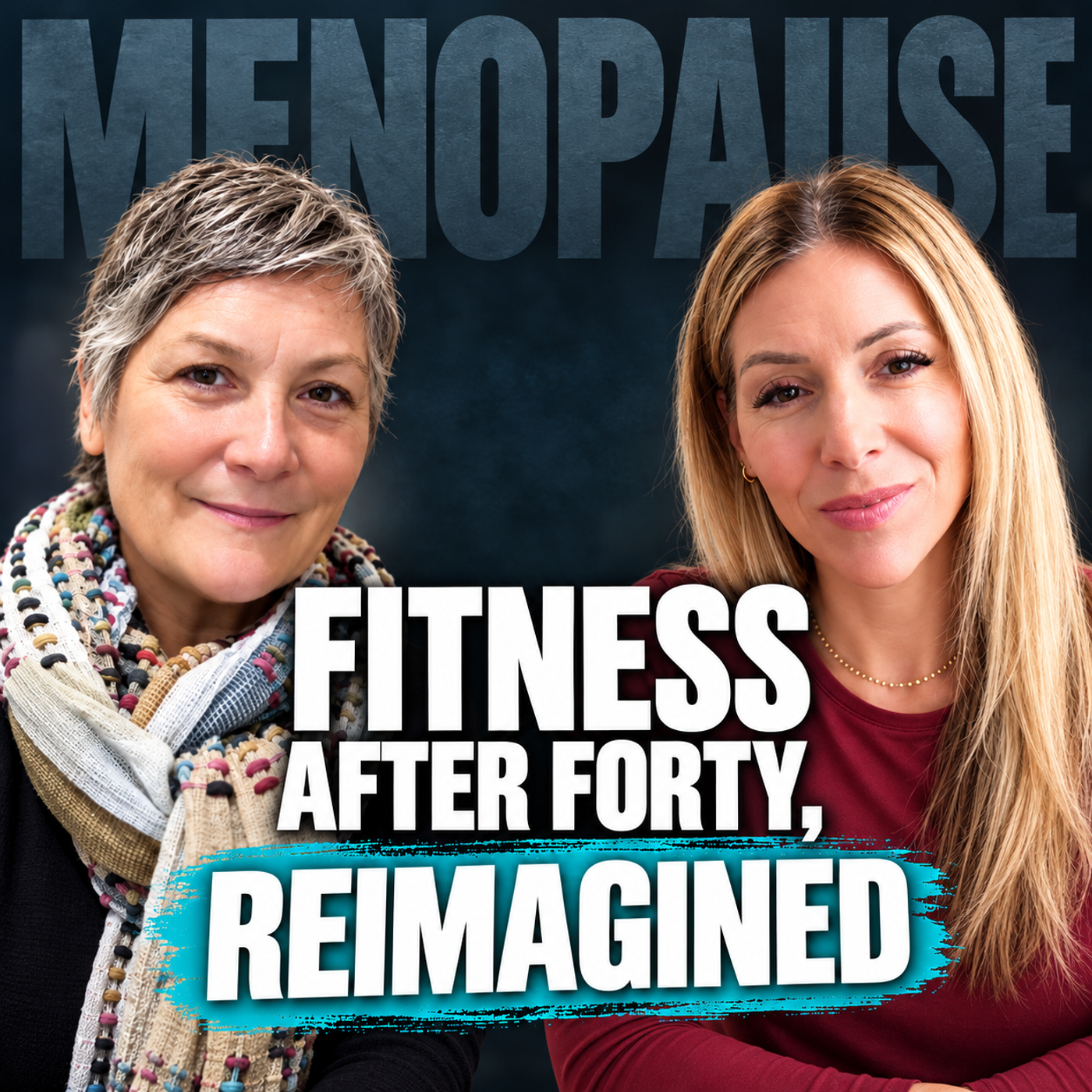
Are you eating less, exercising harder, and still gaining weight? You're not alone! In this episode of the Wise Divine Women Podcast, host Dana Irvine, FDNP, welcomes fitness and health coach Lindsey Mathews for an empowering conversation about perimenopause, menopause, hormone health, nutrition, and finding a healthier relationship with exercise. After gaining 50 pounds in just 52 weeks, Lindsey discovered the fitness strategies she'd relied on for years no longer worked. Her personal journey led her to explore hormone and metabolic health, rethink her training routine, and help other women navigate similar midlife challenges. Together, Dana and Lindsey explore why working harder isn't always the answer—and why recovery, nourishment, and consistency matter. In This Episode, You'll Discover:Why your fitness needs may change during perimenopause and menopause. How the "stress bucket" affects your approach to exercise and recovery. Why cutting carbohydrates and healthy fats isn't always the solution. Why protein matters for maintaining muscle and supporting healthy aging. How creatine may support muscle strength and recovery. Episode Chapters00:00 – Lindsey's journey: 50 pounds in 52 weeks 04:28 – Making perimenopause fitness personal 06:52 – Why cutting carbs and fats may backfire 09:20 – Understanding your stress bucket 13:16 – Sleep, recovery, and hustle culture 16:59 – Why Lindsey reduced her workouts 18:29 – Fasting, creatine, and protein 27:03 – Balancing carbohydrates and healthy fats 31:03 – Walking, strength, and healthy aging 32:27 – Simple habits for lasting wellness Connect With Lindsey MathewsBook: Perimenopause Fitness and Nutrition For Dummies MoxieByLindsey.com: http://www.moxiebylindsey.com/ Instagram: https://www.instagram.com/trainerlindsey/ Facebook: https://www.facebook.com/@trainerlindsey YouTube: https://www.youtube.com/@trainerlindsey TikTok: https://www.tiktok.com/@trainerlindsey Podcast: https://podcasts.apple.com/us/podcast/nourish-strengthen-with-trainer-lindsey/id1692560051 Presale link for Lindsey’s book: http://www.moxiebylindsey.com/books At Wise Divine Women, Dana Irvine helps women over 40 explore the connections between hormones, gut health, mineral balance, stress, and lifestyle through a functional health approach. Ready to take your first step? 🌿 Download a FREE guide or explore the Touch Your Tattas 5 Minutes to Wellness to begin building healthier daily foundations. Visit www.WiseDivineWomen.com 🎧 Enjoyed this conversation? Subscribe to the Wise Divine Women Podcast, share this episode with a woman navigating midlife, and leave us a review! #MenopauseNutrition #HormoneHealth #StrengthTraining #MidlifeWellness #WiseDivineWomen #Protein #HealthyAging
Dana Irvine FDNP: Welcome back to the Wise Divine Women podcast where we help you go from fed up to faith-fueled, helping to become the wise divine women that you've been called to be. Today I have Lindsay Matthews. So wonderful to connect with you today, Lindsay. Lindsey Mathews: You too. Thanks for having me. Dana Irvine FDNP: it's my pleasure and I know that we will learn so much. What brought you on the journey of helping women? Lindsey Mathews: Yeah, let me tell you a little bit my story because your your podcast purpose of going from like finding your passion is really my story of kind of like a pain struggle to passion. So I have been a fitness trainer, a like a health coach since 2004. So for a really long time. Before online coaching was even a thing, I was doing things via email, of course in person as well. But the pioneer of the whole online coaching space, really. And I went through so I've been doing this for a long time. And back in 2018-19, I went through a period of time where my body just completely went haywire. And I gained 50 pounds over that year. So it was truly like 50 pounds in 52 weeks. And it was it completely like changed my identity as a trainer. Cause I was like, if I can't figure this out for myself. how are the other women out there? They don't have any hope either, And I just did more of all I knew. So this was back, you know, eight years ago or so, and no or seven years ago, when nobody was really talking about hormones, perimenopause, what happens in our body in midlife and how things change and how your approach has to change too. And so I didn't really know this stuff. All I knew. was okay I'm gaining weight, I must be eating too much, I must cut back my food, I must exercise more, and that didn't work. It just left me gaining more and more weight, feeling exhausted and sluggish, my clothes not fitting. I didn't feel confident in myself, so I didn't show up the same way throughout my life. And I worked with doctors and coaches and I read books and I finally ended up getting functional lab work done and that's just a it was much deeper look into what my hormones were doing, my cortisol, my inflammation, my thyroid, my sex hormones and Through that, I was able to really figure out what was going on inside. And then once I knew, because personally I was insulin resistant, estrogen dominant, had low thyroid production, and chronically high cortisol, is what I was dealing with. Everybody's different, of course. but once I knew that, I could completely change my approach to fitness and nutrition to kind of cater to what was going on inside, and only then was I able to balance those hormones, lose the weight, feel better, and then we were able to take in my in my business what worked for me and we're like, okay, well let's just try it with some of these other clients that are struggling with the same thing. And like, what do you know? It worked for them too. And then over the years, this is just, I feel like we attract what we struggle with and kind of what we've been through, you know. Dana Irvine FDNP: Yeah. Yeah. Lindsey Mathews: And so now that's all we work with is peri and postmenopausal women who are struggling with, you know, not feeling great because of their hormone changes and they don't know what to do different. They're just going to their their CrossFit workouts, their orange theory, their F45, or maybe they're not doing anything because they Know what to do, and they're just struggling because there's so much information out there, and so Dana Irvine FDNP: Yeah. Yeah. Lindsey Mathews: those are the women that we help, and that's really my passion. Is you know, I remember clearly in the journey of my awakening, I was like, you know, maybe I need to just not give up but stop caring so much and stop stressing out over it and just kind of accept what's going on. And I mean, there Dana Irvine FDNP: Mm-hmm. Lindsey Mathews: is a part of acceptance that has to happen, of course, but kind of. give up. maybe this is just how I am now, But then I was like, no, I can't do that because if I can't figure this out, what hope does anyone else have? You know? So that's Dana Irvine FDNP: Yeah, exactly. Those the those people that they trust to for you to train and guide them Lindsey Mathews: Yes. Dana Irvine FDNP: through, that's a difficult enough process, right? And Lindsey Mathews: Yeah. Dana Irvine FDNP: they've had such success. And then it becomes this, turning point, and then it's just feels like sabotage. And Lindsey Mathews: Yeah. Dana Irvine FDNP: you had to go through it so that you can guide them in understanding that the tables will turn back. Like Lindsey Mathews: Yes. Dana Irvine FDNP: But we have to approach it differently. And that goes Lindsey Mathews: Yeah. Dana Irvine FDNP: back to understanding those root cause issues Lindsey Mathews: Mm-hmm. Dana Irvine FDNP: that end up s you know, slapping you in the face, perimenopause, right? Lindsey Mathews: Yeah. Yeah. And if I was like if I if I give up now I can't help these women that are all dealing with the same thing, you know. So that's kind of what really turned into my my passion, my purpose. And over this last year I've actually written a book and that's coming out in a month. So Perimenopause Fitness and Nutrition for Dummies. And that has been a big passion project because it's it's really like, you know, the For Dummies series has been around forever and it's really a way to take this information that can feel so overwhelming and complex, and just, you know, for lack of a better word, dumb it down. Down to a language that's super easy to understand and it just gives you clear guidance on how to approach exercise, how to approach nutrition in a way that works with your hormones. And if you're having those pesky, you know, perimenopausal hormone shift symptoms, what are some things you can do with your lifestyle habits that can help with that? Yeah. Dana Irvine FDNP: Right. Right. Exactly. And it it does need to be simple. And even out of that, even out of just explaining everything in your heart, in your soul, in your Lindsey Mathews: Mm-hmm. Dana Irvine FDNP: mind onto paper, there's still gonna be people reaching out, right? They just it's kinda like I I just Lindsey Mathews: yeah, for sure. Dana Irvine FDNP: don't have I just I just can't have I don't have time. Just help me. Just help me now. Lindsey Mathews: Yeah, yeah, definitely. People just want and and of course, you read a book and that is just or the content I post on social media, all of that is just general information. Like it's not going to apply to everyone and everyone is going that's why I don't believe in cookie cutter programs. Everyone Dana Irvine FDNP: You're right. Lindsey Mathews: needs something that's catered to them and their specific situation. And that I mean that's why coaches exist, you know. Some people can figure this out on their own and that is awesome for them, but some people want more guidance and accountability, you know? Dana Irvine FDNP: Absolutely. Absolutely. So do you do your functional testing yourself now? Lindsey Mathews: We have a company we go through and then we my team knows how to interpret that and then of course we're not doctors or nurses or anything so we can't prescribe anything, but we can see the red flags and be like, Okay, I think you should go talk to your doctor about this or that or whatever. We focus more on like the lifestyle side of it. Yeah. Dana Irvine FDNP: That's beautiful. That is beautiful. And nutrition does play a role. Although as as as though the fairy tale does say, you know, like the nutrition is the key, which it's not. Not in perimenopause. Like it gets tossed. There's a it's a complexity Lindsey Mathews: Yeah. Dana Irvine FDNP: things. There's your basics. So when it comes to the basic macro sort of profile for women in perimenopause, where the heck do we start? Lindsey Mathews: Yeah, that's a great great question. And It it's tricky because the things that most people are inclined to do actually work against your hormones. Like for example, you know, the fads of like cutting out carbs, like going keto or going really low carb. Your thyroid needs carbs to function and your cortisol needs carbs to stay balanced. And so when you cut those out, your thyroid's gonna be more sluggish, your cortisol is gonna elevate and stay chronically elevated. for example, your sex hormones, your estrogen, progesterone, testosterone, they're They're made from dietary cholesterol. And so if you cut your fat super low, your sex hormones are going to suffer, right? And you're not gonna feel great. And so you're right, you're right. We can't stop menopause. We are going to lose those hormones. The only way to put those back in is through HRT, if that's what somebody wants to do. But proper nutrition and having a balanced macro split where you're really focusing on high protein or at least moderate protein, you know, getting in a good amount of protein. Not cutting out carbs or fats, but having healthy carbs and fats in moderation is going to be key for optimizing the hormone production that your body can have at whatever stage of life you're in. Dana Irvine FDNP: Right, right. So I mean it it is very difficult. And we've been all brought up in this well, 'cause I am older than you, the Atkins or Keto and Yori Lindsey Mathews: Yes. Well I think even for people in their forties, you know, our moms did that. And so we're sweet that was like the trend of the day. Like I remember I had the snack Dana Irvine FDNP: That's all Yeah. Lindsey Mathews: wells cookies in my pantry, the low fat sna or the fat-free snacks, you know. Dana Irvine FDNP: Yeah. Yeah. Yeah, it's it it was kinda terrible. now that you look back at it. And and yeah, so we moved from low fat to Lindsey Mathews: Yeah, yeah. So gross. Yeah. Dana Irvine FDNP: high fat keto. Lindsey Mathews: Mm-hmm. Mm-hmm. Dana Irvine FDNP: No no carbs. And now it's like, where does the balance come into play for those daughters who are just like, what the hell are we making sense of this for? And Lindsey Mathews: Yeah. Dana Irvine FDNP: it's all fine and dandy. So, like, you know, therapeutically, the different things that women do to drop the five, ten pounds and and then still exercising. And then even the exercising becomes counter counterintuitive, comes just exhausting. It's like, Lindsey Mathews: Yes. Dana Irvine FDNP: I can't believe why I'm so achy. All I did was, did whatever. But there has to be this change in like I'm I've hit perimenopause or I've I've that's it, I'm post now. What exercises and activities should we really be looking for? Or is that again like a diet we need to look at the person individually? Lindsey Mathews: Both. I think I can give some general advice, but then of course everybody's different, Dana Irvine FDNP: Mm-hmm. Lindsey Mathews: but in well, let me actually talk about an analogy really quick. So I call this the stress bucket analogy. So pretend like you have a bucket in front of you and there's a bunch of plastic balls, like the kind you used to jump into, like a ball pit as a kid or something. and each plastic ball represents a stressor in your life. And not all of these stressors are bad, right? People think of stress as a bad thing, but a stressor might be a cross-country move. Maybe you're really excited about the move, but it's very stressful in your life, right? So that's a ball in your bucket. Maybe you have a demanding career, it's one you love. But it's still a demanding career, that could be a stress ball in your bucket. Maybe you are struggling in your marriage or with your children. That's a stress ball in the bucket. So when women decide they want to lose weight, let's say they want to lose 15 pounds or whatever, the law of thermodynamics always applies, even in peri- and post-menopause, right? And so you need to be in a calorie deficit for weight loss. That's a stress ball in your bucket. Probably you're gonna want to exercise a little bit. That's a stress ball in your bucket. So the key is managing these stresses because the more stress you have in your bucket, the harder or the worse your body responds to diet and exercise. And our estrogen, progesterone, testosterone, they kind of act like a buffer to stress. So when you were in your 20s and 30s, we were able to live. A more stressful life. You could do the all-nighters, you could party late, you could wake up super early and hit the gym. And your body just kind of bounced back, right? But once we lose those sex hormones, It or they decline, it makes it a lot harder for our bodies to positively react to that stress, and so it just kind of takes those stressors and gets inflamed, you gain weight, you get sluggish, you get way more tired than you used to. So it's really important that especially when you have a stressful lifestyle, which most of us do, there is no way to cut out all stress, right? It's about mitigating that and picking and choosing the stressors that you kind of have to have in your life, and so finding exercise. That is less stressful on the body. So things like strategic strength training is going to be a lot less chronically stressful than the circuit training, the HIT workouts, the daily cardio, that sort of thing. incorporating yoga is really, really good as well. That can not only give you great exercise, but also help mitigate that stress that you can't get rid of, right? And so what I typically recommend is Strength training, obviously, progressive overload, strength training, and you can go in and you can push yourself hard. I'm not saying, go to the gym, work out, but don't work out too hard. That's not what I'm saying. It's the kind of exercise that is that works with your hormones. Because when you're strength training, it's one of the best ways to boost whatever natural testosterone you have left. It's the best way to protect against insul insulin resistance. It's really, really important. But when you go in and you're constantly doing maybe a five mile run one day, a hit class the next day, a spin class the next day, and it's more of that cardio intensity, Dana Irvine FDNP: Mm-hmm. Lindsey Mathews: you're not getting enough recovery, and chances are you're probably not eating enough. So the problem is not cardio. Cardio gets a bad rap, it's the lack of fuel, nutrition, And lack of recovery that surrounds the way most people approach cardio. You could do three lifting sessions in a cardio session once a week, and that could be great for you, and you have plenty of recovery in there. It's the daily chronic cardio that can really wreak havoc on your cortisol levels, which has a down regulatory negative effect on other hormones. Does that make sense? Yeah, yeah, I'm sure you know, yes. Dana Irvine FDNP: I know. I know exactly. It's just yeah, yeah, it's this, it's the balance of things, right? And Lindsey Mathews: Yeah. Dana Irvine FDNP: then with I do medical thermography, which is what Lindsey Mathews: Mm-hmm. Dana Irvine FDNP: I also do. So when I'm going over these reports and I'm looking at the amount of stress and wear and tear through the body, Lindsey Mathews: Yeah. Dana Irvine FDNP: it's like, okay, so I know you exercise because I can see what a fabulous job you're doing. But Lindsey Mathews: Mm-hmm. Dana Irvine FDNP: where's the balance? Lindsey Mathews: Yeah, for sure. Dana Irvine FDNP: Right? Where is the balance? 'Cause the you see it and that's the beautiful thing with with thermography. But again, it poses into those questions because they can't sleep at night and they've got this five pound weight gain. And I'm like, please stop worrying about five pounds, please. You know, like it's Lindsey Mathews: Yeah, yes. Dana Irvine FDNP: But they can't sleep and they have you know they're exhausted and they can't manage stress. They're raging, right? That's all hormonal. Lindsey Mathews: Yeah. Dana Irvine FDNP: And I'm just like, okay, but where's your recovery? Like, you Lindsey Mathews: Yeah. Dana Irvine FDNP: can't do that. Please find somebody who's going to help you assess a better routine Lindsey Mathews: Mm-hmm. Dana Irvine FDNP: to one because a lot of women I think I find that with either women work out or they don't work out. Lindsey Mathews: Yeah. Dana Irvine FDNP: And it's hard for those women to to get out of that routine of that crossfit and the weightlifting and the five mile run. Lindsey Mathews: It is. It's so hard. Dana Irvine FDNP: And it they think it's they really do think it helps them manage their stress. Lindsey Mathews: Yes. Yes. We come from this hustle culture, especially women that ha that work and have careers, like these high achieving women. They want to burn the most calories on their Apple Watch. They want to make sure they're constantly sweating in their workouts. And they don't want to have a day off because they feel like recovery means that they're failing or it's a setback. It's a really hard Mindset shift to think okay, a day off from weight training or from the gym is is part of the program, right? So sleep is a huge part of recovery. And yes, in perimenopause and postmenopause, when you're having night wakings and and hot flashes and night sweats, that can be really hard, but still just trying to get enough sleep, and there's that's a whole nother topic of how to improve your sleep, but you know, focusing on sleep. Proper rest days. If someone is completely overworked to the point that they're not sleeping at night, they might need a week or two off from the gym to completely kind of reset and recover. Or even like then after the week or two off from the gym, maybe you only work out two or three days a week for a little while to kind of come back to that baseline where you're sleeping well, you're feeling recovered, and then you slowly increase. Again, I don't think that any woman in Their 40s and above should be lifting six days a week, seven days a week. I think five Dana Irvine FDNP: No. Lindsey Mathews: is max if you're in a hormonally healthy place, but three to four is plenty. I personally work out three to four days a week. I do cardio for my heart health once once a week and just get plenty of steps. And that's a good balance of things for Dana Irvine FDNP: Balance. Lindsey Mathews: me. but yeah, that recovery is a really hard mindset shift for a lot of people. Dana Irvine FDNP: It is really hard. And that and that is a big resistance to them. And they're Lindsey Mathews: Yes. Dana Irvine FDNP: they would just be devastated. Well, what do you mean? And and that's a whole big mindset thing that you have to talk Lindsey Mathews: Yeah. Dana Irvine FDNP: to anyways. Right. Lindsey Mathews: Yes. Dana Irvine FDNP: And it's probably a unfortunately a lot of times it's that heavy training Lindsey Mathews: Mm-hmm. Dana Irvine FDNP: in that twenty to thirty range, even to into their forties. So twenty to forties, it's that heavy Lindsey Mathews: Mm-hmm, mm-hmm. Dana Irvine FDNP: training that brought them into that hormonal difficulty. Yeah. Yeah. Lindsey Mathews: Yes, because it worked back then. And so they think or or they thought it worked. It their body didn't react negatively to it. So they thought it was working. And Dana Irvine FDNP: Yeah, yeah. Lindsey Mathews: they think that's what works. And so they get into their forties, fifties, sixties and they think, That's the only thing that worked for me before. Why isn't it working for me now? Dana Irvine FDNP: Yeah, yeah, yeah. Nope, you sorry, you have to slow down. You have to touch the body, you have to reflect Lindsey Mathews: Yeah, yes. Dana Irvine FDNP: and there is the rest, the pair like the rest and then the digest and the moving. Like there's a balance. And if if you're not going Lindsey Mathews: Yes. Dana Irvine FDNP: and I think it's difficult for women to really be intuitive and understanding what their body actually needs. And Lindsey Mathews: It is. Dana Irvine FDNP: if the body's telling them to rest and you're not listening, it's gonna make you it's gonna make you rest. Yeah. Lindsey Mathews: it will. Absolutely. And that's what happened to me. I just kept gaining this weight and I got to the point where I was like Somebody tell me what to do because obviously I don't know. Obviously, what I'm doing is not working. And so I hired a coach who specializes in what I was going through. And the first thing he had me do was cut out all cardio. I didn't need to cut out lifting, but we cut it down from six days a week to three days a week. And he told me for a while I could only go like a seven out of ten intensity. So I couldn't push to failure. I was basically just going in, going through the motions, and like I was working hard-ish, but not that hard. It was more just like keeping maintaining the muscle that I had, not really trying. To build new, just very, very moderate intensity. And through that time, it took me about six months of healing and focusing on health as I was doing that. But once I was able to come out the other side, I could push harder again because I had taken a good chunk of time focused on recovery. And then, and even without adding in cardio, I was able to start losing weight, and I was like, wait. This is working. I'm not doing cardio. I'm not lifting six days a week. I'm not cutting calories super low. How is this working? And it's Dana Irvine FDNP: Yeah. Lindsey Mathews: because I had taken that time focused on health, balancing hormones, recovery, that thing. Dana Irvine FDNP: And and it's hard for women like to to do that, but even from a nutritional point of view, that that deficit, the less calories, less weight type of idea is really hard, like you were talking Lindsey Mathews: Mm-hmm. It is. Dana Irvine FDNP: to, in that you need to eat three meals a day. That's the hardest that's the hardest thing for me. And and just Lindsey Mathews: yeah, for sure. Yes. Dana Irvine FDNP: and and at fifty seven, it is still really hard to get breakfast in 'cause I'm not hungry. But Lindsey Mathews: Yeah. Yeah. Dana Irvine FDNP: Do I know that I need to eat protein in the morning? I sure do. Do I tell my clients I do? Sure do. But it's so hard because I'm Lindsey Mathews: Yes. Yes. It is. Dana Irvine FDNP: just not, I'm just more of a, and and then, it becomes this balance also. What are your thoughts on fasting? Right. Lindsey Mathews: Mm. Yeah, I mean That is a great question. I think it can be fine for some people, but the people that come to me typically have high cardiac cortisol, low thyroid function. And extended fasting can make those situations worse. There are hormonal benefits to fasting, but I do think that you need to be in an otherwise healthy place Dana Irvine FDNP: Yeah. Lindsey Mathews: and balanced if you want to fast. and again, if you feel great, if your body composition is great, you have good energy, and it just kind of meshes with your. lifestyle and that's what you like, go for it. But if you're like, I feel horrible, my metabolism Dana Irvine FDNP: Mm-hmm. Lindsey Mathews: feels sluggish, I'm got this stubborn weight, I can't lose, one of the first things we do is have clients stop fasting until we can kind of balance everything out. Dana Irvine FDNP: Where does creatine play a role in those? Creatine's a big hot topic. So where does Lindsey Mathews: Yeah, I love creatine. Dana Irvine FDNP: creatine play a role? Lindsey Mathews: Yeah, so creatine is one of the most widely studied supplements out there. It's like creatine and caffeine. So much research on those two. so creatine is really, really helpful for in the past, we kind of just thought about it as like a muscle building supplement, right? Like Dana Irvine FDNP: Yeah. Lindsey Mathews: what can help you build and retain muscle. So even if you're like, well, I don't want to be like a bodybuilder, as we get older, we have to work like crazy just to maintain our muscle. Like you kind of gotta work like you wanna be a bodybuilder just to maintain the muscle you have so that you Can age independently for as long as possible, right? we want to maintain that muscle. So creatine is great for that, but more research lately has been showing that higher doses of creatine can be really helpful for brain function and cognition, especially as we get older. Because I don't know about you, but I turn, how old do I turn? 46 on Sunday. And I have the worst brain fog. It's like I'll be on these podcasts or just talking to clients or something, and I'll just lose my words. And I'm like, I don't know what I was saying Dana Irvine FDNP: It's Lindsey Mathews: or Dana Irvine FDNP: Yeah, it's terrifying. Yeah. It's terrifying. Lindsey Mathews: Well, I can't remember how to explain that. Yeah, it's so annoying. And then you feel like you're so dumb, but it's like, no, it's the brain fog. But creatine can help with that. So typically, the dosage that we used to talk about was like five grams a day, and just any creatine monohydrate is great. You don't need to go buy anything fancy. It's a pretty cheap supplement. Five grams a day is is great for muscle recovery, that sort of thing. ten grams a day is what is more talked about for cognition and and brain benefits. Dana Irvine FDNP: Is that at once or is that spaced? Lindsey Mathews: Yeah, have it at once. It's just a powder and it's most of the time it's tasteless. I would definitely look for an unflavored one. And it is literally so unflavored, you could put it in water and your water would not taste any different. Like, Dana Irvine FDNP: You wouldn't even know. Lindsey Mathews: yeah, yeah. So I just throw it in a protein shake or if you're having a yeah. Dana Irvine FDNP: So it if that's something that women should be starting, are we looking at our forties or are we looking at when you start noticing? where's the level of prevention Lindsey Mathews: Any Dana Irvine FDNP: and when's the level of recovery that we should be considering? Lindsey Mathews: I think every woman should use creatine. So at any time, if you're listening to this and I'm like, I never thought about that, start it because it's gonna help. Like I said, two main things. Muscle retention, which is so important as we get older. As we get older, we just naturally slow down and it's so much easier. If you're not lifting weights especially and not getting enough protein, creatine's even more important, but it's always important. So I would recommend everyone take it. Dana Irvine FDNP: So let's step back. Creatine comes from what naturally? Lindsey Mathews: It comes com naturally, it comes from your protein, from meat. Dana Irvine FDNP: So that not eating enough meats. So should we just and that's just because of di digestive dysfunction as we're aging, that we're not breaking it down into creatine as we should, or is it Lindsey Mathews: It could be or a lot of people just aren't getting enough meat. Yeah. I mean, I don't know about you, but Dana Irvine FDNP: Yeah. Amazing. Yeah. Lindsey Mathews: I I don't typically love to eat meat a few times a day. I mean I do, but it's like I typically have like some chicken at lunch and then like another meat at dinner. But that's I mean, and that's that's a decent amount of meat, but Dana Irvine FDNP: And is it a hundred grams of protein? it's a it's a lot. It's a lot. Even you Lindsey Mathews: Exactly. Right, right. Dana Irvine FDNP: can't eat that many eggs. You can't eat tuna every day. And it's Yeah. Lindsey Mathews: No, if you're not using a protein shake or something, it's it's hard. it's totally possible to get enough protein without using a supplement. Absolutely. But you're gonna be having a lot of meat. And and that's fine. if you like eating a lot of meat multiple times a day, some deli turkey, mid-afternoon, chicken, steak, whatever, like that's great. It's just a little bit harder. Dana Irvine FDNP: So I heard on a a podcast once, and maybe you can speak into this for me because it just came to my head, is it more beneficial to have your protein in the the best, the twenty to thirty gram one Lindsey Mathews: Mm-hmm. Dana Irvine FDNP: sitting process or Or is it like you're taking ten here from a milkshake or you're doing protein at ten o'clock and then you're doing a a protein bar at two o'clock after your chicken dinner? You're breaking up the protein sources to get to your hundred, or is it essential for the body's ability to utilize what it brings to the table in a thirty thirty thirty? Lindsey Mathews: Yeah, great question. So, a couple things here. So, there is a limit of how much protein your body can break down at once. I've heard things like don't have more than 30 to 35 grams of protein in a sitting because your body can't use all of that and kind of waste the excess. I don't believe in any blanket rules like that for all people, because a 100-pound woman probably can't process and use as much protein as a two hundred and twenty five pound man. So how can you come out and say everyone needs to stop at thirty to thirty five grams or your body can't use it. so I don't typically like blanket rules like that. Do I think that there is a point where you don't need to have more and more and more protein at one time? Yes. But I don't know how to figure that out per person, you know? And so I Dana Irvine FDNP: It's an interesting Topic like it's an interesting Lindsey Mathews: Yeah Dana Irvine FDNP: thought. and we won't really know because the topic of protein, as as exciting as it's been, and we've always known in that macro mindset that it's been there, but the necessity of so many grams per weight really hasn't come to fruition and since the last five years. So the Lindsey Mathews: Yeah. Dana Irvine FDNP: research perhaps isn't caught up to that yet, in saying, you know, doing it sh a shake and adding this to your coffee or tea and adding this at dinner and bring Breaking those pieces down, but I guess really just one, making sure that you're eating, two, making sure you're getting protein. Lindsey Mathews: Yeah, well I I do have a Dana Irvine FDNP: Yeah. okay. Lindsey Mathews: Recommended for your day. I was more just referring to how much at a meal. So I do highly recommend getting 0.8 to 1 gram of pound per pound of protein of your body weight. And so just do the math if you pull out a calculator and if you weigh 150 pounds, go 150 times 0.8 up to one 150 grams, and that's a good range to shoot for for your day. And so I do think that people should split it up because every time you get a bolus of protein, 20 25 grams, you reinitiate that muscle. protein synthesis process in your body. So I do not think it's beneficial. If you're trying to get a hundred and ten grams of protein, I don't think you should have two fifty five gram servings. Yeah. Dana Irvine FDNP: that'd be terrible on your kidneys. Yeah. Yeah. Lindsey Mathews: It it would be horrible for your digestion. It'd be hard to eat. But also that would be past the point that your body could probably process and utilize at one time. What Dana Irvine FDNP: Correct. Yeah, yeah. Lindsey Mathews: I was saying before was I don't think there's a way to figure out for me or for you how much at one sitting my body can process. So I do think it's beneficial to break it up, to have your protein snack mid afternoon, couple hard boiled eggs mid morning, maybe bigger boluses of protein, breakfast, lunch, and dinner, and the protein snacks within, because some people can do thirty, thirty five grams three times a day and feel great, but sometimes that even still is a lot for people. Dana Irvine FDNP: You have to train up to that anyways. It's hard for people to do that. even in the in Lindsey Mathews: You do? Yes, for sure. Dana Irvine FDNP: a in a power bowl sense of things with your legumes, with your protein peas and all this stuff. It and it's hard Lindsey Mathews: Yes, and all of that counts too. Mm-hmm. Dana Irvine FDNP: even to eat that much food because we're just not used to it. Might in the mindset, Lindsey Mathews: Yes. Dana Irvine FDNP: we're just not I'm not hungry, I I don't want to eat. But we Lindsey Mathews: Yep. Dana Irvine FDNP: you need that. And that's again where those shakes come from and adding the Lindsey Mathews: Yeah. Dana Irvine FDNP: proteins to your coffees and and doing those those types of beautiful things. Lindsey Mathews: It can be really helpful to get the protein intake up without just feeling like you're eating more food than you feel comfortable with. Dana Irvine FDNP: How much carbohydrates are we supposed to be looking at perimenopause? Lindsey Mathews: Yeah, good question. So this is this is one that's a little bit more depends on the person. I believe that pretty much everyone should do point eight to one gram a pound per for protein with the caveat of I do typically cap women's protein around 150, 160. So if you've got someone who's 250 pounds, who's on a weight loss journey, they don't necessarily need 200 grams of protein. I would cap them at two, I'm sorry, two, like 150 or so. But Dana Irvine FDNP: Mm-hmm. Lindsey Mathews: for smaller bodies, 0.8 to 1 gram per pound, I think is great. When it comes to carbs, it's gonna be different per person based on preferences. So re research shows that. Calorie deficit determines if you're gonna lose weight, right? You can get into a slight calorie deficit, and your protein intake determines whether that weight's gonna come from body fat or from lean body mass. So if you're getting in enough protein, the weight you're losing is going to come primarily from your body fat. Carbs and fats can fluctuate a bit. As long as calories are where they should be and your protein intake is there, it doesn't really matter if those extra calories come from carbs and fats. You can be slightly higher fat, slightly lower carb, or vice versa, as long as neither of them are. completely cut out. So I give Dana Irvine FDNP: Mm-hmm. Lindsey Mathews: my clients the flexibility to hit their protein, hit their, hit their, hit their calories, hit their protein, hit their fiber, because that ensures they're getting plenty of fruits and vegetables, that sort of thing. But then everything else can kind of fall wherever it falls, as long as you're you're not just completely cutting out fats or carbs. Dana Irvine FDNP: What are your top three fats that are healthy to balance hormones for perimenopausal women? Lindsey Mathews: I love that. I would probably say if I had top three, you know, omega three fish, like fish that includes a lot of omega three fatty acids are really, really healthy for you. avocados, I love avocado oil too. And, you know, your nut butters are do have a little bit more omega sixes, but they're just so good and they're still healthy for you. And they like they're just it's just a good fat source. You just gotta be careful of the serving sizes with that one because if you're not watching it, it can Dana Irvine FDNP: Yeah. Lindsey Mathews: Get a high calorie pretty quick. Dana Irvine FDNP: So not as a fitness person. I'm more of a walker. and I you see the powdered P B, the peanut butter. Lindsey Mathews: yeah. Dana Irvine FDNP: What the hell are you supposed to do with that? Like what is that? And that's sure there's many other women Lindsey Mathews: Yeah, it's funny. So Dana Irvine FDNP: in the world who know and they're like, Dana, come on, girl and other women Lindsey Mathews: Yeah. Dana Irvine FDNP: are like, Yeah, what the hell is P B? So Lindsey Mathews: Yeah, yeah, no that's a that's a great question. So it's basically defatted peanut butter, right? Into a pow into a powder. And And we keep it at my house. We typically use it for recipes. I'll stir it into like yogurt or something. And so I don't use it to cut out fats. I use it if I want my fat source to be something else. Like maybe I wanted a low fat meal because I had a high fat meal at lunch, and so I want a snack that's lower fat. So I might have some plain Greek yogurt with some PB fit in it and maybe some berries on top. So you've got more of a protein carb meal as opposed to stirring in a tablespoon of peanut butter. Where it would be more of a protein carb fat meal, and then it's a little bit higher calorie. So I think it has its place when you're using it as like a peanut butter substitute, as long as you're not thinking, peanut butter is bad. It's just maybe you had a lunch that had some egg yolks and some avocado, maybe some cheese, and you're like, Okay, that was a lot of fat. I want to balance that maybe with more of a protein carb meal. Yeah. Dana Irvine FDNP: Gotcha. Gotcha. So they're not using it as like Yeah. It it it does and okay. Lindsey Mathews: Peanut butter replacement. Yeah, it isn't. Doesn't need to be that. I don't think I have ever reconstituted it into a peanut butter. Like that doesn't sound like it would be very tasty. I'd rather just have peanut butter. I use it more of like in recipes as a powder. Yes. Yeah, for sure. Dana Irvine FDNP: In recipes. I gotcha. Yeah, I've just not ever. I'm like, I'll just eat the peanut butter. But yeah, yeah, and you can't if you love the peanut butter flavor, it really makes no sense to have that much peanut butter because those fats are not healthy fats. Lindsey Mathews: Yeah, yeah, yeah. Dana Irvine FDNP: yeah, exactly. Exactly. So top three things for women to remember during this crazy season of their life when it comes or five, whatever. Lindsey Mathews: Yeah. Dana Irvine FDNP: when it comes to fitness and perimenopause, three. Lindsey Mathews: Yeah, so fitness and perimenopause, I would say, we talked about the first one, would be the importance of recovery. another one I would say with the fitness exercise side, don't I mean, like you said, you're a walker, don't discount the power of walking, especially outside. If you can get out walking outside in the sun, it is so good for managing a healthy cortisol. You know, cortisol gets a bad rap, but we need cortisol. It wakes us up in the morning, like Dana Irvine FDNP: Yeah. Yeah. Lindsey Mathews: a healthy cortisol curve goes up. In the morning, when we're waking up in the morning and have a lot of energy and slowly comes down throughout the day to help you fall asleep at night at its lowest levels, right? So being out in the sun helps you manage that healthy curve. so it's really really helpful to be outside for for managing high cortisol levels. Another one, let's see. strength training is just so important, especially as we age for bone density and you know, especially just living independently, right? I don't know about you, but I want to be able to put things into a high cupboard when I'm older and be able to bend over and grab things off the floor without or like sitting on the floor with grandkids, running around and and living life, and that comes from muscle and not being not being frail and not falling and breaking a hip and and that sort of thing. Yeah. Dana Irvine FDNP: I love it, I love it. What is a word of wisdom that you hold yourself true to or that you may share often with your friends and family? Lindsey Mathews: Hmm, let's see. Word of wisdom. That is a great question. I I mean we kind of talked about something that I think about a lot is like what are one takeaway for exercise and one takeaway for nutrition that someone could just start right away without any preparation. Maybe that's kind of the same thing as a word of wisdom. So the one we just talked about walking. Everyone can do it. You don't, you don't need any sort of special equipment, any sort of special clothing. You could throw on some flip-flops and head outside and walk, assuming it's not snowy out, right? and then on the flip side with nutrition, something that everyone can do right away. I'll give you two things because we kind of already talked about protein. One of them is increasing your protein amount, even if you're not tracking. If you're having some chicken, have a little bit more than you think. Because if you increase protein, chances are the other things that aren't as healthy are gonna fall away, right? You're not gonna be as hungry. For snacking after meals when you have a high protein meal before that. But another one, since we kinda already talked about that one, is eating colorful food. The more colors you can have in your fruits and veggies, I mean all food, but fruits and veggies are typically the most colorful, the more nutrients you're gonna get. So if you have a salad with some purple cabbage and some red bell pepper and some green cucumber, that sort of type, maybe some dark green kale, there's such a variety of nutrients in there. that you wouldn't get if you had a salad that well obviously if you had or if you had no veggies at all, but if you had a salad that was like, you know, maybe some romaine lettuce, some celery and some cucumber, adding in those colors is gonna just give you a higher variety of nutrients. Dana Irvine FDNP: Amazing. Amazing. I think that's perfect. Lindsey Mathews: Yeah. Dana Irvine FDNP: The colors of the rainbow and it is the season. It's the fall harvest. So there's multiple things. Yeah. Lots Lindsey Mathews: Yes, yes. So many good orange things out there right now. Yeah. Dana Irvine FDNP: of incredible things. Whether you still want to do the cold salads or whether you're wanting to move into roasted vegetable power bowls. I think it's just Lindsey Mathews: Yes. I love roasted veggies. Dana Irvine FDNP: the it is the season. There there is no excuse. Right? So Lindsay, the where Lindsey Mathews: Yeah. Yep. Totally agree. Dana Irvine FDNP: can people find you? Lindsey Mathews: Yeah, so I am on Instagram and Facebook. It's trainer Lindsay L-I-N-D-S-E-Y, not A Y. and I'm there all the time. I post every single day. And I've got my book coming out. I'll send you out I'll send you the link. it is up for Dana Irvine FDNP: Perfect. Lindsey Mathews: pre-sale right now on Amazon and Barnes and Noble, and it will be released on December second. Yeah. Thank you so much for having me. You too, thanks. Dana Irvine FDNP: Amazing. Thank you so much for sharing your time today. I'm sure it's very precious. It's my pleasure. You take care. And everyone, thank you so much for being part of the journey of helping you go from fed up to faith fuel, helping you to become the wise, divine women that you've been called to be. Thank you for joining us.