
Wise Divine Women Podcast: Menopause • Libido • Breast Care • Oh MY! The unfiltered truth for Women · Dana Irvine FDNP - Menopause Support • Functional Nutrition • Thermography
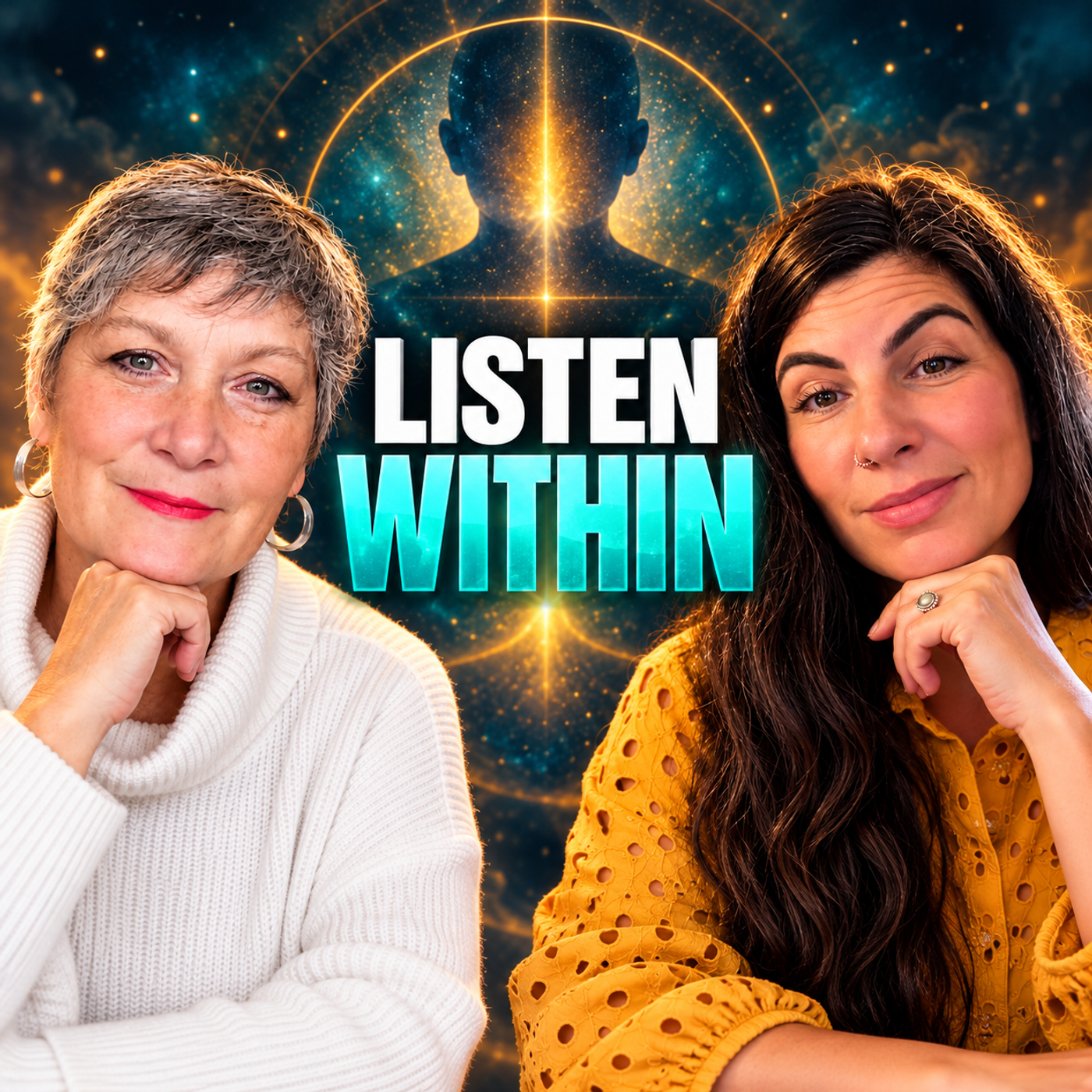
What if the answers you've been searching for aren't found in another supplement, health protocol, or wellness trend—but in learning to listen to the still, small voice within? In this inspiring episode of the Wise Divine Women Podcast, Dana welcomes Gina Marie Boyd, an integrative health practitioner, Ayurvedic practitioner, and spiritual counselor, for a powerful conversation about spirituality, intuition, functional wellness, and the connection between mind, body, and spirit. In This Episode, You'll Discover:The mind-body-spirit connection: Why physical wellness is only one part of the whole-person health journey. Spiritual awakening and self-discovery: How Gina's recovery journey transformed her understanding of faith, purpose, and healing. Ayurveda and personalized wellness: Understanding your unique constitution, or dosha, and why one-size-fits-all approaches don't work for everyone. The power of intuition: How creating quiet moments can help you reconnect with your inner wisdom. Stress, skin health, and emotional wellness: Exploring how our internal experiences may influence how we feel and look. Meditation and grounding: Simple practices including breathwork, spending time in nature, and transcendental meditation. Grace and compassion: Releasing perfectionism and learning to honour your individual healing journey. A Powerful Reminder"Listen to the small still voice within." — Gina Marie Boyd You don't need a perfect meditation routine, complicated wellness protocol, or another program promising all the answers. Episode Chapters00:00 – Welcome and introduction to Gina Marie Boyd 00:45 – Skin health, aging, and inner wellness 02:40 – Gina's journey from corporate success to recovery 05:07 – Faith, spirituality, and whole-person health 09:19 – Ayurveda and the emotional aspects of wellness 10:52 – Carolyn Myss and Anatomy of the Spirit 12:12 – Learning to listen to your body's signals 15:04 – Cultivating intuition through everyday practices 18:59 – Grounding, breathwork, and mindfulness 21:27 – Understanding Ayurveda and your unique constitution 24:28 – Functional medicine and personalized wellness 26:23 – Transcendental meditation and inner awareness 30:04 – Spiritual awakening and navigating life transitions 36:01 – Gina's REALIGN framework 39:15 – Words of wisdom: Listen within 39:49 – The importance of grace and compassion Connect with Gina Marie BoydWebsite: https://ginamarieboyd.com Instagram: @gina.marie.boyd Connect with Dana Irvine, FDNPFunctional Diagnostic Nutrition Practitioner | Breast Health Educator | Host of Wise Divine Women Are you ready to stop guessing and begin understanding what your body needs? Explore personalized functional nutrition, hormone health, breast wellness, and root-cause testing. Website: https://danairvine.com Wise Divine Women: https://wisedivinewomen.com Subscribe to the Wise Divine Women Podcast and share this conversation with a woman who needs encouragement to slow down, reconnect with herself,...
Dana Irvine FDNP: Welcome back to the Wise Divine Women podcast, where we help you go from fed up to faith-fueled, helping you to become the wise divine women that you've been called to be. Today I have Gina Marie Boyd, and she is an integrative practitioner of many different faculties because it's mind-body, it's emotions, it's physical application of that. And we just got started talking behind the scenes and we got so excited. I'm just like, nope, let's just go. Let's just do it. Welcome to the show. Gina Marie Boyd: Hmm. Thanks, Dana. I'm really excited to be here. I am well now I'm like, wait, should we talk about skin? But yeah, I'm Dana Irvine FDNP: Whatever, whatever, yes. I love it. Gina Marie Boyd: Well, it's th it was interesting. We were right before we were about to go live, we were s you started to mention something about skin and what how your health sort of manifests through your skin. And I was thinking about this because I'm forty one and my skin looks better now than it did in it in my twenties. And I think about how much money I spent feeling well, one, feeling not great about myself and also needing to, you know. inject and makeup and all these different things for my skin when in reality I was drinking a lot, I was smoking a lot, and I was using a lot of drugs. Dana Irvine FDNP: Long live the twenties. Gina Marie Boyd: What I mean. So yeah, so I think about that in terms of when even clients come and they're they, you know, have a health issue that's presenting and then there's always some sort of maybe a cosmetic like, and also my hormonal acne and what's happening, right? And what's going on underneath the surface that is present in our skin. Dana Irvine FDNP: Yeah. Yeah, it's so true. It is again this I had the same sort of episode this morning and I thought, you know what, today I'm gonna feel pretty, I'm gonna put some makeup on. I never wear makeup and I just like I am fifty seven and I have no clue how to put makeup on anymore, even though that was part of my whole lifestyle in the past. And it's again it it to me it's this reflection of I feel better without it. Although I I love my lipstick. Gina Marie Boyd: Hmm. Dana Irvine FDNP: Yeah, thank you. The again it's all this internal and how it comes out and presents itself, right? Gina Marie Boyd: Yeah. Dana Irvine FDNP: And that we are now coming into this age of wisdom where maybe that's not necessary and we just live with how we look and we love how we feel. Gina Marie Boyd: Yeah. Yeah, and also this this idea of how we might sort of enliven our own inner intelligence that creates a glow from the inside out. Because I didn't really have a good idea of health until my late thirties. It took me a while to get here. I wasn't always an integrative health practitioner. In a previous life, I was very corporate. and I was at the pinnacle of my career, I was the president of a company managing an IPO. And all of that came crashing down. My my life failed failing fantastically. And at the end of that, I was forced to confront a drug and alcohol problem. And then also debilitating health issues, and then the collapse of an identity. And in all of that, I I ended up going back to school. Well, first I had I had to get sober. And you know, I'm not sure if you're familiar with recovery programs, but they're faith-based, many of them. And I was presented with this problem because I was raised atheist. And so I was asked to to give my addiction up to my higher power. And I thought, well, geez, Louise, I actually don't have one of those. We have a problem. And I thought, well, you know what? I can't afford, I can't afford not to get sober because I came really near close to an an overdose. So I put everything I could into studying spirituality. And I spent two years in sweatpants reading all I could get my hands on. So much so that I got a master's in metaphysical science and I became ordained and ultimately landed on what I believe in. And a lot of Christian principles are found found, you know, founded in my belief. But then there was this also piece, this piece of health, which I felt like, my body, my body's unraveling, my mind's unraveling. There was a spiritual piece that I was able to figure out, but now that it's manifested in the physiology, what happens next? So I went back to school to study integrative medicine. And so now when I work with people, we're looking at mind, body, and spirit in a not cliche way, but how all of those interact. Dana Irvine FDNP: They do. They all they all interact. And when you fail in one, the foundation crumbles. Yeah. Yeah. It it's I'm very much of the way that even though Christian based, everybody has to have some sort of faith beyond themselves. And whether, you know, the wordy word of grounding doesn't matter, you have to have something beyond yourself to have solid ground, right? So and I love that. I mean, I remember as a teenager reading the religions of the world and looking at many different ways to understand higher power. And I love talking to people from many different faiths. So it it's or even different spiritualities. I think it's so fascinating. And when it comes to people's health, that is certainly one of those pillars that people grapple with, right? Gina Marie Boyd: Yeah, and it's interesting, right, because when we talk about questions of meaning and identity, those aren't medical problems. So a lot of what is presented today in and I I was talking about this with somebody earlier. So it feels to me as though we've sort of lost our spiritual and philosophical frameworks to describe how we relate to ourselves, each other, and the cosmos. And we've replaced it with clinical language. And I don't think using clinical language is the appropriate way to describe ourselves. and I don't think it was intended for that anyway. And so I find it sort of fascinating where, you know, this idea of i i if you would have asked me data like 10 years ago, do you believe in God? I would have said, absolutely not. That is craziness. And and it's interesting. So I live in the South, and so there are some people who have religious trauma. And as an ordained spiritual counselor, my hope is to help people still cultivate that relationship with God, even if one religion hasn't disappointed them in some way. But we see a lot of people throwing the baby out with the bathwater. And the word is optional God, universe, The word in my work is optional, but the dimension it points to is not. It's just not optional. And I I'm finding people come to me looking for permission to explore spirituality. and the other piece that I find a lot is that usually when they present one health issue, there is meaning and identity wrapped up in it. And so it's not just one clear path. So it makes it very confusing to know what practitioner to go to go to, right? Because if we're presenting things, depending on who you see, this idea of meaning and identity, if you go to your doctor, he might say, I guess you sound like you might be depressed, maybe an antidepressant. Or if you go to your psychiatrist, perhaps, well, that just sounds like if you're ruminating, perhaps that's anxiety. And some of this sounds like a spiritual crisis. That's where I l I've landed with some of this. Dana Irvine FDNP: I love it. I love that. I I think it's so true. I mean, in the things that I've studied, you know, you've got the Donna Eden metaphysical manifestation of emotions in health conditions. And then you have way out there this be in health with this Henry guy. And again it's talking about sins and manifestation in health, which is Gina Marie Boyd: Mm. Dana Irvine FDNP: was super cool. Totally two lines of perspectives all coming to the same thought. Anyways, and we know even Aerovetic or Chinese medicine, you've got all of these different emotions. And we were talking about thermography before we began. And even our interpreter that we Sharon Edwards, the she uses many times that little add on of this could be emotional. And so I I love that because it is it's so much part of it. Gina Marie Boyd: Mm. You brought up something also Ayurvedic. So my background is in Ayurveda. And something that's interesting about, and for the listeners, if they're not familiar, it's a 5,000-year-old medical system out of ancient India, which to me is quite profound. When you open up some of the classical texts, there is they were already doing surgery. They have herbs for everything. There's a protocol for things like, you know, from IBS to infertility, literally all of it. But what they talk about is when they talk about disease and how it manifests, it is coming from a place where we have somehow deviated from our higher self and then over time compounded made decisions out of alignment and that over time have compounded into disease. And this can be really controversial because some people are saying, well, then it's my fault. And in some regards, you know, we look at disease pathol you know, pathologically as like, how do we trace the the origin of a disease? But some of the diseases that we're seeing today are diet and lifestyle related. So in some ways, yes, I mean I would say we are responsible for We are responsible for our health. But you brought something else up that reminded me my gateway to spirituality was actually through Carolyn Mace. And I don't know if you're familiar with her, but she Dana Irvine FDNP: That name sounds familiar, yes. Gina Marie Boyd: Yes, she wrote a book. Well, she I mean, to me she can do no wrong. I absolutely love her, but she wrote a book called Anatomy of the Spirit. And she talks about how certain you know certain ailments correlate to certain energy centers in the body and organ centers that when they are like out of alignment can manifest in disease. And there's an emotional component to all of this as well. So when you were saying that, I was thinking of Carolyn Mace and like you know, some people could open up that book. Because she was a medical intuitive and she worked with a Harvard-trained doctor, Norm Sheeley, who was the original founder of the Alternative Medical Association. And she worked with him while he was working with clients or patients rather that you know, he couldn't figure out what the diagnosis was. And she was able, as a medical intuitive, to get these intuitive hits to understand, you know, what was happening with some of these patients. And she worked with thousands of people and then compiled this information, you know, over time. This book called Anatomy the Spirit. And I just remember reading this and thinking, my gosh, you know, when I was having all of my health issues and they were, you know, stress related, it didn't occur to me that the two might be related, even though cognitively we understand, yeah, stress is bad for us. But then when it comes to like manifesting in the body, we're like, what? What do you mean? Dana Irvine FDNP: Yeah. Yeah. Yeah. Well, it's the same. I get the same sort of response when I s when when I say, you know, inflammation causes dot dot dot. And then they get the dot, right? And then I don't know where it came from. I'm like, okay, we've been talking about this year after year. You have inflammation. Like let's let's really hone in on it. But also to to speak into that as well with what you just said is that I believe that People need to slow down long enough to be able to develop this internal intuitive conversation with themselves and become their own sort of medical intuitive. It's not calling it, but I mean it's we need to sit still long enough to really understand how our body needs attention and how we need to listen to it deeper, right? And stop reaching so much for so many different people, different things. when we're not still, right? Gina Marie Boyd: Dana, I have to say yes. Like emphatic, yes. With my Dana Irvine FDNP: It's it's Gina Marie Boyd: own clients, I I daily, I this is something daily, and I think people are unaware because most they're unaware that they are aware. Because when I I do assessments with people for some of my doctoral research, I'll do these three 30-minute whole-person insight conversations. And I invite people to bring a health issue to me. And inevitably, there is an emotional component attached to it always, and then a meaning-making piece and an identity. And they go through all of it. They walk me through. They're presenting one thing, but by gosh, by the end of the 30 minutes, it is, and I feel this way about it, and it means this about me. And when I reflect back to them, it's always like, and I'm just repeating what they said. Dana Irvine FDNP: I know, I know, I know. It's it's they're always like when I'm doing their follow-up calls with their with thermography, and it's just like a quick 20-minute talk, right? And then I'll pull something out and Gina Marie Boyd: Yes. Dana Irvine FDNP: they're like, Well, what do you mean? Are you intuitive? Or what you mean, what are you talking about? And I'm like, no, you just it's the inflection of your voice, it's the visualization, and it's listening to your symptoms. And it and you already instinctively knew. Like you already knew. So it's like getting them to step. Back and think and pause to really hone in on that gut instinct. And we've really lost that gut instinct. I I really hope that people really will start. Now the fall is a beautiful season to be reflective, right? Beautiful colors, we get outside and more calmness, more cooling. And I think people need to trust their instincts a bit further. So Gina Marie Boyd: Yeah, and I would go I would even venture to say, like, how do we cultivate that? Like if somebody was gonna ask me, you know, how do I cultivate that? I think we're sometimes looking for like the big answer, like the big there's gonna this one magical thing that's just gonna And it's a to me, it is a muscle that we exercise. Intuition is just like any other muscle and it needs practice. And for me, in my own definition, intuition is what connects me to my higher self, right? It's interchangeable, but then also this longer cord to God. That's how I look at it. It's like, how do I make sure that I am on my path following being of service? It's my intuition. It that's what's guiding me. It's that still soft voice within. And what I find is slowing down, yes, and quieting the mind. And people say, Well, Gina, I can't meditate. I don't know how I'm gonna do that. I can't quiet the mind. I'm not looking for 20 minutes, 30 minutes of meditation. Can we even just do a few minutes of a deep breath? Because before any session with any client, we take three deep breaths and people are like, it's a big shift. I'm just asking for that from you. Just even that. Just a l- I know it doesn't sound profound, but we are overcomplicating all of this tremendously. And it's really just. A walk in nature. It really is just a few deep breaths. It doesn't need to be, you know, I'm I yes, I'm a spiritual counselor. Yes, I meditate, but I I also eat ice cream. And I don't live in an ashram. And I'm married and I have human problems like anybody else. But these are Exercises that I choose to cultivate because I wish to live by spiritual principles. Because when I'm not living by spiritual principles, my life feels chaotic. Dana Irvine FDNP: Amen to that. yes. I often like re you know, when you when you were doing, you know, that connection, I'm often Gina Marie Boyd: Mm. Dana Irvine FDNP: talking about the plum, how plum the line is, and and that when I'm talking to people about elongation of the body, that still that plumness needs to happen, whether it's Gina Marie Boyd: Yeah. Dana Irvine FDNP: you're considering chakras or you're considering, you know, even spinal applications or the strength of the body. Posture, all these different things, everything needs to be in alignment the best it can be, you know, to apply to have the most success it or in change, right? So whether that's a walk in relationship with God, so that you're in alignment with that, or that you're wanting to build better strength to your body and have a better nervous system, that again is like this. You gotta make sure. And and a lot of things come back to that that connection, mind, body, soul, all has to be alignment or as according as it should, in the the best it can be. Nobody's perfect. Right? And this you know applies to many different things. It applies to all things. So as long as we're keeping our minds clear and we're assessing our breath, and I I love how you say that it's like Yeah, do we we just have to take a breath today? Like and that's not this shallow breathing. It's like capturing Gina Marie Boyd: Right. Dana Irvine FDNP: that moment. I don't have time to do any lymphatic work. Well, you can, you can do it in the car. Or I don't have time to meditate and breathe and do those types of things. Like, yeah, you're stuck in traffic, you're on a boring Zoom call, you're in many different places at once. Pausing to take a deep breath is the most refreshing thing you can do during the course of the day. Gina Marie Boyd: Yeah, I feel it shifts me immediately. And part of like my own I've had clients ask, you know, like what do you do to regulate? What do you do to calm? And sometimes it's as simple as I just I literally put make sure and you wouldn't be able to see, but I'm very short, so my feet don't touch the ground. But I make sure I make sure to actually put my feet on the ground and I literally imagine a cord coming from my belly down to the root of the earth. And as I imagine that, and I'm taking a deep breath in through the nose, and as I exhale, I imagine this cord continuing to grow down to the earth. So I I literally feel connected. And that's something that I I mean it literally shifts me like this. It's just and I I was in a class on Monday evening earlier this week and a few women were asking about grounding, you know. And even that is There are so many resources available, you know, some of it I I some of it's quite brilliant. Insight timer, I mean, there's all kinds of places, YouTube. I mean, we have all we have so much information. And I get d for health information that can be really confusing because every influencer is trying to sell you something. But for meditation or grounding, I feel like there are a lot of things. And just go with what resonates. You know, I I don't think there needs to be some. I mean, I'm trained in transcendental meditation. I have other mindfulness practices, but sometimes I just like listening to rain sounds. You know? Dana Irvine FDNP: Mm-hmm. Mm-hmm. Crickets, the outdoors, birds, all I mean, it Gina Marie Boyd: Good. Dana Irvine FDNP: really depends. And I think we have to capture what's better for us individually. Gina Marie Boyd: Yes. Dana Irvine FDNP: You know, any of our journeys and and again, part of that whole health culture that's that's just on fire right now is you really have to pull and ream through what's going to work best for you in your lifestyle, your family, your goals. Things that bring joy to your heart. It it's never one thing or another. It it really is a uniqueness that needs to happen and we need to step back and honor our own individual uniqueness and know that it's right for us. Not Gina Marie Boyd: Yeah. Dana Irvine FDNP: Susie Joe's over here, so Gina Marie Boyd: You know, that's interesting you that you bring that up because of again I think of Ayurveda. So it's not with Ayurveda it's not one size fits all. So generally people fall into a particular constitution and it's the constitution that you're born with and it correlates to Elements, you know, like fire, water, air, ether. And what's interesting to me is what's good for one person is actually not great for another. So when I'm working with people and they present a health issue, we're not actually treating symptoms like we would in Western medicine, right? Like, I have heartburn, I need an antacid, or I have, you know, I have a headache, I need a something, you know, like a Tylenol or something. In Ayurveda, we're working on a much subtler le a A more a much subtler level. And so we're correcting imbalances that are more energetic. But even still, when we're working at that level, you know, you wouldn't if somebody is, so for example, well, arthritis. So arthritis is what we would call like a a a vata vis vitiation, or it's part of this vata constitution that's air and dry. So if somebody's presenting arthritis and they have excess air and dryness in their body or in their joints, or you know, bone on bone, we wouldn't want to give more air, more dryness. We would want to nourish or lubricate. So it works with the principles of similarities and opposites. And I think this is really interesting because You know, a lot of what we see online can be very, very confusing. But from an Ayurvedic Dana Irvine FDNP: Mm-hmm. Gina Marie Boyd: perspective, I know immediately, once I understand somebody's constitution and what what problem or they're presenting, I know immediately what to do. I know exactly what herbs to give them. I know exactly what diet and lifestyle. And it's and also from a mind-body perspective, there, you know, there isn't any There is no separation of mind, body, and spirit. So when they do present a vata issue, so for example, that tends people who are of a vata constitution tend towards anxiety. And people of a pitta constitution, which would be more of water and fire, they tend towards irritability. And then the third constitution is kaffa, and that's earth and water, and they tend towards depression. So I already know when somebody's presenting that in a lot of ways. What else might be happening underneath the surface? Dana Irvine FDNP: Right, right, right. I love that. And the simplicity of it as well is just so unique to Aervedic and it's again, you're not trying to conquer the world. It's again the subtle little changes to reinforce what's necessary for your dosha, right? Gina Marie Boyd: Totally. Totally. And enliven that inner intelligence, which I think is such a brilliant mechanism because even some of what I'm starting to see in functional medicine is is is starting to appreciate well not appreciate, but well my functional medicine doctor appreciates Ayurveda, but I can see some similarities or explanations starting to manifest from functional medicine and looking at things from a functional medicine lens. And for those people who aren't familiar with functional medicine, this can get really confusing. So there's like conventional medicine, functional medicine, and integrative medicine. What do all of those mean? And for for the audience, functional medicine is really looking at root cause. They are they do really in incredible diagnostic testing. That's very different from your conventional primary care physician. That's great for other things like trauma, acute care, surgery, you know. But when it comes time to like if somebody's presenting autoimmune or something like that that needs more than fifteen minutes and in and out, we we wanna go a little deeper. I I usually recommend functional medicine or integrative medicine, which helps look at the whole person. Dana Irvine FDNP: Right, right. And it's wonderful that they they do in many levels incorporate different herb herbal remedies. Well, at least I do, but the herbal remedies or breath work or yoga or different things for different people because each person's different and unique. So take a moment and talk a little bit more of transcendental meditation. What does that actually mean in in today's society. Like Gina Marie Boyd: Yeah. Dana Irvine FDNP: yeah, and how it kind of differs from our old thought process and then where that plays a role in our mind-body connection. Gina Marie Boyd: Yeah, great. So transcendental meditation was brought to us from somebody named Maharishi Mahesh Yogi. So he was here, he was actually very popular in the 60s. He was the guru of the Beatles. and so transcendental meditation has Maharishi founded a university called Maharishi International University, which is in and a town in Iowa, where I my university is. and Transcendental Meditation has actually done a they've done a lot of scientific studies around transcendental meditation. and it's It's seen to like, you know, lower cholesterol, lower stress levels. I mean, we know this about meditation in general. but one thing that's unique about trans and in transcendental meditation is that you're given a a mantra that is unique to you, that you're not to share with anyone, and you keep it for your life. And part of the meditation process looks like twenty minutes in the morning and twenty minutes in the afternoon, and you repeat your mantra. and there's some other things that go along with it. but I what's interesting is I I had always sort of when I got sober I was trying to figure out what it what worked for me. And part of the prerequisite for getting accepted to my university as well was was learning transcendental meditation because they they really do want to make sure that people learn transcendent transcendental meditation that people are like living by this sort of you know this calm presence and their the goal also is like meditating for world peace. Which is a huge part of that as well. Like what what can we what can how can we kind of move mountains through meditation? and when I s when I learned transcendental meditation, I was able to go deep very quickly. And what was happening was I started to go back into my dreams from the night before. And I had never experienced anything like that before. And I was living with my parents at the time. I had I used to live in Austin and I had, you know, some legal issues and there were a lot of things going on. I was in like a very transitional time in my life, but I was living above my parents' garage and I knew I was gonna go back to school. I was already finished with another master's, so I thought, okay, I'll get my other masters. I was in a PhD program as well. I still am in that. But I was Going back in and and it the word Chattanooga popped up in my head. And I remember this dream of being called to come to Chattanooga. And so I came out of my meditation and I thought, Where where? Where is this? And it was in it's in Tennessee. I live in Chattanooga, Tennessee. I had never been to Tennessee. I'd never heard of Chattanooga, but I felt called. So I got in a plane. Booked a flight to Chattanooga, signed my lease, and ended up moving to Chattanooga. And within a month, I met my now husband in the park. So when I think about, you know, transcendental meditation was is great for me. But again, whatever works, as long as we're able to do something that it quiets the noise, that would be my recommendation. Is there is no Dana Irvine FDNP: Mm-hmm. Gina Marie Boyd: perfect way, it's do it. It needs to get done. Something needs to quiet the noise. Dana Irvine FDNP: Right, exactly. And that meditation is is good and it's incredible and it's time that you're supposed to spend for yourself so that you can make those changes. I never remember dreams, so that's incredible that you were able to sort of step back into that. And that's what's supposed to happen in that in that process, I in for a lot of people. And the biggest thing that I wanted to say is yet you don't need ayahuasca to do transital meditation. You don't need all the the big fancy or crazy stuff to Gina Marie Boyd: Mm. Dana Irvine FDNP: really pause, right? And yeah, there's always the good and the bad with these things, but it's so amazing that you have gone through this amazing journey and Gina Marie Boyd: Yeah. Dana Irvine FDNP: that you really step back individually with your clients and and in your teachings in getting people just to recognize Who they are, where they are, and the power from within and the connection to beyond themselves that is necessary in that mind, body, nutrition, spirit changes that are necessary for this day and age. Right? It's so, Gina Marie Boyd: yeah. Yeah. Dana Irvine FDNP: so important. And because so many things are not working, right? When people are trying to get changed and they're trying to be healthy and they're trying to get through. disease or get through divorce or get through, you know, menopause or get through whatever challenge fa is facing them, right? Career changes, so many different things, loss. it's really this time that is necessary to step back and pause. Gina Marie Boyd: Totally. I had somebody reach out to me yesterday and it's again, it's not for a lack of awareness. I think most people are very aware of the changes that are going on in their lives. They're very aware of the struggle. But it's this this idea to stop and quiet the noise. I had somebody yesterday who was feeling like he had a profound paradigm shift. couple years ago and realized he was going through a spiritual awakening. But at the same time, right, he's also dealing with launching a new business and feeling a pressure to perform and provide for his family. and feeling then like this pressure to learn manifestation, because that, you know, that's gonna s that's gonna solve it. And and this idea of like trying to achieve clarity and flow by force, which is sort of, yeah. Dana Irvine FDNP: Counterintuitive, yes. Gina Marie Boyd: Counterintuitive. Yeah. And I think that's also some of the problem with the amount of noise that's available to us. Right. There's all these different people promising different techniques, different programs, different things. And I'm I, you know, I'm no different, right? I also have my own methodology. I also see clients. I try not to be noisy. I try not to you know, but I do think what's meant for people will resonate and you know, not everyone's for everybody and so I kind of subscribe to this idea that the right people will find me and I can be available for them. but I I do think this idea of force, I my heart hurt for him. because I felt this level of desperation and I I felt myself in it. I felt what it was like to be there several years ago, you know, also, you know, the president of a company. feeling so confused, not sure who I was, what my purpose was, which is also like a really tough place to be in. You know, once you start to go through the the fissures that start to happen right before this sort of spiritual crisis, at least for me, or this initiation, they were fissures first until they started to become cracks and fractures. And then basically this the world came tumbling down. And I felt it, I felt them starting to happen and my ego and this sort of like material construct and also my identity was all wrapped up around in this being important and being the president of this company. And that to me at the time was more important than my health. My paycheck was more important than my health. And I think You know, on a some sort of level, I knew. I knew something was wrong. and it took like the whole thing dismantling to really wake me up, which I'm so grateful for. But even I have just a tremendous amount of compassion for where people are on their journey because some people are just, I know something's wrong. And I'm angry about it. You know, I have clients come in. I have rage issues. I hear that a lot. I have rage issues. And then as we start to unpack, it is, you're not a rageful person. I I we're not looking at anger management here. It is a boundary that's been crossed. You know, but but again, this goes back to the some of the clinical language, even of identifying with. without having a framework to explain what's happening. yeah, it turns into you know, I have anger management issues or or whatever it is, but I think the language we choose to use is also really, really important. So so important. I mean a huge part of Dana Irvine FDNP: It is. Gina Marie Boyd: this. Dana Irvine FDNP: It is. It is. It is. Absolutely. So what what new project or what current project are you working on for your community? Gina Marie Boyd: Yeah. Yeah. So right now I do something I I'm my pr my package project or whatever is I'm I'm moving people through a process called realign. it's my methodology and my framework. So it's my my way of kind of like keeping people keeping the whole person in the conversation. So when people choose to work with me, I work in three month private engagements. So the first month we focus on the physiology. So I'll run your labs, we'll look at that. my intake forms are pretty excessive. They're like over a hundred and fifty questions, but I'm sure you know, so from an Ayurvedic perspective, I'm looking at everything from digestion and bowel movements to emotional things and health history and medical history, all of it, along with your labs. Then from there, we come up with some diet lifestyle protocols as well as herbal protocols to help people get some relief from whatever's manifesting in the physiology. And then in the second month we focus on patterns and beliefs because ultimately what happens is when we do diet and lifestyle changes feelings, thoughts, feelings, and beliefs bubble up to the surface and some of that meaning making around the identity that was the person that lived this way, right? So some of my over exercisers that are having fertility issues right now. Right. And this idea of perfectionism and pressure around fertility is a is a theme. So what comes bubbling up then? and then the in the last month we focus on Spirituality. So I help people define what it is that they believe in and then cultivate a spiritual practice. And then decide which spiritual principles they want to live by. And again, from an very Ayurvedic perspective, right? So it's very custom. So, you know, what's great for one person isn't great for another. When we're talking about cultivating a spiritual practice, what does that look like? Does it look like prayer and meditation, or does it look more like contemplation and solitude? You know, it's different for everyone. So that's that's Dana Irvine FDNP: Right. Absolutely. Absolutely. Yeah. Gina Marie Boyd: yeah. So that's kind of like the project right now and I only work with a s a small amount of people at a time because I'm also doing doctoral research, which isn't a community project, but it's my own life project. Dana Irvine FDNP: I love it. I love it. I love it. So where can people find you? Gina Marie Boyd: Sure. So I am on Instagram at gina dot marie dot boyd. And then also my website, which is ginamarieboyd.com. And those are probably the two best places to find me. I spend a lot of time on Instagram talking about health and spirituality and what it means to be human. So for some fun rabbit holes there. and then my Dana Irvine FDNP: Love it. Gina Marie Boyd: website also is a good place to Dana Irvine FDNP: Awesome. Gina Marie Boyd: find me. Dana Irvine FDNP: What is a word or a phrase of wisdom that you hold yourself true to? Gina Marie Boyd: Mm. yeah, listen to the small still voice within. Dana Irvine FDNP: Beautiful beautiful. And what do you find you hold your clients accountable to? Gina Marie Boyd: gosh don't that's a great question. That's a great Dana Irvine FDNP: something that you you know, you you you find yourself constantly sort of reminding them or aging into, like using a word of wisdom into them to speak over them. Gina Marie Boyd: Grace Grace. Dana Irvine FDNP: Mm, beautiful. Gina Marie Boyd: Yeah. Grace. So much so. Mm-hmm. Dana Irvine FDNP: I love that. Yeah. That's so beautiful. It has been incredible talking to you. And I know we could probably talk for hours because so much about I mean, even just diving in maybe another time about maybe your Ph study or how the mind body manifests into disease states or Gina Marie Boyd: Yes. Dana Irvine FDNP: imbalances, which is a whole nother topic for another day because we can that's a lot. And I love that. And Gina Marie Boyd: I know. Dana Irvine FDNP: there are some there's some really great books out there and some great speakers about those things. But I mean, it's par I think that's part of your PhD, is it not? Gina Marie Boyd: Yeah. My PhD is in transpersonal counseling. So we're looking part of my work is meaning making. So shifting away from a more patholog pathological orientation to our suffering. And you know, how do we if we are able to change how we orient to our suffering, how does that help us, you know, get relief? Dana Irvine FDNP: believe. Well I look forward to it. And it's been a your life journey, correct? Yeah. Yeah. Gina Marie Boyd: This feels like it, yeah. Yeah. Dana Irvine FDNP: Well, I love it. If anyone has any questions for Gina and something really sparked truth to you, please reach out. I just completely thrilled with her website. I was d looking at that earlier today. And Gina Marie Boyd: Yeah. Dana Irvine FDNP: and she is a delight to speak to. Gina, thank you so much for being part of the Wise Divine Women podcast. Thank you. And I hope some of this today helped you really kind of transform and help you go from fed up to faith fueled, helping you to become the wise divine women that you have been called to be. Thank you for being part of the show. Gina Marie Boyd: Thank you.