
Wise Divine Women Podcast: Menopause • Libido • Breast Care • Oh MY! The unfiltered truth for Women · Dana Irvine FDNP - Menopause Support • Functional Nutrition • Thermography
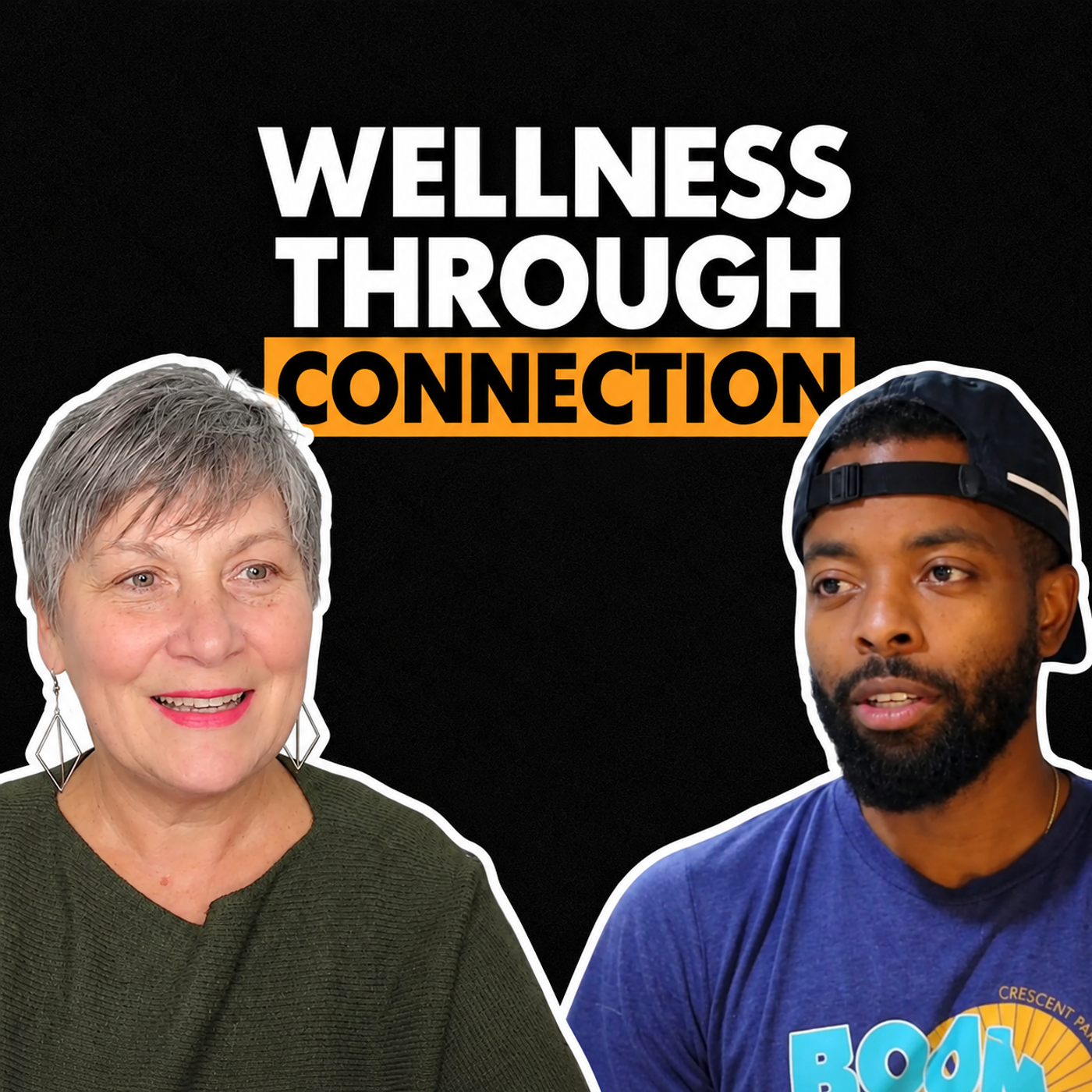
What if improving health wasn’t just about telling people what to eat or how much to exercise—but about building stronger communities, setting meaningful goals, creating better environments, and designing solutions with the people they’re meant to serve? In this episode of the Wise Divine Women Podcast, Dana Irvine sits down with Kwame Terra, founder of bEHR Health, to explore his journey from aspiring orthopedic surgeon to public health innovator. Kwame shares how his early experiences in research, behavioral neuroscience, mindfulness, and public health shifted his focus from treating disease to asking a bigger question: How can we address the conditions influencing health before disease develops? That question eventually led to bEHR Health, a community-centered health platform designed to help improve health outcomes within Black communities through education, engagement, technology, and real-time data. Kwame explains why community is one of the most powerful—and often overlooked—pieces of the health equation. Through Bare Connect, community members can gather, work, learn, exercise, host events, and create wellness initiatives based on what their community actually wants and needs. The conversation also explores Community-Based Participatory Research, an approach that invites community members to become active partners in identifying problems and developing solutions rather than having programs imposed from the top down. Kwame and Dana discuss nutrition, lifestyle, mindfulness, access to healthy choices, health disparities, goal setting, social connection, and the potential for real-time health data to help communities identify what is actually creating meaningful change. Kwame also shares a powerful perspective on longevity: living longer begins with having something meaningful to live for. Inspiration, purpose, connection, and meaningful goals can encourage people to become more engaged with their own lives and health. Words of Wisdom“The perceived separation is merely a perception.” And when something doesn’t work? Learn from it, change your approach, and try again. Connect with KwameInstagram:@kwameterra bEHR Health: bEHRhealth.com Follow Kwame and bEHR Health to learn more about their community initiatives, challenges, and growing vision for health equity. Wise Divine Women Podcast Hosted by Dana Irvine, FDNP, the Wise Divine Women Podcast explores women’s health, personal growth, functional wellness, breast health, hormones and the wisdom that comes from truly learning to understand ourselves. Ready to Better Understand Your Own Body? For support with hormones, metabolism, breast health, digestion, stress, and whole-body wellness, DanaIrvine.com and book a Health Clarity Call. Subscribe to the Wise Divine Women Podcast, leave a review, and share this episode with a woman who is entering a new season of life, love, identity, or self-discovery. #WiseDivineWomen #KwameTerra #BareHealth #BlackHealth #HealthEquity #PublicHealth...
Dana Irvine: Welcome back to the Wise Divine Women podcast where we help you go from fed up to faith fueled, helping you to become the wise divine women and men that you've been called to be. In Menopause, it's an age of wisdom and the purpose show today is gain wisdom, from other people who have a passion and purpose in life. And today I have Kwame Tare and he has purpose and passion. ⁓ Kwame Terra: Okay. Dana Irvine: called Bare Health, it is bridging the gap of wellness for his community, helping them looking at longevity in a bigger picture. Welcome to the show. Kwame Terra: Dana, thanks for having me. Dana Irvine: Thank you so much. So you're young. What brought you on this journey? Kwame Terra: Yeah, guess it started in school, I ran country and track in high school and ended up being fortunate enough to a scholarship to run in college at Xavier University, Louisiana here in New Orleans. And my goal was to become doctor. just like any other 18 year old, I Googled like what professions make the most money. and doctors make a lot of money, especially surgeons. And I always claim that my goal is to become an orthopedic surgeon because I had surgery on my knee when I was 14. I had fractured my tibia. that was really my only exposure to medicine outside of going to the doctor for like my annual checkup and things like that. And so that kind of the beginning of my journey. Xavier is known for producing African-American students. I go on to complete medical school. In fact, they're the number one university. They produce most. students that go on to complete medical school at African American students that go on to complete medical school. It's a really small school, maybe 300 undergraduate students. And so of all of the universities in the United States, this small school sends more black doctors or black students on to complete medical school. So figured it'd be a good spot for me again. And I got that scholarship to run cross country and track. But a couple of years into my academic journey, I was introduced to research and I started developing an appreciation for, you solving problems from the root of the issue as opposed to treating them they've already developed. And I would say that that was the beginning of this journey and what landed me in public health and building platform in their health. ⁓ Dana Irvine: That's amazing. And that's such a great journey. And it is sometimes you when you're in the midst of it and then it's like, ⁓ it's just not quite what I want. And I appreciate that you didn't abandon the cause, but you turned and looked into research. And researching is really exciting. It's always answering the who, what, why. And it's the why that I've come to love as a functional practitioner in that, well. Why is it like that? What tests can we run? What research is behind it? And how we can help the body build itself or give it all the healing opportunities. But it takes people like yourself looking into the research and developing research into the different symptomologies that have. And what did you find the most interesting point in time for you that was a real turning point? Kwame Terra: was ⁓ like learning a lot of self learning that I was doing outside of ⁓ So I did a couple of research experiences over summer during undergrad. I studied three months at UCLA and then I also did three months at Brown University. Mostly it was related to behavioral neuroscience research, psychoneuroimmunology research. When I was at UCLA, I was in the mindful awareness research center. So you can imagine it's basically the in-depth evaluation of everything related to meditation, presence, cognitive behavioral therapy, all of these tools that are often considered kind of like woo woo or not science backed. And here I am sitting in this entire Institute that is dedicated to studying it at UCLA. I really take advantage of that opportunity and connected everyone that was a part of that Institute. Dan Siegel, who's wrote many books and he's an influencer throughout the country. just people who ultimately mentored me for the next three to five years as I was navigating this new perspective on life, right? Because my current perspective or the one before these experiences was that I would go to job or go to school, get my degree, get my job and the And they really my mind to what's possible. in this space, how I can have more of a scaled impact in this space and in this field. And really just gave me an opportunity to create a whole new path for my ⁓ so these experiences definitely shaped me. And in any, I'm just so fascinated by learning in general. was literally during those experiences that it became just like a life passion of mine to learn as much as I can and share as much of my perspective based on my knowledge. with others as I can and the best ⁓ of myself based on what I learned. Dana Irvine: Mm-hmm. Mm-hmm. Yeah, it is. mean, our behavior, the way we're wired, the stressors in our life impact our health. There's no denying. many books, there's many speakers about it. All of it is so relevant to today's life and our longevity looks. And what what... the platform of Bare Health, what is it that you do in that and how is it that all of the research or learning that you had, how did that come forth and where you are today? Kwame Terra: Mm-hmm. Yeah, so I was pre-med, so I studied biology, chemistry, so really science heavy. And then after undergrad, I spent the next five years ⁓ to different conferences related to science, health, social justice, which generally ⁓ a bit more public health focused, right? So I eat a plant-based diet. started eating plant-based diet in January of 2015 when I graduated undergrad. And then I started surrounding myself with you know, community to that. Cause obviously most people, especially here in the South, aren't eating a whole food plant based diet. And so had to go find people throughout the country to connect with and make me feel like I'm a little less crazy than, than, than I feel like I am here in New Orleans. You know, everybody's eating crawfish and everybody's eating shrimp fo' boys and gumbo. You know, they're just looking at me like I'm crazy or like I'm, this is just a fad or a moment. But I had really made a serious commitment to it because of all of the impacts that our diet has on our overall life. And so, I just got exposed to that, saw some of the things that people were doing to make an impact on public health that were untraditional, right? So starting companies, right? Whether this was a company like Purple Carrot, which is basically a meal prep service or meal delivery service. that offers healthy alternatives to some of the standard foods that we're eating here in the country. And just got to meet a lot of these entrepreneurs who were solving problem in a different way that, you know, some of the more upstream drivers ⁓ of the negative outcomes that we see as it relates to health. But one of my biggest learnings was that 90 % of our healthcare spending is on treating preventable conditions, right? So we as a country spend about $4 trillion per year on healthcare. That's $4 trillion with a T. And no one else really compares as it relates to healthcare spending, but 90 % of that is ⁓ preventable conditions, hypertension, type 2 diabetes, many cancers. Dana Irvine: Mm-hmm. Kwame Terra: And that just struck me as completely inefficient. Great. mean, it's just a waste of money. There are tons of conditions that we don't understand yet, that we don't know the causes of, that people are dying from on a daily basis. Children are dying from on daily basis. And we're spending the majority of our money on things that we know how to prevent. That really was... when my goal was or was developed to become a public health practitioner, my goal is to get that number as close to zero as I possibly can so that we can spend the majority of that money on treating conditions that, again, that we don't have cures for, that we don't understand, that we don't know how to prevent. in during the COVID-19 pandemic, just like everybody else looking for the next thing to do, And my aunt had actually texted me and said, Hey Kwame, I think this would be a great time for you to kick off your healthy eating initiative again. And she's referring to me eating a whole food plant based diet. Bayer Health is what I came up with. And she asked that I focus on the black community with the solution. Although should be something that everyone could benefit from. And my first thought was that we don't know how bad we're doing as it relates to our health in the black community. We know we're not doing our best. We know we could be exercising more. We know we could be eating better. But I don't think we're clear on the short and long-term implications of our current health status. someone should tell us. And it's a time we get a bit candid about it. Because an emergency. People are dying early every single day. Heart attacks in our late 30s, early 40s. Strokes our late ⁓ 40s. These again, completely preventable conditions, completely preventable medical events. that the right awareness ⁓ environment, we can prevent. And so I just kind of made it my mission in that moment, summer to solve that build a solution that can solve that problem. And I didn't want to just start another workshop or seminar series or host another conference. I wanted to build a system that could live on and perpetually communicate clearly to the Black our current health status. and evaluate the impact of different interventions that are developed either by us or by the community or by other institutions. have a data set that can evaluate the impact of those interventions in real time so that we know which ones are most effective so that we can continue to invest in those, double down on those, ⁓ ultimately solve the problem. And that's what Bayer Health and the Black Electronic Health Record are. That's amazing. ⁓ Dana Irvine: Mm-hmm. That's amazing. That's a lot of work. COVID gave us time for that, right? it was, it's incredible work. And it is a lot of things when you're looking at, you know, the genetic makeup of the different authenticities. Kwame Terra: is incredible. Dana Irvine: they are dispositioned to different things more easily like diabetes, right? And so it's not your set in stone. It is changeable, right? But it's the education that you've created for communities ⁓ for communities abroad and all over the world. Kwame Terra: Mm-hmm. Yeah. Dana Irvine: that we start breaking it down and understanding how our health is impacted by our habits and easy some changes can be and same as the ⁓ plant-based you can do creole all plant-based you can do gumbo all plant-based you know just like ⁓ it's just matter of Kwame Terra: Yeah. Funny thing about gumbo, gumbo actually was plant-based. ⁓ ⁓ just means okra base. And so it's so funny that there's this vegan gumbo cook-off here in New Orleans every year. And my friends are like, vegan gumbo, what does that even mean? But again, we aren't even aware of the fact that gumbo originally was a completely plant-based dish, and it just meant that it was Dana Irvine: I bet it was. Yeah. Kwame Terra: that was based in Okra. yeah, exactly. And so yeah, there's lots of unlearning. And I did also want to comment on your mention about genetics. Genetics, messaging around genetics is important because it can go one way or the other, right? It can empower you to not feel like it's all set in stone, but it can also limit people if they... Dana Irvine: to Okra stew. So good. Kwame Terra: because they don't think that there's anything that they can do or that there wasn't anything that they could have done to prevent the condition. So when you look at health outcomes, what drives health outcomes are about three components, right? There's healthcare engagement, so going to the doctor. There's genetics and there's, the rest of it is basically how you engage with your life and in your environment. And so those are the three primary drivers of health outcomes. 10 % is driven by, healthcare, you going to the doctor, 10 % of your health is determined by that. About 10, 15, depending on, you know, the measure is dependent on your genetics. The rest, 75, 80 % of your health is determined by how you engage with the world and in your environment. And again, here's another complete mismatch of prioritization. We spend most of our money in healthcare. treating 10 % of what drives the outcomes. We should be spending most of that money over here. And it turns out when we do invest our money in the 80%, the lifestyle factors, the ⁓ to education, the access to healthcare, the access to quality so on and so forth, when we invest in those things, we save a certain amount of dollars on the back end in medical care spending. ⁓ Dana Irvine: Right. Kwame Terra: I am no longer under the impression that is just the of you know, of reality that we, of our that we are in this position, it's consequence priorities and some people have different priorities. And that's okay. not anywhere that everybody has to have the same priorities. And so mine is to create a solution that invests primarily in what drives health outcomes the most and that's what we're doing. Dana Irvine: That's amazing, yeah. in ⁓ that, it's like you don't want to turn the light switch on and working on that 80 % alleviates that and creates a better strength, innate strength in the body. When are, you know, walking and breathing and eating and enjoying life and have a sense of happiness and joy to yourself, that... is so much more that creates all of that 80 % and that that stops thinking of the apple a day keeps the doctor away while eating well and eating whole foods, right? that large plant base into diet is fat just not only just fascinating to what it does for the body itself, ⁓ but it's necessity to that's true health prevent like I don't say health prevention because we always say health prevention, which is Kwame Terra: disease prevention. We are in a bit of a health prevention country though. Our country prevents health, that's a pretty accurate description. That's funny. Dana Irvine: Yeah, disease prevention. And we really have to step back and we are, aren't we? ⁓ Yeah, yes, yes. And how do you think that, you know, in change, and this is going to just sidestep a little bit here, but with the changing of the food pyramid, what was your response to that? Kwame Terra: Yeah, that's a good question. I do think that on the whole, it's a bit better than it was. I on the whole, I actually disagree with significant aspects. But I do think that there's a concerted effort from this administration to remove or limit access to process foods. That's just a good thing on the whole. If that happens and people are still eating the same amount of meat that they're eating right now and people are still eating the same amount of like again, all animal products, but we remove, significantly remove the amount of processed foods that we're eating that country is going to be healthier. So that's kind my general stance it. The focus on like butter and ⁓ the increased ⁓ on animal there's just no data to support it. The longest lived people in the world, right? People who are living in blue zones. Dana Irvine: Yeah. Kwame Terra: They eat 95 to 100 % plant-based diets. And so when someone says that you need protein from animals to survive and thrive, it's just not true. It's literally not true. And the people who living the longest are not doing it. Maybe once or twice a month. they're eating it on a weekly basis, it's like little shreds of meat within a stew. They're eating ounces of meat per meal. This is not happening and they're living longer than us by two decades here in the US. know, so, yeah, that's, that's my main pushback against it is that, that there's any emphasis on, animal based proteins. There's, there's just no data to support that. That is the diet for optimal health for human beings. All of the data ⁓ suggests you should be eating predominantly plant-based diet. Even, ⁓ even ⁓ Dana Irvine: Mm-hmm. Kwame Terra: I don't know if you follow this guy named Brian Johnson and you know, feel how you may about him as a person. He's very interesting guy. but he's been basically investing ⁓ of dollars into ⁓ every aspect of his health over the past few years to basically not not his, that's his whole brand right now is don't die. And you know, he fasts regularly. He works out regularly. He does all these things, but he also eats and I want to, I don't want to miss speaker, but at least 95 % plant-based diet. I don't think he eats any animal protein anymore, but that's where his journey led him. That's not what he was doing before. Now, the guy who's investing the most into their personal health and optimization is eating a plant-based diet and the longest lived people in the world who we've actually studied for years now are eating whole food plant-based diets predominantly in those communities. Dana Irvine: Right. Kwame Terra: That's my main, that's my main thing. There's just no data to support it. It just seems like what they wanted to put out. Dana Irvine: I think it's an awareness for ourselves. Like what we have to be in tune to our own lifestyle, our own health goals, and then what's going to feed that goal. Right. So innately, I find that I'm craving lettuce ⁓ I'm craving, you know, arugula, I like that spice. And it's those, it's being in tune to that, to ensuring that I'm getting enough. Kwame Terra: Mm-hmm. Dana Irvine: greens, right? Just goes like, eat your greens. So important, right? The broccolis, the Brussels sprouts, and even the sprouting itself is such an easy way. your initiative, are you teaching people how to grow their own foods? And have you initiated with your communities to have community gardens? Is that part of what you've learned as well? Kwame Terra: Yeah, not yet. We haven't done much programming like that just yet. You know, we're a startup company. And so what that means is we are really in the field talking to as many people as we possibly can who are dealing with the problem that we're trying to solve and testing as many ideas and solutions as we possibly can against those problems as we for that community. And that's how we essentially will become the best solution. to the problem, not necessarily because we have some great idea or think we're the best thing since sliced bread, it's because we're talking to the most people and we're testing the most solutions. And through that process, we learn more and know what to deliver. So a lot of our growth and focus will basically evolve based on what the community brings to us as what they feel like the solution should be. So one thing that we do here in New Orleans at our space called Bear Connect, which is a community-based space for the Bayer Health community. So everybody in the Bayer Health community, as long as you're a member of the app, you can utilize and engage with our space and everything that we offer here. So you can co-work during the day. Anybody from 9 a.m. to 6 p.m. can come work, study, read, do whatever it is that they want to do during the day. And then in the evening, we host different meetups around anything that really uplifts our community in any way. It doesn't necessarily have to be specific to health. And so people host all kinds of things. People host like poetry readings of their new book that they just wrote. They host, there's this workshop that we're doing right now called Lin Me Your Ears, which is a blindfolded musical experience. So there's like this band that comes into the space and then there are 40 people sitting kind of like theater style with blindfolds on and they're just experience, you know, just kind of like blocking out a lot of the stimulation that we get on a daily basis and just kind of listen for a second. And then so from all of these meetups, we identify like what things catch on, what things not only catch on to where people are engaging with them consistently, but people are also reporting that they're like getting significant health benefits from them, whether those are physical health or mental health benefits. And then we start talking to those hosts. So anybody that's a member of bear connect or that's a member of bear health can host a meetup for free, a 90 minute meetup for free. And so people are hosting yoga meetups, they're hosting run club meetups, they're hosting lend me your ears. Dana Irvine: Mm-hmm. Kwame Terra: And then, I sit down with these hosts and we start thinking about how do we integrate this into people's lives? Because that's what it's really about. We're not trying to create this technology platform where everybody's obsessed with tracking their health all of the time. We're trying to create a health promoting life experience and app serves as a passport to that experience. So just by having the app, you get access to all of this stuff that we're creating. And so we've been sitting down and we're talking about, well, what else can we do with Lend Me Your Ears? at end of this month before our next actual concert of Lend Me Your Ears, we're going to do Blindfolded Conversations by Lend Me Your Ears. So it's kind of like a spin-off of it. just going to have, we even know what will necessarily, like what programming exactly will look like just yet with the blindfolded music or the blindfolded conversations, but we'll have prompts and people will sit ⁓ across from another and talk to one another with blindfolds on and we'll see. what kind of impact that has on people's health and it's a little thing. And she, you know, we're even going to do lend me your hands where it's going to be like, we'll do community service one day as a community, as a group, everybody that goes to lend me your ears as we're going to, we're going to do community service and pick up trash somewhere. really what learned over past two and a half years of building this company is that community is really the solution there. are like a few components. that are necessary to help people stick their goals as it relates to health. You do have to have a goal, right? You have to have a specific objective you want to achieve as it relates to your health. And then you need some sort of time-bound test or measure of that objective, right? It's hard to have an objective and then not have the pressure of, I need to be shape enough to run 5K in three months, or I need to be... I need to be versed enough it relates to cooking with plant-based foods. It's because I'm cooking a plant-based meal for my family in three months. You know, so you need some sort of time-bound test or measure of that. And then third and most important probably is a community of people who are kind of on that same journey with you, right? So this could be people who are already where you want to be. ⁓ then by being around them, you just kind of borrow from their energy. You borrow from their perspective. You almost feel obligated to be more of that just by being around them because otherwise they're going, what are you doing? Why are you eating that meat right now? Because that's just how we work as human beings who are socially influenced. And those three things working together, the consequences that we create a new life experience. People don't feel like health is a chore. It's just they're participating in the bare health experience, which... It's just a new way of engaging with life and it's just health promoting. And we start to our goal being closer to being achieved. And then we measure that monthly when we look at the average health score in the app. Dana Irvine: I mean... I love that. think that's good. And it's good that you're tracking it too, because you want to make sure that goals that you've set and the activities that you're offering are making a change, right? And how they're impacting the community. And I was going to say, like, and well said, in that 80 % health bubble, community is the big of it. Kwame Terra: Mm-hmm. Dana Irvine: If you don't have a community, if you don't have people that have that same motivation, same lifestyle wants, needs and desires, it's hard. Life becomes hard. be health becomes hard. Right? So I mean, I love that you've really focused so on community and ⁓ there been that much of it. I mean, that's a big focus now, but getting everyone back into that after COVID ⁓ has a challenge. And but it is a big focus, And people love appreciate. And as soon as you said the music with the blindfolds, I got goosebumps. I was like, that would be amazing. So amazing. And of course, get together, do more things. It's that, what can we do What can we try next? And the conversation, think the, me your conversation ⁓ is going to be blowing, right? Because we have these, Kwame Terra: Mm-hmm. Yeah. Dana Irvine: prejudgmental mindsets we speak to people about how we should act or how should we respond based even how they look. And so once you remove that, it'll be an incredible conversation. ⁓ amazing. So down the road, what is your sort of five-year plan with this, with Connect and Bear Health? You're looking to gather the information from the changes and then Kwame Terra: Mm-hmm. Yeah. Yeah. Definitely. Yeah, I mean, so if you can imagine, you know, if me as the founder in my team, we are kind of sitting back and we have this giant screen of all of the data trends that are better in the U.S., right? In the black community, we'll see the average health score in New Orleans, we'll see the average health score in New York, we'll see the average health score in Houston and be like looking at the different trends and identifying opportunities either to learn from where black people are doing well. in the country and then take those learnings and apply them to where we're not doing as well. That's kind of the idea. to ⁓ blue zones, we're bear zones or we're looking for bear zones, right? ⁓ Dana Irvine: Yeah. you putting other hubs in the states? Kwame Terra: Yeah, that's the vision. So wherever we see the most organic growth, we'll go set up a bear connect there. And the model will be the same where, again, anybody can host. that's based on community-based participatory research, which I may or may not have mentioned earlier in our conversation. But it's an approach to research and development where you invite the community you aim to serve in as equal partners in the design and development of solutions to their community. And it is the most effective sustainable approach to developing research or developing solutions because people have a sense of ownership. You're talking to the people who dealing with the problems. You're not just looking at the data and assuming that whatever solution that you come up with based on the data is actually going to work. And you more because again, people have a sense of ownership. It's not like you're coming with a solution from the top down. You went and talked to people and found out what Dana Irvine: first. Kwame Terra: their priorities are. Because you can look at a community and see that they have a higher rate of type 2 diabetes, for example. And then a research institution that has no connection with the neighborhood. And like, OK, well, they need a health education. They need ⁓ a education program. Diabetes is a diet related disease. They need a diabetes. They need diet education program. And that makes sense on paper. And then when you go to the community and you start putting flyers up and you're saying, Hey guys, we're this workshop where you can come learn how to eat healthy, so on and so forth. And I'm not saying no one's going to engage, but that community might not care about that right now. Diabetes may not be the top priority, even though everyone's dealing with it. There might be a different factor that's actually driving the disease outcomes because it's going to be an environmental factor. Maybe they're not walking around as much because there aren't sidewalks in the neighborhood. Maybe they're not eating as eating. healthy, healthy meals because all that they have in their environment, in their community is fast food and convenience stores. Right? So you go and you go talk to the community and really just find out what their priorities are. Outside of health, just what are you struggling with right now and how can I help? And that approach, I was gonna say that approach builds the missing component, which is trust. Dana Irvine: Yeah, that's where you... Go ahead. Kwame Terra: If you go into a community and ask them they're dealing with and ask them, you know, offer help solving that particular problem, now they know you care. Now, whatever health education programming or workshop that you're trying to bring to that community, it the likelihood of them engaging with that because ⁓ you're they do need a health education program, right? But you have to build that trust first and that trust is built. through community-based participatory research where you talk to people and help and let them tell you what the problems are and what they need. And we kind of created a model for that at Bear Connect by opening up the space as a platform for people to share with the community what they feel like the community needs or what they need themselves. Some people are just hosting meetups just to find other people who might be interested in the same things that they're interested in. Because again, the community is a really big part of health. so, yeah, my vision is a nationwide network of Bayer Connects that are both gathering data on a daily basis, moment by moment basis, comprehensive health data. So we track over a hundred different metrics on our app, blood pressure, cholesterol, glucose, total steps, sleep, mindfulness, mental wellbeing, nutrition. So we track a lot of stuff on the app. Dana Irvine: Right. Kwame Terra: So we're getting a lot of these data points. And then have this constant funnel ⁓ ⁓ that are hosted and designed by people in specific communities. So types of meetups that are happening here in New Orleans will likely differ from the ones that might be happening in, I don't like Phoenix, Arizona, in the Black community. It's just gonna be different. And that's... important that we we can offer the space in that way because again each community is different the black community is not a monolith and and we know community is country's not like we know all of these things it's just really hard sometimes to develop that are informed comprehensively by the entire community but again this this approach allows people or allows us to kind of and ⁓ systematically find these ideas and solutions. And then we may take, me your ears across the country to all the BearConnects, right? And make it like a staple, staple meetup or event that we host in the space. And so, yeah, that's kind of my vision in looking around and seeing people, you know, sharing healthy meals because they go to brunch at BearConnect instead of brunch at, you know, the unhealthy spot. And we, us watching that average health score go up. Dana Irvine: of it. Kwame Terra: across the board, that we're closing that gap. That's really the vision. Dana Irvine: I love it. think that's so good. And exactly that, that is you're ebbing and flowing to what the needs of the community is. ⁓ you know, you're able to respond. I'd love to learn how to do this. Or do you have someone to do this? And of course, then you just hop right in and reach into those community partners and allow that and that connection to happen. Right. lot more to say in that connection because Kwame Terra: Yes. Yep. Dana Irvine: That's really going to start the momentum of the movement for finding their place, ⁓ finding home. Right. It's always good to connect with people with the same sort of mindset and same Right. So it's think. Awesome. And I love that me your ears thing. That's so beautiful. So it's like, really? Kwame Terra: Mm-hmm. Yeah. Yeah, and she actually just got it. She's got a grant for it. Yeah, so New Orleans has two cycles for grants, the New Orleans Cultural and Tourism Funds. think that's what I think that's the acronym of TCF or CTF. And they have a series of grants ranging from 2500 to $10,000, $20,000 for musical related events and cultural related events for the city. when that grant came out, you know, one thing that I'm known for in the city is like raising a lot of money for my startup. So we've raised like half a million, little over half a million dollars for Bear Health in the past three years. And tons of entrepreneurs are in the city, like, you know, trying to figure out how do I do that myself? Well, it's a very simple formula. is you apply, apply, apply. Dana Irvine: Yeah. Kwame Terra: That's I've gotten the money that I've gotten. I've applied and I told everybody that I know what I'm trying to do and what I need to get it done. And we've gotten enough to where we can keep going and keep making, getting traction and raising more money. And so once we up this space fair connected at beginning of the year, the New Orleans dropped the first window, which is a 24 hour window available for this particular grant. so once it opens, in there. Everybody's in there working on their and whatnot. so I decided against, you know, my mentality is like, if I have an idea for something, let's test it. Let's put it out there. We need to a workshop. need to create space for this. And so ⁓ when saw that grant come out, I decided to open up Bear Connect for until midnight for people to come through and work on application. received support from our team. And I don't know about this grant in particular, but I've again applied to a lot of in my experience over the past three years. And so ⁓ lot of it was just breaking down barriers, really imagined barriers that people had to this grant. And for example, you have to have a New Orleans business occupational license in order to apply. Well, some people might see that when they're going through the application process and then just say, okay, well, I'm not going to... I can't apply. Well, it turns out that you can submit the application, can submit your application to the license and that would be sufficient for the application to that grant. And sure, you got to get it done once you once you receive the grant officially. But just a little things like that, letting people know that you can keep pushing through even if there are small things that might be in your way to getting this to getting a application for this grant. And so, yeah, she ended up applying like submitting three proposals. She wasn't going to do that before. And she ended up getting $2,500. so it's like, yes, we're promoting health and wellness and eating healthy and movement and stuff like that. But we're really just trying to bring value to people. Again, similar to what I was saying before, go find out what people's greatest needs are, what their priorities are right now, build that trust, and then integrate them into your ecosystem to where. Dana Irvine: Right. I'm sure never in your wildest that you would think that a grant writing workshop would work. Right. Unless the necessity rose, but it is like a grant writing nobody has an idea. It sounds so cumbersome, but when you're working together as a team, it it much easier. We have a beautiful company here in Ontario, Canada, that's called Paro. Kwame Terra: you solve the problems that are important to you. Mm-mm. Yeah. Dana Irvine: Now it's a women's initiative and they do small loans and small grants then you can build momentum and it teaches you all these different things, but it based out of that lending tree sort of idea. And so it's been so successful as now in Vancouver, it's now into the States, it's now ⁓ all Ontario and then into other provinces as well, ⁓ starting with micro loans or micro So it's just been as long as someone's there to lend a hand. Kwame Terra: Hmm. Mm-hmm. Dana Irvine: Some long as someone like yourselves like I've done a grant before who else can I help? That's brilliant right and it's just helping them gain that confidence the reality that Anything is possible right? So good so good ⁓ Kwame Terra: Hehehe. Yeah. Yeah, absolutely. Yeah. Dana Irvine: Amazing. I really enjoyed this. think it's, it's timely to ⁓ what realized was missing. And that that researcher in you is like, okay, how am I gathering data? How do I, how am going to help the community? And I think the app is amazing, like, how good you to be able to provide it, not only just gathering the information, because that's important for people's health to understand it for yourself to understand, like, where can we start educating what things are, are we seeing Kwame Terra: Yes. Yeah. Dana Irvine: this becomes valuable information overall for any sort of university or any sort of medical system because we may we understand health as being sort of ABC or we're sort of taught ABC, but is that actually what's happening? Right? ⁓ And then can help with those things? Very nice. Kwame Terra: Mm-hmm. Yep. That's a part of the five, 10 year vision that I left that I did leave. I said three to five years. As the data set grows, as the black electronic health record grows, we'll be able to stratify. And we actually already can do this. We can stratify our data by city, state, zip code, partnering organization. And we're able to see what the average health score in this zip code might be. And so house stakeholder might be interested in that data set, right? A city might be interested in that data set. A system might be interested in a data set. And so then what we're going to do is we're going to go talk to that zip code and say, Hey, this, this entity, this institution is interested in the data set. our aggregate data set in this zip code. Are we open to sharing that aggregate? Dana Irvine: Right. Kwame Terra: unidentified data with this institution and how much are we charging? Right. Because then what we're able to do, let's say we charge $50,000 a year for people to subscribe for access to our data set, our institutions, $100,000 a year. And then we take some of that capital and we invest in the programming that the community has already developed through using the space at Bear Connect to solve these problems in the way that we already know how to solve them. The institutions may have their own agendas for what they want to do with that data as far as like understanding or solving the problems in the way that they want to solve their problems. But we're working directly with the community again, and all of our solutions are informed by that. so honestly, it could even be opportunity to just garner more funding for us in general. may do the research that they do and then they're like, oh, well, actually you guys seem to have figured it out. And so we'll just continue to invest. Dana Irvine: Right, right. Kwame Terra: And there we can almost become a health equity consulting firm, you know, of sorts. And so that's probably our largest financial opportunities in monetizing the aggregate But we got to do it the right way to where the community also gets a cut. Well, yeah, I mean, it's all of our data. And so we should all financially benefit from it. And the only ⁓ investment. Dana Irvine: benefit of it. Yeah. Right. my, yeah, in my thought it was like, it's necessary. They need a grocery store. They need better healthcare. And in that entices because the, numbers are there and the data is there that it would be advantageous for them to put in, you know, a hub, a health hub or a community center or a better grocery store or ⁓ those types things or daycare or things. Kwame Terra: Thank you. Mm-hmm. Dana Irvine: all sorts of different information can be pulled, even though you're pulling just health data, it's creating. ⁓ Kwame Terra: Thank real time nature of it is what's really differentiating ⁓ Not there isn't a bunch of real time data out there. It's just not organized in this way ⁓ for particular problem. And typically, health institutions go and do a needs assessment. They'll maybe take six and do a needs assessment of a community and then they go evaluate that data and that data is limited it Dana Irvine: Yeah. Right. You really spiced it Kwame Terra: you know, how many people did you get to participate in the assessment? And then you go and take a year and develop a program and then you deploy that program, you know, year or so later with, you know, the information that you got from the assessment. But like people's lives have changed in that time. And so there's just there's just some some limitations, I think, to our current model that just can be improved with real time data. Because when we roll out a challenge, Dana Irvine: Mm-hmm. Kwame Terra: we see an uptick in steps and activity the next month, right? Or not, right? That challenge didn't work. to be able to see that in real time and to be able to see, well, we saw a significant increase in the average health score or the average activity score, the average mental health score in the community this month. And we know what different programming we implemented this month. And so now we can go and double down on that. that's really the... Dana Irvine: Right. Kwame Terra: I think the largest play that we have as a company since then. Dana Irvine: So is this just available in the States as of right now or how do people find? ⁓ excellent. And then have you had the hubs start yet outside of New Orleans? Kwame Terra: U.S. and Canada, yeah. U.S. and Canada right now is where we're at. ⁓ No, we just opened up this one in January. So we're literally three months into building out Bear Connect, the model here. And so our goal is really using New Orleans as a testing ground for really understanding how do we communicate this to people? How do we showcase the value that it offers? But like said before, I think it's going to look different in every city. But we're going to do some national challenges. Dana Irvine: ⁓ excellent. Kwame Terra: international challenges with Canada this year that'll start to grow app at least nationwide and wherever we see the most people start the app throughout the country, we'll start to go open up hubs. I mean, I really see a Houston, Atlanta, Toronto, Detroit, so on so forth where we just have these pockets we go again, just create a new experience. ⁓ Dana Irvine: I think it's amazing and I love that very on time and it's timely and you're collecting it and everyone as part of it ⁓ their own health. They get to see everything. It's not only for research and things like that, but they themselves, what apps are for. They're to watch and see and set goals for yourselves and look at activity and understand your health further because that's preciseness of health today. You can ⁓ est, can understand, you can watch your blood pressure, you can watch your sleep cycles, you can do all those things, and they are all changeable. Kwame Terra: Mm-hmm. Thank Mm-hmm. Dana Irvine: And it's the positivity around it and education and community to make all of these things work better. And you're not doing it alone. Right? That's the worst part of things, right? Always feeling alone and drudging through to figure out. But when you're as part of a community like that, even if it's just an app, you know, it's amazing. I think it's great. Yeah. really good. Kwame Terra: Yep. Thank Thank you. Dana Irvine: So what a word of wisdom that you've held true, like a phrase or thought, that held for yourself or that you share often your community? Kwame Terra: Hmm. Yeah, I think. I think the wisdom that I'll share is only I'll share two things. First one is related to public health something been trying to solve for for a while now, which is how to how to increase people's desire to live. So desire to live is what I regard as the foundation of longevity, right, without. the desire, if your brain doesn't recognize a valued goal to pursue, it will not give you what it needs or what you need to fully. Right. And many aren't having a great time because I think on some level we lack valued goals. And that sounds very, you know, business like and stuff like that. But that's just we That's how we're set up as human beings. So we lack value goals and many of us have goals, but we don't really value them. Not the ones that we have. Like we've kind of accepted prescription from our society of what we should pursue. And a lot of us are unfulfilled as a consequence. And so last when I attempted to break the world record for the most steps in 30 days, I think I found at least part of the solution to that. to that problems or how to inspire the desire to live in people. And it is through inspiration. By me going after this challenge and doing things that no one has ever done before and people witnessing it, they now in themselves feel inspired to do more, become more, try more, and more engaged with and excited about life. And ⁓ I'm here thinking, we have to figure out how to send a message to people and... educate them on like the importance of wanting to live long and live well. And that's really challenging, especially when we're up against all of this information that's kind of pointing people in the other direction. It's like, how do you break through? And I found a way to break through by challenging myself and to become the best version of myself. And as a consequence, other work on in themselves. So that was really, I was really glad that that happened. because I wasn't sure how I was going to scale that. And that's a really hard problem. Yeah, I told my mom that one day and she's like, oh, don't Because she, you know, she naturally has doubts about me pursuing entrepreneurship, just as any concern mother would. And, you know, when I told her that that insight that I feel like people, people are struggling with the desire to live and people are having a great time and don't really want to put that much effort into a good life. And, you she agreed on some level, but also it was just like, I don't know how you're going to. I know how you're going to solve that. know, and so that's the first. Inspire, that's it. And tell the story, right? So you can do things, like then it's like, how do we push these stories? How do we promote the content? How do we flood the zone with these messages so that more people engage with them? So that's the first piece of wisdom. And one thing that I encounter a lot with people in the community is just. Dana Irvine: Inspire, that's it. All you can do is inspire. Kwame Terra: anxiety around like if it doesn't work people are afraid to lose something on some level. ⁓ haven't really had that fear for a little over a decade now. And I do attribute it to my experience at the Mindful Awareness Research Center at UCLA. Because when you practice when you develop like a sincere practice, you start to ⁓ develop a relationship with reality ⁓ and your in it and your relationship to everything and everyone around you. My attitude is that we're all part of a whole, right? The separation that exists between us, the perceived separation is merely a perception. And as a result of that belief that we are all one one, we're different manifestations of ⁓ one the idea you can lose something Dana Irvine: Right. Kwame Terra: is based on an inaccurate perception of reality, The original illusion, right? The ego, self. And so since that doesn't really, like that I have a strong presence of my ego as a result of consistent meditation practice. Now it'll absolutely creep up when I'm not practicing as much. And I start to feel all of these things that everybody feels all the time. But the more consistent I am with that, the more consistently I am. maintain that perspective and that attitude that, that there is nothing to lose. There is nothing to fear. And so I don't, I don't have the same anxiety that most of us have when we go to approach doing things or changing things. It's all, everything is subject to change. That's just what it is. And if this fails, it literally doesn't matter. It doesn't matter. Try again. So that Dana Irvine: Right. Yeah, just try again. Try again differently. You learn from every lesson, right? Kwame Terra: Yeah, so that's really main message that I like to share with people is, ⁓ not even a message, it's just I try to put people in ⁓ where it's just, we're just doing it. Like we're not thinking about it, like we're just doing it. just it. Nike, guess, got it right. ⁓ Dana Irvine: Yeah, love it. So wise words, right? So where can people find you? Kwame Terra: Yeah, on social media, can find me personally at Kwame Terra, pretty much on all platforms, Instagram, YouTube, TikTok, T-E-R-R-A. And then you can find Bare Health, similarly, same handle across all platforms, B-E-H-R Health. And yeah, follow our journey, download our app. We're doing a major challenge right now here in the city of New Orleans, where we're trying to cover enough distance as a community to reach the moon. called the Barathon and it'll it'll be a challenge that we do every year in in April. I didn't realize but April is Minority Health Month, National Walking Day, Public Health Week, so it's a good month for us to do this annual challenge. Dana Irvine: It is. It is. It is. And they just sent four people around the moon as well. So they were all Canadians or not. I'm not sure. But four Canadian people went around the moon. Yeah, they just they're just on their way back. So just finishing the dark side. But so incredible. And truly appreciate the hard work. Kwame Terra: Oh, I gotta lean, I gotta... Yeah, yeah, yeah. I'm gonna lean, I'm gonna lean onto that. For sure. Mm-hmm. Mm-hmm. Dana Irvine: that you've put into this. It's not for the faint of heart, that's for sure. And you certainly need to be and centered to accomplish the big things that you've done. Because you've jumped hurdles, I'm sure. Nothing is easy when it comes to ⁓ setting the technology behind it, gathering the information, and then utilizing it to its optimal capacity. ⁓ good luck. Kwame Terra: Yeah. Yeah, I appreciate that. Dana Irvine: I wish you the best of luck with Bear Connect. I think it sounds so exciting. It sounds like you have so many great community partners and such a worldwide or Canadian international community. And I think it's just going to continue in great success, right? It's only up from here. So thank you so much. Kwame Terra: Thank you so much. I appreciate that. Dana Irvine: Kwame for being part of the show and I hope everyone enjoyed it today. Everything you can find out about Bear Connect, the Bear app, Bear Health and Kwame himself will be in the show notes. Thank you for being part of the show. Kwame Terra: Thank you for having me. Dana Irvine: Thank you so much. hope this helped you a little. I'm sure it helped me. I loved it. I think it was a fascinating conversation hoped it helped you on your way from becoming fed up to faith fueled, helping you become the wise divine that you've been called to be. Thank you for joining us.