
Wise Divine Women Podcast: Menopause • Libido • Breast Care • Oh MY! The unfiltered truth for Women · Dana Irvine FDNP - Menopause Support • Functional Nutrition • Thermography
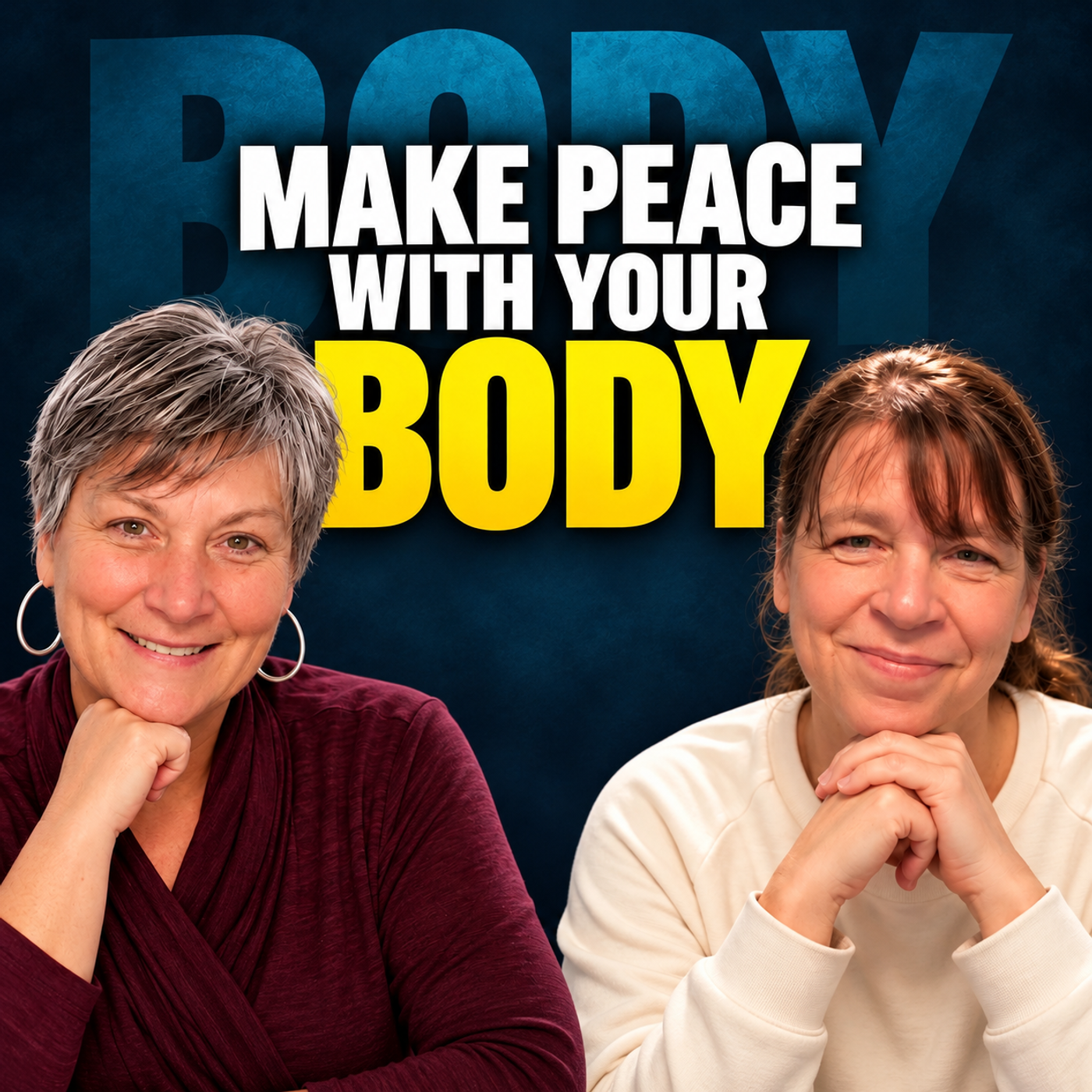
What if you didn't have to love every inch of your body to finally feel at peace with it? For women navigating midlife, perimenopause, and menopause, changing bodies can bring unexpected emotions, self-doubt, and pressure to look the way we did 10 or 20 years ago. But what if we could stop fighting our bodies and start appreciating everything they do for us? In this heartfelt episode of the Wise Divine Women Podcast, Dana Irvine welcomes author, body image coach, and educator Anne Poirier, author of The Body Joyful and The Body Neutrality Playbook. Anne shares her deeply personal journey through childhood body shaming, anorexia, decades of dieting, and eventually discovering a healthier relationship with her body. Together, Dana and Anne explore how body neutrality can help women move away from self-criticism, reconnect with their personal values, and embrace the changing seasons of life with greater confidence, compassion, and joy. What You'll DiscoverBody neutrality vs. body positivity: Why you don't have to love your appearance to respect and care for your body. Healing negative self-talk: How childhood experiences and societal expectations influence our beliefs about weight, food, and self-worth. Menopause and body image: Giving ourselves permission to grieve physical changes without getting trapped in the past. Movement for longevity: Shifting exercise away from weight loss and toward strength, independence, and quality of life. Breaking generational cycles: Modeling a healthier relationship with food, movement, and body image for our daughters and future generations. Episode Chapters00:00 – Anne's journey to body acceptance 02:48 – Childhood messages and societal beauty standards 05:32 – Breaking free from lifelong body criticism 08:32 – Understanding body neutrality 11:27 – Appreciating what your body can do 14:09 – Movement, strength, and confidence 16:52 – Inside The Body Neutrality Playbook 21:18 – Challenging beliefs about food and body image 22:47 – Changing the conversation for future generations 24:15 – Discovering your values and motivation 26:36 – Curiosity and compassionate self-talk 29:07 – Anne's books and personal growth 30:27 – Grieving the changes in our bodies 32:04 – Letting go of the perfect-body illusion 35:30 – Choosing a healthier relationship with yourself 38:58 – Why our thoughts are "choiceable" 39:56 – Anne's free body confidence guide Connect with Anne PoirierWebsite: Anne Poirier Free Resource: Body Confidence Unlocked: Feeling at Home in Your Body Regardless of Size, Shape, or Age. Visit Anne's website for more information. Connect with Dana IrvineDana Irvine, FDNP, is a Functional Diagnostic Nutrition Practitioner, breast health educator, and host of the Wise Divine Women Podcast, helping women over 40 understand their hormones, metabolism, breast health, and whole-body wellness. Explore functional nutrition, personalized wellness, and root-cause health support...
Dana Irvine: Welcome back to the wise divine women podcast where we help you go from fed up to faith fueled, helping you to become the wise divine women that you've been called to be today. I want to welcome Ann Poirier to the show. She is an author and coach. She has written the body joyful and the body neutrality and the playbook. So it's a lot. And I love to hear about your journey and welcome to the show. Anne Poirier: Thank you so much for having me, Dana. I'm grateful to be here. Yeah. Dana Irvine: Thank you. Thank you. So how did this all start? Anne Poirier: Well, you know, sometimes I say that your past leads you to your purpose. And I think that that's exactly what happened to me. So I struggled with body image and negative self-talk as a child and right into my early teens. And I ended up turning external voices internal to myself. The little phrases that my parents used to describe me, I was stocky and sturdy. and I was a chubby Dana Irvine: Mm-hmm. Anne Poirier: little baby and what cute thighs and all those kinds of words and phrases. I had a brother that, you know, developed a lovely little nickname for me. Couldn't quite fit into the clothes at the regular section, so I was down at the back of the store with the Husky. Dana Irvine: Mm-hmm. Anne Poirier: And because of all of that, I just interpreted and internalized the fact that I was fat, my body was wrong, I needed to do something about my body because I didn't fit in with the other kids. looked different and that I started to just not belong. And that led me, because this is what we do when we don't feel good about our body, we look for something that can help us and change our body. And so I just went searching, and this is in the 1970s, and I went searching for a diet and there was a plethora of them at that time. And so I found my first diet and I was so good at it that it overtook me and I became sick with anorexia nervosa. So I spiraled into an eating disorder, disappearing in front of my parents' of eyes, 11, 12, 13, 14 years old. And that was kind of this start of this horrible negative critic that just continued to beat me up. So, Dana Irvine: Right. Anne Poirier: yeah, and that's what... led me to just continue that story. In the 70s, was, if you think about eating disorders, there wasn't any talk about that. It was almost 10 years prior to Karen Carpenter's death in 19, I think it was 1985. And so my mother was relentless trying to find some answers. And she got me into therapy and I got well enough, you know, to... start back at school, you know, so I went back into school my sophomore year in high school and then I just continued finding ways. either went, I was either on a diet or was off a diet. So then I started the whole yo-yo system up and down, up and down. And it really wasn't until my body broke down in my early fifties that I said, I got to figure this out. Like this isn't working Dana Irvine: Right, no, Anne Poirier: for me anymore. Dana Irvine: exactly. I mean, we're the same age, so yes. wasn't so much that we knew about or spoke about anorexia or even bulimia or things like that. It was, well, we could go get dexatrim or we could do the trim shakes or Atkins was in its prime then. So Anne Poirier: Mm-hmm. Dana Irvine: it was there, but not in the same sense as what the craziness is now, I find, right? Anne Poirier: Right, was quiet. Believe it or not, we thought it was loud, but it was actually quiet compared to what it is now. And Dana Irvine: See ya. Anne Poirier: that scares me about our next generation. So a lot of my mission is about how do we help become, feel better about our bodies at our age so we can role model for our next generation because... Dana Irvine: Well, and it's true, right? And for me, it's opening up these conversations like this with my 20-year-old children, because Anne Poirier: Hmm. Dana Irvine: when they were 13, I never recognized their eating problems either. We were just really dumb to it. I was probably just post-menopausal, or postpartum. But Anne Poirier: Mm-hmm. Dana Irvine: when they were that age, I never recognized it either. So now as young adults, we get to talk about it, and we get to... speak about their journeys as well, which has been really enlightening and lovely to share these moments with my daughters. But it's now hoping that we can change that tide into Anne Poirier: Mm-hmm. Dana Irvine: in those 20 year olds body image issues that they're really coming to terms with, or a few of them are coming to terms with. And then hopefully that'll change the direction for the next generations, which is perfect, right? And that's probably Anne Poirier: Right. Dana Irvine: what drove you to expressing this in the book The Body Joyful. Anne Poirier: Mm-hmm. And you know, it wasn't until I started to pause long enough and quiet myself long enough to hear my inner voice. And I was actually in the hospital, and I tell this story and it's part of the book, I was in the hospital to have a surgery on my leg so that I could continue to run and do the things to try to keep my weight in check. And it was when the doctor couldn't do it because my knee was already too He said, it's too far gone. We just have to do a knee replacement. That I had the time to say, what am I doing? Dana Irvine: Mm-hmm. Anne Poirier: And I completely shifted. I was a fitness professional. Part of the problem, I own it all the time. Part of the problem for 30 years. And that's when, that was kind of the breaking point. And I said, I've got to learn how to fix myself. And Dana Irvine: Mm-hmm. Anne Poirier: then on my own journey, going back to school for eating disorders and going back to school to learn about intuitive eating and body image work. It just shifted the whole trajectory of my life and now I do this work for a living, helping Dana Irvine: Mm-hmm. Mm-hmm. Anne Poirier: women feel better and more confident in their bodies, regardless Dana Irvine: Yes. Anne Poirier: of what size or shape they are, regardless of what age they are. Dana Irvine: It's true. It's this sense of, you know, and I do it just as much. We seem to get ourselves caught in this little cycle, but at least we know well now it's like, okay, pull yourself together. Let's snap out of that. That's not true. You know, it's perfectly fine. You're healthy and amazing, but we still get caught. And probably because of all the social media and all this craziness that we get ourselves into. And then even as being business owners and fitness experts and of promoters were kind of caught in it as well. But yeah, when you look in the mirror, it's just like, blah, you know? Anne Poirier: I know, I know. And it's about, it is about changing that dialogue with ourselves. Because Dana Irvine: Yeah. Anne Poirier: it's no wonder we, always, I think about that a lot. It's no wonder that we do it because we've done it for 50 years. Why wouldn't we just look in the mirror and have that same reaction unless we are proactively starting to change the conversation with ourselves, right? Dana Irvine: Right. Anne Poirier: And that's what the work that I do is all about, kind of going. into the self-talk, into some of the belief systems that we were given as kids around food and body and exercise. And how do we start to take some of those apart and get our mindset shifted, shift the perspective of how we see all of those things. And Dana Irvine: Mm-hmm. Anne Poirier: that's what allows us to turn the corner and see ourselves differently. Dana Irvine: So how do you actually approach that with women? Anne Poirier: I think the biggest part of this is separating our worthiness as a human being from our weight. And our culture and our society has tied them together. You know, we've put all of our worth in the body image basket. If I look this way, then everything is okay, right? It's that good old, I call it the when I then I game. When I lose the weight, then I'll do that, right? When I fit in those clothes, then I'll go there. The then never comes, regardless Dana Irvine: Mm-hmm. Anne Poirier: of if you lose the weight or not, right? We never feel good enough regardless. And so it is this separation and how do we start to see ourselves the way other people see us? And so I actually do this very powerful exercise with people. And that's part of this body neutrality concept. And I'll talk a little bit about that in a minute. That I asked them to write down a couple of their their best friends or people that they really care about, and then write down next to them why they like them, why they like to be with them, why they like to hang around them. And so they curate this list of reasons why. And then I ask them, does it have anything to do with the size of their body? And 99 % of the time, it has nothing to do with the size or shape of a body. Dana Irvine: Mm-hmm. Anne Poirier: Every once in a while, I have a really tall friend and one of the things might be, she can reach things over there, right? She can get the crock Dana Irvine: Yeah. Anne Poirier: pot down for me or whatever. But other than that, it's really about their sense of humor, their caring, the way that they are able to have conversations, their vulnerability. It's all the other things that make us human. And then I flip it and I have them do the same thing for them, you know, people that care about them. And that opens the door for at least a conversation around. Our body is just the vehicle that we move through our life in. It doesn't define our worthiness as a human being. And so that's kind of the starting point. Dana Irvine: Yes, that's so good, right? Because it is the separation that we need to connect the dots that is not equal so that we can re-visualize ourselves, right? Because it is this repetitiveness that we, the repeat that we have going on in our head that we have to shut off, right? Yeah, Anne Poirier: Correct. Right. Dana Irvine: yeah. And so then what is the next step? Like how do you approach it from there in switching their mindset to be that joyful? Anne Poirier: Mm-hmm. It's interesting because our body image, I think, about lands on a continuum. On one side, we have hatred. Hate my body. Never liked it, you know, and a lot of people live in that space. On the other side, we have just love your body. Love your body. That's what you need to do. And if you're told, and this is when I was kind of doing this work, you know, back about 10 years ago, I was always told, you're supposed to love your body. And I'm like, kind of throw my hands up, well, I'm not going to love my body. You Dana Irvine: Mm-hmm. Anne Poirier: you hate it for a long time. It just didn't seem feasible. And so the idea and the work that I do with body image isn't to get to body love. It's to nudge ourselves away from body hate. Right, because the body hatred ramps up that inner critic that criticizes and judges and then also compares and then tells you, what you need to do because you're not right. And so how do we nudge ourselves out of that realizing that's not helpful? And if I don't think I can love my body, well, then what's next? Or where do I go? And that's where body neutrality comes in. And body neutrality is this space in the middle of the continuum where we can turn down the volume of our inner critic a little bit, turn down the volume of society's thin ideal and diet culture. and then turn up the volume of our body's function. Like, what does our body do for us every day? We step Dana Irvine: Mm-hmm. Anne Poirier: up, yeah, no, you know, we pull it apart from appearance, which is always what we're only looking at from bodies. How do we step away from appearance and focusing on appearance and then move that focus towards what does my body do every day? And start to think about, wow, it shows up for me every day. It allows me Dana Irvine: Mm-hmm. Anne Poirier: to hug my kids, right? laugh with my friends, digest my food, all of those things that our body does that we never even think about. Dana Irvine: Right, it's just an automatic thing in that, so we really ignore it, but it is, again, is this stepping away from the image aspect into not so much fitness, but it is this, is my body strong enough to hold me up, right? Anne Poirier: Mm-hmm. Dana Irvine: Am I strong enough to walk and carry my grandchildren and do those things that we also have to take into consideration in trying to rewrite the mindset to allow us to move a focus. move the focus away from visual to internal and that strength and power that lies within. Anne Poirier: Absolutely. like working on fitness and exercise and movement is important too because our society has still, I hate to blame society a lot, but it really kind of does sometimes. It connects. Yes, there are people that, yeah. Dana Irvine: It's somebody, somebody, somebody started to. Yeah. Anne Poirier: And then like I say, I was kind of part of the problem because when I was going to school for fitness and exercise science, it was, you need to exercise at least this long. for at least this hard, right, this many times a week if you want to get, Dana Irvine: Mm-hmm. Anne Poirier: you know, move forward. And if someone couldn't do that, why even bother and try? And then exercise became linked to weight and weight loss and body and changes in body shape. And as you said, which I think is brilliant, how do we start to see our bodies so that we can do the things that we want to do in our body? know, our body provides us independence. You know, so how do we move our body so that we can keep moving our body? And what Dana Irvine: Right. Anne Poirier: does that look like? I'm not moving it to lose weight. I'm moving it so that I can keep moving it. Right? For quality of life. Right. Dana Irvine: Right. Yeah. You to use it and lose it. Yeah. Use it and lose it. And it's not from this, have to run to 5k or I have to do 10,000 steps or I have to lift 35 pounds or 60 pounds in weightlifting. It's just to stand up straight, to walk strong, to sit down and get back up again. It's really fundamental. And once you can start achieving confidence, and I'm not saying a lot of women are this way. I'm just saying it can be as basic as that. you, those confident things are built like building blocks. And then it's like, Oh, okay. Well, I can go for a walk with my girlfriends, go hiking for 5k. Of course, because you've, know, your limitations, you understand that you've built that strength, but you've also built that image inside your mind that you're worthy of, of Anne Poirier: Mm-hmm. Dana Irvine: that. You feel great. Of course, let's go. So yeah, it's all. Anne Poirier: Right, right. Dana Irvine: Momentum. Anne Poirier: Right? You know, it's stopping and asking ourselves what we want to be able to do in our bodies. Right? So, and then once we have that idea, I want to be able to get down on the floor and play with my grandkids. You know, I have to, I want to be able to do that. And Dana Irvine: Yeah. Yeah. Anne Poirier: so if that's the case, I want to make sure I do the things that I'm able to do that with. Right? So that's Dana Irvine: That's awesome. Anne Poirier: the, it's the different, it's a different way of seeing things. Dana Irvine: Right. Exactly. Anne Poirier: You know, that's, and I think that's the key here is how do we see our bodies differently, you know, and see fitness and food in a different way, different Dana Irvine: Mm-hmm. Anne Poirier: from the way we've been taught. Dana Irvine: Right. So how does that then roll into the new book, The Body Neutrality? What do you mean by that? Anne Poirier: Well, it's interesting, the body during my own recovery and my own healing, the concept of body neutrality was just kind of skirted by me in a class. And I went, that's interesting because I was still stuck on thinking I had to love my body and I was having a hard time with that. And so I grasped onto this concept of body neutrality and I worked my, I used it myself. What does that mean? How can I stop looking at myself very first thing in the mirror and beating myself up about my body? And so there were a couple little steps along the way. I decided number one, I was never gonna die it again. I'm done. It's just not gonna happen. Because I know it doesn't work and I've played that game too long. And so that was number one. And number two, how do I just start to think about my body a little bit differently from this from the way we've been talking. And so the work that I started to do with clients and groups was very powerful when they started to make that mindset switch. And so I just, for myself, number one, and then for clients, I figured out a series of different activities and tools and mindset shifts that we can do to help bring ourselves to a place of peace and respect Dana Irvine: Okay. Anne Poirier: with our body. And if I can respect my body, maybe I'll treat my body differently. And so the body neutrality playbook is just that, it's a workbook basically for body image to shift the way we're thinking about our bodies. And then here, these are all the tools that we can utilize to help us make that shift. Dana Irvine: Right. And the way, because you couldn't find that love aspect, if women are not being able to find that, that love component of that language just doesn't feel like it's sitting well, it's now bringing them to a peace and understanding of how Anne Poirier: Mm-hmm. Dana Irvine: their body is and being good just with that. Right. Anne Poirier: Right. I use an analogy, I call it the good gift, the good gift, bad gift theory. I call it Dana Irvine: Mm-hmm. Anne Poirier: the Anne theory. It's a good gift, bad gift theory. But I think it's interesting to think about. When we get a good gift from someone, we cherish it. We take care of it. It's important to us. It's almost unconscious. We just do. You know, I got a picture from a friend 20 years ago. It was a Norman Rockwell, one of my favorite pictures. that I've ever received. And it goes into my bathroom everywhere I go. So wherever I move, it comes with me. Dana Irvine: It goes with you, yeah. Anne Poirier: It's very important. When we get a bad gift from a friend or someone after we are curious about why they thought we'd like it, where does it go? ends up in the closet, re-gifted, it just kind of disappears. And I think about the fact that both of those things are really sort of unconscious. We don't really think about it, it just happens. And Dana Irvine: Mm-hmm. Anne Poirier: so if we're thinking about our bodies as a bad gift, like I don't like this body, it's no good, how are we treating it? Dana Irvine: Right. Unconsciously we'll be treating it the way that we receive gifts. Yeah. Anne Poirier: Yeah. Right? We might not be feeding it the way it needs to be fed. We might not be listening to what it needs. And then we beat it up, right? On top of it. And then in turn, we go to restriction or punishment. And then all of the emotions that get tied up with all of that, the next thing you know, we're reverting back to old behaviors. Right back on the dieting bandwagon or right back into binge behavior or eating because I don't like the way I feel. Right, I'm not feeling good about myself, so I might as well just eat the cake because it really doesn't matter. Dana Irvine: Right, Yeah, it's hard. I think it's really hard for Anne Poirier: Yeah. Dana Irvine: women to get, as you're talking, I'm just like, yeah, I do need to get back to that strength aspect. I don't care. I'm not gonna break this figure. I've always had soccer legs. I'm not gonna, you like it's all these perspectives, but in that doubting for myself and in this little menopausal spiral I have myself into sometimes, or I catch myself in. is that I'm forgetting the importance of that strength component. And that's why I had sort of alluded to that. So I have to really start teaching my mind that that mentality and creating those better habits for myself as well. Anne Poirier: Yeah. Looking at what your body can do, the things it has accomplished, the things it does do on a daily basis. Focusing on your strengths, focusing on the things that your friends and family love about you, right? The Dana Irvine: Mm-hmm. Anne Poirier: things that your daughters love about you. Like, Dana Irvine: Mm-hmm. Anne Poirier: can we start to focus there? I think that's part of the bigger Dana Irvine: Right. Anne Poirier: piece of all of this is noticing when that inner critic comes in. noticing when it starts to beat us up and just take a deep breath and go, my little phrase is thanks for sharing. Dana Irvine: Yeah. Anne Poirier: You know, like I validated that it's there, thanks for sharing. That's not helpful for me right now though. What Dana Irvine: Hmm Anne Poirier: else can I, how else can I be more supportive, more curious, more compassionate to myself? And what words and phrases can I use there to help myself step away Dana Irvine: Right, Anne Poirier: from that space? Dana Irvine: right, right. So good, so important. So the playbook takes you through all of those little steps to help you identify that negative thinking or identify the opportunities of healing or reframing for the body, right? And Anne Poirier: Yes, absolutely. Dana Irvine: then it moves into that correcting or the different areas how we can correct things. Anne Poirier: How we can shift things, how we can start to, Dana Irvine: Thank you. Anne Poirier: you know, we actually take a look at different belief systems. You Dana Irvine: Mm. Anne Poirier: know, what are some of the belief systems that you were, I always think about we were given these when we were kids. Here, believe this about food, believe this about bodies, right? You know, depending on where we grew up. And so we questioned some of those beliefs and where did those beliefs come from and are they serving you now? So we kind of dive into some of that space too. Dana Irvine: Mm-hmm. Anne Poirier: And so the workbook takes you right through that and it gives you lots of ideas and thoughts to help retrain some of your thoughts and then gives you tools to help with emotions and emotional, you know, a little bit of emotional regulation and creating a little bit more space and peace in our days before that negative critic really drives in. So, Dana Irvine: Just back in, yeah. Anne Poirier: you know, it has some multifaceted approach. to thinking about the body a little differently. Yeah. Dana Irvine: Mm-hmm. Mm-hmm. And so what is the, I mean, what is the biggest thing that you've really reamed from writing these three books that have been the most effective for your, let's say coaching clients or the thing that you've been able to really pass on to your generational, like your children, how, like that's how we sort of started in understanding trying to change the generations. So what have you Anne Poirier: Mm-hmm. Dana Irvine: found to be the most pivotal point that you see making that change for the next. Anne Poirier: It really is about thinking about how does a person want to role model for their children? What did they want for their children? How Dana Irvine: Mm-hmm. Anne Poirier: did they want their children to feel about their bodies? What does that look like? And if you don't have children, how do you want to role model for the important people in your life? Because that role modeling aspect takes the focus away from you a little bit, and it allows a kind of this You know, if you think about motivation, it's more of an intrinsic motivation. I do this because this is really important to me. And so part of the body joyful in my story, it's kind of a story of my downfall. Like I always think when Dana Irvine: Mm-hmm. Anne Poirier: somebody says they read it, I'm like, well, but it's all of the things that came from the negative self-talk and the negative body image, like all the Dana Irvine: Right. Anne Poirier: choices and decisions I made to actually make my life worse. before I started to make it better. But coming out of it, I really had to step back and say, what is important to me? Dana Irvine: Mm-hmm. Anne Poirier: What are my values? What do I want? Where do I want to go? And so we kind of start from that ground up and start to see, well, what's important for you? Because everybody's going to be a little different. And so what's Dana Irvine: Right. Anne Poirier: the most important thing for you? And then how do we utilize that as intrinsic motivation? to get you to start to see your body differently and start to see yourself differently, especially if you've had years and years and years of creating pathways in your brain of self-criticism and self-judgment in comparison Dana Irvine: Mm-hmm. Mm-hmm. Anne Poirier: of my 20-year-old self or all of those things. And so it's all of the tools that wrap around what's important to one particular person. And then that's where we kind of start. And where do they want to go? What are they passionate about? What do they enjoy? And that's kind of Dana Irvine: Mm-hmm. Anne Poirier: the dive in. I don't know if I answered that question for you. Dana Irvine: No, that's perfect because we have to understand it ourselves first before we can open the door and discuss it with our children and or friends and or, you know, our peers when we recognize those same sort of issues in their own lives. But Anne Poirier: Mm-hmm. Dana Irvine: it's also this ability once we have this within ourselves corrected and we have that sort of inner language. then I would think our own language changes when we're speaking to our friends or when we're speaking to our family or when we're, you know, because we get caught in body image language. Anne Poirier: for sure. Dana Irvine: So that correction in ourselves happens, should happen naturally. And if not, you'll catch yourself because it's hard, Anne Poirier: Mm-hmm. Dana Irvine: right? We do get in these, we've always done this. and we really have Anne Poirier: Mm-hmm. Dana Irvine: to say that's the stop and that's what this generation now is trying to bring to light how much we do body judge and things like that. It's being able to change our own language, right? So that we can speak Anne Poirier: Mm-hmm. Mm-hmm. Dana Irvine: affirmations and beautifulness and words of joy and peace over other people's lives as well, right? Anne Poirier: Mm-hmm, yeah, and I know that your audience knows because you have wonderful guests that talk about how do we treat ourselves kinder? How do we be more compassionate to ourselves? And I think just like, you know, I find compassion very similar on the continuum of self-talk, very much like there's a continuum of body image. And so there's that negative critic that's very, very harsh on one end, and then there's this self-compassion. and being very kind to yourself on the other end. And sometimes it's hard to be compassionate when you've been so critical. And so Dana Irvine: Yeah. Anne Poirier: for the neutrality, the body neutrality word that I use for this self-talk is curiosity. I think about curious George from the old books, like that makes me smile, number one. Dana Irvine: Yep, yep. They still watch it. They still watch it. My granddaughter watches it all the time. yeah. Anne Poirier: Yeah, yeah, gotta love curious George. And I think about how do we be curious, if I can be curious about my critical self-talk, rather than staying stuck in the criticism, that's nudging yourself up the spectrum a little bit. You know, Dana Irvine: Hmm. Anne Poirier: this kind of talk isn't really helping me. So I'm trying to figure this out. What are some more supportive words that I can use for myself? You know, even if it is just, I'm trying to figure this out or I'm working on this, even if it's there, that's fine. Or well, it's no wonder I was saying that again to myself because I always have said that to myself. So those are ways that we can be a little bit more curious and not dive into the criticism and jump back on board and then not feel like we're faking what we're saying to ourselves, you know, that, Dana Irvine: Mm-hmm. Anne Poirier: you're beautiful and you're lovely and your body's fabulous. Like that might not sit either for people. Let's find something that works best for you. Dana Irvine: That's perfect. That's perfect. this just launched, right? This. Anne Poirier: The Body Neutrality Playbook just launched, yep. And I just finished recording the Body Joyful, so it hasn't had an audio until it'll be out in the next couple of weeks. So very exciting. Dana Irvine: That's exciting. I'm always so thrilled when people do their own audio. I'm always like, that is so good because it's so hard. It's such a very big achievement, right? Anne Poirier: Mm-hmm. Yeah, I'm very excited for it because it's been on my bucket list since that book came out in 2021, because I really wanted to do the audio, because it is my story and my Dana Irvine: Absolutely. Anne Poirier: mess that I got myself into. I wanted to share it. Dana Irvine: I think we've all, we've all been there, please. We, we grew up in the seventies. We lived and survived the eighties and Anne Poirier: Mm-hmm. Dana Irvine: you know, it was certainly, I look back now and think like, gosh, how do we even survive? Like this is nuts. And then when raising our own children, it was like, you would never let them do anything that we did. Like, Anne Poirier: Mm-mm. Dana Irvine: or even it's just like, Wow, but it's fine. Anne Poirier: Oops. Dana Irvine: It's made us the people we are and we're resilient and strong and we have now the ability, right? We have the foresight and we can look back at things and correct it knowing, you know, it's made you the person that you are today, Anne. And without Anne Poirier: Yes. Dana Irvine: that journey, you're not able to express this and help millions of people around the world, right? It's not just this little bit. It's a worldly aspiration and it's understanding because it's not just the one person, it'll be many people. And then the ball will just Anne Poirier: It's the ripple effect. Yeah. Dana Irvine: keep going and keep going. I think it's amazing. think the work that you've done is very difficult, right? Because it is very eye-opening for people. can be very, they can also mourn themselves as well. There's this sense of loss and Anne Poirier: for sure. Dana Irvine: mourn and then hoping that they can see that light at the end of the tunnel with this piece and these beautiful affirmations that make, and this great self-talk and these changes, not only, and naturally some changes would happen to the body because this weight is lifted out of ourselves Anne Poirier: Mm-hmm. Dana Irvine: and this strength can come within, that's for sure. So I think it's amazing. I think it's beautiful work and... We really, for a lot of us now entering into this, in this menopausal journey, it's this sense of joy and peace that we do lose in Anne Poirier: Mm-hmm. Dana Irvine: this because it's a little overwhelming where we are in this Anne Poirier: Absolutely. Dana Irvine: midlife. So it's a good time to circle back and that mind, body, that emotional eating, the self doubt, it's huge. Anne Poirier: Right, yeah. I'd Dana Irvine: It's huge. Yeah. Anne Poirier: love to highlight something that you said because you hit something that really is important for people to understand and give themselves space and time to do. And that's the the grieving in the morning. We look back and many people that I've worked with look back and say, if I could just, you know, get back into those genes or be able to do what I was able to do 10 years ago. And then, and they get stuck there. And so then that becomes their story. I just need to get back here. And sometimes our bodies can't do what they did 10 years ago. And to get our bodies to look a certain way now, just, that's where the focus goes all of a sudden. And I always Dana Irvine: Mm-hmm. Anne Poirier: say, you've had 10 years of life. done many more things. There's been more wonderful things and probably some more trauma and some hard times and how we don't stay the same. Our bodies are ever-changing and always changing. And Dana Irvine: ever. Yeah. Anne Poirier: I often ask, well, how did you feel about your body back then? And they usually go, well, I like it then either, right? And so it Dana Irvine: you Anne Poirier: becomes like, it just, that's... But we think that, if I could just get back there, then everything would be okay. And I'm like, well, how'd you feel back there? Well, didn't like it there either, right? Back there, it was Dana Irvine: Mm-hmm. Anne Poirier: like, if I could just get back there. And so it becomes this, we're always chasing a finish line that's always moving. And how do we ever get there if it's always moving? Right? Dana Irvine: Yeah, no, I, confession time, had a hopeful chest full of clothes. And my daughter and I were kind of going through my wardrobe. was like, what's that box? And I'm like, it's my hopeful box. It's my hope chest. She's like, okay, open her up. And it had like jeans and all this great stuff, you know? And she's like, okay, well, one, you'll never fit back into the McGemmon. Let's be realistic. And two, they are. out of style and ugly. I'm just like, no, okay, you're right. But we can't. Anne Poirier: But you do get to grieve. Dana Irvine: Yeah, we do. get to get rid of them. then we really grieve when it all comes back in style and now we don't have them. No, just... That's good. Yeah. Anne Poirier: I know. Yeah. You know, it's interesting. It's interesting because I think about what are we willing to do to, you know, Dana Irvine: Yeah. Anne Poirier: I had to really ask myself, what am I not willing to give up? And what am I willing to give up? Right. And for many people, their hope is a certain weight or a certain size. And are they willing to do all the things necessary to get there if they can even get there? And then you have to continue to like, that's the trouble with dieting, right? Dana Irvine: Mm-hmm. Anne Poirier: We go, what's the verbiage? We go on a diet, which means our brains already, regardless thinking about when am I going off? mm-hm. Dana Irvine: Negative. Yeah. It's such a negative connotation, right? I've used that analogy sometimes too, because it's detoxing and dieting are both negative words that we've created in our body and it will always fail. So it's the opportunity and the healing and the lifestyle, right? So Anne Poirier: Yes. Dana Irvine: it's all these negative words in our health field that we've created that really have negative impacts on the body because we We've always hit a wall, you know, 10 pounds, Anne Poirier: Mm-hmm. Yep. Dana Irvine: 10 pounds, 10 pounds, 10 pounds, and then 40 pounds and you never lose it. So it's just like, step back, understand, right? Understand what brings you to these points and understand the emotional component and the relationship with yourself and the relationship with your food, right? Anne Poirier: Mm-hmm. Dana Irvine: Because those are all necessary steps that you talk about in the joyful and in the neutrality. And with Anne Poirier: Mm-hmm. Mm-hmm. Dana Irvine: the playbook, you're able to guide yourself through those different steps and ask the hard questions so that we can expect and hope to have change in our lives, right? Anne Poirier: Right, absolutely. And it's guiding you through that and you get to, not everything works for everybody. That's why there's a whole lot of different ways to kind of approach this. Dana Irvine: Right. Anne Poirier: And allowing yourself, think the biggest step is saying, you know what? I'm choosing a different way to see my body because Dana Irvine: Yes. Anne Poirier: this isn't helping me. And it is all about, I always thought it was just about healing my struggle. with my body image and it's more about the relationship with my body. Dana Irvine: Right. Anne Poirier: And all aspects, how do I treat it? How do I talk to it? How do I allow it to express the emotions that it has? And all of those kinds of things. Dana Irvine: Beautiful, beautiful. Thank you, Anne, for sharing all of that. I think that's just really touched my heart today because I can completely relate to everything you've said and almost on the same journey, not as extreme, but I've done very extreme dieting as well. So it's a difficult journey we've put ourselves on and we are both sort of on the outside looking back and being able to help women on this journey with this reflection points. Anne Poirier: Mm-hmm. Dana Irvine: and the wisdom that you've gained into this. What do you, Anne Poirier: Absolutely. Dana Irvine: what do you, what's a word of wisdom that you always find yourself leaning into to hold or to share for yourself? Anne Poirier: I think one of, I use a word that I made up, but I think if we realize that our thoughts are choiceable, like we can choose a different thought. You we might have a thought that flies in, but we can choose not to hold onto that thought. And I think if we realize that our thoughts are choiceable, then all of a sudden we have a superpower. And so that's Dana Irvine: I love that. Anne Poirier: a, that's, and I think about that being, you know, a little girl with a cape, hands on her hips, you know, in the power pose going, I'm going to choose a different thought. So she comes flying in and helps me out every once in a while. Dana Irvine: I love that. think that's perfect because it is. It's capturing, assessing and taking a breath, making a decision, you know, and going with that and not everything needs to be honored when you're thinking of it, right? Anne Poirier: Right, exactly, And I do have a free gift for your audience. Dana Irvine: I love it. thank you, Anne. Anne Poirier: It's an e-guide, and it's called Body Confidence Unlocked, Feeling at Home in Your Body, Regardless of Size or Shape, or Age. And so it takes you, it's kind of an outline or a little piece of the Body Neutrality Playbook. So it gives you some ideas of that and I'd love to be able to give it to your audience if they're interested. Dana Irvine: Absolutely, absolutely. Well, we'll add that into the show notes. And I thank you, Anne, for being part of the show. I think this has been really good. It's really what I needed at the time. So I think it's perfect just for me to sort of step back as you're talking and really wrap myself and maybe go through those checklists myself just to sort of see where I am in that correction and honoring and respecting and loving myself to where I'm actually needing to be, right? Anne Poirier: Mmm. Dana Irvine: because Anne Poirier: Yeah. Dana Irvine: in menopause, this state of exhaustion does set in when we are not honoring the body as it is really telling us and we fight back on it. So, and then we seem to dive into that sort of eating habits that are emotional sometimes as well. So I think for any woman at any age, but... especially when we're in menopause, because things are like this, it's a roller coaster. And I think this is a good time to pause and self-reflect and go through the playbook or just through the little ebook just to see where we're at. That sort of, is this a digging deeper? Am I okay where I am? Is there opportunities of healing for ourselves? Anne Poirier: Very well said, very well said. Dana Irvine: Perfect. Thank you so much, Anne, for being part of it. So all the show notes, all the information where you can find Anne in her books and the free offering of the ebook. I love it. I thank you so much, Anne, for being part of the show. Anne Poirier: Thank you so much, Dana. I greatly appreciate being here. Dana Irvine: It's my pleasure. Well, once again, another fabulous show. I thank you so much for being part of it. I hope today we were able to help you go from fed up to faith fueled, helping you to become the wise, divine women that you've been called to be. Thank you for joining us.