
Wise Divine Women Podcast: Menopause • Libido • Breast Care • Oh MY! The unfiltered truth for Women · Dana Irvine FDNP - Menopause Support • Functional Nutrition • Thermography
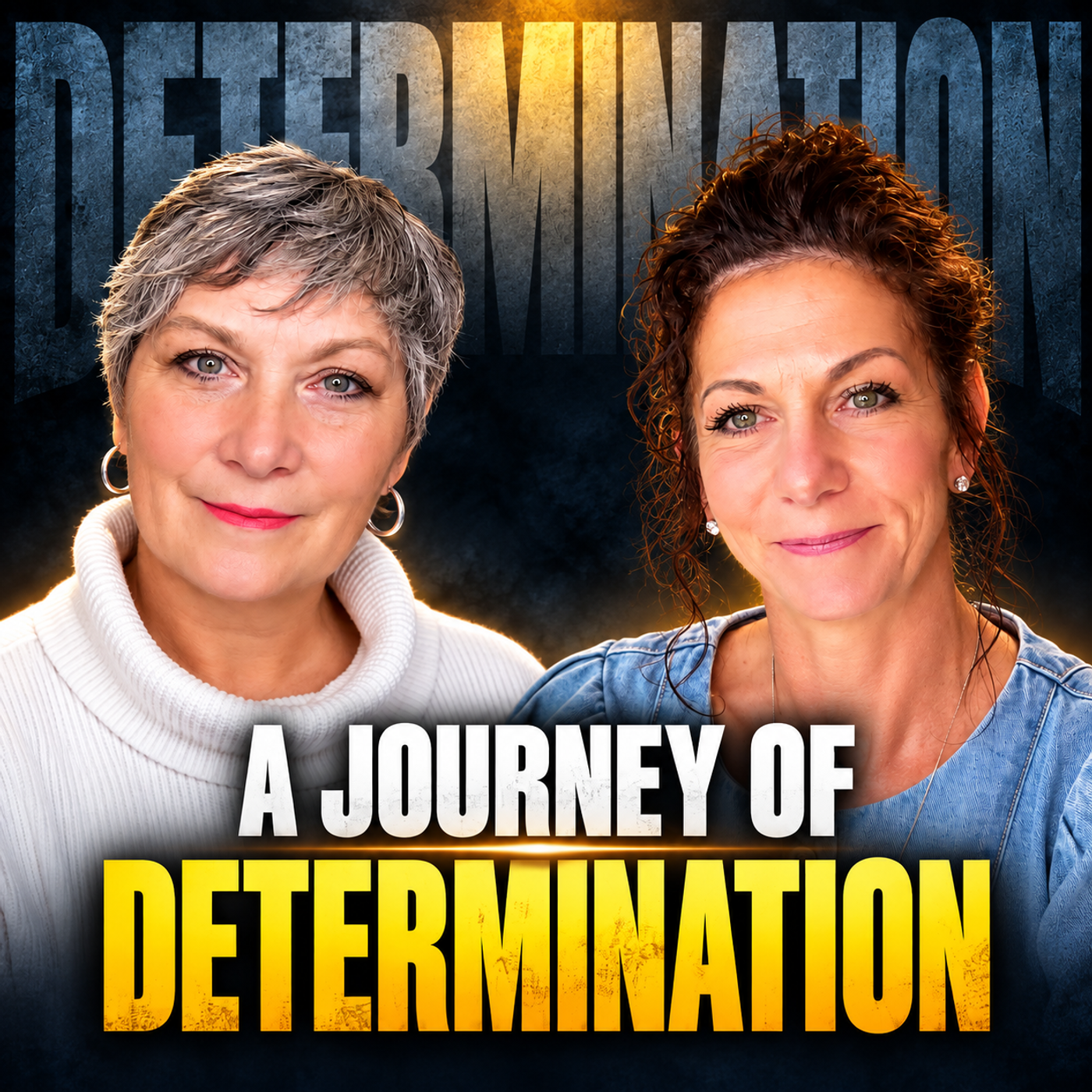
What does it take to overcome life-threatening health challenges, navigate personal loss, and turn your experiences into a passion for helping others? In this heartfelt episode of the Wise Divine Women Podcast, Dana Irvine welcomes back Lisa Mack, founder of Lisa's Thermography & Wellness, for an inspiring conversation about determination, resilience, holistic health, and the importance of listening to your body. Lisa shares her remarkable journey, beginning with a childhood diagnosis of congenital heart disease, followed by a heart attack at just 24, open-heart surgery, serious lung complications, and the challenges of becoming a mother despite difficult medical predictions. Her search for answers to her children's health challenges eventually led her to holistic nutrition and a passion for thermography. Together, Dana and Lisa explore how personal experiences, emotional stress, inflammation, and lifestyle choices can influence our well-being—and why understanding the whole person matters. Thermography: Looking Beyond the Surface Discover how thermography uses non-invasive infrared imaging to assess skin temperature patterns and observe changes over time. Lisa explains why she believes in combining thermography, nutrition, stress management, and compassionate care with conventional healthcare. In This Episode, You'll Discover: How Lisa transformed her health challenges into a mission of helping others. The importance of advocating for yourself and your family. Why stress management and emotional healing matter. How thermography can complement a whole-body wellness approach. The value of reviewing reports and monitoring thermal patterns over time. Why compassionate practitioners and personalized wellness plans make a difference. Lisa's exciting expansion into equine thermography. The power of determination, happiness, and finding peace after adversity. Episode Chapters00:00 – Welcome & Lisa's Journey 02:07 – Congenital Heart Disease Diagnosis 03:52 – Heart Surgery & Motherhood 05:57 – Lung Complications & Recovery 08:12 – Discovering Holistic Medicine 10:00 – Her Daughter's Health Challenges 11:49 – Personal Loss & Finding Joy Again 14:05 – Why Thermography Matters 15:55 – Understanding Your Report 17:56 – Making Thermography Accessible 20:02 – Stress, Prevention & Whole-Body Health 21:54 – Lisa's Personal Thermography Experience 24:01 – Follow-Up Imaging & Lifestyle Changes 26:01 – Compassionate Care & Future Expansion 27:56 – Equine Thermography & Lisa's Mission 29:45 – Lisa's Final Words: Determination & Peace Connect With Lisa MackLisa's Thermography & Wellness Website: https://lisasthermographyandwellness.com Explore full-body thermography, clinic locations, and wellness education. Connect With Dana Irvine, FDNPFunctional Diagnostic Nutrition Practitioner | Breast Health Educator | Host of Wise Divine Women Website: https://danairvine.com Explore functional nutrition, hormone health, breast wellness, and personalized testing...
Dana Irvine FDNP: Welcome back to the Wise Divine Women podcast, where we help you go from fed up to faith-fueled, helping you to become the wise divine women that we've been called to be. Today I have Lisa Mack from Lisa's Thermography and Wellness. She's been on the show many years ago, and I've been working for Lisa as a thermography advisor for the last seven or more years, I guess. Probably more than that. Lisa: There's more than that. Dana Irvine FDNP: More than that. But we have really spent the last sort of month working on Lisa sharing her story. Why why this journey, where she came from, what she's aspiring to be. And those first three parts are are in her Instagram, her TikTok, and in in her Facebook page. But Lisa, welcome back to the show. Lisa: Thank you, Dana. Dana Irvine FDNP: Thanks. We we're trying to figure out an easy way to do this, but you know what? I think it's important for women to understand Journey, purpose, and passion. And this is where that's what this is for. So I'm like, you know what, Lisa, you're coming back on. So Lisa, you've spent the last three weeks really diving into your whole journey and where you came from. And you can see all of that. But let's bring us like summarize that and bring us to what you want to share today. What so, what is part four of your journey, Lisa? Lisa: Okay, so do you want me to start from the beginning and just put out the little pieces together? Okay. Okay, so Dana Irvine FDNP: Sure, whatever whatever you feel like. Lisa: I was born with a congenital heart disease and I was diagnosed at 10 years old with peripheral pulmonary stenosis. And with that diagnosis the doctors told my parents they didn't know a cure for what I had, they didn't know how to fix me if something happened. So and the important part about that to remember is that that biggest piece right there, my parents not telling me that there was no cure. So in my mind I was fine. So I just ran with it. And they told me, you know, no sports, you can't do that. For whatever reason they told me that, which never made sense to me. I always loved to dance, so I took that passion and I ran with it and became a dancer, a professional dancer. And then In that journey, my parents opened up a dance studio, so I became the dance teacher. And as I was teaching one one time, well, I was starting to get winded, and I was asking, you know, the doctor what was wrong, and he just blew it off as if I was getting older, which at that time was only 24. And then I was exercising one morning at home, and I all of a sudden I could feel the wind, I had, had jaw pain, I had all symptoms of a heart attack, and I did had a heart attack. And with that, they the doctor admitted me to the hospital and they did another catheterization and they found out that they just still didn't know how to fix me. So the doctor found a a a doctor out in Columbia Presbyterian and it was a world-renowned surgeon. And when they the one doctor said, listen, we don't know what to do with her. Dana Irvine FDNP: Go ahead. Lisa: Okay. Go ahead. Okay. So the doctor said that I, you know, I only had give him two weeks, and he said I didn't have two weeks. So I was literally fainting inside the house. I could not be left alone. so thank god he found a world-renowned surgeon. And within two weeks I had open heart surgery. so that journey was you know, a little bit challenging, but it was great. I knew that. it was gonna take some time for recovery. But during the recovery, my doctors had said to me, Lisa, they're like, and you know, I don't think that you could have kids. And I was engaged to be married that year. And it literally I looked at him and straight in his eyes and I said, Watch me. And sure enough, then that June I had a stress test on, you know, on a treadmill, running on the treadmill on the incline, and they shut it down and said, Lisa, if you can do that, you can have kids. And I actually got to dance in the dance recital that year with the kids. So it was wonderful. So my recovery was great. and then I was blessed with my first son about a year later. No, no, sorry, about two years later. And then he was about a year and a half. And I was still teaching and I was with at my parents' house and was exercising one night and I didn't feel so well. And I c was coughed up blood out of my lung. And I went to the emergency room and they brushed it off with pneumonia. So they really misdought diagnosed me. And when I got home the very next day, I called the heart doctor and he said, you know, get here right away. So when I got there, they diagnosed me. I had a hole in my lung on my left lower lobe of my left lung. And they put me in an isolated room, running all sorts of tests. And then I got admitted to the hospital the following week where they did a lung biopsy. my lung collapsed during that. Thank God that recovered. And they put me on medication. They said that I they found a bacteria that was in my lung that actually ate a hole through the lung due to the peripheral pulmonary stenosis, the heart condition, there was like no blood flow and oxygen to that part of the of the lung. So within that year, they put me on the medication, told me again no children, and just because of birth defects, did that and had the medication. But it didn't work. So I ended up with surgery. And before I went in for surgery, they weren't sure if they were gonna do invasive surgery or laser. And thank God I was came woke up to laser surgery. So they removed the left lower lobe of my left lung. That's like a tongue twister. And I recovered from that. And then they did another stress test, and I was able to, you know, get pregnant again. And I was blessed with my second son. And so during that time. it was look Logan he had severe eczema and it was it was really you know not not good and Dana I think I lost you Dana Irvine FDNP: you're here. I see you. Lisa: okay sorry I'm my it's my phone so anyway I I had Logan and I said it's the eczema and with that I was it was so horrible to see, you know, and I searching, searching and looking for a doctor to help him. And I found a holistic pediatrician. And she just is such an amazing like to me, it was like miracles to curious scam. And I was so interested in finding out more about it. And I decided that when, you know, and in the meantime, there, I missed this part. I when after my son was born, they asked me, Lisa, are you Are you done? Meaning having children. And I said, I want to try one more time for my girl. And they they said, okay. But I had to have three. This ended up blessed with my daughter, long story short, but I had to have three C sections and I knew I only had one more chance. And I prayed for a girl and I got her. So with the with Logan and going, you know, to the holistic route, I really loved it. It was just so interesting to me. So I promised myself. When my daughter went to school, I'd go to school for holistic nutrition, and that's what I did. So when my daughter was five in kindergarten, I was going to school. I was in school about a month, and she was only about a week into school. And all of a sudden, she broke out into this severe rash. And it was they brought her to the pediatrician. They thought it was, you know, coxaki, the hand foot. But it was day after day after day. There was different symptoms. She couldn't step on the ground. She couldn't move. She couldn't she would took a shower one time. She came out, was holding her arm, bottom of her feet hurt, headaches. I mean, you name it. She was it was awful. So they did several tests on her, tons of Lyme tests, Lyme disease, co-infections, everything, and they couldn't figure out what it was. And a doctor recommended a certain hospital I go to with her, and I did, and they diagnosed her with rheumatoid rheumatoid arthritis. And I was like, what? And to me, I didn't believe it. So I just like, no, she doesn't. So with that journey of me going to school, I was learning a lot about Lyme disease and co-infections. So I was presenting the symptoms to the teacher, and she said that it really does sound like it's Lyme disease. So I did more searching and I found an integrative doctor that did different kinds of testing on her. He did do Lyme and co infections and he did a food sensitivity test on her. And he just his philosophy behind the sensitivity test is that when your body's in a disease state, your body's gonna react to certain foods if this test came out positive. And he said we want to remove those foods so her body can heal, which makes total sense. So in that meantime, would it was like waiting and I had to wait three weeks for that result. I went to visit my sister and all of a sudden sh my sh broke out in a a high fever. a rash again and though this time both blood blood shock eyes they came out it was like red as can be and I called the pediatrician she said get back to the hospital that diagnosed her with the arthritis so I just got the sensitivity test back I glanced at it very quickly and it was like over 70 foods and I put her in the car and I'm off to the city and I didn't feed her so I was like my god she had to eat so I handed her a piece of pizza So she's eating, and then I happened to turn around to look at her. And when I tell you she was she went down to about 35 pounds and her lymph glands were swollen, she looked like a 50 pound watermelon. I was like, my God. So rush her to the hospital, I get her in the emergency room, I'm explaining what happened, and I look at the test, the food sensitivity test, and it said yeast. I was like, my God, it just gave her pizza. So they looked at the test and they were like, that's not accurate. And I'm thinking, I'm like, how is that not accurate? I just gave her pizza. Look at her. So they swooped her off into an isolated room. And all they kept doing is taking pictures of her. And they're like, We've never seen anything like it. I'm like, great. So then the very next day, the integrative doctor called me and her Bartonella test, which is a coinfection to line, came out positive. But it was just over the markers and they didn't believe they didn't believe the test. They're like, they really didn't care for the doctor, so that's where the That was a controversy. So they wanted to do their own testing. So what they did day after day they were doing all these testing, they even did a bone marrow test. And the bloodshot eyes were the reason the panic was they thought that could be Kawasaki disease, which affects the heart. But that was negative as well. Thank god thank God. So within that week I was dealing with the food sensitivities and they kept feeding her giving her the food that she was sensitive to. And I was going back and forth with the doctor, and I believe a nutritionist or dietitian came in and she was like, You know what? Just give her potato chips. I'm like, potato chips. She's 35 pounds. We're gonna just give her potato chips. So at one point the doctor said, I said to the doctor, I said, Look, I'm gonna give her the food that you keep telling me to give her. I'm gonna prove to you that she's reacting to it. I said, But you because you keep giving her Benadryl. She's Benadryl, fall asleep, get up. But it's like it was a vicious circle. So that's exactly what we did. She reacted to the food and he looked at me and he said, you know what, you're right. And he said, But the problem is that we don't have food here. And I said, that's fine. So I said, I will go get it. And I jumped in a taxi, went to go the Whole Foods, went shopping, brought it back, and you know, gave her the food where she was not reacting, which is amazing. And in the meantime, all the tests that they did. all came out negative. There was not one test that came out positive. The only test I did was from the other doctor with the Bartonella test. And I had an infectious disease doctor walk in to give me all the negative results. And he just stared at me and he just said, you know, sometimes we just don't know. He's like, my daughter was sixteen and she was in a coma. And he goes and we just didn't know why. And I looked at him and I said, There's always a reason why. Always. Dana Irvine FDNP: Always. Yeah. Lisa: And he didn't like that very much. And I so with that they did give her a round of antibiotics and it it was they sent her home, fed her the diet that she, you know, needed to have, and she healed beautifully. And now she's 20 years old, never ever had a reoccurrence. So it was it was amazing. But the other cool part of the story is I've I said said it was my final chapter. So back in 2020, the my brother had passed away. And then a year later, my niece, his daughter, passed away. And then sometime a little time after that, which Dana, you were on that journey with me, my personal life took a turn, an unexpected turn. So, and the reason that I was sharing all these things with everyone is to let you know like where my heart is and where Dana's heart is, because when you go through these things in life, it's how you handle them. And we understand what it's like to go through it. So when that my personal life took an unexpected turn. I just remember how, and Dana, you could remember this, it was so hard to even put my feet on the ground. I just remember how I just how I felt. And it was trying to find happiness and peace and joy in whatever I did. So of course everything takes time, but it really truly when people say it's day by day, it was moment by moment. So trying to find that joy for me, it was, you know, I still love to dance. I'd go out dancing with the kids, go out with my friends, you know, I exercising, praying, church, you know, being involved with so many different things, just finding myself again. That is where, you know, because you go through these things and you just you feel like you're lost. But it was just really finding the love and the passion that you have and what keeps you motivated, because once you are going through these things, you know that you feel like you have no happiness, no joy. But day by day and moment by moment, all those things just catch back up with you. And you you really it really is it's so refreshing. So I just say sharing this for people that understand that when you walk through that door to Lisa stermography is that I know what you're feeling. I know what you're going through and where my heart is and my team, like Dana, knows exactly what you're going through and our hearts with you. And we're passionate is to help you. You coming in for a thermography is not just a thermography. It's we deal with this, or I shouldn't say not deal with this, but take you through every step of the way. It's the thermography, it's understanding your report and that's Dana. I'm going to Have you talked about that in a moment? Dana helps you understand your report. And with that, she can do functional testing or we bring you back to your practitioner. And if you don't have a practitioner, we always help you find one. And Dana, while we're on that, and well, how about you say what you do when we get the report back? Dana Irvine FDNP: Okay, so I just wanted to say like like Lisa, the the team that you've assembled with with Carly and Angie, I think is I think one of the most compassionate teams you've created, right? So Lisa: Yes. Dana Irvine FDNP: she has technicians in North and South Jersey, and then they travel and Lisa travels in the more the South PA. But I think each of them have this beautiful, compassionate approach, and that's why it it works out well. So women are not, and men are not Coming in feeling uncomfortable with thermography, which can be the questions that I get often when answering the phones, really giving them that sense of calmness and being heard and compassion, which I think has excelled throughout your entire 13 years. No, I guess no, almost 14 years Lisa: Fourteen. Dana Irvine FDNP: now, 14 years practicing thermography. Lisa: It's a general. Dana Irvine FDNP: And I think it's yeah, it's it's beautiful. And and that's the reason that I had suggested that you share your story, because so many women out there are struggling and I Lisa: Yes. Dana Irvine FDNP: think having that compassionate approach that you have is is really uplifting and and really helpful to women that are there, that are in the same place or that are going through the same Lisa: Yeah. Dana Irvine FDNP: journey as you've gone through, whether it's with your kids. whether it's with family or whether it's with partners. So it is one. So Lisa: It's it's sure. Dana Irvine FDNP: I know we wanted to talk about the report and I go through the report as a functional diagnostic nutritionist, a breast health educator and holistic nutritionist, I wanna make sure you get your report correctly. So we go through that process and then we we get to answer questions and we get to walk through the report together one one. And What do the pictures mean? What the interpretation is saying, but I like asking what has your approach been, who are your people involved in your team, so that we can create a better plan of action for you moving forward and the better questions to ask each of your practitioners. And then even as we're moving from follow-up to follow-up from year to year, it's again reviewing the things that you've done throughout the year. Maybe this is just their normal, or have we really addressed that deep-seated stress trigger? So, you know, and some people think, my gosh, Dana, how do you know these things? And it's not, it's because Sharon is brilliant and she notes it in subtly in the report. And so that's what I Lisa: Right. Dana Irvine FDNP: love about Sharon Edwards with Thermography Medical Clinic, who I work for as well. And with her interpretation and she's been doing this for for twenty years. So the interpretation really takes into consideration the many different modalities that are out there in the world. And that's what I try and come across with people when we're going through the report is that it there's just not one road, right? There's n many ways to achieve health and there's many different practitioners that you can pull into your team. So this is our conversation that we have. And I love it. It's the best part of my day, to be honest. yeah. Yeah, I I think it's amazing. Lisa: And you were so good at it. Dana Irvine FDNP: You know, it's like how do you know these things? I said, Well, you know, it says so right in the report. And and Lisa: Right, right, right. Dana Irvine FDNP: and I can hear it in your voice, right? So and I think that's that's beautiful as well. And so Lisa, I mean, why is it that you found so the journey of thermography with you is not a is not a gentle one, that's for sure, because it's economy based and it's it's a struggle to convince people out of pocket. Lisa: Right. Dana Irvine FDNP: Why is why has your heart been so passionate about keeping this thermography available to everybody? Lisa: Well, the first thing is is when I learned about it is when I went to school for holistic nutrition and I was I went to do one myself. I found one out in the city to get a thermography and I looked at the report and I was like, why isn't everybody doing this? So I was fascinated because it what it gives what what it gives you, the information. So that that's exactly what I did. So that's how the Lisa thermography was born. But watching and seeing how it has helped. people so much because we're looking at it as a as a prevention, right? Looking at the at it before the storm happens. And if we if I had this tool when I was younger, you know, and even for my kids, but I mean we utilize it now, I'm thinking you can, there's so many things that you can avoid if you know things ahead of time. And I can remember my thermography after the stress of, you know, of my personal life, how I looked. It was it was taking a toll on my body, on my mind, on my physical i in everything. So that's why sometimes people don't realize that you may look fine on the outside, but what's going on on the inside? And you know, when we're going through so much stress, the thermography will show you what your body looks like. And I, you know, for me at that time, I was a hot mess inside. It was horrible horrible. And when you show somebody what they look like and say, okay, what can we do to help you? How can we reduce the stress? How can we what do we have to do? Sometimes we're in things and we don't realize how when is enough is enough? When when do we walk away? When do we step away? We know that through my story is that, you know, I don't give up very easily. But you know, personal life, whether it's a job, you know, marriage, friendships, whatever it is, you have to, you know, consider What's it doing to me? And when when do we when do we stop the nonsense and we have to really take care of us? So the passion that I have with the thermography is that first of all, I have a passion to help people and just seeing how this has helped so many, you know, men and women, that it just drives me to continue to do it. Dana Irvine FDNP: Mm-hmm. Mm-hmm. Mm-hmm. In your own personal experience, when and and this is the the biggest thing that that the follow-up imaging, right? Lisa: Yes. Dana Irvine FDNP: From year to year is is really so important because we really are stepping back and taking like we spend money on on massage and we eat we take spend so much money on good food and and all these supplements and all the different people we see like chiropractors and and physiotherapists and or even psychotherapists and Lisa: Mm-hmm. Dana Irvine FDNP: counselors how do you view your own because it took me a bit to convince you to do your thermography again I'm like Lisa you should be doing it every year and I'm just as bad right we may look at Lisa: No. Yeah. Dana Irvine FDNP: ourselves in the in thermography sure I may I'm doing a thermography with somebody and they're you know finished and I'll be like okay let's look at myself let's look at my thyroid but I never take the time to do it myself but once Lisa: I know. You were on me for quite some time. Dana Irvine FDNP: I was. What was the Lisa: Yes. Dana Irvine FDNP: biggest thing that you learned from your own personal report? Lisa: Well, the my own thing is what I look like before and what I look like after, because the pictures don't lie. So it's when we take the pictures and Sharon interprets it and then that Dana goes through it, you have to follow the directions. You have to look at your pictures and say, Okay, we're gonna do A, B, and C first. Everybody, we all try to do everything all at once, but you cannot do. So we so learning through my own journey of healing. That I really dedicated myself to make sure that I fixed the nervous system. You know, my gut was off just from, you know, the stress and everything. So when we did the follow-up pictures, you can see the healing journey in your, you know, because like we always say seeing is believing, and the pictures were totally changed. So that's why the follow-up is so important because you don't spend the money to get a report and then put it aside. You're coming in to see what's going on and and you have to you have to do the work. You know, you can't just take the report and say, no, whether it is that it's usually a lot to do with the diet, inflammation, stress. I mean, it could be so many different things. So Dana Irvine FDNP: Mm-hmm. Lisa: it really it does make a world of difference once you follow the instructions, do what you need to do, then you come back in and then you can see the changes and you and you will feel the changes as well. Dana Irvine FDNP: Right. Right. And I think you know, women are c always sometimes shocked or or men even shocked with the amount of inflammation. I think a lo two, one, their gut, their intuition has already sort of told them what's gonna be what's it gonna look like. But then in a lot of cases they weren't expecting it. And I'm like, it it is your wear and tear of your body. It is your normal. Like If I'm thinking of one woman in particular, we this is their the third or fourth time that she's done her thermography, so she was just really surprised. And I'm like, Have you changed this or have you changed that? And she's No, and said, Well then you can't expect change. And and and then for s Lisa: Right. Right. Does that happen? Dana Irvine FDNP: for a lot of the newer clients, I think it's this it really is affirming to them that they're not crazy and they are not feeling well, right? Even though everything Lisa: Right. Dana Irvine FDNP: else tells them and they're great. this the chaos of things, the chaos of life and how it resides in the body. And Lisa: Yeah. Dana Irvine FDNP: it sometimes is stepping back and pausing for a second for them that really makes the biggest changes in life rather than, you know, running on the hamster wheel. Lisa: It's pointing those things out to people because, you know, when w as we know when we, you know, have them come in, they have their paperwork all filled out on, you know, we get that ahead of time. But then as you're speaking with them, you're finding out more and more what's going on in their life. And then, you know, who has breast pain and where did it come from? And then I have this, I have that. But okay, well, all of that stuff that you're telling me starts somewhere. And you know, you just like disease just doesn't happen. So We have to figure out, okay, well, that's why finding out the whole story and just not doing part of the body, you know, we always cringe kind of when people just want to take a look at the breasts and they're going through a whole lot of different things. Well, let's take a look at the whole body or half body and see what else is creating the chaos that could be triggering an an imbalance in the breast. So that's a lot of times that we lose focus on, you know, where the problem is stemming from and you know and why. Okay, well, what's what's your home life like? What are you eating? Are you exercising? Are you moving? You know, and I we often hear that people are, I did a detox, I did this. Well, doing a detox is great, but if you're not eliminating and moving things around, that's just recycling, you know, bad things. Dana Irvine FDNP: Absolutely, absolutely. So moving for I mean, we can talk hours about why we love thermography so much. And I know we have so many great clients who love it as well. And what are your plans moving forward with thermography now that you've got, you know, Carly and Angie kind of covering the bigger clinics for you. What is your purpose? What's how are things changing for you? Lisa: that's a great question. well I want to touch on Carly and Angie. I mean, they were two blessings that came in, you know, finding technicians and they're they are amazing. So I gonna continue to image and hopefully stay in the local area. I have Dana, I think correct me, I think it's fifteen locations now, and I expanded doing equine. So that's going to be very interesting and fun. And just real Dana Irvine FDNP: Think that'll really ramp up in twenty twenty seven. So tell Lisa: Yes. Dana Irvine FDNP: that, anyone who's interested, please reach out who either have a horse or who have a a stable or have a group, perhaps. it's all set to go for twenty twenty seven. So go ahead, Lisa. Sorry to interrupt, Lisa: Right. Right. Dana Irvine FDNP: yeah. Lisa: No, no, no. That's okay, believe me. So that and you know, with the equine, which is really interesting is that we don't realize too that you know, doing this on the horses it's like pretty much the same as humans, really finding what's going on without being invasive to to the horse. So this is gonna be very it's very interesting, all what we hear from, you know, Sharon and everything. So really just getting the word out there, trying to get mean you know, more teaching because no matter how much we seem to describe it or, you know, talk about it, it's still a question of people understanding it. You know, and that is where I'm trying to do more speaking events and get out there and and, you know, do that because there it's just trying to get that understanding of how it really can help you. And you really won't know it how it can help you until you try it. Right. And then am I right, Dana? Dana Irvine FDNP: Yeah. Yeah, I think it's amazing. So Lisa, what anything I forgot to ask? Lisa: think so. Dana Irvine FDNP: Awesome. Lisa: I don't think so. I think we covered it. I Dana Irvine FDNP: Yeah, no, no, no. It's just always something that I never know what's on your heart. What is a word of wisdom that's really held true to you to really pull you through the last few years? Lisa: determination. Just the determination. I've always was determined and I just keep on. And determination, but also the biggest thing is happiness and peace. That Dana Irvine FDNP: Mm-hmm. Lisa: is listen, we only get one shot at this thing called life, and it has to be happy and peaceful. It because you know you're gonna be having your ups and downs, that's gonna happen, but it's how we go through it, right? Dana Irvine FDNP: Amazing. Well, of course you'll find Lisa at Lisa's Thermography and Wellness dot com and she's of course all over the socials and she's doing such a great job with her videos. I'm so proud of her. I'm so glad to be have been part of the team for such probably nine nine years now, I guess. I don't know. COVID kind of threw a time time warp to things, but it's been Lisa: No. It's it's I think it's more than that, Dana. I think it's I think it's over ten years. I don't know. Dana Irvine FDNP: It's been such a pleasure, honestly, and we've had such a great time doing it. And I know we keep saying we're coming I you're either coming up here or I'm coming down there, but I think s Lisa: No. Well I'm I may be taking a trip to Canada and that's gonna be a little bit chilly for Lisa. Dana Irvine FDNP: It's just it's not much different. But yeah, and then Lisa: Yeah. Dana Irvine FDNP: we've got to make plans and have a big sort of family reunion with all the clients and everyone meets up and really gets to know each other Lisa: That would be great. Dana Irvine FDNP: because I think that's been one of the biggest requests, I think, from clientele and and such. So Lisa: It is. Dana Irvine FDNP: Lisa, thank you so much for being part of the show. I'm so glad that we've spent this time together so that people one get to, you know, see you completely. Right, rather than just snippets on on in s Lisa: Yeah. Dana Irvine FDNP: on socials. And it's wonderful to hear your heart and passion for Lisa: Right. Dana Irvine FDNP: thermography, 'cause it's not for the faint of heart, right? And Lisa: No. And Dana, you are my biggest cheerleader because you know how hard it was for me doing a video a video. Cause I I'm like Dana, no, no. She's like, and it took me a very long time for me to even tell my story. It was always on paper, but it was, you know, Dana encourage encourages me all the time. Dana Irvine FDNP: Yeah, yeah. So the beginning, I mean you wanna learn more part one, part two, part three are are on Instagram and on Facebook. And I really thank you for taking the time today, Lisa. It's a busy schedule for you. Lisa: Thank you, Panera. Dana Irvine FDNP: And you take care and be blessed on your journey of helping other women on their own journeys. Lisa: Thank you, Dana. Thank Dana Irvine FDNP: Thank you. Lisa: you.