
Wild Nevadacast · PBS Reno
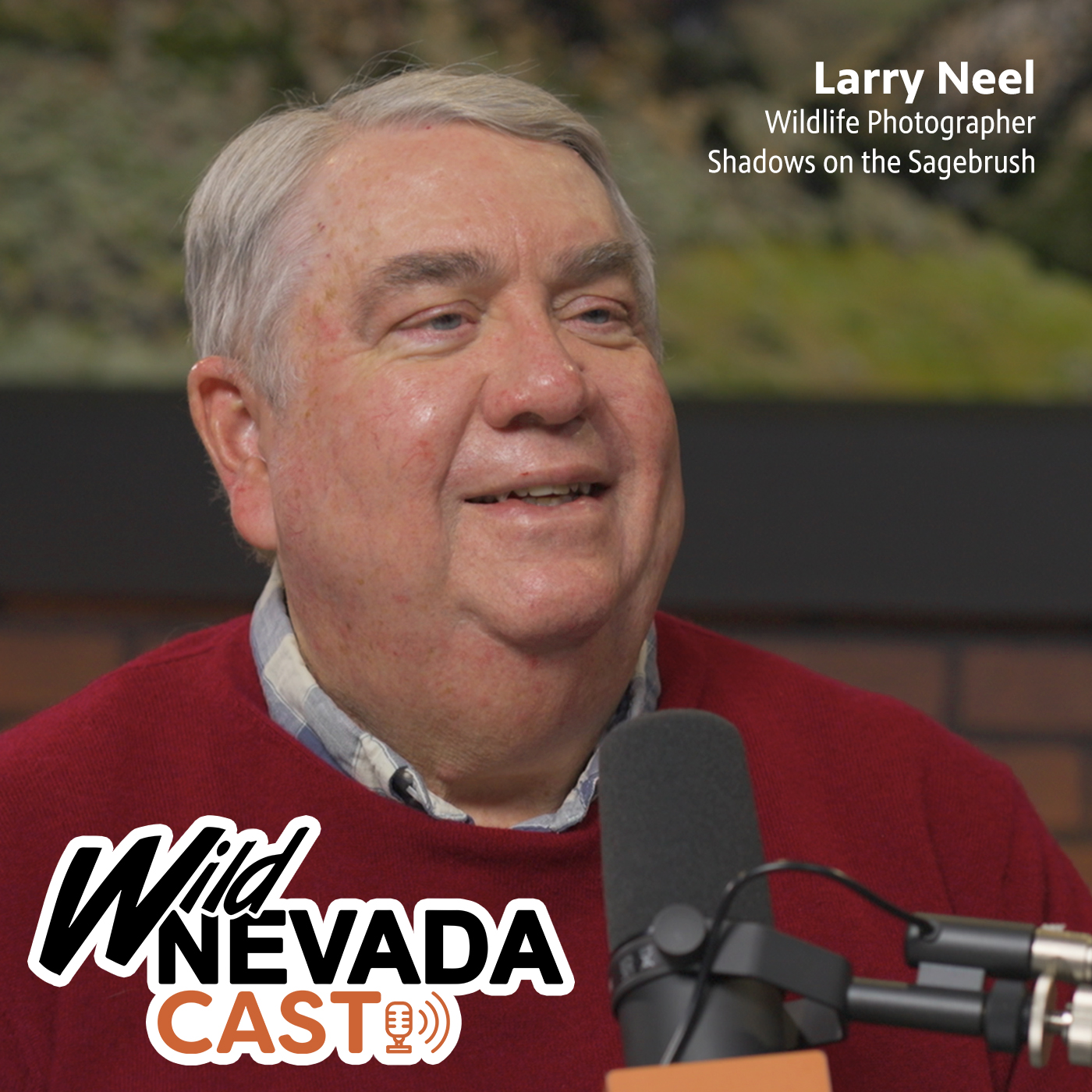
We reconnect with Larry Neel, who took us on a wildlife photography journey in the 2014 Wild Nevada special and who now has a newly published book of his own wildlife photos entitled Shadows in the Sagebrush.
00;00;09;03 - 00;00;20;07 Speaker 1 This is while Nevada casts from the studio of PBS Reno and Reno, Nevada. I'm Dave, Santina, and I am with an old friend of Wild Nevada, Larry Neal. Hi, Larry. 00;00;20;09 - 00;00;20;23 Speaker 2 Hi. 00;00;20;26 - 00;00;48;05 Speaker 1 Thanks for coming in. Larry, you might remember from the 2014 While Nevada Special, which was the only program we produced between 2005 and 2017 when we had a little funding and needed to spend it or lose it. And we said, let's make a one hour special. And that's what we did. And Larry was part of that. And now you have a brand new book that you're here to talk about, which is called shadows in the sagebrush Full of your wildlife photos. 00;00;48;05 - 00;00;53;22 Speaker 1 And I think that's really exciting and something new. So it's always fun to catch up after a few years. 00;00;53;22 - 00;00;55;21 Speaker 2 It's fun to be here. Thank you for having me. 00;00;55;22 - 00;01;14;20 Speaker 1 Oh my pleasure. This is a I really like this book, so I it's got a bunch of if you're watching this, it's got a bunch of pink tabs from the spots that I liked, the pictures I wanted to talk about, but, normally it's it doesn't have those tabs, so, so if you get a copy, don't look for that. 00;01;14;22 - 00;01;29;05 Speaker 1 We first met on Wild Nevada back in 2013. We were recording in 2013 for a 2014 production or a broadcast, and you took us out on a photographic search for wildlife out south of Fallon. Was it Carson Lake. 00;01;29;13 - 00;01;33;10 Speaker 2 Carson, like? Yeah. And then Stillwater and Stillwater did both plays. 00;01;33;11 - 00;01;36;27 Speaker 1 That's right. And, I forgot about the Stillwater. Yeah, it's been a while. 00;01;37;00 - 00;01;38;03 Speaker 2 Yeah. It has. 00;01;38;05 - 00;01;59;23 Speaker 1 We saw a lot of birds. Not as many as you wanted to. That we did. Right. But we saw a lot. And it was a really fun experience following you as you hunted for, a good shot. And it's it's showed me a little bit about the challenges that it takes that you face as a photographer chasing after wildlife photography. 00;01;59;23 - 00;02;09;22 Speaker 1 And now you've got this book. So it's beautiful. I'm looking at this. How does it feel to have this nice hardcover book with your name on it? 00;02;09;25 - 00;03;02;18 Speaker 2 Well, it feels great. We conceptualized this book two years ago. My publisher, Rachel Dahl, and I started working on this, and, she's been very committed to it from the beginning and always been very supportive of my photography. And, so we started working on it and, you know, it's one of those things where when you get started in wildlife photography, you want to be an instant expert or in an instant phenomenon, you know, so you want your stuff to be good from the beginning, and you start wanting things. 00;03;02;18 - 00;03;11;18 Speaker 2 You have a lot of ambition, right? But what I've learned is that there's no substitute for time and experience. 00;03;11;20 - 00;03;12;18 Speaker 1 00;03;12;20 - 00;03;38;11 Speaker 2 So at some point you reach a point in your collection of images where you've been doing this for 10 or 12 years, and finally, you have a collection of images that sort of rise above the standard fare. 00;03;38;12 - 00;03;38;26 Speaker 1 Okay. 00;03;39;01 - 00;03;59;13 Speaker 2 Yeah. So you can pull together 40 or 50 images all of a sudden that are book worthy. Whereas before you just wanted to be able to do that, like in the first year. Sure. But here you are 12 years later and you've got stuff that you can truly be proud of sharing. 00;03;59;18 - 00;04;01;05 Speaker 1 How can people get a copy? 00;04;01;07 - 00;04;29;23 Speaker 2 Well, we're published by Salon Media, which is, based in salon, and the book is available at a website called Great Basin Trading Company. And you can pull that up by typing in Great Basin trading.com. You might have to search for the title Sagebrush or Shadows in the sagebrush. 00;04;29;25 - 00;04;55;25 Speaker 1 So you write in this book about your arrival in Reno in an old Chevy Malibu back in the day, and and your experiences as a wildlife biologist. And then that work led you eventually into becoming a photographer of wildlife. What what was that path like for you? Can you tell us a little bit about your your background and how it all led to this? 00;04;55;27 - 00;05;34;28 Speaker 2 I always wanted to be a wildlife photographer. I mean, I knew probably when I was 12 years old that, I really wanted to do something with wildlife critters in my life. It seemed hard to make that connection from my background. I grew up on a cotton farm in southeastern New Mexico, and the connections were, not evident. 00;05;35;01 - 00;06;18;19 Speaker 2 So, it was it took a lot of dedication and, Just staying on course mentally to what I wanted to do. But being a biologist seemed to be the best path for making a living. Staying with, you know, doing things with wildlife. Yeah. I went to college at New Mexico State University in Las Cruces, and I sort of had a plan to go right straight to grad school. 00;06;18;22 - 00;06;38;04 Speaker 2 I was really looking for a research fellowship and finally was accepted here at University of Nevada, Reno. So when I got my degree, I just kind of hung around to let my, connections here come to fruition. 00;06;38;10 - 00;06;39;29 Speaker 1 Right. And you had a nice, long career. 00;06;39;29 - 00;06;43;22 Speaker 2 Eventually they did. I was hired by the Department of Wildlife. 00;06;43;24 - 00;06;48;14 Speaker 1 So you've had wildlife interaction your whole career? 00;06;48;15 - 00;06;49;05 Speaker 2 Pretty much. 00;06;49;05 - 00;06;50;12 Speaker 1 Yeah. Yeah. And so. 00;06;50;14 - 00;06;51;01 Speaker 2 That. 00;06;51;04 - 00;06;51;26 Speaker 1 That. 00;06;51;28 - 00;06;53;04 Speaker 2 Recreational, somebody. 00;06;53;04 - 00;07;18;06 Speaker 1 Might expect that you'd be sick of seeing wildlife. And here you are pursuing it for recreation. And now I guess you could say professionally, you're you are a published photographer. So what what is it about it? About your work and your experience that led you to this, to become a lawyer, to obtain, to turn the passion that you had for your work into passion for wildlife. 00;07;18;07 - 00;07;54;19 Speaker 2 And I kind of left that in the dirt with all that story. Is that I wanted to be a photographer and coming off the farm and doing graduate work, it's not a lot of money. You're, you're you're sort of living on peanut butter and jelly, pretty much to get to get to where you want to go. And so I never had what I felt like was the, the discretionary money funds to buy the camera equipment that I needed to be successful in wildlife. 00;07;54;20 - 00;08;04;02 Speaker 1 Yeah. You wrote about that, about building over time, you know, slowly upgrading your equipment. Exactly. Getting to where you'd like to be, but always out there shooting. 00;08;04;02 - 00;08;35;23 Speaker 2 Photos, and that's what you had to do. And, so finally, at some point, you've got digital photography really. It really changed everything. When my first camera good camera was a canon A1. Film camera, you were sending everything off to have it? I was I'm not a chemist, and I wasn't going to learn how to develop my own film. 00;08;35;26 - 00;09;09;28 Speaker 2 And so, you know, really, there were so many limitations personally, to becoming an artist. I was never going to be Ansel Adams. And, I sort of had to put it aside while I raised families or and got established. But digital photography changed all that, because it put control of the art right squarely into my hands. 00;09;10;01 - 00;09;18;17 Speaker 2 And so I had control of the product from seeing the creator to putting them image onto a print. 00;09;18;21 - 00;09;19;21 Speaker 1 Yeah. 00;09;19;24 - 00;09;37;15 Speaker 2 And that, then it was just a matter of getting the right equipment, you know, getting a good camera. That was good. Megapixel power. Sure. And a 500 millimeter lens. And then I was ready to get serious. 00;09;37;21 - 00;10;08;11 Speaker 1 Okay. Well, you you've got so many beautiful images in this book, and I'm guessing that you've, you know, this is probably the culmination of years of, of of work. There are the photos covered a number of years you've referenced in the each photo has a year attached to it. So, you know, when it was taken and I wonder how many how many images you took to get to the, the the book that we have here. 00;10;08;18 - 00;10;14;07 Speaker 1 So there I mean, how many didn't are we not going to see that you went through to find the ones you've got here? 00;10;14;07 - 00;10;18;15 Speaker 2 I wish I could say I would, I, I couldn't even say. 00;10;18;17 - 00;10;19;05 Speaker 1 Thousands. 00;10;19;12 - 00;10;32;12 Speaker 2 Thousands. Yeah, I, I can say, first time we went to Africa, I think I shot like 30, 600 images in two weeks. 00;10;32;12 - 00;10;58;08 Speaker 1 Yeah. I remember you talking about this back in 2013 when we were doing the show. You talked about having gone to Africa and sort of a photo safari. Right? And we saw a few of those images in that show. And that just you know, tantalizing the amount you must have of amazing imagery from, from Africa. And so I, I, I think about that and how you, how you acquire them. 00;10;58;08 - 00;11;24;28 Speaker 1 And I think in thinking about these, like I, I wonder about what it takes to get the images that you've got here. It's not just as simple as pointing and shooting. You've, you've we watched you back in the, in the day doing the show, you know, really trying to sneak up on a photo. You, you don't want to alert the, the wildlife that you're there, but some of them will in the case of the birds, they'll fly away. 00;11;24;28 - 00;11;31;12 Speaker 1 If it's a different animal, they may run away. So what's your what's your technique? How do you. If you were going to teach me, what would you suggest? 00;11;31;12 - 00;12;03;19 Speaker 2 Well, I wish I could say that I had done more of the classic wildlife photography routine. You know, after that, after our time together, I went out and bought a pop up blind that I should have been using all the time. And, quite frankly, I've never taken it out of the box. Oh, the only time I've ever been in a pop up blind with regards to this book is the, sage grouse picture, where I was with a friend of mine and was in his. 00;12;03;19 - 00;12;19;05 Speaker 2 We camped out overnight. We used his blind, and it was great. I mean, you know, I should have been doing a lot more of that, but. But really, you can do a lot of wildlife photography out of the window of your car. 00;12;19;06 - 00;12;20;04 Speaker 1 Really? 00;12;20;06 - 00;12;22;27 Speaker 2 Car makes a fine blind. 00;12;23;00 - 00;12;23;23 Speaker 1 Yeah, I guess it would. 00;12;23;28 - 00;12;59;03 Speaker 2 Yeah. So you learn how to approach wildlife carefully with your car and, you learn how to sit, turn the motor off and let them get familiar with you. There's a couple of times in the book where I talk about getting out of the car and sort of sliding down the dike, swimming in the wetlands, slide down the dike and get down below the, profile of the dike so that they don't see your profile. 00;12;59;06 - 00;13;41;26 Speaker 2 Lay down there with your camera and sure, you're going to create some disturbance for a while, but sooner or later they forget you're there, and then they come back. If they're really hungry and they're interested in that acre of water right where they were feeding before you came along, they'll finally start to work their way back. So you just lay there and you just stay patient, and you don't move and and, pretty soon, out of the corner of your eye, you'll see one coming back and, you you can't just shoot right away. 00;13;41;26 - 00;14;12;13 Speaker 2 You got to let them come well into your field of view so that you're not talking your arms and your neck and, you know, creating a new disturbance. Got it. And then at some point, and I talk about this, at some point, that bird will stop. And they'll look around. They're always watching the sky for hawks. You know, they're looking for predators. 00;14;12;15 - 00;14;27;26 Speaker 2 And then they'll start to preen. And when they start to preen, that means they have totally forgotten near their. And you're pretty much on your own after that. You you're free to do whatever. Take whatever you need to take. 00;14;27;28 - 00;14;28;20 Speaker 1 Nice. 00;14;28;23 - 00;14;57;00 Speaker 2 And, so I do a lot of that, and I could do a lot more. I could wear more camouflage. I could paint my face. I could use the blind. But, you know, in this day and age, there's hardly anywhere. I mean, there's places in Nevada you can do this, but you put up a blind, and you park your car and somebody is going to want to know who you are and what you're doing, you know, what are you doing here? 00;14;57;00 - 00;15;16;20 Speaker 2 Is this legal? Are you sure you're not hunting? You know, and you got all these questions you have to answer if you're just out there laying in the mud, that they can see what you're doing, then they can see the camera, and so they can answer their own questions. 00;15;16;22 - 00;15;18;13 Speaker 1 As long as you're moving a little bit. 00;15;18;13 - 00;15;19;10 Speaker 2 A little bit, yeah. 00;15;19;10 - 00;15;21;21 Speaker 1 They don't want to think somebody dumped a body out there. 00;15;21;24 - 00;15;38;24 Speaker 2 Yeah. So that's kind of how I do it sometimes the, the the images from the car can have a little bit of an angle to them. Like if I'm here and I'm on the edge of the water and the shorebirds are feeding. 00;15;38;27 - 00;15;39;14 Speaker 1 Yeah. 00;15;39;16 - 00;16;04;27 Speaker 2 And so I'm, I've got my camera on the door sill and the birds are down there, so some people who will view and appreciate a lot of wildlife photography well can be kind of critical of the angle of view. Sure. Sometimes. And so sometimes the, the thing they're looking for is more of a straight. 00;16;04;28 - 00;16;05;17 Speaker 1 Square on. 00;16;05;17 - 00;16;09;22 Speaker 2 Square on, you know, with the atmos, with the, 00;16;09;25 - 00;16;10;10 Speaker 1 The background. 00;16;10;11 - 00;16;11;00 Speaker 2 That ground. 00;16;11;00 - 00;16;16;17 Speaker 1 Up. Yeah. Level or so that it indicates some amount of effort to get to that. 00;16;16;22 - 00;16;17;28 Speaker 2 To get to that position. 00;16;18;00 - 00;16;23;00 Speaker 1 That makes it a more higher quality realistically. 00;16;23;02 - 00;16;34;25 Speaker 2 Yeah. Presented in in India, they're photographers. Call it call that phenomenon top ish. Yeah I believe that image is a little top ish. You'll hear them say. 00;16;34;26 - 00;16;35;23 Speaker 1 If you're too high. 00;16;35;23 - 00;16;36;19 Speaker 2 If you're too high, your. 00;16;36;19 - 00;16;37;07 Speaker 1 Angle's too. 00;16;37;07 - 00;16;45;29 Speaker 2 High. Because if you're in a rig in India, which has the, you know, the front seat, then it has a bench seat right here in the back. 00;16;46;00 - 00;16;47;09 Speaker 1 Because it's like a tour bus. 00;16;47;11 - 00;17;00;12 Speaker 2 Yeah. Like an open or a tour vehicle. Open. Yeah, yeah, open canopy Jeep. And you're shooting from the back seat, right? You're pretty top ish. 00;17;00;14 - 00;17;04;14 Speaker 1 So that makes sense. Yeah, yeah. You have to wait for the bird to fly. Then it gets up to your level. 00;17;04;14 - 00;17;05;14 Speaker 2 Yeah, they're right there. 00;17;05;15 - 00;17;34;04 Speaker 1 You get an action shot. I notice a couple that I think are not top ish. I made a couple of notes of some of the photos in the book that I liked a lot. One of them is a burrowing owl you took at Carson Lake, and it's looking right at you. And I think about that. You write about sort of that connection between yourself and the and the wildlife, the animal you're looking at. 00;17;34;04 - 00;17;39;04 Speaker 1 And if you make eye contact that that special. 00;17;39;06 - 00;17;59;14 Speaker 2 A lot of viewers like that eye contact and it, it brings the subject alive. You don't always have to have it to have art, but it helps to have it to grab the viewer's interest. 00;17;59;19 - 00;18;00;18 Speaker 1 Sure. 00;18;00;20 - 00;18;13;18 Speaker 2 And there's another, adage about the activity that, involves catch light in the eye, you know, like you're looking over and you can see the. 00;18;13;18 - 00;18;14;12 Speaker 1 The glint. 00;18;14;15 - 00;18;15;09 Speaker 2 Glint in my. 00;18;15;09 - 00;18;17;12 Speaker 1 Eye from a light source. Yeah. White dot. 00;18;17;17 - 00;18;40;13 Speaker 2 If you don't have that white dot in your photograph, you don't have it. So, and pretty much that's true. It's a rare photo that you can get away with making serious communication with your viewer without that catch light. 00;18;40;18 - 00;18;41;19 Speaker 1 00;18;41;22 - 00;18;46;15 Speaker 2 So actually, I have learned to see the catch light through the viewfinder. 00;18;46;15 - 00;18;51;20 Speaker 1 Wow. That'll be hard. I would think, because it's a IT text. 00;18;51;20 - 00;19;23;17 Speaker 2 It's very small. It takes training, it takes you, it takes knowing where the sun is and knowing where the bird or the critter is looking. And so if they're moving their head back and forth, you can see it come into view, and that's when you snap. And so that's part of the discipline of having, your shutter on multiple, click. 00;19;23;17 - 00;19;26;18 Speaker 1 Yeah, yeah. So I was going to ask you when you have that moment. 00;19;26;24 - 00;19;27;10 Speaker 2 Fire. 00;19;27;10 - 00;19;30;19 Speaker 1 You have that moment and you say, all right, now do you. 00;19;30;19 - 00;19;31;03 Speaker 2 Click, click. 00;19;31;03 - 00;19;33;24 Speaker 1 Click click. How many will you take in a moment in a burst. 00;19;33;28 - 00;19;55;25 Speaker 2 Oh well, you know, I've just developed this rhythm. This is in that it's usually like five. Five is a number for me. It depends. Your camera has a cache, the memory cache that loads up with images. So it's not going to take more than, you know, maybe ten. 00;19;55;27 - 00;19;57;00 Speaker 1 Okay. 00;19;57;02 - 00;20;21;17 Speaker 2 But I'll just I'll just get in this in. If I'm having a session with a bird, say a, Western grebe is out there swimming around in his posing for me and doing a little feeding and and I get in a session with them and start firing. It'll be click, click click click stop click click click click stop like that. 00;20;21;20 - 00;20;23;08 Speaker 2 And you just do that. 00;20;23;08 - 00;20;24;03 Speaker 1 You get a rhythm. 00;20;24;05 - 00;20;24;17 Speaker 2 You get a. 00;20;24;17 - 00;20;25;19 Speaker 1 Rhythm as a rhythm to it. 00;20;25;26 - 00;20;39;18 Speaker 2 And then you take it home loaded up, loaded on your computer and you just look for the good shots. Nice look for the catch light. If you don't have it, you don't waste your time. Yeah. 00;20;39;21 - 00;20;55;02 Speaker 1 Well, you got a lot of good shots in this book. I got to say, I marked a few that I just really liked. The very first picture this Bighorn. You and Walker Lake taking a bite out of some shrubbery. Yeah. That's a striking one, because it's an action shot. Really? 00;20;55;08 - 00;20;58;15 Speaker 2 It's a lot of a lot of movement there, isn't there? 00;20;58;15 - 00;21;11;12 Speaker 1 Yeah. Angles and movement and and just, you know, it feels like you're, you're witnessing a natural act by this animal and it's it's comfortable. Right. It's like you're not it's, you know, not distracted by you at all. 00;21;11;19 - 00;21;37;16 Speaker 2 She amazed me at how accepting she was. You know, she had her she's got her eye on me. So she's watching. But as long as I'm not doing any more than what I'm doing there and and I'm standing with a tripod, I'm pretty sure as long as I'm just doing what I'm doing, she's cool with it and she just let me do it. 00;21;37;18 - 00;21;46;15 Speaker 2 And so I said, I'm going to eat on this for a while. I've got my eye on you. And, so we had a good session. 00;21;46;22 - 00;21;48;10 Speaker 1 Yeah. There. That's your I. 00;21;48;10 - 00;21;49;27 Speaker 2 Love it when that happens. 00;21;49;29 - 00;22;07;13 Speaker 1 Yeah. They're your models and you're the you know, it's a session. They don't know that they're being photographed. But really it's a photo session for you with them. That's fun. And a lot of other types of a lot of animals. There are many, birds in the book. You're in a heavily bearded area, a lot of water area. 00;22;07;18 - 00;22;27;15 Speaker 1 So makes sense. And then the other animals that struck me, some of them. One was a badger. So you got in Spring Valley. I don't think I've ever seen a badger in person. I'm. I can't remember whether I ever have. I don't remember clearly ever seeing one. So this photo struck me. It's like just. Yeah. Wow. There's a there's a badger just posing for your photo saying hi. 00;22;27;17 - 00;22;30;19 Speaker 1 And I love that. And, and that was at Spring Valley. 00;22;30;26 - 00;23;02;12 Speaker 2 It was it's a great story. A friend and I were conducting a hawk survey, and we were out of the truck. We'd been walking, and, we turned around. We were headed back to the truck, and that somehow we sensed that badger slipping behind us. It slipped. It was trying to get back. It was caught away from its den. 00;23;02;15 - 00;23;34;02 Speaker 2 It wanted to get back to its den, and it waited for us to turn our backs to make its move. But one of us saw it. And so it made it to its den. But, then we sort of followed it over to its den. I had the camera, so I put a. Move on it that I'm kind of proud of. 00;23;34;04 - 00;24;11;24 Speaker 2 And it's not one I made up, but it's one that the one that while that photographers use, if you turn your body away from them directly, you don't walk directly at a critter that has a some level of curiosity about what you're doing right? If you turn your body obliquely to them and walk as if you were walking just parallel to them, but in reality you're closing the distance at a very shallow angle. 00;24;11;29 - 00;24;12;18 Speaker 1 Okay. 00;24;12;21 - 00;24;21;04 Speaker 2 So you're not you have no eye contact. You're keeping your eye like this. You're walking that way. 00;24;21;07 - 00;24;28;04 Speaker 1 You're looking sort of just off of the the vision, at the animal. So you still see it in your peripheral vision. 00;24;28;04 - 00;24;54;06 Speaker 2 You're watching it in your peripheral vision, and you're very slowly closing that angle of distance towards them. They don't perceive it. They don't perceive that closing of distance. So I did that and got within about 12ft of that. Finally. Yeah, of that animal. 00;24;54;06 - 00;24;56;01 Speaker 1 And with your lens you can get very tight. 00;24;56;04 - 00;25;24;26 Speaker 2 Well, and that was not a 500. That one was just a 300. And so I actually got down on the ground on my belly. And when, when it went down, I went down so that when it came back up, see what was going on, I was ready. And so the first session I had with it was unfortunately down some. 00;25;24;29 - 00;25;28;13 Speaker 2 So I had the sun behind the critter. 00;25;28;16 - 00;25;29;07 Speaker 1 Okay. 00;25;29;10 - 00;25;53;27 Speaker 2 Well, I took a lot of shots. I shot up my car that they don't that camera only had one card slot and so I had to go back to the truck. And my friend, you know, was waiting on me. He was just I'm he's amazed. It's. I can't believe you did that. And, I said I, I, you know, I just wished I could have got upside from it. 00;25;53;29 - 00;26;15;05 Speaker 2 He says, well, do you have another card? Yeah. Yeah, I've got an I've got another one here. He says, you do you want to go back out? I said, well do you mind. Absolutely not. He says when, when are you ever going to get a opportunity like that again if you think you can do it, I said, I think I can do it. 00;26;15;07 - 00;26;35;03 Speaker 2 So I got a new card, went back out, and this time I walked past the critter, got up sun and kind of curled back in. And that's where that image that that one. Now I've got the sun probably at about 10 a.m.. 00;26;35;05 - 00;26;35;29 Speaker 1 Okay. 00;26;36;01 - 00;26;42;09 Speaker 2 I'm at about eight, 8:00 and the critters at 12:00. 00;26;42;12 - 00;26;49;25 Speaker 1 Okay. Well yeah. And it it's a terrific just it's a portrait. It's a, it's a badger portrait I love it. 00;26;49;25 - 00;27;10;05 Speaker 2 And it's not the typical badger portrait that you see in the bar which somebody has agitated one to the point that they're ready to kill the photographer. And, you know, it's backed into its hole and got its teeth showing. And everybody loves that shot. But what would I want with that shot? I mean, everybody's got that shot, right? 00;27;10;05 - 00;27;10;20 Speaker 1 You got the. 00;27;10;20 - 00;27;12;17 Speaker 2 Comb I, I did the. 00;27;12;17 - 00;27;13;19 Speaker 1 Trusting badger, the. 00;27;13;19 - 00;27;26;01 Speaker 2 Trusting, you know, my my feeling on that badger was that it probably was a young badger that had just left its litter. 00;27;26;03 - 00;27;26;09 Speaker 1 Okay. 00;27;26;14 - 00;27;32;20 Speaker 2 Was out on its own and probably trying to figure out this big wide world. 00;27;32;20 - 00;27;34;27 Speaker 1 Yeah. I'm curious about you. Not afraid. 00;27;35;04 - 00;27;48;00 Speaker 2 That's kind of what I. That's kind of what I got. But there was a moment after which it realized in its own mind that it had done that it had let me stay too long. 00;27;48;04 - 00;27;49;03 Speaker 1 Okay. 00;27;49;05 - 00;28;04;29 Speaker 2 And it wasn't for anything I was doing. It's just that it just this consciousness creeped in that I probably have let him stay too long. So it just went down in the hole and started grunting and, and you know, like you need to go. 00;28;05;00 - 00;28;05;20 Speaker 1 You need to leave. 00;28;05;20 - 00;28;07;14 Speaker 2 You need to leave. And I did. 00;28;07;15 - 00;28;14;03 Speaker 1 Terrible. When guests overstay their welcome and you have to start you know, washing dishes and things so they know to go, well. 00;28;14;03 - 00;28;23;15 Speaker 2 That's what it was. Rolling rocks and rolling big, big rocks as big as itself. You know, rolling them out and kind of tearing around. 00;28;23;15 - 00;28;25;29 Speaker 1 Okay. Yeah. That was it was telling you time to go. 00;28;26;04 - 00;28;28;00 Speaker 2 It was time to go. And so I did. 00;28;28;00 - 00;28;46;13 Speaker 1 We had a lovely evening, but it's over now. Yeah. Well I love the badger, the pica. That's Sheldon at Sheldon National Wildlife Refuge. I remember if we had a pica moment on a wild Nevada episode. So I'm. I'm partial to pikas, but I love that image. Great horned owl image I thought was really striking. That was from Carson Lake. 00;28;46;13 - 00;29;07;29 Speaker 1 And then another one was a prairie falcon from the hunting Valley that you took. That was it had had caught a lot. It was a metal meadowlark and was holding it under on its, under its feet there. And you had a shot of it that looked like it might be from below, looking up toward the sky. And, and I just thought that was pretty, pretty impressive to see. 00;29;07;29 - 00;29;12;27 Speaker 1 And, and just another one of those moments of real, real wildlife life where you. 00;29;12;27 - 00;29;36;05 Speaker 2 Could use the the vehicle as a moving blind. So you start shooting back, you know, at maybe 40 yards and you shoot a few and then you move up, you shoot a few and you move up to at some point you're actually too close because again, your angle, you're shooting. 00;29;36;12 - 00;29;36;18 Speaker 1 Up. 00;29;36;18 - 00;29;37;23 Speaker 2 You're shooting too far. 00;29;37;23 - 00;29;41;26 Speaker 1 Right. And it's under the chin and nobody likes it getting their picture taken from below. 00;29;41;26 - 00;29;45;25 Speaker 2 And nobody likes to view that shot. You. 00;29;45;27 - 00;29;53;26 Speaker 1 So before we before we would go, I wanted to ask you if you have favorites in this book or if they're all your children, you know, can't pick a favorite. 00;29;54;02 - 00;30;00;24 Speaker 2 They kind of are. My children. I am partial to the Kyle. 00;30;00;27 - 00;30;02;00 Speaker 1 Yeah. 00;30;02;02 - 00;30;48;13 Speaker 2 Because it, Let me work it while it was distracted with something else. And it's just so colorful that particular Kyle had those red accents in its fur, like I had never seen before. And, actually, I know it's not as spectacular as some of the others, but this cover is a story that I like to tell because I was not I didn't even give that image a second look when I took it, because there again, I was looking for something closer, something more intimate, something more portrait. 00;30;48;13 - 00;31;30;15 Speaker 2 Right? And something more, compelling to the viewer. But years later, I went back, going through that folder and pulled it up and noticed it for the detail in the, in the, shrubbery that it's standing on. Right. It's perched on. And how the image worked as a whole. Suddenly I was struck by how I didn't have to be that close, right, to have art and I could do thing. 00;31;30;15 - 00;31;46;13 Speaker 2 By then, I had learned how to do things in developing, you know, post-processing is what they call it. Two emphasize the crackle of the habitat itself. 00;31;46;13 - 00;31;47;25 Speaker 1 Or the atmosphere. 00;31;47;27 - 00;32;02;08 Speaker 2 Exactly. And so, so that this bird had this crackle around it and I could get close enough, it could crop close enough that it was a nice balanced. 00;32;02;10 - 00;32;03;24 Speaker 1 Yeah. It's beautiful for. 00;32;03;24 - 00;32;04;17 Speaker 2 Compositions. 00;32;04;20 - 00;32;27;07 Speaker 1 For a cover. All right. Well, all right. So, you can't you love all your children. See? You know, it's the coyote. It's said they're all. They're all beautiful. On over 90 pages of, of images. So, really, how could you pick? You know, I can, because I'm a little bit of a distance. But if I go back and look through it again, I'll probably find ten other favorites that I like more. 00;32;27;07 - 00;32;39;10 Speaker 1 I, I think it'll change my my mood will decide from day to day which ones are my favorite. So before we go, what's coming up next? You got anything up coming? Any more books in the works? I'm sure you have more photos you could put into another book. 00;32;39;11 - 00;32;46;19 Speaker 2 Well, I've been given the green light by my publisher to start pulling images together for another book. 00;32;46;19 - 00;32;47;07 Speaker 1 Exciting. 00;32;47;07 - 00;33;24;06 Speaker 2 All right. And that's. I mean, that's good. Reinforcement. Right. Sure. So she's always been a fan of my Africa set. Ooh. We've been to Africa twice now, and so I've been, lately, about the last month, going back through the Africa set. Engaging them from scratch, pulling them back up and working them with the skills that I have now. 00;33;24;07 - 00;33;30;27 Speaker 2 Right. Post-processing skills and tools, which have, improved a lot. 00;33;31;00 - 00;33;31;21 Speaker 1 I bet. Yeah. 00;33;31;21 - 00;33;33;11 Speaker 2 From 2000 to. 00;33;33;11 - 00;33;37;01 Speaker 1 8, 20, almost 20, more than 20, almost 20 years ago, almost. 00;33;37;01 - 00;33;37;10 Speaker 2 20. 00;33;37;10 - 00;33;38;08 Speaker 1 Years. So. 00;33;38;08 - 00;33;40;07 Speaker 2 So the tools are better. 00;33;40;09 - 00;33;47;05 Speaker 1 That sounds fantastic. Do you have. It's maybe too early to say, but do you have a target date for this? 00;33;47;05 - 00;33;48;18 Speaker 2 No. No okay. No. 00;33;48;18 - 00;33;51;07 Speaker 1 All right. But that's. But you feel confident that it's going to. 00;33;51;07 - 00;33;56;18 Speaker 2 Happen maybe a year. Well who knows. We'll see. We'll see what? We'll see what gets pulled together. 00;33;56;18 - 00;34;00;22 Speaker 1 I want to know because, you know, you got to come back and talk about that book. And when it's. 00;34;00;22 - 00;34;02;27 Speaker 2 When it comes out, hope I hope I get to I. 00;34;02;27 - 00;34;03;12 Speaker 1 Would love it. 00;34;03;12 - 00;34;04;12 Speaker 2 That would be fun. 00;34;04;12 - 00;34;10;05 Speaker 1 All right. Well, thanks for coming in today. One more time. How can people get a copy of shadows in the sagebrush? Well. 00;34;10;08 - 00;34;34;25 Speaker 2 They can go online to Great Basin trading.com and search for the name shadows in the sagebrush, or my name, Larry Neal. And that I think they can find it all. Or they can go to, the Great Basin Trading Company store in Fallon and, get a copy there and also see a lot of cool things. 00;34;34;25 - 00;34;48;12 Speaker 1 Yeah, it's a nice looking little store. So if you want to take a road trip, I think I said this already. Great. Go out to Fallon, check out the shop, pick up some locally produced artwork and this book and there's other work from you there, too. 00;34;48;14 - 00;34;53;25 Speaker 2 Yes, I have some canvases, some canvas prints there that are for sale. 00;34;54;02 - 00;34;54;07 Speaker 1 Okay. 00;34;54;10 - 00;34;57;05 Speaker 2 For for very reasonable prices. 00;34;57;05 - 00;34;58;03 Speaker 1 I'm sure. 00;34;58;06 - 00;35;00;11 Speaker 2 A starving, starving artist still really. 00;35;00;11 - 00;35;09;07 Speaker 1 Got his prices. Beautiful. Okay, well, we'll look forward to the next one. But for the moment, we're we're indulging in shadows in the sagebrush area. Thanks, Larry, for coming in. 00;35;09;07 - 00;35;11;15 Speaker 2 Thank you. Dave, it's been a pleasure. 00;35;11;18 - 00;35;18;15 Speaker 1 You can help PBS Reno continue podcasts like this one with funding support. Contact Emma Glenn for more information.