
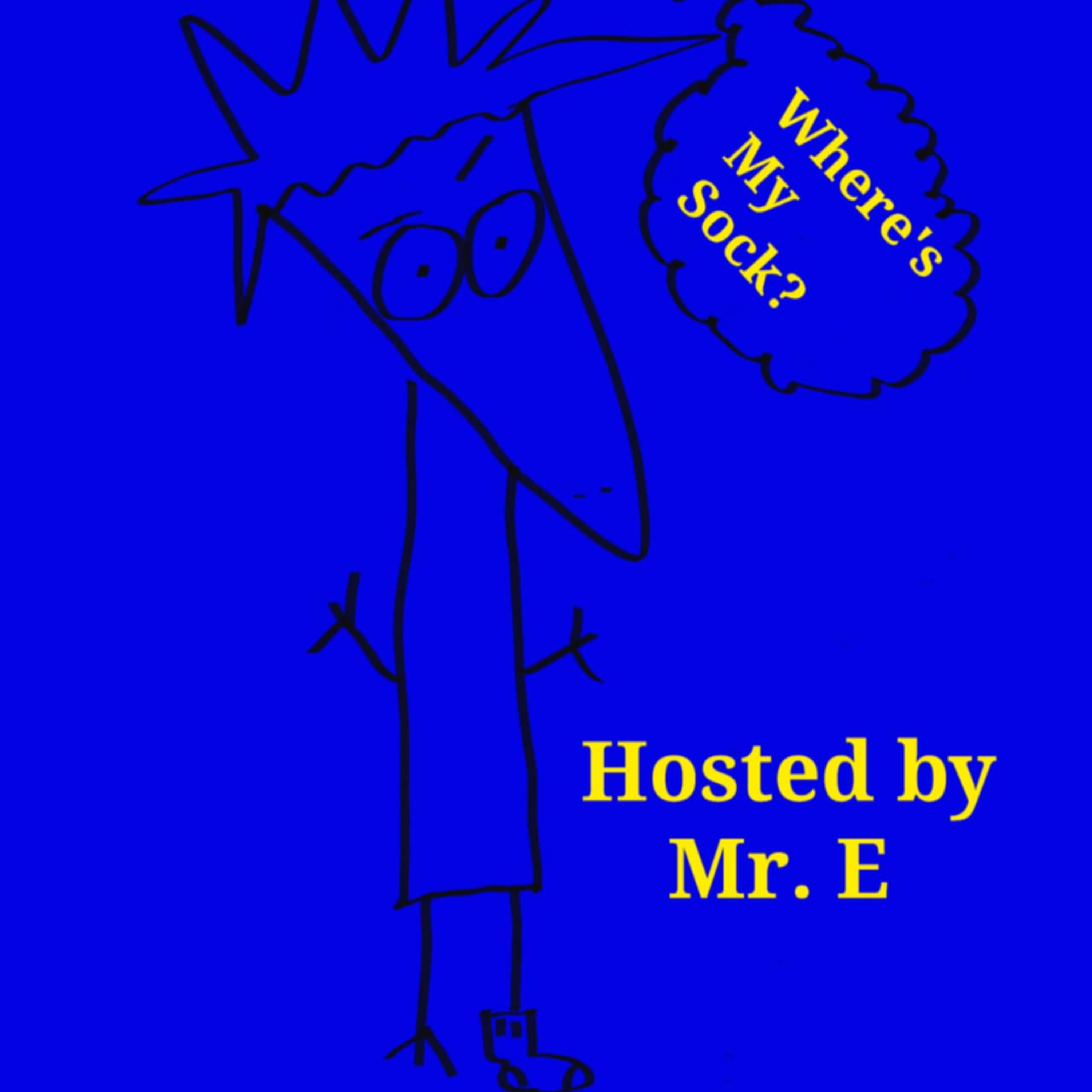
Welcome to Where's My Sock, the podcast by Mr. E, where we learn and share knowledge. This show is about my journey in discovering the world of podcasting, and I'm taking you with me. I'm not a pro, and I'll make mistakes, but that's what keeps it real. I'll show you that anyone can start a podcast, no matter how messy it may seem. Stick around to learn everything I learn, and I promise it'll be useful. Together, we'll find the missing sock, or in this case, the knowledge and skills to start a successful podcast. Thanks for tuning in. Let's get started!
Research-heavy podcast genres require more than gathering information. Mr. E explains how timelines, sources, citations, fact-checking, sensitive content...
Ethical framing is the way you present a real story responsibly in a research-heavy podcast episode. In this episode, Mr. E defines ethical framing in...
Sensitive content warning is a clear notice before difficult material appears in a research-heavy podcast episode. In this episode, Mr. E defines sensitive...
Fact-checking is the process of verifying that the claims in a research-heavy podcast episode are accurate, supported, and not overstated. In this episode,...
Citation is a clear reference to where information came from in a research-heavy podcast episode. In this episode, Mr. E defines citation in...
Secondary source is reporting or analysis that summarizes and interprets an event after the fact—often based on primary sources. In this episode, Mr. E...
Primary source is information that comes directly from the time of an event or from the people involved—like original documents, direct statements, or media...
Timeline is the ordered list of events—often with dates or time markers—that keeps a research-heavy podcast episode clear and responsible. In this episode,...
Teaching in a podcast isn’t about covering everything—it’s about helping a listener understand one idea without getting overwhelmed. In this Roadmap episode,...
Listener takeaway is the one main idea you want a listener to remember after an explainer episode—stated in a clear, repeatable sentence. In this episode,...
Call to action (CTA) is the clear next step you ask a listener to take. In this episode, Mr. E explains CTA in beginner-friendly language with a focus on...
Recap is a short summary at the end of an educational episode that restates the main idea and key points in simple language. In this episode, Mr. E defines...
Analogy is a “this is like that” comparison that helps explain a new concept using something familiar. In this episode, Mr. E defines analogy in...
Example is a concrete case that shows how an idea works in real life, not just in theory. In this episode, Mr. E defines example in beginner-friendly...
Scaffolding is organizing an educational podcast episode in steps so the listener can understand each layer before you add the next one. In this episode, Mr....
Learning objective is the clear “finish line” for an educational podcast episode—what the listener should understand by the end. In this episode, Mr. E...
A strong podcast interview isn’t just “a good conversation”—it’s a guided episode that the listener can follow from beginning to end. In this Roadmap...
Guest release is a simple written agreement where a guest gives permission for you to record and publish their interview. In this episode, Mr. E defines...
Pull quote is a short line pulled from an interview that captures the main idea of the episode. In this episode, Mr. E defines pull quote in...
Conversation arc is the shape of an interview from start to finish—how it begins, develops, and lands so the listener feels like the conversation goes...
Showing the latest 20 of 122. Every episode is in the API: GET /v1/podcasts/pod_43qh2tbc7cb7bbpext0995wmd1/episodes