
Western Ag Life · Paul Ramirez
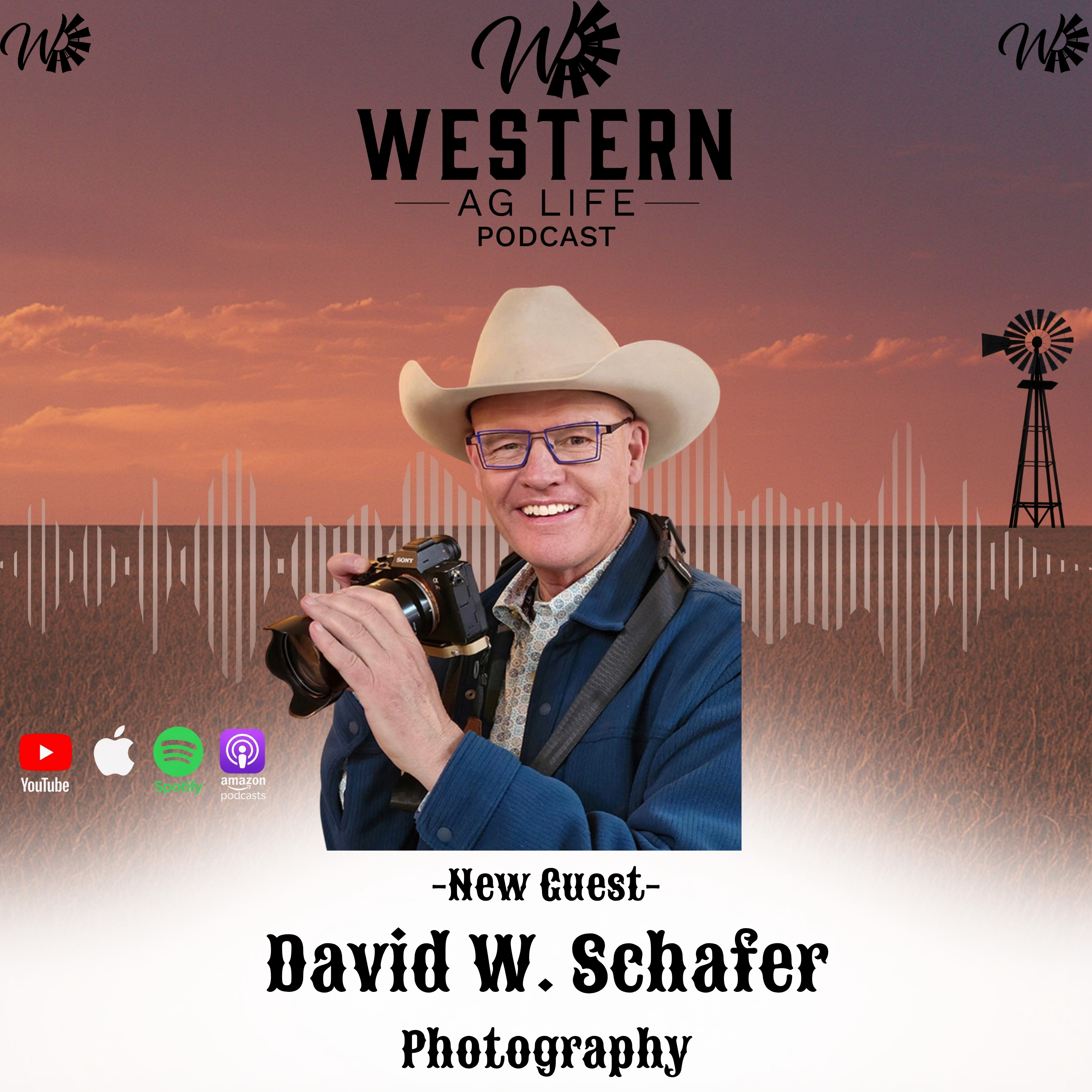
🎙️ This Week on the Western Ag Life Podcast This week, I’m excited to visit with David W. Shafer, an accomplished photographer whose work is being seen around the world. David and I talk about his deep connection to the agriculture and livestock industries and how those experiences have shaped the way he sees the world through his camera. What I appreciate about David’s work is his ability to capture agriculture and the Western lifestyle from a true, firsthand perspective—because he has lived it and been involved in it. We also discuss David’s relationship with the University of Arizona and the role that agriculture and education have played throughout his journey. It was a great conversation about photography, agriculture, livestock, the people who make up our Western way of life, and the importance of telling those stories. 🎧 Listen to this week’s episode of the Western Ag Life Podcast. Please like, share, and follow the podcast as we continue to celebrate, communicate, and educate about agriculture and the Western lifestyle. #WesternAgLife #Agriculture #WesternLifestyle #Photography #Livestock #UniversityOfArizona #ArizonaAgriculture #RanchLife #WesternLife
Paul Ramirez: Well, hello, ladies and gentlemen. Welcome back to the Western Ag Life Podcast. My name is Paul Ramirez, and I have another unique guest on with us to this morning. And so we're going to get right to it. Again, welcome back to the Western Ag Live Podcast, where we celebrate, communicate, and educate about agricultural and the Western lifestyle. And more importantly, tell the stories of the people who make up this way of life that's so special to each and every one of us. Today we're pleased to welcome a very talented photographer and storyteller, Mr. Dave Schaefer, will be on with us this morning. Photography is much more than simply taking pictures, it's about capturing a moment, telling a story, and preserving a piece of history. And Dave has developed a unique ability to do so just through his lenses of his camera. His work has taken him into the heart of the Western lifestyle, capturing people, places, livestock, and landscapes, and Traditions that make up the West that's so important to each and every one of us. In and of this industry where so much of our history is passed down through stories, images, photographers like Dave play an important role in preserving the heritage and the for generations to come. Today we'll talk about Dave's background, how he got started in photography, and what draws him to the Western way and lifestyle. And what goes next into capturing for Dave in s these special moments and most importantly, he will simply tell us and walk us through his past and his experiences. We'll also get his perspective on the changing face of Western photography and some of the memorable people and places he's photographed and what he hopes his work will communicate about the West. Dave, welcome to the Western Ag Life Podcast. We're sure glad to have you on this morning. How are ya? Dave: I'm good. Thanks, Paul. Good morning to you. Paul Ramirez: Well, Dave, we've been long, long friends and when you were here in Arizona and I known you for a long time when I worked for Arizona Feeds, I met you and then you know, certainly when I progressed into becoming an auctioneer and so we've been longtime friends and acquaintances and you know, you left here and went to Colorado. So but what I really like to do for our listeners here this morning is to just let's find out a little bit more about Dave Schaefer and how Dave grew up and stuff like that. So can you just kinda take us back to, you know, your childhood and then Walk us through, you know, going to college and then, you know, what what your careers have been. Dave: Okay. Yeah. I grew up on a farm in mid in northwest Missouri and in up around Maryville, Missouri, I guess would be the town of any size closest to me. And it was a diversified crop and livestock farm and a great place to grow up. went to school at Northwest Missouri State University where I got my bachelor's in animal science and then my senior year I came out to Colorado State for leadership conference and just kind of fell in love with the West and the mountains and stuff. And so I applied to graduate school and was fortunate enough to get a assistantship to come study at Colorado State University. And I started my first year under Dr. Dennis Lamb in kind of ag livestock or beef systems, I guess is what it was called at the time. And then he moved up in administration, so I transferred over to Dr. Jim Brinks and studied under him under in animal breeding and genetics and finished my master's and PhD at CSU. So and then while I was when I finished my master's and when I started my PhD they hired me full time to manage records for their San Juan Basin Research Center and also the Colorado State beef improvement center that they had just gotten in 1985. And so I managed the records and coordinated all the activities of those two research centers while I was finishing up my degree in in school and then when I finished my PhD I took a postdoc at the San Juan Basin Research Center for two years and then went and managed that at the end of that I took over as manager of the San Juan Basin Research Center and the Four Corners of Bull Test and I did that. from ninety gosh, ninety-one to to ninety nine, I guess. And then I moved to the university. The opportunity came up to go to the University of Arizona and work at the V Bar V Ranch for the U of A. And so it was kind of a unique opportunity. Scared me a little bit just because of where I'd grew up and what I was going Paul Ramirez: Mm-hmm. Dave: to, but the greatest decision of my life made so many wonderful friends down there and connections and it taught me a lot about the West and the difficulties that producers face under those harsh environmental conditions. And it also allowed me to carry my camera with me and take a lot of photos while I was there. And yeah, I loved every moment there. but then an opportunity came up for me to come back to CSU. I was feeling like I needed a bit of a change and so I came back to CSU in twenty seven January of twenty seventeen. and managed their the Ardec livestock facility and which encompassed feedlot, purebred cow calf herd, sheep and and a few pigs here and there. So yeah, and then about four and a half years ago I retired. I decided that I was well off enough that I could do that and travel. I love to travel. so I have retired, take taken my photography more seriously now and Just enjoying life. Paul Ramirez: Wow, cool. What a great story. And so I think that's gonna lead us into, you know, what the perspective is that you have, and that's why some of you know your photography, especially when those of us that are involved in agriculture, you know, in an intimate way, certainly can see the essence that you capture, you know, so well in you know, in your in your photographs. they're absolutely incredible. so when you were here in Arizona, so let's talk about so when did you start, you know, when did you start you know Really using a camera to capture, you know, Dave: well it's kinda started a little bit back in my childhood. my parents gave me a little codec and schematic camera or whatever and but film was expensive to to develop and stuff, so I couldn't take very many pictures then but Paul Ramirez: Developed, yeah. But you have to go to like a photo hut back then or something, right? Remember? Was it in the grocery store parking lot or something? Yeah. Dave: Yeah, exactly. Yeah. It was it was a challenge to get things Yeah. So yeah, so it wasn't really until I finished up kind of was at the tail end of my graduate career at CSU that I was finally able to afford a nice camera and that's kinda when I started taking pictures, but it didn't really become super serious until closer to probably two thousand and eight. I mean I'd taken pictures, lots of pictures prior to that. But then in two thousand and eight I had a good really good friend of mine that asked me to take pictures of their cattle sale and so I started doing that and then they told me that they would put some of my photos up in at their sale to sell if I wanted to do that and because I thought they that I should be selling them. So that just kinda it's just kinda grown from there and then and Arizona while I was in Arizona I got involved with The Arizona Professional Photography Association and it's just I have not never looked back. I just keep going. Paul Ramirez: And so had you like gone or do you just kinda stay in in one genre or what what what areas do you really like to photograph? What what are would you call your specialty or your favorites? Dave: yeah, I I explore a lot, but my my stuff, if you look at my website or Etsy store and stuff like that, you're gonna see a lot of livestock, particularly cattle, horses, sheep, a few pigs. Pigs are more difficult for me to photograph and find find and photograph. and then wildlife, a lot of wildlife photos and Then just kind of Western heritage type stuff, just the classic saddles and tack and things like that. And then trying to capture some moments of a lot of times when I was on the ranch, I didn't have a chance to when we were working cattle, I didn't really get a chance to photograph a lot because I was busy doing stuff. But Paul Ramirez: Mm-hmm. Yeah. Dave: now I'm trying when I get the chance to go to places and photograph, I'm trying to capture more of that Western heritage of the brandings and things like that. Just to document that and they make cool photos. So I that's I love that sort of thing. But I've also branched out into some abstract stuff. I just did some on because I love to travel. and I was on a beach in Costa Rica walking along and noticed all these cool patterns down there. And so I started taking pictures of the sand patterns and stuff, and then I take back and edit and turn them into something a little different. So yeah. Paul Ramirez: Yeah, that's that's pretty cool. I love to see, you know, like I don't know, like barn fences and stuff like that, you know, when you take those photographs and then blend with things. I think that's just yeah. You play with stuff like that. Dave: Yeah, I yeah, I've played with like compositing photos where I've taken a photo, particular I've got one photo that I took of a sheep drive in Arizona there, that comes through Early Valley every year and then I layered on two different other photos and it just kinda created an old French style photo to me and it's it's been very popular with churches and things like that because it's kind of represents the flock, I guess, and Paul Ramirez: Mm-hmm. Dave: has that kind of biblical feel to it as well. So Paul Ramirez: And so we might as well talk about this. We'll talk about it now and then we'll talk about it later. So when people wanna go and see your work, they can go into you you have a website and tell people how they Dave: Yeah, I do. Paul Ramirez: can get to your website. Dave: Yeah, my website is DWS Photos at yeah, DWS photos dot com. It's pretty pretty simple. Paul Ramirez: Okay. And then you have an Etsy presence too, right? Dave: Yeah, I do. I have it's David W. Schaefer. dot etse dot com I think is what it is. So yeah. On that. Paul Ramirez: And then whether someone wants to Google you for sure they can just find you. Dave Schaefer, what would be the best way to find you? Photographer. Dave: Yeah. Yep. Yeah. David Schaefer David W. Schaefer Photography on you'll find me. That's on Facebook. Paul Ramirez: Okay, you'd be able to find so yeah. Yeah, go and check out Dave's stuff. I'm telling you, he had one yesterday and that's what kinda prompted me to get him here on the podcast. I wanted to have him on the podcast. He's on my list that I had originally for a long, long time, but I finally saw he has a really, really cool photo of a calf that's licking himself. And I'll I'll try to get it here. it should come up and right at this point in time. I'll try to put it in the podcast so you can see the photo. well I guess with your permission, right, Dave? We'll put that picture Dave: Yeah, absolutely. Absolutely. Paul Ramirez: right here in the podcast. So hopefully you're looking at Dave: Okay. Paul Ramirez: it right now. But that just kinda th I mean, you know, that's what spurred me into thinking, you know, that, you know, a lot of people take photographs and a lot of people are photographers, but you know, they don't have the the back knowledge that you do, you know, to really know animals and and know the, you know, what's going on at that particular time and How that's special to us of us for those of us for sure that have been involved in agriculture. And that's one thing I think that you've always done in your work that I've seen that you capture really well the essence about, you know, what we actually see, you know. And and I think if a photographer just came from, you know, wherever, New York or whatever, and had real no knowledge of our industry, they might miss some of those really special things. And do you feel like that really plays into help really help you, you know, when you're looking at stuff? Dave: Hundred percent. I I mean just having worked with animals for so long and understanding their movement and how to work around them and anticipate their movements and just the best pose for them if I'm taking a full body picture, getting the legs right and the ears and the eyes and stuff, just keeping all that in mind and stuff when I'm taking a full body picture and stuff and then just really focusing on the eyes, I guess, on a lot of things 'cause I do a lot of close up stuff and I really like to capture that eye and yeah, just brings out the heart of the animal. So and like you say, their essence. Paul Ramirez: some time ago I had a photographer on and she primarily focuses on taking photographs for livestock catalogs, sale catalogs and stuff like that. And we got to talking and she was she told me this is her perspective on it. She said the good ones almost always take good pictures. She said, you know, whether Dave: Yeah. True. Paul Ramirez: it's a horse or a steer or even, you know, a lamb or a goat, she said it just seems to be the higher quality they are the you know, and she taken some pictures of thoroughbred horses for, you know, some Dave: Yeah. Paul Ramirez: of the thoroughbred sales and she says it's just I don't know, she said, it's like something, you know, they almost they can exude it. You know what I mean? It's like radiates from them. Their greatness radiates from them. And Dave: Yep. Yeah. Yeah. Paul Ramirez: I always remember my grandfather, he he loved race horses, short horses, quarter horses. Dave: Uh-huh. Paul Ramirez: And he would always say that, you know, when he was looking over colts, he always looked at the cult that had, you know, a real strong demeanor, but more importantly had the always kinda looked good whenever you were out there walking around him. He always wanted to find one that you never seen him like, you know, hanging his head or or doing something where didn't he just didn't look good. And those would always kinda be the cults that he would try to sort through and he believed that for sure. You Dave: Yeah. Yep, I agree. A hundred percent. That's yeah, that's makes it so much easier when you've got a good looking animal and like I say, it's harder to find bad angles. Yeah, de definitely. people are not my favorite Paul Ramirez: Well I guess that I guess that would be true even to humans, right? Every easier photographer. Dave: thing to photograph. If I can do candid shots, I don't mind, but to pose people is not my thing. Yeah. Paul Ramirez: Yeah, for sure. That's a whole different deal. So when you let's let's just kinda digress here just a little bit. So when you were younger and you'd started, you know, just kind of fooling with a camera, did you ever have any idea that, you know, at some point in time that you would end up, you know, being, you know, the photographer that you are? Is there something in there, you know, in your youth that you thought maybe now that you look back you say, Okay, you know, that I I now I could see where I would have started thinking like this. Dave: Hm. I don't know. When I was growing up Paul Ramirez: Did you like art or Dave: I I I was so focused on ag. I just I absolutely loved I'm like my career through with all the universities and stuff and what I did and couldn't believe I was paid to do it. loved it so much at the time and and the photography just kind of was something to just I I just evolved into. I'd always loved taking pictures and I think I get that from my dad 'cause I think he he liked to take a lot of pictures and stuff and when he was younger, I've seen some of his work but I never got to see all of it, I guess. It's hidden away probably in my mom's house somewhere. So but but yeah, I I don't know that I ever consciously thought about it. until like in graduate school and stuff is when I s Started seeing well, moving out west and stuff and just seeing the Western lifestyle and stuff. It just captivated me and I wanted to capture it for other people. Paul Ramirez: Mm. And so some of it's then you're saying a little bit genetic then. So your father had, you know, an affinity for photography too? Dave: Yeah, I think so, a little bit. I mean I don't know that he he never really pursued it a lot, but I know when he was in the army and traveling overseas and stuff, he had a camera and took a bunch of pictures and stuff. And so so yeah, I'd like to think there's a little bit of that coming through from there. Paul Ramirez: Amen. Let's start talking a little bit, you know, 'cause I'll have some people for sure, you know, that will come on here that will be photographers or like to to play with photography, is it? so you know, when you lighting I guess is extremely important, I'm told, you know, that you gotta make Dave: Yes. Paul Ramirez: sure that the lighting my daughter shot a branding earlier this spring and she was just almost giddy all morning long because the she was saying this is the best light. you know, and this and that and Dave: Yeah. Paul Ramirez: and the f and consequently the photographs that she took were really, really good that day and she's just like, Well dad, 'cause the lighting was so darn good and so tell me a little bit about that. I I guess I didn't realize that lighting was that crucial. Dave: Yeah, I mean photograph with photograph you're basically capturing the light. And so your best times, particularly for well, just any time I guess, the golden hours, in the morning right after sunrise for about an hour, or for about an hour before sunset, those are the i opportune times, but as we know we can't always all capture everything at that time because not everything's happening then. so other opportunities, cloudy days make for great photographs as well just because the lights more controlled Paul Ramirez: really? Dave: and stuff versus the midday sun is very harsh. And if you once you if you start laying photographs next to each other and looking at photographs that you've taken early in the morning af kind of after sunrise and stuff and then you look at the ones in the middle of the day, you'll see a really harsh white light in all those photos that you take in the middle of the day. And it's you get some really sharp shadows and things like that. And it's just It takes away from the photograph and so yeah, so the better the more you can control that light and the the harshness of it and stuff, the better the photographs are going to be. And fortunately the technology n these days kinda helps to give you that control and a little bit. So Paul Ramirez: Well and then I guess once you take the photograph I guess you can go back and edit it, you know, to the degree that you wanna see too, correct? Dave: Yeah, absolutely. and yeah, I've one of the things I've learned it's I was always seeing these really cool shots and I was like, How do these people capturing all these wonderful shots? And I've since learned that probably ninety percent of the photos you see out there are heavily edited. So so I've learned editing techniques to be able to bring out the best in my photos, especially under those less than ideal conditions. Paul Ramirez: And so, you know, I guess, you know, l let's talk this let's talk about this, I guess. So, you know, you're saying that, you know, ninety percent or a large percentage of photos now that we probably view is certainly online and so forth, or some have some form of editing done to them. Is there some kind of purist still, you know, 'cause it sounds like you're involved in photography, you know, groups and and so forth. Is there some kind of purist thing that amongst photographers that they would still recognize, you know, that you're still good at taking a photo as opposed to taking a photo and then having to edit it so that it looks a certain way. Dave: Yeah, I I think there's a little bit of that. Paul Ramirez: Like a purist or something. Dave: Yeah, there definitely there's definitely purists one hundred percent that only Paul Ramirez: Mm-hmm. Dave: do whatever they can capture in the camera and stuff. but as I said, a lot of times, particularly with the photographs that I like to take, you're there's not always the opportunity to capture all that stuff like at the early morning or late in the afternoon. I mean a lot of that work happens during the day, so you've got to be able to improvise and make it work. And Yeah, so I think a lot of people, in order to sell their stuff, they've realized that they've got to do some form of editing in order to be able to make it something that's somebody's gonna want to hang on their wall. that's not just that's recognized more as a at least from my perspective, more as a fine art piece versus just a everyday photograph for documentation purposes. So Paul Ramirez: Mm. And do you you know, my wife has she's quasi fooled with photography a little bit and I know people have offered to pay her and so forth, but she feels like if some if she ever started getting paid that she would feel like some kind of, you know, she she would feel like she's, you know it brings stress onto her that, you know, she would be paid. Is there something is there difference between that for you that, you know, when you're just out there free rolling yourself as opposed to You know, when someone's commissioned you or, you know, paid you to come and photograph d your mindset change there? Dave: Absolutely. I mean it is I get what she's saying, what your wife's saying, because that that I do feel the pressure if I know somebody's gonna pay me for that. Paul Ramirez: Mm-hmm. Dave: I if I'm out just on my own, I don't feel any pressure whatsoever. And a lot of times those have been my best photographs. although I'm getting better with events, particularly hot air balloon events, I've been commissioned to do several of those and I guess people tell me I have natural eye, I don't feel like I do for that, but but my confidence is growing in that area, I guess. But yeah, I f I fully understand what your wife's talking about 'cause a few years ago, I kind of started looking at it that way as like, I gotta get the best photos in order to be able to sell and stuff. And it just took all the fun out of it. And I had to just step away from it for a few months and then I kinda got the bug again and went back out and I just decided I'm doing this for me and not anybody else at the moment and just and then I think that comes through in the work when you just Paul Ramirez: Mm-hmm. Dave: you do it for yourself and not for everybody else. That's just decided Paul Ramirez: Yeah. We have a friend that paints really well and you know, she's she does tremendous work, tremendous work, even either way. But I noticed that she said that she feels when she's, you know, commissioned to paint something that, you know, especially like an animal or a person, she just feels like it's never her best work because, you know, she just feels the pressure that's coming on because she's, you know, has an expectation. And when she doesn't have an expectation, she says that she feels like her work is just free flows for it and it's always better. Dave: Yeah. I agree. I yeah, I don't think that art I don't think can be forced. it's gotta feel natural and just flow for you and whenever like under the paid situations and stuff, yeah, sometimes it can feel forced, especially if it's something that you're not particularly comfortable photographing or particularly interested in. So yeah, that can make a difference. Paul Ramirez: What about technology? Have you used a drone? Have you ever played with a drone or anything to take ph photographs? Dave: No, I haven't. I figure I'm doing good to just master the photography, the camera part of it. I don't need to ful I there's Paul Ramirez: It's too Dave: so many regulations around drone using drones and where they go and I just I just haven't I've chosen to not go that route. So Paul Ramirez: I've seen some really cool though, you know, in the with the drone deal now that, you know, Dave: Yeah. Paul Ramirez: people are using them with livestock and, you know, flying down by a water and coming up and it's just, you know, some of the matter of fact, I'm working on a deal for an intro for my podcast and we're gonna have drone shots and it's just amazing what they can do. I I sell a lot of real estate now and even these you know, photographers that come in and and shoot the inside of the home and so forth. I mean they have these little smicro drones now that they fly in the house. And just the stuff that they can capture, Dave is just I mean, it's crazy, you know. It's just so crazy. And then the Dave: Yeah. Yeah. Yeah. Paul Ramirez: the quality of the the film, you know, the video that they take is just, you know, I mean, crystal clear and yeah, just amazing. Technology is here. Dave: Yep. Yeah. Yeah, it's it's an interesting thing and if I was maybe a few years younger I might tackle it. But at this stage of my career, right or life I've just it's just one less thing, one less piece of technology I want to deal with. Paul Ramirez: Well, and I don't wanna get off the subject too much, but you know, you also think about this, you know, because of your ranch experience, you know, wouldn't it have been wonderful for you just to stay at the headquarters and and send a drone up and go check a water or go check a fence or a water gap without having to go there, you know, three, four, five miles, you know, to ride over there and and look at it. Dave: absolutely. It when I was in Arizona on the V Bar V with that ranch being thirty miles long. I mean and the cows, I mean we had five hundred head of cows scattered across that and they cut you didn't it was tough to find them all all the time and so we spent a lot of time looking for cows and stuff and it would have been so much nicer to be able to have a drone that you could just go up in a certain area and zip it around there rather than bouncing all over the place on a four wheeler or on a horse. And so I mean I enjoyed all of that, but but there are times when it it eats up a lot of time and time consuming. Paul Ramirez: Yeah. Dave: And that's I'm definitely a fan of working working smarter, not harder. And being as efficient. Paul Ramirez: Mm-hmm. Well, and I think, you know, in your life and in my life and, you know, what we've seen in agriculture, you know, that technology's just absolutely amazing. I have another friend in Iowa and you know, GPS now runs, you know, they're not completely autonomous, but soon they will be. you know, the GPS just runs, you know, when regardless of where they're in the field, it tells them exactly where they are in the field. And Dave: Mm-hmm. Paul Ramirez: then they even have some of these you know, fertilizing machines and stuff like that that you know, pull a sample and know the area and how much fertilizer, you know, whatever phosphorus is supposed to come down or urea, whatever those those are, it it puts those in the ground and, you know, it's just amazing, you know, how, you know, agriculture I think is gonna change, you know, with technology for sure. I'm sure you've seen a lot Dave: absolutely. Paul Ramirez: of that. Dave: Yeah. Yeah. I mean I we played around a little bit with the GPS stuff when I was in Arizona and 'cause it was just kind of coming out then and not near as good as what it is now. But and then also even just as I was leaving down there too, they were talking about virtual fences and things like that. And that would be amazing because you can spend a lot of time, especially in Arizona and the mountain countries of the West. working on fence and if you could control that virtually that would be amazing. So Paul Ramirez: I I was the other day a rancher was showing me on her phone. she's collared, you know, her purebred cows and she was showing me on her phone, you know, she can she was in Tucson and her ranch is in southern Arizona and she could show me exactly where her cows are on the ranch. You know, she could say Dave: Yeah, that's cool. Yeah. Paul Ramirez: there this cow and then she could also so then Dave, when the dot comes up, she clicks on the dot and that says, that's cow seventy two and then And then such and such dot, you know, and she could say, Okay, that's and you know, they could tell when they went to water and she can also backplay it, I guess, and it tells, you know, tells the the activities that happen that day. It's just crazy. You know. Dave: wow. That's amazing. That that would have been really handy when we were trying to tag kids and stuff like that to be able to out in that say in the brush and stuff in Arizona and the wide areas and stuff, it would have been super handy to be able to just know where the cow was at and go to her and tag the calf. Paul Ramirez: Yeah. That's just yeah, amazing. And then, you know, even these dairies have it tuned up even more, you know, 'cause they even know, Dave: Mm-hmm. Paul Ramirez: you know, where a cow, you know, what her temperature is and so forth. And yeah, it's just technology's here to stay. And so but I I'm sure you've experienced a tremendous amount of technology, you know, it's happened in the you know, and with cameras and so forth. And so tell Dave: Mm-hmm. Paul Ramirez: me what kind of like you know, when you first started, what'd you start out like with, you know, actively photographing when you say you were here in Arizona? You were using what, a thirty five millimeter camera with film? Dave: Yeah. yeah, I had I started out with my my first camera that I bought was a Minolta when I was in grad school. And then Minolta went away and I had all these lenses but I didn't they were Paul Ramirez: What would have a Monelta camera at that time cost? Dave: I think I maybe paid it wasn't a top of the line camera, but I think I paid like eight hundred dollars or something like that. And it was Paul Ramirez: Mm-hmm. Dave: wasn't a per what they call a true full frame professional camera, but it was a it was a nice camera. And I got a lot of really cool shots on it. so when that went away, I was a little disappointed because I had all these lenses that I'd bought for it and I couldn't use them. So then I decided well I'll switch over to Nikon. So I went to Nikon for a while and then a few years later, actually when I was in Arizona, someone told me that Minolta had been bought up by Sony and that my lenses would fit the Sony camera. And so I went back to Sony, got a Sony camera and loved it and I've since switched over to the Sony mirrorless professional cameras and that's what I'm using now and yeah it's it's Paul Ramirez: And and so those lenses that you bought originally, they're still relevant today with that camera? Dave: Well, the ones I have now, no, because I s it they so I switched formats in Sony. They have an A mount and an E mount on their lenses. And my old lenses were the A mount and they did work perfectly well with it. but since I've upgraded to the mirrorless cameras and changed the mount now I've had to buy some new lenses and stuff. In fact this actually a couple of weeks ago I bought a brand new camera that's got AI built into it that actually is supposed to capture the moment you start pressing the shutter, it starts capturing whether you it's or at least the mim the photos, like particularly with animals, you know, there's a lot of times you go out to capture the animal and just as you get it focused, they move. This is camera is supposed to enable you to capture that right before they move because it's got it in its memories and when when you pointed it at them. So so I think that's gonna be amazing because there's so many times it's been frustrating when you get an animal posed just right and then They move the moment you start to push the button. So Paul Ramirez: Yeah. And so explain to me because of my ignorance about this mirrorless deal. My daughter just bought I mean, just bought just spent a lot of money on cameras, for us here, you know, for the Western Ag Life. And Dave: Yeah. Paul Ramirez: so she wanted a mirrorless camera, but I was surprised too, and I want to talk about this just a little bit. I was surprised not only sh the camera was expensive, but then when she told me the price of the camera, I'm like, okay, well, you know what I mean, we we do you know, we do need it. So let's Dave: Yeah. Paul Ramirez: buy it. But then when it compounded when she told me that she had to buy the lenses too. And so I'm like, wait Dave: Yeah. Yeah. Paul Ramirez: a minute. Now all of a sudden that thing over doubled with two lenses against the camera. So tell me, Dave: Yup. Yup. Yup. Paul Ramirez: what is the difference with the mere mirror list and what what happens there? What why's that changed so much? Dave: you know, I don't know that I fully understand it other than the fact that when I switch to mirrorless, whatever I see in the screen, there's like a little computer in there and whatever Paul Ramirez: Mm-hmm. Dave: adjustments I make to the camera, I see them instantly. Versus the regular DSLR, Paul Ramirez: Okay. That's that's the difference. Dave: it's you do the best you can and then when you get back, you see what you've got. you don't or you see it after you press the shutter. With the mirrorless you can actually see the adjustments take place before you press the shutter. Paul Ramirez: So you see it true. It's it's more true, right? And then what's Dave: Yeah. Yeah. And I Paul Ramirez: what's up with the lenses? I mean, I didn't realize the Dave: Yeah. Paul Ramirez: lenses were that big a deal there. Double the price of Dave: Well that's Paul Ramirez: the camera. Dave: Yeah, but that's an integral part of the camera, I guess, in order to to be able to capture just all the the different lenses. Like I've got a lens and I g I get what you're saying. I've got a two hundred to six hundred millimeter lens that I use for wildlife and for wild horses and things like that. And that one was that was like a twenty seven hundred dollar investment to get that, but it's the It's a Sony lens and it just takes amazing photos and stuff. And so and I've had it for five, six years now. So as long as you take care of that's they're an investment. Yeah. I mean Paul Ramirez: So it was a it was an investment, huh? Mm-hmm. Dave: the whole thing it's an investment. And I'm far in over my head in terms of investment versus profitability, but that's farming and and ranching. Paul Ramirez: Yeah. Yeah, that's where you came you grew up like that, right? yeah. Dave: I did, yeah. So that's no different. Paul Ramirez: So so let's just say if you were let's say there's a listener on here that, you know, is just kind of wanting and thought maybe that they might want to, you know, do photography. Is there kind of a early recommendations you would give to somebody that just told you had like to just start? Dave: yeah, I've just I've had I've had some students actually here in Colorado that have asked me that. And basically what I've told them is just don't worry about the getting the best camera out there when you start. I mean, there's a lot of really, really good cameras out on Facebook Marketplace or other places that are quite a bit less expensive, lenses as well. get a good starter camera and then just go play with it and don't be afraid to mess with the buttons and things. I mean I didn't have any real formal photography training. I'm in s many ways self taught, but at the same time I I did do a lot of workshops and stuff Paul Ramirez: Mm-hmm. Dave: in Arizona and I've done a few here in Colorado, but most of my stuff was in Arizona and other photographers w I found, particularly in Arizona, were amazing at being willing to help and tutor you on how to do some things and stuff, but get familiar with your manual on your camera and what the buttons do. And then if you don't if you get out in the field and don't know and there's another photographer around, don't be afraid to ask 'cause most of them will be willing to help you, especially if they're familiar with your equipment. If not, but just wing it. Do what you can and Paul Ramirez: Well and then too, there's so much available right on YouTube and stuff like that that you can you know. Dave: Absolutely. Paul Ramirez: Yeah, we bought some video cameras and my daughter I noticed she's been taking these tutorials on, you know, YouTube for these video cameras that we have that I mean, she's she's got a lot of training off of and so forth. What about, you know, so many people now and and and Dave, you know, I I know because of our age we've seen this play out. You know, now everybody has a camera basically, they carry a camera with them everywhere. in their cell phone. And Dave: Yep. Yep. Paul Ramirez: what what's your thoughts on cell phone photographs and so forth? Dave: I've started using it a little bit. I mean, they've got the quality up that you can actually make some pretty amazing photos just with a cell phone and so it's it's handy if I'm someplace and I don't have my camera with me to be able to kinda grab a shot, but I still love the feel of having a camera in my hand and I'm a little bit of a purist in that way, I guess, just because I f I feel have more confidence in my photos when I have that kind of control. The cell phone Nine times out of ten it'll be a my finger'll somehow find its way into the viewfinder on a cell phone. So it's frustrating to me. It's just Paul Ramirez: I have some of those. Yeah, I have some of those for sure. Dave: it's yeah, it's it's something that seems so simple. but yet somehow just in holding that camera I somehow manage to mess it up usually. So but no, I've seen there's a lot of great courses out there on YouTube and things on how to take photos with your iPhone and whatever phone you got and there's I've seen some amazing captures on there and stuff, but but again, I just kinda like having the versatility of my cameras and being able to zoom in and get the quality. Paul Ramirez: And and so I had a you know, a guy that we were working with and he, you know, I had some old older photos that I had that of course were captured on the cell phone and you know, he would immediately know which photos those were. He just said by the Dave: Mm-hmm. Paul Ramirez: quality and he says, They're fine. Excuse me, those photographs are fine as long as you're viewing and looking at them on an iPhone or another electronic device. But when you actually one need to d either print them or do something with them, you know what I mean, from Dave: Yeah. Paul Ramirez: you know, reproducing him, he said that's when they start to give up the ghost that the quality wasn't there. Dave: Right. Right. I mean there there's a few some of the newer phones now, I mean, have the quality to potentially give you like a twenty four by thirty six photo or something like that. But provided you've just you've got the fra the kind of that the one X exposure versus you try to zoom in on those, that's when they start losing their quality pretty fast and stuff. So yeah, as long as you get the image you want, just kind of without having to zoom in, why, I think you're good. But Once you start zooming then it's they can deteriorate pretty quickly. Paul Ramirez: And so let's go ahead and go into I know that you like to exhibit your work from time to time, right? And Dave: Mm-hmm. Paul Ramirez: so tell me a little bit about that. Where was where was the first place you ever exhibited your work and what were your thoughts about doing that? What what's your Dave: I think probably the first big show of any notice was probably the Arizona National Livestock Show. that's where I I had I had shown it at some bowl sales and stuff like that, but that was just kind of a friend's favor kind of thing. but yeah, true art show. I mean I'd had some stuff I'd put in in put into county fairs and the state fair and stuff like that and had some success, but true show was actually the Arizona National Livestock Show and very was fantastic. I mean I Paul Ramirez: That was a judged event and then had prizes or how how Dave: I don't believe there was any I don't remember there being prizes on that. It was just the work was displayed and twenty five percent of the sales from that went to scholarships, which is near and dear to me. I love the fact that anytime I can support an art show that gives money to kids for for ag education and stuff, it's just I'm there. I'll support Paul Ramirez: You're in it. Dave: that all day long. And so that so that's what I loved about the Arizona National. stock show and actually they gave me the opportunity to be the featured artist in twenty four twenty thirteen, twenty fourteen, somewhere in there, at the show, which was just unbelievable to me and a great honor. I felt really humbled by that. but so many wonderful, wonderful people down there and just the response that I had in Arizona was amazing. but then I Paul Ramirez: Yeah, you you still have a lot of fans here and that's one of the reasons I wanted to bring you on Dave: Yeah. Paul Ramirez: the podcast. A lot of people are gonna be, there's Dave. There's Dave. I wonder where he went. Dave: Yeah. Yeah, I'm still around. Yeah. I still I get down to Arizona once in a while, but it's always seems like it's not long enough to be able to get around and see everybody and stuff. So but the I my best friend up here bought the house next door to where I lived in Arizona and he's got it as a B and B down there and so I go down and spend a week down there once in a while and stuff. But after you've driven all the way down there and stuff, it's kinda nice to just relax and not drive all over the state. So I need to just go down and spend a month. Paul Ramirez: And and then when you go to Phoenix then when you go to Phoenix you can't believe what that happened to that place, huh? Dave: yeah. That is unbelievable how that's grown since I Paul Ramirez: It really is. Dave: left, so Paul Ramirez: I don't even like to go up. I don't even like to fly out of there anymore. It's just it's Dave: Yeah. Paul Ramirez: changed so so much. I mean, anyways. so I want to go back to so at some point in time, I mean you continue to, you know, enter your pieces in, you know, shows and so forth like that, you know. Dave: Mm-hmm. Paul Ramirez: is that do you have any coming up or is there an ideal place you would like to exhibit? Dave: Well, I've got I've been do I've been participating in some virtual shows and stuff where I send them the file and then they display it on the T V screen and that's those I've been able to get reach internationally that way. And actually this weekend, there's a one of my sh photos is showing in Switzerland in the train station in Zurich. so it's Paul Ramirez: wow. And what is what is that what is that piece? Dave: Ugh, I knew you were gonna ask me that and I can't remember which one I sent. Sorry. I Paul Ramirez: that's all right. I didn't mean to put you on the spot there. Dave: I had to enter it like three or four months ago and I was thinking of that this morning but I didn't I was gonna look it up and I didn't I haven't d I didn't do that yet. So I I think it was Paul Ramirez: It obviously is something worthy of an international attention. Dave: Well, I yeah, I think I've got there's one that I have that I call Horses Reflective Hughes and it's something I've been playing with rather than just having and one of the ways I'm combating the sun issue, like if I've taken a photo in the middle of a day and stuff, I've started running what they call actions, Photoshop actions on some of these photos where I create a more painterly watercolor vintage look to the photos. And so I've got a photo that was of a wild s stallion drinking out of a water hole and and I just took this kind of gave it this vintage feel where you just kind of get a g it's like almost like he's coming out of a cloud or whatever and you just see this kind of faint image of the horse and his reflection in the water and stuff. And that one has done well for me and got me to the New York Art Expo last year in April. it was selected to show there by the same people that have the that have been showing it overseas and stuff internationally for me. So but yeah, probably Yeah. Yep. Paul Ramirez: You you own all the rights to that photo? Okay. Could you send me a a picture of that photo and then I'll include it here in the podcast at this Dave: Absolutely. Paul Ramirez: those of the who are gonna watch on YouTube, of course those of you who are listener won't be able to see it, but if you'll send me that picture, I'll see if Madison can Dave: Absolutely. Paul Ramirez: drop it here in the podcast at this point in time. Okay. Perfect. Dave: Okay. Yeah, absolutely. We'll do that. And yeah, then the only the other show that I'll potentially do I've done the last three years is the Red Bluff bowl and gelding sale. the Teha Tehama Paul Ramirez: bull sail? Huh. Dog sale now too. Dave: County Cattlewomen's out there. wonderful, wonderful group of ladies. they put on art show in conjunction with that sale. And I've made some amazing friends out there and they're so rem the cattle women everywhere that I Encountered are just amazing. I mean, in Arizona, I worked a lot with them and loved them down there. Paul Ramirez: Cowbells. Dave: And the ones I've encountered in California have been just as amazing and so helpful that when I've gone out there because I spend a week out there and they have directed me around to different places to get photos and invited me to their homes, and several of them have bought my stuff, and so it's just been phenomenal, and I really enjoy going out there. So that that's potentially the next big show that I'll have. coming up. I did have stuff in a gallery down on Santa Fe Street here in Denver, but that gallery unfortunately had to close due to rent prices. So but yeah so otherwise they're all hanging here on my wall. Paul Ramirez: Or you can yeah, the but most of them are for sale, right? So if they get on Etsy you can order one and and get them bought and stuff like that. Dave: Absolutely. Absolutely. And yeah. Paul Ramirez: Let's let's start kind of I got little speed questions I wanna ask you. We'll kinda go a little quicker here. tell me your favorite animal to photograph. Dave: Tough Highland cows right now. Yeah. Paul Ramirez: Highland. Highlands are popular everywhere, yeah. Dave: Yeah. Paul Ramirez: Highland. And so, what what's just because of their you know, their uniqueness or what what what what intrigues you about them that you want to for Dave: Yeah, just the the uniqueness of them and I guess a little bit of the popularity of them and stuff. But I I just I love all the texture of the hair and the horns and stuff and sometimes you can see an eye, sometimes you can't and just there's just a lot of character that you can do with them there. But that could have been said for a lot of the cattle that I saw in Arizona. I'd always said that those cows were cows with character down there and stuff. Yeah, Paul Ramirez: Yeah, every one of was unique, right? Dave: they were. They were. I used to see a lot of different horns and configurations and colours and stuff and I love photographing the cows in Arizona as well, so yeah. Paul Ramirez: what about a landscape, you know? So ocean, mountain, where where are we going here if you had the opportunity? Dave: for me that would probably be mountain. yeah, I would probably say mountain or west. Yeah, the western area. Paul Ramirez: And so when you photograph mountains, I mean you have to be obviously back at a certain location, right? That you can captivate as much of the mountain as possible. And so Dave: Yeah, to a certain point. I mean, the lenses that depending on the lenses you use, I just actually got a lens yesterday that's gonna allow me to do more potential landscape photography that that'll zoom out far enough that you you don't that'll ha that helps. I mean, if you don't have a soup pro but super wide lens wide angle lens, then you have to back yourself up, but then you start losing quality of the photo as well. So tools of the trade, you gotta learn Just like in ranching. Paul Ramirez: your favorite wild life animal that you would photograph? Dave: probably the buffalo I've been f or wild horses, I guess. Actually probably the wild horses. I've had a lot of fun travelling around the wild horse ranges and stuff and photographing them. Paul Ramirez: Have you ever shot the wild horses here in Arizona? Dave: I actually did the Salt River horses or tried to this Paul Ramirez: The Salt River horses, yeah. Dave: past spring when I was down there. didn't have super good luck 'cause I didn't I've I'd never been down to the Salt River. Unfortunately I after seventeen and a half years living in Arizona, I never went to the Salt River. So I gotta go back. That's something that that's on my list to go back and try to capture some more photos down there. But yeah. Paul Ramirez: What would be your dream animal, whether, you know, either in Safari or even in nature or whatever would would be your dream animal that you would like to photograph that you haven't photographed? Dave: well, in the wild, it'd probably be the grizzly bear. I really would like to go to Alaska and capture the grizzly bears during the salmon run. Yeah. Paul Ramirez: jeez. Really? Huh. Dave: I've done I've done Africa and I did. Paul Ramirez: you have. Tell me a little about that. Dave: Yeah, I yeah, I went that was my first big trip back in two thousand two. I went to Africa and did a three week photo safari thing through there and I that's when I had my film camera. I didn't have digital yet. And so I had over a thousand photographs on film that I developed and I still to this day I think that's still cumulatively probably the best set of photos that I've taken in my in my travels and stuff, 'cause you're a little more selective when you have film versus with digital and l many times it's spray and pray kind of thing. Paul Ramirez: Mm-hmm. Dave: And you just but I'd love to go back to Africa with a digital camera and try to capture those images 'cause The ones on film are it's a little more difficult to use them these days and on the digital Paul Ramirez: Well then I'm sure the technology, the the lenses are probably better now too, than the lens you had when you first went over there, right? Dave: a hundred percent. A hundred percent. Yeah. And the camera that I've got. I would just it would be amazing to be able to go back there and photograph. So I'm actually working on that. I've got a friend who's a travel agent here in Denver and she's looking at a possible trip either to Africa or to Mongolia next year. So we'll see. Paul Ramirez: And so what about you know, so when you were in Africa, did you photograph a lot of the people too, or just the animals or what was Dave: Some of some of the people, most of the time in the places I was at, when I where I traveled to, the people didn't really like having their there was kind of a cultural taboo. They kind Paul Ramirez: Mm-hmm. Dave: of saw it as capturing their spirit and they didn't like that. So you have to be very respectful of that. Paul Ramirez: Yes, I've heard that before. Yeah. Hm. Dave: candid moments and things like that when I knew when there were I may I captured a few of those but in the markets and stuff, but not not too much. I did want to be respectful of people's culture. Paul Ramirez: Sure, for sure. What about I mean, so now that brings up another subject for me, 'cause even, you know, the uniqueness, you know, we've talked about of us here in the West and agriculture and stuff like that. But certainly, you know, going abroad, I mean, sometimes the people are are most as unique as the animals in the in the Dave: Yes. Paul Ramirez: the terrain is. Dave: Absolutely. Yeah, I'm and actually next month I'm headed to South America and I'm going to the Atacama Desert for five days. And then I'm going to Cusco, Peru, which I was there a few years ago, but I had dropped my lens. We were had done a cruise down the Amazon and I'd dropped my favorite lens and it kinda shattered Paul Ramirez: jeez. Dave: and it wasn't working properly. And so I wasn't able to capture the shots that I wanted. They some of them would work and some of them the things would things would line up and it'd work and other times it was a mess. And so I've scheduled myself two more days in Cusco to try and just do that that exact thing. I'm and arranged a I'm arranging a tour with a local guide there to go around to the agricultural communities and just see the folks in action and try to photograph some of those folks and just their dress and just the whole culture and stuff. I just I love that. And then from there I'll be going on to Galapagos Islands for eight days to Capture wildlife there. So Paul Ramirez: Interesting. Now, you know, brought up something. Wouldn't it be cool, you know, if i and especially as much as you like to travel and you know, we talk primarily about livestock and so forth, but you know, we're talking about people now. Wouldn't it be really cool to go on different continents and photograph the people that actually work the land and and you know, tend to livestock? Just make yeah, just make a whole deal about Dave: Hundred percent. Yeah. I would love that. Yeah. I've I have many I've been fortunate enough that I have hit all seven continents now and I'm working my way back around and hopefully try trying to incorporate some sort of ag component into pretty much all my travels and stuff to try and lucky day. I love just one of my dream things that I would have loved to have done sometime in my career, would have been to just travel the world and taking pictures of all the different breeds of cattle out there. Just 'cause there's so many different varied breeds and stuff and Paul Ramirez: yeah. Dave: that would be fascinating to me. Same with sheep or horses too, I suppose. But yeah. It's just it's Paul Ramirez: No, that would be really cool, yeah, to go. I but I my thought is back to people 'cause, you know, we're s we're Dave: Yeah. Paul Ramirez: we're as unique as the creatures we tend to, right? I just Dave: Yeah. Paul Ramirez: think it would be so cool to travel around and just, you know, t take, you know, a farmer from England, you know, and take Dave: Mm-hmm. Paul Ramirez: a sheep herder from, you know, Africa or whatever, and then t come back and, you know, take a horseman from the United States Dave: Yeah. Paul Ramirez: and, you know, go to Australia and take, you know, a goat rancher or something. I just think Dave: Yeah. Paul Ramirez: that'd be so cool. What a coffee table book that would make, huh? The uniqueness is yeah. Dave: Yeah, that's yeah, it's an idea. I've I was in New Zealand a couple of years ago and got the chance to go to a large operation where they had over twenty thousand sheep that they ran and then I think around a thousand head of cattle and stuff and it was fascinating just to see how they operated that whole thing and just facilities. absolutely. Absolutely. Yeah, yeah. Paul Ramirez: And you took a lot of photographs at at that. Yeah. Cool. Cool. Dave: So Paul Ramirez: Do you 'cause so like on I guess in your website, I guess you can put you know, you can make like a photo book, I guess, right? That people is there photos in there they can go in there. I haven't been there, unfortunately. I should have done a little prep work. Dave: No. No, that's okay. well I just I just recently updated the fo the website. So if you do just in the past week or so it's much better than it was before. and it's kind of designed to be a portfolio of my work and stuff. It's by my I don't have all of my work up there by any means, but a good cross representation of it and stuff. but yeah, I mean I can work with people if they whatever they want. I can try to make it happen. I'm learning every day on how to do th different things. So I just created a postcard for my hometown back in Missouri. So and so yeah, I think I could do a book if I needed to or I do calendars Paul Ramirez: And and so Dave: each year. So Paul Ramirez: and so Dave, I guess you must have a lot of old thirty five millimeter film, right, that you printed actual hold in your hand photos, right? And Dave: Yep, yep. Paul Ramirez: have you had to go back and digitize some of those, you know, bring those back in? Dave: I had a lot of them digitized but the technology at the time was not that great, so the photos don't really translate, they didn't really scan well. I don't know. I haven't tried taking any back to see if I could redo I should maybe investigate that a little bit because some of my Africa photos I dearly love to be able to put up on my website and stuff. But yeah, I'll have to I might have to look into that. So Paul Ramirez: Cool. All right. Let's talk about your favorite camera. Dave: My favorite camera. well it's this Paul Ramirez: your your dream camera, what be the camera, you know, if you you know, money wasn't an object, what would the camera that you have or do you already have it? Dave: I think for me with what I know about cameras and stuff, I probably got my dream cameras. I mean the l the one I just bought here a couple of weeks ago is it's the most expensive camera I've ever bought and it's got yeah, I think it's got some really cool features. I mean they're always coming out with newer and better stuff, so who knows what it'll be down the road. But right now I'm pretty content with what I got. So There. I've got the Sony Alpha seven four, which I've had that one for about five years now, and it's a 66 megapixel camera. Love it. And then the one I just got is the Sony Alpha one version two, that it's a fifty megapixel camera, a little less, but it's better for movement and capturing those low light photographs and stuff like that. So I think it's gonna kinda round out my photography. So Paul Ramirez: Well perfect. well I guess we're gonna part ways here then. We I think we we Dave: Okay. Paul Ramirez: had a great session this morning. I sure thank you for coming on and I know a lot of people I want photographers to come and you know and certainly there, you know, if they want to get a hold of you, why don't you tell our listeners again, you know, about your website and then your Etsy presence. Dave: Okay. Okay. Yeah, my website is D Wsphotos.com and email is David at DWS Photos dot com. So if anybody wants to contact me, feel free to reach out. and then my Etsy store is David W. Schaefer Photos.etsi dot com. And or David W Schaefer, if you Google that you'll find me Facebook, Instagram, or Etsy, I guess. And probably even my website. Paul Ramirez: Perfect. Or Google you, right? And then I'm gonna drop Dave: Yeah, Google VM. Paul Ramirez: a few I'm gonna if you'll send me a couple of pictures, I'll drop those in this live feed. Dave: Okay. Paul Ramirez: to go out so they'll be in there and and then we'll also too, I'll have Madison put a link to your website that goes out in the talking points. Okay. Well listen, Dave: Okay. Okay. That would be amazing. Thank you. Paul Ramirez: hey, thank you for and it's good to see you again too. And hopefully Dave: Yeah, you too. Paul Ramirez: you come down to Arizona, holler at me or whatever. I'm still down here in Tucson and so yeah, things are Dave: Yeah. Okay. Yeah, I wanna I wanna get back down there. I'm hoping I can come down and spend like a month or so down there so I can just yeah. Good. Good. Paul Ramirez: We have a new dean. Yep, we got a new dean. And so I met him the other day and he's seems like a wonderful guy. And so yeah, we got a new dean here. So things are going. All right, Dave: That's fantastic. Okay. Good. Good. Paul Ramirez: Dave. Well, keep taking those photos. Drive a pose, man. Thank you. I really do appreciate Dave: Will do. Thank you. Paul Ramirez: you coming on. And like I say, I look forward to seeing you. And I really look forward to seeing your continuing work. I I'm a big fan. All right. Thank you. Dave: Thank you. Appreciate it. Paul Ramirez: Well, ladies and gentlemen. That's wrapping up our session this morning here with Mr. Dave Schaefer, photographer. thank you guys for listening. Don't forget, remember when you share and like, that's how we grow the program. And we're programs growing, but it grows and shares only because of you. So we greatly appreciate that. Also, don't forget, if it's Western, it's probably us.