
Western Ag Life · Paul Ramirez
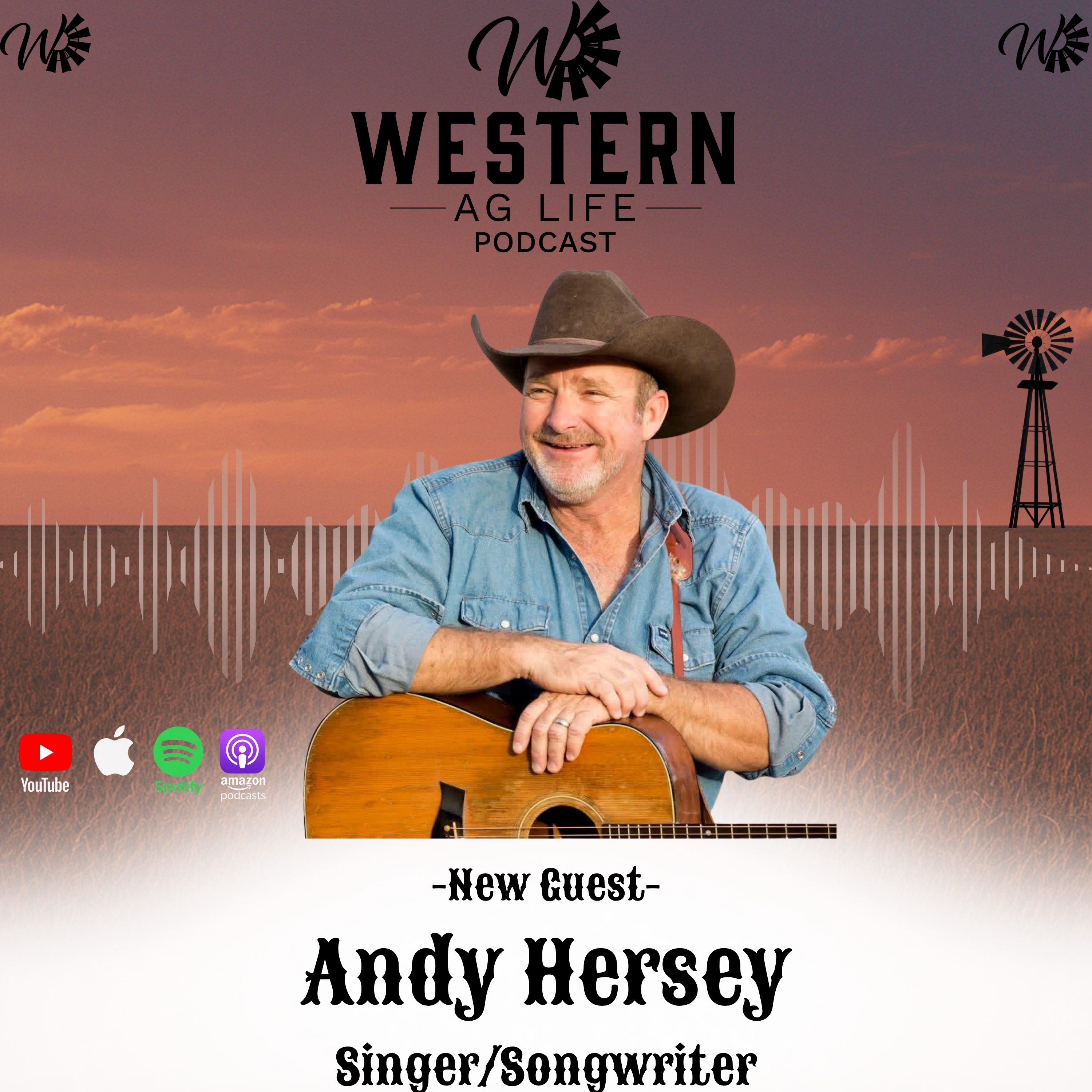
🎙️🌵 WELCOME BACK TO THE WESTERN AG LIFE PODCAST! This week, we sit down with Southern Arizona singer-songwriter Andy Hersey — a musician whose songs are inspired by a life lived in the West. From working as a ranch hand and horseshoer to driving trucks, working construction, raising a family, and making music, Andy’s story is deeply connected to Southern Arizona and the western way of life. His music brings together country, western influences, storytelling, humor, and the experiences that come from living and working in the Southwest. We sat down with Andy to talk about his journey, songwriting, ranch life, the stories behind his music, and what continues to inspire him today. 🎶 Singer. Songwriter. Storyteller. Southern Arizona. Join us for another episode celebrating the people, stories, and traditions that make up the western way of life. 🎧 Listen to the Western Ag Life Podcast on all major podcast platforms. 🌵 Sharing the heritage and lifestyle of the Southwest. If it’s western, it’s us. STAY WESTERN! #WesternAgLife #WesternAgLifePodcast #AndyHersey #StayWestern #SouthernArizona #ArizonaMusic #SingerSongwriter #WesternMusic #WesternLifestyle #ArizonaAgriculture #CowboyCulture
Paul Ramirez: Welcome to another Western Ag-Life Voices podcast, where we celebrate the people that make up the rich fabric of the Western lifestyle. Please do us a favor and thank the sponsors, because without them, we couldn't bring you these free podcasts. If these walls could talk, what would they tell me? If these walls could reflect things that they've seen. I wanna know how many cowboys have lived among these walls and dreamed my same dream. I'm grateful to say I have been chosen to live a free life in love with the land. I've told many people when my lifestyle's been questioned. I love what I do, but they don't understand. If these walls could talk, what would they tell me? If these walls could reflect the things that they've seen, I want to know how many cowboys have lived among these walls and dream my same dream. There's a lot to be learned through the voices of history. I've learned who I am from where I came, from the minds and the memories of the people before me. And in these old walls, there's knowledge to gain. ⁓ If these walls could talk, what would they tell me? If these walls could reflect the things that they've seen, I want to know how many cowboys have lived among these walls and dreamed my same dream. The moon watch with half an eye. As I rolled down that dusty old road to those old Adobe walls, ⁓ calling me home. That night I lay dreamin' among Southwest Adobe, the old stage of walls, time withered through. As I lay wondering where I fit in this picture, a voice from the wall said, Cowboy, it fits you. And if these walls could talk, what would they tell me? If these walls could reflect the things that they say. I wanna know how many cowboys have lived among these walls and dreamed my same dream Lived among these walls and dreamed my same dream Well hello, ladies and gentlemen. This is Paul Ramirez with the Western Ag Live Podcast. I hope you enjoyed that song there by my very good friend Andy Hersey. And Andy ⁓ certainly was one of the people that I initially when I started this podcast that I wanted to have come on the podcast, he was on my short list. And now we finally arrived here today. So so happy to have you here, Andy. It's a pleasure, brother. Thank you very, very much. Yeah, one thing about Andy, you know, when you listen to his ⁓ songs which are just so poignant and so realistic and You know, one of the reasons the essence about I think the most anybody, even a cab most casual observer, would come to the conclusion that he's actually lived that life and and that's true. He has lived that life. And so he was a, you know, cowboy and a calf roper and a horseshoe and he's done so many things in the Western lifestyle and now, you know, ⁓ I think that's reflective so very well in his music. And so Andy, that's why we You're so popular. Well, thank you, my friend. I've been yeah, I greatly admire your work. Thank you for letting me come on and the introduction to your great audience here. Thanks a lot. Yeah, Andy is a staple in southern Arizona. So if you've ever been in any place in southern Arizona, probably Andy has played there and so ⁓ and we've been fortunate enough to keep him away from ⁓ Nashville, so that was lucky for us on our part. I'm sure you've been there but you come back, right? Well, yeah, if you ever wanna feel a little bit closer to nowhere that ⁓ that's where I went was to Nashville. ⁓ Send you back home, huh? For a little while. Yeah. The desert's our home, you know. Amen. Andy, let's go ahead and start so people, you know, they're listening here and they find out a little bit about you. Wanna talk about your childhood and your upbringing and you know, then let's kinda go into high school and then, you know, you start a rodeoing a little bit and ⁓ you know, I know that you're not necessarily from a ranch, you know, but you're kinda like me. You like that lifestyle and always wanted to so we found ways to get into it and so yeah. Just talk about how you grew up and where you grew up and so forth. Well, thanks, Paul. You know, I think you'll agree the ⁓ ag community is very accepting ⁓ of people who ⁓ willing to work their way up. Yeah. You know. And ⁓ you know, you don't you don't have to be from the ranch to be accepted there. And at the same time, not everybody, you know, that that that has it at their disposal w wants to be part of the part of the ranch, ⁓ the ag lifestyle. Yeah, because some of them don't even want to be there. ⁓ Well that's it. Yeah. They're glad to see somebody else come in there. You don't know better, huh? Yeah, well certainly. And it to each their own, there's a need for all of it. Amen. But ⁓ yeah, no, I was ⁓ Eastside Tucson kid, born and raised. ⁓ my parents ⁓ were not involved with agriculture at all. Actually, ⁓ on my father's side, we were in the mines. They were all mining engineers, and my father was a mechanical engineer with ⁓ Arizona Public Service. They ⁓ divorced when I was young. Mom and I moved from Phoenix, where I was born, down ⁓ to Tucson. Mom got her teaching certificate and it was it was me and mom east side of Tucson and and ⁓ I was raised with a lot of freedom. Found the found some heroes on some summers, you know, summer Arizona summers. And ⁓ just just wanted to wanted to go learn about the lifestyle. So at a ⁓ I guess from about thirteen or fourteen on, I started working summers around southern Arizona ranches and trying to trying to learn what it takes to keep animals healthy. You know. So I mean that must have kind of been, you know, an arduous undertaking to convince your mom into buying your your city mom school teacher into buying you a horse and that was kind of liability you needed to take on plus another mouth to feed, right? What was that like? Yeah it was crazy. Well it was if I might, I don't know if anybody had good teenage years. It was kind of tumultuous at my house. So it was an escape for me. My father had passed when I was around 14. And so that I started getting in trouble. I had a little bit of inheritance money and there came the there came the horse and there came the the the saddle and there came, you know, a travel trailer where I could pull onto ranches years later and just kinda be a stable, you know, barn kid and I could just stay in my little fifth wheel. They didn't have to put me up or anything on the ranches and just watch and watch and learn, you know. So it was raised with a lot of friend. I mean we kept in touch. It's definitely not for a lack of love, but yeah. Raised with a lot of freedom and we know we'd have to go and find our heroes that way. And ⁓ found, you know, we we might not we we hope to learn from the best there is, but but we we need to learn from the best we know that we can find. Sure. And there was a lot of lot of a lot of grace shown by the by the ad community, you know, for a kid like me. And then I think you and I had met the first time. ⁓ Joe Parsons place. I think I sold you a calf horse or something. I bought a horse from my one of my first calf horses I bought from you. Actually was at Dean Woodard's. Dean Woodard, absolutely. Yeah, it was at Dean's and you had a horse there that I bought from you. Absolutely. Yeah. I think you traded him for shoe and duels. What great yeah. What great great folks the Woodards are. They're yeah, terrific. Well the Parsons are too. Parsons, yeah, absolutely. And it was ⁓ Mike was it Mike Burris, I think I bought that horse. Tim Burris. Tim Burris. Poco Bueno horse that I yeah. Yeah, those were those were wonderful wonderful times. Learn a lot. But eventually I had to you know, I it was right after that I went to I had been apprenticed with ⁓ a couple of different horseshoeers here locally and then in order to learn about the fire and, you know, learn what I could about hot metal, I went to Oklahoma City in the winter of eighty five to horseshoe and school. ⁓ so you went to the Oklahoma barrier school? Yeah. Came back and apprenticed a little more. Mm-hmm. And then that then that somehow found us found my Found my way to different ranches and then fell in love with and so at some point in time then you decided you didn't want to make a career out of being a farrier? I just I couldn't couldn't do it anymore. It wasn't ⁓ it was by then I had started playing guitar and there was more. It it it I mean we always kept it. Always kept I still have my horseshoe tools. You never you know, you literally leave. But yeah, after a while, I'm 17 years in a trade. And I never got to be masterful like I mean there's some real good ones around. ⁓ man, I don't think there's anything you know, I love to watch someone that really, really knows how to shoe a horse. I tell you what, I kinda used to piddle around and and shoe my own from time to time. And ⁓ one day I was at a ⁓ you know, when I worked for Arizona Feeds, I was at a barn and ⁓ I sat there and watched this guy shoe a horse, ⁓ Don Cook. Remember him? ⁓ yeah. Yeah. So w what happened there? We lost our light. So you were talking about horses. Don Cook. Yeah, I know where I'm at, yeah. So probably we should when we can we should plug ⁓ in, I guess. Yeah. Those batteries are all interchangeable? Yes. What's that battery called? Same type. These are NPF or NPZ batteries like that. There's a they're like a standard connection for mode. Can you put two in there? One for each one. You can put two, yes. Yes. Are we back? Okay, ready to go. We are back, sliding good and continue. Yeah, so I was watching remember Don Cook. Yeah. I sat there and watched him shoe a horse, you know, all four feet and I'm like, I'm not gonna do that to my horse anymore 'cause I I'd shoe him in the front and then a week or so later I'd shoe the Hines and whatever and and you know it's one of those things people don't realize, but you know, ⁓ you have to be in condition to to shoe a whole bunch of horri well even one, but certainly those guys that shoe, you know, ten, twelve a day, my goodness. Most certainly. It's definitely a ⁓ it's definitely an art and ⁓ and and a trade combined. And the skill level that those guys, you know, the way they strike a nail or you know, they just you know, you watch some of those guys and they don't have like a false move. Every move is an intentional move. Yeah. You know, they just whatever. Very, very efficient. Yeah, for sure. Most certainly. And there's a lot of variables that go along with it. It's you know, we kind of you know, muscle memory to a point, but every horse is going to be different in the needs of those horses. different of course. Yeah, because every foot's different on all four of them, right? Well yeah. For a lot of them, yeah, none of the same. So most certainly. So then, you know, you decided that you kind of then want to gravitate and you want to start getting into the ranching and and want to do ranch work? As a horseshoer we find our way to a bunch of different ranches. And ⁓ and then and then that it opens up a lot of opportunities. I would think, you know, a lot of horse traders You at one time we're horseshoeers because you get around you meet a lot of folks, much like ⁓ auction barn or whatever it might be. We get you know, it's not not who we know, it's how we know them, right? I would I would say. Yeah. And but yeah, and then so years later, just fell in love with ⁓ I guess it was, you know, eight or ten ranches that I'd worked on over time. And it was always, you know, a step up or sideways would never i you know, never it would never you know Bad way to leave. It was always, you know, everybody just a blessing got a better opportunity there. Time to move on. You know, something to learn about a different breed or whatever. And then it was a San Rafael toward the toward the And was it always in southern Arizona? Yeah. Yeah. Probably from here to the to the border, from Tucson, dare say, to the to the border. So you certainly know that country for sure, huh? Well yeah. I mean there there's you know, there's a lot that know a lot more than me, but I I you know, a few a few hills we climbed. And so, like, you know, a lot of people don't realize, but I'm sure when you first must have got ⁓ introduced to the ranching, it's not all about, you know, being the guy that stays on the horse and drags the calves and stuff like that. You start out doing a lot of fence work and And water gaps and you know, and then whatever construction jobs, water lines and so forth. I'm sure you become well versed in a lot of that stuff. Most most certainly. Yeah, yeah. Sucker rod on climbing windmills and and you know running a welder. Flanking it yeah, whatever whatever whatever needs to be done you try and you know, you try and try and do it, you know. And and it's you know generated electricity and there nobody to call. You got you you know, your life is at the ranch. Correct. On a lot of ⁓ Yeah. And ⁓ they're pretty pretty lucky to be involved with that lifestyle. It had it was kinda odd, Paul, for little old me because I married my high school sweetheart and we had two boys and we were raising them on the ranch. It turned out she she didn't like the ranch lifestyle at all. And I was already the cast had already or the the die had been cast for me. And so ⁓ you know It was it was oftentimes I was just out there kinda by myself and and ⁓ my first wife would be back, you know, in town going to school and such and then whenever we could they'd she'd come out and like that, but it it was it was two it turned into two separate worlds after a while. You know. But ⁓ two beautiful boys, very proud of Kyle and Stephen both and their mom's doing fine and they all have a great relationship and everything's you know, it's it's everything's fine. But it was just a different place and time. We learn, we evolve, people change. You know, it happens that way. A good songwriting fodder. Yeah. Yeah. Like the old saying goes, you ⁓ you can't have ⁓ testimony without a test, huh? That's right. So yeah, you read I wanted to say I greatly admired that ⁓ that podcast that you were on with the wealthy cowboy. Yes. Crockett. Yeah, yeah. That was really terrific interview and I loved loved it was just I was really taken back, I brought to tears in fact when you said ⁓ when you la you talk about when you lost Your voice. Yes. And trying to figure out what the dynamic was there and you and you said, Lord, if you ever let me talk again I'll never leave you out the conversation. I said yeah, that was a ⁓ right there in that room over there. I made a pact with God on I mean there were some dark days, you know, it I mean it'd be like you losing the ability to move your fingers or something. Or sing, 'cause you know that too. And ⁓ man I I I just in some really dark days, you know, that deal ran out about two plus years where my voice was just You know, and I lost my livelihood. I just lost everything, you know. And and one thing about that, and and I know you've probably experienced some of this too, I don't know, we're gonna get off here on a rabbit trail, but one thing about that, Andy, that I one of the most telling things for me in that particular time was you get to kinda find out who your friends are. ⁓ And you find out I mean, you wanna you wanna you get divorced, go broke or get sick. You know what I mean? They'll tell you who your friends are and And both ways, you know what I mean? People shocked me both ways. You know, I had some people that, you know, just that, you know, I thought were like dying in the wool, you know, ⁓ in my in my camp. They I never heard from ⁓ again. Yeah. And then I had some people that, you know, I really wasn't close to, like one guy lives in Colorado. Well gosh, for a while there he'd call me like once a week. Yeah. Even though I really couldn't talk, he'd like, Hey, I just want you to hear my voice and hey, I just want you to know that ⁓ I don't want ⁓ You or your family to go without anything, so whatever you need, you just let me know. Isn't that beautiful? I don't know that guy that well. People coming out of the woodwork that way. He just said I don't you guys don't go hungry, don't go without lights, whatever you need for me. Luckily I never had to call him. ⁓ but but it he and he was sincere about it, you know what I mean? He's like, I don't know that guy that well. But anyway, so now he's a new friend. That's beautiful. It's what happens. It makes us, you know, we want to Well and I think you've experienced this too, you know, because of all your interacting interact. in actions and where you've been is that country people, you know, and the people that live our lifestyle, the Western lifestyle, I think the the virtues of that, I think really if you think about it, and I think that's where this popularity's come. I know a lot of people say it's Yellowstone and this and that and and certainly that helps. But really what happens, you know, like rodeo attendance is way up. Yeah. Way, way up. And and I think people have gone we've gone so far the other way that I think people are looking for some, you know, they're trying to come back to some kind of a base that is healthy, normal, and and feels, you know, like I think most people innately feel, you know, and so I agree. Are you familiar with the writings of I think it was a Cambridge University professor, ⁓ Joseph Campbell? I've heard that name before, didn't you? He he wro he has written in he passed away in the early mid eighties or something. He was born in 04 or something, and then passed away in the but he He wrote a a series of books and he and he studied cultures all over the world, tribes and religion and the and the the relationship between religion and mythology. How can the glyphs in a cave in the southwest be so similar to those in a on a different continent? It looks like the same artwork, but those people could have never met each other. And it was it was it's it was it inherent or what how how could that how could that be? He ⁓ Joseph, Dr. Joseph Campbell. The power of myth and open life, the hero's journey, hero with a thousand faces, the ⁓ the ⁓ there a dozen books. And it's real it speaks exactly to what you were just what you were just talking about, how we we left the part of it does. We moved to towns and and we built machines and then we started serving machines instead of serving the earth or listening to our tribal elders that way. And name your tribe, name your name your culture, name your continent. It's all it has so much ⁓ I'll I'll I'll give you a book or two of that. Yeah. And it's it's come in very handy. Believe he was Catholic. Mm-hmm. Ultimately he's he settled on Catholic show. But ⁓ just to just to tr and it speaks exactly to that. You know, that's why everybody goes camping. We put our we live in town on these grids, everything's square, even the st and you go out where everything's natural and and yeah not uniform, you know. It and it's the same thing because there it's We know it we can see, we can s we can see, we can hear, we can hear that horse, you know. And that goes cow the interaction with the cowboys and contestants that way. It's it's it's it's very it visceral, it's true. Well and just be in nature, and I think you're absolutely yeah, you're you're absolutely spot on in that why people gravitate to want to go out in nature and be out there in nature and hear water run and trees move leaves move in the wind and stuff like that. Yeah. I got a funny story for you, you'll like this one. ⁓ my wife, when I first married her Her family was big campers. Well, my family, I told her she says, Well, you want to go camping? You want to do this? I'm like, No. She said, Well, what what's up with that? I said, Well, when you grow up Mexican like I did and camped on purpose, that's not something recreational. So yeah, I give her a little tease. I said, When you've got to camp on purpose, it's different than you know, heading up to the White Mountains and staying in the cabin. So no. No, but you're still right. Getting back though, you know, to to I know the experience and and you've said this several times already in this, you know, that you felt like you were welcomed into the community, that you were embraced, you know, and and and I think that just speaks volume to who we really are. And that's one of the reasons I had this podcast, you know. ⁓ I wanted to get the message out that man, there's so many good people in the Western lifestyle. You know, we're really so many good people. Certainly. There's depth. Yeah. Integrity. And and you know, it's refreshing community. Yeah, it's refreshing to to shake do a handshake deal and to know you know you're gonna deal. And and just like you know, I said that on ⁓ Crockett's deal the other day. And and and there's some bad people, but it word doesn't it doesn't take long for word to get out amongst us. Hey, that that compadre right there you'll go. Yeah. Yeah, leave him alone. They don't last long usually. Yep. It's who we who we know and how we know ⁓ That way. And that's not to say that it lends itself I mean little patent places at every small town cafe crossroads in the country, you know, but that's but that's not mostly it's out of concern when somebody says, Did you hear about? It would be, you know, we've how many times have we seen silently community communities, you know, gather around somebody that that needs something you know, that way. It's it's so and you pr we've probably seen it a lot through four H F F A, those programs. Those they really those programs just make it Just so accessible for everybody. Well, testimony. And then it comes back around because I got to play at the ⁓ FFA Gala, the fundraiser last ⁓ year in in Glendale. I got to play for all the beautiful ⁓ folks. Sure. Nice turnout, and he got to a great goal. And this year, October third, my birthday, I get to play for the four H ⁓ fundraiser. ⁓ you're gonna be at the Clover Leaf Ball. I get to be up there and get to get to go and play, but it's it's wonderful. You the y you get a phone call. Kenya. Well shoot you out. Absolutely. I ran across my FFA jacket the other day. It doesn't fit. Yeah, mine don't either. I got two in there. The goal of life would be to get them fit. But I'm not sure that ⁓ yeah, anyways, yeah. I got two in there. They do not fit. I didn't mean to rig up a bad subject. No, that's true. Hey. I was talking with my friend Pete Bittigan. He said we were talking, we knew each other. He said, it's a sign of wealth. I'm sure Pete don't have much belly on him. No, he's he's doing fine. Yeah. But he's he said it's a sign of prosperity because because ⁓ you know, how what what was your waist size, you know, look at pictures of when you were back on those ranches at a branding pen or something and see got a twenty, you know, six inch waist or something, you know, and didn't eat a bologna sandwich every week or something. ⁓ I've I've held steady since about eighth grade for me. So anyways, yeah. Yeah. Guys said, Do you remember when you weighed a hundred and fifty? No, I don't think I ever did. I went from one to two. Kinda stayed in that window there. So anyways. Hey, I want to go back to the to the ranch. And so when, you know, you you start landing in some of these ranches and you know, of course, ⁓ you know, all of ⁓ have a, you know, head cowboy or, you know, boss man or whatever. And then, ⁓ you know, probably I'm sure you also come across ⁓ quite a few ⁓ ethnic cowboys right there on these ranches ⁓ yeah you know what was what was that kind of like you know dealing with them? It was superb. You learn to keep your mouth shut. There's always a language barrier. ⁓ you know on the on the San Rafael ⁓ ranch was the last one that I worked on. But you know it's been it's been a while now. Rubin Ceballos was my was my boss and I was the only gringo that that I saw on the Four years. Well, I was on and off the ranch for about six years. But I'd moved on the plate for three and a half or so. I was the only gringo that would that would step off a horse because they were we were putting up Sudan hay and we'd throw that and cake out in winter. ⁓ yeah. And ⁓ and I was the only gringo that that didn't mind, you know, getting up late at night and making sure that the you know we you know the well was still pumping and didn't mind throwing bales on, riding a tractor. You know, those guys were horseback by, you know, and we're not gonna You and they were they're gone. I was the only gringo that lasted more than six months on the plate. I mean some good cowboys. Sure. Real good cowboys. But but we learn a lot. You know, on the San Rafael it was Raven, Presigliano, Reyes and Andy. You know a lot from the Andre call you Andre's absolutely. And it was it was a beautiful place in time. My last name being Hersey. You know, we find our ways to have fun with the language. So my last name was that, huh? They had a lot of fun with he would ask how my how my boys were doing, he would say, How are the you know, Hershey, Hershey Boy, how are the chocolatitos doing? And his name being caballos like caballo. Caballo I would ask him how the caballitas were doing, 'cause he got his daughters, you know. But it would we f we find our way to have fun that way. Fun with the with the with the language. And there's you can learn a lot by watching. Yeah, for sure. Learn a lot by watching. Well and then you know, I guess the the the neat thing about that is that, you know, they're tolerant of you, right? You know 'Cause, you know, taking you under their wing and and making sure you're not only safe, but then also learn a way to be productive or or become an asset to the place, right? Absolutely. I had a little bit of street credibility because I had worked on neighboring ranchers and had gone over there and they saw I didn't joust cattle or anything. And I had been shooing horses for the ranch for, you know, a long time. So Rebin was glad to see me pull on one. Yeah, we hired a horseshoe. And I made the worst financial decision of my life and gave up gave up my horseshoe clientele just moved to the ranch. But it was a great lifestyle. It and still is. You know, it's the San Rafael ranch for those unfamiliar, it's right on the border. It's in the San Rafael Valley. The headwaters of the Santa Cruz River run from north north ⁓ to south into Santa Cruz, Mexico, and then it turns and comes back through Nogales and then and then Tucson. So it's the headwaters of the Santa Cruz where we were quite beautiful. I bet it's stunning, you know, and of course quite a few movies were shot in that area too, right? Yeah. Yeah. Yeah, there was there was any the ⁓ Oklahoma. ⁓ Tom Horn. ⁓ that's just a tip of the icebergs, you know. It's really must have been like every day was like kinda like a new picture, huh? Riding out there, riding outside on a horse. Yeah. And especially when it rains, it's just like I saw some pictures here recently, ⁓ you know, it looks pretty good right now. When the when the new, you know, annuals come up and they you know, you have last year's dead and standing gramagrasses and such, and then the new green comes up, it's a photographer's green. Not only the canyons and the rolling hills, it's reminiscent of Oklahoma. So You know, if we have there four four deserts, you know, the Great Basin, Chihuahuan, Sonoran, and Mojave Desert. And I would I would add Yano Esticado over in Texas, but I I'm not in charge of making that stuff up. But this so this would be high plains that would separate some of some of those those those two deserts, so Sonoran and Chihuahuan. Or Mojave. Mojave and Chihuahuan. And then to the north would be there's hardly any cactus on that place, right? Mm there's actually no yeah, very little cactus and there's actually rolling hills with all kinds of gramma grass and and the on the sides in the canyons there's some some oaks. ⁓ you know, really beautiful. Yeah, if you've ever got a chance and you're in southern Arizona, I highly recommend you go down there and look around. There's a lot of history and get down there and see a lot of work. South of Patagonia, Arizona, and you can find your way all the way up over Canelo Pass. Quite beautiful. It's really resilient country too, I might say. Yes. ⁓ Yeah, 'cause it can look like bad, bad, bad. And you'd think never, and then it just a couple good rains and a couple good years and it's good again. Absolutely. I learned a lot from the soil conservation. There was a federal soil conservation fellow that used to come out and I liked it because I could, you know, not be horseback for two days. I should just walk out here with a what do they call it, a transect or whatever. Yeah. And just document which grass is there. And every year, you know, you go back to the same spot and you take your five steps and you put it down. document whatever grasses in and go. Way ⁓ you weigh ⁓ too, right? ⁓ yeah. Yeah. And so it was terrific to to ⁓ you know, be able to employ that years later in life too. But And then so tell me what like ⁓ on the ranch, what was your favorite job to do if you had a somebody said you can come back and you do one job, what are you gonna do? ⁓ my goodness. Gosh, that would be tough to say. I always enjoyed the time when we all got together with the neighbors and and traded work. I would say, you know, maybe fall gathering. Brandon. I didn't know. I yeah, I liked it when all the neighbors would get together. 'Cause I'd get to play my guitar. I wouldn't play guitar, you know, for a living and and I we could sit around after and, you know, have a tacate and I get to play my little little cowboy songs and pass the guitar around and stuff. That was my favorite. The community. Here again. Again. Community. And beautiful. Beautiful places, beautiful people. Blessed that way. It's still there. We just it's waiting for us if we're ever if we ever want to, we always get to go. It's what heaven looks like, huh? Hopefully. My goodness. Yeah. With stirrup high green grass and all of our best friends are deputy brand inspectors. There you go, yeah. What so tell me what, you know, ⁓ I'm sure you rode some pretty good horses. You know, talk about let's talk about maybe your favorite horse or ⁓ yeah. There was a horse named Ratone. ⁓ and they had named him raton. It was a backwards R bar on him, front left shoulder when we when they mark him and it was ⁓ this that they were all Was he domestic horse or from Mexico? But no, he was he was from here. Big tall third quarter cross or something. And he had one ear that was pinned back and it was so it just it was flat across the top and and the Mexican cowboys there thought that they named him Raton because they said a rat ate part of his ear when he was out of the path. Raton. But I tell you what, you climb on that guy and you throw your plier bag on and you just you could track right out all day and you could cover a bunch of country on him. You didn't have to keep your spurs in him all day? Mm-mm. He didn't mind. He'd just track right out. You know. And and had a nose for cattle too. And it was a neat place and time then. And would he also be good in the branded pen or sorting or anything? they had a couple of others that were there, a horse named Canella. I remember. And she would do great. And then I'm trying to think of some of the names of the other one. They we always had a couple dozen pretty good. You know, pretty good. And then we would they were ranch mares, so we would take ⁓ over to ⁓ the Lewis's ⁓ you know, ⁓ Jimmy Lewis. Jimmy Lewis. Uhhuh. And ⁓ we would breed to their studs and then take our mares over there and then and it was Jimmy W over at Jimmy's house I know for sure you found a way to make ⁓ faster. Yeah. Jimmy Lewis likes it when they'll kinda move on out down the road. Sure, they certainly do. They're still doing it. He and Don and Great Guy. Yeah, absolutely. Here again, integrity, you know, wonderful, wonderful people. They know their business too. They have for generations. ⁓ yeah, it's a good horseman for sure. Yeah. Really good. Yeah. And so, you know, what about r roping? You know, you liked roping a lot? Sure. That was in the time when there was Who was writing the books? Leo Camarillo was winning the world then. Roy Cooper, you know, of course. And the whole world revolved around, you know, Wellington boots and polygrass ropes and just flax and Brush popper shirts. Brush popper shirts. Certainly. Mobetta shirts. Yeah. Remember those? And those were the colored ones, and they were in Western warehouses and stuff like that. Mobetta. Maybe I do it. I don't remember. Yeah. But yeah, there was a lot here again, a lot of heroes. We got in trouble. Here again used to and years ago. But there was a feed lot ri in Vale, Arizona, right behind where the Vale Steakhouse used to be. There was a a feed yard there. ⁓ and they I got ⁓ It was a cattle rest too, wasn't Yeah. Yeah. And ⁓ there was Phil Lyon that was working there and I went to school with his son Jim Bob and that's all we wanted to do was just go go and rope and they were real good at it. They were ever I never I never got as good as as those guys. I was never I guess maybe not as dedicated, but sure had fun. But we got in trouble because the van the Van Roach trucks would cross Cattle in Douglas, gotta get through quarantine and come up and they'd rest him there before they went to whatever. Imperial Valley or something. Yeah. And so we got in trouble because there was a few calves that if they looked healthy, well would put a put a front leg through a loop and we gotta hang on the tail and Jim Bob would run down and practice flaking a time. And we got we got in trouble for that. Man, those old Van Roach trucks. I was telling a a young kid that's an order buyer here. Lot of people don't know, but I unloaded tons of those when I worked at the sale barn, you know, and those were all side loads, remember? ⁓ I forgot about that. Yeah, they didn't load from the tail, they load from the side. Yep. And yeah, and some of those would even be doubles. Yep. You know what I mean? I do remember that. They'd be double. You imagine that back trailer when them cattle get to moon, ⁓ I mean, that must have got western. How would you Yeah? How would you straighten that thing out? You know what I mean? Or for Before five years I actually had a CDL. I got got off the road playing music and got done doing that. I don't know how those guys can I mean I had a hazmat, double and triples. I never had to use double and triples, but had tanker endorsement and things like that. And I don't know how those guys could haul those doubles like that, especially, you know, if it was car swinging carcasses or if it was live cattle. I don't know how they I don't know how they do that. Yeah, and I always thought about that 'cause I think about that. It's probably why they don't have ⁓ anymore. 'Cause you know what I mean. They times were different back then, but that second that back trailer there, you know what I mean, just with a little pin grip on it and that you know that thing got to making sparks maybe once in a while and so yeah. Yeah, we load them on the sides. Load lots and lots of those. Yep. Yep, you know it well. Yeah, well. so when you so then at some point in time then I guess you know your wife says, Hey Andy, no, you're gonna go and make camp here and light it. It happened on the ranch first because ⁓ I would plu I would working at San Rafael, it was the end of my you know, days horseback making you know, drawing a paycheck from a ranch. It was Bob Sharp, the heir apparent to that ranch. I know Bob brilliant man. Yeah, real ⁓ s told me that I mean no, they work you know, we work a half damn Sunday too on a ranch. And so Saturday nights were taken away from From Sunday mornings and I said, Well they they sure are 'cause I was playing music three nights a week at the stake out restaurant, the old original stakeout restaurant in Sonita. So we'd get done, unsaddle, then I'd throw I'd show up in my herd book still in my pocket, my vest pocket, and and go play. It was three nights a week, just me on that stage. The only stage for miles and we only that was long before the vineyards went in or anything. We're talking about Senoita, Arizona here for the folks that aren't familiar with the Southern Arizona. That's the old steak out before it burned down. Yeah, the old original stakeout and the Wise Track family are just They're just terri I mean, just terrific. They're just brilliant people, the whole family. They're terrific. I'm very, very indebted to the Wise Track family and any number of other ranching families that were down down around there. But I would I would I would play f Friday night, Saturday night, and Sunday afternoon there at stakeout. Just me and then and then, you know, six and a half days on the ranch. And Bob Sharp said you need to you need to make a choice here because you're you're pretty tired and Guitar of the saddle, huh? One or the other. And so that was it. And then I I said, well, respectfully, I I think I'm gonna I think I'm and that that was kind of a way out. I could be closer to try and keep the family together and like that. And then it I went from the ranch to the road. I got involved with some real guys that had just left ⁓ Mercury Records. It was ⁓ Roger Klein and the Peacemakers. But at that time they were with Mercury Records and it ⁓ called a refreshments. And they had a a couple of hits. I got through sophomore junior album with Mercury, I guess, and I was just intrigued by songwriters and such. And it was it Doc Klein from ⁓ another longtime family ranch there in in Sinoida. It was his son. And I had been shooing horses for Doc for a while. And he said, You gotta meet my son, you gotta meet well I did, and we became fast friends. And next thing you know, they left Mercury Records, got their own bus, and they had a tour set up. I went from the ranch to the road. ⁓ really? They let me jump on their bus and go out. And I just remember, gosh, we were crossing. We played a place called the Ranch Bowl and ⁓ So you'd be you just got right in their band. I I was opening for them. ⁓ okay. Helping ⁓ road stuff in, selling some merchandise afterwards. You know, we all are in our keep. There's no extra room on the bus. ⁓ okay. So you were opening for I was playing my songs. I had recorded by then. I'd recorded this Companier Blanco album in 2001 by by then. And we were out. I was out he said, Come on. And and I did, I got the approval and then then I was hooked for a little while on the road stuff and then I tried to do it on my own and found out the road wouldn't for me. It costs a lot of money to be out there. And if you take a band, it's just there's well you have to have some kind of outside source of money, whether it's ⁓ a trust fund or maybe a you know, some kind of allotment or sponsors or, you know, the record company. And I didn't there was no way for me to, you know, find my way as far as live performance. Well now it's my complete livelihood. But ⁓ but for me speak I don't shoot, sorry. ⁓ selfishly, if I might. I'd I I didn't I didn't I wanted to be home. I thought well I'll just I'll stay at home and create culture and I and just right here because there's so few doing it, you know, around here. and it and it was okay. You could stay home and pet my dog and be able to be next to my wife. Sweeping own bed. Yeah. Yeah and not take a shower in one s place. Yeah, and just ⁓ Well, getting rest on the road is just a big thing. And there's a bunch of cowboy singers popping up around now. There's some good talent out there now. I would suggest to any of the kids that are that are listening that way. I mean, there's some real there's some real pros that ⁓ that I'd I was lucky enough to learn from. You get in a different circle and you'll find that we have different things in lifestyle in common. You know, Ian Tyson called me on the phone one time just before I was done. We had met through he'd spend his summers here in in southern Arizona. I remember hearing that, yeah, that you would hang out around here. I was done. I had gone out on the road by myself, and then you get the van, you get the trailer, and you get to, you know, a few contracts in place, you go ping pong around Texas or any place that say yes. And then I couldn't afford to band anymore. And I was it's a spiritual thing. You gotta be out there for some reason other than the the notoriety. You have to be it has to be there has to be a spiritual reason why you're out there. You have to really want to Make a difference in people's lives or or find things in common. Learn. We learn a lot out there if we choose to listen. And I was done. I was just outside of what Alamogordo or something. I realized the band wasn't ever coming back. It was just gonna be me. So I sold the PA system in Alamogordo to limp the van on, huh? And ⁓ Ian called me. Almost sounds like the start of a song. Well it should be, yeah. Sold the system. Alamogordo. I think there's a pawn shot I don't know if it's still there. Hello, Alamogordo. Yeah. But it sold a tear and got back. But Ian called on the on the phone and he had heard this ⁓ song that I'd written, Companiero Blanco, about the ranch. I don't mean to ramble about me, me, me. No, no, no, that's what you're here. Well it's it's pretty strange. This is the Andy Hersey program above my raising here. Yeah. But he called and and said that the song was very strong and to not stop writing. Whatever I did, don't don't stop writing. And had the occasion to to talk with me any number of times about it. I wouldn't say it was a mentor, but it's like You know, Baxter Black, you know, ⁓ we ⁓ wouldn't he wasn't a mentor, but he would any time I would call, he was he was very, very accessible. Take care of those guys. And here again the ag community and the art that represents it, you know. And it was it was terrific. But it was it was all I had and I got off the road. I did I was I'd lost my soul. I had Nashville, LA, Austin, I was tired. I didn't like most of the people I met, I didn't like the drugs, I didn't like the I didn't like the Being away. I didn't like having to make excuses on the phone for why I had to do this or that back home. Nobody understands. Nobody understands. Unless you're in the industry and you have a support group, no, you're out there, you're Lone Ranger out there. So I didn't I didn't like it. There was no spiritual premise to to there was no reason for me to be there. So came back and and put the guitar away for about two years. And a friend of mine, Reed Schmidlin, who had since passed, and ⁓ he was What do mean when you said put the guitar away. I'd put it away. I didn't touch it. I would have touched it. I would yeah didn't didn't touch it for about two years and I started driving a truck. Got my C D O and put a million miles in a day cab hauling equipment and you know. It was it they took that to get it back. Leave it completely alone and get some perspective because all you see, you know, me, me, me, me, me, me, me, what c you know, all you gotta qualify all these introductions. You need to meet so and so 'cause he runs the such and such production or whatever. And I I don't I don't I don't care. Yeah. Never Frank I don't know. I'm rambling on about myself. Can imagine some of the well, yeah, ⁓ that's why you're here, but can you imagine some of these things that have to happen the s in Hollywood and now this stuff's coming out more and more because of technology. You know what I mean? And and so I wanted to get to a question, but I I want to stay over there a little bit with the with the truck and deal. So you didn't pick up the guitar for two years. Right. And and and and and then you picked it up, did it just come back to you or was there Yeah it was like riding a bike or what? The music came back. It took me a little while. Were you still playing music in your head you think? Had intent. No writing songs or nothing for this period of time. Just getting in a truck every day? But I I didn't play out for for two for two years. I was still, you know, I just I was browbeat. I just I there were cowboy haiku in a s in a spiral notebook, you know. I mean not to take anything away from our great cowboy poets. I mean, we love that. But I I I just I was just trying to get out of writer's block and trying to have something to say. What do we what do we even represent anymore? 'Cause you can't go out there I don't want to put leather pants on. Yeah. And we had to punch some of these songs up, these cowboy songs. We had to we had to and have to change the the lyric. But just in order to stay alive in these independent clubs, mostly rock and roll clubs, ⁓ rather than dance halls where you'd play the top forty country music and your house band type type thing. But if you're gonna ping pong around, I'm not gonna go to Denver and play somebody else's top forty country song. We're gonna play our own. But it's a big loud rock club that Those the independent clubs would say yes. Well, I mean, not necessarily rock and rock and roll clubs. There's there's cowboy element to all of it, I guess, Western element. You know, Antones in Austin or the House of Blues in New Orleans. We went down there and played. You know, that's it's just we had to change the dynamic the we had to change it a little ⁓ the music just just slightly. We had to pick up a cowboy waltz a little bit, make it a power waltz or whatever the producers would call it. And we could do that and still keep our integrity. But it was a different experience in now days, it's just I don't like we can't play the college bars anymore. It's too loud, can't play the can't the the ruckus that we used to try and create. Now we're now I just wanna pretend like whichever small room we're in, there's a campfire right there. And there's an interaction. It's not just some cowboy kid over in the corner with a guitar telling stories, but we actually get to listen and learn from people that are in the audience. That's where it's at, if you ask me. You know, cowboy gatherings or whatever it might be, campfires, private events, you know, things along those lines. Where we're not fighting a, you know, a hundred inch T V in a sports bar someplace. We get to have our own and takes a while. And you're like a subset to whatever else is going on. Some people may segue over there, but I I think about that in Las Vegas a lot of times, you know, you you go and there's people are on stage, but people are walking by and this and that and really some I mean that once in a while you'll see somebody and there's not even anybody sitting there, but they're they're playing. Yeah. Yeah, that's emotionally crushing if you yeah, you know, it's it's one of the what what was how is it put to me on two well No, I just remembered nine, no realize I can't say it how it put me but it it's really it's it's like an emotional hangover every day when you wake up trying to think, What am I doing here? Nobody heard me. Let me get to this question. So let's say that Andy Hersey now would have ⁓ s some of the things that you started in the very beginning with the music deal. Let's say you would have had the opportunity to be in this environment that we have today, what would change? With the nature of the business itself social media, you don't need to meet all these people. You just go on I mean, you know, you've seen it time and time again, we've seen it now. You just put out a little tune on YouTube and you don't you don't need Bob over there funding you or whatever. You just you know what I mean? Yep. Well I'm sure there's still some of that going on, but it seems to me like now there's This audience is more accessible than it's ever been. Agreed. We can do more independently, and that's why there's more artists coming out. I mean there's some charlatans out there, but there's some real good, real good artists that are coming out now too. And they're lending reverence to the old heroes as well. You know, we've got we've got Turnpike Troubadours now, love those guys. And they're and they're they're singing a Robert Earl Keane song. You know, great Texas song. The the one thing that I might say regarding, let's say AI that seems to be the raid, I just actually offered a friend of a friend called and said, Hey, we've got this song, great title, it's got a great and then I I said, It sounds really clean. Where did you record it? Well, we put it into AI. Wow, okay. I'm not comfortable writing with AI. I thought And so you heard the song but you didn't recognize that it had been It was too it was too exact, I guess, for you. One of the one of the first things that I heard that was AI, that I knew was AI. When they once they said it just sounded too clean all the way through. What was the recording process? How do you do it? We plugged in Well, I'm not I'm not I don't get the thrill of the chase. The the the the you don't get to put your intellect there if you if everything is gonna be AI. Pretty soon everybody somebody's boss is gonna be AI, no not mine. And I've heard mine already might be I've heard said that that ⁓ I think it was it was Mike ⁓ Weistrack Jr. just had he's got a meet podcast and he said you're not gonna you're not gonna lose your job to AI, you lose your job to somebody who knows how to run AI better than you do. I thought that was an interesting point, but it doesn't have anything to do with me. I'm sorry. I might hire somebody to do f you know, whatever if the time ever came. But there's more we can do independently. There's so much out there and it doesn't take much. I think and now you have access to a crowd that you didn't have access to, you know, not that long ago. Because you can I mean you on YouTube you can get your crowd pretty big pretty quick. Yeah. Yeah. And it's who? You like I I believe you said in that in that ⁓ in that podcast where you and Crockett were talking, you said there's two percent of people in the ag community. So that's it. So that's it. If it let's just if even if it's just that. But it's amazing how many people that with a with a urban centric lifestyle. That's still that's that still adhere to this just what you said about the rodeo stuff a little while ago. Attendance is up. ⁓ yeah. It's really it's it's terrific. You know who goes to rodeos now? More than than they ever have and and probably I d I don't know there's some stats came out that they're dead ⁓ statistic recently and who's going to rodeos. I guess who's going to rodeos? ⁓ Okay. Well I'm gonna go on a rodeos. Okay. Terrific. Hello, yeah, right. Hello, ladies. Yeah. You know what I mean? Well why not? Yeah, sure. I think they're wanting to see something, you know, maybe they don't see every day anymore, you know what I mean? Yeah. So for that yeah, Madison, who did you ⁓ People want to touch the earth. Who did you ⁓ go see last night? Pink is in the rooftops. ⁓ where? Where you ⁓ okay. That's a great venue. Who how was the show? That's great. ⁓ see. Terrific. Yeah. See, there's a lot coming out that ⁓ you know, that's I'll say ⁓ as an old guy, I don't know, I won't say us old guys, but that would be rude. No. But as as a as who we are. But but there's a but there's a there's a if we use something AI won't get is, you know, the similes and the metaphors and the personification and the and ⁓ I believe the word is anthropomorphic. approach to writing. Yeah. Human characteristics. I I ⁓ can name that word in three level. You add human characteristics to to inanimate objects. And yeah, I'm not gonna be able to do that. They're not gonna get to Chris Christopherson's or the Bob Dillons or the Willie Nelsons or the or the or the Ian Tysons. They're not gonna you can't do that. That's the thrill of the chase. That's the goal. I think what may happen, Andy, is that we may go way, way, way out there for a while. And then I think this deal probably, you know, like Madison's age group will see this comeback where people want to be authentic with I think it'll have to, kiddle. I think it really. I think it I think it's gonna have to. So tell me something here. ⁓ I'm I always I love music and I l I love all types of music. I mean, if you ever would listen to my playlist, you would be like, Wow. I mean I just like all kinds of music. But I've always been in tr and and I'm not I'm not musical, I don't have ⁓ I can't sing, you know, and stuff like that. And so anyways, but I but I have this like I just love it. I have an affinity for it, you know what I mean? And anybody that can, I just think it's so darn cool. You know what I mean? That you can pick up that harmonica and you can do all these things and it's just so far out there for me. Or I see somebody play the piano. But I wonder something the other day that ⁓ that came to me and I just wondered, i there must be something innate in us as in in our nature, how do we know when when an instrument's not in tune and everybody knows that? ⁓ Well where where did that start? Who who was the so there must be somet correct me if I'm wrong if I've stepped out of but there must be something so innate with us that we actually know when that tune that that it's not played right. You know what I mean? Our ear hears that and no, that's not right. Agreed. Agreed. You're you're right. So somebody me who's so untrained I know when it's not right. I would s I would su I would suggest that you more musical than than you would think most people are and it's how it has to do with culture, you know, we hear the The Beatles songs, everything's based on the blues. It it it's the intervals, the spaces between the notes. Much like a poet, much like an auction call. You let it rest. And then it and that would be the space in between the notes, if we would compare, you know, The w I'm not gonna get it right. The cadence that you might imagine, uh-huh. if and and there's there's there's subtleties there. And it's the same in in in music. It's in the ear. It's a temperament, it's a ti it's a vibration. It's it's really it's it's they've been trying to be part years. Can you imagine? Yeah, the first ⁓ Years ago, now we look up to you know, the musicians with their wardrobe changing the fake smoke and the lights and all that stuff. It it started with somebody hitting a couple of rocks together and somebody stretching his skin over a hollow walk and hit Killed a deer and and made a drum. They must have thought that whoever that kid was was crazy back there outside of the cave. Who's that make him move to a different cave? That drum is beating's keeping me up. He's at a tune. But it's I think it's inherent here here again, it's human wired up that way? I think so. I think it must be. I haven't done much study. I'm sure there's the study done on it. I was just thinking that the other day. I was thinking how do you know how do we know that? We know it. I know it but how do we know that? Well and there's different modes of music. There's so the the let's say the A through G is the musical alphabet. That's it's seven. So there would be the difference between the first note, let's see a regular ba ba ba ba bum, that would be the first chord. But blah blah blah, you know, then the fourth and then the fifth. But b you know, ⁓ everything from the Beatles to to you know, Delta Blues. It's all b it's all based on the blues. All all of it. Everything is everything is based on the intervals of the of the chord. And then there's a minor chord, so then you hit the second the second, you know, chord of that of those seven. And it sounds like a bad guy just walked in the room, prom you know, or s it's something akin to that. You can do a lot with tone. We really can and I hold no degrees. I don't know. There's a lot of guys that far better at it than I but our natur our natural ear will allow and that that it so it allows a resolve. It allows a song to sound happy or sad, whatever mode of music or whatever chord progression we might put in in place that way. It's it's interesting to learn I didn't ever never got a lot out of school I went, but I never knew much about theory or or you know like that. There are a lot of guys that studied it all their life. How did you learn to play the guitar? My sister handed me a guitar. Mm-hmm. It was ⁓ and then I just kind of Did you take lessons alone? A few lessons, yeah. A great ⁓ player in Tucson here named Bill Gans gave me the first lessons and there's a blues man named Tom Tucker. I learned from him and that's when he started bending notes and kind of singing outside of the traditional Sons of the Pioneers or anything symphonic with the perfect harmonies and such. And then I went over and found ⁓ found my became friends, Tom Tucker and he was a soloist blues man with a harmonica and an electric guitar. And I I was kind of drawn more toward the the free freestyle of playing playing music that way. And we employ a little bit of all of it. You know, there's there's you know, something that George Strait and Chris Chris Jefferson might have in song common is they stood right there flat footed and they presented the song, they prevented pre presented the prose and the poetry and the imagery that that would go forward. You they wouldn't have they were two separate styles of you know of of song. But but they didn't they didn't need any of the theatrics or any anything like that. I I think it all comes back to acoustic music around a campfire. That's where it's at. You get a few folks around that, you know, appreciionados or aficionados and some of ⁓ will play and some of them won't, you know. But that's where that's where aficionado. Communicate can still happen that way. That's where it's at for me. We can make a living it playing music without being in the industry is what I'm trying to say. But you must have at some point in time, I guess You have to admit that that you have a natural there was something natural for you that you could could get go there. Well, thank you for that. I started playing drums when I was a kid, you know, started playing drums and so we learn about rhythms and we learn how to ⁓ keep a solid meter. People understand if it speeds up or slows down. And then there's a certain, you know, there's eight bars of something, and then there's an aside, which would be a bridge, or however we put our arrange our songs. And ⁓ especially the American public, where there's a something we're used to. There okay, it we can a certain chord that we'll play that lends itself to where the song's going, happy or sad, and then a crescendo, and then it then it falls out, and then we've had our emotion f played out in the song, and then we then we bring it home. Then that's the end of it. But ⁓ there are all kinds of different different ways, you know. The and the and the it's like comedy. The thing about comedy is the trick at the end. You know, or in in popular music, and I don't know anything about I don't have any hits or any Grammys or any degrees in this stuff, but just a strict artist standpoint, that there's a trick at the end with comedy. That's what makes it funny. And with music, the modern formula, it's don't bore us, get to the chorus. ⁓ You gotta let them know what you're singing about and then back it up a few ways. You can't wait till the end and then and then the I mean sometimes, you know saying go tell ⁓ and then tell ⁓ and then tell ⁓ one more time. Is that kind of the saying? Yeah. And if there's a if the if we can play with words, but never want There's some you know, it worked for Roger Miller, it worked for Shell Silverstein, you know, Ray Stevens, all those guys. They they they were brilliant songwriters and very introspective and it was sad and some of it was hilarious. We allow ourselves all Roger Miller always had a element of funny stuff, huh? ⁓ man, yeah. And then he wrote Husbands and Wives, and that's what happens when two worlds collide, and those are very introspective and very You know, where he but but he also allowed himself, you know, rip bip beep bip and but you know, camp roller skate in a buffalo herd and the rest, yeah. But so we allow ourselves all that moves self edit. I've got stuff, Paul, in the in the Spiral notebook that I'll never play for anybody. It's just too cathartic. You know, nobody'd like it, nobody'd understand what I was saying. And then there's other things I can't wait to record next week. We're going to studio again next week. ⁓ yeah. Get to play. Well, wonderful. Well, hopefully we'll keep this podcast out a little bit and coincide with some pull through. Thank you for that. Thanks a lot. It's been four albums so far, and they're Apple Spotify. There's a big crass commercialism here. Blatant commercial. ⁓ there, yes, Apple i ⁓ iTunes Spotify. We have our Pandora Station. cool. Maybe we can put that out on the podcast. Find our way. Thanks you guys. Yeah. Thanks for the time here today. No, absolutely. I I'm I'm not done with you though yet. ⁓ Even though Madison maybe wants me to eat I thought you guys would be bored hours ago. No, shoot. I'd probably go another hour with you. You know we could. Especially we brought something to drink. Salute. ⁓ just real quick on the songwriting, you know, so you you played it, but then at some point in time then you must have also started to embrace the fact that you wanted to write some of your own music. ⁓ absolutely. And how important would that be too? That's that's where it started. You know, you find the heroes, Christopherson, gosh, ⁓ Gordon Lightfoot, James Taylor, Ian Tyson, Bob Dylan, any anything acoustically, Towns Van Zant ⁓ John Hyatt ⁓ gosh, there's so many, so many to name. And a lot of people that aren't famous too. It doesn't have to be famous to be good. Jimmy Buffett. ⁓ sure. ⁓ yeah. But there was I was kicking we kicking around Tucson in the seventies. I was a kid and my sister was dragging me around to the old bars and there was truck wagging in the wheels and Frank and Woody Show and Dusty Chaps and I was a ten year old kid standing side stage drinking Roe Rogers watching all this interaction going on. The energy that would come across it just it just So you knew then probably at like ten that was something that you y definitely laid a foundation for Yeah the poetry started And your sister was in music? My sister, yes, to a point. Mm sh there was always a guitar around. And so then it just you just end up woodshedding, you know, you just end up sitting by yourself with whatever it might be, whether you know, but for me it was a it was a guitar. There's a lot of things you can say in poetry quietly that you wish you you could say, you know, to to society. Maybe things aren't going right, you know, but you get to write it. It's like a journal to yourself. Some of it you share, some of it you don't. Some of it you throw away. What ⁓ what instruments are you proficient in? ⁓ well, that's operative word there. But ⁓ play harmonica and guitar. Mm-hmm. I haven't played drums for, you know, quite some time. But it's just play a bass, right? ⁓ I might be able to play a bass once in a while. I wouldn't want to you know wouldn't want to be charged with anything too difficult to do. You wouldn't get paid to do the bass right in the studio or anything. It's acoustic guitar and harmonica and the voice for me. I went through a stint when I got back When I picked up the guitar again and started playing again, I mentioned before, we had something in common and it I I had forgotten how to sing. And ⁓ the re I'm sure you had gone through this with your experience with your vocal cords, but I had to go to a speech pathologist. I forget the lady's name down at the UV. Brilliant. Usually worked mostly with children. Yeah. But ⁓ they scoped it to made sure it wasn't cancerous or anything. I just bruised my vocal vocal cords because we have to put the resonance when we sing properly. We have to put the resonance in the in the hard structures of our you know, put the resonance in the roof of our mouth. Willie Nelson did it. Lyle Lovett does it. ⁓ you know, Dolly Parton, of course, Allison Krauss. Who else? I mean, all the there's some real true singers. Other singers that are actually quite popular and made their millions and got their Grammys, they slide into the notes. Ooh, and in order to do that, we're forcing air through the soft structures. Yeah. Rather than putting it in the in the in the hard structures of persinus in the roof of my mouth. Johnny Cash, Lois He sang. You can still Sing low and keep that resonance in the root roof of your mouth that way. You can still get you can still get real low. But you're not getting real low, you know, and and making our soft structures suffer. Is that what you're Yeah, real real real similar. I mean, I mean real similar to what ⁓ the ultimate, you know, the guy that helped me the most, ⁓ Roger Love, is that he told me, he taught me resonance, but one thing he did teach me, and I and I would challenge anybody that speaks or sings ⁓ on a professional basis, is the one thing that he really time and time again honed down to me is that you gotta make sure you have the adequate breast support. That that puts that bellow out and you gotta it makes that resonation. And if you're shallow or you're not got enough of it, then you're straining yourself to finish that deal without enough breath. So you always have to be mindful about how much breath comes out. So I could you and I could talk for an hour about it. In that regard, I think you're more musical than you might claim because th I think those two things goes go hand in hand. It's a so many people try to start out, even speaking in a normal speaking manner, you try to start out without enough breath. breath support and then so you run your vocal cords because you know they vibrate it an incredible amount of vibrations. And if they don't have enough breath support to get that out to get the projection and then you have to blend them with the resonation in your in in you know up in your the front of your head you gotta resonate. So those were things that I wasn't doing. And anyways, so he allowed me to circumvent what was causing me problems. I just kind of I think what we did is we went around what my problem was. He showed me a way to go around. Because I think if I had to stay back over there Where I was, I think I would have stayed stuck. He showed me a way to go around. Brilliant. Whatever works. But good. Praise God now. You hear me now. So Hey, we're gonna wrap it up. Yeah, ⁓ man, I I I so enjoyed it. Thank you everybody. Could have you come back for sure for another hour or so and yeah. So thank you for ⁓ I do want you, you know, man, ⁓ your song there, I just love it. Tell us a little bit about tell us so the start of your first song that you did with us, talk about that one we're gonna enter ⁓ we're gonna bring you. Talk about that one. The one that I sang ⁓ just now. If These Walls Could Talk. I was working at La Posto Quimada ranch. That was the first song I ever wrote and kept, as ⁓ Guy Clark said about the song. ⁓ there was a bunk house. It was an old Adobe stage stop. It was the second ranch I ever worked on and the first ranch I ever got fired from twice. Was Rick Daley around there then? Yeah, it was Rick. Yeah. And they had and then they he'd put me out there and we had moved. I started getting in trouble in in town and right when after Dad died. confused and angry and anyway we moved out there and not long after I just moved right there on the ranch and that was a bunkhouse. It was me and one other kid and they were busing us to school in Benson from Vale, Arizona, about a thirty mile trek, for those that aren't familiar. And ⁓ we just that was it. Come home and feed and and go inside and do homework, start to write, row up the dummy and then and that was that. But that's where that that's where that song first came from. I was thinking of my Grammy. They they moved ⁓ from Missouri and Iowa Grandma and granddad moved to Tucson in thirty-five and they built a house, what is now Midtown Tucson. Used to be on the outskirts of Tucson. They built every exterior wall of rock. That's during the depression. Wow. And ⁓ they really had a lot of resolve. She believed in reincarnation. And so as we were just huh, we were she was at the end of her life and we were still very much in touch. And I was thinking about those adobe walls, and I was thinking about the rock house that my Grammy built. And that's where that that's where that little trick at the end about the you know, the walls speaking to us, you know. But it it could be a metaphor or it could be you know it could be ⁓ you know, true to life. But but so that was that was if these walls could talk and that's what ⁓ you know it's it has the exact same chords as Streets of Laredo, but don't tell anybody 'cause that's only three chords I knew when I wrote it. I thought I wrote it yet. And and then you're gonna send us away with a song. ⁓ gladly. This ⁓ song is called Companiero Blanco, which is white friend or white companion. And it's about my time on the Last ranch I worked on was a San Rafael and my boss Reben Ceballos. He was ⁓ retired off that place for How long ago did you write this song? This The song was released in ⁓ 2001. We're celebrating 25 years about on this song. It's the one I've got three other albums, but this is the one that always seems to come back. You know, it's always my favorite. Can't believe this one's not a hit, you know what I mean? Well, if somebody knows, I see how it takes. Thank you for that. So tell me. I want Milvett or Willie Nelson to sing it. If you guys are listening to that that I mean I don't mean to flatter myself, but I th it's ⁓ there's a certain look to it. There's a certain imagery that those two heroes put forward and I would love it. I'll pay him to do it. Well got thirty seven fifty on me. What so w why why Lyle Lovett or Willie Nelson would do. They're just heroes. They just they employ all kinds of different Who would sing it the best you think that you know that's ⁓ don't make me say that. I'm not gonna say that. I think they oughta do a duet how about that for sidestepping. ⁓ but they're just songwriting heroes, that's why. I spend so much time listening and to ⁓ And they might they might enjoy they might enjoy singing it. I don't know. I didn't plan on saying that too. Well I was planning on 'cause that was one of the reasons you're here is 'cause that's one of my all time I don't care what songs one of my all time favorite songs it really is. Thank you. I mean I love that song and I just can't believe it you know that it's just not a hit. I think I think the reason it's not a hit it just I don't for whatever reason had Somebody who's gonna listen to it someday, I think they need to pay that. The day's young, from your lips to the good lord's ears, and we'll see. You know, once it's recorded, it's like a savings account. It's always there. You either put it there and you just don't touch it. Somebody will come by. Yeah, it's Maybe maybe somebody after maybe I'm maybe I'll live to see it or maybe not. But either way, it's there. That's the document. It's the art. One of my favorites. Thank you. Well, listen, thank you for coming on today. I really do appreciate it. Gladly. And ⁓ we'll we applaud everything you do. I wanted to say before we go, it's very important the work that you do because a lot of times people can't exact their worth or or the worth of something they may have inherited or whatever it might be. Whether they might not know what they have. I always I always thought the world of you Paul for for for exacting the worth for people that that cannot exact their own worth. That's the hardest thing to do, self employed. Yeah. It's it's really is tough. Whether you're a horseshoer or cowboy singer or paper boy. Well I don't have paper boys anymore. You know what I mean. Truck driver, independent truck driver. Hardest part of looking somebody in the eye and telling ⁓ the prize. That's the hardest part and you do that for people. And I was I think I'm probably with a lot of your friends and fans in the audience that would applaud everything you do, brother. And thank you for the stuff. I gave you your check in a little bit. Okay, yeah. I'll be waiting by the mailbox right now. Ladies and gentlemen, thank you for listening here with our interview this today with Andy Hersey. And ⁓ man, what a great time we had, Andy, and thank you again for coming on. I really pleasure. Paul, absolute pleasure. I appreciate what you do. Keeping things western, that's what it's really all about. And so Andy, I want you to finish with my favorite song, and you know it's been my favorite song for a long time, and I still can't believe that it's not a hit. I still have some optimism that it will be a hit someday because it's just one one person listening to it away from it it should have been a hit already. And this is Andy's song that he's had ⁓ written himself and certainly one of my favorites is Compañero Black. Thank you. The only thing standing between me and Mexico was a rusted wire fence and the love for my country And of all of the Gringos I should have been the next to go As for work on El San Rafael There was plenty First day on the ranch, I did not say a word. I listened and thought of what my foreman told me. He taught me well, he was very direct, and he spoke to me in spite of me. ⁓ It was the last of the ROs, and Rubén didn't care. He looked at it more like occupied Mexico. Senor Rubén Seballos, mi amigo. Can a man work any harder? I'll never know. And one night in October, we drank together. And that very day, Rubin may save my life. When I thanked him for his friendship, he called me. Campania Rolanco And we talked about our children we talked about our wives We drank to our friendship with smooth baconora We drank to Arizona and also Sonora To the Tiara and to the Aurora Arriva Abahu Afuera Adentro Arriva Abahu Arcentro Arentro Los Chubascos, that's what he called them. The rain clouds heavier than oil on canvas. The aroma that arose from the dust and the seed after six months of drought was stronger than cannabis. The windmills he called papalote. And a ribbon seemed to me to be a wise old owl. And those owls he called Tecalote. Grandma Grass dances on the wind like grungy on the sand. The smoke from the factory down in Cannon might be a wildfire just south of Santa Cruz. I looked at Ruben, wondering what he'd see. If he could tell me everything he wanted to. Well, Rubin and I worked good and hard for the families on that ranch. You know, the Sharp family never thought of themselves as owners, but rather stewards of the land. We'd seen the sunrise twice one working day. That second sunrise shone just as clean and cool as that good bottle of Mexican moonshine that we knew they had in the cupboard at the main house. But Ruben ran across a half a case of oranges and made for a great mixer. He called them naranga. ⁓ Raven looked at me and I looked back at Raven. Dang that we didn't do it again. We drank to our friendship, we smooth Baconora. Drank to Arizona and also Sonora. To the Tiara and to the Aurora. Riva Abavo, I swear I didn't troll. Arriba, abajo, afuera, adentro, arriba, abajo, afuera, arentro. Hey thanks, Paul. Thank you for listening to the Western Ag Life Podcast. Tune in again for another great episode.