
Wealth On Main Street · Richard Canfield & Jayson Lowe
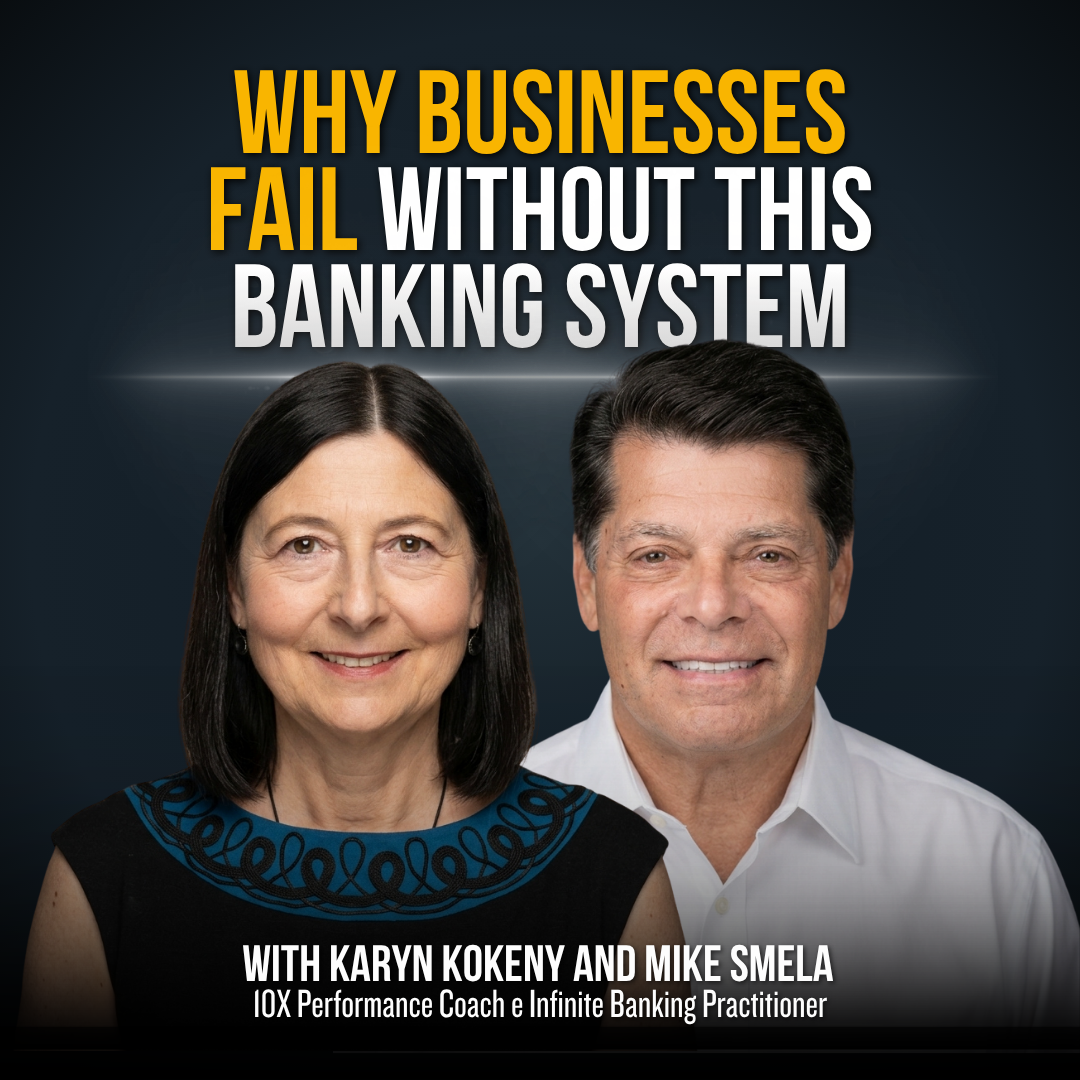
Karyn Kokeny, 10X business coach, discussing Infinite Banking for business owners on Wealth on Main Street
0:00Speaker AForeign.
0:11Speaker BWelcome to wealth on Main street, where conversations about growing your wealth are fun and entertaining. Wealth isn't just about money. It's the skills and the knowledge that we develop to pass on to future generations. Tune in each week to grow your mindset and your net worth at the same time.
0:35Speaker ABorrowed from my own bank.
0:37Speaker BIt's something we do talk about regularly, but it's always good to repeat for some folks because every asset is someone else's liability and vice versa.
0:45Speaker CWell, that's one of Nelson's principles.
0:47Speaker BThink you're thinking he would say, richard, I'm just looking for high quality soil so I can plant high quality seeds. And then it's up to nature from that point forward, you know, and he says, you know, when you plant corn, you're going to get something else. Weeds. Now, if you don't take care of those weeds, they'll take over your cornfield. But if you can get rid of those weeds and you just have this nice strong cornfield, it's a divorce or it's a disability or it's death. I mean, Those are the three Ds. Those are the most critical things that ruin and destroy a good business and therefore the livelihoods of everyone that depends on it.
1:18Speaker AControl your money first and then you have to multiply your money and then you protect your money. And in there he talks about a financial seniority's ranking, which is income first, always focus on income first. Second thing is tax strategies. Most people don't know. Spending discipline third. And then lastly investment.
1:37Speaker BAnd so our question for you is, who do you most wish to be a hero to my clients? So what exactly is 10x performance coaching and executive coaching? We talk a lot about coaching on our podcast. We're joined today by a 10x performance coach, someone who is certified as a business coach to the Grant Cardone organization and also someone who's been practicing and utilizing The Infinite Banking Concept. And of course, we've got one of our amazing coaches with us here, Mike Smella making another return visit on the podcast. But we are joined by what I just found out is a very interesting history in that these are two amazing individuals who've known each other for quite some time. And we have Karen Kokeni here with us. 10x performance coach. Now an infinite banker. And we're going to unpack a little bit about her journey, both with the concept and with coaching. So, Karen, welcome to the show.
2:24Speaker AThank you, Richard. It's so great to be here. I'm really excited about today and just the opportunity to Be in front of your audience. And my intention is to add some value somehow, some way here today. So thanks again for the opportunity and thank you, Mike.
2:39Speaker BAmazing. Now, Mike, you've been trying to coordinate us, you know, lining this up and working again with some of our teammates. The amazing shilpa and getting it lined up. We had. I threw a wrench in the curveball by throwing us on Riverside instead of zoom today, which has been great. We've all been great participants on sorting that out. But, Mike, you guys have known each other for a long time. Walk us through a little bit, maybe the history there, and then we'll let Karen fill in the blanks and tell her side of the story so we get the truth. How's that sound?
3:06Speaker CNo, we've actually, we've known each other since high school. I, I can't say we were real close in high school, but that, you know, we. There was always a. A mutual respect. And then life happened and Karen went her way, I went my way, and oh my gosh, it was like, like the early, early 2000s, mid 2000s or something like that. Karen, that, that you and I reconnected and it was about the time that I started learning about infinite Banking and you were just finishing up, I think, in your. In your corporate career and starting to get into the coaching. And we just reconnected and, and it's been wonderful relationship since then. And you know, when with the wealth on Main street podcast, I'm like, you know what, Richard, we've got to get, we've got to get Karen on because she's just been helping so many business owners and it's something that needs to. People need to hear. People need to hear. She's that wonderful of a, of a person and a coach for sure.
4:04Speaker BWell, Karen, you've got a. Obviously it sounds like a corporate background. We'll maybe unpack that a little bit and why you made to the shift to leave. But, you know, Mike's talking about helping so many business owners and that's something our podcast we try to do here, of course. And we can't force feed people, but we certainly like to know that they're listening in their car. So walk us through a little bit about what your journey has been on, you know, the corporate side and then the decision to leave. And how did coaching become the platform for you to. To begin to thrive?
4:32Speaker AGreat question. So corporate. I was, I was with a Fortune 100 company, I'll mention the name Pepsi, for 20 years. And before that I had worked in, you know, Some other, some other companies, mostly middle market companies, but I ran a $37 million business for, on the food service side. And I worked my way up through the ranks. I just, I got promotions. I actually started out in. I was, I was part of the union. I started out in the lab, believe it or not, through a common connection. Worked my way up, was eventually ran the supplier development group. So I was negotiating pricing for raw materials, also acting as a conduit, if you will, between the marketing organization and manufacturing to commercialize new packaging, but also managing the whole, like overseeing the whole supply chain with that, including the negotiating of the pricing and the contracts for those new product launches or upgrades to our packaging materials. So the first half of my career was on the operations side of the business. Then I segued over and sat on the other side of the desk and went into some classical selling roles and eventually worked my way up into executive management. And when I left, I had recently been relocated from, believe it or not, Michigan to Hawaii. So I've lived in eight different states through my career. And when I was promoted to run the $80 million business of Hawaii, it just, it was very apparent to me that I was losing a lot of autonomy and things were becoming more. They were just, they were so methodical and they're. My ability to be creative, which I think made me so great in what I did, it just was waning. I didn't have those opportunities anymore. So it just was time to leave. And I'd always had an entrepreneurial spirit, spirit for many, many years. So it was time to. Was time to go. But I never realized how hard it would be to start your own business.
6:26Speaker BInteresting. So really coming through the Pepsi organization, you got to wear all the hats, literally probably all the Pepsi hats, because they had various ones came out over that time frame of your career and certainly had some interesting marketing promotions I think during that time as well. What's really unique is that what I find in your story, Karen, going up the chain, getting to a premier top level executive position and running entire massive elements of the organization territories, but to see your autonomy actually go away, not be enhanced, is kind of almost a weird dichotomy, which I think most people would be like, well, how does that happen? And so what I think I hear you saying, and correct me if I'm wrong, is that the kind of bureaucracy of the machine began to take hold in a way that you found less and less opportunity to move around it. And so we have a saying for that, Jason and I. We call it Big dumb company syndrome. Is that what you were experiencing over there?
7:20Speaker AIt is. You articulated it probably better than I, than I would have. And an example of that is, you know, I used to set my own pricing strategy for an, you know, an $80 million business. But suddenly things were more prescriptive. And I'm not saying like it was a great company, right, great opportunity and a great fit for many people, just not for me. And so yes, that is what I'm saying. And, and I like the opportunity to be creative now in the entrepreneurial space.