
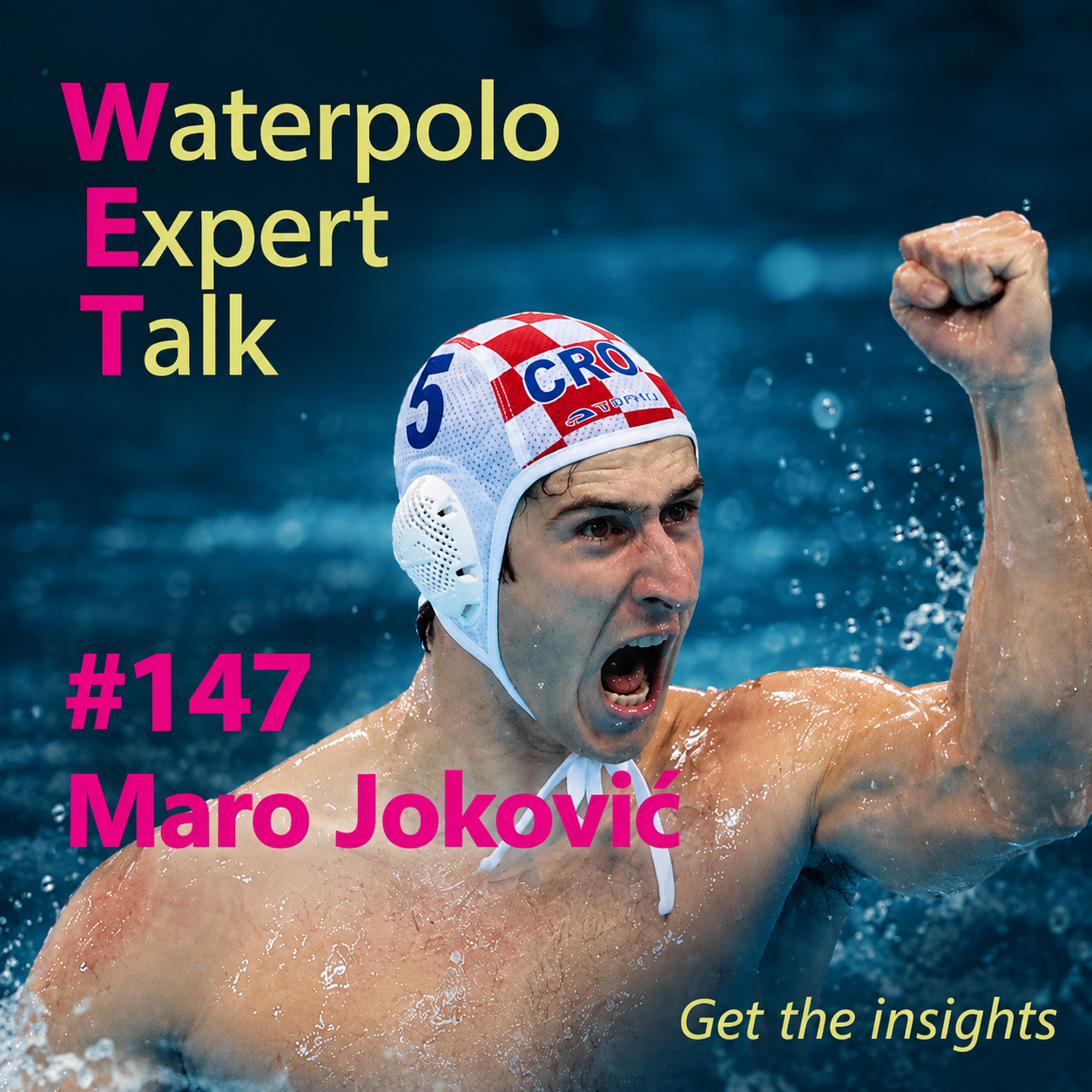
Waterpolo Expert Talk · Andreas Schulze-Kopp
One of the most decorated players in international water polo joins the Waterpolo Expert Talk Podcast. Maro Joković is an Olympic champion, two-time Olympic silver medalist, two-time world champion, European champion, three-time Champions League winner and former World Player of the Year. In this special conversation, the Croatian water polo legend reflects on his remarkable career, his roots in Dubrovnik and the unforgettable journey from Olympic disappointment in Beijing 2008 to gold in London 2012. We explore the mentality behind lasting success, the unique water polo culture of Dubrovnik and the responsibility of inspiring the next generation at VK Jug.
0:01speaker-0: Welcome to this
0:04speaker-1: podcast.
0:11speaker-1: you Water Polo Expert Talk. Get the insights. you
0:33speaker-1: Welcome back to the WaterPolo Experts Talk Podcast. Today we are joined by again one great player of the WaterPolo community, Olympic champion, silver medalist, world champion, European champion. And above all of that, career going from several Olympic Games. today I would like to highlight and bring us some more insights about this great career. And so we are joined by Mauo Jokovic today. So, Mauo, thanks for joining us today. And it's good to have you in the podcast today.
1:13speaker-0: thank you for calling me. We had some problems in the few days a few days back. I was a bit busy with all this world championships that took place in Dubronic, this new format, four on four. But I'm sure we'll have a lot of different topics to to talk about and I'm looking forward to it.
1:35speaker-1: Yeah, absolutely. So we will definitely have some topics about that after all the other topics. to be honest, I'm not really sure where to start with all the career points here. So maybe you already mentioned the tournament about the last week, the 4-4 in Dubrovnik and you raced up in this area, coming in touch, I would say, for the first time in Bordepolo. in this area of Dubrovnik. So maybe we start at the very beginning. So how hard is it not to play water polo in a town like Dubrovnik at the very beginning of such a girl career?
2:19speaker-0: Well yeah, that's a good point how hard it is n not to play. the Brownie has has a has has a long tradition of water polo, that dates all the way back to the beginning of nineteen twenties. And Yug, the Warpolo Club Yug has been has had the leading role in this because over the last two, even three decades we have become one of the leading sports societies in Croatia and from from from this little town so many great Olympians have emerged and this is something we are extremely proud of. I as most of the boys from from from the area, we all started playing water polo at the beach because We are blessed to be situated next to the i at the Adriatic coast, next to the sea. So most of the fields or pitches are are basically in local area are in the sea. And just like you know, out of curiosity as a young boy I started with my friends attending these practices and I fell in love rather quickly because I started it it it just went under my skin and I started when I was what six six seven years so more than three decades I'm I'm I'm actively participating in in this with so many practices, games, trophies, medals, and the the story still goes on. fortunately I I'm still active, I'm still playing for for Whirlpool Club Yog Ug. we are trying to raise new generations, new boys that have that have seen me play when when when they were younger and that's we all fell in love in this sport in the same way, playing it on the beach with our friends and then step by step it became something more more professional and now this is where we are where we are at the moment. we also have yeah.
4:33speaker-1: So you...
4:37speaker-0: I mean one of the one of the biggest things we are re really proud of is also the the famous Wild League, which is basically the competition of of of beaches. So each beach, let's say, has its own amateur team. I have to point out that these teams are mostly made of amateurs, so players who don't who do not play. Warpole professionally. So that gives this charm, i even greater charm to this competition because every summer we have between fifteen and twenty teams competing for the trophy. The trophy is not is not it's a matter of prestige to win the Wild League. We we call it Wild League. And basically it's played with in in little tournaments the at that every every Two or three days you have another beach hosting this tournament. And then the tournament goes through through groups, quarterfinals, semifinals, and in the in the in the end, they play finals in the in the old port in the old town. I I I'm sure you must have seen so many great videos with drones and in the last few years and with old supporters, with all the fireworks and all this a crowd cheering for their team. So it i it's it's something that a young boy cannot just not to see because you are we are all part of this. We are a small town with population let's say less than thirty five thousand and you just cannot skip the the Wild League and with that all the all the beauties the sea, the sun, summer and the beach bring. That means Warpolit.
6:33speaker-1: Yeah, so I think at this point you have to stop because everybody is really looking forward to go to Croatia then.
6:46speaker-0: To to invite everyone to come and to try to experience this kind of tournament, this kind of because this is more of a i they should be like a friendly matches, but of course during a match you forget about your friends, about your family, or you have your opponents. But after the match it all it all comes back to the hanging out with with the with the people you love, with with your friends. There's also barbecues, b boats are anchored along the the field and you know there are also supporters from all around the world and it's really the festival festival of water polling those two or three weeks.
7:30speaker-1: Yes, it sounds really like a festival. So it's like a festival here in Germany, for example, or across Europe for music. And you have your water polo festival then with these kind of beach games.
7:42speaker-0: Yes, exactly. And and of course it all comes it it's a prestige. whoever wins this will not gain any financial benefit or but it's just a matter of prestige to to win the the the wild league and to be highlighted in the winner of of that year's additions.
8:04speaker-1: Yeah, so as a dedicated point, it's not really necessary to say, it's about, I don't know, money or whatever. So it's really then the prestige, as you said, yeah. So that it's more to win the game for the district or for the beach, for his beach. And for the pleasure. Absolutely, absolutely. So you already mentioned your club, Juke. So maybe at this point, a very warm welcome and thank you to Vieco, who's really arranging the connection between the two of us just to have the podcast possible. So thanks for that connection. you already mentioned the young players you try to include in your current team at Juke. I'm really seeing you playing all around your career. how is it? Is it some kind of, or what was it the feelings for you to play with these young guys saying, okay, I saw you in, I don't know, in Tokyo and Beijing. It's so long ago, but you're still here. You're my, I don't know, role model for in some kind of ways. Is it what is the situation for you?
9:29speaker-0: Well the best way to put this into perspective is I was talking to Andrew Bushle, my a teammate of mine that I've been playing with him for the last twenty plus years throughout the national teams and with the club. we were playing two thousand seven World Championships in Melbourne when some of these boys weren't even born. So now imagine how the the this age gap is between between two of us and some of the players we are playing with now. Of course, new new generations require new approach to to to coaching, to training. It's not the same way we were taught to play World Apollo back when when we were young. So new new models have have emerged and we have to update And we have to go alongside their new new era motivations and and all the instruments we we could use. But in general they're very good guys because they're patient, they listen, they want to learn, and that's something that really makes me happy because if I've encountered a few few players, young players, so w when you try to pass your knowledge to them, they don't i it sometimes it's hard to reach them and then you're basically talking to a wall. Fortunately we don't have this kind of situation because all these boys understand the situation, they understand the club they're playing at and it brings a certain level of of responsibility And they are willing to learn, really. They are learning day day by day and they are improving their skills, their physical abilities, and these things can be seen because they can be measured. Most of these boys are also playing for the US national teams and this summer as you as you may know, has been the most successful