
Vīta Brevis, Wit Artefāctōrum Ætērna Podcast · Ash Stuart
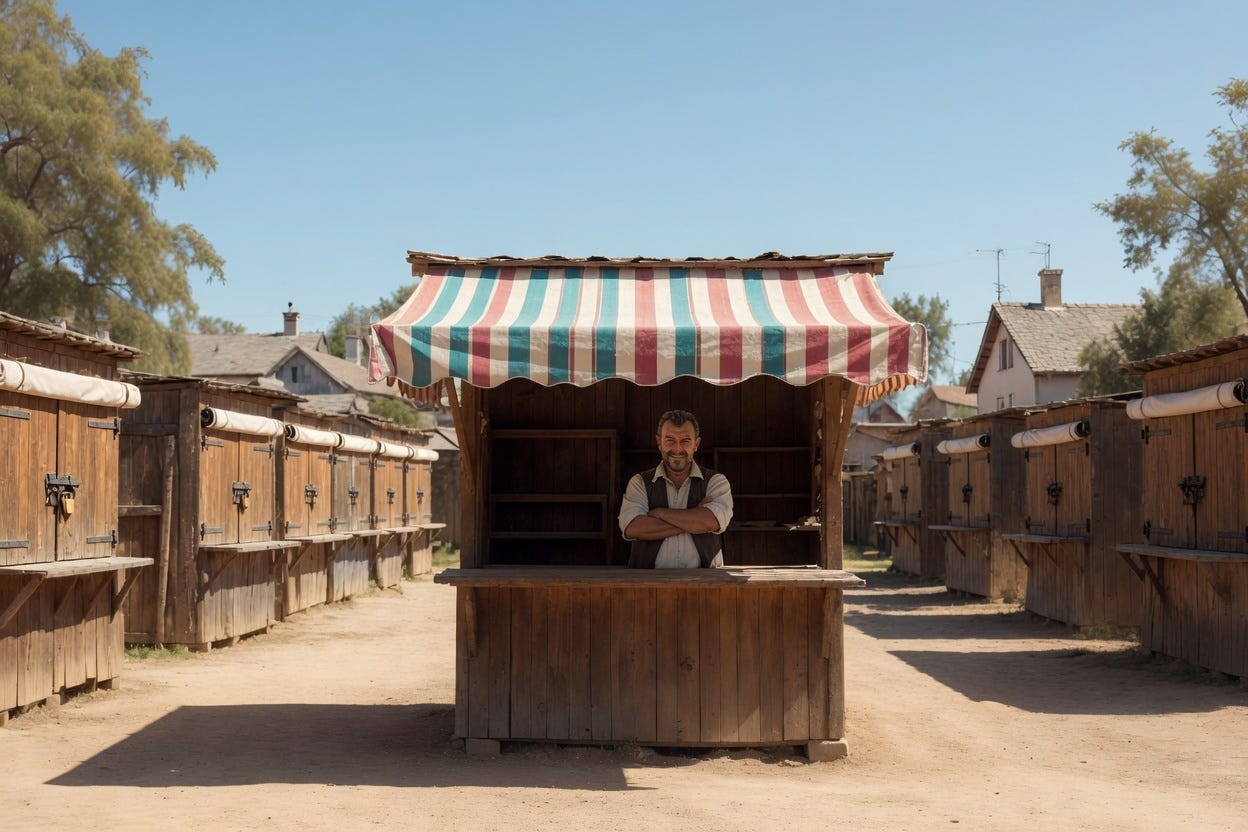
Back in Episode 022 while on the topic of mercantilism, we touched upon the idea of cartels - a small band of merchants grouping together for market abuse and unfair advantage. Let’s take it a notch up. Let’s first go back to where we left our fictional friends way back in Episode 003 when discussing price. Back then, at the idyllic townsquare market, Brenda and Irene strolling around, on inquiring the price of a sack of grain, get quoted 8 and 10 copper coins by Steve and Bryan. They may have been surprised by the difference in price, maybe they first thought of shopping around a bit more. Maybe they were happy to pay either price, the lower for obvious reasons, the higher for the less obvious reasons I explored back in that piece. A fortnight later, when Brenda and Irene are both out again, they only find Steve. And this time he’s charging them 15 copper coins! When they grumble, he’s like take it or leave it (with a look of it’s my way or the highway!) So Few For So Many So what’s going on here then eh? Maybe by undercutting the other seller, he gained an edge and the other seller moved shop to the next town. Maybe the other seller found a better market to sell his goods at a better price anyways. Or some other set of circumstances. But right over here, potential buyers are left with only one choice of seller. Intentionally or not, Steve has a monopoly. In the much more complex world of modern commerce, there could be a myriad other factors that lead to monopolies, although underhanded measures like deliberate undercutting (charging lower while taking a profit cut until bleeding your rivals out), can and do occur. To extend the phenomenon we discussed in the mercantilism episode, where a few sellers got for themselves an unfair advantage by using the corrupt and coercive arm of the State to block newcomers, and thus formed an oligopoly, taking that process to its ultimate end is what leads to monopoly - “a few sellers only” to “only one seller”. Sole Seller or Sold Soul? We have all likely seen and dealt with monopolies in our lives. We might even use the word ‘monopolize’ in non-commercial contexts. But let’s look at its repercussions in the wider context here. We saw back in the price episode that in a functioning market price is not purely in the hands of the seller, but subject to a bunch of other factors, including what other sellers are offering. Now, obviously, some such constraints are weakened, and the sole seller can charge higher prices without restraint - and thus even distort the market equilibrium I touched upon back there. Alongside that, in line with the newly found take-it-or-leave-it nonchalance of the seller -- I mean if the potential buyer has nowhere else to go..., the seller doesn’t have to bother so much about the quality of their goods, again leading to worse outcomes for the buyers and the economy as a whole. It’s also important to note that the monopolist seller, such as Steve here, might not even be a bad person,...
0:00SPEAKER_00Vīta Brevis
0:30Welcome to the Story of Money by Ash Stuart Episode 024 The
0:40Matter of Monopoly When
0:42SPEAKER_00one seller rules the market,
0:44SPEAKER_00the economic costs
0:48SPEAKER_00Back in episode 022,
0:50SPEAKER_00while on the topic of mercantilism,
0:53SPEAKER_00we touched upon the idea of cartels,
0:55a small band of merchants grouping together for market abuse
0:59and unfair advantage.
1:01SPEAKER_00Let's take it a notch up.
1:06Let's first go back to where we left our fictional friends way
1:10back in episode 003
1:12SPEAKER_01when discussing price.
1:14SPEAKER_01Back then,
More Vīta Brevis, Wit Artefāctōrum Ætērna Podcast episodes →