
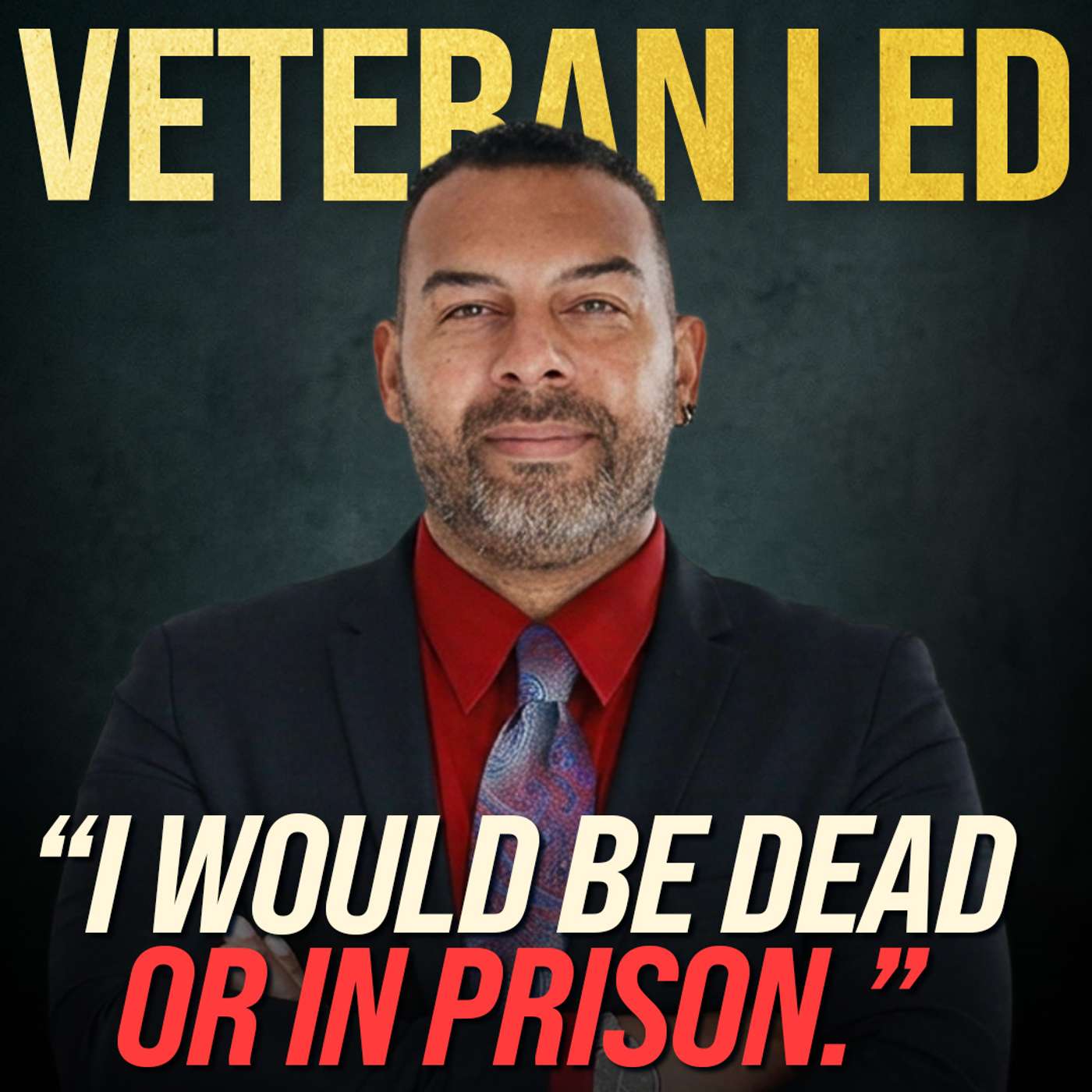
Veteran Led · John Berry
How does someone go from homelessness, illiteracy, and juvenile detention to military service, entrepreneurship, authorship, and leadership coaching? In this episode of Veteran Led, John S. Berry speaks with Sensei Dave Armstrong, Air Force Veteran, author, martial artist, and leadership and resilience speaker, about accountability and the ability to rebuild your life. Dave shares how he entered the juvenile justice system at 11, lost his mother as a child, moved through foster homes and detention centers, and was homeless at 18. Unable to read or write when he graduated high school, he committed himself to passing the ASVAB and joining the Air Force. Military service gave him structure, mentors, and opportunities that changed his trajectory. The conversation explores how martial arts reinforced discipline and respect, why Dave struggled to find his identity after service, and how he rebuilt his purpose through education, writing, coaching, and helping at-risk youth. His message for Veterans is simple: accountability can be developed, purpose can be rebuilt, and action starts by refusing to compromise with yourself. Guest Links: Speaking: https://www.upna.net/speaking Instagram: https://www.instagram.com/senseidaveofficial/ LinkedIn: https://www.linkedin.com/in/senseidavearmstrong/ Learn more at ptsdlawyers.com
[00:00:01.090] - Sensei Dave Armstrong I was illiterate when I graduated high school. I couldn't read or write. I, I was living in the hood. I was homeless at 18. I knew that if I didn't join the Air Force, I would be dead or in prison. [00:00:15.240] - John S. Berry Welcome to Veteran Led. I'm your host, John Berry. Today's episode is all about accountability. Our guest is Sensei Dave Armstrong, an Air Force Veteran, author, and leadership and resilience coach and speaker. Dave, when we started talking before the show, we got into some of the advantages and disadvantages many of us have growing up. Let's hear your story. [00:00:35.500] - Sensei Dave Armstrong My first arrest was when I was 11 and a half years old for felony armed robbery. And so, you kind of see the trajectory that a young person is going to see or have if he or she's arrested for something like that at 11 and a half. Doing 2 years at a boys' camp after I was arrested, my mom passed away and I was about 12 and a half, almost 13. And I had no family. I had no brothers, no sisters, no aunts, uncles, no one to be there for me, no one to take me in after I did my time at the boys' camp. So, it was just group home, foster home, juvenile detention centers after I was released from the boys' camp. I just, I had no one in my corner. As I say it, you probably are picturing like, wow, that's kind of a struggle, but it's probably worse than most people would imagine. And that's kind of what I do now is I have a nonprofit for at-risk youth, and I deal with kids that are in juvenile detention centers and foster homes. And what I try to do is, you know, come in compassionate, empathetic, And with that lived experience, because I know how it is to be hungry and have cabinets locked up and refrigerators locked up and you can't eat after dinner or after snack or whatever it is. [00:02:02.780] - Sensei Dave Armstrong And so, it was a real struggle. And there's a lot of things that come along with that struggle, especially as a youth. You don't feel valued. Do you feel disposable? Of course, you're depressed. Of course, you're lashing out. Of course, you're just not trusting of any person at all because people just come and go and come and go and lie to you and manipulate you consistently through the system. This is back in the '80s. I'm 52 now. Unfortunately, a lot of things are still the same now for our young men and women in the system. So, so that, yeah, I mean, I, I grew up like that. Uh, you know, it's funny, I was telling this story yesterday. I took the ASVAB and I didn't score high enough. I was illiterate when I graduated high school. I couldn't read or write. And I, I had to wait 6 months in order to retest. And I, I was living in the hood. I was homeless at 18, and I was living in a trailer in a field in the back of my, uh, girlfriend at that time, but she ended up being my wife, in her parents' yard. [00:03:15.920] - Sensei Dave Armstrong Just, they had a huge yard and a just abandoned trailer camper in the back there. And that's where I lived until I got into the Air Force. And I studied that ASVAB study guides every single day, John, every single day. And, you know, when we talk about resilience, when we talk about perseverance, when we talk about dedication, I knew that if I didn't join the Air Force, I would be dead or in prison. And I had to stay away from all my boys hanging out on the corner, you know, smoking, doing stuff that if I would've got caught at 18, it would've jeopardized my ability to join the Air Force. And so, I said, I can't even go and hang out with my friends. I have to lock myself in a camper and just study every day, all day. I had a job doing HVAC, which I absolutely hated, but I'm glad I did it because it made me realize that I don't like— I'm a big guy, but I don't like to work with my hands. [00:04:19.790] - Sensei Dave Armstrong And so I ended up getting in the Air Force. I passed the ASVAB, but it wasn't without just sheer determination, just sheer determination. [00:04:31.310] - John S. Berry So, you get into the Air Force, and life starts to change for you. Tell us about that. [00:04:36.720] - Sensei Dave Armstrong It does. You know, something that's so awesome about the Air Force, the military in general, especially the Air Force. I had a supervisor. His name was Andrew Hunter. And Andrew came to me one day and he pulls me to the side. He said, Dave, I need to ask you something. And I'm not sure how to ask this, but, but don't take offense. I said, sure, sir, what's up? And he says, can you read and write? No, not really. He says, yeah, I didn't think so. Look, we're going to set you up with some remedial reading and writing courses. And so at lunchtime, a few times a week, I would go over to the library and I had a tutor that taught me how to read, taught me how to write. And amazing, you know, if it was a civilian job, they would have said, well, you know, maybe you're not qualified for this position, right? But the Air Force, the military in general, but the Air Force, no, no, no, no, we're gonna, we're gonna get you there. We're gonna get you there. And, and I was lucky that that was the motto of the Air Force, right? [00:05:42.800] - Sensei Dave Armstrong That's the culture of the Air Force is building their, their airmen. to, to be leaders. And that's it in every step. As soon as you get in, I was, I was the squadron red robe. I was, I had leadership positions right at basic training. But this is something that you see throughout the military is we're building each other to be leaders. And that would, that, that's exactly what I needed at the time. [00:06:08.850] - John S. Berry Now, in the Air Force, you become interested in martial arts. So interested, in fact, that while you're still in the Air Force, you start opening dojos and schools for youth while on active duty. So you start building an income stream. I mean, it's beautiful. It's brilliant. So tell us about how you get involved in martial arts and all your areas of expertise in martial arts, because there are many. [00:06:28.570] - Sensei Dave Armstrong The martial arts came about when I was about 14 years old, maybe 15. Sensei Otto Johnson was my first instructor, and he was a therapist at one of the group homes that I was at, one of the boys' homes. And Sensei Otto had this little martial arts program that he would take the kids that are being good out into the backyard and do this, you know, the punches and kicks and stuff. And I was always fighting. I fought a lot. I was a bully. I was, you know, just from the time I could even remember, I was always bullying people. And I had really no desire to do this martial arts thing because I was like, man, I could already fight. I don't need to look at these idiots in the backyard doing this stuff. Like, I'm— I could fight. Now, One day, I told Sensei Otto, I'm leaving. It was at nighttime. And he says, no, you're not. It's past curfew. You're not leaving anywhere. And I said, yeah, I am, and you can't do anything about it. I was really manipulative. I was very clever for some reason. And I knew that staff couldn't stop you from doing something. [00:07:32.530] - Sensei Dave Armstrong He couldn't have stopped me from leaving. So I went to go open the door, but he decided to stand in front of the front door. And the time that staff could put their hands on you is if you put your hands on them or you're endangering somebody else or yourself. I put my hands on him for some reason. Now, Sensei Otto was 6'10, 300-something pounds. He's a monster. I wasn't moving this guy from in front, you know, just a little 15, 14-year-old kid. I wasn't gonna move him from in front of the door. Well, he decided to put his hands on me after I put his hand— my hands on him. What he did, you know, he got me, and I was out in my room, and I— oh my God. And, and that made me have such a profound respect for him and martial arts right then. I said, man, this guy's kind of a, a badass. I want to— I want to know how to do that. And so it kind of molded me into trying to be good and trying to not disrupt too much so I could start doing the martial arts thing with him. [00:08:40.070] - Sensei Dave Armstrong The truth is martial arts has so much discipline, so much respect, so much tradition, especially Wataru, which is a traditional martial art. You're mopping the mats at the end of the session on your hands and knees. You've got to get on your hands and knees and mop them from front to back and then get off the mat. You bow as a form of respect on the mat before you get on the mat, to the mat, to the dojo. You bow to each other. And then I have these guys that have been training start whooping me all and up and down the mat. Like, I thought I could fight. I thought I was a badass, but these guys were trained. And it was frustrating to get beat up all the time. It was frustrating to feel Kind of like beneath everyone, you know, I got to get on my hands and knees and I gotta bow and all of this. But that respect is exactly what this little hood kid, right, needed. And, and I, I've seen this transition into like the same thing for the at-risk youth that I used to work with when I was in Colorado. [00:09:50.930] - Sensei Dave Armstrong I had a program for kids that were in juvenile detention centers. I would bring them from Lock up, they'd come to my dojo, and we'd train, but it was really about the discipline, about the respect, about the resiliency. Talk about resilience, right? When you're hurt and you got to get up and keep going, right? I've had blisters pop on my feet, and then you just keep going, training up and down the mat. And so that really started it there, and so much was formed, right? So much of that foundation. was laid right there in the dojo just because of Sensei Otto. [00:10:27.580] - John S. Berry And let's talk about how that developed into you not just learning one discipline, but multiple disciplines in martial arts. Tell us about that. [00:10:33.430] - Sensei Dave Armstrong Yeah, yeah. So, I went on to get black belts in Mataru, Okinawan Kenpo, Okinawan Kubudo, which is weapons, judo, and then I studied Aikido, Brazilian jiu-jitsu, and then I started teaching MMA. You know, when you're intrinsically motivated to do it, when it's something that You know, it's just such a— not a passion, it's just a calling. And this is exactly what I try to help people do. No, what I do help people do is find their why, right? Find their center, find what really makes them wake up with a smile and go, I get to, not I have to. [00:11:09.230] - John S. Berry You do about, what, 24 years in the Air Force, right? [00:11:11.550] - Sensei Dave Armstrong 24, yeah. [00:11:13.000] - John S. Berry You get out of the Air Force and let's talk about some of the challenges you faced then. [00:11:17.650] - Sensei Dave Armstrong I was depressed for 2 years. And so, here's the deal. I sold my martial arts schools. I had enough money to retire and not have to work. And so, I moved to Greece. Here I am, 42 years old. So, this is almost 10 years ago now. 42 years old, everything almost instantly is gone that I built. But it was a good decision. I said, okay, you know, I have a broken spine, so I can't continue to teach. I have 5 screws in my lumbar spine. And so I said, okay, I can't continue to teach. I'm going to sell the schools. I'm going to go move to Greece. When I was stationed here working for NATO, I met a woman, my ex-wife, and we fell in love, moved from here to Portugal, Portugal to DC, and then I retired. So came here and I didn't have a why. I didn't have a why in my life. I didn't have anything to wake up and go, I get to, and that's a huge deal. And so I became depressed with a broken spine. This is before I had the surgery. I couldn't walk for more than 20 minutes. [00:12:35.360] - Sensei Dave Armstrong I couldn't sit for more than 20 minutes. Um, and so everything just kind of changed overnight and it wasn't in a good way. [00:12:43.490] - John S. Berry And that's the thing. You go from a life of discipline where you're getting all these awards for doing extra, going above and beyond, and now the mission's gone, the team is gone, the purpose is gone, and you're struggling. So how do you find your path? [00:12:55.460] - Sensei Dave Armstrong I knew I needed to, to have the, the lumbar spinal fusion. So I, I went and, and did that. That made me a little bit better. It's, it wasn't perfect. It didn't, it, you know, it's considered a failed fusion, but at least I could walk and sit for more than just 20 minutes. I'm not constantly in pain. So, that kind of helped me be able to focus some energy. And then I said, okay, what do I love to do? And so, I love to work with people. I love to help people. I have a plethora of experience. So, I wanted to leverage that. And so, that's when I opened up Unlimited Potential Network. That's when I started writing my autobiography, From Gangs to Greece. And then that's when I started my nonprofit, Inspired to Aspire Youth Empowerment, and then started speaking, went and got a degree in psychology at 46. And it just kind of take— it took off from there. But it was something I already knew that I enjoyed doing. You know, I enjoy interacting with people. I enjoy mentoring. I enjoy coaching. I enjoy helping people. I enjoy seeing people better. And Part of, part of the reason is because I know that, that I'm very fortunate to, to have had so many people pour into me, from Sensei Otto to my Casa, Ron Barnick, who was a pilot in the Air Force, to my mentors and supervisors in the Air Force. [00:14:25.130] - Sensei Dave Armstrong I've had so many people pour into me, so I understand the importance and leverage mentorship and coaching has. So I said, this is exactly what I want to do. And I started building the business and, and here we are. [00:14:37.170] - John S. Berry And let's talk about the accountability now, right? Because you had Sensei Otto teach you accountability through what we would call wall-to-wall counseling back in my day. [00:14:46.230] - Sensei Dave Armstrong Yeah. [00:14:46.790] - John S. Berry Get a little hands-on. And then, and then you learn accountability through failing the ASVAB and then having to study to take it. You get in the Air Force, it's all about accountability. You step out of that role, there's no accountability. You find yourself lost and now you're back where you want to be again. But how do you maintain that day to day now where you've, you've got the degree, you've written the book, you're on stages, You're speaking, you have the opportunity to help people. How do we keep Sensei Dave Armstrong accountable every day? [00:15:16.700] - Sensei Dave Armstrong So here's a funny thing about accountability. When your why is bigger than your why not, you tend to hold yourself accountable, but it's a muscle memory. And so you have to develop that. Everyone isn't born with resilience or accountability and sheer determination, right? Everyone's not born like that. It's not intrinsic, it's developed. So, we develop it, but with time, it ends up being muscle memory, getting back on a bike. So, after 2 years of being depressed, trying to figure out where my North Star is, what my why was, I didn't have an accountability problem. I had a who am I problem. Who am I now after the Air Force, after the martial arts? What do I do? Well, the cool thing is you can rebuild yourself at any stage in life. That's the awesome thing about living. And so, that's what happened. And I think the funniest thing is I'm in a position now to where I don't have to work and I still choose to work up sometimes until 2 o'clock in the morning, taking trips that, oh man, I don't really— because I know my back is going to be hurting, but I force myself to do it because I know the end result, my why, is bigger than my why not. [00:16:37.040] - Sensei Dave Armstrong That's actually one of my signature speeches, is your why bigger than your why not. And so when you have an intrinsic desire, right, something internal that just drives you, you, you figure out that, that resilience part, that, that determination part, that, um, accountability part, you know, with muscle memory, with coaching, with help. And then it's like, well, I don't need— I don't need to hire somebody to, to be accountable anymore because I know what that feels like. I just get back on that bike and I start going, right? [00:17:08.770] - John S. Berry And as you told us, in the beginning of your life, there wasn't accountability. You didn't see that leadership by example from adults showing you what accountability was, trying to hold you accountable. You saw the opposite. That was your world. And somehow you, you figured it out and you embraced that a world where you could be accountable was a world where you could have control. And now you've, you, you've set yourself up to a point where you still work hard, you, you keep your commitments, and yet you don't have to, but yet there's that drive. And so my question to you is, how do you keep that drive going? Is it something that's innate that will always be there, or is it something you have to work on just like accountability and other skills? [00:17:45.090] - Sensei Dave Armstrong For me, it happens to be helping others, right? What's the next way I can help others? What's the next organization I can partner up with? What's the next conference I can go speak at? Because I love it. And so, it goes back to your why has to be bigger than your why not because we're always going to have why nots, right? There's always like, you know, I have a really nice massage chair and PlayStation 5 and I'm playing a new game. My why not, you know, I could just chill today. I don't need to go to the gym tonight. But my why is, hey, I want to live healthy. I already have a, you know, I have some disadvantages already with a broken spine. I got diagnosed with prostate cancer 2 years ago. Like, there's a lot of stuff that, that I, I just, I have a disadvantage. So, do I need to add on to that? No, I need to take away from that. Right? [00:18:39.840] - Sensei Dave Armstrong And so, I don't let my, my excuses become, become my set point because they will. When you start letting your excuses become your set point, they will become your set point. [00:18:51.420] - John S. Berry Outstanding. So, Dave, this takes us to the after-action review, your examples of great leadership and poor leadership. We'll start with the great. [00:18:59.320] - Sensei Dave Armstrong No one expects a leader to be perfect. None of us are. But all of us expect our leaders to be accountable, to not throw us under the bus, sometimes cover us from things coming from different directions. And I can't tell you how many times I was covered in the Air Force and how many times I had to cover My troops in the Air Force, right? You know, the colonel comes down. Why wasn't this done? Oh, sir, we failed. It was Johnny's fault. It was Airman so-and-so's fault. No, no, no, no, no, no, no, no, no, no. That's irrelevant. Whose fault it was doesn't matter. I'm in charge. It's my office's fault. Ultimately, it's my fault. We'll fix it. It's fixed, right? And so great leaders are exactly that—they're accountable. They shield. That's your job to shield your team because there's always somebody above, always, no matter where you are. If you're the CEO, then you have stakeholders, you have a board, you have a million customers, right? So, there's always someone above and it's your job as a leader in any position to shield your team and then educate your team, mentor your team, guide your team, right? [00:20:14.810] - Sensei Dave Armstrong Everyone doesn't have ambition like you do. And that's a segway to a bad leader or a poor leader. A lot of people don't understand that everyone doesn't have their mission, right? Just because you're the owner of a business, just because you're the CEO, doesn't mean that everyone is you. You want everyone to have that intrinsic value, that dedication, that mindset, that foresight. Everyone does not. You're paying someone to come in and do a job. Is he or she doing that job? And I see that, unfortunately, a lot is leaders want people to go above and beyond their jobs. And it's like, well, wait a minute. I have a team that does editing, right? I have a team that does marketing. Are they doing that? Yes. Are they doing a good job in that? Yes. But sometimes they don't really have foresight. Sometimes— Oh, whoa, whoa. That's extra. It's great if they do, but that's extra. So, did you pay someone? Did you look for someone and interview someone for foresight? Right? Was that part of the job description? Of course, that's what we want. But sometimes as leaders, we have to understand that everyone is not us. Everyone doesn't have that fire in them to constantly be pushing forward and thinking about new things and bigger things. [00:21:40.900] - John S. Berry Sensei Dave, where can our listeners, our Veterans, find out more about your books and more about you? [00:21:48.700] - Sensei Dave Armstrong So, senseidave.com is my website. Unlimited Potential Network. Go into ChatGPT or any AI and type in, who's Sensei Dave Armstrong? And you'll get a plethora of stuff. And if you want my book and can't afford it, just email me. There's email contact, you know, on my website, and I'll give you a free copy of my book. [00:22:13.270] - John S. Berry Well, as we wrap up, Sensei Dave, for Veterans out there who live that disciplined, accountable life in the military, and they're out now and they realize that they're not being accountable, because we all know we're not being accountable, what advice do you have for them to get back to that level of accountability where they feel happy again? [00:22:32.630] - Sensei Dave Armstrong Don't compromise. You know, we're taught a lot to compromise, but I don't like to compromise with myself. If I have a good idea, if I have something that I want to do, if I want to try something, I don't go, well, I don't compromise with myself. And so, if I could leave that with your listeners, don't compromise with yourself. You have good ideas. You're a smart person. Let's just You know, put the shoes on and get to the gym. You know, have the conversations that you are putting off having. Take the trip that you've been thinking about for years. I mean, it just requires action. [00:23:19.170] - John S. Berry Thank you for joining us today on Veteran Led, where we seek to help Veterans build an even bigger, better future after military service. Unfortunately for some of our Veterans, the roadblock to a better future is that they are not receiving all of the benefits that they earned. If you need help appealing a VA disability decision, contact Berry Law.