
Verbal Diorama · Verbal Diorama
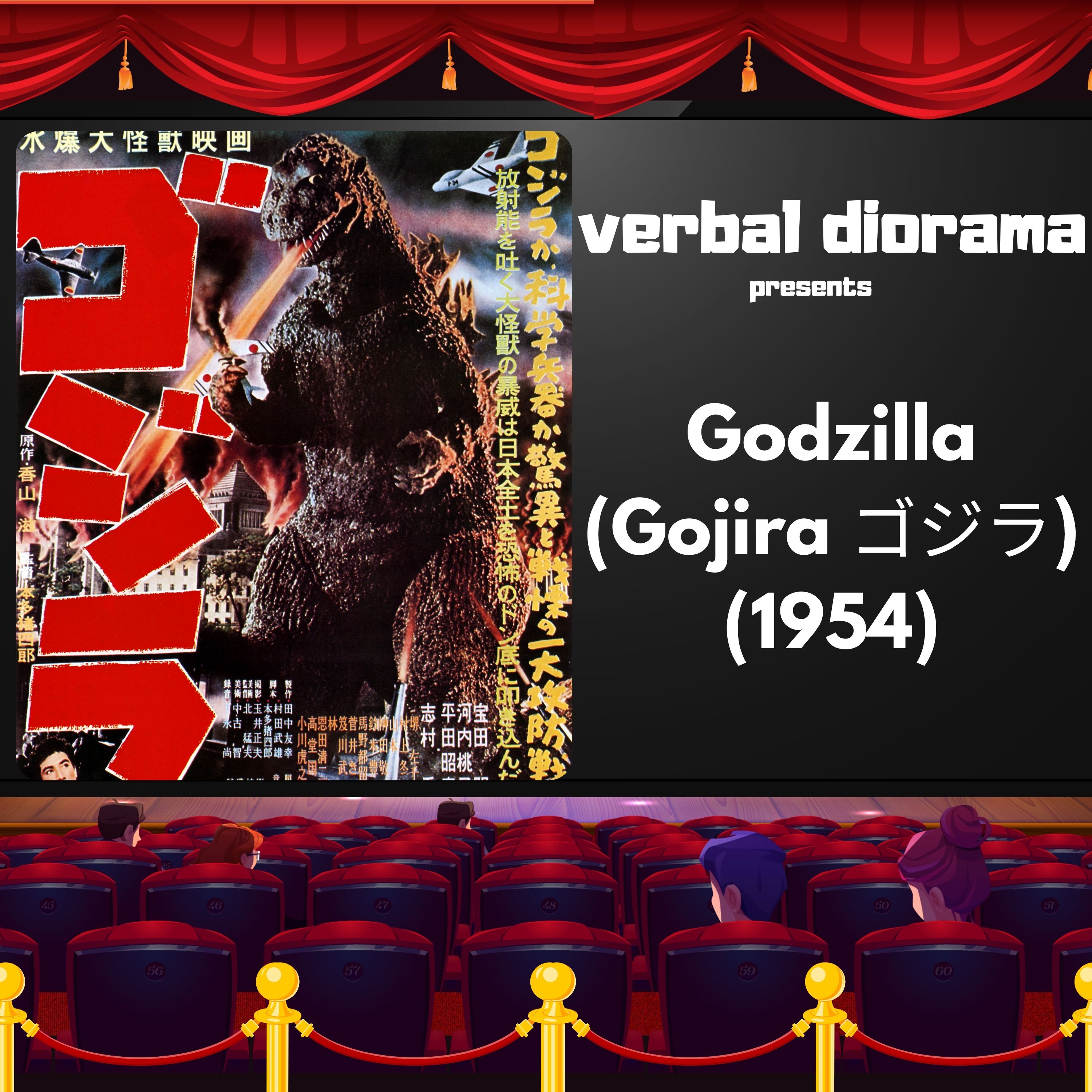
In the spring of 1954, a Japanese fishing vessel called the Lucky Dragon No. 5 sailed into the fallout zone of an American hydrogen bomb test at Bikini Atoll. Its crew came home irradiated, and Japan, a nation still raw from Hiroshima and Nagasaki less than a decade earlier, found itself confronting nuclear terror all over again. Within months, Toho producer Tomoyuki Tanaka, with a collapsed co-production and an empty budget to fill, conceived a monster movie. What emerged from that collision of commercial necessity and national grief was Gojira (aka Godzilla); a film in which director Ishirō Honda, effects genius Eiji Tsuburaya, and a nation's unspoken anguish combined to create something cinema had never quite seen before. The character of Godzilla has evolved over 70 years, embodying contemporary fears and anxieties in a uniquely artistic way. Godzilla was never simply a creature feature. Honda had walked through the ruins of Hiroshima after the war. When his monster surfaced from the Pacific, awakened and mutated by nuclear testing, and reduced Tokyo to ash and radiation, Japanese audiences weren't watching spectacle. They were watching their own grief and trauma on screen. The hospital scenes, the Geiger counters, the dying children: all of it was modelled on the aftermath of atomic destruction. Even the film's resolution; Dr Serizawa destroying his world-ending weapon and himself along with it, posed a moral question about nuclear responsibility that no Western movie of the era came close to asking. As long as countries continue to test and threat with nuclear weapons, as long as that threat persists, so does Godzilla, as a warning to humanity. Support Verbal Diorama Loved this episode? Here's how you can help: ⭐ Leave a 5-star review on your podcast app 💰 Join the Patreon for bonus content and early access ☕ Send a tip to support the show 📱 Share this episode with fellow film lovers Get In Touch I would love to hear your thoughts on Godzilla (Gojira ゴジラ) (1954) Twitter: @verbaldiorama Instagram: @verbaldiorama Facebook: @verbaldiorama Letterboxd: @verbaldiorama Email: verbaldiorama [at] gmail [dot] com Website: verbaldiorama.com About Verbal Diorama Ear Worthy 2024 Best Movie Podcast Winner | Golden Lobes 2025 Earworm Award Nominee | Ear Worthy 2025 Best Movie Podcast Nominee | Golden Lobes 2025 Earworm Award Nominee Verbal Diorama is hosted, produced, edited, researched, recorded and marketed by me, Em. Theme Music: Verbal Diorama Theme Song Music by Chloe Enticott - Compositions by Chloe Lyrics by Chloe Enticott (and me!) Production by Ellis Powell-Bevan of Ewenique Studio Thank You to Our Patreon Supporters Current Patrons: Simon, Laurel, Derek, Cat, Andy, Mike, Luke, Michael, Scott, Brendan, Ian, Lisa, Sam, Jack, Stuart, Nicholas, Zo, Kev, Danny, Stu, Brett, Xenos, Sean, Ryno, Philip, Adam, Elaine, Aaron and Steve. Thank you for supporting Verbal Diorama. Mentioned in this episode: Please consider supporting this podcast on...
2:23Hi everyone, I'm Em, and welcome to verbal diorama, episode
2:26348, Godzilla. This is the podcast that's all about the history
2:31and legacy of movies you Know and movies yous don't. That's the
2:35Raymond Burr of this episode in the background trying to explain
2:39the story to you in English. If that doesn't make sense, it soon
2:44will. Welcome to Verbal Diorama. Whether you're a brand new
2:47listener, whether you're a regular returning listener, thank
2:49you so much for being here and thank you, thank you for choosing
2:52to listen to this podcast. I'm so happy to have you here for the
2:56history and legacy of Godzilla. And of course, if you are
3:00a regular returning listener, thank you so much to you because
3:04you continue to listen to and support this podcast and you have
3:08been doing so for over the last seven years and over 300 episodes
3:13now. So thank you so much for your continued support. It genuinely
3:16means so much. As I say to an indie podcaster who does all of this