
Unsung Podcast · Unsung Podcast
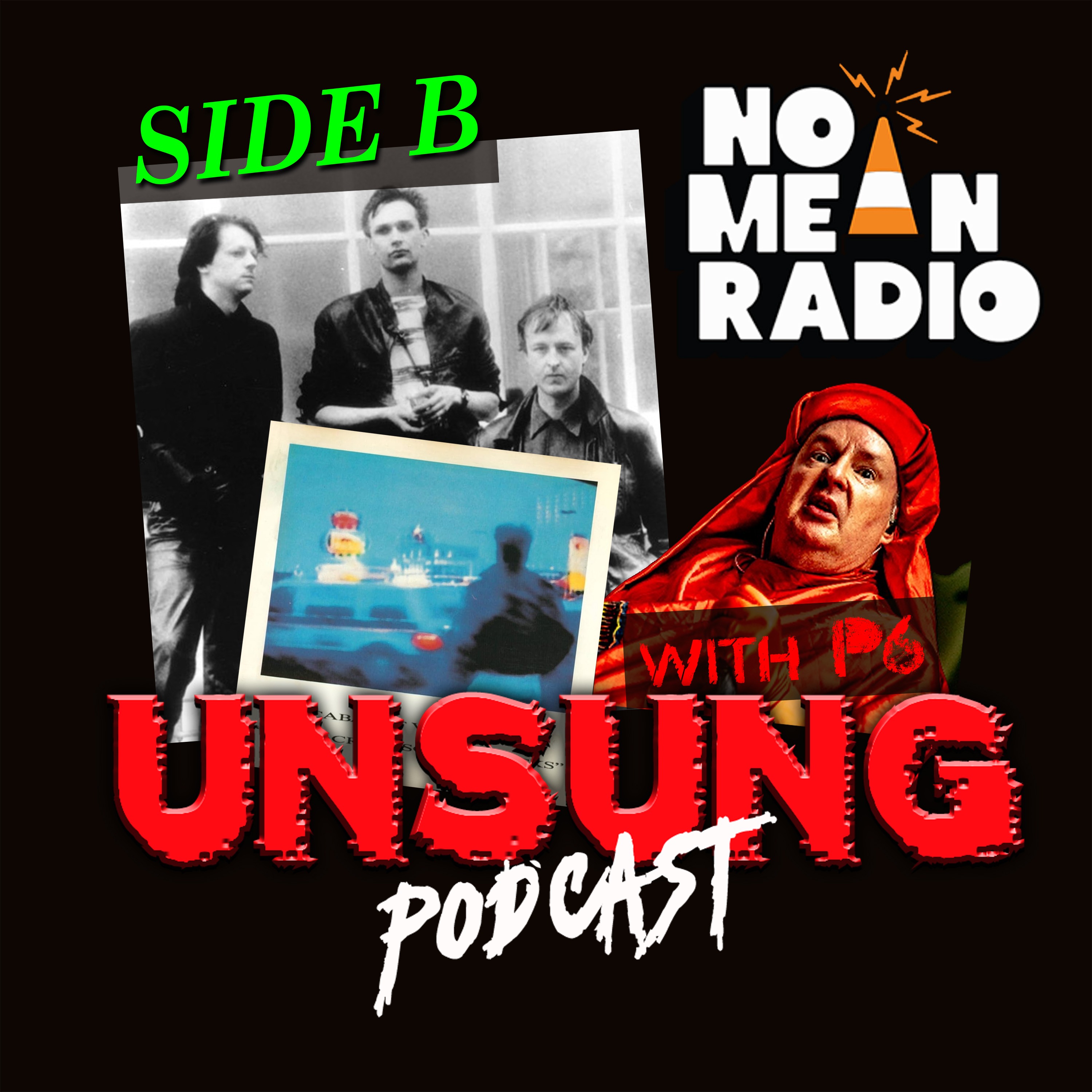
In our previous episode, we went deep into the history of Cabaret Voltaire and their importance to UK industrial and, latterly, dance music. Now, we follow the trail we laid therein by taking a journey through the band's extensive discography, really fleshing out how they went from a Sheffield attic in 1973 to a Patagonian field site recording lizards for David Attenborough. Along the way, we take in televangelists, voodoo, Charles Manson samples, Velvet Underground covers, a near-miss with Todd Terry, and a Taylor Swift pressing-plant mix-up that turned a forgotten ambient track into a viral curiosity decades later. Phil Eaglesham (aka P6 - ex-Stretchheads and De Salvo, current OMO frontman) returns to bestow upon us his encyclopaedic knowledge of the band and British industrial music. We start in 1974 with the lo-fi bedroom experiments of Cabaret Voltaire 1974–76, work through the rough-edged early Rough Trade EPs, the spring-reverb wilderness of Three Mantras and Voice of America, the cult monument that is Red Mecca, and the band's stylistic pivots through Hai!, 2x45, The Crackdown, Micro-Phonies, The Covenant, the Sword and the Arm of the Lord, Code, and beyond. We also pick at the more controversial late chapters, including the major-label years, the slightly-too-late acid house pivot, and Richard H. Kirk's solo reactivation of the name. Along the way, we explore the band as a video production company that happened to make music; their roles as curators and tastemakers via Double Vision; the Burroughs-and-televangelism worldview that made them frighteningly prescient about Reagan-era Christian nationalism; and their unsung debt to Black American music and dub. Chris also offers a wider reflection on what it means to lose the egoless purity of your earliest creative work as ambition and industry pressures take hold. We get deep in the weeds talking about the producers they worked with (Flood, Adrian Sherwood, John Robie, Marshall Jefferson); the labels (Rough Trade, Some Bizzare, Virgin, EMI, Mute); their collaborators and contemporaries (DAF, Wire, Throbbing Gristle, Clock DVA, Soft Cell, New Order, The Shamen); and the bands that lifted from them wholesale (Nine Inch Nails, Ministry, The Rapture, White Zombie, and a generation of Glasgow acts you've heard but can't quite place). It all culminates in us taking a closer look at Eight Crepuscule Tracks, a record that Phil thinks is their best and a very pure statement of what the band can and did achieve. We also settle upon what is perhaps the most important lesson to be gleaned from the Cabs' music: the importance of never compromising on your vision. By entering the belly of the beast and somehow remaining intact, they became one of the rare bands in this corner of music history whom nobody has a bad word for. Highlights 00:00 Intro 01:18 Welcome Back, Phil 02:46 1974–76: Egoless Experimentation 04:51 Bedroom Records 06:30 Extended Play and DAF 07:37 The Velvet Underground Cover 08:26...
0:46Hey folks, welcome to the Sun Podcast. My name
0:48is Mark. I am joined by Chris Bruce. Yeah, Jesus
0:52man, that's good. I mean, I almost regret going
0:55with it in the first place now. Chris Bruce.
0:58And we, talking of multiple names, we are joined
1:00once more by P6, a .k .a. Phil Eaglesham. Phil,
1:04do you know that every time I see that bus in
1:06Glasgow, I think of you in a little way? there's
1:10a bus to Eaglesham that cuts about in Glasgow
1:12regularly and it always makes me smile and think
1:15of Phil such would be my fucking wealth that
1:17I could live on Eaglesham Road Eaglesham but
1:20let's face it I've been there and I'll never
1:21be able to afford to live there it's a nice bus
1:23ride if you ever get the chance though you can