
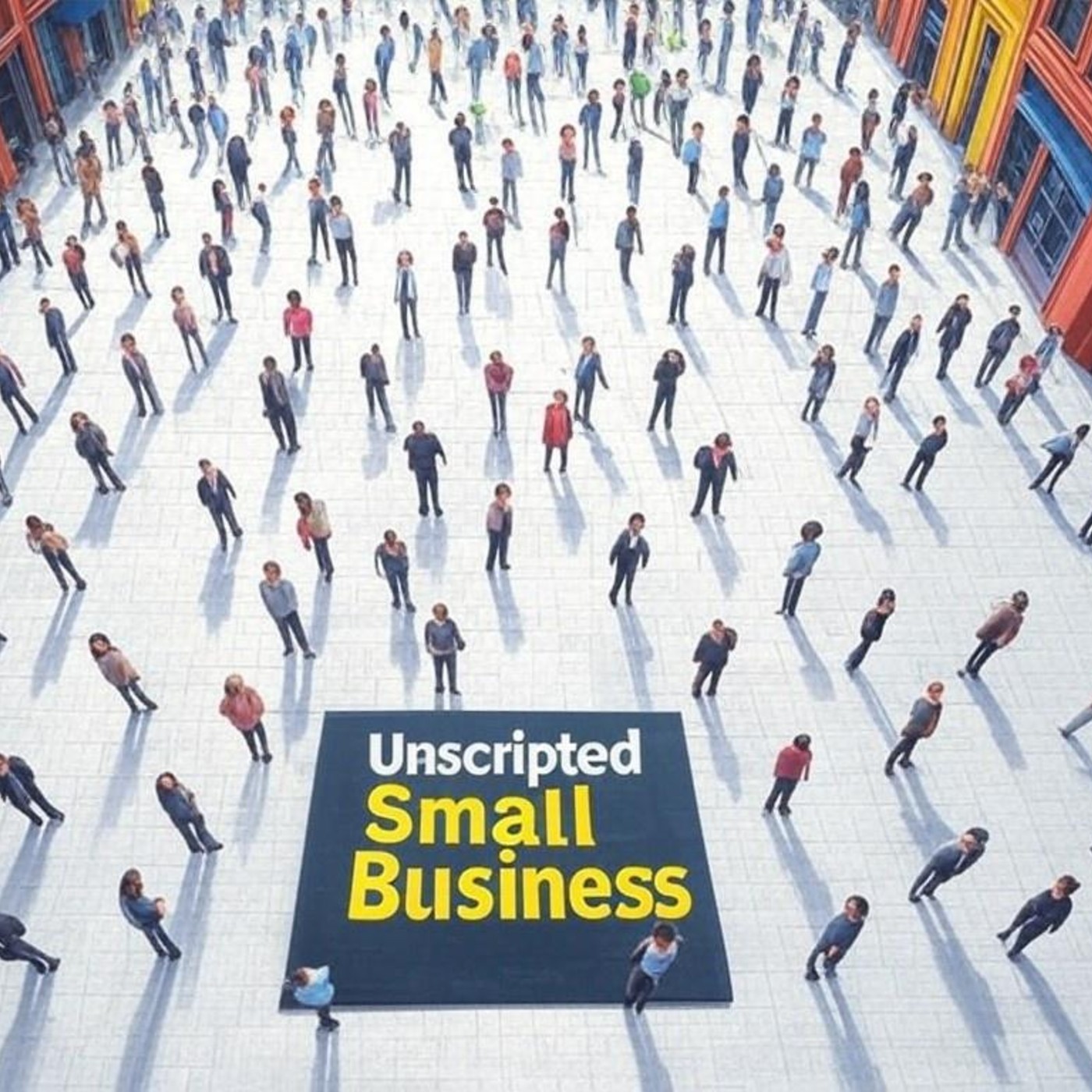
Unscripted Small Business · Abbey Crane
Pamela Maria De La Luz spent twenty years selling tequila before she got tired of watching big brands cut corners, so she built AgaveLuz, a certified organic tequila made with two ingredients. Her rule for anyone launching a product: "We don't wanna do things right now. We wanna do things right. So everything takes time." Pamela is from Mexico and has worked in spirits sales for over two decades, in direct contact with the people who buy the bottles. She watched mass producers rush the process with additives, colorants and sweeteners, and decided to make the tequila she remembered. AgaveLuz uses only organic agave and water - no yeast added, open fermentation, agave grown seven to eight years - distilled by Las Americas, a family of organic farmers in Amatitán, Jalisco. Getting certified organic took passing over seventy tests. The full conversation is written up in the episode recap, and you can watch the full episode on YouTube. In this episode Three years to launch - labels, bottle design and approval of every word by the CRT, plus a bottle nobody wanted to make. Standing out among 4,000+ tequila brands in Southern California without competing with the celebrity labels. Giving back with every bottle - Pamela has rescued and cared for street cats in Los Angeles for years, and AgaveLuz donates to local animal rescues in California and Las Vegas. Why cause partnerships open doors - Jeremy on nonprofit marketing budgets and co-branded community cleanup events. In-person tastings and demos, with the founder working the table like a regular demo person. Genuine marketing versus AI slop, and why people are leaning back toward human connection. Las Vegas as a launchpad - partnering with the city's biggest rescue led to menus, out-of-state requests and new stores. Pet-owner influencers - a bottle and a doggy toy, and creators who make videos because they want to be part of it. Chapters (00:00) Pamela Maria De La Luz and AgaveLuz (01:48) Two ingredients and certified organic (03:17) Why mass-produced brands cut corners (05:17) Three years to launch: labels, the CRT and a bottle nobody would make (06:16) 4,000+ tequila brands in Southern California (07:07) Animal rescue and giving back with every bottle (08:39) Partnering with nonprofits for reach (15:25) In-person tastings and demos (16:20) Genuine marketing in the age of AI (17:55) New generations making smarter decisions (19:02) The real challenge: getting to the people (21:05) Las Vegas and the rescue partnership (22:21) In-house marketing and pet-owner influencers (23:40) Advice: do things right, not right now (27:07) Build it with love, not for a quick exit Notable quotes "The same the words is very easy. But to actually prove it and actually doing it, that's different." - Pamela Maria De La Luz "So we are with the biggest rescue in Las Vegas. That has been our key to open so many big doors." - Pamela Maria De La Luz "Starting a business thinking that you're gonna be a millionaire...
0:00Speaker AHello, I'm Jeremy Rivera, your unscripted small business podcast host. I'm here with Pamela Maria de la Luz and her brand, Agave Luz. I'd love for you to introduce yourself and your brand and what makes you unique in your market.
0:20Speaker BOkay. My name is Pamela Maria de la Luz. It's such a pleasure to be here. Thank you for having me. And about my, my background a little bit is just I've been in over 20 years in the industry of cells and spirits, specifically tequila. I'm from Mexico and of course I have a passion for this spirit, which is the national spirit in my country. So I know everything about the tequila and very passionate about it. So after 20 years in the industry as a salesperson and being in direct contact with the consumer, seeing what's happening in the industry, like all these changes and big names endorsements and the labels and the brands, and a lot of big brands mass produced, cutting corners with, you know, using additives and colorants and sweetness and the drink to speed the process. That actually takes a long time. So it got me to the point that I got disappointed and what was happening and made me create my own brand of tequila, which is Agave Loose Agave Loose Tequila. It's made with only two ingredients for the ones that don't know this process. Usually the basic ingredients for tequila, it's yeast, water, and the agave plant. My tequila is organic, certified organic. Which means there is an agency goes and certified. And we don't use pesticides, we don't use chemicals, and we don't use any additive in the process. We need to pass over 70 tests to certify organic.
2:21Speaker AYeah.
2:22Speaker BAnd Agavelus tequila is made with only water, natural water and organic agave plants. We don't even use cheese. We do the open fermentation in our tanks in Jalisco. It's from a Maxitan Jalisco. And we use the number one distillery and organic section, which is 1% of the whole industry in tequila. And Escolas Americas is a family of farmers. They've been doing organic tequila generation after generation. So as what they do for living, so it's not shortcuts. The agave plant needs to be matured and brought seven to eight years in order to be harvest. That's the official traditional tequila is what the distillery does. And it's something that has been lacking in other brands because the mass producer, the demand they can wait seven to eight years. They harvest the plant earlier, like a two or three years. So the plant is not mature enough to make the sugar naturally.
3:40Speaker AYeah.
3:41Speaker BSo that's why they need in the process to add fake sweetnesses. The additives, the flavors, vanilla, the colors, colors for the aging. This one is my extra Napa which has been aged 12 years and an American old girls. So to get to this color it takes years. So a lot of these companies don't weigh that many that long, you know.
4:11Speaker AYeah.
4:12Speaker BSo I think it's something that I wanted to create with my brand and offer to the consumer, the smart consumer, which actually is aware of what they want to drink, what they want to eat. So that's the market that I'm targeting in my company.
4:34Speaker AI like that, that market awareness, you know, trying to, you know, correct something that you're seeing going wrong in your industry. I love seeing that as a market opportunity. What have been some of your efforts to leverage marketing right now? I know a lot of things are changing. Some things are easier and there's new different marketing channels at the same time. There's probably never been a time where I've talked to more small business owners or marketers where there's been more options but less clarity of what works. So what's been your experience so far?
5:17Speaker BWell, creating the project of Agave loose it took us three years. It's not easy going the direction on organic, which is I wanted to do takes a little longer. Is this odd process that I explained previously looking for the distillery that I want, choosing the profile that I wanted offer to my consumer, making the labels, designing it and wait for the crt, which is the agency in charge in Mexico to approve every single word and every design that we do design in the bottle. Me, I'm a foreigner. Nobody wanted to make my bottle. It was, it was a big challenge. So finally somebody did it and three years the project. After three years we launched it last year and it's been very challenging now because here in Southern California is over 4,000 brands of tequila. Only of tequila out there. So for us starting like from scratch, nobody knows us, nobody knows me. So all they see in the market is the celebrities, endorsements, you know, the big boys with the big companies. I don't want to say names, but everybody knows them and the tequila, you know, so they had the power. So I'm not competing with them. My plan actually is not competing with the big boys, the big names. I'm just want to do what I I intended to do before in my personal life. I've been volunteering my time. The pets for life program from Human Society, rescuing animals, doing the TNR Program for the feral cat colony in Los Angeles for I still take care of them every two weeks. And the food and ladies help with food them. I help over 30 cats in LA personally. I fix them, I vaccinated them, I release them to their colony and I go visit them and I whistle and they come and see me and they remember me. So I keep sending food for them. It's something that I do from my personal, you know, it's like something that I need to do because from my heart so I love animals. What I wanted to continue doing, I create a company that wants to give back for the ones I made. So for every bottle that we sell in Madada Luz, we are partnering and donating to the local rescues in California and in Las Vegas as well. So that's something that wasn't planned as a strategy. But I wanted to put together my two passions in life. And I think he's been doing very, very well out there. The response has been very, very well.
8:38Speaker AWell I know that there's that the famous case study of like Tom's Tom shoes where you know, he gives a pair of shoes to a family in need whenever you buy a pair of his shoes. I talked to Andy Chow of Do Good Points and you know, he coordinates between nonprofits and for profit companies to multiply like the visibility and reach by doing these type of community events. I mean as an SEO and as a marketer myself, I work with a number of my clients, offer a service to do community cleanups and organize. Hey, you know what's a park nearby? There's a ton of digital visibility. I'll reach out to city hall, message to the local school, see if there's any churches that want to participate and co brand with your company, you know, to surface. Oh hey, we're doing this in the community and it's netted for the my partners that I've done that for so many open doors because you're taking the time to not just broadcast and stand, oh, buy my stuff, buy my stuff. Instead it's like, hey, like this, this park is trashless. Pick it up. I'm like help me help you, help me help you. Has a lot more impact and that it's kind of interesting too if you can find, you know, you know, non profit entities to help with, to partner with. I think there was a statistic that the marketing budget for non profits is only like 19% for the. Sorry, 19% for, for their budget as opposed to, you know, 34, 38, 40% that you know, real company. So there's like this suffering of they have a mission, they want to get out there, but they don't end up spending nearly enough to, like, get that exposure. And then you have companies who want that exposure, but don't think, oh, hey, there's an opportunity to partner with a nonprofit that can open doors that maybe might not have been open to a company like mine before.
10:59Speaker BYes. What we encounter in this industry specifically is there is a big brand of vodka. I respect it so much because the founder of that brand really helps animals, not only in America and other countries as well. Whoever meets are in the big need of, I don't know, food or something for the rescues or this big company help them. So I respect a lot of that and admire, you know, I admire that I in. It was never intended since the beginning of Agave Loose, I use it as a marketing or strategy. Like a lot of people had told me, oh, that was a smart strategy. And like, no, I do it because part of me, of my daily life, of what I've been doing for over 15 years, you know, so I just want to keep doing it. And now I have the opportunity to bring a company that is doing it. And it's a lot of brands, a lot of companies that they come up with, oh, yeah, we donate to this. Really?
12:21Speaker AYeah.
12:22Speaker BThe words is very easy.
12:25Speaker AYeah.