
University of Minnesota Press · University of Minnesota Press
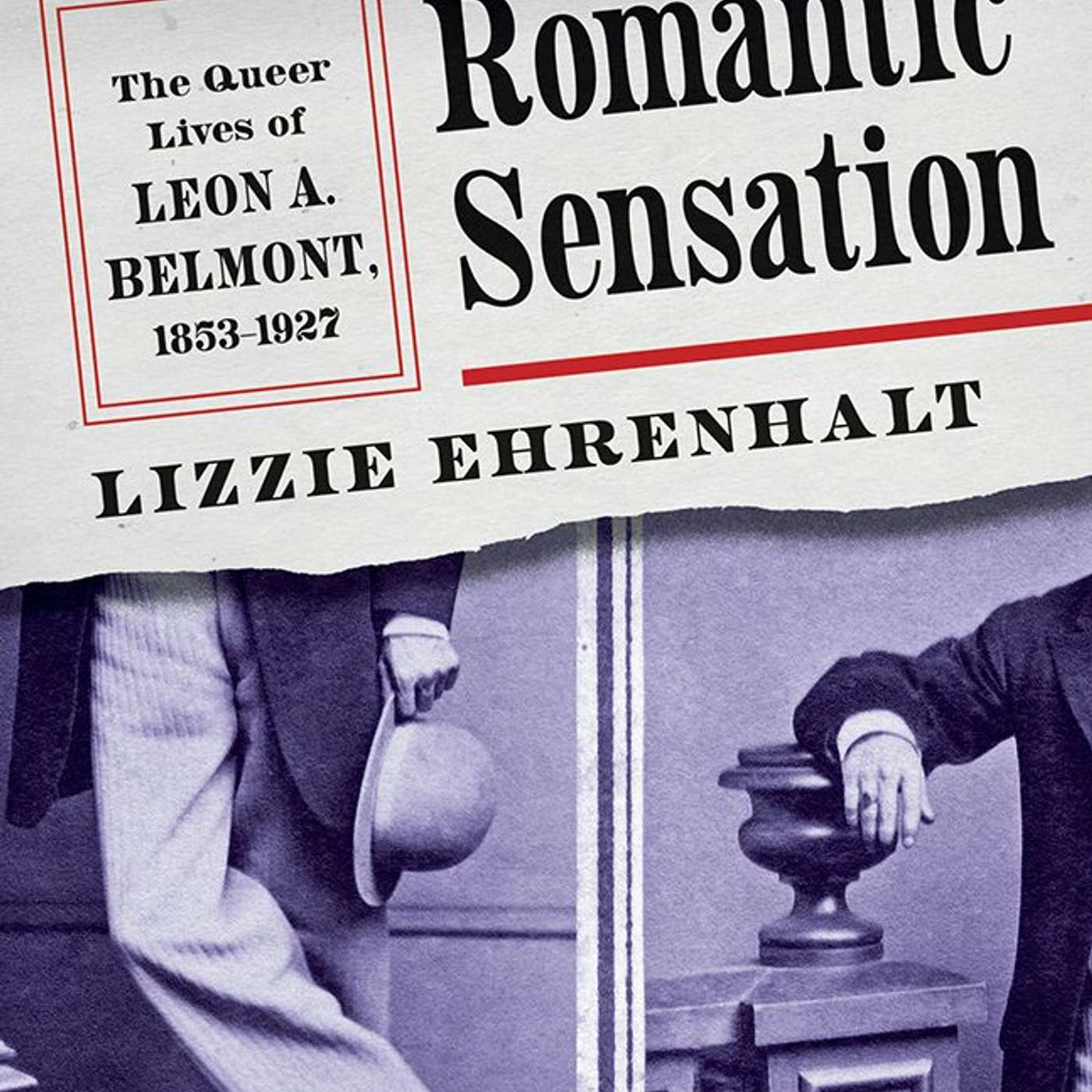
Addie Liona Walker. Leon A. Belmont. Nova McClure Carr. Romantic Sensation tells the full story of this one ordinary person’s singular life. Assigned a female sex at birth, Addie was born in Massachusetts in 1853 and lived as a woman for twenty-five years. After transitioning in 1878, Addie became Leon and lived as a man for twenty-four years before making a second gender transition and living as a woman, Nova, for the rest of her life. Placing these milestones within the historical context of the late nineteenth and early twentieth centuries, Lizzie Ehrenhalt traces Belmont’s life, from child laborer to husband, from celebrity outlaw to heartthrob, and from stepfather to single mother—and demonstrates how trans, queer, and intersex histories are inseparable from American history. Ehrenhalt is joined here in conversation with Hugh Ryan. Lizzie Ehrenhalt is an editor and public historian who specializes in the history of gender and sexuality. Ehrenhalt is author of Romantic Sensation: The Queer Lives of Leon A. Belmont, 1853-1927 and coeditor of Precious and Adored: The Love Letters of Rose Cleveland and Evangeline Simpson Whipple, 1890–1918. Since 2013, Ehrenhalt has edited MNopedia, the encyclopedia of Minnesota history produced by the Minnesota Historical Society. Hugh Ryan is lead historian at the American LGBTQ+ Museum and author of My Bad: A Personal History of the Queer Nineties and Beyond, The Women’s House of Detention: A Queer History of a Forgotten Prison, and When Brooklyn Was Queer. EPISODE REFERENCES: Theodore Roosevelt Jules Gill-Peterson’s Substack series William N. Eskridge Jr. Elizabeth Reis Geertje Mak PRAISE FOR THE BOOK: "Stands as an important reminder that gender transgression has a deep past in the United States." —Emily Skidmore "A fascinating primer for understanding the complex evolution of American ideas around gender, sexuality, trans/queer identity, and the body." —Hugh Ryan Romantic Sensation: The Queer Lives of Leon A. Belmont, 1853-1927 by Lizzie Ehrenhalt is available from University of Minnesota Press. Thank you for listening.
Lizzie Ehrenhalt: Belmont and his experiences as Walker and Carr doesn't deviate from history, but instead reflects it. Hugh Ryan: Many, many things have changed, and yet somehow many parts of it stayed the same. Lizzie Ehrenhalt: Hello, listeners. Thank you for being here. My name is Lizzie Ehrenhalt. I am a public historian who specializes in the history of gender and sexuality between about 1850 and 1920, so, the Victorian and Edwardian periods. I work, and have worked at the Minnesota Historical Society since 2008. I edit a encyclopedia of Minnesota history called Minipedia, and I also, advise people on projects both at the historical society and outside of it related to the history of gender and sexuality in Minnesota and also in The United States more broadly. I have a degree in gender studies from Oberlin College as well as Latin. And then I also have a master's degree in archives and records management, as well as museum studies. So that's up me on my public historian track. And I'm so happy today to be joined by Hugh Ryan, who is a historian I respect so much for... And who is gonna ask me questions in our conversation today. So, Hugh, I would love for you to introduce yourself. Hugh Ryan: Thank you, Lizzie. As you said, my name is Hugh Ryan. I'm a historian and author. My two big books of history are When Brooklyn Was Queer, looking at sort of the long queer history of New York City's most populous borough, Brooklyn, and The Women's House of Detention, which looked at the history of a women's prison that was in Greenwich Village for most of the twentieth century. And then most recently, my bad, a personal history of the queer nineties and beyond, which is a memoir slash history. But I am so excited to be here talking with you about romantic sensation. Lizzie and I, for those of you listening, have known each other, as many of us in this world of queer history do, for years through so many different sources. We've known each other for so long that we were both on Twitter when we met. Lizzie wrote this book, Precious and Adored with Tilly Lasky, which is an incredible book of annotated letters between Rose Cleveland and Evangeline Simpson Whipple. If you haven't read it, I highly recommend it. It's not the book we're here to talk about today, but it is an incredible book. And as with romantic sensation, shows off, I think, Lizzie's incredible, not just depths of knowledge, which I'm so excited to talk to you about, but ability at interpreting these historical events and ideas that are so different from our own for a modern audience. We're here to talk about romantic sensation, the queer lives of Leon a Belmont, 1853 to 1927. Who is Leon a Belmont? Give us the broad overview of what we're talking about. Lizzie Ehrenhalt: Sure, Hugh. Let's get started with this fascinating person, who was born in 1853 in a town called West Warren, Massachusetts, and it's in the western part of the state of Massachusetts. Assigned of female sex at birth and, started out life going by the name Addie Leona Walker. Grew up in Massachusetts, but quickly became a pretty mobile person. She went out to Boston. She went out west as well. Went to New York. There's evidence of that as well. And then for the first time, took on a male identity and the name Ernest Elwood in 1873. But Walker doesn't appear to have lived as Elwood consistently. There's only evidence of Elwood going through life as Elwood in 1873 when he went to Chicago on the train and then came back, and also, at least once in 1878. So so far, we have Adi Walker being the primary identity through 1878 with a few years of Ernest Elwood or a few instances. But then in... Sometime in 1878, I'm not sure when, Addie Walker went through a gender transition and started using the name Leon A. Belmont. I like to point out that if you take Walker's middle name at birth, Leona, and you put a space between the Leon and the a, you get Leon a. So, obviously, Walker is carrying forward parts of that previous identity into the identity of Leon Belmont. So Leon A. Belmont goes about his life between 1878 and nineteen o one. He moves from Massachusetts to Kansas, spends time in Dakota territory, then in Minnesota, and then eventually goes back to Kansas where there's evidence that he he really enjoyed himself there. He fit in in Kansas and he liked living there, went to Missouri. And then in nineteen o one, Belmont transitioned a second time, this time into a woman named a Nova McClure, later added the name Carr to that. Nova McClure claimed that she had married a man named Carr, but there's no evidence for that. So then this third identity, fourth, if you count Ernest Ellwood, lasted from nineteen o one to 1927. And Nova Carr lived in Missouri at Kansas until her death in 1927. Hugh Ryan: Wow. This is such a big and exciting life. I mean, that's one of the things I think that really is so wonderful about this story. You have this person traveling between not just states, but if we consider, like, territorial obligations, the Dakota Territory was a different nation almost, you know, and they're traveling between genders and names and identities, roles, jobs. There is so much in this story, but our language is so inflexible. So how did you decide when going to write about this what pronouns you were going to use? Lizzie Ehrenhalt: I thought about that so much, and it's a process that continues, actually. I'm constantly reevaluating what pronouns make sense for Belmont and Walker and Carr. And I went into this process of decision making about pronouns really with an open mind, just trying to find the pronouns that best reflected Belmont's and cars and Walker's lived experience. So what I did is I just tried to find the scholarly consensus. I tried to look at scholars who were writing about people who changed genders in the nineteenth and early twentieth centuries, Some people following Jesse Baker, I include myself in this, call these people gender migrants to reflect the fact that they migrated through gender as well as, in many cases, through space from from east to west often. So I found that a handful of people do use theythem to talk about people like Belmont, and I completely support anyone who wants to do that. I think that's absolutely fine. It's the cleanest. You can use theythem consistently. You can avoid some confusion from switching back and forth. But, really, when I did this kind of survey of scholarship, I found that the majority of writers really do try to use the pronoun that is most appropriate to the person's lived experience at the time because, of course, theythem is a pronoun alternative that wouldn't have been available to these people who lived in the nineteenth, early twentieth twentieth century. So I'm really here thinking of Leslie Feinberg, Lou Sullivan, Jeb Halberstam, C Riley Snorton, Jesse Baker, who I mentioned, and also Scott Larson and Emily Skidmore. So having learned this, I set out, first of all, to call Belmont hehim. That was always pretty given because it's respectful of the identity that he claimed for about twenty five years. And he really insisted on this identity and on and on his his manhood in in moments of great stress, in moments of detention and surveillance. So that was kind of a no brainer. Belmont, he, him. But then Addie Walker is a little bit more challenging because there's no evidence of her self-concept, especially as a child. You know, we're talking about a working class child in the mid nineteenth century. You know, we... There's just very little recorded about what she thought about herself. Really nothing, actually. So, of course, you know, coming at it from a modern vantage point, I think, well, perhaps this person growing up wished that she could have used hehim pronouns. Maybe there was some gender... Sublonging to be a gender migrant in in that time. But very quickly, I became uncomfortable because I was doing a lot of what ifing. I was imagining thoughts into Eddie Walker's mind. I was... And and to to use hehim pronouns for Eddie Walker felt like a big leap. It felt like I was doing a lot of imagining for Walker. And then as I was mentioning, they, them doesn't really reflect Walker's lived experience. It's not a word that was in use at that time. So with that in mind, I set out to use she, her for Ali Walker. I think it's the best choice out of a set of bad choices. There really is no perfect choice to reflect this person's complicated nature. Finally, third identity, Carr, Nova McClure Carr. So far as I can tell from the evidence, Belmont transitioned a second time into Nova McClure Carr without any kind of pressure. I think it was Belmont's choice to do it. And after the transition, having become Nova Carr, she, as Belmont had done, defended her gender and her identity and went into the world using sheher pronouns. So for that reason, I use sheher pronouns to talk about Nova Carr. Hugh Ryan: As a historian and as a reader, I love the care with which you do this. I think that you not only think so carefully about it and so critically, and have done the kind of, like, both scholarly research and the research into McClure Belmont Walker to really think about these questions. And more than anything else, like you said at the beginning, there are a lot of defensible choices here. There's not a lot of... There's no perfect choice. And I love that you lay that out for us as readers so that as you're thinking through these questions, we're thinking alongside you. And we understand the choices that you've made, which I think opens up so much possibility for the reader at home to agree with your choices, disagree with your choices, take those choices, and use them in their own life. For those of you who are listening who are struggling with questions about like, how do I do this? How do I respectfully think about the gender and sexuality of people in the past? I think, you know, your book provides a great example. But let... Let's back up a little bit. So we've talked a little bit about the pronouns you're gonna be using throughout this. How did you first encounter Belmont? Lizzie Ehrenhalt: I found Belmont in a digital newspapers database, which is where I find so many things that I think a lot of historians of the history of gender and sexuality do as well. It's an amazing time to be a historian of this period because of the development of digital newspaper databases that allow you to do keyword searching that can find unique, especially keywords in just a few seconds. I was actually searching for information about two women who escaped together from a women's prison in Minnesota, in the nineteen forties. So that was in a completely different century. And I believe my search term was dressed as a man, which is a fun one because men are dressed as men all the time. How is that search term gonna help you? Well, they do dress as men all the time, but Hugh Ryan: Never noticed. Lizzie Ehrenhalt: They're noteworthy. Right. So anytime someone is pointed out as dressed as a man, it's usually someone transgender, you might say. Hugh Ryan: In New York State, the phrase I used a lot in doing exactly the same research was masquerading as a boy. Lizzie Ehrenhalt: I have masquerade definitely written down as a search term. I appreciate the resonance of that word because it makes it seem very theatrical what people were doing. It makes it seem like a performance. Like, people are out having fun, and it's all a lark. It's a masquerade. And that word was was more popular at at the time in the mid to late nineteenth century than it is today. And I think the use of that word really solidified the idea in gender normative people that transgender was a masquerade and that it was also fraud. So I I definitely like to lean on that word masquerade in my searching. So what I did was I found this one article about Belmont through this magical search term, dressed as a man. And then I just started putting the phrase Leon Belmont as the search term, and I found article after article. I started out in the Minneapolis Tribune. I moved to the Saint Paul newspapers, and I found out that pretty much every Twin Cities newspaper in 1880, which was the time period I was just starting with, pretty much every one of those papers wrote something about Leon Belmont. Not just that, but most of the papers ran multiple, if not dozens of articles. So I could tell this was a huge deal. This was a sensation, a news sensation. So I thought, wait a minute. I think there might be enough for me to reconstruct a narrative of Belmont's time in Minneapolis. And so that's what I did. I wrote an article just about the Minneapolis episode where he was arrested for being dressed as a man. And then I continued to search at the same time. The Minnesota sources eventually mentioned that Belmont had earlier used the name Addie Walker and was from Massachusetts. So that let me get started with searching for Addie l Walker. Hugh Ryan: I love when that happens, when you find a name and suddenly you're like, okay. I can go right back into all the searches and and do them all again, but now with more detailed information, get closer. Lizzie Ehrenhalt: Yeah. It's such a joy when you have that moment for sure. I never really expected this to go on for as long as I did. I kept expecting to reach the end. Most people who transgender in this period show up in one or just a handful of sensational news articles, and you never get to learn about where they came from before and where they went afterward. But I was finding so much about Adi Walker that I started thinking maybe, just maybe, I could write a biography of this person and get away from the kind of flashbulb moment that is all we get for a lot of these people and try to present a complete story of this person's life from birth to death and show that a lot of Belmont's life was quite boring. He didn't live his whole life as a romantic sensation. You know, he got his wallet stolen, and he sold washing machines. You know, there was a lot of of that. And so that's great because it shows that he was a complete whole person, and that was really what I wanted to be able to demonstrate. Hugh Ryan: And that, I think, really comes through in the book. And I wanna go into the sort of interpretation that you're bringing to these events in one second. But as you said, much as with people who transgender back in this time, we do not often get their backstory or what happens next or what what brought us to this moment. So before we go into this book, which is so, again, beautifully, lovingly researched and written, do you wanna tell listeners at home anything about your personal inspiration for writing this book? Lizzie Ehrenhalt: I do. And in fact, it really intersects with your book, Hugh. My bad. It just came out in May, and I have read it and loved it, and I really recommend it to listeners. So so, Hugh, what you do among other things in that book is talk about how weird it was to grow up queer in the nineties, which I also did. We're close in in age. What I love about what you wrote is that it gave me permission to accept how weird the nineties were for queer young people. For me, that weirdness was coming from the idea that everyone around us was telling us there's never been a better time to be queer. And it really was only queer at that time. Trans was not getting as much attention, especially in mainstream queer publications and studies and conversations and such. So I really absorbed the idea from the culture at large that there's never been a better time to be gay. We solved the gay problem. You know, it used to really suck for queer people before Stonewall, but then we had Stonewall in 1969, and then everything was better. We had liberation. So I was like, well, I guess I guess there aren't any problems left. And yet I was so miserably unhappy as a queer teenager in my high school where no one else was openly queer. There were day teachers, but they were not out. I was miserable. I was so, so unhappy. Luckily, I went to a magical place called Oberlin College and quickly found out that not only was the world filled with wonderful queer and trans people, it was filled with wonderful queer and trans Jewish people, which I also hadn't had a lot of. So I I... My writing romantic sensation came out of my, need to criticize what you might think of as the progress model of a queer history, but you... It's used for all kinds of underrepresented or marginalized groups. People who are treated as an ethnic group, whether or not they actually are. Queer people are one of them. And the idea there is that because of civil rights, because of organizing, we're kind of on this steady track towards everything's always getting a little bit better. And the way things are now is the best they've ever been, which is actually quite a serious thing to absorb because it makes you think... Made me think, well, there's no reason to organize then. If I have some month... Some discomfort about things, if I feel marginalized, if I feel gross about the way I'm treated, it must just be my fault because this is the best time ever to be my identity. So It's not the fifties. Hugh Ryan: It's not the eighties. Yeah. How dare you? Lizzie Ehrenhalt: Exactly. It's not the eighties. It's not the fifties. It's not the lavender scare. So I, from a young age, was really critical of progress theory and wanted to point out that there were times in the past when there were pockets of room for queer and trans people to live their lives. And at the same time, that there are a lot of really crappy things going on now and that we do have to keep organizing. So there's that. There... There's a little bit of, you know, my experience with feminism ability because I'm a femme cis woman. Just wanting to show, really, through Beaumont's example that there's queerness everywhere. There's queerness in places where you don't expect it, where you look and you don't see it, but it's still there. That's what the femme invisibility experience is informing there. Hugh Ryan: And I think that invisibility experience... I mean, not to put words into your mouth, but as someone who has gone through some of these similar experiences, I think sometimes when you have experienced invisibility and it can make you sensitive to seeing how someone's identity may not be represented in what they're saying or what saved about them. And I think that that gives you a kind of perspective on this history that is part of what makes you so careful and respectful and so thoughtful about what might be happening inside the heads of your subject. And that, I think, is so important in doing this work, and it could have so easily gone the other direction. Right? So being told that these things don't matter or that all of these fights have already been won could make you pacified. And instead, I think it's it's obvious from the book how it it sharpened your sort of need for answers and to consider these questions from really complicated positions, which I think you bring to your interpretation of all of these events. So this is where I'm I'm curious. So you've you've found all of this material. Right? When you know there are all these articles out there, you know a little bit about Belmont slash walker slash car and the migrations, both physical and gendered, that Belmont participated in over their life. You've got the material. You've got the sort of approach. What decisions did you need to make in turning this into a book? How did you take what you knew and turned it into this biography of Belmont? Lizzie Ehrenhalt: I first had to think about structure. I had to test the idea that it would work... Structure would work out as a three part examination, first of Walker, then of Belmont, and then of Carr, never implying at any point that this is somehow a different person. This is one person, but just giving equal respect to each phase of life. So I had to decide what the phases of life were. So for example, as I talked about, Ernest Elwood does not get his own part of the book. Also, at the same time, I had to make a decision that I was going to look at Belmont as a primary identity. Belmont insisted in a lot of high pressure situations that he was who he was. He created this identity for himself. He embraced it. He defended it. Only under extreme duress involving police did he ever admit that he was assigned female at birth. Also, Belmont was his own creation. I talk about Belmont, and, of course, that informs decisions like putting Belmont's name on the cover of the book. I'm saying the lives of Leon Belmont, not the lives of these three people. At the same time, a big part of interpretation for me was looking at the evidence and seeing that Belmont, and here I'll use Belmont to also include his experiences as Walker and Carr, doesn't deviate from history but instead reflects it. Queer people aren't historical anomalies. We are history. What I look at in the book is how Belmont is really participating in these moments in American history rather than fighting against them. When Addie Walker is a child, I had an opportunity to talk about the gendered history of childhood, what it was like to be an assigned female child. Also, what it was like to be, an assigned female person working in a factory in Western Massachusetts in 1869, what it was like to be someone living life as a woman committing confidence crime. One of my favorite parts of the book actually is the chapter that talks about women confidence criminals and how... Even though it's... One of Walker's most spectacular acts appears to be that she was getting money from people through fraud related to checks and banking and chiseling related to that. Hugh Ryan: Chiseling, one of my favorite, like, late nineteenth, early twentieth century verbs that we really have lost. Lizzie Ehrenhalt: Yeah. I I I know it really well from Gilbert and Sullivan. So it perfectly fits into the time period here. This was actually the birth of modern confidence crime. There was a earlier era about eighteen fifteen to twenty five that's called the era of good feelings. And wonderful historian named Mark Summers said, well, if that was the era of good feelings, then post civil war, you had the era of good stealings. I am so in love with that. Thank you, Mark Summers, for that. So this was a time when ordinary people as well as, like, the Jay Goulds of the world were committing financial fraud, and they were becoming very rich because of it. Not everyone could be a Jay Gould, but even someone like Adi Walker could enrich herself through doing some of this banking fraud. So I talk about how women were actually some of the first developers of things like Ponzi schemes and all kinds of fraud in this period. So so that was actually part of the era in which Walker lived. It wasn't actually so crazy that she ended up doing this in the eighteen seventies. It was happening all around her. Then when I talk about Belmont, I talk about western migration, the gendered part of that, how Belmont was participating in this huge trend of American men, whether they were gender migrants or assigned male at birth, moving west to claim their manhood. This was a huge thing. You have even people like, Theodore Roosevelt doing this who are picked on his sissies in the East. And then to reject that, they go west. They become cattle ranchers and get really macho. They shoot animals. They take on a persona as, for example, a cattle rancher, which is what Belmont did in the eighteen seventies. And, again, this wasn't like a crazy out of left field decision that Belmont made. Belmont was responding to social cues that were saying, young man, go west, as Horace Freely put it, and did things that even people who weren't transgender like Theodore Roosevelt were doing, but were still using that western migration as a way to claim masculinity. Then I also get to talk about with Nova Carr, what it was like to be a mother and a widow in the nineteen teens and twenties. Carr was also responding to social trends at the time. And throughout it all, I'm really trying to put Belmont in his historical context and say that he was responding to history rather than deviating from it. Hugh Ryan: I love that so much because, one, it helps us to see the period, you know, through the person. Two, it makes the person more of their world and not this, like, strange freak, which I think so often is how people who in any way fold under the LGBTQ umbrella are looked at historically. And it also avoids the trap that frustrates me so often where it's like, you have a historical show Downton Abbey or the Gilded Age, I think is a great example. And many of the characters and storylines, we see modernity evolving. We see them changing from one kind of person to another, business evolving, cities evolving, but the gay people are stuck having the exact same understanding of themselves that we do now, and they're arguing about same sex marriage. And you're like, what is happening on the screen? It has nothing to do with the historical period they were in. And it's like we somehow are sort of exempted from history. But you don't do that. You let him, her, them, however our leaders, our listeners are going to respond to this, whatever parts of the story they are in, reflect the story happening in America. Belmont is part of history. Lizzie Ehrenhalt: Definitely. And I'm glad you brought up the point about readers responding to Belmont and bringing their own identities to bear because one thing I was up against was this instinct to to claim Belmont as something or for a certain group. Like, you know, is Belmont trans? Is Belmont cis? Is Belmont gay? Is Belmont bisexual? And on and on and on. And I really reject that move. I think it's very unhelpful. I think that Belmont is... Belongs to all of us as queer and trans people and intersex people as well. I really leaned into intersex history in this book, and I wanted to investigate the possibility that Belmont was intersex. But all of us living today can see parts of our own experiences reflected in Belmont's experiences. And for that reason, I think he can be a really uniting figure. Hugh Ryan: Absolutely. And I and I so agree. I think that there's so many parts of our, you know, broad LGBTQ plus trans everything history that we don't see parallels in the past, but we do see things from which our ideas have evolved and things that echo our experiences. And that's not... It's not worth it, I think, to fight over was this person trans, was this person gay. That's unanswerable. But we can look at them through a gay lens, through a trans lens, through a intersex lens. We can bring many lenses to one person's experience. But before we get deep into that, which I think you and I could talk about forever, there is one thing I really wanna to to dive in on specifically. We talked about, you know, this is the era of good stealings and Belmont's attempts to make a financial life. But was Belmont ever convicted of a crime? Lizzie Ehrenhalt: Actually, no. He was, as Walker was, arrested for various things over his lifetime, but only two of those arrests had anything to do with gender. In 1873, Ernest Elwood was arrested in Chicago for appearing in a dress not belonging to his or her sex. That was a municipal law at the time, as it was in many American cities. And then in Minneapolis in 1880, Belmont was also arrested that... But all of Belmont's other brushes with the law had to do with obtaining money under false pretenses, stealing a watch, stealing a horse, stealing chaps and a bridle. I love imagining Belmont wearing chaps and and, you know, a cowboy outfit, which he definitely did. He was also arrested in 1887 for causing a disturbance. So I actually appreciated the the chance to tally these up because I do worry that readers are gonna be like, reject Belmont as just criminal. Well, this guy was a fraud. He is a criminal. And that's... There's certainly truth to that, but he was never convicted. And so therefore, I don't, you know, lead to any conclusions about that. If he had been convicted of a crime, I would state that and and change my outlook, but I think it's important to stick to that path. Hugh Ryan: Absolutely. And I think, you know, as you say in the book and you go into great detail and really explain this, the question of fraud and the question of criminality and the question of gender identity are implicated in in different ways in this period than we think of them as today. The lenses we bring are not the same. So what laws actually did restrict gender migration in Belmont's time, and and and what were their intended purposes? Are they what we think they are? Lizzie Ehrenhalt: Well, there were a lot of city ordinances already in the eighteen seventies against dressing as the, opposite sex. As I mentioned, there's the Chicago one. These had been around in The United States since the eighteen forties, but it's important to not leap to the conclusion that that all these ordinances were created just in mind with policing gender migrants. They were actually more than that. It was about policing various kinds of mobility, especially class mobility. Sumptuary laws, laws governing what you could dress as, were also at play here. People didn't want lower class people to be passing themselves off as a higher class through their dress because cities were exploding in population, and it was harder suddenly to be sure that the person you were talking to is really who they said they were in various ways. Gender was only one of them. So these first city ordinances, as Jules Gil Peterson has pointed out in a really great substack series, these ordinances weren't what we would today think of as trans rights related. It wasn't really until later that cities were specifically thinking about people transing gender, assigned female people wearing what were considered to be men's clothes. So it's complicated. Even though we have this really deep history of anti cross dressing legislation, it's a complicated field. Hugh Ryan: And I think that's so often the case, you know, that what we think we see historically, what seems obvious on the surface, you go back and dig into it. It's, you know, like, laws around sodomy. They are not what we think of them as today when we go back historically. You know, William Eskridge has done such great work on this, but I think... And Jules' work on on cross dressing laws, I think, is essential right now to this understanding. And I think you do such a great job of of laying all of that out, all those complications. So I'm gonna try to to summarize where we are right now in the story of Belmont and your writing of it, and then we're gonna get into some of that bigger history that you were gesturing towards that that is reflected through this story. So Belmont Walker Parr is a person who begins life on the East Coast, migrates to the West, has experiences in the Dakota territories, has experiences in Kansas, transgender several times in several directions, has had all of these experiences. They're married. They're arrested. They are not, however, convicted of any crimes as you point out, and they live through all of this post civil war and into the nineteen twenties. And as you rightly pointed out, that's a huge amount of time, huge changes, things that we think we know do not come into play in terms of queerness and identity and all the things we think are entangled with it. So if we're looking at this big life, this life that starts on the East pre civil war, ends in the West in the nineteen twenties. Can you walk us through just quickly some of the big changes in gender and sexuality that Belmont lived through and that readers in the book are gonna see through Belmont's life? Lizzie Ehrenhalt: I would love to do that because those things are what make me love this time period and why I focus on it because the changes that happened between about 1870 and 1930 are how we got to where we are today. So for example, there was a very different feminine ideal at play in the mid Victorian period called the cult of true womanhood, where the ideal woman was very demure, didn't go out in public, was obedient to her husband and to all men. And that was replaced gradually in Belmont's lifetime with something called new womanhood. New woman defined more by independence, by independent thinking, by athletics, doing things in the public sphere, maybe living without a man, living with another woman, for example. And at the same time, Belmont lives through an evolution in the American masculine ideal. The history of masculinity is one of my favorite things to look at because I think there's this assumption today that the ideal man has always been the same, and it could not be farther from the truth. So, actually, early, the very beginning of the nineteenth century, you have the gentleman farmer in the model of Thomas Jefferson, who was very rational and not quick to anger. You you start seeing the ideal get a little bit more violent in the Jacksonian era. And then in the civil war, being an ideal man is about fighting for sure. But it's really not until the eighteen seventies and eighteen eighties that you get the more Theodore Roosevelt archetype of the rugged, ruthless, violent, and competitive manly man. That ideal is only a few decades old. I mean, from my point of view, the 18 were, you know, fairly recent. That's what comes of studying this period so consistently. So you have masculinity changing, femininity changing. You have the entire invention of sexual orientation because a majority of people who studied history of sexuality argue that before about the eighteen seventies and a field of writing called sexology, people did not think of what you did sexually as an identity. It was more of a behavior. You might be a man who had sex with men, but that didn't mean you were a type of anything. It was just something you did. So then during Belmont's life, that seeds to the idea of even just wanting to do something was evidence of an identity. If you were a man who wanted to have sex with another man, that meant you had an identity as a homosexual. So it was in this period that the homosexual, but also the heterosexual, and eventually the bisexual, were invented, and that was a huge change. You also have, in this period, the medicalization of sex and gender variance, huge changes in the way intersex people are treated. It becomes a medical issue, where before it was more of a community issue. If someone was born with what we would today call intersex traits, they were usually dealt with at the community level. There was no rush to take the baby or the child to a doctor and have their sex pronounced or curtailed or, you know, fit into a male or female box. And I really recommend the scholarship of Elizabeth Rees and Gjert Thir Mak, who is a Dutch scholar of intersex history, that was really important in imagining the ways that Belmont was received by his various communities. Hugh Ryan: Yeah. I mean, I think that those changes are are so huge, so immense. I always like to refer back to... There's this short story that gets published in in The US in 1864. It's serialized in newspapers all over the country. It was originally written in Scotland. And it's this this four part series about a young woman on the the eve of her marriage who this, like, very butch woman who's rich shows up in town. She goes, I think her name is Teddy or maybe it's Harry. It's a a masculinized name, and she's rich, and and the fiance is very worried about his, you know, soon to be wife spending all this time with this person who to our eyes seems like a butch lesbian. It seems like we're following some kind of, like, you know, gay seduction story. And and when the story comes to an end, it actually is all about smoking cigarettes and how the husband is so worried his wife is gonna start smoking cigarettes. And what I love about this story is that it follows this outline of like what we think of as gay seduction, what we think of as gender and sexuality being sort of like always in communication in a way that they are not in this moment. And then it jumps from the point of view of the fiance and and her soon to be husband to the head of the butch who has left town and is back at her office in, like, Chicago. And he was like, god, those people were so boring. You know what? Send them a package of cigars for their wedding. It's... That's the end. Says it to her assistant. And I I love it because it is like Belmont, so much of what we don't expect to be happening in this period, and so related to things that we think we know that we we almost think we know what we're seeing, but we we don't. And that's why your work is essential because someone who came across just a a fragment of this, these pieces of history are so easy to sort of decontextualize, slap onto a meme, and send them around the world as, you know, this trans guy whose life was exactly like ours, only it's 1880. So I wanna... As we're moving into kind of the significance and the the end of our our conversation today, I wanna talk a little bit about this story in our context and and why it matters. And I'm wondering if you could tell us a little bit, like, why does Belmont represent something bigger than himself, or or how does their story connect to us today as queer and trans and intersex people? Lizzie Ehrenhalt: Yeah. I would say he only represents something bigger than himself when he's put in conversation with other examples. So for example, other celebrity impersonators of the era, like Lord Gordon Gordon, Olive Dutton, the man who claimed to be sir Roger Tick borne. This was all happening in the early eighteen seventies. Conor, just I mentioned it before. People like Theodore Roosevelt and Morton Fruin and other cis, someone who traveled to the West to claim masculinity. Other people who are transmigrants like Joe Monahan in in Idaho, Sam Pollard in Nevada, Edward Donovan in Montana, and then intersex people as well, even women who are causing what you might think of as gender trouble in Kansas and Missouri in the eighteen nineties, and then also gender migrants around 1900 whose experiences mirror Belmont's experiences. So you come to see that Belmont, as I said before, is participating in this historical evolution, this historical conversation, and that he is an example of a larger trend. Hugh Ryan: That, I think, is so interesting and so important to remember that, yes, Belmont is a romantic sensation as he was called in the newspapers, but that sensation is also one that's happening all around. The interest in Belmont is because things like this are happening. They're relevant to the lives of so many people in that time period. So how is it relevant in our time period? What do you think this story sort of tells us to today? Lizzie Ehrenhalt: Well, it definitely shows us people you could think of as the ancestors of queer and trans and intersex people were living their lives in the nineteenth century. I wouldn't use those words to describe them. Those words were invented later, but there's a lot of shared experience. There's a lot of shared lived experience having to do with police surveillance. Belmont was followed by police and arrested and interrogated in ways that would be very familiar to trans people or non gender normative people today. Also, Belmont's experiences with doctors examining him, diagnosing him, trying to identify what he was. That's very familiar, especially to intersex people living today. The trauma of the examination to determine sex, which Thelma went through at least twice, that really, I believe, resonates with intersex people today. Just the laws that restrict queer and trans people, the ignorance that drives suspicion of us, and our sensationalization by the media, invasion of our privacy, all of these things, I would argue, make Belmont our ancestor. Hugh Ryan: You know, it's funny. We just got through talking about how different things were historically, and then you look at this list and you're like, oh, but has anything changed? Or at least many, many things have changed, and yet somehow many parts of it stayed the same, stay similar. In our final moments here, I think the big question I'd like to ask you... So we know a lot now about this story. We know about Belmont. We know about the time period through Belmont and through the interpretation you're bringing to it. If you were to try to tell someone who hasn't picked up the book and doesn't know anything yet about the late nineteenth century and the evolution of gender and sexuality, why does this story matter? Lizzie Ehrenhalt: It proves that someone could live his life as a person transingender and really direct their own life, make their own decisions, do what they wanted, and be a complete person. There were, of course, times when Belmont was challenged doing that. He was challenged particularly by police, sometimes by doctors, sometimes by laws, but he did exist. You know, people like Belmont weren't supposed to have existed, and yet they did. And in some ways, there were freedoms that we don't see when we only look at the past as uniformly oppressive compared to our assumed to be liberated present. In the course of living his life, he got married. He was legally married to a woman. He adopted a daughter. He was a parent. Later when Belmont became Nova Carr, she adopted a son, and she was a mother. Part of this complete life that I'm trying to evoke has to do with with drama. You know, there were these lawsuits. At one point, Belmont escaped from jail and eloped with a sheriff to the gold mines of Dakota territory. Obviously, that's got some sensational notes to it. But, also, he just lived his life. He sold washing machines. He lost his wallet, and he put a item in newspapers asking if anyone had found it. He didn't have a job. He was he was going through these really mundane and universal experiences in love and work and migration that show that he was just a human. And that's really the key for me because once you have accepted Belmont's humanity, you have to accept the humanity of all people who transgender both in the past and in the present. Hugh Ryan: Yeah. I love that. That's so perfectly the way you put that. I mean, I think that this is... What you do so well is that you show the mundanity of this story, both in Belmont's life, the mundane moments, but also how the story is one of many that are happening in this time period, some of which we know about, some of which we don't. And you also show the sensational aspects, which are, yes, partially about gender and sexuality, but also, like, about, you know, being a great con man. I don't care what the person's gender or sexuality is. I will listen to a con story anytime. That's an American story, frankly. Lizzie Ehrenhalt: It is. That's part of why I love that part of the book so much is because there's nothing more American than a scam. You know? Hugh Ryan: I love a gay grifter. Lizzie Ehrenhalt: Oh, a gay grifting is amazing. I'm also thinking as we wrap up here, this has been such a great conversation, but I wanna emphasize towards the end here that there's a lot that's inspiring about Beaumont's story, especially in the fact that if there were moments in the past when it was easier to transgender as Beaumont did than today, then I... That permissiveness might come back. So there's hope, basically. It's a hopeful story. The linear progress narrative is flawed. It's not all completely oppressive past and a liberated present, and it just shows us that the the wheel of history can turn again and that the freedoms of the past might return in some form. Hugh Ryan: Absolutely. And I think that's a great place to end this. Thank you so much, Lucy, for having this conversation with me, for doing this research, and for writing Lizzie Ehrenhalt: this huge. Hugh Ryan: Excellent, excellent book. I really recommend if you are listening to this and you have not yet ordered the book, I don't know what's stopping you. Get your copy of romantic sensation. And while you're at it, pick up a copy of precious and adored as well. They are both incredible texts, essential texts on how we talk about this history and what this history is. So thank you, Lizzie. Lizzie Ehrenhalt: Thanks, Hugh.