
Unexplained History · Tom McKenzie
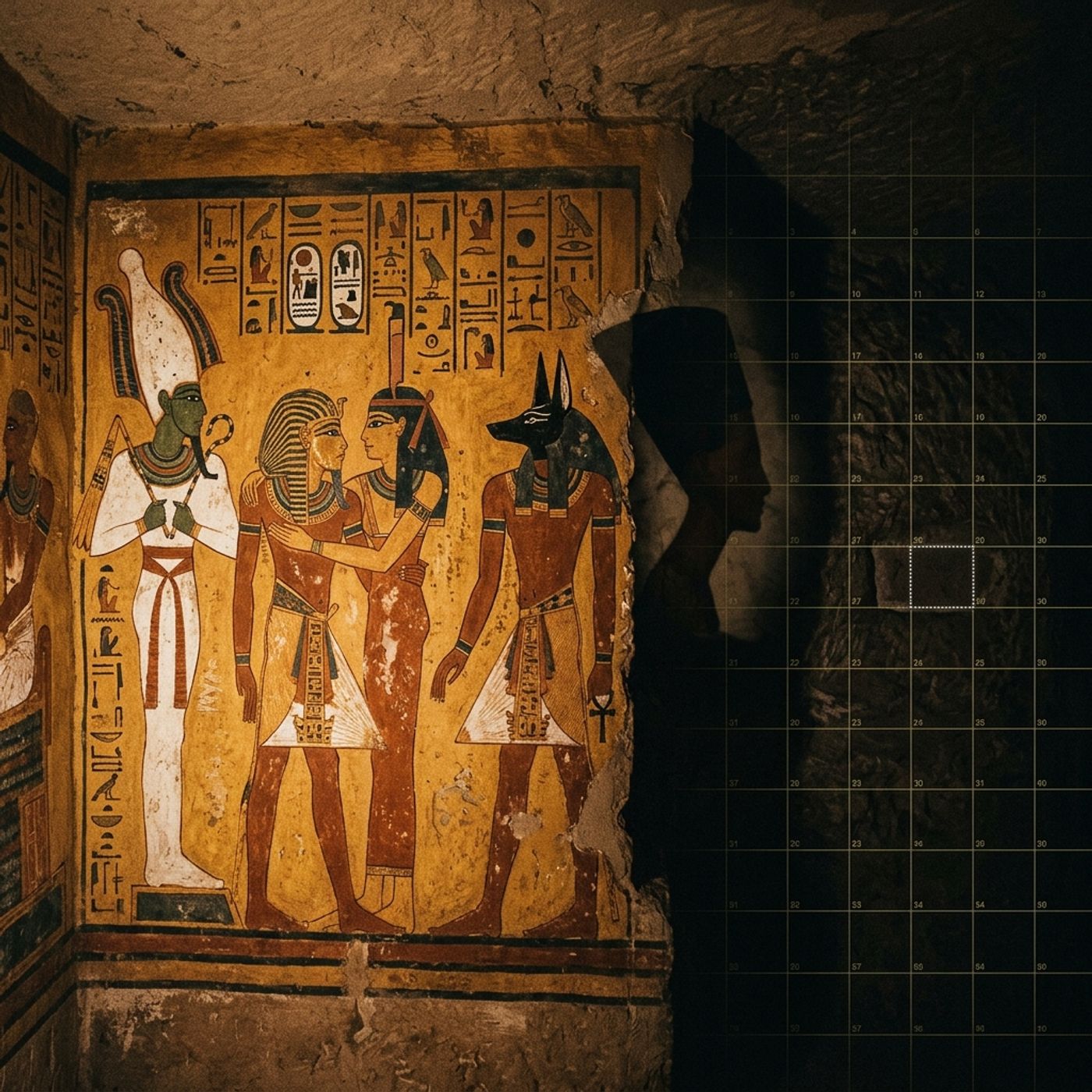
In September twenty twenty-six, a team studying Tutankhamun's tomb reported new geophysical anomalies north of its known rooms. Their proposed plan revives a remarkable idea: the famous royal burial may occupy only the outer part of a larger tomb made for Nefertiti. The search has already produced hopeful scans, conflicting scans and a published negative radar study. We follow the images and measurements back to their sources, then ask what the new work can establish, what it cannot, and what a careful physical test might reveal. Become a supporter of this podcast: https://www.spreaker.com/podcast/unexplained-history--6429156/support. 🎧 Unexplained History explores the myths, mysteries, and misunderstood moments that shaped our world. Hosted by Tom Mackenzie and Don Masterson. New episodes every week. Follow us on Spotify, Apple Podcasts, or wherever you listen — and uncover the stories history tried to forget. More at The Unexplained Company History, Mystery, True Crime, Conspiracy, Paranormal, CIA, Cold War, Ancient Aliens, Archaeology, Unsolved, Supernatural, Tom McKenzie, Audio Drama, Storytelling, Documentaries. This episode includes AI-generated content.
0:07Speaker 1In September 2026, a new plan of Tutankhamun's tomb appeared,
0:11Speaker 1beside a set of underground measurements. The rooms known since
0:15Speaker 1Howard Carter entered the tomb were shaded as familiar space.
0:20Speaker 1Beyond them, north of the painted burial chamber, several more
0:24Speaker 1shapes appeared. Some were shown with greater confidence. Others were speculative.
0:32Speaker 1None had been opened. The image came from a team
0:35Speaker 1led by Mamdou El-Damadi, a former Egyptian antiquities minister. It
0:41Speaker 1joined ground radar, older electrical surveys, and new microgravity readings,
0:46Speaker 1a method that looks for slight changes in underground density.
0:50Speaker 1Across the slope above and around the tomb, the investigators
0:54Speaker 1had collected more than 1,200 gravity measurements. Their interpretation suggested
0:59Speaker 1that the monument might continue into passages and rooms beyond
1:03Speaker 1the part excavated in the 1920s. George Ballard, the team's
1:08Speaker 1structural investigator, told Nature that he could see a corridor
1:11Speaker 1about two meters wide, apparently packed with rubble, leading away