
U.S. Right to Know articles · U.S. Right to Know
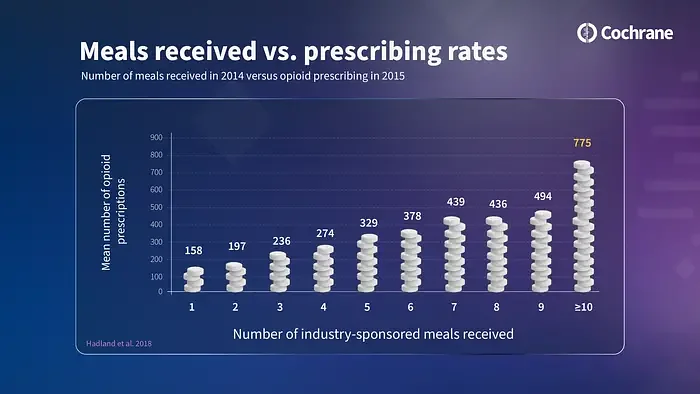
Gifts, payments, free meals, and other marketing ploys by pharmaceutical companies heavily influence doctors to prescribe more drugs, choose less appropriate treatments, and drive up prescription costs, according to a systematic review of 93 studies.
0:03Drug company gifts, meals and payments, to doctors lead to worse prescribing.
0:07Review of ninety-three studies finds. Key
0:14findings. Pharmaceutical marketing aimed at doctors, from gifts to meals,
0:19and payments, may increase inappropriate prescribing and the quantity and cost of
0:23prescriptions. Conflict of interest policies that restrict or manage interactions between
0:30pharmaceutical companies and doctors can limit prescribing of inappropriate drugs and over-prescribing.
0:37Gifts, patients free meals, and other marketing, ploys by pharmaceutical companies heavily
0:42influence doctors to prescribe more drugs, choose less appropriate treatments, and drive
0:48up prescription costs, according to a Systematic review of ninety three studies.
0:53These prescribing choices, can expose patients to drugs that offer fewer benefits,
0:57cause more side effects, or are unnecessary, while increasing health system costs.
1:03The review, published today, October 9th in the Cochrane Database of Systematic
1:08Reviews, found that policies restricting interactions between drug companies and doctors were
1:13associated with better prescribing choices, lower costs, and possibly fewer prescriptions.
1:20Overall, when doctors have more contact with drug company promotion, prescribing tends