
Two Faithful Brews and The Good News · Paul Purifoy
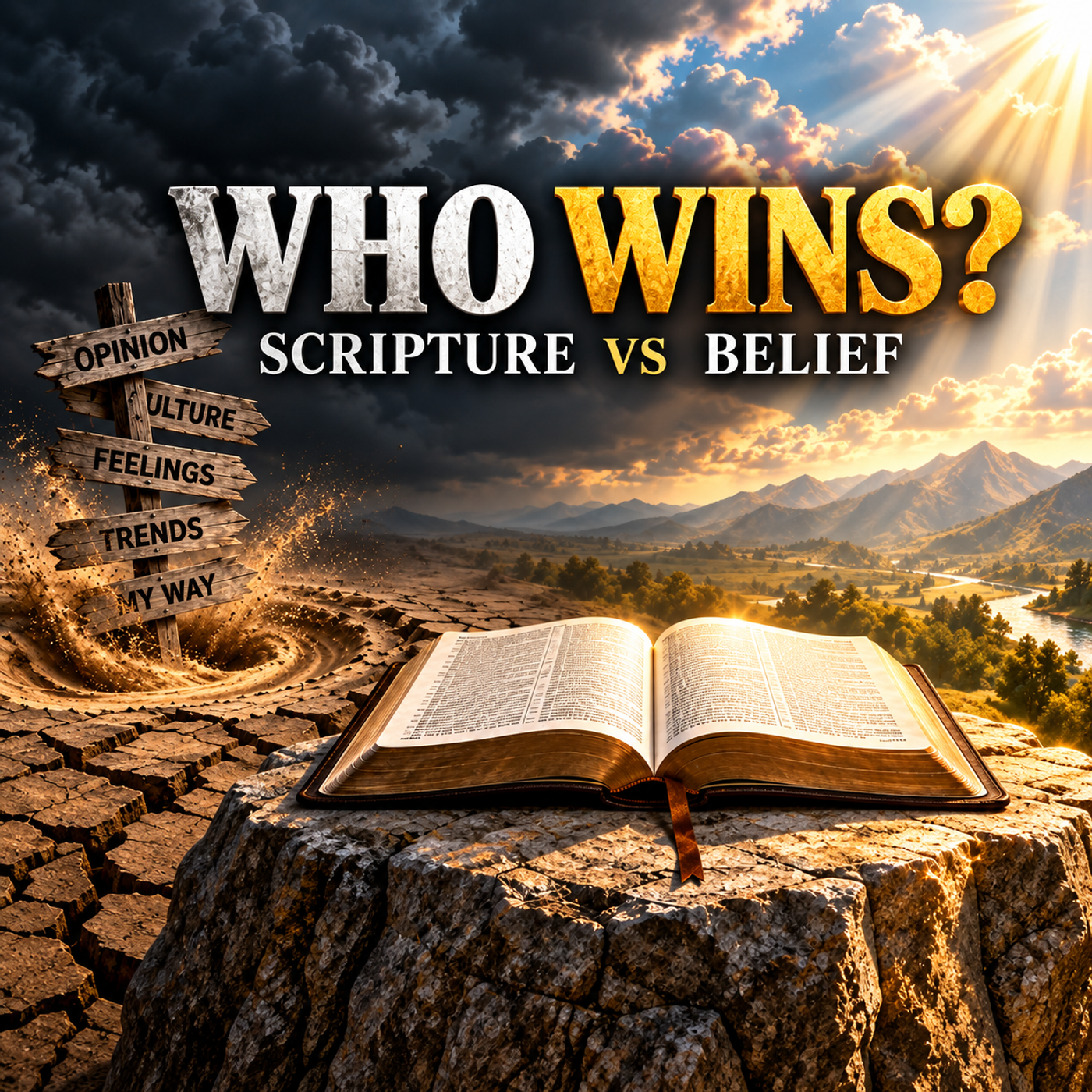
What happens when Scripture confronts something you have believed for years? Who gets the final word? In Season 3, Episode 33 of Two Faithful Brews and the Good News, Paul Purifoy and Uncle Royce begin in Galatians and Genesis and follow the covenant story from Abraham, Isaac, and Israel toward its ultimate foundation in Jesus Christ. The conversation begins with covenant and asks whether we can become so consumed with modern arguments, governments, borders, culture, and politics that we miss the redemptive story underneath it all. From there, Paul and Uncle Royce move into a deeper question about humanism and authority: what happens when mankind begins treating itself as the final authority for truth? That question does not stop with government. It reaches the church. It reaches denominational traditions. And eventually, it reaches each one of us. Uncle Royce talks candidly about his own journey from simply holding tightly to what he had been taught toward pursuing a deeper understanding of the character of God. The conversation then turns to Galatians 1, where Paul warns believers about being drawn toward “another gospel” and allowing the Gospel of Christ to be changed into something else. That raises a difficult question for the Church today: Are we faithfully proclaiming Scripture to this generation, or are we trying to make Scripture fit this generation? But conviction cannot become an excuse for hatred. Paul and Uncle Royce bring the conversation back to Ephesians 4:15 — speaking the truth in love. Biblical conviction does not require hatred toward people. The episode emphasizes that believers can reject ideas, condemn evil actions, disagree with religious beliefs, and challenge governments while still remembering that people are the ones Christ died to reach. And then the question becomes personal: When Scripture confronts my politics, who wins? When Scripture confronts my traditions, who wins? When Scripture confronts my desires or something I have believed for thirty years, who wins? Because if God is only Lord when we agree with Him, then we have made ourselves the final authority. The episode closes where the entire conversation ultimately belongs: Jesus Christ, the Sure Foundation. First Corinthians 3:11 declares that no other foundation can be laid than Jesus Christ. ☕ Two Faithful Brews and the Good News https://twofaithfulbrewsandthegoodnews.riverside.com/ Visit paulpurifoy.com to subscribe and receive the free ebook When Life Makes You Question: Is There a God? Paul's newest book, Evolving Calling: A Journey Through the Fivefold Ministry, is also available through paulpurifoy.com, Amazon, your favorite bookstore, or your local bookstore. You can also request it through your local library. Subscribe to the Paul Purifoy Ministries YouTube channel, follow on Rumble, and follow Two Faithful Brews and the Good News on your favorite podcast platform.
Paul Purifoy: Uncle Royce wrote a letter to the editor and calling out humanism by name. And it landed him right back in Galatians and staring down the question every believer eventually has to answer. When Scripture confronts what I believe, who wins? Welcome back to Two Faithful Brews and the Good News. I'm your host, Paul Purifoy and I'm here with Uncle Royce. And today we start in Galatians and Genesis, and we're tracing the covenant from Abraham all the way to Jesus as we ask a hard question: Is the Israeli-Palestine conflict really a political argument? Or are we missing the redemptive story underneath it? And from there we get into the truth versus humanism, borders versus boundaries, and while Uncle Royce believes the church has been raised in ignorance of its own foundation. And we'll close it out in Galatians chapter one, where Paul warns about another gospel. And we ask ourselves plainly, can we stand firm on what Scripture says? Without letting conviction turn into hatred. So let's get into it. Okay, so Galatians chapter six verse sixteen says, Now to Abraham and his seed were the promises made, and to thy seed, which is Christ. So Uncle Royce, when you're looking at Abraham, you look at Isaac, you're looking at Israel, you're looking at the covenant, how important is it that we eventually arrive back to Jesus? Royce: Well it amazes me all of a sudden I'm thinking of this Ecclesiastes and Solomon when he went through his life and went through all the stuff he did, finally got around to it and looked back on it, wrote the first chapter of Ecclesiastes, he said, I have decided that there's nothing in work but vanity. And without God it says nothing. And so when you talk about Jesus and the covenant, what you actually done is you've tied some things together there. And from Genesis to Revelation is as we go through Abraham, Isaac, Israel, and the promises that were made, the covenants that were in there. if that foundation is laid the way that it should be on Jesus Christ, Paul, I don't know that we ever actually left the foundation or if we ever left Jesus Christ in the covenant. I think probably the reason I say that is because he pretty much is. The foundation of the covenant. He is the redemption plan and he is Paul Purifoy: Yeah. Yeah. Royce: the one. So I don't know how we can say that we have left it and have to come back to it or arrive back to it, because all of it comes into the covenant promise. And every one of these, Abraham, Isaac, and even going into Israel, they are the benefactors of everything that covenant promise was. And God, said, This is where I'm going to place it. So To answer that question, I'd say I don't know that we've got to come back to it 'cause I'm not sure we ever left it. We're alpha and om Omega. Paul Purifoy: you know in the l in your letter with that the discussions of it we were talking in the about Ishmael and and everything so if wouldn't we miss the whole redemption story if this becomes nothing more than a political argument over territory because that's basically the discussion. Royce: that's secondary. That is very much secondary. And the reason why I say that is because it really should not hold the position of importance that it seems to hold in mankind today and in humanity and in the geographics of this world and this nation that we're in. I mean when you think about it, God placed that and built a home for man, and that's actually what we're talking about. When we begin to talk about that and we begin to look at it, so we talk about Abraham with Isaac and with Ishmael and the split that come in there and how that worked out. To me, it becomes secondary for the simple fact that the truth and factual happenings of that goes all the way back to Abraham and the faith with which Hebrews says that he had and he displayed, that was there. And had it not been for that and what he'd done, God would have probably had to done some re renegotiating on his thinking. The thing I I'm glad to know is that if that had been necessary, he'd have done it back before he ever did this and before Abraham ever showed up, that would have already been taken care of. So I I have to go that direction with it and say, Yeah, I understand what you're saying, but I also understand that there was purpose behind everything that God did and God's character fits right into the middle of everything that's there. And he's not going to change who and what he is. So Me, we have to look at that and think about it and ask ourselves, is this what we want? Did God give us what he needed to give us? Do we understand it? And then I'm gonna hold up. I won't place the church in there right yet, but I am gonna just kind of mention it in passing Paul Purifoy: Mm. Royce: because I do think that today, as we look at it, I do think there's some things we have to give consideration to when it comes to a blood bought church. Paul Purifoy: Sure. I I totally agree. You know, so that tells us that there is a historical dimension. There is there's Israel, there's land, there's covenant, but then you also have Jesus. You got the Messiah that's there. And Jesus does not suddenly appear in Matthew disconnected from everything that was before him. He's coming through that whole story, that covenant story that's there. So ultimately, this story is about something that's greater than any kind of geopolitics or anything that's there, Uncle Royce. So is it a story about whether God keeps his word. And that comes back to his character that you always mention and talk about a lot. And if God keeps his word, then we've got a problem in our modern culture because increasingly we have we are being told that. Truth itself can change. So we have to ask the question now who gets to decide what is true? Royce: Well hey Pilate asked that question one time, remember? When he asked Jesus. Paul Purifoy: It is. Royce: And what made him ask Jesus that question? You know what, Paul? I think I'm just gonna be real bold and say, I just think the man just didn't know. He said, I'd like to know. If there's any truth there, I'd like for you to explain it to me, please. I'd sure like to know because I'm trying my best to let you go and you ain't giving me much reason to. So so I mean Paul Purifoy: That's true. So Royce: to answer that question, that's kind of the answer I'd have to give there. Paul Purifoy: Okay. So you use the idea in that letter that you wrote to the editor of humanism. So you use that in your letter. So what do you believe happens when man becomes his own final authority? Royce: Okay, I'm gonna read something. Well you brought in truth while ago. You brought I'm just gonna read a little excerpt out of the excerpt out of this letter that I've got gonna be in a paper Sunday. And you might want to listen to it close so it does not elude you because I know with your mind in the condition it's in now you may be thinking about food. And I don't want you to get into that place. Now let me look Paul Purifoy: I don't add lunch. I'm good. Royce: at this. This said history is a strong teacher of absolute truth, which highlights the reality of the past. Yet mankind and humanity is slow to learn, never looking back, hopelessly unburdened by what has been. It's vested go back and find it. While not understanding that the garden of illusion will never deliver a truth or provide the answer to any needed actions that are beneficial to mankind. And so when we look at truth and we look at mankind, we look at the humanistic side of things and what's there, you're kind of getting a picture, of course there's more in here that kind of helps fill that out, but it kind of gives a picture of our government. Mankind, the leadership in our nation, even the leadership in the church, when you get right down to it. Because we we've got a place now that we have been taught certain things, our opinions have been formed, we have our knowledge, we love the knowledge that we've got, and we don't want anybody messing with it. Just leave my knowledge alone, lie to me and make me feel good. And that's kind of what we find ourselves doing. So what we see and we look at this now is we're seeing a lot of people and they've never took the time. I mean, I read a lot of letters in the paper and things like this. The church is caught up in areas I'm not sure that they care too much about the character of God and whether his character is worth pursuing or whether it's not. The thing that I am sure of is that many people in the church have been placed into a point of belief and understanding. And that's where they're at. So when they read those first words in the in the I'm going back to Genesis again. In the beginning, God created. We go back and look at those. We're looking at lot of people in the church today that's seeing that. And they're thinking, Okay, I can accept that. Yeah, I believe that there's a God. I believe it's there. But then I say, But what order do you place them in? Where's the boundaries? Where's the borders? Where's God at in respect to creation? Where is Before Christ, where's that at? What's back there? Where is that point of beginning that he's talking about? Was God in that point of beginning? Was God outside of it? Where was he? And that's what we look at. That's where the church is at. That's what we believe. But if we don't believe and understand God, Paul, we're not going to understand this nation. We won't understand our Constitution, and we will not understand our politicians and our preachers. And I don't mean that in a tacky way, but the thing is. If we don't have the right foundation and we don't have a firm grasp of what that foundation is with knowledge, understanding, wisdom, and discernment, we're going to find ourselves standing on quicksand. And I'll let it I'll let it sit Paul Purifoy: Yeah. Royce: there. Paul Purifoy: So do you so that means do you believe we're dealing primarily with political problems, or is the political problem actually just the symptoms of the spiritual problems? Royce: Woo man, you said a mouthful. And the reason why I say that and I and I move into that direction is the very simple fact that when you look at what we've got today in our social and our cultural established way of thinking today, what we've got, the mannerisms, the opinions that we have, the way that we have formed those opinions, our ideologies, our thoughts, our beliefs, our doubts, our fears, everything fits into an emotional standard. It's all there. Excuse me. It's in the church. It's in our government. It's in it from our Constitution all the way down. And I looked at this DSA of America Constitution bylaws and started reading through it. I'm gonna try to use a word that ain't too bad, but I wanted to go find me a toilet bowl and just go ahead and expel a few things. Paul Purifoy: Yeah. Royce: Anyway, with that being said, the thing that I look at is no, it's not. The government with the church, it's not the church with the government, but it is the manner with which we made our choices. I'm gonna bring choice in right here. Because that is exactly what choice brings us to. And the question that you just asked moves it to that place to where in order to answer it, we have to decide the best answer when we do, we make that choice. And it determines what's coming out of it, and the thing that's gonna follow pretty quick behind it is called realities of life. Okay. Paul Purifoy: So I th that keeps so that brings in makes me come back to chap Genesis chapter three, because the temptation wasn't just the fruit. There was an authority question that was underneath that. Who determines good and evil? Is it God? Is it man? And that I believe is what we're still wrestling with today. The same thing. And maybe it's the vocabulary changes. or institutions or technology changes that we have. But regardless, mankind keeps reaching for the right to say, I will determine what is good. Royce: that I look at. From the human standing point, God determined that before there was anything in the Garden of Eden. When you go back to the tree of of good and evil. Don't eat from that tree of the knowledge of good and evil. Do not eat from that tree. And he gave that to him. But now was he talking about the fruit? Is that where he was looking at? Or is he talking about the impact with which that fruit will move into the life of the individual if it is allowed to have leeway and man chooses to reach out and choose it? So I we go back once again, we take the tree of good life and evil, we take God's placement, we take God's commandment, we take where Adam and Eve are out, what they've received and what's there. We look at choice that's been placed, and we come down to where once again we see and Lucifer and Satan going fishing. They're fishing and they're hunting. Why? But I don't think we can place that in the Garden of Eden. I think good and evil was determined to ride along with righteousness and holiness. And it goes all the way back into the back yonder, into that point of beginning once again, where that I'm gonna call it a philosophy like for a lack of anything else, humanistic psychology, however you want to put it. But when you talk about good and evil, to give that a definition is something that I think we have to as humans and as individuals we have to give consideration to because I don't think God gave it the definition. I think God said, This is what it is. It's a choice that you can make or not make, but I'm placing it within the midst of my righteousness and holiness in the Garden of Eden, where chapter three is at and what's there And if you notice, there was one quick thing in the in the Garden of Eden where that was at, and one time very quickly it mentioned the tree of life. It was only mentioned one time very quickly in conjunction with what was there. And with that being said, I'm gonna try to cut this back and not talk too much on it. But it comes Paul Purifoy: Yeah. Royce: down. It comes down to a place of what does man think about good and evil? What does God think about good and evil? What does Satan think about good and evil? And how does each one of the three of us, the spirit of God, spirit of man, spirit of Satan, how do we deal with it? What is our perception of it? And how do we think it can be utilized in the realities of life? And I'll let it sit there. Paul Purifoy: Okay, so well that's gonna push it the push us into another direction because if we believe God's covenant and the purposes of it and the concerning Israel, the that concern remains significant. does that mean everything in modern Isra Israel government, does that mean everything is automatically right? So Royce: No. Paul Purifoy: so how would you how would you answer that then? Royce: I just did no. ain't exactly Paul Purifoy: Just no. Royce: right. There's a lot, there's a lot that's wrong. But the same thing in America. We can talk about Israel all we want to. But and people can say that, well, America's not that they're not, we're not even in the Bible. Yes, we are. If you don't believe it, go look up the Arkansas and you'll find it back in Genesis. Paul Purifoy: my. Royce: Yeah, I know. But the thing that I'm talking about, and I know that I know that old joke's older than the hills. I know that it is. It's been around so long, but then so's the tatters that's under the hill. They've been around a long time, too, long enough to be grown rotten. But in the processes of what we're talking about, we look at America, and I'm a firm believer that we're sitting here because God has called us into a place of protection. We have been the protector of Israel since 1948. That's a long time ago. But you look at the prophecies of the Bible, and how long did it take for that prophecy to come into fruition? Long time. That went way back. I mean, it's going all the way back to Abraham when you just stop and think about it. Paul Purifoy: Mm-hmm. Royce: And we look at that and move into it. So when we talk about modern day Israel, it's kind of like we are in the church today when it talks about the old gospel versus the new gospel and the old versus the new and what's there. Israel's in the same place. We want to throw the old testament and the commandments and the laws out. And Paul, if we do, we throw God out. Now just think about that. We cannot throw away our past. I mean, I know some of our astute people that runs for office, they have that they want to be unburdened by the things of the past when they move into the present. They don't want to have any responsibility. And doggone it, there's some folks that do a good job of just going in and tossing it back there and pretending that it never happened. And when people start talking about it, they just go on like they didn't even hear it. And where are we at? So that's where we're at in America. Same thing in Israel. But there's a lot of good stuff in Israel. A lot of good stuff in America. I get mad at some of our leadership. I won't call any names because one of them just really irritates me. But the thing is, when you go back and look at what they are accomplishing, their accomplishments far outweighs their demeanor. I mean, th they have a pretty bad demeanor. They demeanor that they get the demeanor they want to get, I guess. But the point that I'm getting to is when you look at what they have accomplished. It's just like under the last administration we had a nine percent inflation rate in America. Today is three and a half percent. And what do the people do in order to show their respect and their blessings towards that? And who do they give credit for? Not Donald Trump, not the Republicans. They don't even see that. Why? Because they are blinded is called They're in the valley of illusion. And the garden of illusion is there. they done left Eden paradise and find theirselves a place. So was Israel. God had them in that Eden paradise. And and how'd they how'd they wind up out of there? Why did He wind up having to take them out? I'm just going to tell you, like it is. I use this word a lot. Them people are just stupid. Paul Purifoy: Well, you know it's People don't really think logically in a in the right manner. And the reason I say that, you were talking about the inflation stuff a moment ago. What we're seeing right now with the cost of everything is not what has occurred in the past two years. Inflation's something that you're not gonna get true results of inflation for several years after things have started going south. So you're what you're seeing right now is the results of what was there previously, and you're just starting to get the fruits that are grown out or that are growing from that what was planted. And now we're having to take out the weeds and take out the mess. And you're not going to get it done in two years. It's going to take a full four years to try to get things shifted and going in a different direction. But then here you go, you get we're down to the next two years after this, into a new leadership direction. Who's that going to be in that direction? And this is why we stay in such a mess, because we can't get on a good path and a pattern, and things keep getting pushed back. So we end up with the mess that comes with it. But I don't believe, Uncle Royce, that covenant, going back to Israel, I don't believe that covenant means exemption from righteousness. The old testament prophets, they prove it. And some of the strongest condemnations ever spoken against Israel came from the prophets that God sent to them. So there are two extremes that I we need to avoid. One says biblical Israel has no relevance whatsoever. And the other says everything the modern Israel rela Israeli government does must be God's will. And I don't believe scripture requires either position. So would you agree that God's covenant, faithfulness, and a government's accountability to righteousness can both be true at the same time? Royce: that's conditional. I'm I'm gonna put that on a conditional basis and and I try real hard not to make an a summation and make a solid statement because once I do I'm hard to get off of it. So but I am gonna back up just a little bit and I'm going back to those two little words on the front page here under the plan for today where it said humanism and authority. And the fact that both of them are there. You mentioned them very briefly, but then we went on into modern Israel. But the thing that I'm looking at and what you're talking about now and bringing these things together is exactly what God understood and recognized, and why he recognized and understood that choice was absolutely essential for his created man, his created nations. We try to separate. Like we did back in chapter two un under the first couple of verses of chapter two, when we try to separate the cr the creations that was there between the earth and the home that he God created for man and for man himself that God created that he planned to place into that home that he created, which was two. We talked about this one time and actually got into a three one time, so we ki I kinda moved away from that 'cause I knew the only people that understood it was me. So anyway I'm gonna I'm I'm gonna go, I'm gonna try to go. But the thing of it is, and it's all the way through the Bible, but that seventh day, that Sabbath of rest that was in there, and where that works was at, where he rested from his work, they never understood or they never took a buck. But you look and you have to ask yourself, where does authority end and humanism begin? So when you put those two together, you have to come up with some kind of an answer. And what I see there is a fact that the authority with which is there, Paul is absolute. The power and authority of God is absolute. It is there is no give and take from any direction, no matter which way you turn in the 360 degree turn. you can put it into a spear, do whatever you want to do, and while it's invisible, but that's there. It's absolute. It does not change. So humanism on the other hand, It's kind of like the wind and the spirit. I remember when Nicodemus asked the Lord, he said, Lord, don't understand this business. Why I gotta be blood and blood and spirit. Why'd I have to be born of bond? And Jesus told him, he said, Well, he said, you take a look at that and you see the evidence that the wind is there. You see that evidence, but go out there and try to catch it or put your hand on it and see what you come up with. Gonna come up empty. And that's Paul Purifoy: Mm-hmm. Royce: when you talk about humanism. That's where you're at between authority and humanism and the fact that the two can be worked together, but Paul, I'm going to add a third word in here, and it's called faith. Paul Purifoy: Okay. Yeah? Royce: And that's what the church is on, that's what man is on. And when you talk about humanism, that's the other side of it. And faith is where you can find the authority and the foundation. So now I'll go back to you and see where you want to go with that. Paul Purifoy: Okay. So that makes me want to get away from the governments for a moment because one of the things that you wrote really wasn't aimed only at government. You had asked why is the church not visible and impacting our world as it should? So I'll turn your own question back to you there. Why isn't it? Royce: Well I'm trying to figure a way to answer this, staying out of trouble. I don't want to get into the but Paul Purifoy: No Royce: thing of it is the reason why is because the church has been raised and taught in ignorance. We have, I'm I'm staying away from the word stupid now. We have an ignorance. Now, ignorance is something people think about it. It's not that they're dumb or they're stupid or there's nothing there, it's just that they don't know. Why do they not know? Because they have for whatever reason they have never found the foundation of truth that they want to get on. And truth is God. God is truth. The truth is God. The foundation is what it's on. It's on that foundation of truth. And it does not change. Faith is the only way you can have it. Faith, I've said many times, is what heaven's made of. And who determines that? Paul? We do. We have to know what we're placing our faith on, why we're placing it on there, and then we have to activate that faith. It's one thing to believe. It's another to place our faith in it. If you don't believe in God and you don't believe in the character of God, you do not have faith. And I'm just gonna be straightforward with that. And that's one of the reasons why we're suffering like we are. The church holds a responsibility. I will I will be I venture to say. That the blood bought church is going to be sizably smaller than people would anticipate. The power and authority that comes out of that church is going to be astronomical for the simple fact that they will be on the foundation of God the Father and I am. So I'm gonna hold it there. Paul Purifoy: Okay, so as the church Royce: I got some more, but I'll hold that. Paul Purifoy: So has the church confused being accepted by culture with influencing culture? Royce: Church absolutely influences culture, but not so much as a part of it and going into it from that standpoint. If they go that way, they're in the humanistic side. That ain't church. So I can't I can't attach that to church. But if they do and they go into the world and they want to carry the characteristics of the God into the world and they want that to be their foundation. You can take one person, the Bible talks about how one person can put ten to flight, ten can put a hundred, a hundred can put ten thousand, and it just keeps on astronomically jumping, which is where the blood bought church should be. That foundation and the power and authority, that is where the blood bought church should be. So when we ask, is it having an influence? No, because of people sleeping. Okay, go Paul Purifoy: Mm. Royce: ahead. Paul Purifoy: So the do you think we've become afraid to say something is wrong because we don't want to offend anybody? Royce: Some people, to a large degree, I do I do very definitely think that that's quite possible and it does and not only do I think it, but I know it. Paul Purifoy: So that means we try to avoid having to tell truth at some point. So where's the line between Royce: Yeah, but they don't call themselves not telling the truth, they call themselves just being passive. Paul Purifoy: where's the line between speaking truth boldly and becoming unnecessarily combative? Now this is a good question for you. Royce: it's an excellent question to me, because I practice it often. And but the thing about it, and this and I have found even with me on occasion the spirit of God drinks down and just gives me a kind of tap on the head, which knocks my head loose and says, Shut up And Paul Purifoy: Mm-hmm. Royce: when that happens, I understand I don't know why I'm sort of like Habakkuk when he ha said that prayer got all turned loose with God and got to letting God have a piece of his mind, even though he couldn't afford it. He still gave him a piece of his mind and let him know exactly what he thought was happening between Nebuchadnezzar and Babylon and what was going on there. And then he got but he got smart, Paul. In that second chapter, he got smart. He climbed up on his watchtower where God had placed him. And he said, I'm gonna sit on this watch tire and I'm gonna look and I'm gonna wait and I'm gonna find out what God's gonna come back and say to me when he decides to reprove me. So he knew he was wrong. I mean, you just think about it, he already knew. I got this coming, but I'm gonna I am gonna vent my spleen, I'm gonna share this, and I'm gonna dump it all in kind of like Moses did a time or two, and even Job once or twice kind of got south on some things and so got down, went on a pity party. But the thing of it is that every one of them had one place to go and they knew when they did they were wrong. You know something? Today we are dead wrong in many things. And most of the time where we go south and we find ourselves on the south side of the street looking north, what we've have done is we're looking and we don't see the truth because we have illustrated our garden of illusion. Paul Purifoy: Okay. Royce: And the truth that we see is in that garden. Okay. Go for it. Paul Purifoy: Okay. so do you think denominational traditions sometimes have more authority in people's lives than scripture itself? Royce: yes. We can get into the denominational end of it or we can get into the doctrinal end of it. We could go to A. W. Tozer or we could go to what's that man down in Houston that's got that big old church at the Astrodome. I can't ever remember it. Whoever he is I Paul Purifoy: Yeah, Joel Osteen. Yeah. Royce: I mean, if you set those two down in the same room, I feel sorry for Mr. Osteen. I really do. Because What you see come out of his mouth and the books he writes, and I am gonna say this about him is just plum stupid. Makes no sense. Paul Purifoy: my well. what's one of my favorite sayings is idiots you can educate, crazy you can medicate, but you can't fix stupid. So there you go. Royce: Well, I well, the only thing that's gonna fix it, and here's the thing, i it's God. I mean, it's kinda like sin. Sin and stupid go together, and if God can fix sin, he can fix stupid. The difference is that once God gets through fixing stupid, it ain't no longer stupid. Now we found we have found truth. Paul Purifoy: Yeah. Royce: Go ahead. Paul Purifoy: So I do want to want to dig a little bit deeper in that because you have been in the church for several, years. and I say that with a loving heart. So you Royce: I don't know how you meant that, so I'm gonna take it with an open mind. Paul Purifoy: So you and when you were younger, did you lean more toward the traditions of what was there, or did you actually lean more into the scripture? And how did the traditions of the church really affect you? Because, you know, over the last few years here recently, you've really come to a more of an enlightenment, or the is the word I'm gonna use, where God's really revealed some new things to you. So Can you really kind of go deeper into it with how the tradition really affected you and the church versus what you found that God has revealed to you over the last few years or so? Royce: Hm. Thinking about the west best way to go about sharing anything on that. The big thing for me, very definitely when it comes to doctrinal denominational teachings, sound biblical doctrine is absolutely faultless. There is no error in the truth of God's word. There is no error in the character of God. There is no error in anything in the promises and covenants of God. There is no error in the placement in the lives of the individual with God. That is absolute. It is perfect, and it is without repentance. It is a redemption, a rectification. The thing is now that when you take that and you move to the other side, now I'm going to go over there for a minute and try to get into that. But then you move into the denominational side. And that's when you wind up. You just look in this world at these forty something thousand, four thousand, I don't know, countless numbers of religions. They're countless, but there's not very many actual Christian I hate calling them religions. I just I hate that word when it comes to Christianity. That's just not one that I just that just not compatible. That's kinda like putting partners with somebody that's a worker, mate work mate or something. But When you look at that, you've got to pull it to a place and understand it for what it is, and that is that those doctrines and those denominations, if they're not biblical, they're going to move us into another denominational teaching. And it may have a foundation that we're looking at on that foundation of faith that man gets into with God. But the thing that happens and people don't think about it, I don't believe, I may be wrong. I could be proven wrong, probably if anybody's listening to this, they're probably gonna write and say something nice, tacky to me. But the thing of it is, that when they get into those places, they have the concept of what is there, they believe that to be, and they don't want us fooling with it. They come to that understanding and that's a belief. And I did that up to 60 years old. I mean, I Paul, I firmly I'm and I'm gonna say this to some of our Baptist friends and some of the others out there that are in there, are Christians in those denominations. There are Christians in there, but it has nothing to do with the denomination. It has everything to do with their belief and their faith in who God is, their faith in who Christ is, and it's hard to believe in God and not believe in Christ. It's also hard to believe in Christ and not believe in God. It's those two are The they're they're kind of there and the spirit in the middle of it. So that's something that we look at. But what that does is that moves us into a place of what we consider the knowledge and understanding we got, because that's what I was taught. So up to 60 years old, I did everything the church needed to be. I believe I was saved. I believe I was a Christian, but I was barely. I was just barely. And here's why I'm saying it this way. Some people say, well, either you were or you weren't. Well You know what? If you and I were judging me, you'd probably determine putting find me a nice hot seat and tell me, I go, why don't I go visit there? A while. Some people would probably say that to me. But then you've got a few others that say, Well, you know, God understands what you're doing. He even understands what you're saying and how you're acting and things that's there, but he's also looking at tomorrow. But he's looking at the intent of your heart. Does the intent of your heart is it to do good, or is the intent of your heart to do bad? What is the intent of your heart when you make your choices? And that's where I'm going to go right now because when we get to that place and it's 60 years old, it's just like, I mean, it's almost like the Spirit of God verbally spoke to me and said to me, When do you plan to find out who I am? And that was a wake-up call for me because it caused me to go back and make an assessment of Ross Purifoy and ask myself, What do you think of yourself? You don't even understand yourself if you can't understand God. And that's when at 60 years old I started trying to pursue and find out more about the character of God and recognize Him for who it is. So with that being said, I'm gonna say that at about 60 years old, I recognize up until that point. Don't mess with my don't mess with my beliefs. Leave them alone. Just keep your hands off of Okay? There Paul Purifoy: All right. So Royce: you are. Paul Purifoy: well, Galatians chapter one, verses six through eight, Paul warns about another gospel. And you've talked a lot about a another gospel before. And you talked about what A.W. Tozer had to say, and I can't recall the exact statement there, but verse seven says, There were those who would pervert the gospel of Christ. And the Greek there is to turn around or to transform or to change something into something else. And that's where the church has to be careful. our job is not to make scripture fit the generation that we live in. Our job is to faithfully proclaim the scripture to the generation that we live in. So we have to really be sure we get the right context into this. And that's where I've I'm afraid that we try to adapt too much to certain things, Uncle Royce, that I've seen and places that I've gone. So let's put another tension on the table here. Because somebody can hear an episode like this and walk away angry at everybody. And that's not what we want to produce. So how do we stand firmly for what Scripture says without allowing conviction to become hatred toward people? Royce: Well, you know what? I'm gonna I'm gonna move that into a encouragement with a challenge. I I'm gonna hold those and I'm gonna go to that first chapter of Galatians and I'm gonna read some of those scripture on the front end. You probably gonna have to put a second deal up on this and let people know. You may be getting ready to go there now, I don't know. But as we go in we look at it and see where we're at and where we're going to with this and recognize it for what's going on, Paul was not shy nor was he bashful, and those people that thought, well, he's not he's not wanting to hurt people, he's not wanting to do this, he's not wanting to do that, they need to stop and think that he pretty well laid things out right solidly and straightforward. He didn't mess around a lot a lot with anything that was there. So when he went into Galatians and he began to move and make his introductions and began to talk, it was at a point in time where he had already gone through quite a bit and learned an awful lot about himself. But his gr background was very solid in the law, in the gospel, in the truth of the old testament, in the Ten Commandments, and in those things that were there, because he lived in those. And for a long time he always believed that he was doing God a favor. By going and going after the believers and those in the church that had accepted Christ. And he actually considered that to be a area that had come into the to the to the Israel and come into the Jewish mentality and the Jewish people that was a challenge to it, and he intended to nip it in the bud if he possibly could and stop it. So to say that he didn't get on a few toes here and there. Kinda like Christ, if you look at it and read it, you'll find out that kinda like Christ, it's the same story. Now, there was a compassion. The thing that made a difference in Paul, is I'm gonna say this, it's the spirit and the way that the spirit moved and what the spirit did and didn't do. So I'm gonna read these scriptures. Then if you want to come in and kinda get in with them and let's discuss that'll be good. Paul Purifoy: Yeah. Royce: But I want to go down to that sixth through the eighth verse and I want to read in. And I want to place them into this. And as I do, we might wind up back in Acts chapter twenty-eight, going through one or two things. But as we look at this, Paul was very, straightforward, and I'm not entirely sure that Paul was worried too much about hurting feelings. When he goes to the church of Galatians, I think Paul had reached a place he had some he had some evidence of things that was happening in the in the world and what was taking place, and he pretty quick come to the recognition. that if this is allowed to continue, it will destroy the very gospel that I'm trying to carry to the people. And this is a place where he had taught the people and brought them into a place and he had spent, I don't know, a couple of years in with the people at Galatia. When he wrote this book, he had he had brought these people into a place in the Lord that they were doing pretty good. But then in that sixth verse, he just came up And he just let them know, hey, you know what? There's not another gospel. We can look anywhere we want to and we'll find it, to be that there's one. There's only one Jesus. There's only one place to go. And Jesus told us, He said, Go into the world and teach the gospel. But if we don't know Paul and we don't understand, then we're going to have a herd hard time carrying the truth. If we don't have the truth, How in the world are we going to expound it to somebody else? This is this you'll find this is an area in the church we could get into a long discussion with as to why I think there's some shortcomings in the church because of this. But he mo he came to a point and looking at the people and he recognized something happened. These people have not picked up on. I mean, we went to a lot of trouble to plant and put them on the foundation of Jesus Christ and give them the gospel for what it was. But then he wrote this, he said, I marvel that you are so soon removed from him. Now, who are we talking about? We ain't talking about Jesus. We're talking about the Holy Spirit. This ain't Jesus we're looking at here. But he said, For he called you into the grace of Christ. So when you look at that and think about it, and he said that Now he said you've been removed unto another gospel. Now We take time to think about these and look at them a little bit. And I don't want to rush this, but I want to give it a minute or two for people, if they're hearing it, to think about what Paul is saying, because this is a man that's going out and killing Christians. He was dragging them out and he was taking them and he felt like he's doing God a favor by doing it. But now his eyes have been opened and he's found the truth. And that's what he shared with them. But then he said, You moved it unto another gospel. Then he said, which is not another. But There be some who trouble you and would pervert the gospel of Christ. Now, I can't speak for everybody, but for me, when I read this, I'm looking at a Trinity that's at work here. And I'm seeing it. And I'm seeing Paul caught up in it. And I'm looking at that. And he goes on, but then he goes a little further, and then I'm going to turn this back to you because I know you've got some thoughts here. This is important. This is stuff that we don't want to lose. But he went on in that eighth verse and he said, But though we, talking about him and his people that are there with him, or an angel from heaven, preach any other gospel unto you than that which we have preached unto you, let him be accursed. That don't sound like a man is trying to make friends. That sounds like a man that's telling people you need to wake up and smell the coffee or Paul Purifoy: Yeah. Royce: look at the roses or whatever's there. And pull yourself together and recognize what it is you're seeing, what you're hearing, and what you plan to do with it, because you have food around, let some people come in and feed you and smoke you and put a blinder on you and lay deception on you to the place to where, hey, this sounds good. I believe I'll go with it. And he said, then he went on and he said, And as we said before, so say I now again. And we're getting on people's toes now. We're starting to challenge them. And it says, if any man preach any other gospel unto you than that you have received, let him be accursed. Now I'm gonna go ahead and stop right there. I'll let that tenth verse sit, and we look at it later if we need to. But we're looking at a situation and a people, Paul. And we're looking at a Paul that delivered it to him and placed them to a place, and he said, You know what? I gave you the truth. You took the truth, you had it for a while, but then you let somebody come in and knock it, slam out of your head and put something else up there. And what you got happening now, and this is where I get in trouble with people. But what happens now is you like their truth better than you like yours. So you done climbed all the way out that Eden paradise you was in. You need you done got out of that. You done moved into a place now where we're in illusion. Deception is set in and now you're buying into a lie. You're just flat buying into a lie. So what have they done is they moved them from the foundation of the gospel to a foundation that's set on quicksand to a place now to where there's nothing gonna stand, and whatever you build on that quicksand, it's gonna start to sink. It's gonna and you leave it like it is, and sooner or later you're gonna find that the truth is gonna be buried underneath the quicksand. It's gonna be deep ended. It's still there. But you can't find it. And that's kind of what I'm saying. So w when we talk about how can we do this without alienating people, Paul, I'm gonna be honest with you. There's a few people in the church that I certainly hope I alienate them. I don't mean to be tacky, but they do and say things that I look at it and I think, where in the world did they get that from? Now it's your turn. Paul Purifoy: Well, you know, as I had said earlier, I believe what we're find is with what you were just reading in the scriptures, we the church has tried to make the scripture fit our generation and how everything is. But we've we as believers have got and I use word believers versus Christians, because Christianity truthfully in the scriptures when it was started being used it was used as a derogatory term. And There's nothing derogatory about me. I am a child of God and I am in the a child of the king and in righteousness. And therefore, there's nothing derogatory. There's just only hope and glory. Amen. But we've got to be able to proclaim the gospel and the scripture, how it is, to the generation that we live in. We can't make our scriptures fit the generation. And I think that's where we get into a lot of trouble. But how we are able to stand firmly for what Scripture says without allowing conviction to become hatred, that's the biggest question there. Is I believe we have to go back to Fe where's it at? Ephesians. And of course it's the apostle Paul. Royce: Chapter four. Paul Purifoy: Yeah, Ephesians 4. Yes. Ephesians four. Where it says speaking the truth in love. So we're not truth or love, but truth in love. So we can condemn terrorism and we can do it without actually hating people or even a group of people. Because it's not the group of people that's causing the problem, it's the actual actions of just a few people that's decided to be a terrorist. But we can oppose anti semitism. Without actually becoming hateful toward Arabs. We can disagree totally with Islam, but we can still love a Muslim enough to tell them about Jesus. That's not hate, that's love. And we can even criticize government without actually despising the human beings that are in leadership. And we should. We need to be praying for our government and our leaders. The good, the bad, and the ugly. That's our duties. We should we should love them enough to pray for them. And so if our biblical conviction makes us incapable of loving somebody Christ died for, something has seriously gone wrong with us. Royce: I do believe this, we are human. I mean I I'm not gonna try to defend myself from the fact that I'm not a human because I am. I have emotions like anybody else does. I have thoughts, I have beliefs, I have feelings. I have what's the word I'm looking for? my opinions are very solid. I think my opinions are based on foundational solidity. I don't think that the I think the foundation of the covenant and the promise that's there, and I think most of basically I do believe set on the character of God. How well do I display those? This is where you come into a place to where We have to recognize, that's why I said a while ago, I marvel that you are so soon removed from him, the Holy Spirit. When the Spirit goes, emotions are going everywhere. You let you try to handle this word without the Spirit of God giving it to you. I don't care. I've done it so many times, and I'll make you a promise. Before I said very much, I'm gonna get on somebody's toes and I'm gonna say something, they're gonna take out a text. And the next thing you know, they're ready to read me the right act. Or just walk away and pretend that I didn't say nothing and have no use for anything else I say. That's their privilege. If they want to do that. The thing is, and this is the difference, I can be in that place, but you let that spirit of God begin to take this word and move into my heart and move into the intent of what is there. And all of a sudden you can take the hardest statement that you want to make. And the Spirit of God will take that word and that truth and that statement, and that person may for five minutes be upset with you, but five minutes after the fact they're gonna say, Well, you know what? I didn't care to hear that, but by golly, he's got a point. Why? Because the Spirit of God placed a seed. S E D. Placed a seed. Now, when that takes place, we find something else that's going on. And this is the part. Sometimes that Spirit of God will allow us to become a little bit abrasive. Might want to take some sandpaper and begin to scrape a little bit on that soft skin and where that feeling is sitting down there on that sleeve. Might want to take you a little bit of detergent and wash it a little bit and stuff like that. Because what winds up happening is that it's no longer just a seed that's been planted, but now that seed becomes seeded. Not S E D E D, but S-E-A-T-E-D. And it is seated along with the seed and it begins to bring nourishment. It begins to move into that place. So five minutes ago where I was mad at that person, I want to go talk to him and find out why he did it the way he did. I want to understand what he did, why he did it, because I intend to do the same thing he did. And that's the difference of what I see. And what you were saying a while ago, I don't fault you. You are in a place to where you can probably do those things. At eighty one years old, I'm too old to change my stripes. I ain't a leopard. But if I was, I don't know if I'd change my stripes. I'm sorry, it's a tiger that has Paul Purifoy: No, I don't think I was saying that Royce: a sp has this has the stripes. It's a leopard that has the spots or the vice versa. Anyway. You got one's got spots and one's got stripes. Either way, whichever way they go, I ain't gonna change man. At my age, it's probably not going to. I don't think God's gonna turn me into a mild mannered kangaroo. I just don't think he is. Paul Purifoy: Well that's why I said I don't think I was saying that you have to change because the truth is spoken in love because the love part is you're willing to speak the truth even in the circumstance or as hard as it is to swallow that peel. Royce: But you see, every time you say that, you're bringing choice and emotion right straight into your statement. You're not you're you're using the words and adding to it. And that's the point. When you take it away from the spirit, the minute you remove it from the spirit, that becomes works in your life. And if it's works in your life, no matter what your intent is or how you want to do it, just as soon as we get a hold of it, we open our mouths, we let things happen just like Eve did in the garden. And what winds up happening, the best laid plans go south. And that that's the only Paul Purifoy: Okay. Royce: reason I'm saying what I am. Paul Purifoy: Okay, so let's go a s a step more into it. Don't you first have to make the choice to allow the spirit to work? Or if the spirit convicts you and tells you to speak something, don't you have to first choose to do that? Royce: And what happens when your daughter comes up to you and says, Daddy, I just wrecked your car? Paul Purifoy: I have to really choose to think hard because I have a tendency to wreck the Royce: Now, where did the spirit go? That's the point I made. Emotions, get in the way. Human emotions are. Now everybody Paul Purifoy: But you first have yeah. Royce: don't have it, but by golly, and I don't care who they are, I don't care if it's you, if it's God, or whoever, the minute that the emotions, even God got angry, he even divorced his people. Think about that. Even Jesus come back and called all them people sitting in that n in under his ministries. He called them snakes and he called them vipers and he called them liars and he called them hypocrites and well I can just keep on going. But the point that I'm getting to is that that's in love. So the thing I'm gonna say, love is wonderful. Satan will kill you with it. That's the point that I get to. And when I say that, what I'm saying is I don't care how good we plan to be. If we let life come at us and we don't let God be the one and learn how to count to ten, we're going to open our mouths. And when you got something to say and you see stuff, if we're not careful, we're going to answer it in ways that may be true, but when we apply it, don't go across too well. That's what I say many times. Preach the truth all you want to, but it's how you apply it that makes a difference. And that's kind of what I'm trying to get to here. It's not But the thing about it, Paul, I don't care who we are. I do not care who we are. We are not gonna get out of this world in perfection. We're just not. It's a given. I want to read something to you right quick. talk about God and you know, we talked an awful lot over the years about borders and boundaries and the things that's there in the creation with God and how those things work. But Oftentimes I got to thinking about those two words because a lot of time we use them kind of favorably with each other, we put them in kind of the same place. But the truth of the matter is there's antagonism between the two of them. We don't think about it. But when you go back and you begin to look and start defining definitions, Borders, according to what I found, are driven by fear and scarcity. Boundaries are rooted in love and respect. Borders block access to God's world. Boundaries preserve the sanctity of God's design. So now when you look at those, you can readily see where they're compatible in some ways. They play off of each other in other ways. But if you separate them and try to move them together and move them in a different place, they'll carry you a different direction every time. So how is it that we can talk to God with his creation and understand that there's boundaries and there's borders? And they both work in God. He has both of them working in him. That's kind of a challenge, huh? Paul Purifoy: yeah. Absolutely. So here's where I wanna make us both uncomfortable here. Royce: Well, I don't know if I can get much more one, Carford. You done got me so defensive, I don't know which way to go. It'll last for every bit of fifteen seconds. Paul Purifoy: So there you go. So we've spent a lot of time talking about governments and acting like they can overrule God. in a previous episode. We've mentioned it today. We've talked about the culture doing it, we've talked about intentional and in international institutions, we've talked even talked about churches changing things. But let's turn The mirror around for a moment. Can we do the same thing personally? If God says one thing and I decide I'm going to do another, I'm not operating from the same basic assumption. I know better than God. Can we do that same thing personally? Royce: Yes. Paul Purifoy: And is that ultimately what rebellion is? Royce: well now that's a conditional deal because re rebellion just is to me, the word rebellion states, I know this is wrong, I know I shouldn't be doing it, but I'm gonna do it anyway. That's rebellion. rejection has a whole different ball game. When you move into that, it means that I'm not throwing out what's there, but my rejection comes in the fact that I feel like I have a different direction. that has better benefits is basically what it comes down to. I'm trying to put down in just plain old English here. But rebellion means that we know better. God's law says do not. God said, have no God before me. God's law said you need to love your neighbor as you love yourself. That's the two commandments that God said if you build your relationship and foundation on these two commandments, you will do those things that are pleasing to me and I will write my laws on your heart. And you will by nature do those things that I want you to do that fit with where I'm at in the holiness and righteousness that I'm in. If I reject it, God says you just close the door and the border shows up. And now you just built a wall, kind of like the veil that was built that was crashed when God went to the Christ went to the cross. You just put that in there. And what that does is it makes it impossible for my blessings to flow. And so what we do sometimes we build our own walls and we become our own worst enemies. I hope that helped you a little bit on that. And you hadn't maybe give you another question. Paul Purifoy: Yeah, no, that that's good. You know, and that's where this kind of brings us home. So when scripture confronts my politics, we have to ask the question, who wins? When scripture confronts the traditions that we have, who wins? When it confronts our desires or confronts something that we believe for 30 years, who wins? If God is only Lord when I agree with him, then he's not really Lord. You know, that that's that simple when it comes down to the individual. But God is still God. He still sits on the throne. He still has his character. He still has everything that he displays and shows us. He's given us the rules, the laws, and the and the things that we need and t and has taught us how to live. So I I've made myself Lord when I don't allow him to be there. And I ask God just to endorse what I want to believe. And that's something totally different up a royce. And I think that's one of the biggest things that we see today. What do you think? Royce: Yeah. Well, I'm fixing to read something out of a book that you had. I believe it or not, I have been doing a little bit of reading and I'm on share a little something here. But it said the church is not a static institution, but a living and evolving organism. It is not exempt from the transforming process that marks the world around us. In today's ever shifting environment, characterized by constant changes. The church must remain vigilant and relevant, all the while upholding its timeless message of truth. Now, somewhere along the way, you wrote that, Paul. I don't know, Paul Purifoy: Yeah, that's good. Royce: I don't remember where I got it, but I remember that you got it. And I've got several things that you've had in your books that I've used in places and things is there, but there's some of that stuff that just kind of stays with me. And but see that there there's a lot of truth in that because we're talking about a blood bought church. That's what you're having reference to right there. And a church that's responsible in the individuals that those stars you were talking about that makes up that body, that individual Paul Purifoy: Mm-hmm. Royce: body that makes up and it d becomes a church body, and that is the blood bought church, and it's made from the individuals that carry this gospel forth, but they do it in a unity. And in a way that the Spirit of God is the overseer, and the Spirit of God is the one that gives the message, shares the message, delivers the message, and lets it be implanted into the lives of those that hear it. And that's what the church basically is supposed to be doing. So congratulations. Paul Purifoy: So you've used the term for years and I've used it, the sure foundation. I mean that's even what the first book I've got, The Church and Flux, Building on the True Foundation, I guess is what is actually there. Royce: Yeah. Paul Purifoy: But first Corinthians chapter three verse eleven. For other foundation can no man lay than that is laid, which is Jesus Christ. So bring this whole conversation home for us. With everything we're watching happen in the world right now, what does it actually look like for a believer to stand on the sure foundation? Royce: Okay, I'm going to read a little bit more that's in here. I'm just gonna throw a little bit more and then I'll put a thought or two behind it. But it said this text highlights the dangers posed by modern influences that dilute the fullness of the gospel and urge believers to deepen their understanding of scripture, stand firm in faith, and resist the deceptive forces that seek to lead them astray. So, with that being said and bringing this into a place, Paul We cannot get away from our responsibility. We have no choice if we are Christians and we feel that we have been called of God. Like in my place, I know for a fact that He's called me as a watchman and that I share and try to look out for tomorrow and share. So sometimes I do get on people's nerves. I get on their toes and I create animosity and I do things for a purpose. I do it for the purpose of causing people to stop and think. Sometimes in the church we have to do that. But those dangers that are there, that's the very thing that we have to fight. That's the thing that God has called us. And how do they get there? They got there because Satan, we're in his world, we're in his domain, and he brings it in because he believes he can do it within us. He goes into that spirit of man and he said, if I can just take that spirit of man and I can cause him to move the direction that I want him to. believe what I want him to believe, he will tell God no, and because of his choice, God will let him and I'm going to win. That's what, that's what Isaiah chapter 14 tells us when he had about three verses that I'm fixing to put my throne up yonder above God's. I'm fixing to Paul Purifoy: Yeah. Royce: move it up and I'm going up. But that's what we're looking at here. This is what the church fights today. This is what you and I fight. This is why we're doing what we're doing. When you just stop and think about it. We would not be doing this if it were not for the fact that Satan has fought so hard and the church has helped him. It's time for us to stop helping him and start fighting him. And I don't care to be nice to him. Paul Purifoy: Yeah. Royce: I do know this. I know one thing that in the spirit of man there lies the choice that we can make. We can either rely on the Spirit of God or we can rely on the Spirit of Satan. But one of the two is going to determine the choices that you and I make and that the churches make, and that will determine the blood bought church. And that's it. Paul Purifoy: Okay then. Royce: That was very simple, wasn't it? Paul Purifoy: Yes, sir. The foundation was never up for renegotiation. Abraham, Isaac, Israel, the covenant, all of it points straight to Jesus Christ, and no other foundation can be laid. But here's the warning Paul gave the Galatians, and it's the same one for us. It doesn't take much to be removed from grace and turn toward another gospel that just sounds good. Truth in love is the only way through. It's not truth without love. It's not love without truth. If our convictions make us incapable of loving somebody, Christ died for, something's gone wrong, and it's time to reevaluate. So subscribe and hit the notification bell on Paul Purifoy Ministries YouTube channel on Rumble and find two Faithful Brews and the Good News on your favorite podcast platform as well. And if you subscribe at paulpurifoy.com you'll also receive a free e-book when life makes you question, is there a God? And that's a gift to you. And folks, I've also got a new book that's out, The Evolving Calling. You can find out more at paulpurifoy.com or go to your favorite bookstore, or even better, go to your local bookstore. And purchase from them you can even go to your local library and request that they pick it up, also. And folks, I'm not trying to pressure you, it's just an invitation here. So we just want to build your life, help you build your life on one foundation that will never shift, and that is Jesus Christ. So we want to wish you all the best and God bless.