
Two Faithful Brews and The Good News · Paul Purifoy
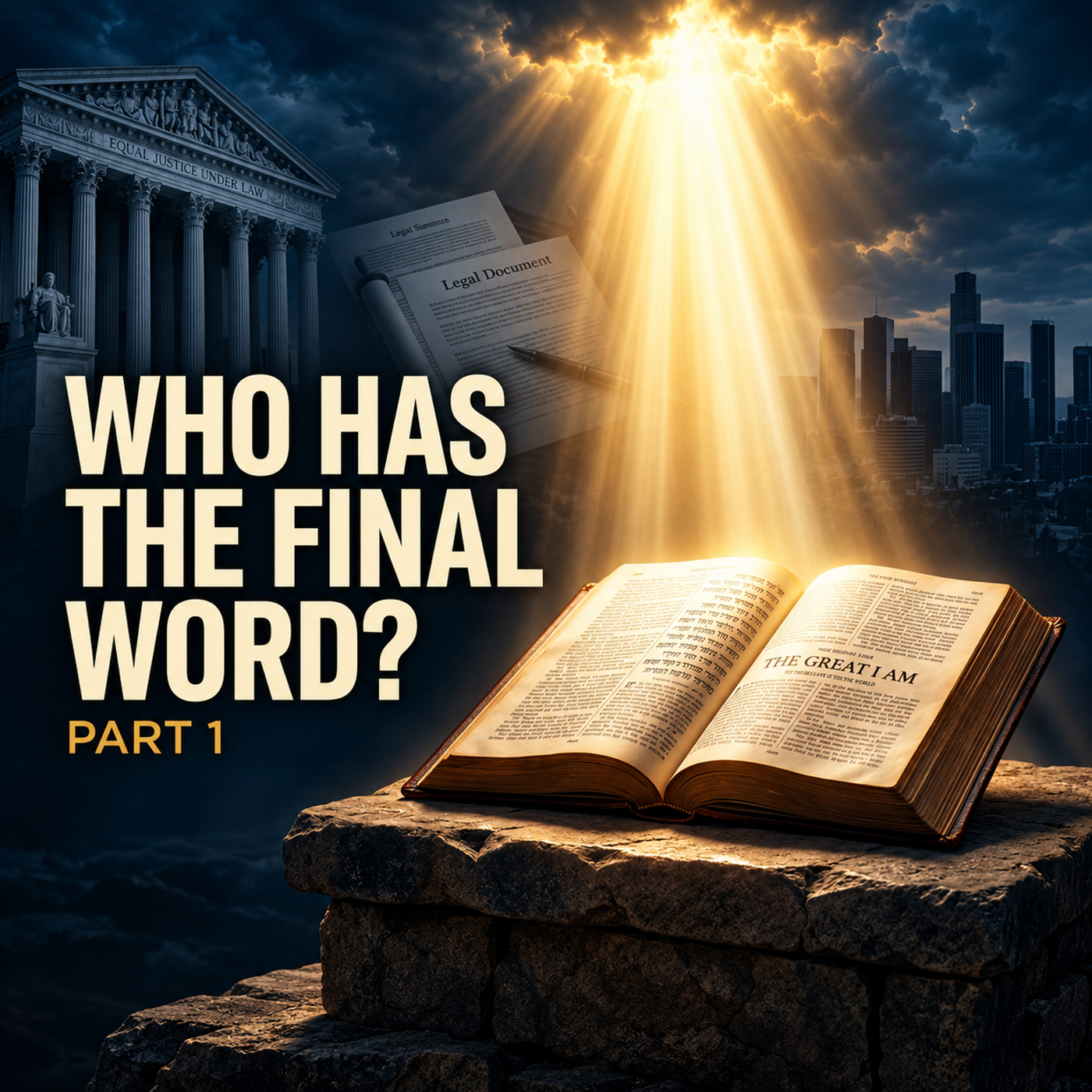
Can mankind overrule God? Or does man simply suffer the consequences when he believes he can? In Season 3, Episode 31, Part 1 of Two Faithful Brews and the Good News, Paul Purifoy and Uncle Royce begin with a question that reaches far beyond politics: Who has the final authority? Government? Culture? The church? Our feelings? Our traditions? Or God? Beginning with the declaration of Exodus 3:14, “I AM THAT I AM,” Paul and Uncle Royce explore what it means that God is not merely the God of biblical history. He is not the Great I Was. He is the Great I AM. The conversation moves into biblical authority, Abraham, Genesis 12, Genesis 15, covenant, government, culture, the church, and the danger of treating something God established as though mankind has the authority to redefine or cancel it. The episode also turns the question inward: before we point toward governments, political movements, nations, or culture, where have we known what Scripture says and still allowed our opinions, emotions, politics, traditions, or comfort to have the final word? This is ultimately a conversation about authority. If God is truly the Great I AM, His authority does not disappear because culture changes. His Word does not become less true because mankind rejects it. And His faithfulness does not depend upon whether humanity agrees with Him. This is Part 1. In Part 2, Paul and Uncle Royce will continue deeper into Abraham's covenant, Isaac, Ishmael, Israel, and what Scripture actually says before politics, culture, history, or emotion are allowed to define the discussion. Continue this Bible study with Part 2: The Cost of Impatience, as we examine Isaac, Ishmael, and trusting God’s promise. ☕ Two Faithful Brews and the Good News 🌐 https://twofaithfulbrewsandthegoodnews.riverside.com/ Visit paulpurifoy.com and subscribe to receive Paul Purifoy's free book, When Life Makes You Question: Is There a God? While your there check out the T-Shirts and the New Book Release Evolving Calling: A Journey Through the Fivefold Ministry. Subscribe, follow, and share this episode with someone who needs to remember: God is not the Great I Was. He is the Great I AM.
Paul Purifoy: All right, so we're not beginning with Israel, we're not beginning with politics, we're beginning with authority here. And the question underneath the s entire episode is who has the final authority to define the truth, morality, history, and the future? And that question then naturally will lead into government, the culture, Israel, covenant of God, and ultimately into the church. So by the end of the episode What we should have here is an understanding of the difference between God's covenant promises and purposes, the actions of human governments, and the authority of scripture. And we're gonna wrestle with a much more personal question before we get finished here. And that is, are governments really the only ones trying to overrule God, or do we sometimes do the same things ourselves? And that question needs to remain open until the near end here. So with that, welcome back to Two Faithful Brews and the Good News. I'm Paul Purifoy and I'm here with Uncle Royce. And let me ask you something before we even get started today. Can man overrule God? Now I know that I know what most believers are immediately gonna say, Uncle Royce, they're gonna say no. But don't people don't need to answer that question too quickly because governments certainly act as though they can. Culture is still increasingly acting as though it can. There's international institutions that makes decisions as though biblical history carries no authority whatsoever. And sometimes even the church begins to adjust what it says because what God has said no longer fits comfortably inside the culture that we have around us, Uncle Royce. So maybe the question isn't simply can man overrule God? Maybe the question is what happens when man believes he can? And this entire conversation really grew out of something you wrote, Uncle Royce. And You were looking at what is happening culturally, socially, politically, internationally, especially as it comes to Israel and concerns them, God's covenant, and you made this statement that jumped out to me. You said, God is not the great I was, he is the great I am, and that is where I want to start today. So grab your coffee, open your Bible, and let's talk about it. So before we get into Israel, the governments or the international polit politics, I want to start with a statement again, that statement you wrote. God is not the great I was, but the great I am. When you wrote that, what were you trying to say there? Royce: Hmm. I mean the hm don't have a whole lot in it, but that's because the mmm has got me I'm running across the lines of what's there and I'm looking because there was once upon a time a song that I used to sing. It's called Not the Great I Was. And there was a line in it that said because he's not the great I was, but he's the great I am, and that song went on and it did reiterations. Or maybe I'd just say iterations, stanzas, if you will, of the things across the scriptures that depicts a God of creation, a God of absolutes, a God that was able to do things that man could never perceive within himself. But when he tied them in with the character and presence of God, it moved him into a point of understanding, kind of like Isaiah was in the sixth chapter of Isaiah when he was in the temple at the foot of the throne, and he's thinking, Woe is me. So that little statement that was made but the thing about it is that it began to talk about a concept. And that's kind of what we're looking at in this where we rode here. There is a concept in society and in culture today that I think we need to look at, and it is political, but it's also spiritual. And I'll carry this back to the Constitution because we very much in this nation we are under the guidelines and the commandments and the status of the Constitution. It refers to God as a God of nature. It also refers to God as having a nature of God. So you've got a God of nature and the nature of God. And the Constitution is very strong in how that place, because that's where it talks about the promises and concepts and commandments with which the word that's there in the Constitution works. And so to take that and look at it, moves us into a place of understanding that God is an absolute. God can work whatever He chooses to work, Paul. I mean, this is why you'll find, we get down into it and begin to talk in Genesis, you'll find several chapters there that deals in detail with Israel, with Ishmael and the Muslim nations, and the conflict or the dichotomy with which they work and the promises and covenants at which God has, but God Had the capacity to do and be as he chose any way and any place he chose to do it. So when I look at that, God is the not the great I was, but the great I am, I go to it from the perspective that God is not what was yesterday, God is not history, but God is also today because he is timeless in everything that we can think of. God began in the same place. When it first began before in Genesis said back in the beginning God, He was in place there. We get over to Revelations into the future, when we look at it, we're gonna find that we'll find God in the same identical place. He has not changed, he is still that God, and in between we have what I call the realities of life. And that makes up the life of the individual or humanity. And the history with which we have built the foundation of this earth and this creation. And there's so many things in here that you can get into with it. But I just want to say that for that very reason we find a God that no matter whether we've seen him or we haven't, he's never been misplaced. He's never gone anywhere. He has never moved past, beyond, or behind anything, but he is instant in everything that he says, does, thinks, and performs. So with that I say he's not the great I was, he is the great I am. And I'll Paul Purifoy: Okay, so you're saying God isn't simply part of a just a biblical history. he's just as much God now as he was when he spoke to Abraham. Royce: Maybe even more so. Because now man understands him better. His character has grown as man has come to understand him. Paul Purifoy: So do you think one of our problems today is that people treat God almost like a ancient historical figure instead of the one who still has authority? Royce: You know what troubles me about that question, the way you ask it, is I look at it, and I have to stop and say to myself, now wait. Because Paul Purifoy: Okay. Royce: of who God is and what he's done, he has ordained and placed what we call a bloodbought church. And so we're looking at two different areas and entities here. We're looking at that church. We're looking at where we are in the world today as human beings and in humanity, but we're also looking at where we are today in him. And Paul, he's in all of it. He's never been out of it. He's always very much a part of it. But then you look at the other side of it, Paul has also been out of it. We don't think about it sometime. But what we see is two sides of the same corn. But as man begins to take on an understanding of the character of God and recognize him for who he is. We quickly begin to see and understand that God is, has been, and always will be whatever He chooses to be. And He's just letting man come to the place to where we finally understand this part of who He is. Not that we know Him or understand Him or understand His character, because we cannot, never will, never have. Will not happen. But we can. at least pursue that and strive to understand. This is why I say so many times, sometimes we have to understand those things that we do not understand. We just have to reach and direct, I don't understand this, but I understand that I don't understand it. And when that happens, then we go looking for answers. And that's kind of where we are today. And that's where society is, that's where the church is. And God said now Test said, God help their poor souls. Paul Purifoy: So where do you think government crosses the line from governing people into acting as though it determines ultimate truth? Royce: pride. Paul Purifoy: man. Royce: And the reason I say that is because pride works from two different directions. Pride is a symbol. Now it may be a symbol of power and authority. It may be a symbol of hiding. There may be a symbol, but pride will cause us to even deny untruths. Pride will cause us never to accept responsibility. Pride will cause us to change the social and cultural structure of the world we're in and the generation that we're in today especially, we see where there's been a generation of failure. And people ask, what do you mean by that? Well, what I mean by it is that we have moved into a place today to where people we use that term, the only difference between sin and stupid You know what I'm saying? Is the way they're spelled. Well, I'm gonna I'm gonna add another little something with it. You know what? There was a time when God let man make their own decisions, but man come up with their own way. They said, you know, there's a way to figure out how to do this with God. We don't know it, we don't understand it, but if we find water in a boot and we want to Get it out of that boot, how do we go about doing it? How do we get that water out of that boot? And somebody got smart. They said, Will you write the directions for what you do in order to accomplish that on the heel of the boot? Well, that's good. Except I've all I have learned now that when you do that and you tell people that, instead of turning it over and looking to read it to find out how to do it and pour the water out of the boot. They lift it above their head and read it by looking up and they never turned the boot over. So they still got the water in there. Well, that's kinda how the world is today. And I'm gonna tell you what, that's why our political structure is in the mess that it's in, because they have took the Constitution and they have been it, they've warped it, they redirected it, they restructured it, they've reworded it, they have taken it and put it in every direction that they want to put it, but they never put it in the one place they should. Let that be the foundation. And the rule of law and the commandments with which God placed and let that placement be on the fact that God said, Let's give man choice and then let's give him freedom to choose. Paul Purifoy: Okay. Royce: And that's what's in the boot, Paul. I just want you to know that's the thing that's in the boot. Well, people are still holding it up above their head, reading the directions on how to get to it. And since they can't, they just make up their own way. And that's where that's where we are today in our society and culture. So we've got a generation of people that they're smart enough to know that what I'm doing is not gonna work, but it ain't nobody to tell me to do it different. So I think I'm just gonna let it lay like it is and I'm gonna go with what I got. That's a denial of understanding that we don't understand. Okay, go Paul Purifoy: Okay. Royce: ahead. Paul Purifoy: Well, I think it's why it's really important to that we re know who he is. You know, Moses has got it written in Exodus chapter three, verse fourteen. And God said unto Moses, I am that I am. And that Hebrew expression that's in there, it com it means to be connected with to existing. It means already is. It's there, right? So Royce: Yes. Paul Purifoy: remaining. So God's existence isn't dependent upon whether mankind recognizes him. And it's important to realize that because God doesn't become God because America acknowledges him or the world acknowledges him. He doesn't stop being God because America rejects him. He doesn't become true because I believe in him. And he doesn't become false because somebody doesn't. The fact is, God is God. He is there. He's always been there. And he is the I am. So we need to we have to remember that. And if God is really the great I am, and if God actually speaks into history, then we have to ask, did God make promises that mankind is still required to take seriously? Royce: Yes. Paul Purifoy: And that's where things start to get interesting here. So you put a lot of emphasis in this letter that you had written on Abraham and covenant. So let's Royce: Yes. Paul Purifoy: let's define that before we start talking about the modern Israel. So why do you believe the covenant with Abraham still matters to what we're seeing today? Royce: Well, because God was the great I was. God is the great I am. And when Moses asked his questions, if you go to the fifteenth chapter of Genesis, what you're going to find is that he was still Abram. He hadn't become Abraham quite yet, but he was still Abram. But Mo Abraham he had no children of his own seed. So his children. Ishmael had not even been born. At his time it was a person of his house, one of the people that was over his house, was going to be his heir to everything that he had. And he questioned God about it, and he said, Considering that you have given me no seed, can you can you at least give me something to help me? And God told him, He said, Abraham, he said, I you don't have a seed, but you will have, I'll give you a seed. And he carried him and showed him the stars, and he said, Do you see them? And Abrams looked at it and and he told him, He said, If you can see those and count them, this will be the number of seeds that you will have, and they will come from your loins. Those seeds will be there in yours. And that was the first covenant that God had made. with Abraham or Abram at the time. So there was a second question. And a lot of people may not understand that 15th chapter, but it goes for about 20 or 21 verses through there. And the second one that he asked when he came back to it, he said, But God, to this point, I don't have a seed. What can you do to promise me and show me That this will without fail be my heirs, and that this will be true, this covenant will be kept. And God then told him, and I don't go into the details of it because there's a lot of it, but he told him, He said, You get me all of these animals, you get me these birds, you get me these things, you bring together, and we lay out, and he did. He followed was I think it was due to Deuteronomy or someplace there where they had all of the a feast and stuff that they set up and all of the to the altars where they made their offerings and set that up as God in f in had told him to do, and he went ahead then and it said that Abram fell into a deep sleep, or and in that sleep he was constantly fighting away the birds and the buzzards and the whatever they were trying to destroy the meats because they had been cut in halves and set And there would be a passing through, but he protected those. And basically what they were, Paul, and I don't know that man understands it, but this is one of the things we'll probably look at when we go back into Genesis, is that this was a promise that the pass-through of that wasn't Abraham and somebody that was the signified thing that this is a covenant between you and me and it will not be broken. What this is a covenant with me and me. And when if man fails, this was not built on whether man failed, the covenant no longer worked. This was built on the fact that if man failed, I as God will still be God and I will still deliver. So people don't understand God. They don't understand the character of God, but they should understand a little bit more about the fact that as the one that says, I am going to guarantee it because I will do it myself. Self. This is God we're talking about. This is that God of I was and that God of I am. And so people today they still don't understand that when we get into Matthew and we begin to talking in the first of John, we begin to talking about the Word. In the beginning was the Word, the Word was with God, the Word was God, and without it nothing could be formed that was formed. But we're saying that God said in this in the 15th chapter, I promise you. Abraham, that your seed will be there, and to ensure that even if man breaks this covenant gov covenant, and falls, I will be the guarantor, I will be the warranty, I will be the provider, and I will keep my side of that covenant, no matter what man does to it. And so Paul Purifoy: Okay. Royce: we're looking at the beginnings of the redemption plan. We're seeing that take place and that's starting to happen. And Looking at it from that point of view, we get on into these others, God's telling you, Abram, I am the great I am, I will. And he turned back then and went on forward. But that's what he told him. And he made him sure, he said, Rest assured, I am, I am going to fulfill this covenant, and no man will break it and keep me from doing it. Even if I have to become a part of my own creation. There's more to it, but that kinda lays a foundation. Paul Purifoy: Sure. Well, so when you're saying covenant here, you're talking about something that's stronger than what we normally mean, when we say somebody made you a promise then, right? Royce: this is something that the Jewish people took seriously, very seriously. Paul Purifoy: Yeah. we've always had the discussion about going back and looking at the original Hebrew and those things, with the writings of it. But there is something that brings a depth to some of the meanings that we can sometimes overlook because of translation issues. But the Hebrew word in that for covenant, it isn't simply I'll try to do this. Because God initiates something in Genesis 12, and he begins the promise: I will make of thee a great nation. I will bless thee, and in thee shall all families of the earth be blessed. And then, as you were talking about Genesis 15, in Genesis 15, 18, it gets specific. And the same day the Lord made a covenant with Abram. That matters because the text doesn't say Abraham created it, says God. God did. So Royce: Yeah that also declares the fullness of that covenant, does it not in that area shows the fullness of what's there? Paul Purifoy: Yeah, so is that really the heart of your concern when you wrote this, that modern man is treating something God initiated as though man has the authority to cancel it? Royce: To a degree, yeah. I won't say that that's everything that caused it, because when you look at today in this world and what they've done, Paul, we've got people in this nation right now. and we've got people and really they're from both parties or from no parties. I mean the biggest party we've got in this world in this nation today is the independent party. But in all of these, even in the Republican Party, we've got people now that they just don't like Trump. Let's just be honest. Well they got the good old case of DTS and they just don't like him and it don't make any difference. So what it's done, see, Satan has brought the deception and just tossed it right in there on top of him. This is one party that I swear to God. There's three parties you can put it on, but there's you got one that has got these people actively involved and spitting it out, going crazy with it. But the big thing that's there that's come out is they've turned against Israel. They have absolutely turned against Israel. And now they're supporting Palestine and all of this Ishmael stuff over there, all of this crazy stuff. We ain't even got into him yet. But this is where this comes from. They're sitting right smack dab in the middle of where all these Muslims and all this Sharia law and everything is all worked out and doing its thing over there. And they're saying, Well, you know what? Israel has just done gone what it's done. They've done gone and they're killing people. They're not listening. They're not pulling back. They're not stopping. They need to just stop and let people go ahead and destroy And but they don't have a right to defend themselves. That's where I finally find I have a problem. Because what we're seeing is people now that they can't look at something objectively and say, wait, I don't like that. There's nothing I care about that's happening there. But there's also such thing as unintended consequences. and a bad choice that was made and now you've got to make the best of the bad choice you made. So why would you make another bad choice and try to undo the bad choice you've already made? And that's what they've done. When they choose the Palestines and the Sharia law the Muslims and all that bunch over there and the terrorists, they choose them over Israel. They have just gone against everything that this covenant did from chapter fifteen through about chapter eighteen or nineteen that's in there. It's in bits and pieces, but it breaks out and it comes to fruition. But it names in three different places the exact territory with which God has promised geographically to the people of Israel. He said, You will be a nation in nineteen forty seven or forty eight, I don't remember, they became a nation. And at that point in time, it said, when that happens, the generation that's here today will not pass before I come back. So we count that back, Paul. We're sitting pretty close to 70 years. And that generation is just about past. So when you think about it, we're in that. But what they've done, and this is the part that really got me and made me think and irrit got me irritated with this. I'm political as well as I am Christian. But what irritates me is they've turned their back on God's chosen people and the promises of the covenant that God gave to Abraham, and they have taken over and said, We're going to blow our throw our lot in with these other people because we just cannot stand what Donald Trump's done. And since Israel is there, these that little Satan, we're just going to turn against that little Satan. And that's kind of what I'm looking at. It's the fact that people will choose wrong in an effort to punish what they consider to be wrong. Now tell me where there's any sanity in that. Paul Purifoy: Okay. Well. Justification's a hard thing for outside of God. Royce: Yeah, poor Nebuchadnezzer figured that one out. Paul Purifoy: So basically you think the same attitude goes beyond Israel. So are we seeing the same mental mentality toward God's definitions of morality, marriage, truth, life, and everything else? Royce: Well, yeah, we're starting to see that. a person that is willing to turn their back on everything that Israel is and refuse to recognize, even though they've been told every day. Day, it's in the word of God and the truth is there. If they are willing to turn their back on that and support wrong in order to try to punish somebody that they think is wrong, and they look at that, tell me where the mentality and the rationale for that can possibly be. But if that's where it is, and back again to sin and stupid and what's this in there, if that's where they're sitting, they can't even claim ignorance. They just got to claim stupid. They haven't even tried to find the truth. They haven't tried to look for anything that is there. So when you talk about all of those commandments, there's really only two commandments. God only gave two. He said, Love your neighbor as yourself and don't have any gods before me. And then you break those down. If you live by those two rules, you will naturally do the things that are pleasing to me. And these people, they done messed up both of them. Because first off, you can't love somebody if you hate Y love and hate are not on the same platform. They come from the same place, but they're not on the sad same platform. I've always heard my entire life that there was a thin line between love and hate. But now I'm looking for that line. And so far in today's society, Paul, I ain't finding it. I hate to say it, but you can't you can't do it. I tell people all the time, devil will just love you to death if you give him a chance. He'll get into your family, he'll take the people that you just totally love, he'll destroy them because he knows what it's gonna do to you. And that's where we're at in the world today. These people, they want what they want, and here's the thing that gets me, And we've been brought to the place now to where socialism and communism have all of a sudden become a lot preferable to democracy and capitalism. Conservatism and capitalism go hand in hand. So what we're looking at now is we're looking at the fact that they've decided to give up their freedoms in order to give up their conservative and the capitalism with which we work and function. They got rich off of what they grew up under. Now all of a sudden they want to live under socialism and communism so they can take what they grew up under and they own now and give it to a communist form of government. That's what we're looking at. That's common sense. Yep. That's sin and stupid So go ahead. I know. I know. Paul Purifoy: Well yeah. Yeah. Royce: Don't take the and don't take that out of this. I want people to hear it. I'm sorry. But people that do that, you just got to look at them and a and accept the fact that these people are making my decisions for me and making laws based on what they think rather than asking me what's right. They need to be asking God what he thinks. Paul Purifoy: it's important because this episode's relevant what we're doing here for today. And it's relevant even to someone who is not deeply interested in Middle Eastern politics. Because what we are seeing here are the similar to the same things we're seeing across there. And you know, probably in the next episode we'll get into the Isa Isaac Ishmael and what was actually said and those things. But the truth is we're seeing in our own country right now, we got the quote unquote democratic socialist party, basically, or whatever they call themselves. They're that's not democratic at all, Uncle Royce. And then you get into Texas is in a big battle. I mean, I think we've had stuff here in Little Rock that's been occurring f on Muslim stuff. Then you get up to Michigan, my word, the things that Michigan's going through right now, in Islam and those things. That is Sharia law, that's totally different, but yet they're trying to incorporate it into what we currently have. And Whether you whether we like it or not, that is Middle Eastern politics. And it's been brought into our culture today. when you take God out of the equation, which is what our foundation is built upon, you get the chaos with what we're seeing today. And this is why it's so important we hold relevant to the who he is, the great I am. He was in the beginning. He was before all time. Royce: You know, Paul, I want to inject a little something in here because we're going into the church and we're taking a look and this is one of the things that I don't get. we've got a lot of people that have joined and attached their horse to this bandwagon that they're on right now. They stepped over there because of how they feel about Trump. But it goes beyond him. It also goes into the fact that they feel like that I'm just gonna put it like it is. They want to just say that racist i is a racist saying. If you don't agree with me, you're racist. It doesn't matter what it is. It makes no difference whatsoever. And we've got a lot of people in the church that have bought into this, even though that they only have about twenty percent over in this area that they would actually agree with as a Christian. But if you move that and you place Trump into the way, all of a sudden it flips, and that twenty percent is over is over in a Republican Party and they're 80% over there voting somewhere else. So what I'm looking at is a church that we've got now and the people in the church, and there's a lot of them. There's a lot of things that causes this, Paul Purifoy: my trade. Royce: and what we wind up with. Is a place in the church where they feel like that they're justified to be able to take this stand. Some of it has to do with what the benefits are that people have or don't have, whatever it might be. But the big thing that I'm looking at here goes back to the place that in the church today they can do that and it's okay. And God actually agrees with it. That's what they think. Well the great I was is never going to agree with that, but that's what they do and that's where they vote. That's what I get and I don't understand. When the church is splintered and split like it is today, this is what we get. And we can do what we want to do from our perspective and what we want to do or not do. But the thing of it is we cannot do for them. They've got to decide. But when they when they make the decisions they're making, they actually hurt. not only the church, but our government. And it bugs me when they talk about how socialism and communism also is acceptable and what goes on over there with Sharia law. But I don't know they talk about us being a democracy. And I'm gonna talk a minute about that. Because I've told you before when they start talking about this, I start getting ready to pull my hair out and I can't find no hair and that really frustrates me. When we get into places like this and democracy is brought up in the way that it is and everybody is defending democracy and what I would like for them to stop and consider is why and how exactly can you talk about democracy and say that we are a democracy when you don't even know what the definition of democracy is. If you are a democracy, it means that the fittest, the one that's the strongest, they're the ones that is in control. They're the ones that makes the laws, they're the ones that rules, they're the ones that make determinations on what happens in that area with which they have authority, kind of like Nebuchadnezzar was. That's kind of what we're looking at there. And this is what Nebuchadnezzar had, and this is what God had. I'm gonna show you talking about that great eye was. first off, the great eye was king of the heavens. That's the number one thing. He was king of the heavens. Nebuchadnezzar was just king over Babylon. God was king of the heavens. Number two, all truth is in the works that God did, and all truth works in the works that God chooses. And his actions are manifest judgments for cause. These are things that fits God, the great I was. The fourth thing is the prideful he brings down. This is a God that does not stand in those areas. But we're also talking about a king of Nebuchadnezzar of Babylon, and every one of these things that God is, Nebuchadnezzar never was. And this is what got him in trouble with God in the first place. So that great I was in Nebuchadnezzar, they had a head button. It mopped them pretty good. if you have a democracy, you're not going to make it very long. You're going to be looking for socialism and communism. Paul Purifoy: Well, that's why we're not a democracy. But yet every time we turn on the TV or you hear something or something that's being spoken, they always call it say democracy. We have a democratic process, but again, it's a constitutional republic. Now you want you want to tell talk a little bit on that? Royce: Well, the only thing I'm gonna say about it is a constitutional republic is the one where God has determined. he's put this nation in the constitution on two tracks. And it's kind of like I don't want to say it's kind of like a pair of oxygen walking beside each other because that would be where they're in a yoke. But they're walking behind each other. So that means that God is in the lead and the rule of law works in there, but man was given the authority, but they were only given it as they are following the commandments of God, and they're following through the rights and freedoms. Those are the constitutional freedoms with which God guaranteed, which are our Constitution guarantees, but we also look at it and say, Well, we take the church out of it and move them to the side. We take God out because he's influencing the government too much, so let's move him aside. The a constitutional republic is one where the power and authority is placed into the hands of the voter and the man. It's placed into the hands of the individual. Now let me place that into a place, those that vote. They have the power and the authority. Those that don't vote, they have nothing but opinions. They don't even have a right to have one of them. But they do. Everybody does, and you get to hear it on the streets. But when it comes time to walk into a booth and vote, they don't. But a constitutional republic is one that has a has a constitution and bylaws that states very emphatically that the power and authority is given to the people. And it's in that power and authority that government is established. Every law, every legislature, every individual, every police for you name it, if it's an institution or education, whatever it might be, it is guided and directed under those laws. And those if they are under God, they work the way that they're supposed to work, and a nation will prosper. And that's the place that America for the probably one of the just about one of the only nations that ever has placed this kind of government to a place to where it has functioned up until just recently. it's functioned kind of raggedly and it's had its ups and downs, but we still flourish for two hundred and fifty years under this under this guidance. So that constitutional republic is one that works. I always remember with Ben Franklin, when the woman asked him, she said, I hear y'all have given us a government, but what kind of government is it? And he told her, he said, Ma'am, I've given you a constitutional republic if you can keep it. And that's that was his answer to her. And I don't care what nation it is, if we don't have God as a centerpiece of that government and as a centerpiece of our education, as a centerpiece of our finances and the economics of any nation, if we don't have him in the center of it, we're worth living in a nation that's set to fall. And that's what man did, we fail. Paul Purifoy: Okay, so there is a lot more here than we're gonna be able to cover in this one conversation. So so we started with one question Can man overrule God? And that's where we have really uncovered what we've really uncovered here is that the issue is bigger than government. it's bigger than politics, it's bigger than One nation and it comes down to authority. Who gets the final word? Who defines truth? Who defines morality? Who defines what is right and wrong? Who determines where the history is going? And if God is truly the great I am, then he does, and he does not become less authoritative because the culture changes it by any means. He does not become less true because governments begin to reject it. He does not lose his covenant faithfulness because human beings decide they want something different. But here's where I want to leave the challenge with you, okay? Before you point at Washington, before you point at another political party, before you can point to another country, another culture, or any other group of people, you have to ask yourself this. Where have I tried to overrule God? Where have I known what Scripture says and decided that my opinion, my feelings, my politics, my traditions, my comforts, they mattered more. Because this conversation, folks, it cannot only be about what they are doing. It has become about what we are doing. And that is where standing firm really begins. And standing firm is not about becoming louder than everybody else. It is about becoming more rooted, more grounded, more certain about what you believe and why you believe it. It is learning how to stand on scripture when culture shifts, when the pressure comes against you, when the confusion continues to increase, and when everybody around you is telling you that you need to move. And if you have been listening today and you're still wrestling with some of the bigger questions about God, faith, suffering, the Bible, or whether God even exists, I want to invite you to go to my website, www.paulpurifoy.com you can subscribe there and you'll receive a free book when life makes you question, Is there a God? And that book it's been created for people who have real questions and does not want to have shallow answers. So go to paulpurifoy.com subscribe on there to get your free copy. And make sure you stay connected with Too Faithful Brews and the Good News. Subscribe at Paul Purifoy Ministries YouTube channel. You can also find us on Rumble and follow us there. And subscribe on your favorite podcast platform to Two Faithful Brews and the Good News so that you don't miss the next part. of this conversation that we're going to have because we're not finished. In the next episode, we're going to move deeper into covenant itself. We're going to talk about Isaac, Ishmael, we're going to talk about Israel, hopefully. And we're going to ask what spiritual or scripture actually says before we allow politics or culture or history or emotions to tell us what we are supposed to believe. So don't miss the next episode. And until then, remember what Uncle Royce said at the beginning of this conversation. God is not the great I was, He is the great I am. And his word still stands, folks. His covenant, His faithfulness, folks has not changed. And Jesus Christ is still the sure foundation. And if everything around you begins to move, that is exactly where you need to stand. This is Paul Purifoy and I've been with Uncle Royce. Here on Two Faithful Bruce and the Good News. We'll see you in part two. All the best and God bless.