
Two Faithful Brews and The Good News · Paul Purifoy
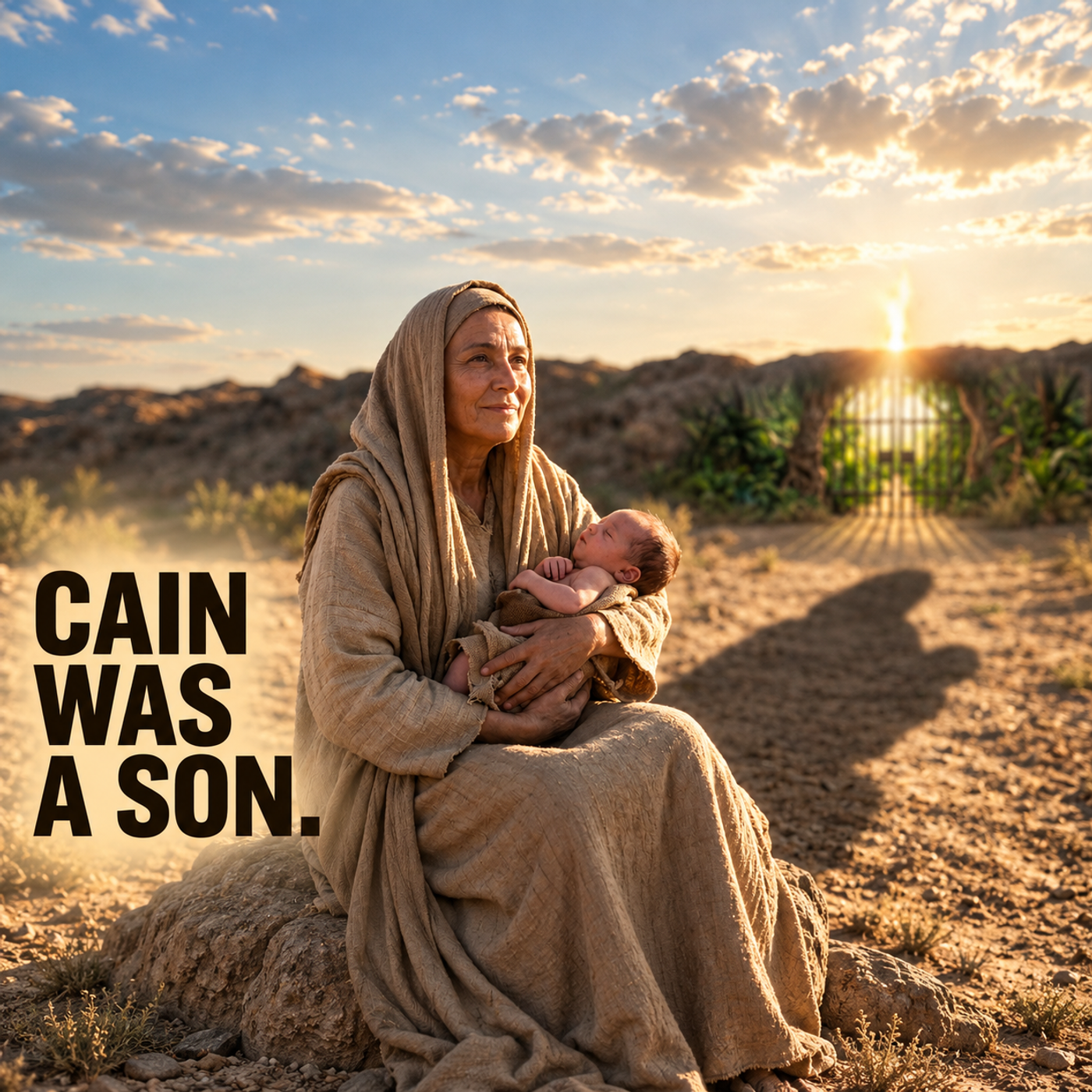
In Season 3, Episode 37 of Two Faithful Brews and the Good News, Paul Purifoy and Uncle Royce finally settle into Genesis 4:1 and begin looking at the first family outside the Garden of Eden. Genesis begins the chapter with these words: “And Adam knew Eve his wife…” There is a difference between recognizing somebody and actually knowing them. Millions of people recognized Elvis Presley. People knew his voice, his appearance, his music, his success, and his failures. But public familiarity is not the same thing as relationship. That same distinction matters inside the Church. Paul warned the Corinthians against organizing their identities around powerful personalities. One said, “I am of Paul.” Another said, “I am of Apollos.” But Paul brought the attention back where it belonged: One plants. Another waters. God gives the increase. Gifted people matter, but gifted people are still people. Gifts should be appreciated, but gifts must never become gods. Then Genesis introduces Cain. We already know what he will eventually do. We know Abel will die. We know anger, jealousy, warning, murder, lying, and judgment are coming. But Eve did not look into the face of her newborn baby and see the label that history would eventually give him. She saw her son. And that forces us to read Genesis 4 carefully. Cain’s humanity does not excuse what he will later do. But his future sin does not mean he entered the world as something less than human. That brings the warning much closer to us. Anger can grow in a human heart. Pride can grow there. Envy can grow there. Resentment can grow there. Self-deception can grow there. And God will eventually hold Cain accountable for what he chooses. But Cain’s birth also reveals something else. Adam and Eve were outside Eden. The Garden was closed. Consequences were real. Pain had entered the human experience. Death had entered the story. And yet Eve conceived. A child was born. Outside Eden, a newborn cried. The fall had consequences, but God had not abandoned His promise. Pain and promise now occupied the same world. That is one of the biggest truths in this episode: Consequences are real. But consequences are not abandonment. You may be living with the consequences of yesterday and still be standing inside the faithfulness of God today. The episode also begins developing Uncle Royce’s distinction between something being seeded and something becoming established within the unfolding story of creation and redemption. And underneath all of it is the continuing promise of God. Eden was closed. Humanity had fallen. Sin was growing roots. But God’s redemptive purpose was still moving forward. The promise survived the fall. ☕ Two Faithful Brews and the Good News https://twofaithfulbrewsandthegoodnews.riverside.com/ Subscribe to Paul Purifoy Ministries on YouTube, follow on Rumble, and find Two Faithful Brews and the Good News wherever you listen to podcasts. Visit www.paulpurifoy.com and subscribe to receive the free ebook When...
Paul Purifoy: Eve named her son after God's covenant, believing she was helping fulfill his promise. She had no idea she was raising the man who would become history's first murderer. So today we ask what it means to trust a promise is coming true. Right in the middle of watching sin that's growing roots in your own household. Welcome back to Two Faithful Brews and the Good News. I'm Paul Purifoy and again I'm here with my Uncle Royce, my co-host, and our wise man. And today we're picking back up in Genesis chapter 4, verse 1. Adam knew his wife. That one word knew it carries the whole weight of this episode. And we're going to talk about the difference between recognizing someone and actually knowing them. And why the church has always been tempted to build its identity around powerful personalities the same way the world builds idols out of our celebrities. And how Cain's birth that teaches us something crucial about consequences versus abandonment. We'll also get into something Uncle Royce has been building toward this whole series so far, and that's the difference between the seed that's planted and the promise that's seeded, and then permanently. And then we're gonna get into God's creation itself with that. So let's get into it. With everything that's been discussed, it leads us up to extra questions. can disappointment keep us from recognizing repentance or growth? And how do we love a person without making that person responsible for filling a place that belongs only to God? Everything can continue and it can grow, you know, and you can even apply that some of that same way that you were talking about with the angels. but the best part is we get to see that the church has not been immune to any of this, Uncle Royce, by any means. And Paul confronts everything that we've discussed. He confronts believers and that had begun to organize their identity around the powerful personalities. So you get to go to first Corinthians and you look in chapter three, and you'll find where Paul says, For while one saith I am Paul, and another I am Apollos, are ye not carnal? Who then is Paul? And who is Apollos? But ministers by whom ye believed, even as the Lord gave to every man. I have planted Apollos water I have planted Apollos watered, but God gave the increase. So then neither are is he that planteth anything, neither is he that watereth, but God that gaveth the increase. So Paul does not tell us that he and Apollos have no value. He put their value where it actually belongs. They were servants through God, and they worked and done according to God. So they could plant, they could water, but they could not give what God gave, which is life. And that's where everything comes from. It has to be pointed back in the right place. And the distinction there, it protects both the people and the person that's being admired. So when we make a gifted person into this idol, We demand that person from that person what only God can supply. God's the provider and he's the one that can give the provision. If we lift it and place it onto a person, we found the fa we find the failures. Go back and look at Johnny Cash. Go back and look at Elvis Presley. Go back and look at other idols in those in our lives. How many times do we see people in Hollywood or celebrities that we have we've placed on one spot and all that we see next is this big felled moment. That's what happens. Why? Because mankind is not designed to carry that type of pressure. Everything has got to be placed where it belongs, or we will f fail. If it's done in accordance to God, it will be what God brings about it. And so we have to be real careful on things. And we're going to see where that same thought process, Uncle Royce, also gets distorted. And we're going to see when it comes to closer to the end of times that people are going to be so deceived that they think they'll be doing things for God. And they end up actually even killing people for God. And we're seeing it today. We have a religion that's around that speaks about we gotta kill infidels. Beheadum is a big thing that's in their religion. And we do it according to God. So you got to be very cautious, very careful with things that are that are there. So with that. Eventually, we're gonna find that people fell under the weight of what is expected of them that they were never meant to carry. Jesus remains Lord, and everyone else they remain human. So that we this is where we can include musicians, preachers, politicians, authors, parents, spouses, friends, gifts. should not be placed as a godly thing. Because we place it as a godly thing, we place people and people's pride grows. Gifts should be appreciated, but gifts must never become God's. And that kind of leads us back to the verse in verse one that we had kind of mentioned. And Adam knew his wife Eve, and she conceived and bare Cain and said, I have gotten a man from the Lord. And when we hear the name Cain, we already again know what's coming. But we have to go to the place where Adam knew his wife. And this is the first phrase that we see in Genesis chapter four and at verse one. And that Hebrew word that's there, new, translated to new, it can mean to know, recognize, understand, become acquainted with someone or something. And the context it uses here is that relational word. For the physical intimacy between a husband and a wife. And that word becomes especially meaningful beside our Elvis discussion. Because millions of people recognize Elvis, but recognition does not mean that they know him. Genesis does not describe intimacy as recognition, as observation, or public familiarity. It speaks of knowing. And that's a real relationship, Uncle Royce. And it requires more than an image. It requires presence. It requires that there be truth that's there, responsibility, vulnerability. It requires that there be willingness to encounter the actual person rather than a projection of them. Adam knew his wife. Royce: Okay, I wanna I wanna try to make a point in here before you get too deep in because I think you're about to move in a direction that's gonna probably move me in a little bit different Paul Purifoy: Yes, sir. Royce: direction. But I wanna get this in on this before we go too far. Y'all talked about the shift that took place with that inner man a while ago and what was there and looking from that direction, but I'm also gonna make a comparison on the responses and things that are there in pride. is one of the things if you remember Lucifer was caught up in that and pride can be good, pride can be bad. It depends on where it comes from, how it's applied, and the direction I said many times that I've heard a lot of preachers, a lot of other people that they have really took the word of God and I mean they have took it down the line and you could not have not one thing to hold against that person. You were in agreement with them. They were flat representing God in ways sometimes we wish we could. But then you stop and the application that takes place and all of a sudden we find out that as pride comes in, that internal man that's moving in that word of God that's there kind of points outward and you're looking outward. And if you're not careful, judgment comes in. So pride will move us if we're not careful in our application into a place of judgment. And when that happens, the word of God goes out the window. Because we just violated the one thing God said do not do when he said pride comes before a fall. And we look at that. But when we're talking about the human life and the human beings, it said humans were introduced to sin externally through deception and temptation. by the already fallen Satan or Lucifer, as the case may be. So there's gonna be a choice and a reaction that comes with that with man and where we're sitting right now. Of course Adam's already made his, we know that as Elvis Presley and Johnny Cash have, but it said, therefore man did not invent sin. Well you know we had a deal here a while back where the woman was telling us that sin and how it came into being what happened to it. She kind of said, well cul the culture does it. Well, a way another way of saying that culture says, well, man did that. They brought it in and that become our culture. I don't accept that, and most people I don't think do. But they said humanity, I urge your culture, said it succumbed to a spiritual infection that had already broken out in the angelic realm before the material world was formed. I just want us to remember when we hear these things and see them and think about them from the standpoint that we need to be is that Eve now is responding according to what the external and her relationship with her husband has moved her because it has also had an effect with her dealings with God and what was there has moved her into a place. Now. That she has come to the point to where she's making choices. She's deciding what's there. And the choices she's making made, and when she uses the word Lord, it's talking about the Lord and it's moving him into a place where that Lord, and it said he has become the Lord is the covenant God. So when Cain come into the picture, the name that's there, and what she gave credit to, she gave credit to that covenant, and she gave credit to God. She didn't look at it from the point of view we did, but she looked at it from the point of view of an external view that had been placed in her. But she did it seemingly with very little guilt. Because she thought now this is going to fulfill what God told us back in chapter, three. This is what's happening now, and I'm going to help fulfill it. I look at it from the standpoint of under trying to understand Eve and where she's at and the choices she makes, what it is that's motivated her and moved her into this choice process. Paul Purifoy: we mentioned it earlier that it's about the relationship. You know, Eve looked Royce: Absolutely. Yes. Paul Purifoy: at Eve looked at her son as human as her child. When we hear his name, the first thing we hear of when Cain when we hear of Cain is what transpired in chapter four. So There's you it's all about the relationship. That's just what that's this whole episode's been about. The relationship, how people viewed Elvis, how people have viewed Johnny Cash, how people viewed Adam, the successes, the failures, you know, the whole thing of them. But again, God is the only one that knows the full heart. And Everything just ties back. And this is why w when we get to this first verse of chapter four, and we're talking about Adam knew his wife Eve. He knew her in every way. Intimately, he knew her emotionally. He knew her physically. He knew her every he knew he knew her heart. He didn't just judge based off of what the appearance was. He had this relationship with her to know the difference. e intimate details of everything on her. So the first picture scripture gives of us of Adam and Eve's marriage after the fall is here. Sin had entered into their relationship. They had stood together in the shame. Adam pointed toward the Eve when God called him to account. Blame was in there. Self-protection was in it all. And he had entered the union of God And created for self-giving faithfulness. But Genesis 4 opens this marriage and shows us it's still standing. So we shouldn't invent some kind of romantic scene in the Bible because it doesn't give us that. Scripture does not record their private conversations, it does not tell us how they worked through what happened in Eden. This verse also. does not give us permission to call abuse or danger covenant faithfulness. It simply just shows us that sin wounded what God joined, but it did not erase God's actual design. So Adam and Eve, they couldn't return to the old settings of they couldn't go back into the Garden of Eden. it said, was placed there. So a flaming sword stood behind and they had to learn how to live faithfully with God and with one another in a new direction and on new ground. And sometimes restoration does not mean pretending that nothing actually happened. It just means That telling the truth about what happened, receiving what only God can provide, and learning obedience from the place where we now stand. So that brings us into, you know, you got we got two directions to go. We can go into more details of the flaming sword, or we can come to a rest of this episode, pretty much, with that because If we go back, if the Elvis discussion and the sections that we've talked about here, we've got a lot that we've placed in this episode, Uncle Royce. And we move from man who the world recognized to people when scripture asks us to actually see truthfully. Elvis Presley, he became an image in the public mind. But no public image contained the whole human being. Cain became identified with the worst act of his life, but Genesis first makes us stand beside the cradle and see that he is actually humanity, that he is a son first. So Adam and Eve, they damage their relationship through s sin, through blame, but Genesis chapter this verse one and chapter four, it still shows us and speaks to us of knowing rather than merely they them just existing beside one another. So that does not mean sin is unimportant. It just means truth must be whole. So we shouldn't turn gifts into idols, failures into permanent identities on people, personal expectations into false versions of people that are around us. God sees the hearts, God tells the truth about sin, and God's hold holds us responsible for our choices, and he still calls us as human beings toward redemption. So Uncle Royce. What is the one thing that you would want people to understand about the difference between an idol an image, and the actual human being here? Royce: You know, that's a loaded question. And the reason why is because Paul, as human beings, I don't feel like I'm qualified. I don't feel like man is qualified to make a determination there. The best that we can do is take the information and knowledge that we've got and try to recognize it from the point of God. And that carries me back to a righteous and a holy character of God, where He is. what he has placed and whether we like it or not, I do like it because I feel like when we're in that place in God, we've moved into a place that God said, I'll walk that valley with you. I'll be there with you. The thing about it is that many times we don't, but there w in a society, in a culture today, this has been so fractured. Eve is sitting in a place right now to where she's gone through from a place of perfection And she's actually the one that when the serpent came to her, she was in a world of complete and total innocence for all refr all possibilities and everything that's there because she had nothing to make a comparison to. And Satan didn't actually attack God as an individual. sad to say, today, oftentimes in our process of being objective and pacing things on the word and sc scripture of God. There's actually an attack on the individual that comes in it. And I've been guilty of it. I'm just going to be honest. I find myself that way. That's why I say for me to be qualified puts me in a place of really negative considerations. But with her, she has gone through and she's gained experiences in things right here that has brought her to the point of the choice that she's made. Paul, I have no doubt she feels like That what she's done, that what Adam's done, they have found rational explanations for everything that they've seen, that they've had, that's happened to them. They can put in their compartmentalize them, let deception and illusion, and Satan's gonna help them just like the serpent did when he told Eve. He said, Did God really tell you that? And she said, Yes. Not only that, but he told us that if we did it, we'd die. And then he came back and instead of attacking God, he said, No, God knows better. That's not what will happen. And let me just assure you, and he went to his knowledge. the serpent went to his knowledge. Satan placed it and the serpent fell on it because of his subtlety. But he used his knowledge to bring in the fact and say, Hey. I'm telling you now, you can put your confidence in me. Say, don't listen to what somebody else says. Listen to what I say. And I'm telling you, this is the truth. God knows that when you do that, you're not going to die. But when you do, you're actually going to become like him. And that's where Satan's at. But he moved her into a place in Paul, she had nothing. Not one thing that she had. We're in the world today in the same place. We're caught up in that. And what winds up happening with us if we're not careful and we don't see it. We're going to let our emotions then come in and this outer man, because this is a spirit of man that comes in, begins to move into the spirit of God and the spirit of Satan that's working and moving. And since there's no right, wrong, or anything there, there's just holiness and righteousness and perfection, then she feels perfectly comfortable in making the choice and saying, It doesn't matter what choice I make, it will be the right one. We do the same thing. I mean people Paul Purifoy: Mm-hmm. Royce: can say that we don't, but we do. And so what I'm doing is I'm using the word of God to try and make a point. Not with me, I'm trying to get me out of it. I don't want to be in a part of that. I want the serpent to be in it. I won't I won't I want it to be between her and her and the serpent and what's there. But when she made that choice, then what she did, the choice that she made, well it doesn't matter. So she took it and eat it. Hmm, that's good. And said Adam was with her and she gave it to him. And when he ate it, said Instantly, Paul, it said absolutely and instantly they knew. There was a shift took place not only in the inner man and what they felt inside, but in the reality of Eden in the presence of what was there and the serpent. They didn't know what it was. They couldn't explain it. But what did it bring on? You mentioned it one time. It's called fear. You remember that word you brought up? And I kind of questioned you a little bit on it, and then I got thinking about it. You know what? He dead on with that word. He got that down to a fine science. But as we look at it now, we're seeing that Eve took these things and she did an analysis and an evaluation. And she came to the place in her lives that we feel like this is the point that now I think we're ready to move on. I think we have brought ourselves into a place with God to where now we have once again become acceptable and because of his covenant, he has told us that this is what he's going to do. And I believe him. And I think within her mind, she felt like, okay, I, if I do this, I will be the one that brings this into the world and it'll happen. So that shift that took place That instantly happened. Paul did happen not only with the inner man, but it also happened in God's creation. It was instant. But they were tied. And what caused it? Disobedience and failure. They did not. hear what God said and obey. And the instant that it happened, that's what we find. Paul Purifoy: So I think what you started getting to the w actual place where we may see what the discussions of Adam and Eve may have been and having a reconciliation with one another, reconciling with God, and Eve coming to the realization that God's word is true. And that what's gonna come It's still ha gonna happen, and now she's got a realization that hey things are gonna start here with me. And then we get that's how we end up with this part with Cain, because when Eve looked at Cain, he was she was looking at him in a total different manner in a different direction. So when Eve conceived and bare Cain, we've read words like these throughout the scriptures, but here Conception and birth are new. This is was new to the human experience in this state. Now there's many discussions, many things that there Adam and Eve had other children prior to this, because of what scripture says there's going to be pain and childbearing after this, right? So Maybe they had other kids prior to. I don't know. I think if we went to Jewish documents and history, we might find some different details. But in this fallen state, this as far as I know and as far as I've researched and seen, this is the first place where we actually see that there was a conception and birth during this new human experience. The fallen state. So Adam came from the earth, Eve came from Adam. Now Cain comes through Eve. So the command to be fruitful and multiply is now beginning to unfold through this new human generation, through the fallen state of man. So scripture doesn't tell us what Eve's pregnancy felt like. It doesn't tell her how long she had to labor and lasting. It just tells us that it was going to be painful from that point forward. But She had no mother. She had no one to call that was older, women, who had carried children before her. The sorrow that was connected with the childbirth was no longer a theoretical thing, yet neither was God's continuing gift of life. God's promises were still gonna come put to pass and f to the front. So pain and promise now. Have provided and occupied the same womb. And Cain's birth reminds us that consequences they do not mean God has abandoned his promise. The garden's still closed, but Eve's womb was fruitful. So death has entered the human story, but outside of Eden, a newborn cried. So there was also life. I want to ask you this question, Uncle Royce, what does Cain's birth teach us about the difference between experiencing consequences and being abandoned by God? Royce: Cain being who he is, Cain was just allowed to be Cain, Paul. He wasn't put into a situation Other than the fact that more than likely, kind of like Elvis and Johnny Cash was, he was put into a place to where what he was told and what they were saying to him probably helped form his inner man into a place that we might want to give consideration to. But I wonder if they actually taught him those things of the covenant that needed to be taught, because we know we know that he became a individual and a man of strong, rejection in some areas because he was a tiller of the ground in that process. Paul Purifoy: Yeah. Royce: But here's the thing I'm gonna say here. He there's no doubt in my mind as a child of Adam and Eve, he was taught he understood what it was to have the blood sacrifices. He understood what it was and why that was needed, why the blood and the shed blood was needed Through the standpoint of the redemption plan, he may not have understood the dynamics of it, but he did absolutely understand that making sacrifices and offerings to God and the altar that was there and all of those things that come into play that we see in chapter 15 and chapter 17 of Genesis, if it was with Abraham, it had to be with them. it says even Abel, when he went to the Lord, he had the offerings and sacrifice and he used the first offerings. He used those things that was there. So when we go back to Cain and look at it, you can immediately see the difference between fact and fiction, between truth and desire, between directions and misdirection, between those things of personal opinion and choices. You see those take place. So with Cain and what is there, I think we're seeing a man that has been brought into a point in his life and what he's doing that is not going to be pleasing to God. Now what he did was fine. We'll find out later on that God had a perspective with Cain the same as he did with Adam and Eve and Abel and going forward on all the way through. But with Cain, he was in a place with God and God received him in that place. He didn't make a difference between Cain and Abel or anybody else. God was God. And he didn't he said, I change not. So when we look at it, if there's gonna be any change taking place or any shifting going on, it's gonna be with Cain, not God. And it and if the church would learn to understand that today, we could we could quickly define the difference between spiritual and flesh. We could define it in a hurry, because that's what's there. Sadly we don't. And Satan uses that to his advantage. So but Cain's in a place to where he had opportunity, but I'm not sure what his motives were. Paul Purifoy: Well, I think that's where we get to see that as we get to continue in chapter four, we're gonna see where we he grows and we get to see where that relationship and the relationship dynamics come into play. But Cain was born. He was just a human. He was born in this new life where sin was in the world. And it was, and this is where you get to see now the dynamic of what really occurred in Genesis chapter three during the fall. Now we get to see how the sin of man is inherent and it is growing in the heart. It's not something that is placed on the shelf and can be taken down. It is something that. grows in as p as part of the root system and Royce: Okay, that's what you're saying. It's been seated as A S E D E D, but then Paul Purifoy: Correct. Royce: it has also been seated S E A T E D. And that's Paul Purifoy: Okay. Royce: into that is into the culture and the and the going forward in history. Paul Purifoy: So so you wanna explain the difference on those real quick? Sure. Royce: Well, yeah, I don't have a problem but to go all the way back to the first and second verse of Genesis, it's worth going back to because when you see the Trinity sitting there, what you see is you see the fullness of the redemption plan that God intended from his blueprint before anything happened when it did, and it said in the beginning, God created, and then it went on and said the universe or the heaven and the earth and moved it in there. But in that second verse where it starts talking, it's already talking about God As the creator, it's already talking about now the Spirit of God that's hovering over the waters, but it's also talking about another point and place there, which is going to be the redemption plan himself, and that is the word of God, that is the truth, which is the Lord God, that is the created covenant, and that when you when you have that, then it is the covenant God. So we're looking at that in that second. And just to give a very quick upbringing of that, redemption plan was then placed and it was set. It was ordained and it was delivered and it was moved upon and it happens. It was set into what? Into God's perfect creation. Without redemption going into it, there could be no perfect creation. People say, Well, what are you talking about? Well If you're going to have redemption plan, salvation is one thing. I'm going just I'm fixing to I'm fixing to tear some people's thinking up. But salvation is one thing. And I don't take salvation and try to say a person's saved or they're not saved. That's between them and God and the intent of their heart. But that's what's there, and that's where God judges salvation. But then the redemption plan that come in, and this is what people don't get, is I don't know that very many people do, but with a redemption plan, when it was placed, that was placed into that creation. And it was a part of what that Trinity did. It was instant, it was there, and it was seated. That means that God seated it. was already water there. It was placed into God's creation and spoken into existence along with God when He said, Let there be. A redemption plan was a part. Let there be light. That redemption plan was in that light. And we know back and look, we'll find that light. was the word of God. In the beginning was the word, the word was with God, the word was God. And without that word, nothing was made that was made. So when he said, Let there be, the redemption plan just got seated and placed. Now, from there until Revelations, what you're seeing is the redemption plan now begins to grow with God's creation. As he begins to say, Let there be, if you remember you've got All those times where he said, and it was good, it was good, it was good, it was very good, and he got all the way through a dozen or so times, and in every time he did, well what's he saying? My righteousness, my holiness, and my perfection is a part of everything that I've just done. It will grow into it. Now when I say that it is seeded S E A T E D, what I'm saying is that it has now grown. What you said a while ago is It took on growth in the foundation and the roots began to dig. That redemption plan grew with creation. It grew into it. became a part of it. will not come out because God said it will last. It will not be done away with. That's what I mean when it not only was seated. But it has been seated. And so it's two words. One letter changes them up and makes a difference. Go ahead. Paul Purifoy: Absolutely. Here's the truth this episode leaves us with, folks. An image can never explain itself, repent, grow, or surprise you. But here, a real person they can. Because only a real relationship requires presence and truth instead of just recognition. Adam knew Eve. God knows the heart. And even when sin entered their marriage, their household, and eventually. Their firstborn son, God gave a promise, and that promise it spoke back to Eden, and it shows that Eden didn't canceled. Instead, that promise it got seeded permanently into the foundation of everything he's building. Consequences, folks, are real. But consequences are not the same thing as abandonment. Outside of Eden, a newborn cried, and that cry was proof that life, which is a promise of God, was given, and that we're still moving forward. So we hope you've enjoyed this episode. If you have, please share it with someone. Like, subscribe, and be sure to hit the notification bell on Paul Purifoy Ministries YouTube channel. you can also find us on Rumble, and you can catch two Faithful Brews in the Good News wherever you get your podcasts. And if you head over to www.paulpurifoy.com and you subscribe there too, you'll get a free ebook when life makes you question is there a god? And we want to thank you for joining us and joining that. And that's just a free gift to you. And don't forget the new book that's out now called The Evolving Calling, A Journey Fo Through the Fivefold Ministry. You can grab your copy at www.paulpurifoy.com. you can also get it on Amazon, request it at your favorite bookstore, even better, you can get it and request it at your local bookstore or go to your local library and make a request there as well. And with that. We want to wish you all the best and God bless. And we'll pit back up in Genesis chapter four next time.