
Time For Heroes · Martin Morel
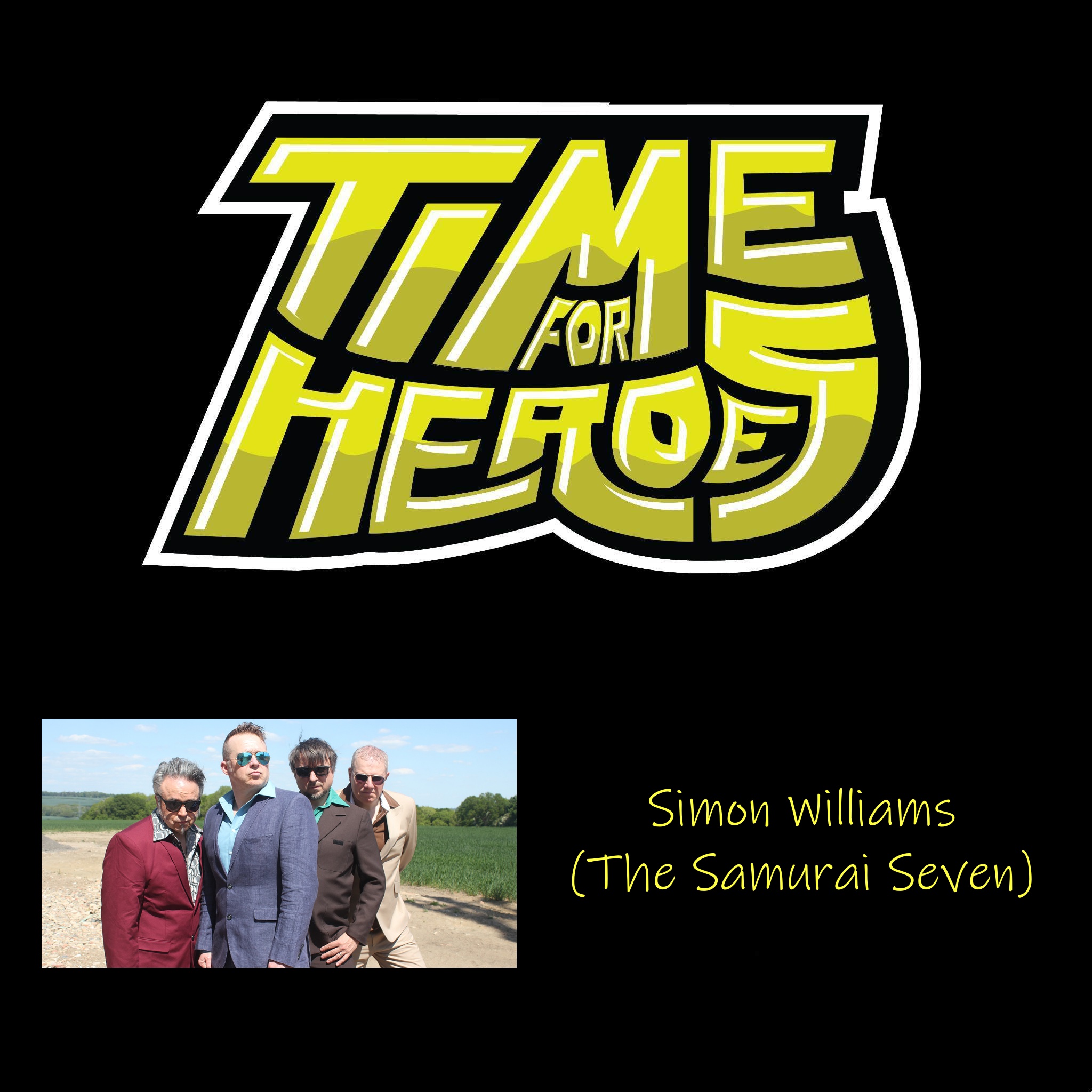
This week on the podcast my guest is Simon Williams of The Samurai Seven, a band back after a 20 year hiatus, a new EP just released and a run of gigs supporting The Boo Radleys. We discussed Simon's early life and influences, exploring the local music scene and emotional investment in his local football team. The connection between music and football is also highlighted. The conversation covers the influence of Teenage Fanclub on songwriting and vocal harmonies, the experience of gigging and touring, the changes in the modern music landscape, and the process of songwriting and exploration of contemporary themes in music. As i said the band have a new EP which you can check out below: Make It Real - EP by The Samurai Seven | Spotify Gig wise they play Portmouth Wedgewood Rooms on September 20th The Samurai Seven Portsmouth Tickets, The Wedgewood Rooms Sep 20, 2026 | Bandsintown As well as dates with The Boo Radleys in November (Manchester, Leeds, Glasgow and Lewes) And then Oslo Hackney in London The Samurai Seven London Tickets, Oslo Hackney Nov 15, 2026 | Bandsintown and a hometown show in Oxford at The Bullingdon The Samurai Seven Oxford Tickets, The Bullingdon Nov 19, 2026 | Bandsintown And check out their links below: Instagram Facebook
Simon: Hello, this is Simon Williams from the Samurai Seven and you are watching and listening to the Time for Heroes podcast. TFH: Brilliant, Simon Williams, my guest today. My last guest was Andy McLeod. That episode came out today. Simon: Yes. TFH: So, obviously on that we touched on his pal Simon Williams. I just want to reiterate that you are not that Simon Williams. Yeah, so. Simon: I am the second Simon Williams to write this podcast. yeah, I wasn't even the only Simon Williams in my school. So, comment is not me. TFH: Yeah, so I mean that other time in Wilkins is well renowned in the music scene. He Simon: Yes. TFH: runs Fear Panda. Simon: Well, we did a single on Fierce Panda, so I know Simon Williams very well. He's Simon TFH: Yeah. Simon: Richard Williams and I'm Simon Gareth Williams. And I think I must have met Andy McLeod as well through Fierce Panda as well. TFH: Yeah, anyway, we'll go back to the start. What I like to do is go right back to early life growing up. So obviously you were in a band with your brother. So Simon: Yes. TFH: what was life like for the two of you growing up in your house? Simon: Well, we grew up in a really quiet village in South Oxfordshire and, you know, that kind of place where, you know, happy, safe, you could ride your bike around the streets and it was, you know, perfectly fine. It's weird to talk about, like, you know, those days feeling like safer than they do TFH: Mm-hmm. Simon: now, because, you know, ride around. the village on your bike with your mates and then go home and watch Rov's cartoon club, Jim will fix it. And, you know, it's a knockout on Selly. TFH: Yeah. Simon: But yeah, so it was, it was a very nice and pleasant childhood, but it felt like the world of music and football and, you know, life in general was a long way away. It's weird where... Obviously we've been part of the Oxford music scene for a long time and you've got people like Radiohead and Supergrass and Foles and all kinds of, you know, well-known acts. But when I was a kid, there was none of that. And the only band who were of any kind of renown were called Mr. Big. They did a single called Romeo, which I'm not sure I've even heard to this day. So it felt like there wasn't anything going on in Oxford, let alone the village we lived in. And I remember TFH: Mm-hmm. Simon: I remember there being some handwritten posters up in the village about a gig at Blueberry Village Hall by a band. I can still remember the name of the band and it's quite a memorable name, but they're called Beef Curtains. Now I don't know TFH: Yeah Simon: if it was a well attended gig or whether the members of Beef Curtains are still, you know, still remember it. But like the idea that there was music going on sort of almost within our, you know. TFH: Mm-hmm. Simon: touching distance was really thrilling at the time. And that's the thing, I think my dad wasn't a musician, but he owned a lot of records. He had all of the Beatles records and he had a lot of Dylan. But obviously, they were bands of the past. And so it did feel like life, music, everything was going on a long way away and there was nothing going on in the village. sort of felt, it was happy and nice. but it felt, I wouldn't say, I never felt bored, but there was a lack of distraction. And we've got older cousins from Manchester, and I remember going to Manchester and thinking, this is exciting, there's something going on here. TFH: Yeah. Simon: Whereas they were always like, you're lucky to live in, you know, you know, countryside kind of thing. So it's a funny kind of thing where, I suppose it's the same for everybody, but music music influences had to come from outside. TFH: Mm-hmm. Simon: And so, you know, it wasn't, we're really lucky that we had, not just music, but football as well. I remember when I was at primary school, someone saying, do you support Liverpool or Man United? As though those were the only choices. And I was like, well, TFH: Yeah. Simon: don't know. And then I was watching the final scores on grandstand one day and Oxford United popped up. And I was like, dad, dad, dad, there's a football team in Oxford. And he's like, not very good kind of thing. But like suddenly there being like a connection, all these things sort of felt like they belonged to another mysterious world. And TFH: Hmm. Simon: I think that it's the same for everybody, but my older brother, I was in his bands when I was a little chubby cheek kid. And now he's playing, we're playing in the same band now, but we had these older cousins. And the excitement of the bands that I found out about through my older cousin Ian, who was a good 10 years older than us, if not more, and through my brother going to secondary school was really key. So I remember watching, well, my brother was watching Top of the Pops. and Temple Tudor came on doing Swords of a Thousand Men, or maybe it was Adam and the Ants, I can't remember. And he was like, that's amazing. And I was probably still a bit young to sort of really sort of comprehend then, but my cousin Ian ended up doing us a tape of punk music. TFH: Right. Simon: And it had like the dammed, the sex pistols, plus a load of stuff like a killing joke and Iggy Pop. but also a load of stuff from, suppose, the Oi movement. the exploited, in fact, there's this exploited song. I still really love To This Day off the back of that tape. And so that was really key. Like when I was at primary school, I suddenly sort of got into like punk music, but it was all bands that were like kind of done. know, certainly Brian James had left the Damned and I think it was approaching the time when Captain Sensible had left the Damned. But this music really spoke to me. It was... the thing that made me want to play guitar. And that was the trigger that made me like stare through the window in music shops staring at guitars and sort of like wondering. TFH: Mm. Simon: But it's funny that like the bands that I got into, Sex Pistols were long gone by the time we got this tape. And then my brother went to secondary school, my older brother went to secondary school and he's getting into bands like Kiss in the makeup era. you know, TFH: Mm-hmm. Simon: and Hanoi Rocks who had already split up. So the whole time that I was, I grew up sort of feeling like music belonged to another country and was like exotic and mysterious and magical. But then the bands that I got into were like, were done, they were dead or, you know, in some cases people were actually dead in the bands. So you couldn't go and see them. So music to me, always felt like it belonged to another place and even another time. So it sort of had this kind of like wonder to it. And as a result, I didn't necessarily think that I had a right to be part of it, but I just was, you know, it sort of was TFH: Mm. Simon: really magical. I don't know, I've probably answered your question in quite a long winded way, but it's actually lovely you're asking. TFH: Yeah, no, but it's fascinating that, so like on the football side, then did you stick with Oxford or did you go elsewhere? Simon: no, absolutely. mean, to me, remember. So when I was a kid, you know, like not yet old enough to know better, I had Oxford United tattooed on my foot. TFH: Right. Simon: Just because it was like, you know, because when I was playing football and I remember thinking at the time, know, you could have your girlfriend of the time on tattooed on you, but you but you only ever love one football. TFH: Yeah. Simon: So I, you know, I badgered my dad to take me to see Oxford United and eventually we went and it was the season where they got promoted to the old first division, now the premiership and they beat Charlton Athletic 5-0 and you know, I thought it was wonderful. You know, I thought every game would be like that. And of course, you know what, TFH: Yeah. Simon: I think you're a Celtic fan, right? So it's probably, it might be different, but it's like... I mean, Oxford got relegated in the last season and now have an embargo that means, to financial reasons, we can't actually buy new players at the moment. it's TFH: Right? Simon: a tough gig, but I think there's something uniquely British about supporting a underachieving team or your local team. mean, I might have found out about Oxford United, like, you know, when I was like, you know, eight or nine or whatever, but... TFH: Mm-hmm. Simon: I was born in, like anyone born in the John Radcliffe in Oxford, it was like a few hundred yards from Oxford United's old ground. I, you know, I used to, there's something about a team being yours or feeling like they're yours. I think it's TFH: Yeah. Simon: easy when owners come and go, managers come and go, players come and go. And the only people who really stick around are the sucker fans. But yeah, TFH: Hmm. Simon: I mean, I go to as many games as I can. Indeed. I definitely got to a point, and I don't know if you've ever felt like this, I watched, it was when Oxford away at Bristol Rovers, when Bristol Rovers were playing at Bath City's ground, and Oxford were 2-0 up, and in the last quarter of an hour, they conceded three in seven minutes. I, TFH: Jesus. Simon: you know what it's like when you sort of, when something bad's happened to you, and you wake up in the morning and you've sort of forgotten? And that I went through that grief process for about a week and I did think actually, as much as I love going to the football, it seems stupid to me to be so emotionally involved, invested in something over which I have no control. So there are times when I sort of think, actually I'm getting too wound up by this and I sort of back off. TFH: man, totally got you man. I've been like that all the last year we settled it. I mean, we ended up winning the double, but it was one of our worst seasons off the park. Just constant fighting with the board and stuff like Simon: Yes. TFH: that. every week was hard graph for us. But I mean, just like when you mentioned that about being a kid and realising there was a team in Oxford, because it reminds me the story that Like John Power told me, obviously Simon: Mm. TFH: when he was a young boy and he asked his dad, who's the greatest band in the world? And his dad said The Beatles. Simon: Right. TFH: And he says, and who's the best football team? And his dad says Liverpool. And he was just so amazed because everything in his world was right there and it was the Simon: Yeah, yeah, yeah. TFH: best. like on a smaller sense, obviously, that's the same with you with the football. Simon: I mean, totally. I think it's like, that's the funny thing. When Oxford got relegated this season, there were still two games to go when it was cut and dried and we knew we were going down. And I was walking to the stadium to watch the game. it's Sheffield Wednesday, it was, I think. And I just sort of, actually, it doesn't matter. Yes, I'm disappointed they've been relegated, but they haven't moved further away. They're no longer my local team. TFH: Mm. Simon: through the financial stuff that's going on, it's not impossible. mean, smaller teams are going under all the time. And, you know, if Oxford were to no longer be a thing, I mean, I'd probably, there's Oxford City, a lower league team, I might go and see them, but I'm not going to get Oxford City to do anything. I'm not, you know, TFH: He he. Simon: it's a funny thing. And I think it must be hard challenging being a Celtic fan because because the universe is one in which obviously there's local rivalries against the Edinburgh teams and Rangers and everything, but it's like the expectation at the beginning of the season must be to win the league ideally. TFH: Yeah, yeah, totally. Simon: And I think there's, know, being an Oxford United fan, my expectations are so low that it's like, you don't get, I even quite enjoy a relegation scrap. you know, it's as long as you try and end up the right side of it. But it's, TFH: Hmm. Simon: I've decided that somewhere along the line, I thought actually Oxford losing is only, Oxford winning can be more depressing than Oxford losing. Cause on the way home you're like elated TFH: Hehehehe Simon: and halfway home you're like, well nothing's changed. It's not the end of a film. They've still got another. game to play next week or even when they got promoted to the championship which was amazing and my wife came and we're at Wembley and is incredible. You've still got to play another and it'll be hard. You get promoted and life's hard. Oxford TFH: Yeah. Yeah. Simon: have got one of the smallest budgets in the league and they're still overspending. How can that be? TFH: Yeah. Simon: Spending less than everybody else and yet overspending within our sort of means. So it's a tough gig but it's like Yeah, I would, they're my local team and you can't choose that. So yeah, same as you, I guess. TFH: Yeah, mean, my sister, she's from Crawley. So we get down Simon: yeah. TFH: there two or three times a year. And I initially started, I was going to see Crawley. I went a couple of times, but I didn't like it at all. I didn't like the atmosphere. Obviously, this is when they were kind of in the up. They were playing Simon: Yeah. Yeah. TFH: FA Cup, man, and they just, they seemed a bit big for, they seemed a bit. above herself. I can't mind going to see them on Boxing Day and I left at half time because they had a wee pub in the back of the stand and Celtic were playing that day. So Simon: Right. TFH: I thought, right, I'm going to leave at half time going to this pub and the pub was shut. They shut the pub while the game was on. So ended up watching the Celtic game through the pub window whilst waiting on my missus uncle. So, Simon: Yeah. Yeah. TFH: but then... After that I started going to see the non-league team. So there's a non-league team down there and it's brilliant. I get down, I go and see maybe three games while I'm down. They'll play Saturday, Saturday, midweek and I'll go to other games. That level of football, I love it because it's completely different from Celtic. Simon: Yeah. Yeah. TFH: The last game I went and seen them, they got beat four-muffin and it was a brilliant game. Simon: Right, exactly. Sometimes there's like that community atmosphere or especially TFH: Yeah. Simon: when it's like a little old school shed ground where it retains the noise. And, you know, the people who go to see aren't, not there for glamour. They're not there for expectation. I mean, it's interesting what you're saying about Crawley, a team having success. I don't know if this is a particularly English thing. I always think about this around the time of a major football tournament, but I don't think the English are particularly good winners or losers. Thanks. TFH: Well, I've got a wee story regarding that as well. Simon: Okay. TFH: So when I was down there, I was down during the World Cup, Simon: Yeah. TFH: travelled down on the Tuesday and obviously the semi-final was the Wednesday. Simon: Mm-hmm. TFH: So I immediately went out on the Wednesday and got myself an Argentina top. Simon: I hate TFH: Walked up the road, I had about six or seven vans tootin' me, callin' me a wanker, cause I had it on obviously, Simon: Right. Yeah, yeah. TFH: which I wasnae bothered about in the slightest, man, I'm thick-skinned, it didnae bother me in the slightest. So we travelled back on the Wednesday after the final, so we're three days out for the final. a week out for the England-Argentina game. So we're traveling up the road. I had my Argentina top on. The missus was loading the car. Me and the wee boy took the two dogs for a walk. And as Simon: Yeah. TFH: we're coming back into the street, obviously I got my top on, because we're a long drive ahead, a nice comfy top. Wasnae hankie in of it, because we're a week out. And we're crossing the road, and I seen this guy coming out the street. And he's looked, and then he's... done a double take, he's caught me with the Argentina top. So he's then crossed the road, see he's on the other side of the road and he's walking away from me. They're a good bit, maybe about 50 yards away, but he keeps looking back and I says to the wee boy, I says, he's going to say something. I says, Simon: Yeah. TFH: look at him. So he up, shouted there, says, mate, are you English? I says, no, I'm Scottish. He says, well, what the fuck you wearing that? What you fucking wearing that top for around here? I says, mate. I says, come here and we'll talk about it. He says, no, you're a fucking idiot. I says, well, you're the idiot that's crossed the road before you could. But I thought, I hadn't even thought, I was just, we're a week out for the final and it's, but it's obviously, bad losers as you say, they don't lose well. Simon: Well, and that's the thing, it's funny, because I mean, I'm half Welsh. yeah, TFH: Right? Simon: it wasn't so much that my dad was proud to be Welsh, but there was a lot of hatred for the English. And I sort of think it's, you know, well, you know, everyone's got a history book, right? And it's like, you know, there's, I totally understand where kind of, I mean, England loses its mind during major football tournaments and the media go crazy. And that's partly the issue. TFH: Yeah, and that's why people dislike them. That's why me as a Scottish fan. It's nothing to do with the players. Simon: No. TFH: It's the media and the way they build them up. And then as soon as they fall, the media has piles on them as well. Simon: Yeah, and also the way the B of BBC being British talks about we TFH: Mm-hmm. Simon: when they talk about England. And TFH: Yeah. Simon: you know, it's like what was nice was, you know, the Scottish fans at the World Cup this year were, you know, glad to be there and just having a ball. you know, as the Welsh fans would be had they qualified and they didn't, and it was very sad. So, TFH: Yeah Simon: but you know, it's, mean, it's... That's the thing about football. It's like largely good. you, when you, at a football match in the pub, if you see the opposition fans in the pub and you have a drink, you'll be like, how's your season been? You know, da, da, da, da, da, good luck for the rest of the season. And it's all nice. And the moment that everyone's segregated, then suddenly it's like, TFH: Yeah. Simon: I'm pointing and shouting and talking about people's heads getting kicked in. And it's like, huh? You know, actually it's like human beings as a whole. think individually. where most people can find some common ground. But at the moment it's on mass. It's like, don't think anyone comes off very well today. TFH: Yeah, totally. So, back to music. Simon: Yes. TFH: So obviously, you had all this growing up. Obviously your dad had these Beatles, Dylan Simon: Yeah. TFH: records. What other sort of musical influences obviously you had the tape for your cousin. Simon: Yeah, so I mean, that was really key. then through after when my brother went to secondary school, suddenly he was bringing home like Kiss albums and, and Hano rocks and kind of like guitar rock. So that like pushed me further down. That was the point where I'd started, you know, like picking up a guitar and learning because I'm totally self taught. I've learned by listening to records. TFH: Mm-hmm. Simon: And so, but I think there's something about, I didn't realize this, but talking about it now, because music felt like something other people did a long way away and in the past, I've never felt like, I've always felt like what we did musically didn't belong, like what was going on locally right now didn't really matter. So we just sort of do what we do. That's just a thought that's occurred to me. But somewhere along the line, think there were, there was an arena, there's a Rolling Stones film called 25 by 5. And the TFH: Mm-hmm. Simon: arena program on BBC played it. And I watched that and suddenly I was like, you know, got really into 1960s Rolling Stones around the time there was Sounds of the 60s and stuff like that where they showed like Jimi Hendrix and Pink Floyd and the Kinks and the Beatles. And that led me to starting to. getting a proof, because the thing is when you're a kid and my dad had these Beatles records, he didn't really want me to play. It was like, you no, don't don't don't you're going to mess it up kind of. TFH: Hahaha Simon: And when you're a kid, you think the Beatles, well, I thought the Beatles was when I'm 64, octopus is garden, TFH: Yeah. Simon: yellow submarine, like all you know, and they are that but now I think the Beatles are I want you see she's so heavy or helter skelter or because TFH: Yeah. Simon: or all these amazing things. And so I think through those, there's a bit of lionizing about the sixties that sort of, and again, I'm like getting into music where people are dead, right? They're not even, you can't go and see them. So again, it's sort of like that. And I think through that, I ended up hearing Boundworkin-esque by Teenage Fan Club. And when I was in, you know, I maybe was into things like The Cult and stuff like that and like the Electric album. But then through Teenage Fan Club, that got me into the idea of like songwriting and the importance of vocal harmonies. And this was a Van TFH: Mm-hmm. Simon: Wagon-esque album where it was sort of still a bit loose and a bit drunken, but it sort of felt attainable. So then I got, at the time when lots of people were into Britpop, And is it Oasis or is it Blood? In the same way that it's like, are you Man United or are you Liverpool? TFH: Mm. Simon: Although I didn't have a local connection, I had a real affinity with the Glasgow music scene. So Teenage Fan Club, BMX Bandits, Captain America, who became Eugenius, I guess, Soup Dragons, people like that. got really into that, because it's like, and through there you get to a reprievation of Neil Young. and a reassessment of the Beatles and pet sounds and all that kind of stuff. suddenly it's like, so by that time I was at university, I'd left, so I played in my brother's, the two year age gap between me and my brother, was sort of, that's a long time when you're a teenager. And so my brother was like, with his mates and. girls and stuff around and I was this like chubby cheeked, underdeveloped guy in the jeans that his mum had bought him from CNA wearing a ski jacket kind of thing. It was like very uncool, but like, you know, I could play guitar kind of thing. So I was sort of like earning my corn through playing the guitar, but it was like a, was sort of a, there was a tension to me being there, I think. Then I went to university and so then I formed a band at university where I... I wanted it to be like Teenage Fan Club and all these bands that I'd really got into from the Glasgow scene. So the idea of being a song, so there I was just a guitar player and there was another guy, a singer who wrote lyrics. And it really worked well for a bit. And I was still doing backing vocals, because I sort of got into that kind of thing. And somewhere along the line, I think the difficulty between with... songwriting partnerships and I'm not trying to compare myself to any of the more successful ones but what I found when you're it's like a relationship people if you don't grow and develop then what you're doing and but if you develop you're going to inevitably develop in slightly different ways and directions and you don't end up necessarily wanting the same thing so the band I was in at university where yeah there was a singer He sort of ended up with, we wanted different things and it sort of started off really TFH: Mm-hmm. Simon: great and really exciting. We were doing stuff we both liked. I remember he was into, do you remember Back to the Planet? Like, and The Levelers, like sort of quite new age, TFH: Mm-hmm. Simon: sort of dreadlocks and all that kind of thing, but on a white guy. And so I TFH: Yeah. Simon: remember him saying he wanted to start a crusty revolution. And I'm like, don't believe strongly in that. So it was a bit weird that we sort of like, so by the end it sort of got a bit, yeah, the shine had gone off it. So by the time I finished university, I was like, I don't think I want to be in a band anymore. You know, I was kind of done with music. And then a friend of mine called Neil Murray, who he's still around now. So he's playing in a band now called The Barking Poets. And he came TFH: Right? Simon: around my house at university, just him and a guitar, acoustic guitar, and he played this song. And it was really good. It was called Go Right Ahead, I think. And it was really good. And I remember thinking, hang on a minute, it's possible to make music on your own or create music on your own and it work and you not need someone else. So I've sort of gone through this sort of like bumpy thing where I was like, I'm not sure I want to be in this kind of like tense relationship, music, artistic relationship. TFH: Ahem. Simon: So yeah, so that started me thinking about this idea of being not a singer songwriter on my own like Dylan, like, but being able to create something. So I was like, I'm done with music. I left university and I, but I'd written these songs that I thought were probably rubbish and they'd never not go anywhere. But they, was like one last throw of the dice before I, you know, go and do something else. So my brother at the time wasn't in a band and I said, would you like to be the other guitar player? And he said, yes. And there was another drummer I knew called Chris, who as far as I knew was pretty good. He was just a really great guy. So I said, would you want to be in my band? And then we were at a party and we met Jimmy. And he was like, I played guitar too. And I was like, already got two guitar players, but we do need a bassist. And next time I saw him, he bought a bass. So in he comes. So all the Samurai 7 was when we started was just I was like, I think I'm probably done with music, but I've written some songs. Let's just. Rehearse together, record them and just see if they're any good. TFH: Mm-hmm. Simon: We did that and then I mean, just person on a personal level, we got on really well. And Jimmy, when he arrived at rehearsal, although he wasn't a particularly great bass player at the time, he just he had this high harmony. So I'd started writing. songs with harmonies and he brought this third thing that I hadn't even thought about and I just thought how amazing that's something I can use and he just he had his own ideas about harmonies it brought this different tone and everything sounded different and it was amazing so we did this recording long story we were at Oxford away against Watford in the FA Cup and the not fairy lights what do you call it the floodlights went out they had a power cut So the game ended up being canceled, but there was a guy called Richard Cotton that I knew from the Oxford music scene. And I happened to have a demo tape in my pocket and I was like, you know, hello, we're in this band. And he rang us up and ran me up at work the next day going on about how great he thought we were. kind of everything went from there really. We started doing gigs. He got us our first gig. And then eventually we did a first single with an independent record label called Shifty Disco and John Peel grabbed hold of it. So John Peel played TFH: Mm-hmm. Simon: it at time and gave us our real first bit of national support. that's that, you know, back in the day with the world service and everything, then you ended up getting like fan mail from Argentina and stuff like that. so we didn't really intend for it to be anything. I was just like, I think I'm done with music, but let's just give this a go. TFH: Mm. Simon: know, now, you know, what, nearly 30 years later, here we are kind of like back doing it. So it sort of was, it's just one of those things where we're four like weird, funny little jigsaw shapes that somehow fit together. don't think. I don't think any of us are necessarily particularly great at our instruments, but there's something about the four of us together that just clicks. TFH: Yeah. Simon: yeah, so after that, after we did the Shifty Disco single, then we did a Fierce Panda single. So we met Simon Williams and probably Andy McLeod. And then, yeah, so we did five sessions for John Peel and that was very exciting. And then there was a thing where I got shot and I went. blind in that eye and so I had to take a lot of time out while I recovered from that and they put a silicon lens in that eye kind of thing so very good all on the NHS amazing and and TFH: Yeah, well... Simon: the weird thing what you know what once we came back from that the music industry had moved on suddenly things were it was yeah TFH: it'd be totally different, So, mean, dialing back a bit, like, see when, like, gigging, so when you were gigging with this new setup, whereabouts were you gigging just locally in Oxford? Simon: no, no, no. mean, we would literally go anywhere where we would turn up at the opening of an envelope. I mean, we started off, I mean, our second gig was in Harlow in Essex, which is a long way away. It felt like a long way away. And then we would go, it was amazing. was a great time and really exciting and probably not a very good time to be like one of our girlfriends or something, because we'd be rung up in the afternoon and you know, Play a gig in Gloucester, okay, and we just go and do it. So we ended up doing like over 100 gigs a year for a good couple of years. And it was a great proving ground because it got us really, really, really tight. I I TFH: Mm-hmm. Simon: really love Teenage Fan Club deeply, but I think when I was into things like Bound Wagon-esque, because of the slightly, I think they freely admit they. add a few drinks in the studio and it's sort of like a little loose and it has a charm to that. But I think, and certainly if you listen to things like Grand Prix onwards, then they get super, super, super tight and everything's ultra perfect TFH: Mm. Simon: and it's wonderful for different reasons. But I think we ended up touring with a band called The Interpreters who were from Philadelphia and they did singles on Fierce Panda stuff too. In fact, We certainly played a fierce Panda night at the Bull and Gate, I think, with the interpreters. And they were, I mean, were stowed. Everything was played at 110 miles an hour and everything was really tight. And there's a called The Sweeney who were on the same record label as that guy we gave the demo tape to at outside the football match. And they were really tight as well. And I think that was a real lesson for us is like, if you're gonna do it, cause I remember we did our first ever gig. The sound was like doing the harmonies felt difficult live in the noisy venue. And then I think the week after Silver Sun were played at the same venue. So do you remember Silver Sun? They're great. TFH: Hmm. Simon: And they played at the same venue and we went to see them and they were just like on top of their harmonies. And we were like, going, it can be done. We can't make excuses. So we, you know, we rehearsed really hard. We did a load of gigs and we were playing like everywhere. We, I mean, I have to say, this gig that we've got coming up in Glasgow in November with the Booradleys, that's going to be for someone who loves the Glasgow music scene. We've never actually had the chance to play in Scotland, not for any other reason than we never had the opportunity. So I'm so thrilled to be playing in Glasgow in November. But we'd play in Wales, we'd play down in like Penzance kind of thing. We'd go anywhere that would have us. TFH: Hmm. Simon: And we just got really well drilled. So we were really tight. And as a result, when we got back together last year. Because it was like, again, we weren't necessarily trying to... It was just that, you COVID had happened. My brother had got really ill. He had been quite seriously ill. And once he'd recovered, I think it's one of those things where you sort of think, if not now, when, if we were to TFH: Yeah. Simon: of get back together. But all it was was our bass player's wife said, what would you like for your birthday? And he... said all I want is a few hours in the rehearsal studio with the boys again. And we'd all remained friends. You know, we hadn't hang around as a four a lot, but we'd all kept in touch individually. And just the moment we got back in this, all it was was a rehearsal for rehearsal sake. We weren't planning on doing any, even a second rehearsal, let alone any gigs, but we got back together and because we'd done all those gigs, hundreds of gigs, TFH: Mm-hmm. Simon: There's like muscle memory. So the old songs that we had played a zillion times, they just like fell back into place. We would just have, it was so much fun. I remember my stomach hurt from like laughing so much. TFH: Ha Simon: And it was just really nice. And then Chris, our drummer shared on social media that we had done, had a rehearsal together. And suddenly on social media, you've got people going, reunion kind of thing. And we're like, really? I didn't think anyone would care. TFH: man, it's not so good. I I spoke to so many people on here and like I've had three or four bands kinda in similar circumstances to yourself where, I mean, at least you've got an album out. Simon: Yeah. TFH: Some of these bands never even get their album out and then 30 years down the line they come back and they do it and they're always amazed that there's the audience. But the audience that... The fans will always be there and see if it's a 30 year gap for you. Simon: Mm. TFH: It's a 30 year gap for the audience. The audiences go away and they have kids and they grow up and they don't go to as many gigs because they can't. I've been there, I had maybe 10 years where I never done anything. And Simon: Yeah, yeah, yeah. TFH: then your kids get older and you want to reconnect with all the stuff that you used to listen to. So it will always be there. Simon: Well, that's the thing. think we... I mean, for us to get... Because I've been the one who's written the songs, I feel like if we were going to get back... Yes, I want to have fun, but it's got to be good if we're going to subject other people to it. From my own sense of personal pride, you know, it's got to be good. But because there are fans who remember us fondly and that fond memory gets polished over time. They're like mega rose tinted glasses going on. We've got a duty to them to come back and not be shit. We've got to be good. For my point of view as well. Like you're saying about, it's funny because Oasis are doing, they got back together and they're doing a tour and they're doing their old set. And the reason why that is is because there's an awful lot of fondness for the stuff. that they did and it's like, why would they create something new? TFH: Mm. Simon: Whereas from my point of view, I always sort of thought, you know, I wish, cause you know, I wish we'd been better. I've had a long time to look back on the stuff we did, which a lot of people love and I, you know, I feel fondly towards it, but there's a load of stuff where I go, I wish I'd done that differently. I wish that wasn't, that song wasn't so complicated or I wish that lyric wasn't so naive or whatever it may be. And so it's like for me, Yes, we've got back together and it's the same four guys, but this is a chance to be the band that I think we should have been before, know, like to be a bit better. So what was surprising for me is that I started writing new songs fairly early on. I mean, we did some reunion shows with the set, well, know, bits from the set over the years, and that was great, and lots of people really liked it. But if that's all you're gonna do, there's only enough mileage there for a few gigs really. So we started writing new stuff and the new stuff's gone down really well. And yeah, so it feels fresh for me. I get bored quite easily, so it's quite important for me to have new stuff. But the new stuff's been really well received. We're really liking playing together. It's just nice, because I think... I mean, my kids are actually quite young. My kids are 11 and seven, but they're old TFH: Mm-hmm. Simon: enough when we play a festival to come and see us, or if there's a venue that we played in Oxford recently, which is all ages. So as long as we're not on too late at night, my kids are like there with their, you know, ear defenders pushing TFH: Mm-hmm. Simon: their chubby cheeks out, like going like that on the riot barrier at the front. So it's just really nice. But I think, you know, we've all grown up a bit. You know, I'm probably easier to deal with than I was. back in the day and yeah, it's just really nice to, think, I was reading a book by David Hepworth recently that my brother had bought me, which is about the bands, British band, the British invasion of America kind of in the 60s. And TFH: Mm-hmm. Simon: there's the reason why a lot of people like the Beatles was because they felt like a gang. were, you all together and they took the piss out of each other kind of thing, but they had each other's backs. and if someone else had a go at them, then they all closed ranks. And I'm not trying to compare us to the Beatles at all, but there's, I've been in bands in between the Samurai Seven first go round and this go round where it's been difficult arguments, people, you know, squabbling on stage and no one wants to see that, they don't. TFH: No. Simon: And you've seen it happen yourself, I'm sure. And it's like, what's really nice about our band is it's like, we just... because we're just having fun on stage, I think there's something, I'm just trying to work out why it is that when a band's in between, we were working so hard and we couldn't get arrested really, whereas there's something about the Samurai Seven with this lineup where people are, everything we've done, we've done some really exciting stuff so far and it's all been because we've been offered it. TFH: Yeah, so like looking back to at the start and Simon: Yeah. TFH: in terms of where you are now, obviously at the start like 97, you're in that scene, the Oxford scene where you got radio heads, you super grass and ride Simon: Yeah. TFH: and stuff like that. Then we had the Sound City Festival, Simon: Yes. TFH: which was in Oxford, which brought big bands here, Travis, Embrace, Spiritualized, they all Simon: Yeah, yeah, TFH: played that. You've touched on obviously the support of John Peel, Steve Lamac, so at that point man, that's like, you go to the right flagstones for it to go somewhere. So nowadays, how do you feel like the music landscape's changed? for Samurai 7 the second time around. Simon: Well, I mean, that's the thing. It's so different just in terms of the way that music is recorded and released now. Spotify is the biggest one of the streaming channels in that when we did our first single that got played by John Peel, there was a record label who would release it. They would organise all the promotion. the radio plugging or whatever that helped. can't remember how was. I think John Peel heard it because we ended up doing a television program with John Peel called Sound of the Suburbs that had a Glasgow TFH: Mm-hmm. Simon: episode where they interviewed Sean Dixon from the Soup Dragons in Bellshill. And so we were reliant on having those, that sort of support network to do stuff and I think what's, of course it's different now. I mean, it's great, because we're all like lefty, it's great that Spotify is good in a way, because it means that if a band has got something to release, it doesn't have to kiss some record company guy's ass. They can just release it themselves. But what makes it hard is, because everybody's doing that, is there's just this tidal wave of music coming TFH: Mm-hmm. Simon: out, and it's really hard for anything to kind of stick its head above and be heard. So. And even, I'll be the same with you, just forget Radio 6 music. It's like, even if you're a local radio station, people get sent so much stuff that how do you sort of cut through? So it's nice that music's become a lot more democratized, because it's like, everyone deserves to have a voice, but I think that brings the challenges of how do you get something heard? I remember, every time we used to be played on Radio 1, you'd get a check for like 50 quid or wherever it was. There was some money in it. we were around at the time when file sharing was the big bogeyman of the day. And of course TFH: Mm-hmm. Simon: now, no one's making, you get played a hundred, there's that story about Snoop Dogg being hit a billion streams on Spotify and it's like, you how much have I got and his accountant said something like $40,000 or something. It was something not akin to, it's a small amount. TFH: Yeah. Simon: Relative to the number of streams, don't mind. I wouldn't kick $40,000 out, but do you know what I mean? So anyone trying to make money, or not make money, if anyone trying to be able to feed themselves through music is really hard. And as a result, and again, going back to our sort of political leanings, you see a lot of, mean, even when in the, someone once said that we were the working class Oxford band back in the day, because we'd never, we went to comprehensive school, we hadn't gone to public school. So even then it was like quite a divided time. we all, even when we were doing peel sessions and everything, we always had jobs. We were like, you'd go to work. get some time off, go and do your gig, come back to TFH: Mm-hmm. Simon: work looking like death the next morning kind of thing. So I think it was always tricky, but now, you know, it's hard to make, you're not making money from record sales, venues are struggling. So of course, if a venue is struggling and the brewer is giving them a hard time, then the amount of money that gets passed on through ticket sales, you know, it's harder to have that go to the band. You know, even merchandise is being included in record deals now, not that we have one because we're self-releasing now, it's, you know, so from that point of view, it's really hard. At the same time, I used, when I used to write my songs back in, you know, on the first go round, I just write things on the back of an old envelope. Whereas now you've got things like GarageBand and stuff like that, that mean when I write a demo for the guys, I can come up with something that sounds pretty good actually. It sounds like it was done in a shitty studio at least. Just TFH: Mm. Simon: myself in my front room. So that's great. I just think the other thing that's changed a lot of course is people would sign you in the, on our first go around based on seeing you live and on maybe listening to a demo. Whereas now so much of it is to do with, well, you have. a certain number of Facebook friends or followers or whatever it is. TFH: Yeah. Simon: I think that can create, given that there are artificial ways of boosting those numbers, feels like, and the biggest danger of course is AI, because now that there are, you can say, if you wanted to, and I'm not the sort of person who would, but you can say, write a song in the style of The Beatles, and it'll be, know, it's... you're sort of able to do that. So even the people making money from writing songs to go on adverts, they can't do that anymore because AI can do it. And that's why I think something like Angine de Poitrine has been, had the impact it has, because like those two weird French Canadians wearing masks and doing like math rock kind of thing has been something that's unpredictable. And I guess that's the, I'm not saying we do anything that's remotely know, groundbreaking in music because everything's, you know, there's only 12 keys and majors and minors and all that kind of stuff. And like you say, you know, it's amazing to be compared to Teenage Fan Club, but you do sort of wonder about the future of music if everything is a rehash. And we've been lucky to play some amazing festivals this year, but the number of local festivals that are just cover band, cover band, cover band, cover band. And if TFH: Mm-hmm. Simon: that's what people want to see, I get it. You know, because venues want to sell out, they want to sell. TFH: Well that's what Andy said in the last episode. He said there was a time where cover bands saved venues because they weren't getting the gigs and it was the cover bands that kind of saved it. But mean it's no my bag. I want to go and see a band playing original material. But I mean Simon: Yeah. Yeah. TFH: on yourself, like I touched off mic about you sound like Teenage Fan Club, there's also... connection I think to Ash. Simon: yeah, yeah yeah. TFH: And there's a wee bit of Nirvana in there at times, is all probably, I mean, Teenage Fan Club are big fans of Nirvana. So, there probably is all the influences that go together. I mean, so looking at the new material, so obviously May he released Punching Down Simon: Yes. TFH: and then followed up just last month by Ducking Cover. Simon: Right. TFH: I mean, Punching Down. like the subject matter in the song. Simon: Yes. TFH: Obviously, I mean, it's pretty clear how the world's going, you know? And that's kind of put into that song. So I guess I was going to say how did it come about, I mean... Simon: No, it's a really good question. And I think that when I wrote songs on our first go round, it was all, you know, like I've always loved bands like the Buzzcocks who sort of write like, you know, like slightly kitchen sinky, like grumbling about relationship kind of thing. So when I was a kid, you know, your relationships aren't that happy. You're probably doing a job you hate. There's lots of things to complain about. And so I was able to direct that into my... And I think, I mean, this has been said a load of times before, and certainly Nirvana are a good example, that actually creativity comes out of hardship, I think. And happy people don't always write great songs. So it was interesting when I started to come up, because music has always come first, almost always, and songs I've written, the lyrics are like, I better write some lyrics for this now kind of thing. The music always comes first for me. I think there was one song once where I had a line and I thought that would make a good opening line for a song. And you sort of think actually, know, I married with two lovely kids. Life's not that bad, you know? And I did, when people don't want to, you know, people don't want to hear a song about, you know, me wondering what secondary school my... elder daughters she goes to. really TFH: Hahaha. Simon: boring. My brother's good example was, know, no one would want to hear a song about, I'm thinking of joining the parish council kind of thing. So I did wonder what, because from a personal level, like, you know, I mean, there's sort of, there's not a lot of stuff for me to complain about, but actually you zoom out and there's TFH: Yeah. Simon: a load of things, you know, and, know, for me punching down, you see like, you know, all these billionaires controlling the media narrative to have us all, if we're all squabbling with each other about things and we're not looking at the fact that, you know, since Punching Down was released, Elon Musk became a trillionaire. It's like that division's getting worse. And TFH: Hmm. Simon: same with Duck and Cover, that it's like, you know, it's funny, five years ago, 10 years ago. the idea of that kind of like 1950s style nuclear paranoia, it seemed like such a long way away. It felt like we're in a sort of better worlds and the kind of like the political strong man had been consigned back to the 1930s. yet suddenly you've got, know, we're staring down the, know, wars going TFH: Yeah. Simon: on, led really by. you know, white elderly billionaires who are looking to some degree or other to avoid accountability for something. And I could be talking about any one of at least three people just by saying that. It's like, it's crazy, isn't it? So, and with having kids, of course, it's a scary time. So you sort of think through AI, what will the world of work be like for them? But you know, actually, you know, that is a crazy time. so yes. TFH: Well, I mean, according to Elon Musk, we wouldn't need to work. That was his latest one, Simon: Yes. TFH: a couple of days ago, wasn't it? He's a fucking... Simon: No, no, exactly. there was it Sam Friedman or whatever, one of the open and one of the AI companies says, yes, you know, AI probably will destroy the world. But you know, there'll be some great companies. That's literally what he said. And it's like, the first bit, the second bit doesn't make me feel any better about the first bit. It's crazy, isn't it? TFH: But it's absolutely nuts innit, for a guy to say that, you don't need to work, but your politicians are telling you, you'll need to work longer and it'll be longer to your pension, but then in the same bread, you know what mean? Simon: Yeah, we will never get a Yeah, the state pension will always be like that. It's just out of reach for us all, won't it? And it's like, TFH: Yeah. Simon: you know, but exactly as you say, it's like to say you won't have to, you won't, what he really means is we won't need you to work. But I mean, where, it doesn't feel like, you know, the social services are getting the funding they require to enable us to get, you know, it's not the, I don't know, it's just crazy. But yeah, so TFH: Yeah. Simon: long story short. writing new stuff, guess, just try to zoom out a bit. I mean, it's difficult, isn't it? Because then the moment you sort of do anything that's remotely social or, you know, political, is K can be quite different. And I don't want to be like Bono. And I don't mean that in a good way. TFH: You Simon: But all it really is is going, you know, there's more that unites us than divides us really, apart from if you're a trillionaire, in which case, fuck off or give me some money. TFH: Yeah. So, so what's going on then? Obviously your release, start and cover. What's coming up next? your own tour with the Boor Simon: Yes. TFH: Adleys in November. What else is coming up gag wise and release wise? Simon: Yeah, so we've got an EP coming out, so an EP in the middle of September, and that will have Duck and Cover and Punching Down, plus some other tracks on it too, which we're really excited about. And then we're releasing another single in November to coincide with the Boo Radley's tour that TFH: Mm-hmm. Simon: we are doing. So that is, and I'll written it down somewhere, because always forget. So we're doing, so we're playing a... gig in Portsmouth by the way on the 20th of September at the Wedgwood drums with some amazing bands so The Glorias, The Stay Awakes, Us and The Space Wasters but then we're doing and there's a possibility of a little mini tour of Norway. did a festival recently where someone came to see us from Norway and then he was like you know go and get your gig in Allslau and we're like yes please and you know hopefully Trondheim and places like that. And then in November, we're playing with the Boo Radleys, 6th of November at Manchester Night and Day, 7th of November Leeds, Broden El Rums, 8th of November Glasgow Stereo. Finally, I get to play in Glasgow because it's like, you know, after teenage fan club, then you've had people like, you know, the Delgados and Yummy Fur and Franz Ferdinand and Biss and all that kind of stuff. It's really exciting. So just to be able to, it feels like a spiritual homeland for me. And then 30th of November at Lou's Kong Club and Sunday the, 50, I can't read my own writing, 15th of November at London Oslo. So I'm hoping we can play Oslo in Norway and then Oslo in London. And then if TFH: Ha Simon: anyone's in Oxford, then we're playing a headline gig on the 19th of November at the Bullingdon, which is a great venue. TFH: without it. Simon: So yeah, loads of stuff coming up and then I've started writing more new songs so then we'll be in the studio again. So we packed release schedule for 2020. God, 2027, it's depressing, isn't it? TFH: So in terms of writing new material, what do you think the plans would be for that? Would you be writing for EPs or would you think about an album? Because as Simon: That's such a great question. Well, that's the thing. TFH: you say, the musical climate has changed. A lot of people will know that these albums... Simon: Yeah, it's such a great point because when we started, so we'd recorded some material for release and I don't think we had ever intended it to be single, single, EP, then another single kind of thing. We probably thought EP, then some more EPs and then release an album. But as you say, we're still learning to say nowadays what's more relevant. Because if you want press reviews, then having a bunch of songs is better. But if you want to try and get something on a radio and Spotify, Spotify essentially treats something with two songs on it as an album, which is nuts. So yeah, it's a really good question. And I'll let you know when I've worked out the answer. TFH: Yeah. Simon: We've really enjoyed the whole radio thing because it's like, And we started working with a press plug to try and get some relief, some reviews for the EP. But if you'd have asked me six months ago, I'd have gone, absolutely, we're working towards an album. Because it's like that to me is like, you know, we're going to have some physical releases for the tour. TFH: Mm-hmm. Simon: But actually, we have to fight all the time to try and challenge our mindset, which is shaped by us being music fans and music buyers in the past. Because if I think about those first records I got, you saved up your pocket money and you went down, well, in my case, you went to Music Box in Didcot, rest in peace, Music Box, or Cobb Records in Bangor in North Wales, where am I? you'd buy these records and you'd stare, when you're with me, you stare at the sleeve and read everything about the studio and the record label and you know what? all that bits and bobs. So I've always loved the idea of the physicality of it. But now, I mean, it's awful really, because it's like, it took me ages to start listening to music on things like Spotify, just because it felt like anti-artist. TFH: Mm-hmm. Simon: you know, like, we're a similar age, I'm sure. And we've sort of spent, you know, I've had vinyl, then I had CDs, and then... now they're trying to encourage you have vinyl again. And I got rid of all, know, just that I feel like a sucker. So something TFH: Yeah. Simon: along the line, it's sort of like, I think that's the thing. The music industry shouldn't be punishing music buyers for following the technological trends kind of thing. And it feels a bit like that's happening, but it's, yeah. So to answer your question, yeah, I don't know. I don't know how. Definitely some singles and then either grab them together in another EP or go towards an album. In a way, it depends on how prolific I am as a writer. TFH: Mm-hmm. Simon: I wish I wrote more songs than I did. A lot of them don't make it past the gestation period, because I'm like, there again, if it's not good and I don't really love it, I'm not going to do it. TFH: Totally. So a lot coming up then. Simon: Yes. TFH: As I say, I'll try, I'll see what I can do for the Blue Radleys. A band I've never seen either, so it'd Simon: yes. TFH: be nice to go to that. Gaggenstereau is a great venue as well. I've seen Hope Simon: great, I heard it was... TFH: of the States there a couple of years back on their return. Simon: Yeah, and I'll be definitely tapping you up for like restaurant recommendations and stuff like that. TFH: Mm. Simon: I always like to test what's out there. TFH: And obviously the last part of the podcast, you've you've listened to a few so Simon: Yes. TFH: you'll be aware of that. So the last part of podcast is called Time for Heroes. I asked my guest to pick four heroes to come for dinner. Dead or alive, whatever profession you like. Why are they your heroes and what are you cooking for them? And if you like restaurants, I'd imagine you've got some good food ideas. Simon: I mean, I do love to cook, especially when we had kids. My wife's a great cook as well, but when we had kids and she was like, you know, doing the breastfeeding and everything, then I ended up sort of taking on more of the... So, yeah, it's such a great question because there are so many people who have been musical influences on me, where you just read about them or you read interviews with them and you just think, they're such arseholes. So I've sort of tried to bear that in mind with who, I think there's always, there's gotta be a Beatle. And I think it's funny, do you ever listen to John Lennon being interviewed now and you sort of think, man, really? You know, he's sort of evolved so much in a direction he wouldn't necessarily have predicted. And I sometimes wonder what John Lennon would be like now, you know. being sort of acerbic and everything. Paul McCartney has ended up being, I think that Get Back documentary has played a big in Yeah. TFH: Yeah, it's totally turned in it. If you did look like 10, 15 years ago, everybody was John Lennon. I mean, I was all in on John Lennon, but that kind of changed my perspective with Paul McCartney. And then a new documentary came out, McCartney documentary came out last year again, which, Simon: I'll dig that out, yeah. TFH: yeah, that's phenomenal as well. So I've got a completely different perspective. I always thought of Paul McCartney. is the pop stuff Simon: Yes. TFH: and John Lennon is the political stuff which probably adds the case but through those Simon: Yeah. TFH: two documentaries you get a completely different perspective. Simon: Well, there was definitely a point where the sort of almost like fire and ice of, you know, his optimism, Macca's optimism and John Lennon's sort of like sardonic sort of pessimism or sort of like darker side, like work together in a day in the life is such a great example of that. But like in that Get Back documentary, he's, it's clear that even though they're not all getting on, Paul McCartney's the one going, come on, everyone, let's, you know, let's, you know, come on and do it. And I... We've all been in bands with people who have been difficult and it's hard not to sort of like it. I mean, I'm sure John Lennon was going through stuff and everything on something or whatever. I think the other thing about Paul McCartney is he's just creatively, he's always challenged himself and you might not like what he's done, He's never tried to recreate. mean, it would be great if he tried to recreate, I want to hold your hand or something like that. But it's like he hasn't, he's always done something new and And sometimes I think it's been things like temporary secretary of McCartney too. It's like, I mean, in 1980 or 81 or whatever it was, that's like, it's groundbreaking stuff. So he wasn't like jumping TFH: Mm. Simon: on a bandwagon, he was creating something new. And I think that would make him, that's admirable, but it'd also make him interesting as a dinner guest to bring it back to the thing. And I think, even things like the Frog Chorus, it's like... you know, if that was the only thing he had ever done, kind of thing. But it's like, take out the bomb, bomb, bomb, bomb, the Rupert the Bear stuff. And it's like, as classical music goes, it's, you know, it's all right, you know, kind of thing. So TFH: Mm-hmm. Simon: I think, and obviously there's Ringo, but I think Ringo's a notoriously fussy eater. Like when they went to Rishikesh with the Maharishi, he brought a suitcase full of baked beans. So I'm not, I'd find, if someone's a fussy eater, good for them, you know, but please don't come to my house for dinner. So yeah, so I think Paul McCartney's got a lot of interesting stuff to say. He's probably in hindsight, my favorite beetle, and especially after, the other thing is it's like, just think someone dies and it's like they can, everything gets burnished and polished and like, but actually what Paul McCartney has done, he's done a load of stuff for animal rights. He's invested in the performing arts center in Liverpool. He's given a load of stuff back. It's TFH: Mm-hmm. Simon: not Paul McCartney International Airport in Liverpool, is it? It's kind of like, he sort of gets a bit of a tough break. My overall overriding feeling about The Beatles is you've got to approach The Beatles with a cut half empty approach. Because if someone says, I don't like anything by The Beatles, I think it's such an edgelord opinion. Come on, man. It's got to be something. I would also be suspicious of someone who said they liked everything by the Beatles because then the Obladi TFH: Yeah, totally. Simon: Oblada and all that horrible stuff. So, so yeah, Paul McCartney. TFH: They did consistently try and put at least one bad song on every album, didn't they? Yeah. Simon: Yeah, the one Ringo sang. But I think the other thing is, it's like, know Paul McCartney has, there's a lot of whimsy with music hall whimsy in a lot of his bit late Beatles output. But I think, I mean, John Lennon, he, a lot of his stuff, I mean, yes, he's darker, but then he sort of had a lot of goon style, surreal things that I find just as annoying. Like, didn't he suggest to George Harrison that the lyrics of something should be something in the way she moves excites me like a cauliflower. And it's like, I've always felt a bit uneasy about the link between comedy or humor and music. It's like, I don't know if it's Sam Poe faced, but it's like Spinal Tap first film, they really nail it. Like that's fantastic and really funny and musically it's good. And I think Flight of the Concords had done some funny stuff that was- TFH: Yeah, I like that. Simon: music. I sort of when people go Paul McCartney is a bit whimsical. It's like, yeah, but John Lennon was annoying in other ways, kind of like being all kind of like surreal, like, you know, just ripping off the goons really. So yeah, Paul McCartney is in. Not quite musical, but sort of next to it is John Cooper Clarke. Yeah, TFH: but I'll eat. Simon: my wife got me tickets to see John Cooper Clarke a year or two ago, and I just I could listen to him read the phone book. I have family in Manchester, so there's something about his burr that I sort of find comforting, but he's just such a, the way, he's indiscreet with his stories. He's had such an interesting life and I just think he's, yeah, I think he's great. So I'd have John Cooper Clark in a minute. TFH: He's touring this year as well, I was gonna buy tickets for him in October and I've not got around it yet and I'm worried that it's probably sold out. I'll need to check that after I come off of here. Simon: He's, yeah, I I have to say, mean, because I'm not really a poetry kind of guy, he is the stuff TFH: Yeah. Simon: in between, the stories he tells in between the poems are as, they're as worthwhile as the stuff he's doing. Like, so the whole thing is just like, he's just like an extremely engaging, interesting guy. TFH: It depends what poetry is though, doesn't it? obviously I like him, there's maybe three or four that I like and they're all kind of similar. Obviously younger guys, but all doing that similar style. I mean, I don't even know if I class it as poetry or whether I would just say spoken word or whatever. Simon: Well, yes, and that's the thing. It's sort of like the sort of blurred boundaries. I forget the name of the guy who supported John Cooper Clark when I went to see him, Luke something, but he was very good as well. But yeah, so John Cooper Clark, I could listen to him, like, you know, chat for an evening quite happily, I think. really? TFH: I did try and get him on the podcast as well, but his PR said he couldn't work a computer. Simon: It's probably true. I mean, surely there's a, but I mean, he often, he says, he says something like, you know, I can't have a computer because I'd never get anything done. You know, you'd find him like under buried under a pile of pizza boxes. TFH: Yeah Simon: Yeah. As you can see, I sort of, I can channel him. It was what I was reading his autobiography recently. And what's lovely TFH: Mm-hmm. Simon: is as you're reading it, you can just hear the word, his, the the beat of his language and the way he would say it. It just seems... Yeah. TFH: Yeah, I've got that as well. I read it and has voice, yeah. Simon: Yeah, so yeah, really wonderful. I mean, so far so North West England. So I'd have to break that out. Someone like Dolly Parton, think, because like she's led such an in she's been, you know, at the peak of, you know, the music industry during some times when it was, it's always been hard, I think, to be a woman in the music industry. you know, in country music, it's probably not. the most, certainly not in the 60s or whenever she came up. It wouldn't have been very progressive. And so she's probably had to be ballsy to actually, you know, really TFH: Mmm. Simon: tough to get stuff done. And I'm something like this. I'm always really wary about the difference between a public and a private persona because she can't, you know, to be as hard-nosed as she's had to be to get to where she is. do things on her own terms, I think. She's probably maybe not as folksy and as charming as she comes across in interviews, but she tells them lovely. I'm, because you hear things like Silla Black, like Silla Black solo, all right, Chuck, and she's notoriously horrible. I mean, was, you know, but there's not a cabin crew, British always cabin crew member that's got anything nice to say about. And I heard something recently about Tom Jones, because of Tom Jones, going, rallies kind of thing. you TFH: You Simon: know, I mean, I don't think he did, if he spent any time down the pits, I don't think it was much, but I gather that, I know someone who encountered him at a music festival and was like, do not look Mr. Jones in the eye kind of thing. It's like, on, Come on, TFH: It's fucking nuts, innit? Simon: man. It's not any, can I have five? TFH: Yeah, you can have five minute, yeah? Simon: Because I always I'd love to have a footballer but I've met some footballers and they're all almost all really boring I I won't say who it is because But that probably my favorite anyone who knows me will know who my absolute favorite Oxford United player was and I heard him interview late recently and it was like What do we know what you into and he saw? Well really like sleeping and it's So I'd like football to be represented. Pat Nevin, the Scottish international, as much because he's such a music fan. I mean, there are sort of anecdotes about he used to because he got the NME every week and he would like, yes, yeah, yeah, yeah, yeah. TFH: Buy two copies. Simon: Because he knew all his teammates had like defouled one of them. And that story about him, think he has to be substituted. in a preseason friendly, so he'd have time to go and see New Order at some point. TFH: Yeah. Simon: And I think didn't he get, he got fined on a preseason trip to New York, not for like going out and getting wasted, but he went to a museum. I just saw, I think he's, you know, he's a football player. He's had a long career of international, Scotland international, you know, Chelsea and whoever else he's played for. But also because of his interest in that. you know, music and everything. said, at the very least, he'd get on with Paul McCartney. So I think him. The other the other person I think enough is my wife likes to watch the Saturday morning cooking programs. And TFH: Uh-huh. Simon: there's a guy on who I always really like. And he's a Scottish guy, but he's seek a Tony Singh, his name is. TFH: Right? Simon: What I love about him is he's really enthusiastic. There's a lot of the role of any kind of TV chef has got to be to make food accessible to us all, right? You know, make it sort of feel possible that you could do it. But what I love about him is he, cause he's done loads of different kinds. He's clearly done like cooked in different restaurants where there's been world cuisine, but he always uses like local Scottish produce. So. TFH: Mm-hmm. Simon: He's sort of like got that nice balance of like all the best that the world has to offer in terms of food and flavors, but he uses like Scottish and local produce. So it sort of feels like the right thing to do. Not so he could cook, because that would be making chef come and cook would be horrible. I mean, it would be very nice for him, but so he could tell me what I'm doing wrong. imagine. TFH: I mean, can't give you a hand, though. I it's no good if you don't have a figure to hand. Simon: Well, that's yes, it'd probably be annoyed by my hamfist. So yeah, so I ended up asking for five guests. I hope that's okay. but yeah. TFH: Yeah, that's fair. Simon: And in terms of what I'd cook, I mean, obviously, Macca's at least a vegetarian. Is he a vegan or is he a vegetarian? I don't know. So I think something like either tapas or like Greek meze kind of thing, because then you've got loads of little bits and people can pick up what they want. Because I bet John Cooper Clark likes a pie. I love a pie. So, you know, there's pie, there's empanadas in tapas or there's like a spanakopita or something is a, yeah, spanakopita, spinach, Greek spinach pie. That's got spinach for Macca and pie for John Cooper Clark. There you go. I'm making Greek. TFH: Phenomenal. That sounds really good. brilliant, thank you. Simon: Yeah, and you obviously. TFH: Thank you. If I don't get to see John Cooper Clarke this year, then that might be my option, yeah. Simon: no, absolutely. And if you can get tickets, absolutely. It's a great show. I mean, it's funny. There was a time when me and my brother went to see a load of gigs on the bounce. so we saw, who do we see? We saw New York Dolls when Arthur Killer Kane, the bass player, and David Johansson were still alive. And then Arthur Kane died almost like, you know, weeks after. And then we saw Arthur Lee in love and Arthur Lee died soon after that. There was a point where like, there you go, we mustn't go and see any more national treasures because we were like killing them off. TFH: Yeah. Simon: But yeah, I mean, without being sort of a morbid, who knows how long John Cooper Clark will be around in tour. I mean, he seems he looks well on it. He's like Keith Richards, isn't it? After Armageddon, it'll be. cockroaches, Keith Richards and John Cooper Clark hopefully. TFH: Yeah. Absolute pleasure speaking to you today, Simon. Simon: Thanks. TFH: It's been brilliant. All the best. the Boo Radley's tour coming up. Obviously, a couple of songs coming out. The EP coming out in September and a new single in November Simon: Yes. TFH: and that's the tour. As I say, hopefully I'll get to see you. Simon: Yes, please. TFH: But if not, I everything goes well. Simon: Yes. TFH: And thank you very much for coming on. Simon: Thanks for having me. It's been lovely to meet you. TFH: Thank you.