
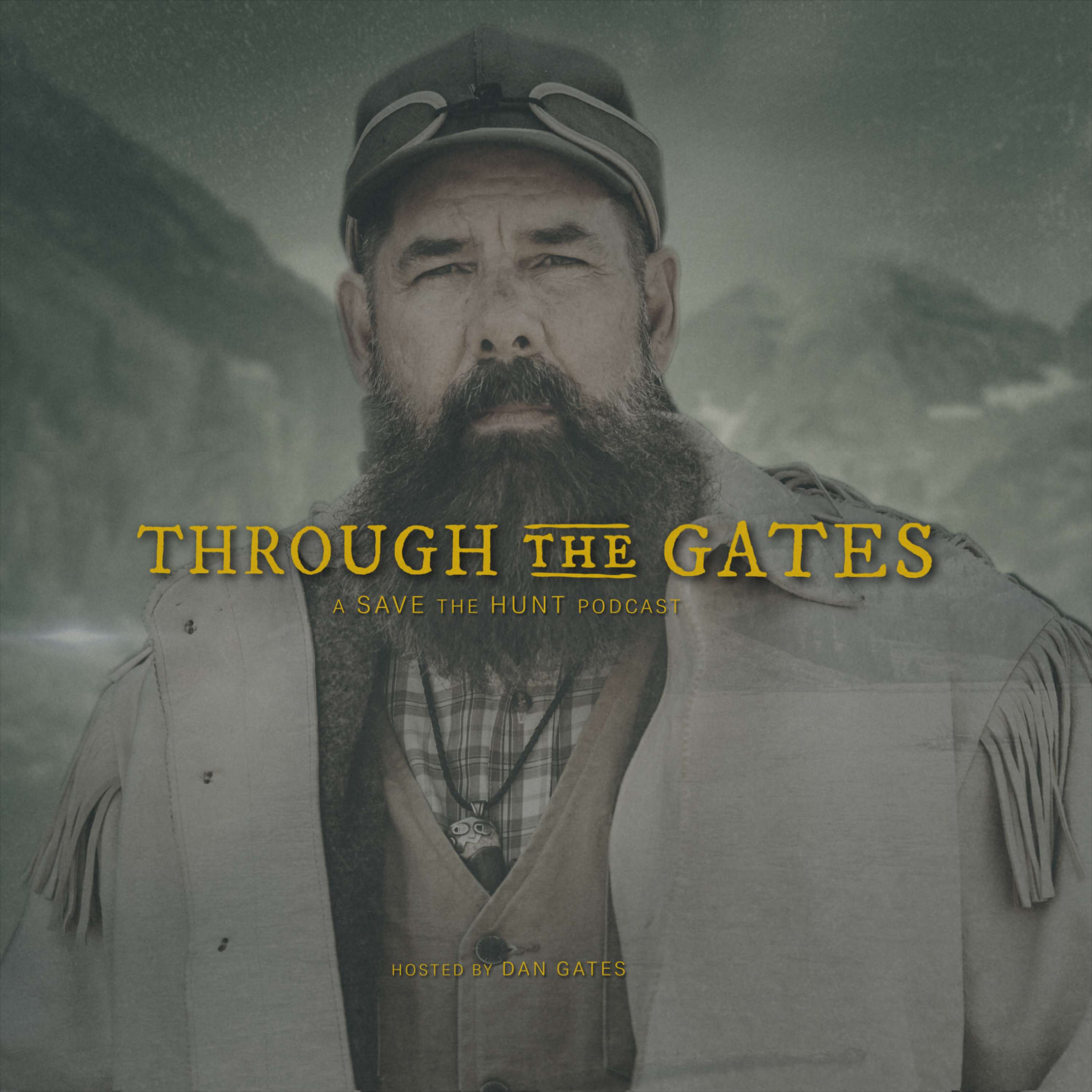
Through the Gates · Dan Gates - Save the Hunt
What happens when the fight to protect hunting, fishing, and wildlife conservation moves from the field to the political arena? On this episode of Through the Gates, Dan Gates sits down with Cable Smith, host of the Lone Star Outdoor Show, for an in-depth conversation about the future of hunting, science-based wildlife management, public lands, predator hunting, and the growing political challenges facing sportsmen across America. Cable shares how he went from a radio broadcasting graduate with a passion for bass fishing and duck hunting to building one of the longest-running outdoor media platforms in the country. With more than 800 weekly episodes, decades of hunting experience, and a growing role in conservation advocacy, Cable has seen firsthand how the outdoor industry has changed—and why hunters can no longer afford to ignore wildlife politics. The conversation explores the lessons Colorado's Proposition 127 fight holds for other states, why public lands matter even in states dominated by private property, and how hunting traditions connect families and communities across generations. Dan and Cable also discuss chronic wasting disease (CWD), mountain lion and bear hunting with hounds, wildlife commissions and political decision-making, the funding behind North American wildlife conservation, and the importance of protecting the right to hunt and fish for future generations. With Colorado's Amendment 83 on the ballot, this conversation takes on added significance. Dan explains how a constitutional Right to Hunt and Fish could help protect Colorado's outdoor heritage while preserving wildlife management authority and science-based conservation. Whether you're a lifelong hunter, an angler, a public-land advocate, or someone who cares about the future of America's wildlife, this episode connects the dots between hunting, conservation, politics, and the responsibility to pass our outdoor traditions on to the next generation. IN THIS EPISODE: Cable Smith's journey building the Lone Star Outdoor Show Why hunters must get involved in conservation politics Lessons from Colorado's fight against Proposition 127 Public lands, private land hunting, and access for future generations The traditions and family connections built around deer and elk camp Backcountry elk hunting and the rewards of DIY hunts Mountain lion hunting, houndsmen, and ethical decision-making Chronic wasting disease and wildlife management controversies Texas wildlife policy and the role of state wildlife agencies Why science should guide wildlife commissions The North American Model of Wildlife Conservation and conservation funding Colorado's constitutional Right to Hunt and Fish and Amendment 83 Why apathy is not an option for hunters and conservationists
Dan Gates: Well, we are here with Mr. Cable Smith with Lone Star Outdoor Show. Cable and I got to introduced to each other when we were doing the 127 campaign on the prohibition of Mountain Lion and Bobcat hunting back in 2024. And he was a great supporter and an advocate of what we were trying to do to get the message out. And we've talked a few times. We'd never physically met. Which is I'm finding out common practice in this landscape is everybody sees each other on Zoom or the Hollywood Squares program and And they never in engage in any capacity. But I think our paths will probably cross at some point. Either me coming to Texas, you coming to Colorado or us ended up in the same spot. But Cable introduce yourself, give our viewers and listeners a little bit of a background of who, when, why, what, where, and how. And you you've been doing this a long time, so it's not like you need an introduction, but give me give me your best elevator sales pitch. Cable: Yeah, so I appreciate you having me on, Dan. And but yeah, a little background. I went and got a college degree in radio, TV, film, and I wanted to do sports talk radio. Apparently everybody wanted to do sports talk radio because it was highly competitive. So wife and I got married, we moved to East Texas, I took a job at a radio station in Texas Arcana. You had to drive to Arkansas to buy beer. but yeah the one of the job requirements was my boss In addition to doing the the sports talk stuff I want to do, he's like, you gotta do a weekly outdoor talk show and I was like, Okay. I like at the time I was primarily just into duck hunting and bass fishing. so this is that's in two thousand eight. The economy crashes, I get I lose my job, they can't afford to pay me anymore. And so the wife and I moved back to North Texas and she she still kept her job. So we weren't destitute or homeless or anything, thank God. But Dan Gates: Ha ha. Cable: she was like, Well what are you gonna do now? And I was like, I don't know. I but I really liked that, I really liked doing the outdoor show. And I was like, Maybe I could just do that full time and you know, I don't think I made a dime for the first two years. Maybe, you know, I was I was taking two hundred dollars to produce a thirty second commercial for Jim Bob's guide service on Lake Texoma and just praying that he would send the check like he said he was going to. Dan Gates: Mm-hmm. Cable: But yeah, I mean it was like a a break even deal and and finally started to make a little bit of money and and I just fell in love with the people in the outdoor space and said, you know what, screw sports talk radio. This is this feels like my calling and providing something that's educational, entertaining and conservation driven week in and week out. That's what I've been doing for the last eighteen years. So crazy though, because back then the word podcast didn't exist. It was just a radio show. And I was like, Hey, if you missed the show you can get it on my website or iTunes, which I is a podcast technically, but nobody knew what a podcast was back then. No. Dan Gates: No. No. I mean, hell I didn't know what a podcast was until until MeDeater asked me to get on their in in person, you know, Cable: Yeah. Dan Gates: podcast in Denver. I'd never listened to a podcast. I mean, I was always out in the field doing all the other stuff and and and people said, You need to do a podcast and I'm like, I don't even know what the hell you're talking about. And then that first year I did eighty six podcasts on everybody else's shows, including yours, Cable: Yeah. Dan Gates: for the one twenty seven campaign and People kept saying, You need to do your own and I'm like, I don't wanna do this. But then I Cable: Right. Dan Gates: found not so much that I want to do it, it's the message and the connectivity that it creates for all the other advocacy work that you're doing to help connect the dots on so many different levels. And that's what kind of drew me into it, specifically, you know, in what we were able to do on one twenty seven and that ordinance three eight, the fur band. Cable: Mm-hmm. Dan Gates: And it was a it was a message to get out to people to where they could be up to date. fairly expeditiously or almost immediately, depending on when you turned something out and you needed people to show up or or engage. But when you started this, it was a motivational factor of of employment, it sounds like, not a need to try to message to people to say, get your ass to the Capitol or try to support this financially. Cable: Yeah, no, for sure. I mean I I wanted to stay in radio and I was like, Well I I listened to the other outdoor shows that were airing in Texas at the time and it was guys in their sixties, there was two or three of and they're basically just reading lake reports and I found it like it it was good and people in in their demographic enjoyed it, but I like, This is boring for someone my age. I'm in my late twenties. I'm in my late twenties at the time. I'm forty five now, but I was like, how do we make this exciting? How do we get people excited about the outdoors? And and so I you know, I like, Well I'll incorporate music, I'll incorporate country music, we'll have artists on and was kind of like, you know, one of the I guess that that was something totally foreign to those other shows. They would never do that. But I Dan Gates: Mm-hmm. Cable: was like, if these guys that we like to listen to their music, if they like to hunt and fish, why would we not have them on and let them sing their songs and then talk about, you know, how they're their deer season was or how they enjoyed the the crappie run or whatever it was, you know. so yeah, I was just like, let's let's not reinvent the wheel, but let's just change it up a little bit and try to get people excited and and provide some entertainment to go along with the the c the the driving factor, which is, you know, conservation. Dan Gates: When you started, you had some background and knowledge about the setup and the the radio equipment and and what to do. But but even then the digital or the computer aspect of the of this was much different than what it is now. I Cable: yeah. Yeah. Dan Gates: mean I envision you sitting there next to a light bulb in a dark closet trying to turn around and get connections with a carrier pigeon on a on a tin can with a string or something. Cable: It's hilarious. I had to get this thing, it was called a a Gitmer a Gitmo. Ba basically it was this thing that you could put on on a landline and then record. And th and if you go ba I mean those old episodes are still on my website, but if you were to listen to one of them, the audio quality is utter garbage compared to what we have today. It's embarrassing really, but that's what we had. Yeah. I mean that's what we had to work with, you know, and Dan Gates: It's like being on a party line. Cable: Technology for someone that is, you know, uses it every day, my wife will be like, You're the most untechnological person that uses modern technology every day. And I'm like, Well, that's because I'm I'm like well, I'm like you, Dan. I'd rather be out out in the field, you Dan Gates: Yeah. Cable: know, but I gotta I had to learn how to use it. So I don't know, I'm really battling the AI thing right now. I know my youngest brother, he's not really a hunter, but he's real into AI and he's like, Dude, I can make your website better in like an hour. And I'm like, huh, maybe I'm missing the boat on this AI thing, but you know, I'm also pissed at at these data centers for coming in and destroying and not just habitat, but like, you know, they're buying up family ranches. Well that was five thousand acres that was viable wildlife habitat, even though it's private land in my state. I don't know, I just hate I hate seeing all that, but it's here to stay, it's not going anywhere, so Yes, embr embrace Dan Gates: So Cable: it. Dan Gates: so when did you s when did you start actually having to do an editing and 'cause w were you doing well you were doing just audio before, not video? So when you Cable: Mm. Yeah, well yeah. Yeah. And I probably didn't start doing video until COVID and we started doing Zoom. Yeah. Dan Gates: Yeah, so so were you technologically advanced enough to turn around and start editing or did you just sit there like a a a bumper head in a rubber room trying to figure out what what your capacities are? I mean y you had to grow with the times and some of that was Cable: yeah. Dan Gates: by d need and this necessity. When did you start getting to a point to where you actually felt comfortable enough that you could jump from complete audio into audio video and then turn around and worry about how you're gonna kick that stuff out? Cable: Yeah, I mean that was just a natural progression when Zoom came around, you know, I was just like, All right, well and I had started using Skype some because the audio quality was better. I mean the landline stuff was just like well, this technology exists, so we gotta dump this landline thing. This just sounds Dan Gates: Yeah. Cable: sounds terrible. but yeah, as far as video, I mean I know you invest a lot or or or putting all your stuff on YouTube. I only put it out there if it's something I recorded on, you know, Riverside or Zoom or something like that. so I do probably miss some some of our episodes that are recorded in person in the studio or if we're at a trade show or something and we're recording. Yeah, those those don't get any audio. But you know, like we were talking about off the air, might I don't know if YouTube has me flagged or what's going on, but I don't get a lot of traction on YouTube. I pretty much use social media to try to put out the the most important points from Dan Gates: Mm-hmm. Cable: from the show. Dan Gates: And then you're directing them to your site to where they can just turn around and go listen on whatever platform they listen on. Cable: Yeah, iTunes or Apple or if they wanna just stream it straight from the website, they can do it that way. but yeah, it's it's crazy to think like when I started Spotify wasn't a thing, you know, like Dan Gates: Yeah. Cable: that didn't exist. And we still have about twenty radio stations in Texas that carry the show every weekend. so still just still still on the radio. Yeah. Dan Gates: that's cool. That's good. And and and how about your how about your sponsorships? Have they evolved into something to where well, okay, we'll go ahead and support the idiot who's sitting in the closet doing this stuff to a level if they think that this is a way to be able to promote their mission, message, product, destination or whatever? Cable: Yeah, I mean I think like I was concerned when podcasts became popular 'cause like, man, this is gonna make this space so much more competitive. I mean, I went and got a degree in this and now is my degree worthless? because any Tom Dick or Harry can start a podcast now. But what actually happened was what actually Dan Gates: That's me. Cable: happened was it popularized you know, podcasts to the point where more people started listening to my show. And then you can track those you know, you can track the performance and then I I use that to send to potential sponsors. But I kind of at a point now where I I have all the I have enough sponsors for for the show to where there's a there's kind of a waiting list. but I you know I've worked with a lot of them for over a decade so they kinda they kinda let me do my thing and you know, I guess trust that that they're they're getting an ROI on it. So Dan Gates: Exactly. Cable: yeah. But they also they also get plugs on social media and they and they can see that and track that a lot easier. For sure. Dan Gates: But you've done you've done is it close to a thousand so far episodes? Cable: Yeah, I think we have eight hundred and forty something episodes and then another those are the weekly ones. And then I do these campfire conversations when I have just more content than I can put out. I think I have a hundred of those, so something like that. Dan Gates: And I'm looking at your website now and it's you got stuff in Brady and Beaumont and and Abilene. You got stuff all over the state of Texas. Cable: Try to. We try to, you know, keep a good footprint so folks can because there are guys, let's just say my age and younger are probably listening to podcasts, you know, through via the podcast form, but the older guys they they get up and they listen to the radio on the weekends. Dan Gates: Mm-hmm. Cable: And I track that because I do a giveaway every week so I can see, you know, I'm like email in and I, you know, I'll I'll ask people occasionally like, Where are you listening from? And It's usually it's usually guys north of fifty that are that are listening on the radio, yeah. But I'm a radio Dan Gates: That are doing the radio. Yeah. Huh. Cable: junkie. I still listen to the radio I mean all the time. When in the truck. I don't just sit here at home and turn on the radio. Dan Gates: It's you don't have the old box sitting there and you all s gather around the radio and listen to it. The fireside chats. Cable: Nah. Yeah. Yeah. Dan Gates: Yeah. I I r now I remember doing that in in Arkansas with my my great uncles. they had three channels on television and when the rabbit ears on top of the roof got sideways you went and sat down and listened to the radio and and Cable: Mm-hmm. Yeah. Dan Gates: It I I I reminisce about those days and I miss those days, but I hated it at the time. It was either watched Lawrence Welk, hee haw, or had to listen to some sort of news station out of you know, Fayetteville, Arkansas or something someplace. Cable: Right. yeah. Dan Gates: and so I just wish we could have turned around and worked the fields twenty four hours a day when I had to do that stuff. So but so so for what this has gotten you into You were a sportsman, you were a hunter, you participated at multiple levels before you did this, but this has Cable: Mm-hmm. Dan Gates: kind of expanded your horizons to the point to where you're in a circle of the industry that maybe wouldn't have brought you in that close, but at the same time you trying to figure out how to be a constant message for that circle to expand the circles out at different levels. Cable: Mm-hmm. Yeah, well, it's funny and you know, there was a time when I was younger, I was like almost embarrassed to admit this, but when I started that show on the radio in East Texas for the radio station, I'd never shot a deer. I grew up bass fishing and I was so involved with with club sports that we did hunting and fishing. I mean, we did bass fishing and and camping. but my dad didn't own any guns. I got into that in college. A buddy was like I had a lab. I got a lab with a girlfriend. She left, the lab stayed, and my buddies like, Come on, your dog likes to fetch tennis balls and sticks. Who who'll fetch ducks for us? I'm like, Well, what does this entail? They're like, Well, you need a hunting license and a shotgun. I'm like, Okay, great. So I bar 10 enough to save up for an eight seventy, go buy the the dang thing, get a hunting license, and I'm like, All right, I'm I'm in, we're going duck hunting. I knew the dog was gonna hate it because he hated fireworks and not like loud noises. Yeah. Dan Gates: It's Cable: So we go and everyone's missing, I guess. They they didn't look like they'd been duck hunting much to me because they were terrible shots and we couldn't hit a duck to save our lives. Finally, someone knocks down a mallard. And the dog is he's a hundred pound lab. He's tied to the back of the blind. He's trying to leave every time we shoot. Dan Gates: Uh-huh. Cable: And someone knocked a bird down and I let old Maverick off of his lead and he went and fetched the bird and brought it back and dropped it at my feet. And I was like, Huh. Okay. And from that day, if you Dan Gates: Huh. This is pretty cool. Cable: if you went and picked up a shotgun, he was sitting by the door. So he was got comp once he saw the duck go down, something in his brain switched to he's like, Huh. Okay, I'm gonna go get the duck now. And then he was just like, I'm all in. And so then I was like, I guess I'm all in. So I was Dan Gates: If the dog's gonna do it, why shouldn't I? Cable: like, cool. And then we learned how to duck hunt together on public land. And made so many mistakes, you know, and I'm reading every article I can at the time, you know, like waiting for the next ducks unlimited to come out so I can read about decoy spreads and just, you know and and then there was some there was online chat forms were starting to get big, so you could get on a hunting forum and you know, pick people's brains and I still am good friends with a lot of those guys I met on online forums to this day, even though I haven't been on a hunting forum in years. But so yeah, so when I started doing that show in East Texas, I I had was into dove hunting and duck hunting, just stuff I could do with my lab and had never shot a big game animal. But that first year I was like, God, I guess I I I'm gonna host a hunting shop. I better go shoot some deer. See what that's all about. See if I like that. And and then I just fell in love with that. So I mean now I have two deer leases and probably spend more time deer hunting than anything else. But no stranger to Colorado. I'm I I love hunting elk in Colorado and I've shot I've shot an elk in Colorado. Shot a mountain lion in Colorado. and have points, you know, saving points just like building points just like everyone else in all the western states. But I'd say archery elk hunting is my favorite thing. If you could just say, you know, you have to pick one thing. I would say hunting the rut in the mountains in September with a bow is it's by far my favorite. Dan Gates: Yeah. Cable: So but yeah, so you're you know, and I've been to Africa nine times and I'm leaving next week to go to British Columbia for a mountain goat hunt. So it's called the Lone Star Outdoors Show. It's not really Texas focused anymore, which is why, you know, which is why I wanted to have you on the show originally when we first got connected. Dan Gates: Mm-hmm. Cable: Because all of these things Whether people want to admit it or not, and I live in a state that's very proud, like Colorado once was. Dan Gates: Right. Cable: like that well, people are like, Well that could never happen in Texas I'm like apathy Dan Gates: Okay. Cable: is no excuse because it's coming. It's coming everywhere. So Dan Gates: Yeah, you and you've and you've seen it transition into something I I've done it the majority of my entire life because this is what I've always done. Not podcast, but all the other components to that. Cable: Mm-hmm. Dan Gates: If you just started hunting not too long ago, I mean probably maybe half of your life, Cable: Mm-hmm. Dan Gates: but the the the attacks and the assaults on this stuff are unknown to people that don't pay attention or they're not in that particular wheelhouse. And so Cable: Mm-hmm. Dan Gates: did you ever think that you would get to a point when you started your podcast, you started your radio show, that you did the outdoor show, that did you realize that there was politics involved in any of this stuff? Did you just I mean, did you ever pa cross your mind? Cable: yes, and and that's why I always vote conservative, right? Because one side introduces all of the anti hunting legislation. One side's a lot more willing to bastardize the second amendment than the other. But then the way that I vote, they can turn around, the other side can start turn around and say, Well, you guys suck on public lands, and I say yes, yes, we're not the best. But you know what? I'm gonna fight with you for that. And Dan Gates: Right. Cable: I'm not gonna let sell off one acre. Because not because I d I think some of the land probably should be sold off. It's not great habitat. And but I don't think you can give the government a blank check. 'Cause if Dan Gates: No. Cable: you give them carte blanche to do it, like where do they stop? And that's why that's why I'm like, no, you can't. You can't negotiate with them. You just it's a hard line for me. You can't no, we're not selling public land. Period. But I come from a state that's ninety eight percent private land, right? So for me, my hunting Well, and this is a good example. So when I was hunting Mule Deer in Colorado two years ago, I had conversations. I was there third rifle season for Mule Deer, but the orange army of elk hunters, over-the-counter elk hunters, were out. I'm like, well, this kind of sucks, you know? And it did for me, but I talked to so many guys that were so nice who are there with their tents or their camper. And it's not this unit I was in was just north of Chama Dan Gates: Mm-hmm. Cable: and Most of the hunting I've done on public land has been like true backpack in. It's been, you know, put everything on your back and go in. So this was a little more you know, had more road access. So these guys would put their camps there and they would stay for the whole season. And then I came to respect the fact that I was like, This is their deer camp. They don't have a a private land place to go like I do. And yes, I pay for that and it there is a lot of sweat equity that is put into that and financial investment. And people don't realize that. Like that is a commitment. but This is their deer camp. And I've and I s started to realize the tradition that came along with that and it's brothers, you know, hanging out. And some of they don't they don't see each other very often, you know. They're they but they get together for their elk camp every year. And so while I was like, This is annoying 'cause there's so many hunters, I I left with a different perception. I was like, Yeah, this is this is what they do every year for their you know, this is their deer camp. And Dan Gates: And it used to be far different than that. I mean, there was there was camps when I was a young guy, kid, teens, that up until we actually switched areas five or six, seven years ago for cl proximity, looking for something different. But those camps had been established and it was generational. Cable: Mm-hmm. Dan Gates: It was it was, you know, grandpa's uncles, brothers, cousins, next door neighbor, and they were all Hispanic out of Pueblo, Colorado. And matter of fact, I even remember names of some of But you know, the but after thirty years, the guy that was fifty is now eighty and he's sitting in camp, maybe cooking, but then the Cable: Yeah. Dan Gates: grandkid is doing it, and it's it's generational, and you look and you go, There's nine tenths there. There's twenty-seven people in that camp, and it's become a family function, just just like what you're referring to. And then when it even got more convocation. With the the lack of over-the-counter deer tags because everything Cable: Mm-hmm. Dan Gates: became draw, and because of the supply and demand side of things, where not everybody drew a tag, not everybody had a chance, then they became I think a little bit spread out, a little bit more sporadic to where, well, if there's twenty seven of us and we're used to getting eighteen licenses, but now we're only getting seven, we're better off to split off and try to go to another area. So then they start their own little generational elk camp. Cable: Mm-hmm. Dan Gates: But it's not like it used to be. It's not as defined and family oriented as it used to be. It's still there, but not like it was when I was a kid and what I grew up into my early thirties and forties, where you saw this was this was a tradition. It was a heritage. And they s they stayed in the same spot. I mean, when when anybody else went into that area, if they've hunted those locations, you didn't camp there because the Mexicans f were camping there. You know, that's that was their spot. That was that was their game poles, that was their firewood stash, that was their that's You know, they put their big army tents and stuff up. You don't s yeah. Cable: Yeah. I ate breakfast tacos with a couple of those guys. They were super nice. And they were brothers. and yeah, they were like, man, I saw a big mule deer over here and I was like, you know, and then they were like, Did you see any elk? And I like, I did actually, I saw, you know, a whole heart. I was like, But I didn't see any bulls that morning, but yeah, and they like, Hey, you want a breakfast taco? And I'm like, Yeah, sure. Yeah. Dan Gates: Yeah. I mean I I ca I can I can remember on many occasions of of we always hunted in in gr smaller groups, you know, three, five, seven of us tops. There was one occasion when we had about twenty two, twenty four people show up and we had a we had a circus Cable: wow. Dan Gates: tent that looked like looked like Barnum and Bailey. And th and the and the Mexican guys that came over, and they didn't w and and I wanna emphasize they didn't class themsel classify themselves as Hispanics. They were Mexicans. This is what the Cable: Yeah. Yeah. Dan Gates: this is I mean This is what their culture was. And we put this tent up and it was in the aspen trees, but it was so big it was one of those old marquee type white canvas tents. And from their camp, probably three-eighths of a mile away, they could see this illuminated tent through the aspen trees. But what made them come over is because that the angles of the top of the tent, it was 14-foot centers with seven-foot sidewalls. And they they saw they saw visions of of of shadows inside the tent that we need to have to turn around and and and figure out a way to try to you know tell them hey w w there's only twelve of us here but only seven of us are actually hunting. Cable: Yeah. Yeah. Yeah, it it was it was cool to see and you know, I just learned like I felt bad because I burned like five mule deer points and then I was like, Well maybe I should have picked a different unit, but you know, live and learn. You know. Saw a bunch of mule deer, just nothing you know, that was captivating. So Dan Gates: What state do you like to hunt the best? Cable: I mean the one I've had the most success in and have spent the most time in is New Mexico. I've shot a couple Archery bulls there, you know, public land. Just pack in and cheat a little bit if you get one. I I started backpacking there when I was twenty-one with my dad. I'm forty-five now. but he did a church trip with his buddies. They've been doing it since I was a a boy. And once you turn twenty one, they're like, All right, you're a man now, you can come on the trip. And so they were all, they were just like, let's go look at this waterfall fall. My dad wasn't doing that. He was like, Where's the trout? 'Cause that's what he's a huge fisherman. That's all he cared about. And so I went, I was like, Well, yeah, I want to go fishing. So we would just fish and then I started seeing all these grouse and I like, When is grouse season? And we're always going in September. And then the next thing you know, I had a shotgun. And I was like, All right, what about these elk? You know, where how can I hunt one of these things? And so then next thing I'm putting in for elk tags. But so I was real familiar with New Mexico and the Pecos Wilderness and the Carson National Forest. And so I started putting in for those places where I'd already spent weeks of my life camping, fishing. And yeah, I've and this is what I'll say, because if it if any flatlander like me can go in and kill an elk with the with the bow and arrow, then you know, I'm nothing special. So don't let that the fact that you've never done it or don't know how to do it, don't let that discourage you from going out there and trying. 'Cause I missed a bull the first time I ever went. And then the next the next year I killed one. And that's prob that was probably like the singular biggest accomplishment I would say of of my hunting career, you know, because I've been on tons of guided hunts and those are great and those can be physically demanding as well. But to to do it on your own, that's that's where the trophy is in that experience Dan Gates: Mm-hmm. Mm-hmm. Cable: and having finding that success and and sharing those moments with a good buddy, you know, that you you're in the suck. You're you hiked in seven miles, you've got blisters, life is is terrible, it's raining. the weather's horrible. but you you come out with full packs, that that's that's that's the trophy. Dan Gates: problem I see is I was if I'm coming out with a full pack it seems like more often than not that I'm the only idiot that's coming out and then I gotta go back in and come out and go back in and come out. Cable: Well, so there's there's a great way to cheat and that is since I had been backpacking in that area, I had you know, at the time I had a satellite phone. Two this is long before Garmin Enreach existed. I just had a sat phone to tell the wife I was still alive. In the first backcountry hunt I did, first Archery Elk I did, I went by myself and I didn't see another person for five days, which was r the only time my life I can say I was in that level of seclusion. I was like How do those guys in Alaska, the real hermits, they get off the grid? How do they do that? 'Cause I'm like, after five days, I'm looking for someone to talk to. And then I did see I saw a guy on horseback. Yeah. Yeah. I was Dan Gates: Especially a especially a podcast radio guy, you know. Cable: like, This it solitude is great. And and I really like it, but up to a point where I was just like, Man, it would be nice to like have a conversation with somebody. but anyway, my wife was like, My buddy bailed at last minute. They had a death in the family, I'm like, Well, I'm going. I have the tag, I'm going by myself. My wife was not real thrilled about that. So I had the sap phone and then I had the number to the stable that when my dad and his buddies would go in, there'd be fifteen to twenty-five guys. And so they would put everything on their back except for like their food and and as they got older it they got fancier, so they wanted to bring more stuff in. And so they started having horses carried in. So I had that that lady, Lou Story is her name, Circle S stables. And so I called her and I like, hey If I get this to a trail, will you come get it? And she was like, Yeah, absolutely. For seven hundred dollars. And I was like, Sold. You know, you she could have told me it was five times that. And I'd be like, Yes. Yes, I do not want to pack this thing out seven miles. Yeah. And then your buddies with you. So Dan Gates: Yeah. 'Cause se seven yeah, and the seven seven miles you got you got you got a fourteen mile round trip and and that's times two or three and and yeah. Cable: yeah. Yeah. Dan Gates: that the it makes it taste better but but you Cable: Mm-hmm. Dan Gates: it you d you you wanna save it so you don't have to go back and do it again. Cable: Yeah. yeah. well I know I've taken elk out in Montana. I didn't shoot it, a buddy shot it. but we didn't have the luxury that time, you know. So it's I mean, we've done it both ways, but I I highly recommend if you've got some access to some horses. Dan Gates: Yeah. Have you hunted off horseback? Cable: I have, but I end up w I end up walking with the horse. because my bac I my I've like a couple of L four, L five situation from a wreck when I was in my early twenties. Some lady was late to mass and she T boned me. And at the time I was young and didn't really pay much attention, you know. They were like, You need to do physical therapy. I'm like, Yeah, I'm fine. I'm a young I'm twenty five years old, whatever. so anyway, I I ended up walking with the horses 'cause the horse hurts my back, but I'll ride it for a little while and then you know. Well When I sh shot my mountain lion in Colorado, that was a lot on horseback and that wasn't optional. You know, the outfitter was Dan Gates: Yeah. Cable: like, You're gonna be and we're in such steep terrain there. Gosh, I mean, we were up by Rangeley, Dan Gates: Mm-hmm. Cable: close to that Utah border. And I w I went with this guy three trips, eighteen days total. And I w this is back when y'all had the dry ground season. Dan Gates: Yeah. Cable: And that was the appeal for me. I was like, I want to go with a guy who has knows has the knowledge and the dogs to to catch one on dry ground. So we went in the spring, did seven days. Weather wasn't very good. Rained or sleeted every day. And I called my wife after seven days and I was like, When do you have to go back to work? And she's like, Don't do it, you son of a bitch And I was like, I'm doing it And I stayed Dan Gates: Ha ha ha ha. Cable: three more days and didn't get one. So then the next year I went back in the wintertime in the snow and we caught three but they were all female so we let go. And so then I went back the next year and there was no snow, even though it was December. And he called me, he was like, I think we should cancel. He was like, There's no snow. And I was like, Flight's already booked, bro. I'm coming. Plus I want to do on dry ground anyway. So we go for the first time we're hunting on private land and this this rancher had lost two colts to a mountain lion. And he said, Whatever you catch, you have to kill it. And I said, Okay. the outfitter asked me if I was okay with that. And I was like, Yeah, that's fine. We were on day eighteen now. And that first morning, the dry ground, we're on I'm on a mule because he wouldn't put me on a horse because he called me a a dude from Texas. He's like, Dudes don't get on horses, they get mules. So I'm on a mule and we're free casting these hounds. They we find an elk kill and then within ten minutes they've treated this cat. And it ended up being a female. And he looked at me and he was like, You want you want to shoot or you want me to? He's well, we can go find you a big Tom. And I was like, Well, we did it on dry ground. That was the thing I wanted most. If I if you kill this cat, we have to go kill another one. So from a conservation standpoint, like what that doesn't do much for me. So like this is our cat. So I shot it and ate it. Thought it was it was great, you know, fed it to my friends who would never a lot of my friends don't hunt. Kids I grew up with anyway. So I we you know, we had like a cowboy football game. I invited one everyone over and we cooked them out in line. but one thing was I told him, I said, I want I want the heart. He like, Mm I don't really do the internal stuff on the cats because they stink. And I like, All right, well, I'm getting it. And the next morning he walked out and he was like, That son of a bitch really took the heart out of that thing. Yeah. So I ate the heart too. I was like, I want to have the heart of a lion, so I ate it. And No, it was a great experience and and I do w I always said I'll just I wanna kill one mountain. I do want to go back and get a big Tom. and I and really the thrill of chasing hounds in the mountains for me is like the driving factor there. I absolutely love it. And but yeah, it was a hell of an experience spending eight days over three trips with that guy. And highly recommend it. Dan Gates: Have you done have you done much bear hunting? Cable: yeah, I've shot bears in Canada, New Mexico and well, Vancouver Island and then also in Alberta. So some in Canada and then in New Mexico. And New Mexico was with hounds. Alberta was sitting in a tree stand and then Vancouver Island was spot in stock. So I've tried all three. Yeah. Uhhuh. Dan Gates: All th all three. What do you prefer? Cable: I like sitting in the tree stand as far as how many bears you get to see. But it's kinda boring, right? I mean you're sitting there. I like being out and moving. So I would say the spotting stock was cool, but like I'll just go back to the hounds. Like I just like the dogs. I that's Dan Gates: Yeah. Cable: why I fell in love with duck hunting. was because of the dogs. So anytime there's four leggeds involved, I'm gonna lean that way. Dan Gates: And that's hard to understand for some people that, you know, we kept hearing during during the one twenty-seven campaign that we do this for the dogs. We do this because of the dogs. We do this because I love dogs. And the culmination of that was trying to get that point across to the general public that the majority of the houndsmen I'm not talking about outfitters. Outfitters are doing it to take people out. with the tool of choice that they have, but I'm talking about houndsmen. The reason they did that they do this is more frequently because of the dogs and because of the hounds. And we had guys that said, you know, we we trained we trained eighteen cats last year, never killed a cat. You we treated nine cats last year, never killed a cat. We've s or or or the houndsman themselves, or even the outfitter in most occasions, was like, you know, I've been on hundreds and hundreds of of trees with lions and bears, and I've never pulled the trigger on anything, or I haven't in Cable: Mm-hmm. Dan Gates: the last twenty years. That's hard for people to understand because they assume that you're out there and you're going to kill every single thing that you come along. And you you're a prime example. You what'd you say? You hunted eighteen days and and treated how many lions and finally ended up killing one? Cable: Mm-hmm. Dan Gates: But it's I I had a conversation with some animal rights, animal welfare individuals that I have to fight against, who are actually decent to sit and talk to. I mean, they're just good people, but we have different perspectives. Cable: Mm-hmm. Dan Gates: But the conversation that we had when we first had coffee one time, i they were enamored that I didn't kill everything that we turned around and came upon. It was like we walked through the valley of the shadow of death like Hulk Hogan or something and killed, you know, killed everything with a giant hammer and a shield. No matter what it was, it was going to die. And I said, Do you know how many things I've turned down? And they're like, Why would you do that? And I said, Because it's my choice. And maybe it was maybe it wasn't the right size, maybe it was in the wrong location, maybe it wasn't you know, there's so many different examples you could give. It's my decision that I'm going to that I'm going to hard. I'm going to decide what I'm going to turn around and try to acquire. And that's why Cable: Mm. Dan Gates: the success rate is so low on so many different things. Now, white-tailed deer, success rate's high, but there's a lot of people out there that pass a lot of white-tailed deer up that never harvest the deer, or they turn around and go harvest the dough for meat because they didn't find the buck that they wanted. That in itself is what houndsmen are known for in the hunting community. But in the non-hunting community, in the in the anti-community, That's not common knowledge and they don't want that to be given because then that gives a different perspective of what they're trying to convey about the guy with a giant hammer and a shield walking through crushing everything. Cable: for sure. Yeah, and my the guy that I went hunting with Wayne Pinnell, he has killed one mountain lion in his life. And it's over his mantle in his living room. And so I knew when he asked me, Do you want to shoot it or you want me to? I knew he did not want to shoot it. Because he's how many times had he been to the tree? Hundreds. Hundreds. And he's killed one cat. And he's just like, Yeah, from a conservation standpoint, you know, I'm good. So, you know, it made all the sense in the world for me. I'm doing this rancher a favor. We've accomplished what I set out to do on dry ground. And we've put in our you know, we've put in day eighteen, you know. I think we I think this is the right cat for all those reasons. But but yeah, I certainly didn't want him to have to shoot it. Dan Gates: Have you gotten involved just by the cycle of attrition on the politics side of things in Texas and what you've had to turn around and do to promote or educate or advocate for? Cable: for sure. I mean I've had on Governor Abbott's been on the show multiple times. Ted Cruz has been on. even pirate Dan Crenshaw who we just kicked out. Everyone thought he was a good you know, gonna be a very charismatic young leader for the Conservative Party, but turned out to be a rhino douchebag and and treated people nasty. So, you know, he's probably one I regret having on, honestly. But And then I've had on, you know, Secretary Zinke, I've had on Alaska's governor, I mean, I don't remember all of the politicians I've had Andrew Clyde, who was essential from Georgia, Congressman Clyde, who this was more recently, helped us get the the tax stamp for suppressors. I can't I cannot believe we got that accomplished. I didn't think in my lifetime we'd ever see that. And here we are now. We don't have to pay the the two hundred dollar tax stamp anymore. And we don't have to wait months and months and months to get our suppressor on that's a wonderful thing. but I would say like one of the well like I when I had Ted Cruz on, we did get a little sideways on public land because his default was, Well in if you're in Texas you can just get a deer lease. And like, Yeah, but that's expensive. And like not everyone has is in the same financial situation. So, you know, he's friends with Mike Lee. And and they Dan Gates: Mm-hmm. Utah. Cable: politically they they align a lot of the time. So but I did tell him I was like, well, that's not how hunters are gonna look at that senator. So I don't know. That was probably five years ago. That was before this whole this round of, you know, what Mike Lee was trying to accomplish was in play. But yeah, it Mike Lee's been we've known about him for a long time as far as his idea on public land. And you know what? Part of me understands because his state is what, eighty four percent not federally owned. I think it's seventy percent federally owned and like fourteen percent or something owned by the state. And so that doesn't leave a lot of room for growth, you know. I mean I get it. But again, I don't trust Mike Lee to stop doing it, you know, once he d once he starts. No. Dan Gates: No. No, it's not it's not gonna be a one off. It's it's it's gonna continually expand into other opportunities. but Cable: Mm-hmm. Dan Gates: but in Texas, I mean the Texas is kind of the flip side. The private the Cable: Yeah, we're Dan Gates: private land is, you know, what I don't know, ninety one percent or eighty four percent or whatever. Ninety eight percent, yeah. I mean yeah, di completely Cable: Ninety eight percent private land. Yeah. We have two percent public land. And Dan Gates: different setup and scenario. But Texas is a big hunting state. You got w Cable: Massive. Massive. We kill more deer than any other state. We kill we kill and this is a cool thing. We're I don't wanna like if this is a time sensitive deal, but we're recording on the thirty first. Our our dove opener is tomorrow. That is a holiday for my family. My kids will not go to school. They will be in the gross minority. I don't know that anyone else in their school will take their kids out for the dove opener, but we will. And Texans kill more dove than every other state combined at the end of the year. And it's like in the it's I think it's seven to ten million a year. and most of those will be shot in the next two weeks. So Dan Gates: Which is which is interesting because as this as this episode airs, which would probably not be until October, because of our political stuff that we're having to deal with, I'm mentioning th this because you just said that that you you actually treat it like a like a holiday. And Cable: Mm-hmm. Dan Gates: on the second and third of September that we're recording this a couple of days prior to that. the Colorado Parks and Wallet Commission is having a commission meeting on the opening opening day of archery season and the second day after dove season. So we'll be sitting in a meeting when a lot of people would want to go out and hunt, which I think those things are s s strategized and planned to make sure that they don't have the engagement. but they don't they don't care here. And th there's a lot of states that I know, counties and states, they still close down the school for for deer season, for opening day of deer season. When I was in school they they gave you a three day window and I went to school outside of Colorado Springs. No, big city. It was a big town then. But they gave you a three-day window you could take off to go hunting somewhere to do something. It could be the first day, or there could be the last day, or it could be anywhere in between. And you had those three days grace, and you know, the kids had shotguns in their pickups and they drove back and forth because they went duck hunting in the morning. And we we were in the city. now it's even hard to find that in the rural communities, but there's still places that treat you know, branding season or or opening day of deer season or opening day of dove season as like a a rite and a ritual that people in those loc that aren't in those locations can't comprehend any of that stuff because it's not part of their culture, tradition and heritage. Cable: And that's very sad. my kids go to a public school here in McKinney, Texas, and there is n there are not a lot of other kids that are hunters. And my son is thirteen, he doesn't really talk about hunting with his friends because it's not you know, at thirteen years old, you you're you want to fit in, you wanna be cool, right? And that's always been sad to me because like that would be the first thing I was talking about. and he's been to Africa. And he it like he even told my wife the other day, he's like, I I hope dad takes me back to Africa. I really like that. I'm like, Yeah, maybe somewhere on down the road, buddy. But Dan Gates: Yeah. Cable: you know, it's not cheap. But he w he when they come to our house and they see all the the mounts and everything, and he's got four deer hanging in his room, then then he opens up and he'll talk about it. But and he'll talk about it with adults. It's weird. He just like It's just you don't want to talk about the stuff that's foreign to your buddies, I guess. I don't know. But so every year I try to get one of his friends to come to the deer lease with us over Thanksgiving. well g you know, Black Friday. and so that's kind of I'm like, we're trying to recruit his buddies into hunting. Dan Gates: Mm-hmm. Mm-hmm. Cable: but it is sad and it's different. Like you if you took if you had a shotgun in your truck, you're going to jail if you if you go on public school property. So Dan Gates: Yeah. Yeah. Yeah. Cable: far cry from how it was when I'm forty five, you're a little older than me, like Dan Gates: You don't have to rub it in, but yes, I am a little older older. But I but I'm looking so so Texas has got roughly thirty-one, almost thirty-two million people, one point one million paid hunting license holders, making it the largest hunting population in the United States. Estimated population of white-tailed deer is around five million hour animals pursued by roughly seven hundred and fifty thousand hunters each fall, and estimated of thirty six point seven million morning doves statewide for the twenty twenty-six season, with over three hundred thousand dove hunters participating annually. And I mean th those are numbers that are epic, you know. Cable: yeah. Yeah. No, I mean hunting is still huge here. but it is it's a pay to play state. I mean there we do so when I started duck hunting, I started on public land. I mean, we do have public land and our but our state is so big, like when we say it's only two percent, well there's still places you can go hunt. And Dan Gates: Mm-hmm. Cable: there you know, especially for waterfowl. in a lot of those places, you can dove hunt there too. I don't know if the hunting's gonna be great. I've done it. Typically if you got four or five birds, you know, dove. That pretty good. Dan Gates: Mm-hmm. Cable: where tomorrow morning when I'm going, I'm gonna sh I'm have a pretty good idea I'm gonna shoot my fifteen dove on private land. but and then there's we have we have places within an hour and a half of of DFW where you can archery whitetail hunt. Just get a permit from the Army Corps of Engineers or whatever it is. Each each lake's different. so there is opportunity. We have a good we have a good draw system. Texas Parks Wildlife does a good job. I've drawn those hunts on public land before. so there is opportunity. It's not like this limiting factor where you can't hunt, but it is it is hard. I would say it's hard to be a consistently kill deer on public land for sure. there I wish there was more opportunity for that like there is out west. But then would it would that make it there's always a catch twenty two. Then would you have to have a draw system like where it's now we're all fighting over tags. So I guess for me, I like it the way it is. And then I want to come out west and play in your sandbox as much as I can. So it's like the best of both worlds. And for introducing kids, Dan, this is my kids are thirteen, eleven, and eleven. For introducing kids and hunting, having a deer lease is just it's absolutely amazing. I don't Dan Gates: Yeah. Cable: I mean, they love going. it's a family affair. And I don't know. I don't know. I think it would be hard to to instill that passion in them if it was like, well well, and then the other thing, like I don't know what the the age for the barrier to entry on ages in Colorado, but here twelve. Okay, the we Dan Gates: twelve. Well, for twelve for big game. Cable: We've already lost kids at that point. My ki my son was six seven when he shot his first deer. And that wasn't me saying, You gotta shoot a deer, son. I said, when you want to shoot a deer, you let me know. I'm not forcing what I do for a living or what my passion is on you. He really likes sports, you know. But he said, I want to. And I said, okay, and he shot one every year since then. And, you know, I think that We lose so many kids to technology and and club sports. There's a lot of kids that are sucked into that at such an early age, like they miss out on the outdoor lifestyle. But twelve years old, I mean, give me a break. I think Dan Gates: Yeah. Cable: it should I think it should be up to the parent, right? And when is my kid mature enough and when do they want to take the next step and understand that taking a life is a big deal. Are they mature enough to do that? Well, a lot a lot of it depends on how they were raised. Dan Gates: Well and there's a different component too, because we're even talking about that sort of stuff in Colorado right now. And not to let the cat out of the bag, but but you know, we we've we've griped about recruitment, retention, and reactivation, the the R three program nationwide. And what do you gotta do to get more people involved? Well, earlier is better if you really wanna try to do that, even though it's not impossible to get college students or people in their mid twenties or thirties or forties. I mean, look at you, you're you're a prime example of that. Depending on when Cable: Mm-hmm. Yep. Dan Gates: something is available to an individual, whether it's duck hunting or white tailed deer hunting or whatever. However It's a lot easier to turn around and get a kid to put the phone down and to understand the difference between life and death and appreciate the outdoors and the habitat and the conservation efforts and all the stuff that goes along with it. Plus, the thing I would emphasize more than anything is the family unit and structure. And that old bumper sticker that you saw that that you know kids who hunt fish and trap don't mug little old ladies. Well, I tell you what, that's Cable: For sure. Dan Gates: there's a there's a pretty good deal that goes along with that. That the inner city doesn't have the inner city kid does not have the ability to be able to go do some of the stuff, nor do they have the interest, but they don't have the the resources. Now, there's ch attempts to try to get some of those people involved. But if they don't have the parents and they don't have the grandparents of the family structure to keep that involvement going, a lot of them don't pursue it more than the one time or the two times, and then they're no better than the ones that didn't pursue any of it. They might have a little bit of appreciation, Cable: Mm-hmm. Dan Gates: but it's it's like You know, I I ate chocolate ice cream once, but I never ate it again. Well then you when you eat it, you know, fifty years later, it's like, man, I should have been eating this stuff for the last, you know, fifty years. I think it's the same thing with outdoor recreation. And it doesn't have to be the harvest. It could be just the pursuit, whether it's fishing, dove hunting, you know, whatever it might be. But when you have an eight year old that can hunt small game, but it's four years be can it before he can actually go to the deer camp or the elk hunt and pursue Not to mention the fact that the sports and the school restrictions or prohibitions on those activities because of you can't miss a day of school or you're going to get docked, and then you got two days of school and you're going to get really docked, and then pretty soon then you can't do some of the s the sports that you want to do because you're going to get further docked. I'd love to be able to see a little bit more of a leniency on education requirements in the sense to where Real life situations put you into a different position to where it it brings a better level of interest of things that will eventually affect their entire lives and affect everybody because of the habitat, the conservation, our wildland and resources. And we don't teach people how to balance a checkbook, let alone where their water comes from or what how how we manage our wildlife. And I'm not saying everybody needs to be a s a staunch right wing gun totin hunter. But they ought to have an awareness about it because the environment affects everybody. And and I think it would help in the long run. Now the animal activists would disagree with you and I having this conversation at all because they don't want anybody to do anything. But there's an opportunity for education that goes into why do we have what we have and how do we continually maintain that, with in Texas 32 million people, or in Colorado six million people. And get people to understand Cable: Mm. Dan Gates: why we need to continually do what we do, how it's paid for, and what we do it how we do it to steward it in perpetuity. Cable: Well and the how it's paid for is the main thing, right? I mean I I I believe in just conversations with with non hunters, not even the anti hunters. Like th they don't understand that there's not some imaginary conservation money tree that just pumps out money for for this stuff. Like it has to come from somewhere. And our our government's they've proven like it's not top priority for them. So like w w okay, what is your better option? Well, I think then you should probably just shut up and let us do what we've been doing for the last century. And that and that's the reality. No, there's not. There's Dan Gates: They they don't have a replacement. No. Cable: not. I mean, they they and and a lot of them get to freeload off of, you know, our investment. And I'm I'm a hundred percent okay with that. I don't care. Like if you're a non hunter and you're utilizing public lands and and you're granola eating hippie and you think hunting's deplorable, fine. I'm happy to have you. Whatever, take advantage of it. But I mean, bitching about us doing what we're doing is is why we have these wild spaces that you're enjoying. So I don't know. I think there's a lot of missed opportunity or I don't know how we how we have how we educate people on that reality. Because I find that to be it's there's it's a common there's a common hang up there. There they don't connect the dots. Like this stuff costs money. Everything costs money. So we're the money. Sean Ender: If you're looking to explore your opportunities to hunt out West, maybe try Colorado. If you're trying to get information about bighorn sheep, elk, deer, private land, public land, maybe it's everything that you want to do as far as pack-in trips. Maybe it's just having a pack trip decided for you. And then when you get there, you just hunt out of a drop camp. Make sure you check out the Colorado Outfitters Association. Colorado Outfitters Association here in the state of Colorado has got a numerous amount of outfitters that are members. and they can supply you with whatever you're looking to try to acquire and what you want to do for the hunt of a lifetime. For more information, check out the coloradooutfitters.org and make sure that you let them know that you heard about them through the gates and let them know that you're trying to continue to save the hunt in the state of Colorado. If you want to support a company that supported the efforts to defeat Proposition 127, then you need to support Davis Tent. Davis Tent has provided quality canvas goods for outdoorsmen for the last 50 plus years. For more information, go to davisentent.com. In the world of throwaway furniture, the folks at Rustic Living are creating heirloom furniture the right way. Each of their over 3,000 designs start with hand-selected aspens milled and kiln-dried in-house to ensure your piece, whether it's a bed, table, dresser, or anything else, lasts forever and beyond. Their artisans hand-sand, hand-fit, and hand-finish each piece. It's craftsmanship that you can see and feel. I personally own a number of the pieces and absolutely recommend Rustic Living to anyone who wants to turn their cabin or farmhouse into a true mountain home. At Through the Gates, we constantly talk about sustainable use of the resource. Rustic Living has a long-standing relationship with the U.S. Forest Service, hand-selecting stands and trees to ensure our forests remain healthy and your furniture lasts for generations. Rustic Living, right out of Alamoso, Colorado. Stop in on your next adventure through the great San Luis Valley or visit their website at rusticliving.com. Dan Gates: What do you have going on in Texas that is of concern to you right now politically that motivationally drives the animal activist extremist side of things. I'm not talking about animal welfare. I put animal welfare and activist in two different c capacities. Cable: Mm-hmm. Dan Gates: there it's a it's a thin line, depending on who it is. But what do you got going on in Texas that's of concerning to you the way things have kind of morphed into a lot of these other conversations that happened throughout the country? Cable: Well, I'll s I've got two. And the first one is more of a nationwide thing, but it certainly is is happening in Texas and that one's CWD. I'm waiting for the all of these whitetail herds to just die off from this disease they've been telling me about for I've been doing this eighteen years. I would say about two years into it is when they started first going into these private ranches and smoking entire deer herds because there was a CWD positive deer or it was traced back to a ranch where they bought a bread dough and now we gotta come in and euthanize your entire herd. Okay, well I'm waiting for the shoe to drop. Where where are all the dead deer? And the answer is they're not they're not it's not affecting deer herds. Wisconsin has like one of the highest prevalency rates in the country and they can't get hunters to kill enough deer. So I the math isn't mathing. There should be massive die-offs. Well EHD we know will kill a bunch of deer very quickly. But a CWD positive deer, you're gonna look at that thing. You're not gonna know it has CWD. It might die of old age. And then if you shoot it and you eat it, nothing happens to you. So Steven Ziegler has done a good job covering this in r and kind of exposing the the money trail like of National Deer Association taking grant money and Missouri Department of Conservation or whatever it is taking grant money and Texas Parks and Wildlife. And the list goes on and on and on and they're getting money to do C W D research when doesn't really matter. What what have they proven? We know that C W D is real. That's all they've proven. That's it. I mean, that that's pretty much where it ends. And so they're going, they're still to this day going in and killing private landowners' deer herds because there was a you know, three times removed deer that was purchased from a farm that three years later had a one CWD positive test. And even if that deer tests negative, they still want to kill it. How does how much sense does that make? It has a negative they did a live test on a deer. A guy just messaged me yesterday about this. They bought a buck. I'm not going to throw his name out there. They bought a breeder buck from a place. This buck was one when they bought it. It's three now. And a deer from where they bought it tested positive for CWD like last month. And they came to them and said, We need you to kill this deer. And they s and they said, Well, we'll do a live CWD test on it, which is very expensive. We'll do it out of our own out of our own pocket. They're like, Nope, gotta kill it. So they had to kill it. Otherwise they were gonna come in and wipe out their entire deer herd. And when they killed it, that deer posted tested positive or negative, sorry, for CWD. Of course it didn't have CWD. They already knew that. So to me, the CWD thing is one. I don't I think that the worm is turning. I think hunters are becoming more aware that this is not the boogeyman that we've been told it is for white tail deer. And other servants too, but primarily it's white tailed deer that most people are talking about. so I think hunters are becoming more educated and there hasn't been like there hasn't been any results. Like where's the tangible results that that this is actually bad for my deer herd, for a state's deer herd, for a region's deer herd? I I I don't think it exists. So that's one and then almost more concerning is and it going back to how we started the conversation. You you can't just because you're from Texas, you want to be apathetic or Have a lause-faire attitude about what's going on in another state. No, it's all related because here come the anti's in my state trying to implement mountain lion restrictions. So a Colorado might balk at the idea that we treat mountain lions like coyotes. There's no closed season. There's no you just have to have a hunting license. That's it. but what they wanted to do was come in and this was in 2022. there was this group that formed called Texans from Outlions and I looked at their roster of people and it's some some folks. I'm like, Hmm, that's kinda questionable. You're saying you're a pro or n at least not anti hunting organization, but there's known activists on there. So I went and spoke at our commission meeting in Austin. There were a bunch of houndsmen there that were speaking on our side of the fence and then the people that were speaking with Texans from Mount Lions was defenders of wildlife. HSUS, Sierra Club, and CBD, Center for Biological Diversity, the all the usual players. And I'm like, so you're you're trying to tell me that you're not a anti hunting organization, but those are the people speaking on your behalf? Dan Gates: Yeah. Cable: Like, how does how does that stack up? So they made all these demands. and they wanted a West Texas and South Texas specific populations. They wanted them managed differently, and they wanted you know, season dates and bag limits essentially. and they got all they got was 72 hour mandatory trap checks and no canned mountain lion hunting, which I don't think is really happening, but it's a different conversation. So those are the two concessions that Texas Parks and Wildlife made. I thought, just to like get these people out of their hair, be like, fine, we'll throw you this bone, leave us alone, you know? But then here we come, in 2026 and no, they're they're back in full force and Texas Parks and Wildlife is saying we're gonna make harvest reporting we're thinking about making it mandatory. If you kill Mount Lion, you have to report it. Now, does that seem like such a big deal? Like fundamentally? No, I don't really have a problem with that, right? Other than that's not the way we've always done it. And everyone will tell you that is actually on the ground looking at the situation in real life. We have more mountain lines than we've probably ever had. And why is that? Well it's because we manage all of their food sources. Like white t South Texas is a whitetail deer buffet. That's what's going on there is deer management. So there's and there's a food source that is never going to be depleted. So yes, of course more cats are there. Dan Gates: And then you've got and and I'll interject and correct me if I'm wrong, but then you've got the out ad population, the the Texas Desert Bighorn, Cable: Mm-hmm. Dan Gates: you've got you've got this replenishing food source. That for the most part, unless it's drought or maybe just excessive heat, I guess, but you don't have the climatic conditions that the northern states have when they're worried about severe winters and stuff starving to death. It's a it's a different dynamic down there. And from what I've seen Cable: Mm-hmm. for sure. Yeah. Dan Gates: from the lion side of it, and I've hunted Texas not extensively, but a few times, talking to Cable: Mm-hmm. Dan Gates: the people there that do this for a living, that have been on the landscape for twenty, thirty, forty, fifty years, whether they're game wardens, whether they're just private land managers, whether they're trappers, whether it doesn't matter. Their perception is that they've got a pretty good thing going population-wise, and there could be enhancements and improvements to try to replenish populations of species like the bighorn is an example. But the bighorn has not Cable: yeah. Dan Gates: done it from hunting, it's been mostly from from the owdad and from the mountain lions. Cable: Hundred percent. Yeah. The oddad carry a I forget what disease it is, but they carry something that they're pretty immune to. Like it's not gonna kill but it if it transmits to the desert bighorn, it's usually something that they're not Dan Gates: Yeah, it's fatal. Cable: as they're not as hardy and it's fatal. And we've spent millions of dollars, millions and millions of dollars on our desert bighorn. So, you know, Texas Parks and Wildlife shoots the oddad out of helicopters in mass. And I don't like really advertise it, but they do it. And I don't you know, I don't have a problem with it. The landowners that are making money off selling the audad hunts do. They don't like it. but you know, that's they're in the native species. To me, they should get priority. but yeah, there's a buffet out there for them too. There's I don't forget how many I saw a stat the other day, I forget how many audad they said were in Texas recently, but it was an astounding number. astounding. I think it was over a half a million. Africa. Dan Gates: That were brought in from overseas, yeah, in the in the in the I don't know, teens, twenties, thirties, somewhere in there, wasn't it? Cable: Yeah. I think it was the research I did that our our World War Two soldiers that were stationed in North Africa came across these things and eventually ended up bringing back here. And that's kind of the story of the oddad. But so what happened is they proposed this this change and they're taking public comment for it. And it's a very short comment period, which was kind of weird to begin with. And I I feel like they they didn't really want People to know about it. You know, it wasn't something that people were publis publicizing. And and then folks like myself found out about it and we start being like, whoa, whoa, whoa, whoa, what's happening here? And why are we doing this? Where's where's the science that has changed in the last since 2022 when we all went and spoke in Austin that warrants you trying to make this change? And then you start following names of people and our new executive director David Yoskowitz, who used to work at this place called the Heart Research Institute on the Texas Coast. And then I'm and I know Pam and Will Hart and I'll be very careful and say this. I don't want to say they're anti hunters. They're anti predator hunters. I don't get sued, but they are they are literally on the advisory board for Project Coyote. You can go to their website and see Pam and Will Hart. They have financed films that portray Predator hunting in a horrible manner. so and and she has gone in person and protested at at a at the West Texas Big Bobcat contest way in. Like she tried to get that during COVID, she tried to call the lieutenant governor and say, You need to cancel this weigh in because it violates COVID restriction guidelines. of people of gathering in more than whatever number of people it's supposed to be. And luckily we have the right ton fish. So he was like, Well, sorry, it's it's a constitutional right for them to do that. But that's what she was trying to do. And so keep following the dots. And Will Hart is on the Texas Parks and Wildlife Foundation. He's a trustee, which is the money raising arm, you know, entity for Texas Parks and Wildlife. And and then you find out, okay, so Hart, same name as the Hart Research Institute, where this guy, David Yoskowitz, with a financial background, is now the head of Texas Parks and Wildlife. How does that make sense? to me it doesn't. And so but I'm like, well, why are why are we pushing this on on the hunting community again? We already told you in 2022 how we felt about it. We told you to kick rocks then and we're gonna try to tell you to do it again, but something changed, and I think it's the fact that like and it's the same in Colorado. The governor appoints these people. A lot of them don't hunt. They don't care. They're making big financial campaign contributions, right? I mean, that's how you get your appointment. They're not elected. And I don't think they really have any clue. But there are there are voices in the background that are saying, let's do this. Where are those coming from? Well, activists have gotten their foot in the door with Texas Parks and Wildlife. or at least anti predator hunting activists. And I was shocked when we found out that they pulled it off of the May Commission meeting. Like I I could not believe it. But as quietly as it was kind of tried to you know, they tried to shoehorn it in, it it went away. So we won. And I think there was a lot, you know, I I was publicly saying I have lost all trust in Texas Parks and Wildlife. and a lot of people were saying the same thing, and I think that the negative PR really got them to think about it. And it w everyone was saying, Hey, you work for us, not the other way around. Who get who told you you could do this? And I and Going back to like someone from Colorado, why is it a bad idea if we make mandatory harvest reporting the status quo? Well, because I don't trust you to use the information. Either way, say Texans killed thirty mountain lions last year. Okay. Well, Texas killed three hundred mountain lions last year. One says they're gonna say, Well, you didn't you didn't kill that many, so we must not have that many cats. Boom. Now we're gonna have Season dates, bag limits, try to tell private landowners what they can and can't do. Or wow, y'all killed 300 cats, you killed too many. We need season dates and bag limits. The answer is the same, either way. They're going to Dan Gates: Mm-hmm. Cable: use the data to fit their agenda. However, whatever the number is is irrelevant. They will spin it to say, nah, we're going to get what we want. And you guys helped us do it because you you gave us the data. So I mean, I've never told anyone to break a game law, but if if they try to pass that, I would say don't report it. Just don't don't don't cooperate with them. And I mean and and and I don't even think I have to say it because you know what they've told me? They're not going to anyway. Because they don't trust Texas Sparks and Wildlife either. And it's not Dan Gates: And that's a sad state of affairs that to to get to that level because we're sitting Cable: Mm-hmm. Dan Gates: here promoting the science based wildlife management and the experts that we've got because we know that the only alternative that we have is to turn it over to the opposition. And and our agency is not the culprit. It's the commission that manages the agency and and then shuts them down. Now, is everybody in the in the CPW just a golden, you know, Teddy Roosevelt clone? No. But are they are they against the conservation and the mission of the agency? And I don't believe that ninety nine percent of them are. I believe that ninety-nine percent of them are for what they signed up for. It's just so it just so happens that the the commission and the undermining manipulation of the government administration has tainted that and it sounds like it's going farther and farther through Texas and maybe even easier to do because I mean how many employees does Texas Parks and Wildlife have down there? You got thirty one million people. Cable: thousands. I don't know. Dan Gates: How many friggin' employees you got? Cable: I don't know. And it's not even like our dear program leaders and and our biologists and our game wardens, that they I've talked to them off the record. They don't support this. Dan Gates: No. Cable: You know, it's like we we do not recommend this. We do not support it. And they never said please keep doing what you're doing, but that's basically what they were saying. Someone try to hold these bureaucrats accountable. And yeah, because they're all good I I have never had a bad experience. I out of those eight hundred something episodes we talked about earlier, there's probably a hundred of that have a Texas Parks and Wildlife official on, especially from the early days. And I have and I had I had trust in Texas Parks and Wildlife at the time. This is more of a recent thing in the last four or five years where I'm like, someone needs to put you guys in check. 'Cause I'm not sure what what you're doing represents the hunting, the collective hunting interest of the state. So Dan Gates: I'm just looking up your your numbers here. Colorado Parks and Wildlife has roughly eleven hundred employees, three hundred and fifty wildlife biologists, and every game warden has to have a degree. So, you know, 130 some odd game wardens in totality. You've got you've got thirty four hundred and seventy-nine total employees with almost five hundred game wardens, a hundred and seventy park police officers. 13 specialized divisions with over 200 operational sites in the state of Texas. Texas is a big frickin' place. And with that amount of people, they're they're drawing attention from a wide variety of of different sectors going, we should infiltrate this and we should guide this and we should be able to turn around and direct that. I would imagine that it's gotta be different. because of the because of the private property side, maybe because of the game farm, preserve, high fence, whatever you want to call it. But then just look at the West Texas side of things, that's not that's not much different than any other part of the West except for it's private, most Cable: Mm mm. Dan Gates: mostly not public. Cable: Yeah, yeah. No, I hunted I hunted mule deer last year on a hundred and ten thousand acre ranch out there outside of Marfa. And you think that guy you think he wants to be told what to do about the mountain lines that are killing his cattle? His livestock? No. I mean in that isn't that one of the biggest things? You come from a western state where I mean I see it all the time. wolves are killing Colorado ranchers' livestock. okay. Colorado Parks Wildlife only has X amount of dollars to reimburse. Well then w so now the ranchers just take it in the shorts? Dan Gates: Yeah. Cable: And these these cattle ranchers in West Texas, they're not stupid. They see what's going on at other places. They think they're gonna vote against their own or or side with anyone that's going against their own interest on saying, Yeah, I want you to tell me that I have to report every mountain lion I kill. They're not gonna wanna do that. Cause then you end up in the same place. Dan Gates: Are they trying to do are they trying to do any studies to this point where they've collared lions yet and they're actually tracking and and and seeing population growth and densities? Cable: Yeah, they need to do more of that. they have done some like preliminary preliminary stuff. but th the the tool that I think that they should utilize and they and they said they were going to is voluntary reporting. So if you shot a cat, you report it, or if you got trail camera images or you know, you took photos of a track and you could and if it was confirmed by a a game warden, then what you do is you go on the website, they had this link on there. And you submit the information and then they were supposed to put that into a database where you can see all of the confirmed sightings where they came from. Well, the guy that I hunted Mule Deer with last year, he told me. And this guy just sent me f yesterday, four photos of mountain lions on that ranch. Different different different feeders setups. One's on the water source, you know, a couple other feeders. four different cats. And he He reported. He sent in the trail camera images, timestamps, and everything. And when it was time to look at like whatever the f the the the annual findings were, his weren't even on there. He's like, I sent those in. I'm trying to do my part to help you guys. And then there that like didn't didn't even put them into this into the data results. So he was like, Well, I don't now I certainly don't trust them. They didn't even include it because it makes it look to him, he was like, it makes it look like We have more cats and they don't want that. Dan Gates: Exactly. Cable: Yeah. So that's what they should have should be doing. If you want landowners to participate, well then yeah, you let voluntarily report what they want to report. And then at least you're gonna get more data that way, as opposed to zero data. But now this guy, you he trusts now? He's like, they didn't even I I played their game, I sent in the stuff and they didn't even include it. So I don't know. I think I think the winds of change have have infiltrated the commission board and I don't know much about I don't want to throw shade at our new executive director. He might be a great guy and he might be conservation minded, but I don't think he's in charge. So you know, like it's pretty clear who pulls the strings and the same thing with your with your situation Dan Gates: Yeah. Cable: in Washington State and I mean, name the state. The commission is is doing the undoing the conservation efforts that sportsmen have been invested in in the last century. Like Dan Gates: Yeah, and it's nothing nothing could be more centerline than what we've seen here in the last five or six months where The letters of recommendation for denial on citizens' petitions that have come from the director and the agency, and the commission just completely ignores it and says that they're going to go with their values. Or they completely ignore recommendations about the science side of what the agency is doing for a variety of different species. And the commission says, you know, that's all fine. And Danny, that was a great presentation. We really appreciate that. Okay, we're ready for a vote. Anybody want to make a motion? And they just ignore anything that was said by six scientists. And biologists, and they just move the needle forward. And that's why that's why SCI is is in engaging in litigation because of the transparency process and procedure. And I'm I'm assuming that there'll be other litigation that comes forward because of some of the antics that we've seen. But that's the bad part about wildlife management conservation efforts as a whole, is the politics have infiltrated it so deeply over the course of the last 10, 15, 20 years. It's always been there in the last fifty, but not to the level that it is now. And these organizations like the ones that you mentioned that have now infiltrated Colorado and Texas and most of these other states, they're butting their heads up against the wall, but they've got an endless supply of resources to be able to do so. If they don't use the Equal Justice Act and and the and the taxpayer dollars to be able to turn around and go to court, they've got plenty of money to propose things on their own level in the in the tens and hundreds of millions of dollars that sportsmen and women Typically have not had the ability to be able to counter. The organizations have not been able to counter, but the management agencies are the ones that are being used as pawns. And and and they're subjected to the trials and tribulations of the politics and the government influence that comes with funding that comes from those organizations and entities to provide politicians resources to get. I mean, it's it's a it's a piss poor system. from the attack side to go against a fantastic system of conservation that the world is trying to emulate in some form or fashion. It's just that they don't have the financial resources to be able to do so. Cable: Well, and I'll say like d you you brought up SCI, love SCI. Huge fan. Title sponsor of my show. But you can join SCI for sixty five dollars for the year. How many sportsmen well, okay, wha what do we have? fourteen plus million hunters of the United States? SCI doesn't have fourteen million members. Dan Gates: Yeah, roughly. Mm-hmm. Yeah. Cable: Why? Why? I mean we'll go Dan Gates: It's like twenty five thousand or whatever. Cable: spend twenty sixty five dollars I mean, you can go to Taco Bell and feed your family of five for sixty five dollars, eat a sandwich for one day and support SCI because you're right. These people, these their their ideology, wherever the money's coming from, it seems it appears to be endless. And ours is not. And fighting these these these legal battles takes money. And sixty five dollars might not sound like a lot, but it makes a difference when you extrapolate it out over a hundred thousand people. So Dan Gates: Well, and and on top of that, people think that I bought a license and that that provides me with everything that I need to do, which that provides the management side of the agency for what you need to do, but for the the conservation fight side of it. This is an ongoing effort. I mean, y you don't see and we switch gears here in conversation, but you don't see The AWCP, the American Wildlife Conservation Partnership, or Rocky Mountain Oak Foundation, or SCI or anybody else, turn around and do encounter ads during the holiday season that ASPCA and the World Wildlife Fund and the Humane World for Animals and everybody else is doing saying, give me your nineteen dollars a month for the rest of your life because we're going to save this puppy and this orangutan and this elephant and this seal pup. we we don't do that because we think that we're doing a good enough job on the ground. Well, we are That's why we're under attack. But the biggest reason is we should the the biggest notion of that is we should be contributing to the cause to fight the counterterrorism cause. of the animal activist groups that are buffaloing people into doing what they're doing monetarily because they say, look, we're saving the planet, we're saving the world, we're saving the wildlife. When all it's really doing is trying to counter the science-based wildlife Cable: Mm. Dan Gates: management of what our North American model of wildlife conservation has instilled and where it's come from and where it is to try to sustain it in perpetuity. Cable: But I think that's the crux of the whole the whole issue is their catchphrase sounds really good. Look what we're doing, we're saving the wildlife. And our catchphrase is, Look what we're doing, we're saving the wildlife and we kill stuff. And the the the average person's like, Wait a second, you're you're saving it, but you're killing it and they saying they're saving it, but they're not killing it. That that one sounds better to me. Dan Gates: Yeah. Yeah. Cable: And so it's it's a tougher sales pitch for us, right? I mean, 'cause we are we're we're killing stuff. Dan Gates: Peop people don't know how much money goes into the management of the wildlife species. And I and I don't know what Texas is, and I could look it up here, but Colorado's got nine hundred and sixty one species of wildlife, including the the wolf that people voted on. Seventy-eight of those are game species. But all of the funding from the game species goes into helping to manage all of the other wildlife species. Now there's other components of that, but it's all based upon a pay to play system. And The Antis have done a really good job of ignoring the pay to play system. And just countering with the death and destruction that comes, even though I just mentioned nine percent of people are successful elk hunting, 91% aren't, but they're all paying into the system. The antis aren't paying in, the non-consumptive user isn't paying in, the non-hunter isn't paying in, the antis are are not contributing anything to that equation, but they contribute to the cause to try to stop the funding mechanism and the consumptive consumptive use in wildlife management that is provided under that North American. model and the American funding model. Cable: Yeah. I mean it's it's lunacy, isn't it? Like I I love wildlife so much I wanna defund the thing that keeps it in existence. I got but that's basically what they're doing. So Dan Gates: Well, and and sportsmen haven't done a good enough job, and this is critical assessment, so anybody's listened to this, pay really close attention. The sportsmen have not done a good enough job fighting the fight and helping to fund the fight. Like for organizations like Rocky Mountain Elk or the Mule Deer Foundation or Safari Club International or the National Wild Turkey Federation. They shouldn't have to be trying to get government grants to do the conservation work. Because they're doing the fight and the conservation work, because they're doing the advocacy and the outreach, because they're supporting the game agencies and doing the boots on the ground stuff. They're doing all of it, but they don't have enough money to do the fight like they need to, like what SCI tries to do, and they don't have enough money. Cable: Mm mm. Dan Gates: And Army F recently initiated their hunt to conserve C4, which then puts them at a higher level in the fight. But there's not enough money there when you're dealing with such a juggernaut of opposition that they raise money to the fight. That's it. They don't put any money anywhere. Cable: Well, I mean as long as these are non profits, why are we not this is a tax write off. Why are we not making the donation to these entities? 'Cause they're Dan Gates: Yes. Cable: I mean, they are the ones that are in the fight for us. Like we if we didn't have SCI right now, w things would look a lot different. Sportsmen's Alliance, also one that I like a lot. and their and their memberships, I think theirs is like thirty five dollars a year. but They're kind of they're blowing the they're the whistleblower. They're trying to track anti hunting legislation in all fifty states at all times. That's a that's a pretty tedious task because it's coming from everywhere at all times. And and they don't have the legal funds to fight all. So, you know, I mean, that is a great point. I I'm not someone that just writes a check. I have I'm I'm I'm going to, I think, after this conversation. You know, I do my Dan Gates: Ha ha. Cable: part. I pay my sixty five dollars. I'm life member of organizations. Support Ducks Unlimited and Delta and all these other critter clubs. And I think we should. But I've never just been like, you know what? instead of giving this money to Uncle Sam, I'm gonna give it to RMEF this year. Well, I think we maybe we should all take from this conversation and you know, say, you know what, this five hundred dollars is going here this time. Dan Gates: Well and that's w that's one reason why we've been fortunate enough to be able to survive because people felt compelled to be able to provide a stipend, but We need all of us need it when there's not an immediate battle, because the immediate battle is right around the corner. Just in Colorado, our immediate battle has been every four and a half months, five months, through the legislature, through the commission, through the ballot, and it just keeps going and going and going. And you gotta have those funds to be able to to maintain that level of s sovereignty and partnership and coalition building. But it doesn't happen by accident. It happens because there's a need for it. And I joke I joke, but that's not a joke, and I'll say this. I honestly believe that if it wasn't for me and C RWM and the Colorado Trappers and Predator Hunters Association and what we stood up starting back in two thousand sixteen and in preparation for what we thought was yet to come in twenty eighteen with the new governor administration, who is going out and we will get a new governor, but it's been so screwed up, I honestly believe that if we hadn't of engaged at that particular time and done it in the way that we did with lobbying representation And legislative re representation and bowed initiative ideas about how to stand up something, I think all that stuff would have been gone if we hadn't been there because it's not in the wheelhouse of all the other organizations. And I'm not saying they would they would have just stood by But they wouldn't have done it like what we did it because it's not in their mission. Yeah. And it in, you know, I mean, who's Cable: Not as organized. Yeah. No, you guys were Dan Gates: who's going to argue for swift fox harvest? Or who's going to argue for being able to live trap bobcats because that's all we have left because they took the other stuff away through the constitutional amendment? Who's going to argue that stuff if it wasn't the people that were actually doing it? And Cable: Mm-hmm. Dan Gates: and the point that I just had, I had a conversation earlier, and Chris Timerson with SCI, the vice president of governor government affairs. Chris and I are great friends, and I know you guys know each other well. but part part of this whole this whole diabolical discussion is the fact that don't wait to have to go on the offense just because you're always on defense. And what we're doing here in Colorado with the constitutional right to hunt and fish, and with what the International Order of T. Roosevelt. Is providing as a addition, other states are likely to be able to turn around and watch and learn and listen and figure out how to educate themselves on what to do moving forward. Texas already got that right. You don't have to worry about it. You you can you can go to court to turn around and try to defend it. But in states that don't have it, we're up against the wall with these attacks and these assaults at so many different levels. That the average person goes, well, I guess you're gonna lose that. Well, you shouldn't have to have that idea and that mentality to go into the battle and say, Why are you always on defense? But it's because we haven't ever had the ball to p turn around and go on offense. And to have the ball to go on offense, you gotta have money because all you've been doing is spending your money on defense. Cable: Mm-hmm. No. Dan Gates: Some states don't have to do that as frequently. Florida is an example that they just recently passed the constitutional right to hunt and fish, and IOTR led the charge on that in 2024. But it doesn't bulletproof them. It just gives them a barrier or maybe it maybe it's a little bit of an insurance policy that they have to turn around and try to figure out the a way to implement or initiate. And I'm thankful that states like Texas don't have to do that at this point in time. And I just wish that everybody else would see the light and and have that that perspective on what do we do for the future? What do we do for fifty years from now? Well, you and I will be dead and gone, but maybe what Cable: Mm. Dan Gates: we do now sets the tone and narrative for what can happen or what doesn't have to happen in fifty years. Cable: I think about that a lot, honestly. Like why why do I care? I will be dead and gone in fifty years. Maybe in Texas I'm not gonna lose my hunting rights in my lifetime. But I look at my kids and what is my legacy gonna be? Not not someone that stood on the sidelines and just watched it happen. That's for damn sure not the way it's gonna go down. and and I'd say, you know, w Colorado's much more liberal than Texas, but give it twenty five years, right? If w if things keep going the way that they're going, society like has society changes. Y when you were a kid you never thought Colorado would end and ever have to have these fights, right? But here we are. Dan Gates: God. No. No. And now we now we're now we're putting socialists through primaries and and Cable: Right. Right. Dan Gates: we we've got animal rights animal rights extremists running a significant amount. I mean, they're t they're trying to do similar things but in incremental steps of what they've attempted to do in Oregon with IP twenty eight. And Chris and I talked about that, that they wanted it all gone. Trapping, fishing, Cable: Yeah. Ranching. Dan Gates: ranching. You couldn't couldn't raise chickens for eggs, you couldn't turn around and have cattle, you couldn't have sheep, you couldn't you could you couldn't do pest control. You couldn't hunt, you couldn't fish. And people are like, What? How could that even be? Well, they're doing it in Colorado, but just a baby step here and a baby step there, and then he get kicked back a little bit, and let's try this. They're they're doing it in in Oregon. They're doing it in California, they're doing it in Washington. But just that guy in that Charles Whitwin, I forget his name, but the the one that was yeah, well, the w Cable: How? Yeah. Dan Gates: the one that he interviewed doing the documentary up there on Cable: yeah. Dan Gates: IP twenty eight. There's enough people that think like that to do that sort of stuff. I'm just hoping that at least for the rest of my life, there's enough people that think that's an absolute asinine way to turn around and live and manage our natural resources. And I'm I'm assuming that that's still there. But you can't let your guard down because that could happen in an individual state for a small segment here, a small segment there. I don't think it's gonna happen in Texas immediately, but look, nobody thought twenty years ago it was gonna happen in Colorado either. Cable: So where do you guys currently stand on getting your constitutional right to hunt and fish passed? Dan Gates: So we will be on the ballot, it'll be amendment eighty three. It's it'll be voted on come November third. the polls appear to be good, but there's opposition. And there's people that don't want that to happen. There's people that think that they made significant inroads in the past eight years and they would prefer not to lose any of their ground. And some of their some of the lies and fallacies and falsehoods that they're giving are that this will bring back the spring bear hunt or hounds or bait on bears. This will bring back trapping. this will allow people to kill wolves that were most recently introduced. None of that will happen because this Only incorporates what is legal at the time of passage. Now if somebody wants to go to court down the road, they could do that now, but th they're acting like that this will immediately reverse things and it won't. It doesn't affect private property rights. It d du the traditional methods that are in place in the constitutional amendment will be what are legal methods now, like rifle, shotguns, bows, arrows, fishing equipment. You won't be able to turn around and go backwards. It's not retroactive. But we're hoping that if we can get the fifty-five percent majority, has to be that fifty-five percent because it's constitutional, that we will make Colorado the twenty-fifth state to be a constitutional right to hunt fish state. And then there's already talk about Oregon and there's already talk about Washington and and if if we can not convince, if we can educate the general public about the need, because we get people all the time saying, Well, why do you need that? Well, because we are under attack and assault on a regular basis here, but in the states that aren't under that attack or assault yet, think about twenty or thirty years from now on where you're gonna be. Maybe fifty. Cable: Every one of those states should be pushing for this. Dan Gates: Yes. Cable: Right? I wish I wish we all would have had the foresight to you know, thirty years ago when th the landscape was different politically, be like, you know what we should do? Protect our right to hunt and fish in perpetuity. That sounds like a good idea. But Dan Gates: Well, look what they did in Vermont, 1777. That was the first date. 249 years ago. Cable: Mm. Dan Gates: This is the 250th anniversary of the country. 249 years ago, somebody said, Hey, you know what? Joe down the street, I think, is gonna turn around and try to prohibit me from being able to harvest a deer. I mean, why else would they do that? You know? Cable: Right. Yeah. Dan Gates: I don't know if they had animal rights extremists, but they put it into their constitution and it's taken two hundred and forty-nine years to get to twenty-four states. That's one every ten years, essentially. And Cable: Yeah. Yeah. Dan Gates: I would like to see this be able to pass to where the arguments are left up to the scientists and any decisions to alter that need to be science driven. And that's exactly what this does. It does not take the management authority away, it does not take the ability to change away, as long as it's science-based. And and I think that most logical, reasonable people would understand that, especially since they voted on the Mount Lion issue and we relied on the scientists. Let the experts don't I said a thousand times, don't don't listen to me, don't listen to the animal activists, the extremists over there, listen to the experts. And the people of the state of Colorado agreed, and I'm hoping that they'll agree this time because we can turn around and maybe put some of these things to bed and to rest, and at least create a barrier to where every six months you don't have to turn around and go back and try to play defense again 'cause you never got the ball. So Cable: Yeah. Yeah. I'm I mean I'm I was skeptical. I know when w probably our last conversation before one twenty seven was voted on, you told me the polling looked good. And I was very skeptical. I was like, I know we've invested a lot. me to a much lesser degree. But I was there. But you guys did all the heavy lifting and you were pretty confident. And I was like, I I hope that you don't get the the rug pulled out from under you here. But you you you were right. And so that gives me hope that, you know, you guys can get this thing passed. Dan Gates: Well, I appreciate the support short, mid, and long term, and it's nice to be able to have the conversations because these conversations are part of a coalition. And they're part of a an ability to be able to expand a message and like you just pointed out, well I'm gonna I'm gonna make a donation. Well if if this if this sort of message at different levels hits, you know, one tenth of one percent of the population that that are sporting organizers or participants. And they decide, you know, maybe I need to do something a little bit different. Maybe I need to get involved a little bit more. Maybe this is something I need to pay attention to. I think it's just a it's it's maybe it's part of our calling. But our our our two levels are different, but they they cross pollinate, they intersect so intimately because of why we do what we do and why we need to continually do it. So Cable: Hundred percent. Yeah. Dan Gates: so let me ask you, start to wrap this up, but what are you doing this fall in winter besides your British Columbia goat hunt? Cable: I have got a muzzle loader hunt in Kentucky for whitetail deer. I've never hunted Kentucky before. so excited about that. Something different. That'll be at the end of October, and then our deer and waterfowl seasons will open up early November for rifle. I'm probably gonna archery whitetail hunt a little bit in October. but then it'll be just if there's a nice buck on camera, I'm gonna hunt it. If not, I'm gonna let my kids shoot some call bucks. took I shot a nice deer on one of our leases last year. And you know, I it's not one of those things where you know, you you do you have to let them if you wanna have nice things, you gotta protect So I might not shoot a trophy this year on my lease. I might weasel my way into an invite somewhere. I don't know. But that'll be those will be the main things. Just the the The more I get my kids out, that's kind of what's my driving factor during deer season these days. I've shot a lot of deer and very blessed to have done so. But it ba brings me a lot more joy watching my son pull the trigger. or my daughters. They've each they've each killed a doe. so I don't know. That's kind of where I'm at. This y you go through these seasons of life and gonna do a these guys from Missouri, they come to West Texas every year. on I think this will be our thirteenth annual we call it the hog and duckapalooza and they just come down here and we do thermal hog hunting for four days and do duck hunting in the morning. and they found that the duck hunting in Texas is better than because migration patterns have changed where they hunt in Missouri. So they come to Texas to duck hunt too. So we and we push the envelope on wild game. That is like we're trying to figure out the weirdest thing that we can cook and eat and it's is it gonna be good? So there'll be some kind of you know I don't know we've eaten duck tongues and pig f feral pig fetuses, like it's a delicacy in South America. We tried that. That was not that good, Dan, not gonna lie. And we've eaten bobcat and mountain lion and r venison carpaccio and wild boar testicles. I mean, last year they stewed a beaver. So we'll just we'll eat whatever, but that's always a a wild game, you know, centered event. So those will be the main things and then you know, mixed in. As much dove hunting and whatnot as possible. But it's more to me about days that I get to spend outdoors than what what I'm actually pursuing. I could care less. You tell me what the season is and I'll Dan Gates: Mm-hmm. Cable: be there. and then we'll and then I'll be in Nashville for SCI. I think it's in I think it's back in January this year. So Dan Gates: I think it's the twentieth or the twenty seventh or something like that. Maybe maybe not that many days, but I won't be at S C I but I'll be at Wild Sheep in February and I've got invited to go to the Western Hunt Fest in Salt Lake, but I don't know whether I can move that around because we've got too many other things going for the politics side of things. Too much crossover. Cable: Well, I wanna say thanks to you because I know y you you would rather be in the field and your life over the last five years or so has been this and sitting in front of a computer and going to meetings and meeting with legislators and that's their sacrifices there. Yes, you are protecting your state's heritage, but you're not to getting to actually do the thing that you're protecting as much as you want to. So I appreciate y'all's sacrifice and like I said. Apathy's no excuse. And I saw the writing on the wall. I was like, if this happens in Colorado, if Colorado, the w the once proud Western heritage state, falls, who's next? Who's next? They they shoot you down, they're they've got their sight squarely on the next state. So that's why I was like, This is so important. I want to you know, I'm a guy from Texas. I want to do whatever I can. I love to hunt in Colorado too. So but yeah, thank you, man. I don't think I I I'm sure people are appreciative, but I certainly am. Dan Gates: Well, thank you very much. I appreciate it. I mean, I was just at a function the other night and people said, Why do keep doing this? And I'm like, 'Cause well, for one, I got a chip on my shoulder. For two, I'm not I'm not smart enough to say no. And for three, I think we're making a difference. when we stop making a difference it's gonna be h become harder and harder to be able to do that. And I'm not saying we're gonna solve it, but the constitutional right to hunt and fish on November third will help. And if we were for some reason not successful at that It doesn't mean it's the end of the world. We didn't lose anything. We still have to fight. But we're hoping Cable: Mm-hmm. Dan Gates: to be able to gain that and put put like I say, a little bit of a shield, a protective coding, an insurance policy on something to where other states can benefit off of that. And anybody that wants to come to Colorado and anybody that lives in Colorado always has that opportunity. And I think that that's the lesson that I would like people to take back. But I appreciate the kind words because it's it's not what I chose to do. And now that I've kind of thrown myself into it at this level, I mean we've been doing this for quite some time, over twenty years, but not until we formulated CRWM in two thousand sixteen was it imperative to elevate our game. And then once twenty eighteen came along when Governor Polis won Well, I mean that's like thinking you're going to see the the wizard at the Emerald City and finding out that you know there's a great big giant gorilla and a dragon in there with a candy apple. and and you know how that's gonna turn out. Cable: yeah. Dan Gates: so but no, I appreciate the kind of words. Appreciate appreciate you helping to carry as much as what we what we need to on this level and and it's helpful for your state and other states as well. But look forward to further working together and maybe sometime I say this to everybody that I talk to, but maybe sometime before one of us dies, we can actually get together and and go on a hunt somewhere, whether that's an alligator hunt in Louisiana, or maybe it's a goose hunt in Saskatchewan, or maybe it's something in Texas or Colorado. But it's it's funny that we make all these connections and we become very, very close to people that we're working with. that if we don't take advantage of those opportunities, is it really worth it in the in the long run? Because we're Cable: Right. Dan Gates: all doing the same thing, it'd be nice to be able to put some of those pieces of the puzzle together, so Cable: Absolutely. Let's make it happen. Dan Gates: Appreciate that very much. Cable Smith, Lone Store Outdoors. if you have not paid attention to what's going on at the state of Colorado or other states, you need to pay attention. And guys like Cable are in the middle of the fight and there's a bunch of other people on the landscape, but continue to support their efforts. support Save the Hunt, Colorado dot com and up until November third. To get engaged in the constitutional right to hunt and fish, you can go to savecoheritage.org or save the huntcolorado.com. And in the meantime, aim small, miss small, stay the course, and continue to help save the hunt. Thanks a bunch, Gable. Cable: Thanks, Dan. Sean Ender: Thanks for joining us for this episode of THrough the Gates For more content like this, make sure that you like, follow, and subscribe on all of our channels.