
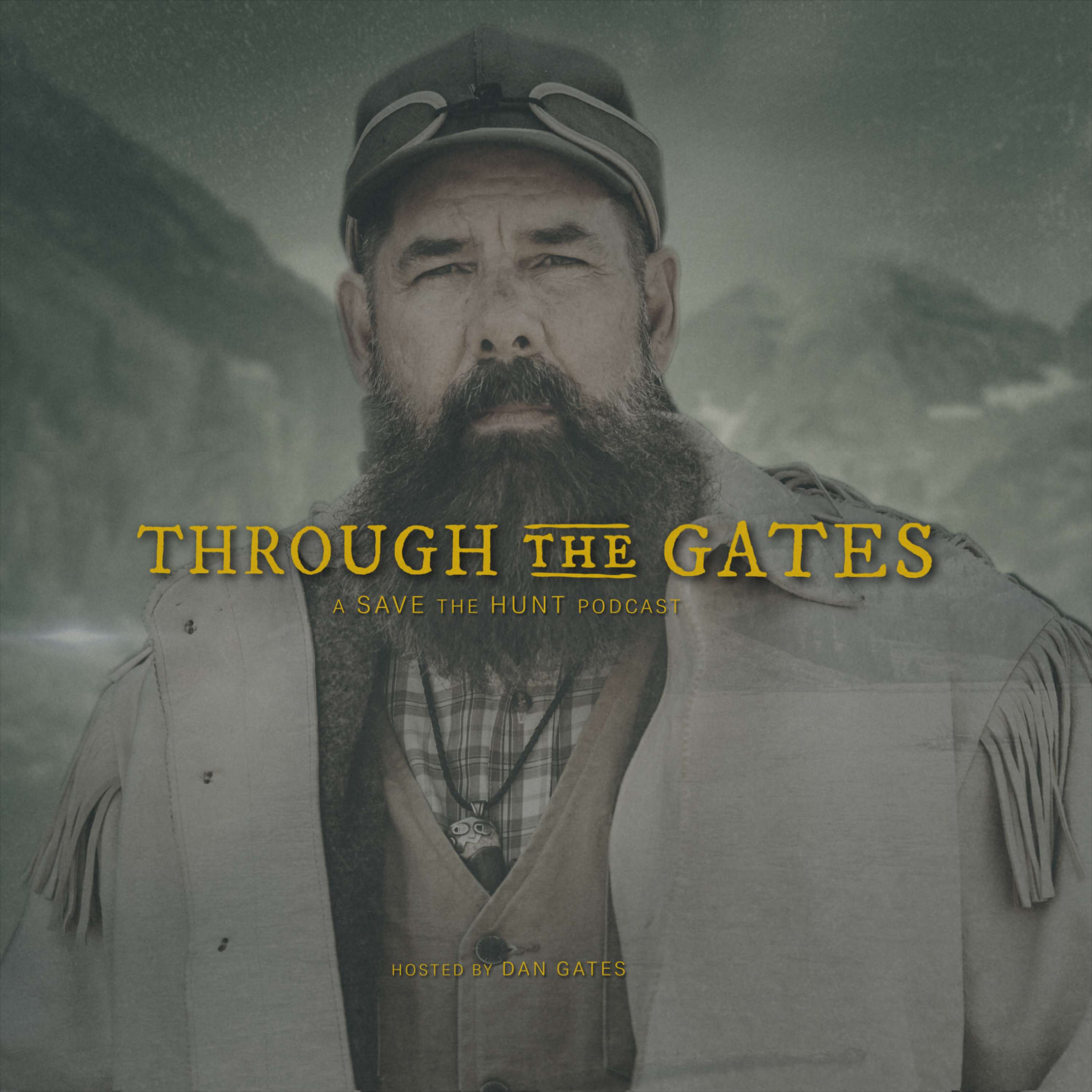
Through the Gates · Dan Gates - Save the Hunt
What happens when wildlife management becomes a political fight? In this special Through the Gates x The Mountainside Podcast collaboration, Dan Gates and Bobby Marshall sit down for a wide-ranging conversation about Colorado wildlife, hunting, fishing, conservation, CPW, ballot-box biology, and the emerging fight over Colorado’s constitutional right to hunt and fish. This conversation goes far beyond hunting. Dan and Bobby break down why wildlife management affects hunters, anglers, hikers, mountain bikers, photographers, ranchers, outdoor businesses, and anyone who enjoys Colorado’s public lands and wildlife. A major focus of the conversation is the proposed constitutional right to hunt and fish in Colorado and the argument that complex wildlife-management decisions should remain grounded in science, data, professional wildlife management, and adaptive management. They discuss: • What Colorado’s constitutional right to hunt and fish actually says • What the proposed amendment does — and does not — do • The concept of “ballot box biology” • Why CPW and professional wildlife managers play such an important role • Colorado’s experience with Proposition 127 and wolf reintroduction • Mountain lions, bobcats, lynx, bears, wolves and beavers • The debate over trapping and wildlife-management tools • How hunting and fishing contribute to conservation funding • Pittman-Robertson and Dingell-Johnson funding • Why wildlife doesn’t recognize state boundaries • Colorado’s rapidly growing human population and increasing recreation pressure • The changing relationship between wildlife and outdoor recreation • Why non-hunters have a stake in wildlife management • How people outside Colorado can support Colorado’s wildlife-conservation efforts • How to talk to someone who doesn't hunt or fish about wildlife conservation • And why Dan believes wildlife management should remain adaptable as conditions change The conversation also gets into something that often gets overlooked: Colorado’s wildlife belongs to everyone. Whether you hunt, fish, hike, camp, photograph wildlife, ride a mountain bike, own a ranch, or simply enjoy seeing elk, deer, bears, mountain lions and other wildlife in Colorado, the decisions being made today can affect how those resources are managed for generations. This is a conversation about wildlife first — and the people, policies, science and funding mechanisms that determine how Colorado manages it. SUPPORT THE RIGHT TO HUNT AND FISH IN COLORADO Fund the Campaign: WildlifeDeserveBetter.com Donate to CRWM: savethehuntcolorado.com/support-us Learn more: savethehuntcolorado.com Follow CRWM on Facebook: facebook.com/savethehuntcolorado Follow CRWM on Instagram: instagram.com/c.r.w.m
Sean Ender: Dan Gates, it's been way too freaking long. You're traveling worldwide. That's why. And you're a busy man. I think I was just looking at it six months ago is the last time I saw you. Already? Yeah. Isn't that crazy? I saw my wife since then. Well that's good. Yeah. She's I hope so. She hopefully she was happy. She was when I saw her. no, we we've been we've been doing good. But I didn't What a remarkable woman, by the way. Shout out for her support. It's not I mean, I know that you're all over the place and in the public eye, but behind every good man there's a good woman, right? Yeah, I th she doesn't want to be in front of me. I know that. I mean she she'd have a target on her chest and and she would take the the scrutiny. But she sh we wouldn't be able to do what we're doing without her and my son. and, you know, recognizing both of them in public is difficult 'cause we're hardly ever together. And when we are, it's typically about fundraising and ballot initiatives and, you know, a plenty of other things. but they all they they are available to allow me to do this and but but as my wife said before on a fundraiser we're doing a couple of weeks ago that We don't know any different. This is what we've always done. Not so much the politics, but we've always done three or four things at the same time. And now this is just added to the three or four things. Yeah. So but it seems weird. I'm pretty sure. I think that was the last time I saw you is when we co-released that episode, which we might do on this one. I don't know. Yeah. we haven't really talked about that though. But we'll talk about that. But you've been traveling. I mean you've been running your ass. Dude, I've been all over the Freaking world. Yeah. It's been insane. With the new business venture, it's it's hard. We've had to slow down the podcast just a little bit. Like we're still putting out content. Yeah. But and it's pretty much weekly still. Mm-hmm. But yeah, I had to just pump the brakes on a little bit. But it I think it's been a good thing for me too. Good. 'Cause I start to look at some of my mentors in the space and the shit that they have to deal with, and it's the same issues that you're starting to have to deal with or have been dealing with the last couple of years. Yeah. It's like I'm pretty good. being able to walk around without protection and I d I hope, you know? Yeah, there's there's a there's a component of self reliance and there's a component of self preservation. Yes. And there's a component of of situational awareness. and not to make things a big deal, but but There's some whack jobs out there that's crazy. And I say that not just in our space. it's in sp in space in in on the planet. look what happens with somebody walks up to a Wendy's or a Starbucks or to a presidential campaign function or to a golf course or to some sort of bowing alley or a school or whatever. I mean, there's some whack jobs out there. Yeah, and it's happened. It happened right here in Evergreen. Yes. Multiple times. Yeah. Yeah. You know, so so no nobody I don't think anybody's oblivious to it. It's just that unless you're directly connected to it, you don't realize the fragility or the toxicity of the landscape. that there's a lot of people that disagree with a lot of different things for a lot of different reasons. And sometimes their own lives or their own brains take in a different direction. Well, I mean, even look at CPW and shout out to Scott Murdoch and everybody at the commission meeting, the amount of security that was there and the way that that Building was set up and I kind of do security for a living. I wouldn't say that I'm an expert in it, but I have some experts that work for me. Top notch. Yeah. And they had me in a bulletproof vest. I know. You know, I mean it's insane to me, Dan. Like I don't want to see you in a bulletproof vest. You know, I didn't either because it was a hot sun of a gun, I'll tell you that. I it's they're not comfortable to wear, man. No. Yeah. No. And and I and I think one of the one of the things that you have to realize too is Sometimes people are pushed to a level of insanity in their own head and some that sometime that might be at the spur of the moment or maybe that's just what, you know, triggers them, or maybe that's just the way they are. Mm-hmm. and we all make snide comments about different things and stuff. I believe that people are a little bit more sensitive to things and they don't let things roll off of their skin like what they should. Well, I think part of that too is like 'cause I've thought about this a lot because some of the shit I say on here offends people. yeah. A lot of stuff does actually. And they let me know about it. But it's almost like when I take in a podcast or a movie or a television show or an audio book. You're listening to it in private most times. Like we don't sit down as a family and listen to the podcast that I want to listen to. Like nobody wants to hear a seven hour story on Sean Ryan about how a Navy SEAL almost killed himself and cheated on his wife and whatever else happens, right? Like and I'm just generalizing. But I'm taking that in in private so I can like process it and form my opinion. Right. I do that with Through the Gates. Mm-hmm. That's how I form my wildlife on our podcast? Fuck yeah. wow. As much as I can, you know. I didn't listen. You guys dropped one today, right? Yeah, the women hunt came out today. Yeah. So that's like I haven't listened to that one yet, but I stay pretty caught up. I mean We got some good guests. Incredible, dude. You're fucking crushing it. Yeah. We got some really good guests. For me, like I don't ever get jealous, but I'm just like, damn, Dan's doing exactly not it's not jealousy. I'm excited for you, man. Like it's The it's all guests that I would love to have on this show, right? They almost all of them fit the billet for what I would have on the mountainside. Yeah. And that's kind of was like I guess when I spurred the idea and I wasn't the full idea, but I was like, you know, you should start a podcast because you reach and you look at you now, dude. Like But then you hooked us. I mean be between between the Ronellas And the Randy Newbergs and the Clay Newcombs and the Cable Smiths and all the guys that are in that space on a on a grand scale. And then you kind of babysitting us and and and and you were you made it so easy because you're like, hey, let me turn around and I'll give you this space and we'll do this and we'll help you out. And Sean just happened to live here. Yeah. So it made it almost almost divine, dude. Yeah. It was almost like, well, you know, this is too easy not to. Granted, I had to drive and we you know had to get guests to come here. But you gave us a platform to start with and now while we've got our own studio, but we haven't been able to actually weaponize it or mechanize it to the point to where we've got in in person guests. Now it's kind of a problem because Sean is in Evergreen, I'm down in Canyon, and we're trying to turn around ninety percent of the stuff is either me on site remotely somewhere or we're doing We're doing the Riverside app. That works for your podcast. And I think you're doing a fantastic job. The quality is really good. The audio quality is incredible. Like I I think the reason why I don't do it here at the mountainside virtually, or I've chosen not to do it, is I really enjoy the human connection. I enjoy sitting down with somebody. So it's kind of almost my own greed. Yeah. Do I think it's better? I I think it's better for you to get the content out. And for me as a listener of the through the gates, and I listen religiously. Is it sounds amazing? I just want the information, man. I want to stay up to beat with what's going on as much as I can. Yeah. And sometimes I gotta be honest, I'm kind of multitasking, right? I might be writing an email while I'm listening to a podcast, or I might be doing a workout, or I might be hiking, or I might be walking the dog and my dog gets in a fight with another dog or whatever, right? So it's kind of just like background and noise because not all of it not all of a podcast you want to listen to you kind of I found myself like tuning into what's important to me or or what catches my attention. Well it's just like stuff like like we did a couple weeks ago with with Will Primos and the amount of people that reached out because we had Will Primos on and the amount of people that had reached out that said how the hell did you get Will Primos? And well I called him And you know, we we talked and it was it th some that's just because of relationships that have been built. Jason Matzinger was a great podcast. people that reached out that respect and follow him through his travels of of conservation work and and the in the hunting space. we've been very fortunate to be able to have the relationships through the fight for conservation that is built up and then and then to kind of you know get into this space that you know I credit you in the sense to where you open the door. Because otherwise Sean and I would have been kicking the can down the road trying to figure out how to sit in a phone phone booth, you know, with a with a microphone or something. No, you guys are crushing it. And I was happy to help, man. So like you don't even have to thank me. Well, no, I it's it's it's it's I I tried to over and over. One of my favorite podcasts to listen now too because of that. Yeah. No, and it's it's cool because just like the one that's coming out today with Dana Dykema and Renee Thornton and Rachel with with w Women Hunt through through the Wild Sheep Foundation. it's a story that I think resonates with about ninety-five percent of the flipping people. And to be able to tell that in a platform of of outreach and messaging and continuity and collaboration and coalition building and and getting people involved in a in a outdoor recreational conservational perspective, I I think it's it's cool to be able to have those opportunities to get those people involved and and provide a different viewership or different different listenership on what it takes to maintain conservation sustainably in perpetuity. Things I say all the time. You're so good at it too. You're you're crushing it. I'm happy to see you guys just thriving in that space. Appreciate it. We need it as sportsmen and women. Colorado needs it in general. If you're a mountain biker, a rock climber, a photographer, you should be listening to this, even though some of it's based around hunting. Not all of it. It's really based around wildlife conservation. yeah. Yeah. It's not about your trophy room or or somebody's mountain bike or anything like that, which a lot of podcasts tend to like bleed over. yeah. We even do it on the, you know, when I have a fighter on, we're talking about. their stuff, right? It's human connection. But what you guys are doing is really like caring and talking about wildlife and wildlife policy and the people issues. Exactly. And and trying to incorporate that into it because all the players that we're getting from different, you know, dynamics, different demographics and geographics, they're they all have their own story. They have some amazing stories too. Yeah. Like the guy that killed the mountain lion with the two by four to save his dog. Rusty Ross in his underwear. In his underwear. Wearing Duluth Trading Company underwear. Seventy years old or whatever he was at the time. Exactly. It's crazy. Yeah. And it's Duluth should give him free underwear for life. That's what I yeah. I should I should take that in there and says that. They should make a cartoon of that. You know how they do the like cartoon ads? God, he's Rust Rusty's a great guy and he's he's he's eighty something. And nobody would know Rusty unless he was on through the gates. Yeah. Like he lives in like a cabin. Yeah. No, I mean he got a generator, no electricity, no electricity. You had to go to him for that one. Yeah, we were in his house. Sean and I went up and f and when we drove all the way up there, we did two podcasts that day. We did one with Ovis Wildlife, with Doug Barnes. And then we drove all the way over and we just kept driving and driving and driving. It just kept getting higher and higher and higher and and I could tell Sean was like Where the hell are we going? I don't know if I can claim Do I have enough batteries for this? Because I there's no electricity up here. yeah. So it was yeah, it was a it was a good deal. And I'm hoping to be able to turn around and bring some of that other stuff back in. You know, we did that one with Caitlin Tausick on the wolf issue. We did t in your studio, we did Tim Richard and Doug Bruchet. Yeah. And and those guys were awesome. We did Nikki Day and Amanda Cervini on the Wolf issue up in the Copper Creek area. I mean it's just the to be able to turn around and and make those connections and help try to s expand some of the stories is cool. The most value in it is like I haven't seen you in six months, but it doesn't maybe it doesn't feel like that because I've been listening to you every week. But it keeps me up to date. You know, I bet you it's eliminated some phone calls and some stuff for you, right? Because now people your everyday advocates like myself, I would call myself like just kind of on the edges, right? Like I'm not as much as I support you guys, I'm not like in the fight a lot of the times. I'm not at the Capitol or all these commission meetings. I try to show up when I can, but I'm not always in town. You just weren't there for the for the like the big stuff when they're gonna have security and SWAT teams and stuff. I was actually coming for your protection dude. So I was like shit, man, I was worried about you on that one. I stayed in the back of the room. Yeah, I know. Yeah, I was I think That was some of my advice of going to Yeah. You know, I'm like I'm like, really? You got service and you always call me a rock star. That's the rock star treatment actually. I I think I think it's more of an insurrectionist treatment than anything. So Yeah but but no, we we we're fortunate to be able to maintain the space that we have and to create a a level of a conduit, a mechanism for people to be able to turn up, whether they like it or whether they don't like it. Yeah. I we got We got some of our biggest adversaries or enemies that listen to our stuff. but we do theirs as well. Right. We're we're we're turnaround and trying to figure out a way to navigate through this landscape. Do you need to take that call? 'Cause we can pause if we need to. Okay. No. we we we c we can maneuver through this landscape and deal with all the sausage making stuff, the the minutiae. But when it really gets down to it, conservation, hunting and fishing The practical application of science-based wildlife management is is going to continue to be under attack. and there's people out there that want it to stop. They want it all to stop. And this has provided us a conduit that most of our allies have not taken up for have not taken up for the the cause of that. I mean, the look, I'm not knocking anybody on a podcast. I I don't have any space to be able to do that. But we have we have plenty of I'm not saying enough, we have plenty of podcast about Binoculars and and and you walked in. I was making a binocular You know. For our Patreon Exactly. Yeah. So if you want to see Dot Dan in the raw form coming in the studio all pissed off from driving in traffic, go subscribe to our Patreon channel. You know, but but ballistic coefficients on ammunition and how to do this and and what's the what's the the the circular velocity of a a four ninety round ball out of a muzzlower and which is fine. There's a space for that. But that does nothing good for our space to be able to turn around and fight at the Capitol or at the Capitol. Right. I mean, hunters are one percent of the vote, if that, right? Like there's they're probably about one to two percent of the vote. They're about four percent of the general population and they don't vote. That's one of the the telling that that's one of the telling tales. I mean, look at the gun owners. Yeah. You know, gun owners are the same. Now no the thing I wanna mention Is as we're having our conversations in all the outreach that we do and all the public functions and all the political interactions, which I never wanted to do that. But to to be able to exist in this space, we have to have a presence. And just like what I said at the Lincoln Day dinner over in Delta, it's Delta County Republicans. I I was there on the night of the twenty second. And I was the only one in the room that talked about Republicans, Democrats, and independents. Because it's a Republican event. And I said, you're no no don't kick me off the stage here. But I need every single voter that cares about wildlife and wildlife conservation to vote for this on the constitutional right to hunt fish. Because if I just talk to Republicans, we'll lose. And I can't just talk to Democrats because the Republicans will be pissed off. But independents are fifty percent of the voting block. I have to be able to talk to them. Our message has to go broadly and people can make their own decisions. I think that that's why people understood and you can probably fill us in more on that, like why ballot initiative one twenty-seven had the success that it did. It wasn't, I mean, it was the hunting and fishing community, but it was really the education in wildlife, true wildlife conservation, biology, science, like whatever you want to call it. It was that education I think that really made people understand. Which one of the things that scares me about this upcoming initiative is the word fish. And hunt are in it. Right? Because automatically there's people that build up walls and they're just like, my God, they're killing Bambi or whatever, right? Yeah. Because we've psychologically been programmed as a nation, as a world now, right? With all this Disney influence or whatever you want to call it and humanizing animals, but anthropomorphizing. Yes, there you go. I can't even say that word. There you go, Dan. That's why you're here. That's why you should listen to through the gate. I can't spell it, but I can say it. Man, how long have you been doing this? How long have you been advocating on wildlife policy or been in I know you've been involved since a young man as as a sportsman and then as a career even, right? For I mean a lot of years. Yeah. I mean, we run a wildlife control business. Next year's our fortieth year of running a wildlife control business. Now, that I wanna emphasize I don't have a wildlife biology degree. But I got forty years of boots on the ground experience dealing with the same animals in the same places for the same people on the same landscape. That gives you a pretty good indication of current events. not to mention, in fact, of what you're dealing with on the political side. The first time I testified in front of the Parks and Wildlife Commission, which was the Division of Wildlife at the time, was like 2005. And then I testified again in 2007. And not until about 2009 or 10 did I actually start playing at a level that we needed to engage in because of different agendas from different sectors. Colorado was a changing state then. It's it's changed a lot since then. But becoming engaged to a level of some sort of knowledge about how the system worked, about what was d the decision making process, about how studies were compiled, about about how science and data was applied. And then about how the political motivations of individual groups and entities and organizations had their personal perspectives of that. And the reason the reason it draw drew such attention to me in Colorado is because the Colorado Division of Wildlife, or Colorado Parks and Wildlife now, is a type one enterprise agency. They're pretty much self sustained within themselves, within state government, because of the funding mechanism. If the public would let them be. If the public would let them be, and if the if the if the managers of government would let them be. Managers of government should not be intervening, whether it's the governor or the department of natural resources executive director or the legislature, should not be intervening in science based wildlife management. Let them let them do their job. But we saw this growing interest in disrupting, eroding, and degrading that. That I thought, well, you know, if we're gonna make a difference, we've got to show up here. And okay, then that leads to having to show up there. And then that leads into having to be on this. And then that leads to pretty soon you're, you know, you got fourteen different things when you really only signed up for one. You just consumed by it. Now you're the face of it. Yeah the yeah. Yeah, which is which is a a a scary freaking thing that you're the face of it. These are the bumper stickers by the way. Yeah. these are cool. The the w the way that this is formulated in the stuff was not by not by me Attempting it to that. You know, and who who to blame for that?com website. Yeah, so go to Save the Hunt to support it and all the proceeds go to saving the hunt. That's a cool hat. Yeah. The good quality hats. I mean that's in the These Richardsons are awesome. I think I'm wearing one right now. Yeah. Yeah. awesome. No, I appreciate the plug on it because we we've W who I blame who I blame for my face on this stuff since we started doing you know you know, that's Luke Weedle. Yeah. You and and Luke I'm I'm I'll tell the story 'cause I've told it before, but Luke's awesome. You know, I walked into the house and my wife was wearing a hoodie with my face on it during the campaign and I said, What the hell's that? And she says, Well that's what that's what Luke and Bob came up with and I said, Who the hell's Bob? And she said, The guy that's doing The shopping cart. I said we have a shopping cart? I didn't know any of this stuff was going on. Yeah, that's it. Yeah. I didn't know we did any of that stuff. And look You become an icon. Well, something con. I don't know what it is, but but there's there's there's something there to be said about brand recognition. And look, if people are gonna challenge me and turn around and threaten my my life or my business or my family or whatever else, why not be the face of it? Because they're already making me the face. It's awesome, man. I love it. It's so funny because if I'm telling somebody that has listens to the Let me interrupt that so that the bighorn sheep one? Yeah, those are cool. Those are the number one sellers. And then the one with the circle down at the bottom that says Unite to fight to save the hunt. Uh-huh. Those are those are number two sellers. Nice. but I like the Colorado flag one personally. Yeah. that is sick. Yeah. I mean flag in the background. Package deal up here for sponsoring too. Exactly. They a built-in package. Yes. So I mean, just just something that we're we've done really well with that product. I gotta thank Bob Thompson with Market, that that helps supply all the product. They understand that this is it's not a money making venture, it's a money spending venture because you have to have funds to be able to spend at the Colorado Capitol to fight the ballot initiatives, to deal with the legislature. You know, we've got three full time lobbyists at the Capitol representing sportsmen and women in the state of Colorado. We attend every single commission meeting and work it whatever level is feasible at the commission, which is becoming more and more difficult because of the intrusion of the animal rights community into that by the governor appointments. but you don't go back to two thousand nine, before the merge, it was the Colorado Division of Wildlife. And then you had Colorado Parks. Well, then it John Hick and Luber decided they were gonna merge That was a two thousand ten, two thousand eleven. That's where we're stuck at today. Right. Now, legally, there's no way to split that money from wildlife to go to parks or parks to go to wildlife. But incrementally and systematically, when you have one umbrella, there's some bleed over because this regional manager works for the parks and the wildlife. And he's got employees on the park side and he's got points on the wildlife side. But the money doesn't commingle because of the federal law and the state laws. And because of the enterprise agency side of things. And then when you get into Dingle Johnson and Pittman Robertson money that comes from the excise taxes, that's on the wildlife side. None of that comes to the park side and none of it can be spent on the park side. Two different check-in accounts. It's a mess. Yeah. It's like having a husband and a wife have a joint check-in account, but then they each have their own check in or savings account in some sorts circumstances. Maybe they don't, maybe they do. Maybe it's all in the wife's side. Well, in Colorado, I mean, well, I guess it's anywhere. But like Colorado's unique, you know, like we're a western state. A lot of these western states like Wyoming. Like we share wildlife with Wyoming. Yes. We share wildlife with Utah. And Kansas. And Arizona. And it's like, you know, and sometimes Montana, right? Like some of these animals migrate. Well, especially when you get into wolves or bears or lions and stuff. I mean, they're not they're not bound by state boundaries. No. And and there's different policy. Exactly. Right? In all these states. And it's some of it's drastic. Like the wolf policy in y in Wyoming is drastically different than what you've spent billions of dollars here in Colorado for. Yeah. Well, not billions yet. Well, it feels like it feels like. But I think wolves are in the news every day. You think it would be close to a billion if you took all the campaign money and and all that stuff and put it together and the it's it's it's probably in the in the reasonable millions at this point in time. But stop and think for the headache and the hassle that this agency and the and the ranchers and the people of Colorado had to go through just on the wolf issue. Yeah. And and that was ballot box biology. Ballot box biology, in our mind, is attempting to restrict or prohibit or manage wildlife through the check of a box. this constitutional right to hunt and fish, I want to emphasize what we're talking about, is not ballot box biology. It's an attempt to turn around and and thwart ballot box biology and take the will of the voter off of being able to manage Colorado's wildlife resources from an ed uneducated position. It does not stop the voter from engaging through the legislature or through the commission to go there and say, We don't like this. What it does is it makes them have to turn around and comply with science from the agency because it still gives the unequivocal ability and the right and the privilege of the experts at Parks and Wildlife to manage wildlife scientifically and still allows the commission and the legislature to be able to interact with that. But they can't turn around and restrict or prohibit something unless science from the agency de determines that. So all this is doing is turn around and taking the flower shop gal or the pizza guy away from being able to check the box. You can still go through the commission. You can still go your legislator And say, I don't agree with this. I'd like you to run a bill. Can you run a bill to turn around and stop this? Can you question what they're doing on this because I want to turn around and restrict you could still do all of that. And that's where the misnomer is because if you look at the antis language that they're kicking out at this point in time, it specifically says we are trying to undermine Colorado Parks and Wildlife. No. No we're not. We're trying to we're trying to enhance. They've been trying to do the whole Well, that's the thing. I mean, you know, are you telling the truth or are you lying to Read their stuff. You know, I mean if if we can since we're into this, I'll read I'll read what the actual language of that says. And I think that when people if they if they will if they will read it and understand Maybe before we read that real quick, can you just catch the listeners up? Because this is like pretty recent news, right? Like this This is the the latest thing since Ballot Initiative one twenty seven, besides the commission meetings and the Exactly stuff like that. But stuff where people can actually have an influence or voice their actual opinion through the ballot box. Right. So so we got handed this from the International Order of T Roosevelt that some Colorado individuals, some wealthier Colorado individuals, ran through the legislative council and the title board to try to get a title for a constitutional right to hunt and fish. Just like what Cats Aren't Trophies did back in twenty twenty-four. And they passed Muster, went through all the proper procedures, got everything, got the title. I'll read the title. But then they hit me up to incorporate CRWM as far as part of a ground game because of our successes in the past and what we built up as far as name recognition, relevance, landscape engagement, and so forth. After some negotiations and c and conversations. We opted to help because they were gonna move forward without our help or not. I I don't have reservations. I would have not have preferred to do it that way. I would have preferred to had more of a strategized game plan and get our ducks in a row community-wide as opposed to individuals in state who didn't communicate with individuals in state and organizations in state, and then went to the national organization whose job is to do this. They were very successful in this. They've they've championed this in different states. Most recently, twenty twenty four in Florida, where they got the constitutional right to hunt and fish there. They won, I think, by sixty seven percent. Their mission is to provide a constitutional right to hunt and fish in the rest of the United States. There's twenty four right now. This would make Colorado this would make Colorado the twenty fifth state. there's really twenty four of the states. Yeah, seventeen seventy seven. Vermont did it in seventeen seventy seven. They did? Yeah. That's a year a year to have the foresight of that? Yeah. I mean, stop and think. So somebody was trying to take their rights away then to be able to do so. So stop and think of that. It's taken it's taken two hundred and forty nine years to get to a spot to where we've got twenty four states. But the attacks and the assaults on the conservation and hunting and fishing side of things over the course of the last ten to twenty years has has been exacerbated by the influx of the animal rights community and to some degree voter ignorance. Or the uneducated voter, because they can capitalize on different things, and agendas that are driven by so many different levels of public engagement that legislators are willing to be the squeaky wheel that gets the grease because they're willing to take money maybe from the Center for Biological Diversity or the People for Ethical Treatment of Animals or the Humane World for Animals, or you there's a there's about seventy five different organizations you've got to that's kind of part of the problem is all the organizations. States that are nice. Thanks, Matty. See, you're you're you're a good guy back there. I mean yeah, you need to come down and run my stuff because I'm here for no reason. I can't do all that stuff at the same time. So but but if you d will it will it g will it pop up Vermont? Can you just click on right here Vermont was established in nineteen seventy seven? Yep. So you got Alabama, Arkansas, Florida, Georgia, Idaho, Indiana, Kansas, Kentucky, Louisiana, Minnesota, Mississippi, Montana, Nebraska, North Carolina, North Dakota, Oklahoma. South Carolina, Tennessee, Texas, Utah, Vermont, Virginia, Wisconsin, Wyoming. This is gonna and soon to be Colorado. Yes. Under the seas. Here's like the map of the Yeah, that's a pretty good diagram right there. We actually don't have a sea on there. We'll be the first sea state. Yeah. We're like almost surrounded too. It's got like You would think with all the wildlife here, the amount of revenue that we create is gotta be greater than almost any state. population wise, Colorado is up at the top of the list for sure. We have the greatest elk population. Yeah in the in the world, essentially. like 50 on the golf course. I th I think I think that they're just they're just looking for that little white ball again. That's what it is. But you know, to to do it like this, we would have preferred To be better organized at the state level. That's what I was gonna ask you, is it seems very, very abrupt like like there's not enough time. It's not so much there's not enough time. It it's when you have a well oiled machine in one sector that blends with another well oiled machine, it takes a little bit there's a there's a learning curve there. It takes some blending to make sure that you turn around and and and do what's necessary because each state is different. If you go back and read the constitutional amendment language, this is what we've got. But you look at every other state, there's some differences because of state law. Florida's different than Colorado, New Hampshire's different, you know, Vermont's different, whatever the hell it is. Which makes sense because a lot of it's based on population and we got freaking seven million people here. Well, and and just the just the the boundaries are much different than the and the way the Constitution was written at the time when those when those states became states. And I think that it's not critical assessment, but understanding the nuances and the caveats to make sure that it's right and it's right for the time and it's right for the people of the state of Colorado. Because no matter what we decide to do, the wildlife is what's going to turn around and either reap the benefits, hopefully off of something like this, or that we'll feel the repercussions or the ramifications, like on the the ballot initiative about wolves, in my opinion. Yeah. or the ballot initiative about mountain lion and bobcat. pro prohibition or the trapping prohibition or the bear hunting prohibition. Those are all ballot initiatives in the state of Colorado. I don't think that we as a human population should have been voting on any of that. It should have been science based. It should have been driven by the data. And we've ignored that enough. And we've ignored attempts we haven't, but we've ignored temps of society about as many times as as these groups went to the legislature or to the commission. To drive a citizen's petition to derail and erode and e erode and degrade Colorado Parks and Wildlife and their ability, division wildlife at the time, to be able to manage our wildlife resources. If you listen to them be able to speak at the Capitol on something that was going to be detrimental to them to be able to do wildlife management, it's been a very, very vague and limited engagement because they don't have the approval from the governor and they can't speak on their own behalf because the governor is the God almighty wizard, and then turns around and makes sure that they have what is on his agenda or was what would be on her agenda if it was a female governor. I think that we're in a position to where people understand the nuances of government manipulation and this constitutional right will do nothing other than codify current state statute thirty-three one one one. Which allows for the science-based management of our wildlife resources with hunting, fishing, and trapping as the primary methods to be able to do that and accomplish that. That says primary. This particular ballot language here, which I'll read, says preferred. Same, same, different context or whatever. It doesn't mean the only. It doesn't mean that you can't use non-lethal. It doesn't mean that you can't use translocation. It doesn't mean that you can't use exclusion or deterrent. But this is the Primary or preferred, depending on if you look at the statute or the ballot language, because we need to have some sort of league lethal off take for harvest management and still allowing opportunities for sportsmen and women to go out and pursue those seventy eight game species under a science based management program that CPW establishes. We can have input, we can have conversations, we can give our perspectives, but the ultimate decision is going to be back to them. Just like it currently is, but we're helping to codify that in the state constitution. Yeah. The revenue source, I think I paid seventy dollars or something for my over-the-counter elk tag this year. Three point two five billion dollars comes into the state from hunting and fishing. It's incredible. And it's look at the wildlife thriving, you know, because of that. If you're not checking out the mountainside podcast on YouTube. You absolutely should be. If you like the content that we create here and you want to help support the podcast, please take a moment, subscribe to us on YouTube, and hit that notification bell. Let me read this real quick. Yeah, yeah. So I can get that off my chest. Yeah, so so this will be the actual title itself. I gotta get it close because of my flipping old eyes here. So it says. Do you want to send it to Matt? We can put it on the Yeah, let's do that. That way that we can just show it on there. Okay. You can drop it on the desktop or whatever you want. That's the podcast computer. It just lives there. Nice. Thanks, Matty. So I'm gonna I want to read this, but but it it says there is established a right of the people of Colorado to hunt, fish, and take fish and wildlife. The right includes hunting, fishing, and harvesting fish and wildlife by the use of traditional methods. The right applies to all species of fish and wildlife managed by the state except non-game species, endangered species, or any species that is illegal to hunt under federal law. The policy of the state of Colorado is that hunting and fishing are the preferred means of responsibly managing fish and wildlife populations. This section does not intend to authorize trespass upon private property or to modify any provision of statutes relating to trespass or property rights. This section does not limit the authority of an agency of the state of Colorado or the General Assembly to regulate hunting, fishing, and wildlife management if the law is necessary for sound scientific wildlife conservation and management, public safety, or to preserve the future of hunting and fishing opportunities for all species statewide. It tells you what it does and it tells you what it does not do. And if you look at the stuff that's out there from my adversaries, your adversaries, this is what it's gonna do. It's gonna bring back bear hunting. No it's not. It's gonna allow people to kill wolves. No, it's not. It's going to bring back trapping. No, it's not. It's going to allow people to turn around and trespass. No, it's not. What they're saying is that trying to get their point across with not reading this and not utilizing the language. This is the language that'll be there. And this is the language people will be voting on. And all the fallacies and falsehoods and lies and smoke and mirror shell game that they keep playing. That that that's their tactics just like what they did on one twenty seven. What they did on the fur ban and ordinance three eight. this doesn't do that. This doesn't do that. Yes, it does. And what they're saying right here doesn't do what they say it's gonna do. And it does a lot of what they don't say it's going to do for the benefit of wildlife management, conservation and hunting and fishing. It's incredible. It's written really well. Yeah, I mean for reading that. Maddie, we need a timestamp. we're gonna make a clip of that. Yeah. Because It'll help educate people into what they're actually voting on or have a opportunity to vote on if they show up. Yep. And then everything that it doesn't do, I think it's it's perfect. But I think we got to get it out there. Like the that's what I'm worried about is the time frame, right? Like with one twenty seven, we had a year and a half. Fourteen fourteen months from start to finish. And this I mean, it's different when you're on the offense of something. You people people bitched and griped and moaned and groan and complained, Why aren't you doing offense? Why aren't you doing offense? I've been doing this a long time. Right. We formulated CRWM in two thousand sixteen. I'm tired of you doing defense. Well, it's kind of hard to do offense when you don't have the ball. You know, when you don't have a running back or a quarterback or a kicker or anything, the only thing you can do is take the ball away as a defense. Right. And we did that on Defenses win Super Bowls, too. Yeah, you and my opinion. And we did that fairly well. But we didn't have we didn't have a game plan or a strategy. Now that we do We haven't practiced on the field a bunch with the offense. We haven't shown our value and our worth as an offense. And I think that there's questions and consternation from a certain amount of the general public about, well, what if you lose? What if you lose, we still have the statute. We still have something. It's not like we lose anything. Right. We're just trying to turn around and gain and codify and make it more difficult to be able to turn around and take away or lose. We still have thirty-three one one one. thirty three one one one four specifically talks about the the primary management tools of hunting, fishing and trapping. Now I want to emphasize on trapping. Trapping in the state of Colorado was severely restricted and prohibited back in 1996 under the constitutional amendment. Amendment fourteen. You can't use body gribbing devices, cable restraint devices, or foothold traps on public or private land for avocational harvest. You can only use them with a 30 day exemption period on private land for agricultural damage instances. That's in the state constitution. People should be able to protect their own property, which people still do. This does not reverse that. This does not make it to where people are going to have to worry about foothold traps on their trails, on public land, in any way, shape, or form. Unless somebody did this illegally, then they become a poacher. Because under current law, you can't do that. That's right. Under law past this, you won't be able to do that either. Yes. Yeah. So you can kill the mouse that's in your toaster. Which they've tried to take away. Remember last year. Senate Bill sixty two that we beat through the House AD Committee. They wanted to make it illegal to kill rats and mice. Now is that part of the constitution? No. Should it be? Well, maybe it should if they keep trying to turn around and alter the ability f for people to be able to protect their food storage or their house or the utility company or their water supply company or their vehicle. Nobody wants to live with rats and mice. If they do, I'll start live trapping them as a pest control operator and take to And they can do whatever the hell they want to with it. Right. There's laws and rules and regulations for conservation purposes on a variety of things. We need to make sure that we adhere to those laws, rules, and regulations. However, and I will say this and I hope my adversaries listen. I am people first and wildlife second. But I will fight for wildlife As a person that I care about wildlife just as much, if not more, than the average Joe. I care about people being able to supply a food source, be able to recreate, be able to be part of the management process, to be able to protect their own private property, be able to protect their own health and welfare, whether it's on a bear getting into your dumpster or your house, or mice and cockroaches running around. I care about people first. We live in a on a planet. With eight billion people, three hundred and fifty million people in the country, six million people in the state with 94 million visitors, there's going to be animal and human interactions of wildlife. Let the experts manage our wildlife. Yep. Let the scientists and the biologists at Colorado Parks and Wildlife, or the Arizona Arizona Game and Parks, or the Texas Game and Parks, or the Montana Fish and Wildlife, or whatever it is, let them manage. Manage our wildlife for the benefit of people and animals alike. They manage much more than just hunting and fishing and checking licenses. I think that that's kind of like a general what the general public thinks when they see a game warden. They're also the guys picking up the roadkill and trying to mitigate deer and elk from crossing the highways and they're also the ones turning around and darting stuff at the at the Pearl Street Mall down there at the farmers market on Sunday. What happened there? Well there's the Was that the bear? Yeah, the bear in the tree. I mean they're doing things to manage our wildlife resources. And they took that bear and they turned it out. But they also went and harvested, killed, disposed of, euthanized a few bears that attacked people because there's a process people first. People first. Yes. And this governor and the first gentleman have have consistently wanted to put animals first. And I don't believe in that. And I think that ninety-five percent of the general public doesn't believe in putting animals first. We need to make sure that we consciously and systematically manage our wildlife thoughtfully with an animal welfare practice behind us and we have the the the ability to be able to do that, but not if we're gonna turn around and check a box on vote yes or vote no on every single thing. Right. Now that this can of worms has been opened and the money that's behind it in our adversaries It's just like they keep rolling to the next thing. Have is there any is there any measures on the ballot right now that are anti hunting or anti fishing or not this go around. No, they wildlife management. We kicked him in the in the privates. I didn't want to say n something else. But well it could be either or now. I'm just kick him at the front of the back. Depending on what it is. But we we've gotten to a point to where We've been victorious on enough levels. Most people wouldn't know this, but House Bill 1323 was an example. We just beat that. Yes. I think it was 10 to 3, might have been eleven to two in House AG. that would have prohibited the harvest of beavers in the state of Colorado. At the same time, Colorado Parks and Wildlife was designing a beaver management plan. And we, through CRWM and the Colorado Trappers and Predator Hunters Association, instigated A citizen's petition to require harvesters to tag the beavers that they harvested so there's like an accountability, a track record. Then the commission came in and undermined that because you can only harvest two beavers. Okay, so now you have to tag the two that you harvested because they wanted to do a fur ban on top of that. That was the the essence of our meeting in in Westminster in March. If you're going to implement a statewide beaver management plan, And hire somebody for to run a $1.1 million beaver management plan under Parks and Wildlife. You have a beaver manager now, which beaver's still under chapter three, under the fur bearer and small game management side, but they took beavers away from a guy by the name of Mark Vieira. Mark is the fur bearer carnivore biologist manager for Colorado Parks and Wildlife. They took that away from him, gave it to this other gal. If you're gonna do that, why do you need bag limits? That didn't have anything to do with science. Mm-hmm. Why do you got to turn around and and systematically undermine what the experts have already come back with, what the agency recommended for denial, what the director recommended for denial. The commission comes back, says you shouldn't do this. But the legislature already voted on failing House Bill thirteen twenty three, which would have prohibited the harvest of beavers, straight across the board. You got all this conversation going about beavers, about prohibiting and restricting and managing. How about just let the experts decide what we're going to do? And this particular ballot initiative, as an example on 1323, would codify this and take some of those what they call tools, what we call weapons, out of the toolbox to undermine one species. We're not talking about all species. One species is what they went after, just like they went after. Bobcats, just like they went after mountain lions. They said they were going after lynx, but we can't harvest links in the lower 48. So how do you go after something that you can't harvest? And if you remember back in 2023, 2024 at the title board, when we were in initiative 91 that became Proposition 127, when the question was asked, why do you have links on here? They said in case links ever get recovered to the point where they can harvest them, we never want them to be harvested. It doesn't have anything about population. Doesn't have anything to do about what what the science says. It's we don't want them to ever be harvested. Yeah. And that's the way it is on all this other stuff. So in that case, if links were on there and let's just hypothetically say they take out somebody's child that's playing in their yard because lynx the lynx population has grown to whatever, right? Right. Sustainable enough that hypothetically, yeah. Yeah. that they become, I guess, a nuisance predator at that point. At some point, right? I mean, we've seen it happen in LA where kids have been killed by coyotes. Coyotes, mountain lions, yeah. Bears in California. So at that point, if that would have passed, they couldn't have done anything about that problem. Lynx. Well, there you get Yeah, that you get into a a threatened or endangered animal just like what we're dealing with on wolves. Sure. We haven't had a human attack with a wolf yet. But we've had instances where people have killed wolves, one particular individual, and other ones got taken out by lethal removal under the management plan for for wolf introduction. It's not that there wouldn't be an opportunity, but shouldn't we be allowing the experts to make those calls as opposed to a a new legislator that before that was a house mom or a realtor that now she came in and she's sitting in the legislature and she's trying to turn around and tell so crazy. That's the thing. Crazy to me. We have professionals to do professional work. And I think some of the conversations I've had is I want a mechanic to work on my transmission on my truck. I don't want the Uber driver. Mm-hmm. Or a brain surgeon, right? Yeah. But I want a brain surgeon to work on my wife. Yeah, my brain. Yeah. Careful. No, I mean wait my wife my wife just went through some s some some medical issues and and really? I'm sorry. No, you're No, no. And and but but I want an expert to make those decisions. Yes. I want an expert to turn around and make the decisions on our beavers and our bobcats and our mountain lions and our people's jumping mice and our boreal toads. I want experts to do that. I don't want a box checked. Just because somebody was going down, going, yep, yep, nope, and yep, and nope, that has no clue, cannot identify any of those animals, has no interaction with those animals, has no living coexistence with those animals, they have an opinion. And I think opinions should not be managed on our wildlife resources. When you got 350 people that have biology degrees, every game board in the state of Colorado and every scientist in the state of Colorado within Parks and Wildlife has those degrees to make those decisions. And we're not talking about somebody that's been there for six months. We're talking about many, many people that have been there for fifteen, twenty, twenty five, thirty years. Like the retirement, I forget the gentleman's name that retired. Didn't he retire like forty five years or something? fifty years with Bob Holder. Bob Holder. Yeah. That's right. Fifty years. Look at Eric Odell, the wolf guy. Yeah. You know, I mean Eric was in charge of lynx and wolves and river otters and wolverines and everything else. Just retired. Did Eric and I agree on everything? No. He just did the podcast with Meat Eater. Did he? He was just on there. He was I think he he retired on a Friday and I think he was doing a podcast Monday or Tuesday. It's a worth it's worth it's worth watching. It's about an hour and a half or so. And do I agree with everything that Eric said or did? No. Because I don't believe in the whole process should have worked because people check the box. Yes. And then forced CPW to do something that they weren't prepared for. That they didn't have a game plan for. They had to build this roadmap as they went. And I think that that's a piss bore way to manage wolves or wolverines or African elephants or saber-toothed tigers or whatever the hell it is. We have to have a plan of action with experts in the field, and they shouldn't build it as they go. They can adapt it based upon what they've known or what they don't know. But to build as the as they go by checking the box, I think that's a piss bore way to manage our wildlife research. Yeah, it's kind of like. As a parable to turn your toddler loose in the grocery store to go shopping for the week and you give him your debit card and wait in the parking lot. See what he comes out. See what happens. You're gonna have a lot of Captain Crunch, Oreo cookies, chocolate bars. I mean, you ain't gonna have anything there. The rest of it's hot wheels, yeah. Shit you can't eat. What are tampons? I don't know what these I think I think that we we have given the general public too much credit on things That should be science based for them to make a decision. Should they be able to vote on their president? You bet. Should they be able to vote on their county commissioner? You bet. Those are people. There's no science behind that. Those are opinions. But when it comes to these other components of of ballot box biology, clean water. Yeah. I mean, do you want clean water? Yeah. But do you want them to tell you how to get clean water? No, I want the experts telling me how to get clean water. Exactly. Yeah. You know I d do you want do you want the guy that drives at eighty five miles an hour up Vale Pass telling you how to build the highway up Vale Pass? No. No. Or the weight ratios or the or the the angles or the the curves or I know. I don't want them people doing that. Especially now that the highways are getting elevated. Yeah, the one going down the yeah, the the one through going through the seven. I dro we drove down there a couple of weeks ago. That's a high that's a high one. Yeah. That's really high. And I love driving on the one in Glenwood, but look at that rock slide that dude, just shut a main artery down. Yeah. But do you want those peop do you want the people that are checking the box to turn around and just do you want them to check the box and say, Yes, we need to provide the funding for that or not pr provide the funding? But I don't want them doing the design and the engineering and the manufacturing and the building of it. And this is why we have building codes when you start getting too many people in a populated area. You start running into building codes and stuff because people will just do whatever they want and what they think is best. Have you been in the northern part of the San Luis Valley? It's insane. It looks like Mogadishu. Yeah. I mean there's there the the I mean tire houses, yeah, blue tarps, bales of hay. I'm not talking straw bale houses. Man, like if it's your property and you live rural and like until you go to sell it to somebody. Right. Then that person's shit. Yeah. Yeah. Or you have neighbors that live so close to you that can be affected, or it starts turning into first responder issues to where they can't get to where they or human health and safety. Yes. And you get into that sort of stuff. Yeah. Yeah. I mean, everybody there again, everybody's got an opinion on everything. I just think that those opinions should be very, very limited when it comes into the science based side of what we do. Sure. for our for our habitat, for our water, for our natural resources, for our wildlife. You know, for fire suppression, do do I believe there should be fire suppression in some areas? Do I believe they should let it burn in other areas? You bet your ass. Mhm. I think they should turn around and clean some of the forest out. And and if the experts say to do that, then we shouldn't be fighting in court whether we should or should not let them to do that. I know. Yeah. Wild horses, that's another subject. Should we be doing that? Getting hit and I'm sure you're getting hit up left and right. I'm getting hit up left and right on the Exactly. Yeah. Exactly. I mean th we we can we can name a plethora of different things. Should you be able to vote on your school board? Yes. You have a kid in there. Why do I? I don't have a kid in school. Yeah. My kid is not gonna be back in school. He didn't do very good in school when he was in school. He didn't want to be there. He was like me in school. Well why should I be voting on something if I don't have an immediate family member or grandkid in the school, why do I get to vote on everything? Now you're telling people how they can and cannot live or how they can or cannot raise their kids. Yeah. That's kind of to take it back to the right to hunt and fish, in my opinion, that's what you're doing. Because there's a lot of education that I learned as a young man in having a rifle in my hand, there was some responsibility. There's also the value of a life I learned in the field. Mm-hmm. Like I think that that's a huge component, man. Should people be able to vote on their military objectives for a country? No. No. Should we be able to vote on the space program? No. Should we be able I mean, there's there's certain things that we should not be allowed to check the box on just because we have an opinion about it. Because everybody is going to make a decision based upon their personal experience, and I guarantee that 95% of the people in the state of Colorado do not have a personal experience. with any sort of wildlife management. It's crazy. I mean, I'd be surprised with the wolf initiative and all that, you know, that I'd be surprised at how many people voted on it and how many people have actually seen a wolf in the wild. And how many people would if they had a chance to re vote, would change their vote. Yeah. I think that would be There's not been a week in the last six years that hadn't been in the news. Right. It's constant. I mean And that's one reason why I think that we were successful on one twenty seven because they started to see the f the the facts come out about wolf introduction that were not conveyed during the ballot initiative because there was no wolf introduction. Mm-hmm. I mean But It wasn't that was after we voted on one twenty seven, right? Where they actually started reintroducing them. No, it was like right before. So the wolves the first batch of wolves had to be underground by December thirty first of twenty twenty three. Mm-hmm. We had gotten the ballot initiatives delivered to us on September twenty second, twenty twenty three. And by the time that the wolves were on the ground, the first batch of wolves, we had already just done our first meat eater podcast at the Mission Theater, downtown Denver. That was the f that was that that whole transition back and forth at the same time. I was on stage with big ass Derek Wolf and made us look like a bunch bigger now. I know it made me look like a bunch of little kids up there. I'm just I I got pictures there. It was like I felt like a munchkin. You know so back to the the right to hunt and fish, because I think this is important. And this is a question for me and I think our listeners want to know what's the best way to get involved to spread the message. In your opinion, what's the best way to break it to somebody that doesn't know or isn't educated in That side of it. Because I think the initial verbiage, right? The right to hunt and fish was like, well, if I don't hunt or fish, what do I care? And do I want animals to die? Mm-hmm. It's gonna be kind of the the quick thinking, I think. Well, the heritage and the d tradition of hunting in Colorado and the western United States is is is time proven. along with Explaining to people like what we did during one twenty seven about the science based wildlife management side. This does not degrade any road that in any way, shape, or form. It enhances it. It makes it and solidifies it for future generations to know that their wildlife can be appropriately managed by a science based agency. Now I'm not saying that the agency eventually can't become undermined and infiltrated. And to some degree, a lot of people would say it has now, but the commission has, for sure. The commission, the authority of the commission. I put such a bad and I was only there one day. Yes. At the beginning. Yeah. And it just s I followed it online and we had so many friends down there that were sending me videos and I was just like after testimony and testimony and people like Cody Lostro going up there and dropping the mic. I mean, hit what he said I was like, God, how come you're not on a podium every week, you know, speaking on this? Like it I mean, just and then your testimony, and it was like the amount of people that showed up and that were in the room that are boots on the ground and affected by this daily. And then you look at the adversaries that were there that were pro, and it was pretty minimal because they all decided to wear like a red shirts or something like that. Right. Like they were outnumbered, like it seemed like eighty twenty. Well, might even have been more. It might have been more than that. And I think that that, you know, looking at the way that wildlife management has occurred from a social science perspective, and if you look at the the new commissioner, Dr. Rebecca Neemick from Caldera State University, who's a social science expert, supposedly, wants to employ their again social science into wildlife science. That my opinion should matter, and this is what you should do because my f my friends and I say that you should do it differently. Well If you looked at the way that 127 came out, 55 to 45%. If you look at the way that the Ordnance 308, the fur ban in Denver came out, fifty-seven to forty-three percent, that's a pretty good social science experiment right there. Yeah. Those numbers don't align with what she's alluded to. If you look at eighty-six percent of all Coloradans have acknowledged the fact that they agree with regulated hunting, they approve of regulated hunting. Now it'll drop down at different levels. But it's still in the fifties, just like the ballot was proven on one twenty seven, it's still in the fifties that do you agree with Mountain Lion hunting? It's about fifty three to fifty six percent, depending on who you ask or where you ask That's what the ballot came back. That's a social science experiment because people went out and did it. One point five to one point three million people on each side of the aisle came out and gave their opinions on something. Their opinions. I don't think it's right. I don't think they should have had the chance to turn around and get almost three million people to vote on something. Because if it would have flipped the other way, we'd have been in the same position on mountain lines in a short period of time than what we are on bears right now. It would have been so much faster though, I think. Well, it'd have been so much faster because there would not be a management opportunity for the agency to be able to turn around and curtail immediate things that they've that they've been able to deal with. Because they get so much science from it, right? Like they're taking DNA or whatever they take. Like there's all kinds of regulations. The regulations that go along with fur bearer management and predator management. Or probably the most extensive that you could possibly get out of anything because of the political conundrum that's been created around those types of of those specific species. Look at bears. There's been six thousand one hundred some odd bear human conflicts this year alone. That's what's been on the app in the state of Colorado. Yeah. Last year it was three thousand. Yeah. Now we got rid of spring bear hunting. With bait and hounds and spring bears in 1992 it was initiative ten. It's taken this long to get to a point to where CPW or wildlife services are having to lethally remove essentially more bears than what were legally harvested back in 1992. We've got more encounters, we've got six thousand this year. Some of that's climatic, some of it's drought stricken, some of it's just food storage, whatever. Some of it's the fact that we got six million people in this state and the bear population continually rises. Right. So you're going to have bear interactions more frequently, whether you have a food source or a you don't have to be a scientist to look at the population rise and then the bear population rise. No, but here's the idea is that there's going to be more interactions. They don't want any of that. They don't want any harvest. Every bear should not be killed for any reason, whether it's for lethal removal of conflict resolution or an opportunity for a sportsman or women to go out there and turn around and try to hunt one. They don't want any harvest. Look at their statements. We should ban hunting and trapping. Listen to Marlon Reese. Hunting and trapping should be outlawed. That's what he said. I don't think he misspoke. Ellen Kessler, the former state veterinarian gal that got a that g got charged with cruelty to animals under this administration. She says, take hunting off of the table. Yeah. This is not a one-off. These are attacks, these are assaults on the sporting community, the hunting and fishing side of things. There are tax and assaults on the conservation minded science based wildlife managers. And for people that aren't in that circle that don't know how drastic and toxic this landscape has become, we're trying to tell The reason we need the constitutional right to hunt and fish is to stop the lunacy and the rhetoric of agenda driven politicians and individuals that want to stop all forms of hunting and fishing. Period. Hard stop. Let turn around and try to argue that. Right. In the world of throwaway furniture, the folks at Rustic Living are creating heirloom furniture the right way. Each of their over 3,000 designs start with hand-selected aspens milled and kiln-dried in-house to ensure your piece, whether it's a bed, table, dresser, or anything else, lasts forever and beyond. Their artisans hand-sand, hand-fit, and hand-finish each piece. It's craftsmanship that you can see and feel. I personally own a number of the pieces and absolutely recommend Rustic Living to anyone who wants to turn their cabin or farmhouse into a true mountain home. At Through the Gates, we constantly talk about sustainable use of the resource. Rustic Living has a long-standing relationship with the U.S. Forest Service, hand-selecting stands and trees to ensure our forests remain healthy and your furniture lasts for generations. Rustic Living, right out of Alamoso, Colorado. Stop in on your next adventure through the great San Luis Valley or visit their website at rusticliving.com. If you're looking to explore your opportunities to hunt out West, maybe try Colorado. If you're trying to get information about bighorn sheep, elk, deer, private land, public land, maybe it's everything that you want to do as far as pack-in trips. Maybe it's just having a pack trip decided for you. And then when you get there, you just hunt out of a drop camp. Make sure you check out the Colorado Outfitters Association. Colorado Outfitters Association here in the state of Colorado has got a numerous amount of outfitters that are members. and they can supply you with whatever you're looking to try to acquire and what you want to do for the hunt of a lifetime. For more information, check out the coloradooutfitters.org and make sure that you let them know that you heard about them through the gates and let them know that you're trying to continue to save the hunt in the state of Colorado. We always talk about supporting businesses that support our efforts to be able to save the hunt in Colorado. Well, the Colorado Shed Company in Pembroke, Colorado, just outside Canyon City, is one of those partners. Colorado Shed has been building sheds in the state of Colorado for the last 10 years and is actually owned by sportsmen and women. They support the efforts of what the Coloradans for Responsible Wildlife Management has done, and they also support all the organizations that you're probably a member of. Whether you're looking for small modular type buildings, sheds for your property to store the extra hunting equipment, or maybe just to turn around and put that freezer in for all the meat that you've got, check out Colorado Sheds. They also do pole barns and can do custom manufacturing to whatever your heart desires. She sheds, man caves, it doesn't matter. Check out coloradosheds.com. Yeah. I'm excited about this, man. Like I was excited to get the news. I was excited to hear the news. Then you found out I was running the ground game. No, I was wondering, honestly, what I was kinda wondering, what I was gonna ask you is like I I feel like although you're very involved, I I think we kinda explained it. I don't know if the mics were on or not. I I think we touched on it. Yeah, I was just wondering. I saw your face freaking everywhere. I know everywhere that you went. You did more you recorded more podcasts in twenty was it twenty twenty six or twenty twenty five twenty twenty four. I b I did eighty yeah twenty eighty six podcasts in twenty twenty. That's more than we put out on the mountainside and I do it weekly, right? I did eighty six. Yeah. I mean there's fifty two weeks is what they're I think now today you're the most recurred most recurring guest that we've ever had on the mountainside. Like you've been on here more than anybody. That's scary. And I didn't see you for six months. That's awesome. That's I think that's how it should be. That's how invested I am in this and how much hunting and fishing means to me. Well if we didn't have all the attacks and assaults, you wouldn't have me back as frequently 'cause we wouldn't have as much tragic stuff to talk about. We'd have a better time. I might have you back more. Might actually be able to relax and drink some whiskey because like A lot of times I hit you up and you're so busy, you're like, Man, I'm so sorry I can't. And then my schedule gets crazy. That's why I would have you on once a month. Did you your schedule? Well, I appreciate that. But did you see the podcast we did with Go Hunt when Lorenzo Sortini said, you know, I'd really like seeing him, but I hate it when he comes because I know there's gonna be some bad juju coming down. You know, and and it's it's that's the that's the bad thing about this is trying to explain to people. about the severity of the landscape. And people ask us all the time, how come you're not talking about roadless rules and why aren't you turning around and getting on public land access? Because everybody else is. Yeah. We can be on that bandwagon too. Mm-hmm. But there's very few people talking about the stuff that we're talking about. And we're trying to elevate that up to where then they do talk about it. If everybody just wants to talk about wild horses or everybody just wants to talk about Mike Lee, Senator Lee out of Utah, they're turning around and trying to take public lands. Who's gonna talk about the stuff that not everybody's talking about? And that's what we've been fortunate enough to do. Sure. We saw that. And appreciate that from you because that's one reason why I trust you and I listen to you is like I wanna hear what's what's actually gonna affect me, I think is a big part of it, right? And stuff that I care about. And I think if you're the person that's just constantly coming up with problems, look at what's happening to mainstream media. Mm-hmm. With even Fox News, CNN, like their numbers are constantly declining and more people are listening to Through the Gates or Joe Rogan or Sean Ryan. Like Well, they're not listening to us like that. I mean Mountainside. Yeah. You know. You know. I mean, they've talked about us on Joe Rogan, but that we haven't been on, and they're not Joe. Joe, we're calling you out. Yeah. They've talked about us, but but it's interesting too because Wildlife politics is still something that a significant amount of the population is not a hundred percent familiar with because guys just want to buy a license and go hunt. They just want to turn around and maybe get their kids' first buck mounted on the wall. They just want to have good deer chili. They just want to turn around and go out and sit in the tree stand and watch bobcats and turkeys and sit there and just reflect and and and get on the get on their own time. It blows me away too. Like we have so many like fitness influencers on, like we had one in here yesterday, right? Right? Like that the nutritional value that's behind wild game meat is tenfold if you start looking at it to beef or anything like that. And there's some jack people out there, and there's you know, these fitness influencers that are just they look like Greek gods, you know. I'm really surprised that that trend hasn't caught on. Because if you look at the science that you're going back to science again. Look at the protein value, look at the the vitamins and nutrients and all that. It's a big reason why I continue to hunter fish. Well, and that's interesting too, because if you're going to go on that bandwagon and you saw Luke's commercials back in twenty twenty two, twenty twenty three that we did, you know, nine percent. Can you imagine going to the grocery store and why being successful? Nine percent. Well, that's what the average elk hunter does. Right. Nine percent. But ninety one percent are actually paying into the system. So we have a viable elk population to manage, to pursue, to enjoy, to wildlife watch. We have that because a hundred percent of the people that are buying a tag, but only ninety-one percent of the people are taking anything off. If you want to turn around and feed yourself, you need to either stockpile some game, or maybe you go deer hunting, maybe you go bear hunting, maybe you go sheep hunting, maybe you go duck hunting, turkey hunting, pheasant hunting, whatever. Mountline hunting. Yeah, mountain hunting. Yeah. But the success rate on sportsmen has to be a pursuit of multiple species of game for multiple methods of take and multiple seasons if you're going to put wild game meat in your freezer. Mm-hmm. Because the average guy is not going to go out and be successful on deer every year. Maybe you didn't get a license. Maybe you didn't see what you wanted to shoot. They're not going to be successful on elk. For instance time restricted. What if you only had one month to go to Whole Foods to get your food supply for the year? Yeah. Like when they were trying during COVID, it was a prime example when they were trying to restrict what times you could go to the grocery store and businesses. I was hoping they'd do preference points in the an application. For toilet paper? Yeah. You turn around, you put your name in a hat, they turn around and give you Yeah, look, I don't have any preference points. I can't wipe for a week. You know, I mean that I think that jokingly, that would have put something back into the flavor of people understanding the law logistics and regulations And the management value of what an organization does or an agency does to be able to manage our wildlife resources. People say, I didn't draw a tag, or my kid didn't draw a tag, or I didn't get a tag, or what whatever. When you have more people that want to pursue something than the resource or the wildlife that you have, there has to be some limitations. There has to be some, we're only going to give a certain amount of this, but we can give more of that over here, or we have to turn around and give more to the landowners because of the private land in those areas. Whatever it might be, CBW's job is to turn around and try to manage wildlife as a whole. Not for you and not for me, but for us. But while we're thinking people first, CBW for the most part is thinking wildlife first and people second. And I think that's a good way to understand that I care about people first. I want to be able to feed my family first. But if there's not enough wildlife for all of us to feed our family first, I understand that we need to have an agency that says We don't have the resources to be able to do that for our objectives. We have to turn around and look at wildlife first and people second. And they need to be nimble enough to be able to do that on the fly. They shouldn't have to wait for a ballot initiative to come up two years from now, right? Basically. Or they should over two years. Or they shouldn't have a ballot initiative saying that they restrict them from doing it at all. Because a lot of what they do is nimble based on counts and surveys and all the things that come or Predation of just constantly changing. Firesome. Yeah. Look at what happened down at Aspen Acres down in area sixty nine eighty four. Well, even right here, all the dead stuff that we had in Evergreen Lake after this last flood, all your ground animals were pretty much wiped out, right? Like the the deer and elk have dealt with it, you know, with fawns and calving and stuff. There was drowned babies in the in the lake, you know, like you they can't swim as fast or whatever. These animals live around water. So I think being able to change and manage that on the fly is an intrical, integral part to the science, right? Because it's constantly fluctuating. And that's that's one thing that they do very well is they are managing the wildlife to what can actually be taken off the land to help the species. Exactly. Through hunting and fishing. Yeah. And I think I think getting people to to know that What they can do is educate your friends and relatives about the need for a managing agency that this constitutional right to earn fish will help elevate and enhance their ability to be able to do so and not always have to worry about the grim reaper standing around the corner trying to shut up, trying to take it away, trying to shut them down. And if anybody hasn't seen, and we'll get some clips from some of the last commission meetings. But when you see commissioners sit there and argue with staff about science, new commissioners that just got on one meeting, that's their first meeting, argue with staff and then go against the recommendations of the director and the agency. That doesn't have anything to do with what we want for the better. This is what we want, and this is what our values are, and this is how we want our man wildlife managed, and then they bring up fictitious non-peer reviewed studies from their college that they that they are professors at. In a different state. Well, she's not in a different state, but to turn around and bring up all of these things to counter the experts. When people watch that stuff, and if you can get that stuff out and see this is the undermining manipulation of individuals to stop and erode and degrade and befuddle the managing agency to the point to where they are t they're handcuffed. They're tongue tied and they can't do what they need to do because her or him or them decided I'm voting for my values. To broaden the spectrum on the political side of of stuff is like is it how many of those people on the commission are appointed by the governor? All of them. There you go. All of them. Every single one of them. It shows. Yeah, it definitely shows. I'm hell, you might as well have just eleven Marlon Reese's sitting up there. Right. You know, which the governor would love. And so would Marlon for that matter. You know, 'cause he could turn around and say just like he said in public, hunting and trapping should be outlawed. So crazy. Also, if you pay for a like a sorry. No, you're good. If you pay for a like I'll get a fishing license, I'm not going fishing, but doesn't that money go help like If a hiker gets lost that pays for some of the people to search and rescue and find them, like there's a bucket buck fifty search and rescue fee that goes into that. Don't you want to support that if like other hikers get lost? Like that's caring about people too, just because you're buying a license for you look at the habitat stamp dollars that's on there. It's a I think it's eleven something now. But it's out of every single license that's sold, the habitat stamp money goes into the conservation and acquisition of of property. For conservation easements for wildlife habitat and conservation efforts. So when immigration stuff. Yeah, when you when you when you buy a license, it goes into the habitat stamp. There's the search and rescue fee that you mentioned on there. There's there's other things that are beneficial, but you gotta buy a license to be able to do so. And you gotta unless you're gonna turn around and start implementing taxes, which would be an interesting dynamic. And I want to mention Initiative three eight just made the ballot. So we don't know it'll likely turn around and become amendment eighty five, I think. but that's gonna be like a backpack tax. And so people are gonna have to start paying on different sporting goods, a tax or fee as they call it, to be able to turn around and go into these funds and it'll be divided up with the good thing in my opinion. Why didn't I think it is too because there's so many of those people that share the land that shop at REI that aren't hunting and or sportsmen and women have been paying Majority of that. Yeah. The the problem is, as long as that goes into the right pots to turn around and continually systematically manage our wildlife resources, then they don't take it out for these di different funds that they want to put it into for different reasons that undermines the conservation and the science-based wildlife management. They talk about conservation, but there's some com components on there says well if wrap without raising taxes, more conservation funding is needed to reduce. The risk of wildfire and conserve and protect Colorado's water, land, parks, and wildlife. And then it goes down into the the Is it just backpacks or does that bleed over? No, is it like boots and everything that's sporting good that they're gonna turn around and put under the So pretty much everything at REA. Yeah. And and the difference being is that Is it a pr do you know what the percentage is that they're proposing? Well, I no. And it's it's 'cause isn't Pittman Robinson is not a percentage based like so if you're Pittman Robertson is eleven percent of all shooting tools like ammunition, guns, all the components that go along with that. that that is included into that as is the Dingle Johnson side, which is all fishing related type stuff. which would be like boats and motors and everything else. Yeah, it's it's big time. But and and some of the critics have Well, critics criticize, like the Pittman and Robertson side of things, that most of the money generated from there is from target shooters now. It's from recreational shooters because it has to do with firearms and ammunition. They use more than the actual hunter unless he's a target shooter. So there's a tremendous amount of money that comes from the target shooting side of things, recreational shooters that goes into Pittman and Robertson, but it goes into the conservation side. That was established back in nineteen thirty-seven. Mm-hmm. Daniel Johnson was the early fifties. These things have practiced in the process of what we have today is because of the money and the sacrifices and the self imposing of those taxes that sportsmen and women have done. I commend here's this part here that says kind of like what they would want to redirect and what percentage of the buckets would go into. Yeah. So so if you look, it's forty seven and a half percent to Great Outdoors Colorado Trust Fund, forty five forty seven and a half percent to the Colorado Wildfire Prevention and Water Fund. Two and a half percent to the outdoor equity fund and two and a half percent to the Colorado Recreation Economic Development Cash Fund. Redirect. Yeah. One hundred and seventy five to a hundred and eighty million dollars in tax revenue from sporting goods and equipment. Yes. So that would only be on purchases in the state of Colorado, too. Yes. Right? Yeah. That's just called if they go to Wyoming to buy a backpack to avoid the tax, they're saving eleven percent or whatever. Well, depending on what that total per percent tax is that's eleven percent on Daniel J or the Pittman Robertson. Yeah. But this one here is divided up in in incremental steps. I think this it says that the measure would also boost the spending to the outdoor equity grant program by four point four million dollars. Colorado Parks and Wildlife, for example, would get distributions totaling forty million dollars from the Great Colorado Outdoors, which allocates a portion of lottery proceeds toward parks, wildlife and open spaces, and distributions to local governments from Great Outdoors Colorado would be twenty million dollars. Now I'm not saying those are bad, but it doesn't go into what license buying sportsmen and women do. That would be additive to, not substitute for, and it wouldn't replace anything that we currently have. You still have to have what we have from a license buying perspective. Because stop and think. It's basically in twelve different pots or however many. Tell me where the ball is. Yeah and sometimes not unless you're at the if you're state capitol, you don't love that game. I've said that in a few I'm not even gonna say it. Fine esta gentleman establishments. That's probably about as good as you're gonna get with that too. So I I think if we if we dissect where we were twenty years ago and what happened in in the last eight years. If people would do a little bit of research on why this measure is being proposed, the constitutional right to hunt and fish, if if we didn't have that at this point in time, with the attacks and the assaults and the attempts to degrow, derail and erode and degrade these practices, I think that five and ten years from now, it would be irreversible and we would not be able to stop the onslaught because the changing population The more ed uneducated that people become, the more disconnected that people become. They become disconnected from their food source, from their wildlife management, from their outdoor conservation efforts, from their political structures of who manages what and how it's done. And if we don't codify Colorado as the 25th state, I'm concerned about the outcome of what Colorado wildlife resources will become in five to ten years. And I'm concerned about what other Western states We could talk about this stuff all day long, but look at what happened in Oregon, IP twenty-eight. That would have banned fishing, hunting, trapping, pest control, no cattle, no sheep, no goats, no pigs, no chickens. You would not have been able to kill an animal in the state of Oregon because it would become an animal sanctuary state. And they missed meeting the ballot threshold by a very small margin. What are they doing? Going right back to the well and start gathering signatures for twenty twenty eight. That was just happened. Charles with Howl for Wildlife is doing a documentary. It's coming out here pretty quick. Maybe it'll come up by the time that we air this. That's what they wanted to do in Colorado. But they had to do it in incremental steps because Colorado has not become Oregon yet. Right. When the governor took office here, remember anybody? Meat out day? Don't eat meat. Yeah. It got such backlash from the agriculture community, and everybody wanted to turn around and eat hot dogs and hamburgers on the freaking social media stuff because they said you're not going to tell us what to eat. In Oregon, as we speak, there's a coalition being formulated. To get the constitutional right to hunt and fish in Oregon and get it on the ballot for 2028. Washington is trying to figure out how to do this. Arizona is trying to figure out how to do this. There's people that are calling me as we spoke here from New Mexico. I know who they are. They want to talk about the constitutional right to hunt and fish in New Mexico. If we don't start to build up our armament and resources, the cancer locusts on the cornfield will come. For your state in incremental steps until they get what they want and then they can take it all. Use IP twenty eight as an example. Look at everything we have fought in this state and Washington and Oregon and Arizona and what other states that don't have the constitutional right to hunt fish. I see this as a key launching pad for our continued success to maintain this and create a unification of conservation measures. Or to turn around and lose it and watch the cookie start to crumble to the point to where it's irreversible and you can't get it back. stuff but I'm very thankful to have you and many of these other organizations, you know, that put their both feet in and ten toes down in the fight, you know. Mm-hmm. It's it's interesting In the time that I've known you, how much you've gone through, how how much you become a friend, much more than just an advocate or my education in in this space. and you know, with you, I think I opened the podcast with the question like, How long have you been doing this? And then you just mentioned twenty years, right? We're kind of at that mark right now where it's it's a turning point, right? And it was in twenty twenty-four. It's like these these little incremental things that they do in the way that the anti hunting people strategize is basically that one piece at a time or one small thing at a time. And it is the smoke and mirrors or the cup game, right? So I urge you if you're 'cause we have a ton of people that listen to this podcast that don't hunter fish or You know, maybe they're rock climbers or backpackers or mountain bikers. I mean, you go down the list, dude. There's everything out there. I s I've seen rollerbladers at the skate park again. I'm like, I thought this wasn't this wasn't cool when I was a kid. How is this still around, right? So there's what I'm getting at is there's so many sports, there's so many different things, there's so many different ways to enjoy nature. And I think everybody should have the right to do that. I think that protecting Wildlife is a huge integral part of why people enjoy being in nature is seeing a hummingbird or or being around elk or like Maddie yesterday w drove up to the golf course up here and had his partner with him to show her the elk and they drove up and saw him right on the golf course, you know. So I think getting the enjoyment out of it, but then also what's best for the species is the right to hunt and fish because then they're managed by science. Biology. There's a reason to manage them and provide a conduit and a mechanism to be able to sustain that. I I would say out of sight, out of mind. When people don't see wildlife, a lot of times they don't think about it. We got six million people in the state of Colorado. There's roughly roughly a million sportsmen and women. You said like twenty years. Yeah. And so it's crazy. And and so when when you look at I think by twenty f twenty fifty, we're supposed to have eight and a half million people. There's not going to be more hunters on the landscape because there's not enough wildlife. Mm-hmm. You have a carrying capacity of habitat. And CPW manages that. We can only put so many elk realistically in this area, or so many deer. Which is becoming more and more restricted because you got more and more people. You got more and more development. Habitat is the number one loss of all wildlife because they got to have a place to go. Private property, great harboring spot for wildlife resources. Whether they hunt or whether they don't hunt, wildlife uses that private property. Just because you have forest, look how much stuff there is or not to eat on forest land. Look at the winter that we have. Last winter isn't a an anomaly in a in a different example. Yeah. But but I mean th you look at how our state starts to really shrink in the wintertime with the wildlife that is high high terrain populated areas and then works its way down into the valleys because of the snow. So they come down in the valleys. They might migrate for a hundred miles, two hundred miles. Maybe they turn around and just drop down fifteen miles, but they're in the valley floor. That's where all the landowners are. That's where all the cattle production is. That's where all the livestock that we have to have to be able to eat. Our s our state shrinks and expands with the seasons, most generally. The more predators you have, the more habitat loss you have, or the more urban rural expansion that you have, no matter how that is, is detrimental to the wildlife species. But I'm still people first. We have to be able to figure out a way to live in that practice to where people can adapt how they need to without being so restrictive on wildlife. But I tell you what, I remember this state when it had 1.9 million people. Now we got six million. 2050, I'll be dead and gone, which ninety nine percent of the people just be happy and tickled to death that I'm done. Especially on the adversaries. But what are you gonna do with eight and a half million people? Where are you gonna put Yeah. You're gonna put on top of wildlife habitat. And if they aren't on top of wildlife habitat and we just keep building stuff in Denver skyscrapers with, I don't know, golf courses on top of the buildings and solar panels or whatever, those people are gonna want to recreate somewhere. And they're gonna go into wildlife habitat. Is forty percent of the state still public land at this point? Roughly. Yeah. Yeah. I mean, there's there's there's a growth of an urban. People use the shit out of it, man. It's crazy. Yeah. Right now, I see people in the woods now that I never saw any time in the wintertime ever. I d I purposely don't go hunting on Labor Day weekend. No. No. Even though I have the opportunity to because it's just it's too much. About five years ago I was over outside a a Gunnison in area fifty five and I walked in in the dark about three hours before daylight. And I sat on this ridge to listen for elk. And then you know, wait for the three hours because I was ahead of everybody else. So I thought. And like 4 30 in the morning, I look up on this trail that's probably a half a mile away, and I seen these headlights coming down this trail. And then like more headlights and more headlights and more headlights and more headlights. And they were mountain bikes in a night race in the middle of the forest. Well, it wasn't badass when you're trying to hunt elves. But just the word night race. But I'm thinking. First of all, how did they do that? Second of all, why would they do that? Third of all, why would the forest allow the permit to be able to do that? And fifth of all, there was probably over two hundred of them that did that. Wow. And it wasn't on one trail. Yeah. It was like a 60 mile race in the dark that we had to hike on because it was horseback or foot traffic only, or mountain bike. Mm-hmm. Those things never happened twenty years ago, thirty years ago. And then you go back during the day and the people are doing the same thing. And you go back the next week and there's another group of people that want to do it. And they might probably play in a Bluetooth speaker with Yeah. Like that's what drives me nuts, man. It's just like regulate something, regulate noise ordinance in national forests. Wildlife cannot get away from anything. No. It used to be able to, and there's no reprieve. A lot of that has to do with with the private property side that they can get away. It gives them a harboring spot. That's why when you get up around Vale and other locations where in the springtime you see trail clothes. You can't go here. Calving grounds, fawning grounds, migration paths. You can't go hunt elk antlers at a certain time because you're disrupting the who'd ever thought you'd had to have worry about that many people going in the woods to turn around and do something? We never had that before. That's the population growth. Yeah, you gotta start perm having a permit to visit certain spots around Aspen and stuff like that, right? Which I'm all for. Yeah. Because of the amount of people. And the other thing I'm all for is because of the stupidity of people. Yes. That's absolutely asinine stupidity of people. Be steward of the land. Like even if you're not a hunter or farmer or rancher, you should learn some stewardship skills. Like I don't need to see where you went to the bathroom the entire weekend that you were there and And all your toilet paper just left everything and if you're gonna bag it and then leave it by the trail, what are we doing? What the hell? What are we doing? There's like a poop scooper guy coming out from Aspen to turn around and pick people's poop up in the bags along the trail. You can't even take your own shit out. That's not covered in the the license. Right. Yeah, that's not covered in the license. Kind of one of the reasons why we started the mountainside is I was started seeing dog shit bags on the side of the trail. You know, I mean Sean and I were filming down here the other day. There were dog poop piles next to the gate. Yeah. Y the trash can is right over there. It's insane. So those are the asinine people I'd like to curtail, but here's the deal. Yeah. We gotta get those people to understand that we need them to vote for the constitutional right to hunt and fish. That's right. Because they'll still be able to turn on a poop in a bag and leave it by the trail. Which we're coming up on time. We're actually over time, but I w I need to ask one more quick question if you Yeah. Do you have time to do that? I got plenty of Okay. So we have a ton of people that listen to this thing outside of the state of Colorado, right? And I think one of the things that really helped us in ballot initiative one twenty seven was we had a bunch of support outside of the state of Colorado. Tremendous right. Exuberant amount of support. I mean, it was talked about on Rogan. It was talked about on multiple podcasts. It was we had organizations like Howe, which is are they based in S California? Yeah, or or around Sacramento. It was San Francisco there. talked about Which is crazy, right? Yeah. Yeah. and then you had, you know, Robbie and just Blood Origins found now he's Origins Origins Foundation. Origins Foundation. I mean we had just all this crazy support, right? And then that led to a really big celebration too, which was awesome, right? Like everybody was able to celebrate it. If there's people that maybe don't have a podcast or a platform, and I urge you please, if you do share this information because it was super helpful last time. It was helpful for us to campaign because maybe there's some people in the state that don't listen to me or you or somewhere, but I think those conduits coming in, maybe they're a Cameron Haynes follower and having him influence them into voting a certain way in the state of Colorado, right? But then also there's a revenue source, right? We can do more if people donate money to certain organizations, CRWM being the top tier, I believe, to to put your money in. There's a new one now for this, right? Yeah. So so if somebody's interested in supporting the overall cause, they can go to save the huntcolorado.com. That's the same website that we've had in the past. there's some caveats to that though, because when you're in the middle of a ballot initiative, you have to watch your T's dot your I's across your T's, watch your P's and Q's about how you Take money in and where you can expend money. And so the the issues committee for this that we're running is Colorado's Wildlife Deserve Better. And that one there is probably getting ready to be up and running. Remember. Is there a website for that? Well, yeah, it'll be it'll and I don't know the exact b the URL on it, but keep in mind, at the time of this podcast, we don't have one thousand percent definity that it's gonna be amendment eighty five. So we're being very cautious on what we're putting out. But in any event After September fourth, you'll be able to turn around and look up Colorado's Wildlife Deserve Better. That's the Wildlife Deserve Better com. Yeah. So so you'll s so you'll see this where it says vote no on proposition one twenty seven. That's the old stuff. It'll update to but we won't do that until we know that we have the certified amendment. So there's this flux between Secretary of State of certification. I know that's what even makes it harder and harder to be able to do it. But if you go to Save the Hunt, Colorado dot com, you can go through this Of where we've been to support the right to hunt and fish. that's where he was going for the shopping cart and then all the other accoutrements and accessories and yep, all the stuff you could do, the media side of it, our blogs, all the crap that's on there. there's live links to if you're listening to this right now, just open up the show notes or show description or what it kind of varies across platforms. But YouTube, Spotify, Apple, all the podcast streaming RSS feeds, like it it's all constant. There'll be live links to all of this. And definitely if you want to stay informed and the way that I stay informed here at the mountainside, is I'm not just calling Dan 'cause I know how busy he is. I'm listening to through the gates because you've done a beautiful, beautiful job with that. Thanks. And talking about stuff that's current. And some of those fire podcasts that you put out that might only be twenty minutes because it's like breaking news, right? The wildlife space. It's yeah. Incredible. Yeah. No, I appreciate that. So it's a good way to to keep up to where I don't have to bug you every six months. And we're not gonna put a live link to Dan's phone number 'cause it's gone off probably a hundred times since you've been in. But Dan, and I am so appreciative for everything that you do and I'm just I'm grateful. I appreciate that appreciate it. Appreciate that. I'd like to say, in the words of Shane Mahoney, who will be on our podcast after a three hour podcast that we just did, people need to understand that wildlife does not happen by accident. And it can't happen by checking a box. It needs to happen from a thoughtful, mindful, science-based driven perspective that is adaptable. For a variety of different species on a variety of different landscapes for a variety of different utilizations or acknowledging that they're just there. Don't make a decision when it comes to just checking the box on something unless it's an attempt to try to stop some of the attacks of the assaults on that. And so when you talk to people about Amendment 83 this is not a ballot box biology opportunity. This is an opportunity to codify this and stop. the insanity from gender-driven individuals, organizations, and politicians that want to stop hunting, fishing, agriculture, animal utilization. And if you don't believe me, look at IP twenty eight from Oregon and see what they attempted to do and what their mission is to try to accomplish through the Western United States. Go to SaveTheHuntColorado.com, check out the Colorado Wildlife Deser Deserves Better. You can also go to savecoheritage.org, which is another part of the campaign that we're doing. It's imperative to see the partnerships built by the International Order of T Roosevelt and the Coloradoans for Responsible Wildlife Management to put these things together and make sure that we have wildlife for future generations, not just for the wildlife, but for the people alike. So, Bobby, I I appreciate the opportunity. It sounds like a soapbox beech, but I'm just trying to. And you're welcome here anytime. You want to come back once a month, we'll have a spot for you. Your viewership would drop real figure. No, I don't think so. Like people, it's so funny. I don't know if I said this already, but when I start telling them like, 'cause I get hit up all the time, they're like, What's the current on wildlife policy? And now I have a podcast to redirect to. 'Cause I don't always have the answers or the educated answers, right? And I'm I try to be thoughtful about that. And they're like, through the gates. And then as soon as I show Right, because your face is on the the cover of it. They're like, the guy with the beard. The knuckle dragger. Yeah, I follow him. Yeah. Yeah, he's awesome, you know. So so yeah, I think that I'm happy to what I'm saying is I'm happy to do my part. Appreciate it. Just like we did in one twenty seven and and stuff, I'm happy to stand on that soapbox with you or on the lower half of it. Well, on a on a on a final note for this to wrap it up. i is, you know, check out the Instagram and the Facebook stuff on social media because that's what we keep people up to date every single day between now and the campaign. And whether it's events, whether it's opportunities, whether it's rebutting the misnomers from the anti's or whether giving the facts and the data from from news articles or whatever the hell else is out there, there's an opportunity to be able to capitalize and get the information that you want versus the information that you're being fed. by the animal activists that want you to believe something that is that is completely false. There's some great information there and I'm sure you guys are going to do this again once it once that initiative is named by the number. where you guys made some useful information that anybody could download and then turn around and share. Yep. Like that stuff was invaluable, I think, man, and just made it easy. So it's easy to repost. You can post it as your content. Yep. Which is incredible, right? but yeah I One last thing because we didn't really get to it, with people that live outside of the state or can't vote in the state of Colorado, donation is one way that they can help. How else? Sharing the message? Sharing the message. I mean, going back to the one twenty seven campaign real briefly, eighty two percent of all of our funds was was contributed by non residents. Really? That's incredible. But understand. Yeah, thank you very much. I mean, understand that That those were people that strive to hunt Colorado, had hunted Colorado, knew somebody that hunted Colorado, vacationed in Colorado. this is the same. If you want to continue to support Colorado hunting and fishing, we need financial support. We are attempting to try to help out the non resident, just what we are like the resident. There's powers that be that would like to turn around and stop that practice. Well, then your resident fees are gonna go up tremendously. Mm-hmm. Because it takes thirteen residents to pay for one non resident license. Which I need to clear something up on that because I've been hit up a ton and I actually had a personal friend be like, I asked him if he was coming to Colorado this year to El Con at all, because I was trying to get him on the podcast or just hang out with him. Right. And he was like, No, ever since they did a way he said I put in for archery and there's no over the counter for out of state residents. Right. There is during certain seasons. So he can come here and rifle hunt, he just can't do it during all but the kicker is that even even on the first draw of the archery season, there's still leftover licenses in the secondary draw and then the leftover after that. So depending on where you want to hunt, what season you want to hunt, yeah, there is some restrictions. And there's some crazy websites out there now and AI that'll figure all that shit out for you, like where you have the best chance. Exactly. Yeah. Yeah. And I and I think I think what people need to understand is it's not that It's not to keep non residents out. It's a supply and demand issue. Yes. It's a crowding issue. It's what's best. When you turn around and have unlimited people come in and you already have unlimited people in the field, I'm not talking hunters. I'm talking mountain bikers and campers and rock climbers and night night races and everything else. There has to be a management balance there of how many people are you going to try to manage on the landscape versus what wildlife you're going to turn around and try to manage. versus the the the carrying capacity of that wildlife and the habitat versus how many animals you're trying to take off for objectives and then what are you actually trying to do for the other recreational opportunities that are out there on public lands. Yeah. Those are things that not everybody understands. I didn't get a license. Well I didn't get a license either. But there's other avenues that I can try to get a license for something else. Sure. But I want to hunt. Just go to Colorado Parks and Wildlife. Yes. CPW dot state dot C O dot US. That's what it is. Yeah. No wonder I couldn't remember it. All the rules and regulations are here, all the draw information, all the secondary leftover tags, there's B tags, there's man. I want to mention. Yep. Since you're on this website, yeah. You don't see anti hunting stuff on here. You don't see anti hunting stuff on our website. You don't see anti hunting stuff on conservation websites. Go to the animal activist websites. It's all anti hunting. Yeah. Don't let anybody convince you that it's not. If you see something that's out there, go to their site. It's all about anti hunting. It's never about conservation. It's never about wildlife management. It's never about stewardship. It's about anti hunting. Yep. That's the difference. The Wolf annual reports up there right now too. Go check that out. I want to see a Wolverine. See specified semi automatic firearms. That wasn't CPW's deal. Don't blame them. Right. That was the legislature and the governor turning around and mandating that to CPW. They're they're the soldiers. They have to implement the law that was given to them by the legislature. Yep. You wanna change the law? Law enforcement. Yep. You want to change the law? Get new legislators. Don't blame CPW. Yeah. We could go on to this all day long. Yeah, we can keep going. Let's wrap this up, Dan. I really appreciate your time. I know how far you have to drive and now you have to drive to go do another podcast. I don't want to make you that. Shout out to the guys at Salida Gun Shop. You bet. Another great podcast to listen to. Yep. They've been here. Is it the Salida Gun Shop podcast? Yep. Yeah, we've had Adam on and Yeah, he's been a huge voice and I want to thank him publicly too. Him and Josiah, the whole team down there are just fantastic. Incredible people. Great partners, great friends, and it's it's good to be able to turn around and put them in the in the in the middle of our efforts that we work tandem on a bunch of different things. So we're we're more in the wildlife, they're more in the guns. We do some guns, they do some wildlife. We just turn around and cool manual. Yeah. Yeah. So is their logo. It shows it. Yep. Yeah. Uh-huh. That's awesome. Yeah, see? Yeah, good people. Badass. That's another great one. So Dan, thank you so much. I appreciate you. Bobby, thanks. Appreciate it. And we'll have you back a lot, I think, coming up here. Yeah. We'll come back in and talk about That'd be awesome. Okay. I think we'll squeeze one in if your time allows. Yep. And our platform's big enough. Hopefully if you have an opportunity to go on Rogan since we just called him out or here, go on Rogan, okay? I'll I'll I'll t I'll take I'll get hurt. I'll take Joe. Tell Joe I said hi. I appreciate it. Shit, I'll go with you. Yeah. Thanks, Bobby. All right. Thanks everybody for listening. Stay tuned on this. Stay up to date on Through the Gates, Save the Hunt, and all the other platforms we dropped. Open the show notes, cool, get the links, help support these guys, help support me and Colorado. Thanks, Matty. Thanks for joining us for this episode of 3Dgates. For more content like this, make sure that you like, follow, and subscribe on all of our channels.