
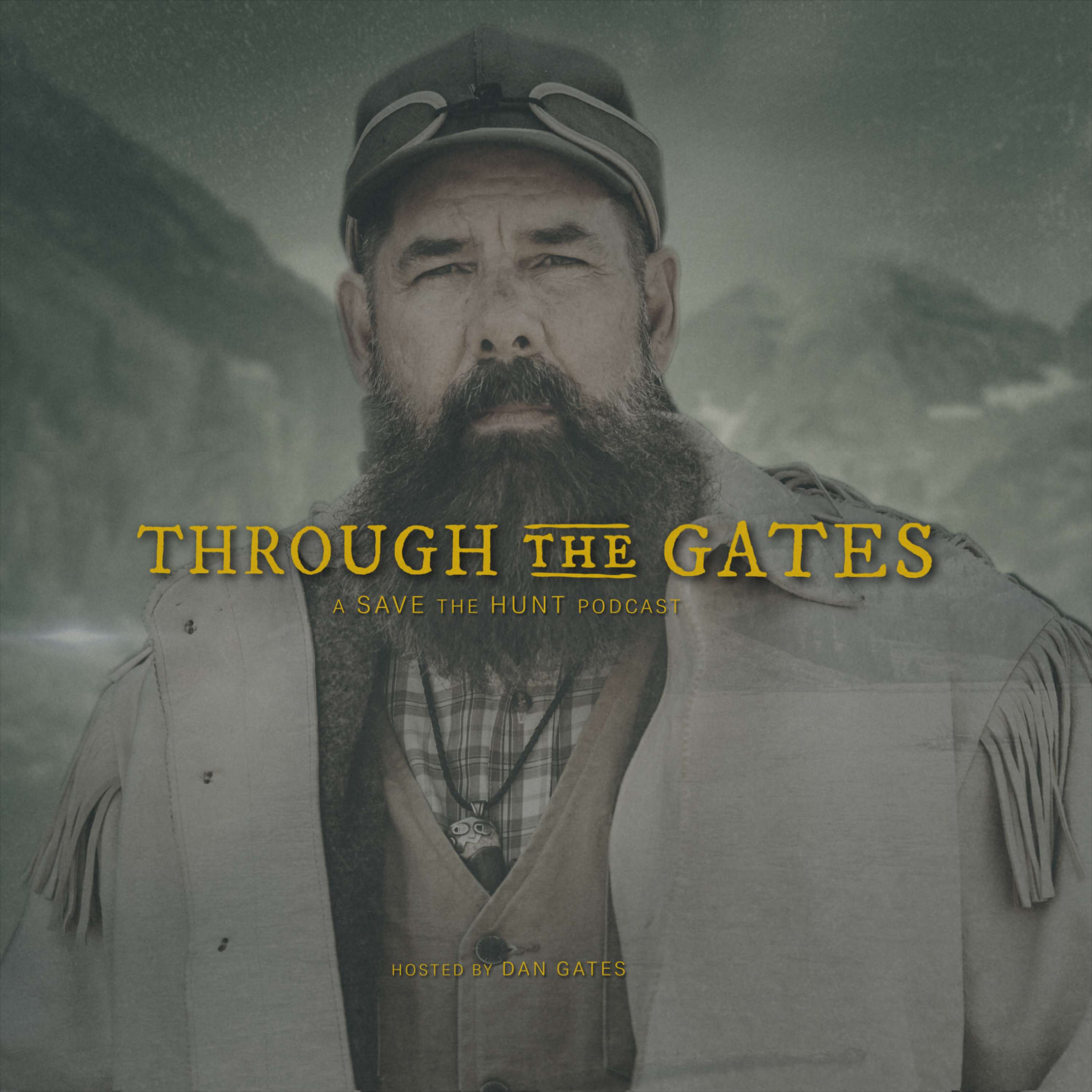
Through the Gates · Dan Gates - Save the Hunt
What does it take to build one of the most recognizable brands in hunting while becoming one of the strongest voices for wildlife conservation? In this episode of Through the Gates, Dan Gates sits down with legendary hunter, entrepreneur, conservationist, and Primos Hunting founder Will Primos for one of the most personal and insightful interviews he's ever given. Will shares the incredible story behind building Primos Hunting from a garage startup into one of the biggest names in the outdoor industry. He discusses the evolution of game calls, hunting videos, elk calling, turkey hunting, business leadership, and how timing, innovation, and authenticity changed hunting forever. More importantly, Will explains why science-based wildlife management, the North American Model of Wildlife Conservation, and educating the non-hunting public are more important today than ever before. In this episode: • The incredible story behind founding Primos Hunting • Building a hunting company from a garage • How VHS tapes revolutionized hunting education • Why authenticity built one of hunting's biggest brands • The evolution of turkey, deer and elk calling • Product innovation inside Primos • Entrepreneurship lessons from growing a national company • The importance of habitat conservation • Why science—not emotion—must guide wildlife management • Educating non-hunters about conservation If you believe in conserving wildlife through science-based management, responsible hunting, and protecting the North American Model of Wildlife Conservation, be sure to subscribe and join us for future episodes. SUPPORT THE RIGHT TO HUNT AND FISH IN COLORADO Sign the Initiative 302 petition: savecoheritage.org Donate to CRWM: savethehuntcolorado.com/support-us Learn more: savethehuntcolorado.com Follow CRWM on Facebook: facebook.com/savethehuntcolorado Follow CRWM on Instagram: instagram.com/c.r.w.m CHAPTERS 00:00 Introduction 00:44 Meet Will Primos 01:39 Growing up and early influences 06:57 Starting Primos Hunting in a garage 09:58 Audio cassettes that changed hunting 11:42 The birth of hunting videos 17:06 Timing, innovation & entrepreneurship 18:02 Conservation begins with education 20:31 Building the Primos brand 22:00 Expanding beyond turkey calls 27:58 Product innovation & Trigger Stick 37:50 Conservation becomes the mission 42:58 Teaching the next generation 48:59 Ballot box biology & public education 53:24 Challenges facing hunting today 56:10 Why everyone impacts wildlife habitat 1:00:51 Future hunting plans & favorite adventures 1:05:03 Final thoughts from Will Primos 1:06:03 Colorado Outfitters Association 1:06:50 Mintern Anglers 1:07:07 Rustic Living 1:08:09 Outro Keywords Will Primos, Primos Hunting, hunting podcast, Dan Gates, elk hunting, turkey hunting, deer hunting, wildlife conservation, North American Model of Wildlife Conservation, science-based wildlife management, conservation podcast, elk calling, turkey calls, hunting industry, Rocky Mountain Elk...
Sean Ender: Listen to the advice of Cameron Haynes and support companies that are supporting your cause and your efforts. Mintern Anglers is one of those companies. Mintern Anglers provides product and fishing excursions in Colorado and they're second to none. For more information, go to minternanglers.com. In the world of throwaway furniture, the folks at Rustic Living are creating heirloom furniture the right way. Each of their over 3,000 designs start with hand-selected aspens milled and kiln-dried in-house to ensure your piece, whether it's a bed, table, dresser, or anything else, lasts forever and beyond. Their artisans hand-sand, hand-fit, and hand-finish each piece. It's craftsmanship that you can see and feel. I personally own a number of the pieces and absolutely recommend Rustic Living to anyone If you're looking to explore your opportunities to hunt out West, maybe try Colorado. If you're trying to get information about bighorn sheep, elk, deer, private land, public land, maybe it's everything that you want to do as far as pack-in trips. Maybe it's just having a pack trip decided for you. And then when you get there, you just hunt out of a drop camp. Make sure you check out the Colorado Outfitters Association. Colorado Outfitters Association here in the state of Colorado has got a numerous amount of outfitters that are members. Through the Gates is produced under the support of the Coloradans for Responsible Wildlife Management to enhance, promote, and defend the North American model of wildlife conservation and responsible wildlife management. That's our mission. We're engaged in fighting at every level so that wildlife management remains science-based and conservation continues to work for our wildlife. To learn more and join the movement, visit SaveTheHuntColorado.com. Daniel Gates: Well, we're here for another episode of Through the Gates, Through the Gates to Save the Hunt, and I am proud and privileged to say I'm sitting here early in the morning with Mr. Will Primos. And for those that don't know who Mr. Primos is, ⁓ you haven't been in the hunting community very long because the way that he has led his life and what he has actually stewarded wildlife conservation and and expanded the outdoor recreational opportunities ⁓ for hunting and fishing is remarkable. And I remember I remember as a young man growing up. Sean Ender: Thanks for joining us for this episode of 3Dgates. For more content like this, make sure that you like, follow, and subscribe on all of our channels. The North American model of wildlife conservation is the greatest conservation model in the world. It's a success story that should be shared and celebrated because everybody is a part of it. and they can supply you with whatever you're looking to try to acquire and what you want to do for the hunt of a lifetime. For more information, check out the coloradooutfitters.org and make sure that you let them know that you heard about them through the gates and let them know that you're trying to continue to save the hunt in the state of Colorado. who wants to turn their cabin or farmhouse into a true mountain home. At Through the Gates, we constantly talk about sustainable use of the resource. Rustic Living has a long-standing relationship with the U.S. Forest Service, hand-selecting stands and trees to ensure our forests remain healthy and your furniture lasts for generations. Rustic Living, right out of Alamoso, Colorado. Stop in on your next adventure through the great San Luis Valley or visit their website at rusticliving.com. Daniel Gates: And watching guys like him and many, many others, ⁓ through their trials and tribulations of trying to figure out how to publicize hunting and actually let people know about the conservation model of North America. So, Mr. Primos, I really appreciate you taking the time this morning. I know we played a little bit of catch up and stuff, but ⁓ would you mind giving us a a remarkable introduction of who you are and where you come from, and then we'll get into some questions and answers, sir. Will Primos: Well, thank you, Dan. I don't know about a remarkable introduction, but I'll just tell you the truth. How about that? So I'm seventy four years old. ⁓ I was born in nineteen fifty two. ⁓ so my life was built in that era, ⁓ which was the coming of the Vietnam War, which in in affected me and influenced me tremendously watching the news, watching Huntley Brinkley on T V and Daniel Gates: That would be good enough, sir. Will Primos: watching Walter Conkite and watching the story. I was in the sixth grade when John Kennedy was ⁓ assassinated and that was a a big moment when the teacher walked in crying to tell us about that. So, you know, those are the world events, some some of them in the United States that affected me growing up. But my grandfather on my daddy, from my daddy's side, ⁓ immigrated from Greece in nineteen ⁓ eight with his mother. ⁓ he Turks had killed his daddy. And so they took their land and so they came to the United States. She brought ⁓ five children with her and tried to make a life. And my granddaddy being eight years old, they landed in New Orleans and they became citizens and he began to try to learn English and and grow up and r worked in bakeries and worked in restaurants as a bus boy at a very early age. He was a very smart man, ended up moving to Jackson, Mississippi, which is the capital of Mississippi in nineteen twenty seven. brought his young family with him. He had married a French lady, my my grandmother mom, and they beg built a restaurant ⁓ empire, five big restaurants and country controlled all the activity and that area of Mississippi in the restaurant business. And he invested in in real estate and all kind of stuff and ended up buying a piece of property outside of Jackson, which is now of course in the city limits. And that's where I grew up and had a lake, had sheep, horses, donkeys, chickens, and squirrels and rabbits. Didn't have any deer or anything to chase, but ⁓ anything that swam, ran or crawled, I was after it. And that's that's how I grew up. ⁓ And I and I love that. My cousin Jimmy Primos was five years older than me. ⁓ and so he came was kind of my mentor. He ⁓ was just old enough to teach me and ha pass down pellet guns and twenty-two's and stuff like that. And we all lived on about fifty-two acres. ⁓ my grandfather was at the end of the property, it's my daddy and all the all the uncles, all the the the and aunts and They it was an extended family, so it was a wonderful upbringing. I could walk a quarter mile pretty much to any one of my aunt and uncle's house. And we were raised in the South and you said, Yes, sir, no, sir, and Yes, ma'am, and no ma'am, and when you didn't, well, you got you got popped by by your aunt, by your uncle and whatever. So you learned that. So even today I'll be somewhere where they don't teach that and I'll be at a at a drive thru or whatever. I say, Yes, ma'am, that's fine and then they Daniel Gates: Yeah. Will Primos: often the door of where are you from? But anyway, that I was the b born and raised in the South, but I loved to to hunt and fish and ⁓ and that's that's what I wanted to do. Frog gig in the summer and just you name it. So ⁓ early on I had a real appreciation for understanding where critters lived and habitat and what made it better and one thing led to another and I graduated from high school and I joined the Air Force. I was a marksmanship instructor. Daniel Gates: Yeah. Will Primos: ⁓ was what ⁓ was my job was and I trained ⁓ once I went through ⁓ at Lackland Air Force Base and went through basic and went through ⁓ on job training ⁓ there. I I was taught how to use ⁓ sixteens, forty fives, ⁓ 38s, M1 ⁓ sixteen had a grenade launcher that owned it and I had to learn all of those weapons, which were small arms to teach the pilots and co pilots. So if they got shot down, how could they defend themselves? So that was my job. ⁓ so I was in the Air National Guard and ⁓ Vietnam was on the downhill run and you know, the the music of the time, you know, the whole all that was just terribly influential, but I I loved to hunt and to fish and that's all I r I really wanted to do. I went to ⁓ college and ended up graduating from a private school in the Jackson, Mississippi area. I went to ⁓ miss for a little while, went to state for a while and ran out of money and had to come home and go to work. Had so I could get a job with the family and and I could work and go to school, finish my education. So I had a ⁓ a master's in business and I still, you know, started I just I just loved to hunt and fish and so I said, you know, I I I was in the restaurant business so to speak, 'cause I that's what I knew and that's what I was doing. But I didn't love the restaurant business because it was so confining. So I ⁓ Daniel Gates: Ha ha. Will Primos: I started a little call company ⁓ in nineteen seventy-six in my garage. I was just making turkey calls. And it was a hobby at first. But very quickly ⁓ I was able to really get some good sales going locally and then got had a an account that ended up in Pennsylvania. And ⁓ one thing led to another and I said, Dang it, I might be able to make a a a job out of this, a living out of this. So I converted my whole house to an operation, ended up had twelve people working at my house every day. I'd converted the carport to a area that we could manufacture stuff and ⁓ I had a guy answer the phone during the day. I worked in the restaurants. ⁓ and I didn't stop working in the restaurants until nineteen ninety. So I I kept plowing everything back in there. I'm sorry, nineteen eighty eight. Nineteen eighty eight I quit the restaurants. ⁓ and and started, you know, trying to make this full time. So it was just a a love of great product. And I I I learned early on that in in this world of outdoor recreation and the people who love it, you need to make the best product you can because you're going to use them too. And taking a shortcut wasn't in my book. So my products were more expensive, they they cost more, but people really ran to that and appreciated it. And it kept growing and kept growing and finally, you know, I was leasing space, moved out of the house, leased space, and finally built a a real big 110,000 square foot building where I housed everything, ⁓ marketing, ⁓ rece receivables, payables. Had about a hundred and sixty people working in that ⁓ building at that at that stage of the company. But really what really helped make Primo's a success was all the fine people, all the wonderful people who wanted to come and be a part of that. And there have been many of them along the ways. ⁓ recently the people who now own Primo's, I sold it in 2006, but ⁓ the people who ended up owning it ⁓ produced the f this is this is our two this year is our fiftieth anniversary. And they produced a a documentary, if you will. And you can go to YouTube and watch it. It's called ⁓ the Primo's Truth ⁓ Documentary or Primo's ⁓ Primo's fiftieth anniversary documentary on YouTube. And ⁓ they did a great job with that. I had nothing to do with it. They came and interviewed me, hired a they hired a wonderful production crew, ⁓ Sigmonta, ⁓ Kyle Nicolett and Donnie Vincent r run that organization and they just did a fantastic job telling the story. They're do a lot of outdoor space productions. Anyway, so, you know, I I I think what one of the things that really helped make primos was the timing. So in 1983, what was available to us, ⁓ to the general public was audio cassettes. That's right, you bought your music. That's you know, you had a little audio cassette that you usually had an aftermarket deal you put in your car so in speakers so you could enjoy music that you wanted to listen to. And so I produced an audio cassette. Daniel Gates: Mm. Will Primos: And I had a guy go with me in the woods who was a producer. He didn't he wasn't a hunter. And I had him record turkey hunts. Everything, the birds waking up, everything happening. And people just were enamored by this thing. Had the gun go off and you run to the turkey, the turkey's flopping, and had great microphones on me, so you could hear every crack of every leaf. Anyway, it was a it was a big success story. Then we went into how to use turkey cough. So my mission began to Teach, to show people, to share with people how this it activity could be so much fun. And if you teach people to love something, they'll want to protect it. And that's where the conservation side of me really began to work. Because there were so many things that over the years we've done wrong that we've made bad decisions on, that the pe trying to make things better for raising cattle or whatever and the wrong grasses and whatever. And it's hurt a lot of the wildlife. A lot of things say the quiet quail in the in the in certain areas of the United States, especially in the southeast. But at any rate, that was a big success. So I was fortunate that the audio cassette was available. Well, shortly thereafter, about nineteen eighty six, you could go to Walmart and buy a video camera. Not not not a not a the ⁓ the little eight millimeter what what they call that, the brownie back in Daniel Gates: Mm-hmm. Will Primos: The day when you had to send the send it in and have it developed. But this was a video camera. You could record something and look at it right away. And so ⁓ I I was figuring it, trying to understand how to market primos. And ⁓ I didn't have any money to really put behind big fancy ads and magazines and so forth. And so I was at at the National Wild Turkey Federation Convention in New Orleans. I think that year was 1985. five or ma somewhere about that. And it's about three hours from my home in Mississippi. So I'd I'd driven down there and was at the show and had a booth and was selling calls. The guy next to me wasn't selling anything. He was an architect from Alabama and he had taken one of these Walmart video cameras and recorded a a hunt. He was in an old logging area and he turkey goblin down the bottom and he set up against the old butt Burned up trash that they had piled up after they cut all the limbs off the trees and everything and pulled the logs out. And he called up this gobbler and shot this gobbler. And people were lined up. I was I was selling out of calls because all the people were at his booth, right next to me. And I went, uh-huh. I got me an idea. I'm fixing to go buy me one of these cameras and and do a hunt. So the next year, ⁓ 1986. Daniel Gates: Yeah. Huh. Will Primos: six if it maybe that was right 85 86 I produced the first audio the first video that we had on turkey hunting and it was a stupid name he was called ⁓ turkey hunting with Wilbur Primos and the Southern boys my given name is Wilbur W-I-L-B-U-R I'm named for my mama's daddy his name was Wilbur Rivers R-I-V-E-R-S and so my name is Wilbur Rivers Primos Daniel Gates: Mm-hmm. Only no. Will Primos: Anyway, so you know that I I bought that thing and that that tape was a pretty good success. And so I said, you know, I need to get serious about this, but I'm still working in the restaurants. I'm still got I've got two jobs, I'm trying to make this work. So a guy had contacted me about that audio cassette. His name was Ronnie Strickland. He was at Rex Sporting Goods ⁓ in Natchez, Mississippi. And he had called me and told me how that audio tape had just affected him. And he said, I need some more of your calls. And and so I so I drove to Natchez, which is about two and a half hours south. So I drove down to Natchez, Mississippi. ⁓ it's a wonderful ⁓ right on the Mississippi River, right next to Louisiana. ⁓ it's a wonderful old ⁓ annabellum ⁓ plantation area where they grew all the cotton and stuff in in Louisiana and they lived up in the hills in Natchez. So anyway, I went down there and and talked to Cuz and I he got he he became known as Cuz. He wasn't Cuz yet, he was Ronnie Strickland at the time. Daniel Gates: Yeah. Will Primos: And so you know, I said, you know, why don't you come up here and visit me one day? I'd like to talk about trying to hire you. Well, I'm a nut because I ain't got no money. Much less, how am I gonna afford to pay him when I ain't even paying myself nothing yet? And I'm still working in the restaurant. So he came and visited with me. And I said, look, I'll take a gamble. I'll go to the bike and borrow some money. I'll buy you a pickup truck and you go video hunts. And you take if I'll go with you when I can, but you take anybody you want to take. And the main thing you got to do is you can't fake anything. You can't reshoot anything. You gotta tell it's got it's gotta be real. It's gotta be real. And so he did. At the end of the season, he had 12 hunts. I think I was on one or two of them. And he had 12 hunts ⁓ recorded. Great turkey hunts, the real deal. And we sitting there and say, well, we got to edit this thing. We got to hire a studio to do that. We don't know how to do that yet. But we got the footage. And what are we gonna call it? And cuz got and Ronnie had become cuz. I'll tell you that story in a minute. So he had become cuz. So says, all I know is it's the truth. And I went, we'll call it the truth. So that became the beginning of the video. So once again, it was timing. The video camera was available to us. We used that to market and tell the story and to show people what calls we were using. I didn't care if you use a competitor's call. Here's the here's how you use it. This is what you do. This is how you have fun. And it just was a huge hit. ⁓ and by the way, Ronnie became cuz. One day we were at a grocery store in Natchez, Mississippi. We were turkey hunting down there. And he's walking across the parking lot, and some guy walking across the parking lot says, Hey cuz. And he goes, Hey, cuz. So we went on inside and I said, Ronnie, how do you know that guy? He goes, I think he was in high school with me, but I don't know him. I says, Well, what's the deal? What's the deal with him calling you cuz? He says, Daniel Gates: Ha ha ha. Will Primos: Everybody down here calls everybody cuz. When you you have just a slight acquaintance, he's your cuz. He's cuz. So he became that day, to me, he became cuz. So we called him cuz, and that's now his name. He works for Mossy Oak ⁓ up in West Point, Mississippi. A fantastic guy, does a great job of of promoting conservation and hunting and fishing in the United States. But anyway, ⁓ that's kind of the story of Primos and how it developed. So timing, there's a book. Daniel Gates: Uh-huh. Mm-hmm. Will Primos: And I've talked about this book before. It's by Malcolm Gladwell. He's a famous New York Times bestselling author. And the name of the book is Outliers. And it's the story. It's not a story. It's the documentary of when you were born, the month, the year, the decade, the century, when you were born and what was available to you and what was affected that could be a part of your life. So understanding that and taking advantage of that. Bill Gates couldn't have been Bill Gates if it wasn't for when he was born and having access to computers at the age that he did and understanding programming. That's just one example. So thank heavens for the audio tape, but game CDs and then videos and then later, you know, DVDs. ⁓ and now it's streaming. So I don't know that I could have done what I did. Maybe, maybe so, but with streaming, people are ⁓ can go anytime. But we were a part. Daniel Gates: Mm-hmm. Will Primos: of the living room. You we were on your TV screen because of the D V Ds and because of the T V show that we had. ⁓ and it just it was magical that you reach so many people. I mean it's amazing to me. The other day I was ⁓ in Montana. I was stopped in Wheat, Montana to get some gas. And so I'm I'm Mary's going in my wife's going inside to get me a bottle of water and I'm pumping the gas. And I said, Hun, give me a bottle of water. And this guy says, Will, Will? This guy runs over from another deal. He recognized my voice. And I was just absolutely floored. And I'm like, yeah, I'm Will. I'm scared then. What am I, what have I done now? You know, how'd this guy know me? He says, Man, I can't believe that. I've been watching all your Delk videos. And so ⁓ anyway, it's been a wonderful ride. It's been a wonderful experience, and I'm very, very honored. And along the way, to understand more and more and more. about conservation. And let me say this. Right now, y'all in Colorado and there's some initiatives in Oregon. Things are happening. People are signing things, wanting to restrict hunting and fishing and how we raise our our our our food on farms. It's just it's absolutely crazy. Let me say this, let me make a statement and then I'm going to turn it over to you. All of us, all of us are consumers. Daniel Gates: Okay. Will Primos: Every one of us, the people in Colorado who think that they want to stop all hunting and and restrict the ability to manage wildlife scientifically through through hunting and and through through fishing and trapping, they too have built a home and taken the habitat away from the animals. They are consumers. The food that they eat. Where they grow it. They have changed that habitat to make it suitable to grow vegetables or whatever it is that that that they eat. And we have to make wise choices, not only them, but everybody, whether you hunt and fish or not. We're all consumers. We've got to do it wisely and we've got to understand we all affect conservation. Every one of us, whether we hunt or fish or not. So There there's my take on conservation. Daniel Gates: You know, I said a remarkable introduction and and ⁓ that that is a remarkable introduction because the the so so you li No, and and I appreciate you getting into depth on that. You know, it's interesting because as as ⁓ and I'm a little bit younger than you but but ⁓ Will Primos: You gotta tell the story if you gon' tell the story. Daniel Gates: ⁓ watching some of that stuff transform from a young man. I you know I grew up in a taxidermy shop and I was around hunting guides and and outfitters and western artists and game wardens and stuff and and I remember vividly ⁓ the name of of Primos and I remember ⁓ like Gerald Stewart and Wayne Carlton and and the Robertsons in the early days with Duck Dynasty and and the guys like ⁓ Tom Miranda on ESPN and and and Will Primos: ⁓ Tom Miranda, yeah. ⁓ yeah. Daniel Gates: You know, I mean and those those now have become icons in the industry, but there's a lot of people that have followed in the footsteps of those individuals because of the business model and because of the way that things have have come together. When when when you got into this and you were actually working the restaurants and you and you were trying to do this, did you think about did you think about product in general or was it just specifically about game calls and did you get into other versions besides you know turn Will Primos: Yeah. Daniel Gates: Turkey and duck and everything else. I mean, what how did you mold into changing I mean, you got into the video side of it, but what about the product? Will Primos: Yeah, so, you know, a as you as as we as we built turkey calls and as we did that, you know, I saw that if I was gonna be successful, that was the spring typically sales started in December, December, January, February, getting ready for the spring month, stocking the stores and so forth. But as a business person, I'm looking at looking at what I was doing, and I said, if I'm gonna be successful at this, I'm gonna have to have sales in different times of the year. So began to look at deer. And people just beginning to understand the vocalizations of deer. So I too was paying attention to that. Down south, most of the deer hunting was dog hunting. You let beat beagles and different types of dogs as as they go and jump the deer and run them. And guys would ha be on radios and they'd be telling people where the where the where the chase was happening. And that was, you know, a lot of deer hunting in the South. But then there were a lot of people like myself who wanted to what we call still hunt. And we didn't want the deer being pressurized by a a a drive by be men on horseback or or dogs. We wanted we wanted to manage the deer. We wanted to let them get older. We didn't want to kill the one and a half-year-old deer. We wanted to be four and a half. And we began to study. Our brothers from Texas did tremendous work on understanding aging deer and when they were at their optimum and growing big horns and and that was part of it too. We love the venison, we love the food, but we also liked the the the the chase, the event, the anticipation of being able to hunt a big deer. So that began to go on. So then we started, you know, building calls and I got lucky and was able to kill a really nice buck, runnered them up and, you know, th I wish we'd had that on video. And so Then I began to everything I did was on video. Every time I hunted, I started a big video department, had somebody run that. And we we were good gracious, we were selling millions of the VHS and then DVDs ⁓ on on turkey hunting, deer hunting, started really pursuing elk in nineteen ninety. And ⁓ you know, we it took me to nineteen ninety-two to figure it out. How do we call up and video an elk hunt. And it I didn't have any money, so I'd take a cameraman and myself would try to go hunting and I I would buy the hunts. So ⁓ they they were not cheap. And when if the elk did come to the call, he came straight on because he's coming straight to the collar. And so next year my friend Will Walker, ⁓ we we were gonna take him, we've had two hunts bought there and out of Angel Fire, New Mexico. And he said, Will, I want to take a friend to call and ⁓ and and I want you to trust me, I think this'll work. I I I thought about it. So we're gonna have a cameraman, a collar, and a hunter. So the cameraman's with the with the hunter, and the collar backs up. And it became magical because the elk comes to the call, but when you're a hundred yards from the shooter, the elk thinks, you know, he has no idea, and he comes right broadside by the shooter. And They killed a beautiful bull and the lights went off and that started the real success of Primos because we began to hunt in groups of three. So rather than pinching pennies and trying to make it work, we were making it work. Some years we would have sixteen hunts all across the United States and I had other people hunting. Some some y some years I hunted two or three states 'cause I loved elk hunting so much. But we we'd have I had a lot of people and that's a that's a That was so much fun to share the hunt. So if you watch the truth series, you can go you can go on YouTube, you can Elk Hunts by Primos, you can watch so many hunts, it's cr crazy. ⁓ we've killed over three hundred bulls with a bow on video, producing those videos. And so ⁓ we learned a lot about archery, we learned a lot about broadheads, we we documented everything and all that became so much fun. But so here we are, turkey and and Waterfowl was my first love of hunting. I I really, golly, when I was eleven years old, I got to be in the green timber in Mississippi hunting ducks and whew. That's a that's an incredible sight to see them ducks come through there thing the big nut-all flat. ⁓ my gosh. Anyway, so we had turkey, deer, elk, waterfowl, and predator. And we decided as a group, I ended up having seven departments in Primos. And each one had a department head. Each one had a budget. If every one ⁓ it was run like a business, but it we were passionate hunters. We were passionate about great products. And so those seven departments ⁓ ran the company. They each ev within ten days, the CFO is a lady, ⁓ she still works for the people who own Primos, ⁓ Deborah Williamson, wonderful, wonderful, smart lady. And she she would have the meeting in look up at the screen and you'd look at your budget, everybody got to see what you did, whether you made budget, under budget, over budget, what you did, what you didn't do, and put all that together with everybody everybody was on on a team, ⁓ and everybody ran a division. So it it it it had focus to it. ⁓ I I I can't say enough about making the right decisions and having the right discipline and sacrifice as you go along building a company. But it was consuming me. I worked all the time. ⁓ a a after church on Sunday, even my assistant would come up there on Sunday afternoon after church and help me because it I'm technologically ⁓ challenged and as we grew the company, here came computers and here came all this technology and all this stuff. So I needed help keeping that going. But ⁓ it it it it became ⁓ such a tremendous work of love. Now t I'll tell you this too about Predator. When we decided that we needed to be number one or two In every category, deer, turkey, elk, waterfowl, and predator. I I said, Look, guys, I love all this hunting and I love predator hunting. But I said, There's so many people out there that know so much more than me about predator hunting. I can't be that. And we don't have that person. And I said, the person that I think that is the most talented is a guy named Randy Anderson out of Nebraska. Let's let's let's call Randy and see if he'll come talk to us. Randy, we flew him into Mississippi. Daniel Gates: Mm. Will Primos: Talked to him and said, Randy, we're gonna pay you a royalty. We're gonna develop calls that you design and you make. We're gonna so we put him in our CNC division, which was about an hour and a half south. We had another operation down there where all the big fancy computer programs, solid work programs, design, ⁓ 3D printers were and all that. And so we sent Randy down there and we designed the product on the screen, feed it to the 3D printer, print it out, put it together. Cut the reed and have him blow it. And then he would say, nope, the low end's not there, the hind's not there, this break's too early. We need to change the curve of the soundboard. We need do this. And so Randy stayed here for about two weeks, off and on, working at that plant. And we developed Randy Anderson calls. And it was a huge success and a lot of fun. And it was fun to promote Randy and to see Randy have this opportunity in his life. Daniel Gates: So so go backwards from the three D printer side, when you started designing calls, you had to do it on a lathe or with a pocket knife or I don't know what the heck maybe a drill bit or something. What how did you start you just sit there and say, I wonder what I could do with this? How do you start that? Will Primos: Yeah, you know, so there were there were people before me. You know, there were people who made duck calls before me. ⁓ so I I there were people who made made ⁓ turkey calls before me. ⁓ The box call excuse me, the box call was in was patented in eighteen ninety seven by a man named Gibson. G-I G I B S O N Gibson. And he that that that Forerunner of the box call, even though it it was designed and patented in eighteen ninety-seven, it was it's not perfect. So ⁓ as the years went on and that patent expired, little cottage industry started, and guys at their shop would build a box call and they glue them together. ML Lynch was a famous box call maker out of Birmingham, Alabama. He was a pharmacist and he would make those calls and put them in his trunk of his car and drive around on weekends when he wasn't being at the pharmacy selling boxcalls. And they were great boxcolls. They're collector's items now. They're wonderful. The Gibson is a collector's item when you find one. ⁓ so they still exist. But we improved on that. Lynch improved on it. Everybody improved on it. And when the C and C became available, you could take a block of wood instead of gluing them together. Once you decided you could take a block of wood and you could program that C and C to cut that box call to very specific specifications. And that's what Primos did. ⁓ we we said, we want to make the best that we can. Let's invest in this. So that's what we did. And my favorite call today is a box call called the Tall Timber Gabriel. And a a Gabriel to me is an angel that sings on high. And that's what a gobbler is in the morning singing from a tree. Tall Timber Gabriel. And I named that for the man Charlie Whittington Who wrote the book, Tall Timber Gabriels? ⁓ what a what a wonderful book. They're they're of course way out of print, but you talk about a a valued collector's item. You got one of those books, you got some. Daniel Gates: When you when you were when you were designing things, did you have an idea on how to make things better or was that just a natural cycle of attrition that you you said, No, I I don't like the way this sounds or I wanna do something 'cause I mean 'cause it 'cause when you look at when you look at you go to like Cabela's or Bass Pro or any of the Johnny Morris locations or something, and you look and there's there's a like an aisle and a half of different types of calls. Does does Will Primos: No doubt. Daniel Gates: Does a call manufacturer get to a point to stay above the competition and be competitive that you just come up with different designs? I mean, turkeys and elk and deer all talk the same language. What's the what's the the ideology about making something better than what the last one was? Will Primos: Yeah, so so the the the the the game call market, which is what it was known as game calls, they have it it has matured. And there there's so much that you can use just about anybody's call and be successful, but the way it fits in your hand, if you have a barrel that fits a a grunt call for deer, a lot of the manufacturers didn't want to have to make another barrel to have it on inventory, so they'd use the same barrel on a duck call. Well, in my mind, that just didn't work. So I made specific products for specific categories and specifically designed them. They cost a little bit more, but that that's what really won people over that we were making calls specifically for that event, that hunt. And it it it it caught on. Daniel Gates: But same same I guess with with any of the other big game stuff or or I mean it you know, just like predators, I mean you l look at the predator manufacturing side, there's times to use the same call but but different calls do different things, whether it's a squeaker or a deer bleat, or maybe it's a howler or something, something along the line of each one of those. And then I guess if you get into the duck call side of it, you got how many different species of ducks that people are trying to imitate. Maybe maybe real good guys can do a lot of different calls with one call, but Will Primos: ⁓ yeah. Daniel Gates: I I think there's a lot of other guys that are doing you know, I've seen guys with fifteen calls around their neck on something. I'm like, How do you know which one you're picking? Will Primos: Yeah. Yeah. Yeah. Well, you know, you learn about ducks and you learn which ones you like and you learn which ones can give you a little bit of an advantage. You know, some days duck calling ⁓ duck duck hunting, I don't even I might not call a whole lot because they've become real shy. Once they get all the way down south, sometimes it's it's a little bit more difficult. So sometimes calling not too much is the right thing to do. But one of the things we we we realized, Dan, the videos were so popular. And we're being seen by so many people and being played in sporting goods stores, being played at taxidermy shops. ⁓ there was so much of that going on. We realized that people were beginning to like us that because they had a chance to know us and they saw us on on video and they trusted us. So when we were using a certain backpack, they wanted the same backpack. When we were using a certain way to carry our bow in the mountains, they wanted that bow sling. ⁓ so we began to manufacture all the products that supported everything we did. We manufactured our own backpacks with simple day pack for deer hunting. It was specific to what we were trying to do. ⁓ the bow sling was hugely successful. A bow vest. This vest made it for right-handed and left-handed shooters. It allowed you to put everything in a vest in a certain pocket so that you didn't have a little fanny pack to go through trying to find stuff. Be it a wind checker, be it a call, be it a tree step, what be it a little small light to be able to see in the dark while you're sitting up in the dark in your in your deer stand, whatever that was, that that bovest, all that was very successful. And then then came the trigger sticks. The trigger stick was invented by a guy named Nate Young. I was at the shot show and I was going to the Nikon ⁓ event that they were having, and This guy was up against the wall showing this guy a shooting stick. And I saw him punch a button and the stick immediately changed lengths. So I waited till they got through and I walked over to the guy and I said, How you do, sir? My name's Will Primo. He goes, Yes, sir, I know who you are. I said, I just saw you punch that button and change the length of that stick. I'd love to talk to you about that. Excuse me. And he said, Okay, I'll talk to you about it. So he came to my booth. We had a little private meeting area there at the shot show. And I sat and looked at the deal and met with him. I said, Look, you've got a patent applied for. I will pay you for that patent application. I'll pay you a royalty. I'll figure out how to make this work for you. So we brought him to our CNC shop and redesigned it. And with his help, beefed up the patent, got it, got the patent approved, and it became the trigger stick. And It's just now fixing to expire. But that has been a huge success in the United States and Europe. But that's just another one of the products. Then we bought double bull blinds because they were such a great way to get in a blind and hide from the game to be able to hunt and enjoy observing wildlife. And you know, I th those are just some of the steps as Primos grew ⁓ and became big enough to really be a force in the outdoor world. ⁓ And still to this day, you know, Primos has a great name and a great reputation out there. Daniel Gates: Will w when you when you were transitioning into different parts of your life, did you think that I mean you you probably always were cognizant of it, but did you think that the conservation side of things needed to be uplifted and enhanced to where people understood that it wasn't just about hunting, it wasn't just about the outdoor recreation side of it, it wasn't about feeding your family or trying to get a great big ten point buck. Did you when did when did the conservation side really start to turn on in your mind to get you involved in some of this. Will Primos: Well, it started early on. I'm very lucky to have started the company about the same time that the National Wild Turkey Federation started. So we were making turkey calls and here they were conserving and ⁓ spreading the wild turkey across the United States in areas where they had been wiped out and were no longer ⁓ viable. And so I I people one one guy came up to me and goes, Man, you need to quit t telling people about turkey hunting. We don't need any more turkey hunters out there. And I went, okay. Daniel Gates: So Will Primos: I thought about it and I went, you know, I want as many people wanting to turkey hunt as they can. So once again, if you share something with somebody and you teach them to love it, they'll want to protect it. If you have a child, you love that child, you'll do anything to protect that child. And the same thing goes for our love of hunting in the outdoors. We want to protect it. We want it to be around. Hunters are the first ones that won't go hunting if something's in in danger because of population. We're the first ones to protect that. So conservation became a real mission for me to understand habitat, both the restoration of habitat and the protection of the habitat. I, for one, would love to have been on the Lewis and Clark expedition. I would love to have seen the grasslands. I would love to have seen the herds of buffalo. I I just I'm I've I've got a place in Montana in Bozeman and I'm I'm there quite often and a lot. And I'm standing there at my place. I'm looking, I turn one way and I'm looking at the Spanish peaks. I turn another way and I'm looking at the bridgers. ⁓ my gosh. To think about, and that's why I love Jeremiah Johnson so much. The movie. I mean, as a matter of fact, a friend ⁓ that's become a friend, he he wanted to do something for me. And so he found the original black and whites. For the Jeremiah that were re that were taken while they were making the Jeremiah Johnson movie. So I've got pictures of Sidney Pollock, I've got pictures of Swan, of Caleb, of of of Robert Redford, ⁓ of Del Gu. I've got the original Black and Whites right behind me in this office that I'm sitting in right now. And I've got the original ⁓ in in 1972 when it was released, the the the marketing that was in the theaters, the big huge posters that were in there. I've got the original synopsis. That was presented to Hollywood by the original authors of Jeremiah Johnson, which was basically taken off a book, Liver Eating Johnson. His his name was his name was not ⁓ Jeremiah Johnson, it was John Johnston. And he became Jeremiah Johnson for the screenplay. So it's a wonderful screenplay. ⁓ and and it it it it's it's all about the passion of outdoors and seeing that habitat. But I would love to have Daniel Gates: Mm-hmm. Mm-hmm. Will Primos: seeing those grasslands. I would love to have been walking across those grasslands and flushed so many prairie chickens ⁓ that I I didn't know what to do. You know, 'cause that that's just incredible habitat. And so restoring that and being a part of that. So along with my passion, you can probably still go to the website. It's called The Truth About Conservation. So two years ago, two and a half years ago, I I I realized I had Over the years, I had collected a set of shotguns made in London because I'm a side-by-side nut and I love Upland hunting. And so these are hammer guns that have the old hammers on them with ejectors. These are beautiful handmade shotguns that cost hundreds of thousands of dollars apiece. And I had collected a five-gun set. And so the Congressional Sportsman's Foundation worked with me, and that's through who I chose. Daniel Gates: Mm-hmm. Will Primos: ⁓ the lady that was there at the time, she's no longer there, Corinne Johan, she was incredible ⁓ at helping me come up with a plan to give these shotguns to the Congressional Sportsman's Foundation under contract that they would have them auctioned off by Rock Island Auction. Rock Island Auctions is absolutely incredible. They forgave the buyers and sellers commission, and last December 5th, we auctioned those guns off. and gave all the money to the Congressional Sportsman's Foundation, National Wild Turkey Federation, Ducks Unlimited, Quail and Pheasants Forever. ⁓ And, you know, what what what an incredible ⁓ opportunity. So conservation is in my blood. And it's it's we've got to give back and we've got to protect it and we gotta share it with other people so they will learn to love it. Daniel Gates: Mm. Do you do you think I mean obviously people keep saying we have less and less hunters, and I think we have just as many hunters in some areas, but we have less hunters percentage by percentage of the population. I mean, just because the human population has grown. But do you think that the the sportsmen of today, the conservation groups of today, are doing a good enough job or are they still molding the model to be able to turn around a message to the general public, to the non hunting general public? Will Primos: Mm-hmm. Well, the non hunting public is the ones that are gonna dictate at the at the ballot box. You've gotta educate them, you've gotta share with them. But you know, hunting is so unique. You you've gotta have time. It's not a cheap sport, it's not a cheap activity. ⁓ and you you gotta have places to do it. So the Rocky Mountain Elk Foundation is so dear to my heart and to see what they are doing, they just received from Colorado. ⁓ the Conservationist of the Year Award. ⁓ I what was that guy's name? ⁓ he's a volunteer. I wrote it down. Luke Whitele, I think is the way he's W E I D L. He he nominated the RMEF, ⁓ the Rocky Mountain Up Foundation for the award because of their work. Not because they talk, but because they do, because the Carters they predict pr ⁓ protect ⁓ for the w for the big game. Daniel Gates: Yeah, yeah, mm-hmm, yeah. Will Primos: ⁓ for the number of acres that they protect. There is in my opinion, the Rocky Mountain Foundation is one of the most solid, well run. When you give them money, it's going to work. It's going to work for what means so much to all of us. But the general public, we need to educate them to so they will understand what hunting is all about, what the activity's all about. Whether, you know, whether you have a child, And you hunt and invite him to invite his friend who might c not come from a hunting family or they don't have access to that. But, you know, these kids who get to have their their parents are lucky enough, smart enough to own a small piece of property or a big piece of property and take the kids there riding four wheelers and enjoying the outdoors and fishing in a lake and getting mud between their toes and understanding the the nature and the relationship. You know. I I don't I don't consider myself a hundred percent city guy. I was raised in semi country, but my brother had a daughter, her name was Paige, sh her name is Paige, and I took her turkey hunting when she was nine years old. And so I'm sitting with her and I got my friend running the camera and helping call and the turkey finally came up there and I had told her. Let her shoot a 22. I did not let her shoot this 20 gauge, 22 only. And she just put the sights together and shot it a like like like 10 yards away. And I showed her the beads on the shotgun. I said, So when the turkey comes up, you just line those beads up and put that on his neck. Go aiming his head, aiming his neck. And you pull the trigger. I'm gonna tell I'm gonna tell you, shoot when you're ready. That means he's in range. She killed that turkey. And so I I said, run run get run run get your run get your foot, put it on his head. He's flopping over there and I'm Run with your foot on his head. Hold him down. So she jumps up and runs over there. I take the gun from her for safety reasons, make sure it's unloaded. And went over there and that turkey quit flopping. And she looked down at that turkey and she said, Is there a turkey in there? I said, What do you mean? Says, she just, you know, like turkey sandwiches. I said, Yes, darling. I'm going to show you. Daniel Gates: Ha ha ha. Will Primos: Wha how this happens. We're gonna pluck that turkey and we're gonna bake that turkey and we're gonna make us some with some turkey for turkey sandwiches. But you know, a kid grows up, they have no clue. Turkey to them is in a cry vac or a cellophane bag in the grocery store. They they don't understand where food comes from and the relationship between wildlife, domestic life, and what Daniel Gates: Mm. Mm-hmm. Will Primos: what brings food to the table. They don't they don't have a clue. So we have got to tell that story. We've got to share that. You know, ⁓ the the guy one of the inventors of Double Bull Blinds was Keith Bean. And Keith Bean did an incredible job of creating these books for young kids that you could punch the button and hear the turkey gobble so you could go on hunts and and it it's but it wasn't a success financially because People wouldn't shove out the fifteen dollars to buy the book to share it with their grandkids. We gotta realize if we don't tell the story, we're gonna wake up one day and we're not gonna have that opportunity. And the worst thing that can happen is that we're not able to scientifically manage wildlife. If we can't make decisions that are based on science, what works and what doesn't work, when you get white-tailed deer that are overpopulated, and right now here at my home where I live. ⁓ I l live in a semi, you know, rural co rural area. The deer are eating themselves out of house and home. 'Cause you you know, we can hunt here, but ⁓ not enough people do it. And the number of deer hi getting hit by cars whoo is unbelievable. ⁓ and we've got to tell the story. We've got to manage wildlife to merge and fit in with what benefits mankind. ⁓ we gotta tell the story. Daniel Gates: So so things that have happened, I mean, I know you have been, but but if you go to the what is it, the wonders of wildlife museum that at the Bass Pro in Springfield, Missouri, and the and the amount of general public that goes through that. I mean, they call it ⁓ you know, it's the eighth wonder of the world or whatever they call it. I mean but I've been there several times. But to see the general public go through And then for a chance at the general public to be able to check the ballot box and whatever state allows that. Twenty six states allow ballot box biology. Do you do you think that our groups, our our core groups are doing a good enough job to not just talk inside the echo chamber, but to get that message out to those voters because they need to be told about things just like what you said. Is there a turkey in there? Well they need to know that because they're going to the grocery store three hundred and sixty five days out of the year. Will Primos: W what you know, I know I don't think the core groups are too I I don't want to criticize them so because God thank you for them. But preaching to the choir doesn't do us a lot of good. There is an organization north of Chicago called the McGraw Foundation. The McGraw Foundation ⁓ is the producer of wings over water. It is the story and the migration. Daniel Gates: No. Mm-hmm. Will Primos: of a yellow warbler, if I remember correctly, a sandhill crane and a mallard. And it is a three D film. You know, Chris Dorsey, hu huge part of of producing that. If if you could s see that movie and be moved by the fact that these what these animals have to go through to survive and to live, and how we as humans can affect that. So the McGraw Foundation Now is on a mission to produce a movie about the ⁓ the Everglades, the Great Salt Basin, what's happened there, ⁓ the forest of the United States, and tell the story, which is about conservation and how we have to be a part of good decisions not to screw it up. And they're reaching the schools. If they can reach those schools, how important is that? And Thank the Lord for the Cox Foundation, for the ⁓ Cox Entertainment, the big huge ⁓ corporation out of Atlanta. They are supporting that the product production of those movies so that we can get them into schools and tell the story. Tell tell young children where the food comes from. Tell them what these animals go through. Tell them what our decisions, when we build railroads, when we build dams, when we in the wrong place. We need to do things good for human beings, but we need to be cognizant of what the long term effects are on the habitat. Without habitat, we don't have the fish, we don't have the birds, we don't have the ⁓ the the big game, we don't we don't have it. We've got to protect the habitat. Daniel Gates: And do you do you think, Will, that we've gotten to a point to where maybe some of this industry has taken it for granted just because of the plethora of of products and distribution and the new new fangled ways to be able to, you know, new camo and new spotting scopes and new rifles and new ammunition and new calls. Do you think that that there's a way that we can bridge that gap with some of that public from the industry side to be able to turn around and get them to understand, the general public to understand how important conservation is from start to finish. It just doesn't happen at the end. And I'll say something real quick and then I'll let you answer. People need to understand that the majority of sportsmen are unsuccessful and still pay for the opportunity to turn around and go out and pursue that, but they're paying for that conservation movement. I mean, you're a big elk hunter, you know. I mean, nine percent of elk hunters in the state of Colorado are successful, but ninety-one percent are paying for the opportunity to be able to go do that. That'd be like ninety one percent of the people getting a movie ticket, but having to stand in the in the in the f in the lobby out there and never get to see the movie. Do you think that we're We're doing a good enough job industry-wide to be able to turn around and incorporate that that circular motion and and and get people to understand how important this is from start to finish. Will Primos: Yeah. Well I I don't think that ⁓ that these the industry takes it for granted. ⁓ but I do think that it's hard work. I do think that sometimes you knock on the door and you get turned down or ⁓ y you it's it's not easy. We have to really put our minds to it and we've got to be a part of the right grassroots organizations that have been started, like like yourself. that are trying to tell the story, that are trying to tell people what what has to be done to be able to protect hunting and fishing going forward and to protect the habitat that that brings it to us. And I'm gonna tell you this when you made that analogy about the movie. It's not a good analogy because because when you go hunting, whether you're successful or not, you still got to see the movie. Daniel Gates: Okay. Mhm. Exactly. Yeah. Coming from a film guy. ⁓ huh. ⁓ Will Primos: Yeah. You still got to see nature. You still got to listen to the birds. You still got to see the critters walk by. You know, even though you might not have been successful, but ⁓ you know, being able to spend time I mean, find somebody with high blood pressure and go sit ⁓ down in the woods where it's still and quiet and and take their blood pressure. I bet it goes down. Daniel Gates: Uh-huh. Uh-huh. I bet it does too, yes sir. Yeah, yeah. Well let me ask you real quick and and so things that are going on across the nation, that you know, there's there's a s a certain specific segment of the human population that doesn't think that we should be doing anything of what we're doing when it comes to hunting and fishing and wildlife management and conservation. ⁓ briefly you look at things like the the IP twenty eight in the state of Oregon, the to create that as an animal sanctuary state. I mean it'll get rid of pest control, all domestic livestock production, all hunting, fishing, all trapping. You won't be able to do chickens or goats or sheep or beef or anything. And then you look at what Colorado's doing, the similar Type things, but incremental steps. Try it at the ballot, try it at the legislature, try it at the commission. Do you think that there's a movement that is that strong or it's just the squeaky wheel that go that gets greased? Because it 94% of the people in this country are not vegans or vegetarians and they engage in outdoor activities. How do we turn around and bridge that gap to get people to understand what affects me and you, just like what we talked about before this podcast, about the ranchers coming together? They might not They might not really agree with each other, they might not like each other, but if there's a fire or a branding or a flood, they all show up. What does sportsmen and women need to do to be able to turn around and make that same that same set of circumstances? Will Primos: You know, I I was in Bozeman recently and walking by a little shopping c center area and there was a guy there asking for my signature. And I saw people go up there and and sign it. They didn't even know what they were signing. I believe it was Winston Churchill who said, and maybe others have said it as well, but he said, those who do not know history are bound to repeat it. So we need to look back and see where we came from. Why do we have pest control? Pest control needs to be done wisely. ⁓ Why do we have the activities and things that are going on because it made life work for humans? So Colorado's a beautiful state with a great climate. Oregon, beautiful state. Great climate. People are moving there. People have the best intentions. They want to do good. But when those people are moving to those states and they're building a home, they're renting an apartment, they're going to the grocery store, they're driving down a road that's been built and paved so that you can ride your bicycle or your electric vehicle or your your gas vehicle or whatever. Every one of those people have affected wildlife. They have taken away. wildlife's home so they can have a more convenient and better life. We've got to tell the story that we're all consumers. We've got to tell the story that these decisions that we make affect every creature in and around us. We've got to do a good job of telling that story and realizing whether you hunt or you fish, you're still affecting habitat and wildlife, and you're taking away homes. That conversation I had with somebody on an airplane. And they were an anti-hunter. And they're sitting next to me and we got into conversation. I didn't really want the conversation. But, you know, my question finally says, So where do you live? I live in Arizona. Would you have a home or apartment? I live in an apartment. Well, you do realize this person was a vegetarian as well. And I said, You do realize that that apartment used to be some wildlife home, some some critters home. And you've taken that home. So you're a consumer too. You're affecting things too. Yeah. Yeah. In an in an airplane, you know. So I mean, it it's it's all about balancing life. We've got to make good choices. We've got to understand what goes on. Just the work that the different some of these conservation organizations are doing, understanding invasive species and invasive grasses and things that take away the ability for the right Daniel Gates: They're in an airplane. Will Primos: vegetation to be there so that elk can thrive and sage grouse can thrive and all upland birds can can thrive. All that's huge. ⁓ the quail that we used to have in the southeast, used to walk out our door and it was nothing to find four or five cubbies. Nothing. That ain't that way no more. All because of the use of different chemicals and for the different grasses that were planted, thinking that they were gonna be better winter grasses for cattle, have Taken away the ability for the quail to have the habitat to survive. So somehow or another, we've got to continue to fight the battle. Thank heavens for you and everything that you're doing to try to tell the story and to let people know. But we've got to get outside the choir. We've got to teach. And that's why I love what the McGraw Foundation is trying to do and with their production of their movies, run by Charlie Potter. fantastic guy and and Carrie Luft, his executive director. Those guys need help and they need encouragement. ⁓ what they are doing ⁓ with that foundation telling the story of the different areas of the United States they can focus on that have gone awry because bad decisions were made and we need to make good decisions so that the critters that call those places home can thrive. Daniel Gates: That's a good ⁓ statement and I think, you know, being able to emphasize that to not only our circle, but outside of our circle is important as well. to to lighten this conversation up just a bit, sir. Where are you going hunting in twenty twenty six? What did you draw any good tags? Are you going any specific places? You got something on your bucket list? Will Primos: Well, I do. I hope to be back in Arizona hunting upland birds with Patrick Flanagan from Border to Border Outfitters. What an incredible outfitter and guide. ⁓ he hunts all the way from Minnesota to Arizona, border to border. So ⁓ that's one of my favorite ⁓ trips of the year. I don't think I'm gonna be back in the elk woods this year. ⁓ I I I've b I've been there so much and done it for so long. I I I don't have to ⁓ go kill another elk. ⁓ But I love being there, calling him and listening to him. And I'm I I'm I miss being there with my wife. ⁓ Mary and I used to be be there together. She was my main caller. Man, she is a good caller. Let me tell you what. One day she called up a bull. I'd already hunted and killed an elk, so she was calling from my friend Brad Ferris. That elk ran up there and he about went nuts, about killed himself before he got there. Brad shot him at about fifteen yards with a bow and we ran over it. The elk went about fifty yards and fell dead. I walked up to Mary. She was doing the college. She was about a hundred yards behind Brad. I walked up to Mary and said, Mary, what did you say to him? He said, Will, I know what you guys are thinking. Daniel Gates: Ha ha ha ⁓ Will Primos: So anyway, it's a lot of fun to see her enjoy elk hunting as much as I did. But ⁓ yeah, there'll be some duck hunts ⁓ in there. ⁓ there'll be some quail hunts in there. I love wing shooting. ⁓ I love ⁓ side by side shotguns. I shoot a over and under my sporting clay competition. I shoot a lot of sporting clays. ⁓ that that keeps me active and keeps me going and thinking. ⁓ good good great activity. But ⁓ I've got some a number of points for Arizona and Montana for for ⁓ Bighorn, for Desert Bighorn and for Ro Rocky Mountain Bighorn and maybe I'll draw one day, maybe before I'm too old. Daniel Gates: What kinda what kinda d Will Primos: I think I got thirty three points in Arizona and thirty one or two in Montana. Daniel Gates: So you're you you've been you've been dedicating a lot of time and effort into that for the last three decades. Will Primos: Yeah, I I work with ⁓ Eric Pollack from World Trophy ⁓ World World Wide Adventures. So Eric Pollack, yeah. Daniel Gates: Okay. What kind of what kind of dogs do you like to run? Will Primos: So I don't have any dogs of my own, but Patrick Flanagun, he's got s he's got he's got setters, ⁓ he's he's got pointers, he he's got so many different ⁓ breeds. ⁓ he has a couple of flushers, ⁓ cockers, ⁓ but pr primarily ⁓ you know, the the the German short hairs as well. ⁓ he's got I think he's got seventeen dogs now. ⁓ so ⁓ I I love watching them all. Over the years hunting with Patrick, ⁓ my some of my favorites have passed away. They've gotten they they'd reached their limit at twelve and thirteen years old. ⁓ yeah, Rita was my one of my favorites, that was her name. And ⁓ it was so funny. You know, Rita would come up to and jump up on my shoulders and let me love on her and all that kind of stuff. And ⁓ I called her my girlfriend. And so then I'd leave and before long Patrick would send me a picture of Rita flirting. with the next group of hunters. She's up on their shoulders. And I said, You gotta be kidding me Daniel Gates: No loyalty in the dog world. Is is Will Primus gonna get into a ⁓ a deer stand or a deer blind this year? Will Primos: No loyalty, none at all. Rita was a flirt. Pro pro you know, I may ⁓ take somebody to enjoy the activity, but ⁓ I've I've I've done that my whole life. I've been very fortunate to really chase some big old whitetails and been successful sometimes. So ⁓ I'm I'm sharing it more than I'm doing it. Daniel Gates: Well, Mr. Preebos, I appreciate you taking the time. I know you're a busy guy and you got a lot of things on your plate. And hopefully one day maybe we get together to to to share a blind or a hunt together in some capacity and run into each other in Bozeman when I'm up there doing podcasts with somebody else or or maybe we just run into each other at some other function or some other octa opportunity. So Will Primos: Yeah, that that would be great, Dan. And God bless you for your work. I hope that you continue to tell the story and share with people how important it is to have science based wildlife management as part of the plan. Daniel Gates: Thanks a bunch, Will. Appreciate it. Well, this is another episode of Through the Gates, and and we continue to try to tell the story about conservation, but also about iconic lives in conservation, like Mr. Will Primo's. And we appreciate the opportunity to speak with him and others. And we've got a full lineup of other individuals coming down the pike. And we look to keep telling the story. And in the meantime, aim small, miss small, stay the course, and continue to save the hunt. Will Primos: Yes, sir.