
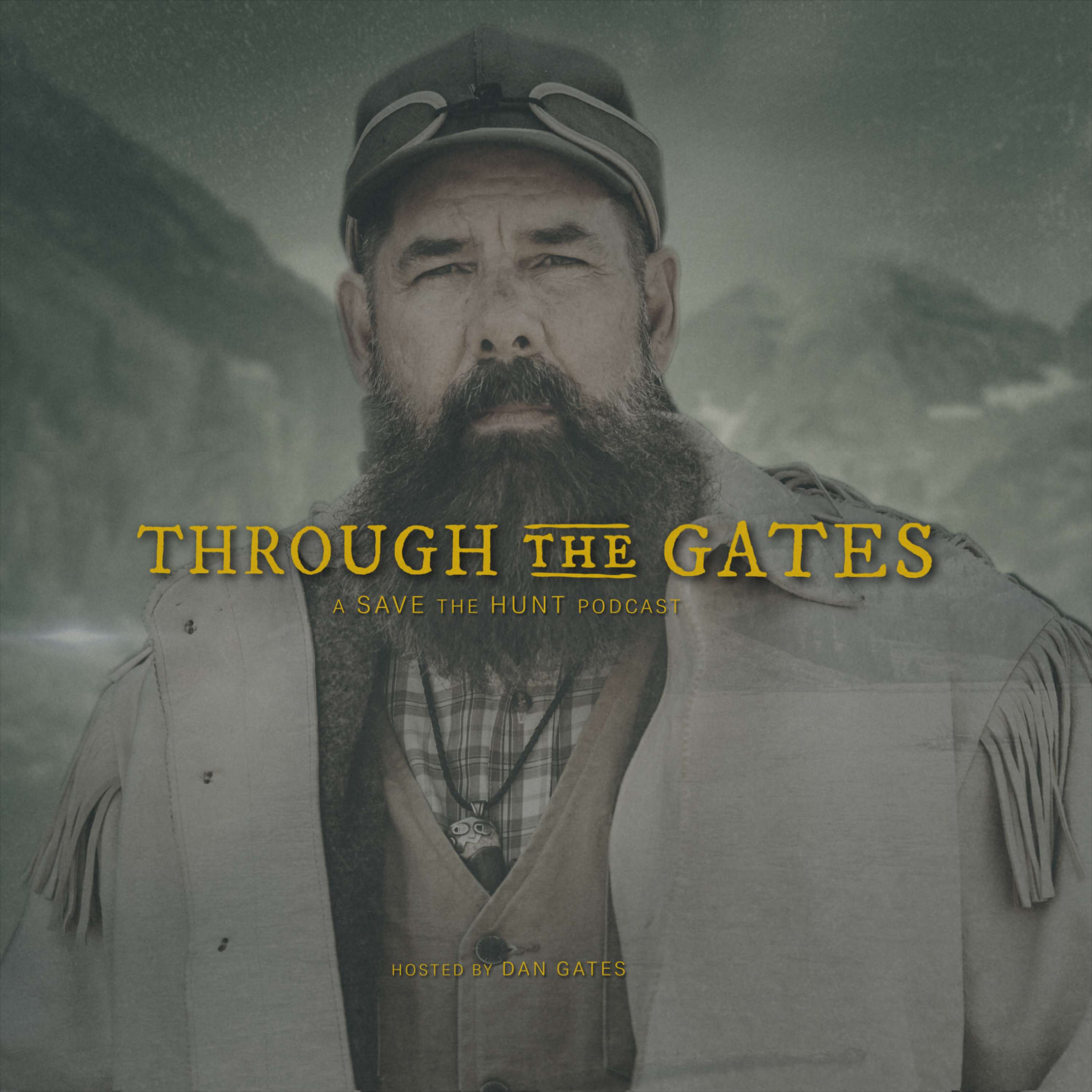
Through the Gates · Dan Gates - Save the Hunt
For decades, outdoor television has focused on the hunt. Jason Matzinger has spent his career telling the story behind it. In this episode of Through the Gates, we sit down with the creator of Into High Country and one of conservation's most respected filmmakers to explore why hunting is about far more than the harvest. Jason explains how storytelling can bridge the gap between hunters and non-hunters by showcasing the science, stewardship, and wildlife conservation that make the North American Model of Wildlife Conservation the most successful conservation system in the world. From his groundbreaking documentaries with the Rocky Mountain Elk Foundation, Mule Deer Foundation, Wild Sheep Foundation, Theodore Roosevelt Conservation Partnership, and Boone & Crockett Club to his upcoming documentary on grizzly bear recovery, Jason shares why he believes conservation—not trophies—should always be the hero of the story. We discuss: • Why modern hunting media often misses the bigger conservation message • How film can reach audiences outside the hunting community • The truth about "trophy hunting" and selective wildlife management • The North American Model of Wildlife Conservation • Why grizzly bears should be managed through science—not politics • The role hunters play in funding wildlife conservation • The future of conservation storytelling If you've ever wondered how hunting became North America's greatest conservation success story—or how we can better communicate that story to the public—this is an episode you won't want to miss. Subscribe for more conversations protecting hunting, fishing, wildlife management, and the future of conservation. SUPPORT THE RIGHT TO HUNT AND FISH IN COLORADO Sign the Initiative 302 petition: savecoheritage.org Donate to CRWM: savethehuntcolorado.com/support-us Learn more: savethehuntcolorado.com Follow CRWM on Facebook: facebook.com/savethehuntcolorado Follow CRWM on Instagram: instagram.com/c.r.w.m
Sean Ender: We always talk about supporting businesses that support our efforts to be able to save the hunt in Colorado. Well, the Colorado Shed Company in Pembroke, Colorado, just outside Canyon City, is one of those partners. Colorado Shed has been building sheds in the state of Colorado for the last 10 years and is actually owned by sportsmen and women. They support the efforts of what the Coloradans for Responsible Wildlife Management has done, and they also support all the organizations that you're probably a member of. Whether you're looking for small modular type buildings, In the world of throwaway furniture, the folks at Rustic Living are creating heirloom furniture the right way. Each of their over 3,000 designs start with hand-selected aspens milled and kiln-dried in-house to ensure your piece, whether it's a bed, table, dresser, or anything else, lasts forever and beyond. Their artisans hand-sand, hand-fit, and hand-finish each piece. It's craftsmanship that you can see and feel. I personally own a number of the pieces and absolutely recommend Rustic Living to anyone If you're looking to explore your opportunities to hunt out West, maybe try Colorado. If you're trying to get information about bighorn sheep, elk, deer, private land, public land, maybe it's everything that you want to do as far as pack-in trips. Maybe it's just having a pack trip decided for you. And then when you get there, you just hunt out of a drop camp. Make sure you check out the Colorado Outfitters Association. Colorado Outfitters Association here in the state of Colorado has got a numerous amount of outfitters that are members. Through the Gates is produced under the support of the Coloradans for Responsible Wildlife Management to enhance, promote, and defend the North American model of wildlife conservation and responsible wildlife management. That's our mission. We're engaged in fighting at every level so that wildlife management remains science-based and conservation continues to work for our wildlife. To learn more and join the movement, visit SaveTheHuntColorado.com. Daniel Gates: Well, we're here for another episode of Through the Gates, Through the Gates to Save the Hunt, and I am privileged and pleased to sit here with Mr. Jason Matzinger out of Bozeman, Montana. ⁓ Jason is a sportsman, conservation advocate, supporter of CRWM and a film producer. And I don't know, Jason, if you're a actual wildlife biologist, but you you sure come across as one because of your expertise that you've had on the ground. But ⁓ t you know, d privileged to have you on board and privilege to Sean Ender: Thanks for joining us for this episode of 3Dgates. For more content like this, make sure that you like, follow, and subscribe on all of our channels. The North American model of wildlife conservation is the greatest conservation model in the world. It's a success story that should be shared and celebrated because everybody is a part of it. Daniel Gates: ⁓ spark that friendship up that we've had for the last couple of years ever since we've been fighting on ⁓ initiative proposition one twenty seven. And ⁓ you were a great supporter of that and helping us get some of that stuff across the finish line. But why don't you give us a little bit of a introduction in ⁓ where you come from, what you do, and then explain the background of where you're at because it looks like you're in the Museum of Natural History, so Sean Ender: and they can supply you with whatever you're looking to try to acquire and what you want to do for the hunt of a lifetime. For more information, check out the coloradooutfitters.org and make sure that you let them know that you heard about them through the gates and let them know that you're trying to continue to save the hunt in the state of Colorado. who wants to turn their cabin or farmhouse into a true mountain home. At Through the Gates, we constantly talk about sustainable use of the resource. Rustic Living has a long-standing relationship with the U.S. Forest Service, hand-selecting stands and trees to ensure our forests remain healthy and your furniture lasts for generations. Rustic Living, right out of Alamoso, Colorado. Stop in on your next adventure through the great San Luis Valley or visit their website at rusticliving.com. sheds for your property to store the extra hunting equipment, or maybe just to turn around and put that freezer in for all the meat that you've got, check out Colorado Sheds. They also do pole barns and can do custom manufacturing to whatever your heart desires. She sheds, man caves, it doesn't matter. Check out coloradosheds.com. Jason: Well, first of all, I just appreciate you having me on and and the the kind words and the introduction there. I mean, I feel the same way. It's like watching you out there fighting every day is ⁓ pretty inspiring what you're doing out there. So it's an honor to support it. ⁓ you know, I guess I'm not a biologist. I just have done a lot of conservation films working with the world's leaders in whatever subject it it's been, you know, whether it's been elk, mule deer, wild sheep, ⁓ public lands, w ⁓ you know, now the grizzly bear walking with grizzlies, the film I was talking to you about. So I feel like I've just had a front row seat to talk with some of the smartest people on these subjects and you know, when you when you're with those type of people, you you should listen more than you talk. And I've tried hard to do that. And so just been able to retain a lot of a lot of information through the years and and deliver it through film. So but you know, my background came from just being born and raised here in Bozeman in a hunting family surrounded by people who not only hunted but felt that Being a part of a conservation organization was important. You know, I remember going to the Rocky Mountain Elk Foundation banquets when I was little, you know, really too little to fully understand what the big picture of what was going on was. To me, it was just a gathering of a lot of people that were really good people. ⁓ so you know, it kind of instilled that mindset in me that. We're not only hunters, but we have this responsibility to uphold through the entire process. And and so I've tried to just kind of carry that on through the television show into high country or through the documentary films that I've done with with various organizations through the years. And it's kind of led me to meeting you and and helping, you know, fight some of this stuff today. Daniel Gates: Well and and it's it's interesting too because being able to tell a story through television or video production is something to where ⁓ I think it you know that old saying a picture's worth a thousand words, a video's worth in my mind, ten million. and that's good and bad too. I mean there's that you could you could turn around and take something out of context and and tell a a bad story that doesn't really tell the whole story about a video. But if you complete the video and you tell the entire story like what you've been doing for quite some time, I think for The non-hunter, it actually helps maybe connect some of the dots. We just have to get it in front of those non-hunters more frequently. But when you started this process, was it I mean, did you grow up you know, watching Mutual Omaha's Wild Kingdom and then going into the Marty Stauffer era and then ⁓ Steve Irwin or I mean, you know, you look at the the time frame of this as a combination of all of that? Jason: Yeah. Yes, a hundred percent. I mean Mutual Omaha. I remember watching that every Saturday morning. ⁓ I remember the Marty Stalfer Wild America. My dad and I would watch that religiously. I just I could not believe the the footage that he could capture these animals. You know, it was for our time it was planet Earth, you know, like Marty Stalfer was our era planet Earth. It was just mind boggling to see the footage and Daniel Gates: Yeah. Jason: And then for me it wrote it rolled into Gordon Eastman. You know, Gordon Eastman started making films that was kind of that combination of I'm a hunter, but I love documenting wildlife. And so I really feel like Gordon was kind of that final inspiration on me that's like kind of set me off on that path where my productions the animal is always the star. Daniel Gates: Mm-hmm. Yep. Jason: You know, they're always what what the subject is. And I'm always just kind of the person to deliver the message. And I always want to keep it that way, you know. ⁓ and I feel like Gordon was that guy or Marty was that guy, you know. ⁓ so yeah, it really started from that kind of inspiration. And then I I started guiding right out of high school. And that was at the time where hunting television was at its early stages, and Daniel Gates: Mm-hmm. Jason: I loved watching it, but I didn't feel like it really it didn't represent me as like a Western hunter and it never talked about conservation. And so I was like, man, every day I go out and I take these guys and I see these sunrises and sunsets and I see these skylined herds of elk and bugling bulls and you know, the steam coming out of their mouth and this stuff. I'm like, I wanna capture that. I wanna show people that because that's not being shown on T V right now. Daniel Gates: Mm-hmm. Jason: you know, not through the hunting networks. And ⁓ so that was my inspiration. And so I I started trying to film while I was guiding. And I realized that that was just a disaster. I became a you know a half ass guide and a half ass cameraman at the same time. So Daniel Gates: And and and and and maybe maybe even a a a c a critic of your of your cast members. 'Cause I've guided plenty of times in my life and I'm like, Okay, this isn't working out of that I'm I'm I'm gonna wanna kill this guy. So y yeah. Yeah. Jason: There was a few of those times too, yeah. But but but then, you know, when I ended up kind of finishing my guiding career, it really rolled into the chance where okay, now I'm hunting with my friends and I can pack this camera and I'm not costing anybody anything, but maybe my own hunt if I'm fiddling with this camera. And so that's where it just really started to to kind of grow into. This library of footage, you know, it wasn't professional at the time. It was a little handy cam. I would pull it out when the action was hot and heavy. I wasn't trying to storytell. ⁓ but over years of doing that, I all of a sudden had this archive of footage and these amazing moments of animals doing just crazy stuff that people really hadn't seen. And although it was like on a little handicam. That's what people were used to at the time. And so I was like, wow, I really have something here. Like this really could be something. So I kind of upped my game with a nicer camera. And, you know, I'll be honest, it was like overnight I had a TV show. I I didn't even know how to edit. Like when we first got the contract with the sportsman's channel, I was so nervous because I was working full time as an electrician, but I had this chance to chase my dream. Daniel Gates: Mm-hmm. Jason: And so I would sit in my office after you know, working all day in the as an electrician and I would watch instructional DVDs on how to just do this editing. And ⁓ you know, all of a sudden we Daniel Gates: Yeah, and I like the way you say that. Instructional D V Ds. You know, you had to turn around and get something to put it in a device to turn around and play it so you could learn how to do that. And now you just turn around and YouTube it or Google it or or chat GPT it. Jason: Yeah. Yeah. ⁓ for sure. I could show you. I actually have the whole instructional set still right here in my in my office. And I remember disc by disc. You know, and I don't think I even made it through the whole thing. Once I got to like disc seven out of ten, I was like, okay, I can do this. And then, you know, Into High Country was born. And that's ⁓ you know, we're about to launch 17 seasons now. Daniel Gates: This is ⁓ Jason: ⁓ season seventeen starts in July. So it's pretty crazy. It's been a it's been an awesome ⁓ time. Daniel Gates: D do you think do you think Jason, with seventeen years of that one platform, has there been ⁓ you you tell a different story because from what I've seen And I've not watched seventeen years worth, but I watched enough of it to get a pretty good idea and I enjoy the hell out of it. But there there's there's a similarity between you, I think, and somebody like Tom Miranda, to where Tom st tells a story, Jim Shockey tells a story. There's all there's storytellers all over the place, but But they're they do it in a different light. And you seem to do it from a from a remembrance type thing in conjunction with the everyday, you know, observations and and where conservation came from and how it actually was established and how it transcends into the science-based wildlife management side. You're not highlighting the hunt, you're highlighting the experience and the ⁓ opportunity. This is this is from me observing. Correct me if I'm wrong, you're highlighting the experience and the opportunity just to be in the situation to be able to do that. The hunt is almost secondary. It's it's the entire lifespan and the experience of what you're trying to do. Am I am I over overlooking that or Jason: No, I'm really happy to hear you say that because I work hard to try to paint that picture. Like I told you, you know, I don't I don't make my hunt or my focus to take one animal or whatever, the story typically. I mean, sometimes it just happens, you know, like but no, I always want the animal and the landscape and the work that came to bring those things together to be the the star of the show, you know. Daniel Gates: Yeah. Jason: And I get a lot of compliments on just people love to learn, you know, and when you can do it in a way that's not shoved down their throat or abrasive or whatever, it's just they really appreciate the the information that comes while watching something they also enjoy. ⁓ so no, I think you're spot on and I appreciate you saying that. Daniel Gates: Mm-hmm. You know, I l I look at it as almost like a ⁓ ⁓ a combination of a Jack O'Connor read, ⁓ and then if you look at if you look at something like a Robert Frost ⁓ type storyline that goes along with that and you combine it in some some you know some jumbled origami, ⁓ Miranda I think does something from a from a ⁓ a a personal hunting perspective more than the conservation storytelling side. He he includes all the conservation very well. And I don't think he Jason: Mm-hmm. Daniel Gates: Actually used to when he started on ESPN. But there's an infotainment side of things that that you provide that are different than what Tom does and that is different what Shockey does. I mean, I think Jim stuff is it's when you the the thing that I was pleased about what Jim Shockey does is he and my wife said this too. When he's in a a exotic place, he tells the story of the culture because the cultural experience of the wildlife and the landscape and the habitat means so much to that individual sector or that region. It's no different than North America than what we do with for the majority of what we do. But Miranda has it has a ability to be able to tell that differently, but it's still it's not about the kill, it's about the engagement and it's about the thrill of you know, preparing Jason: Mm-hmm. Daniel Gates: and actually participating and then ⁓ recollecting and and and culminating all that stuff together. I mean, and I think it's it's something that is missing in a lot of different sectors, but there's a few of you I look at that have told that story very well and look at it from a different perspective as a as opposed to a 22 minute Sunday morning deal on the Pursuit Channel, and I'm not knocking anybody. It's just that, you know, I I look at things and I get tired of you know, looking at things ⁓ turkey hunt, turkey hunt, turkey hunt, turkey hunt, white tail hunt, white tail hunt, white tail hunt. Those are cool, but I think we could do a better job of telling that story and guys like you and Shocky and Miranda and a few others have been able to do that pretty formidably and and I I just appreciate what you bring to the table. Jason: Well, thank you. I I appreciate hearing that. It's it's it's a you know, what drives me is telling those stories. Obviously as a hunter I have my personal goals and I love going out and taking my boys out and seeing them be successful. And, you know, I'm a hunter just like everybody else. But I do feel like, you know, here's a perfect example to highlight what you're talking about. I remember going to the Archery Trade Association show. And talking to Jim Libertor at the time was the president of OSG. And ⁓ I sat down in a meeting with with Jim and Jake Thole, who's my programming director over there that I've worked with for all 17 years. We've become great friends. And I remember they were saying, like, you know, what do you think we should do with the network? Or or what do you think we could be doing we're not doing? And Daniel Gates: Mm. Yep. Jason: Some things like that. And I said, I just think we need to talk about conservation more. I think it's really important because, you know, there's my show, Jana at the time, Waller was on the network with Skullbound, and she was always really good about telling the conservation stories. Randy for a while was on. He was good. But then those people started to go away from the network. You know, they still produce and they do their thing, but it's not on the network. So Daniel Gates: Yeah. Mm-hmm. Yep. Right. Jason: Anyway, I was like, in my opinion, I just think we need to keep beating the drum on conservation. And I remember, you know, this is the biggest gathering of bow hunters in the United States, you know, people who do what I do and what you do and what people that listen to this podcast do. And I remember Jim kind of sitting back in his chair and he goes, You know, we talk to hundreds of producers through outdoor channel, sportsmen's channel. you know, all the different things that they have a handle in. And he goes, You're the only producer that ever says the word conservation in here. And I just kind of sat back in my chair and I said, Well, what are all these people doing then? I mean, do they not understand without conservation, none of these banners, none of these booths, none of our TV shows, none of our magazines would exist. Daniel Gates: Yeah. Mm-hmm. Jason: And he's like, I honestly don't think they do. A lot of people think their legacy is that picture on the banner, you know. And I was and it was just a brief moment in this conversation, but it stuck with me forever that you have a room full of passionate bow hunters. These guys have meetings with hundreds of them, you know, some of the leaders in what we do. And ⁓ and he said, You're the only one that ever talks about conservation. And I was like, Well. Daniel Gates: Yeah. Jason: I guess that means we need to keep talking about it then, you know. So Daniel Gates: Yeah, 'cause y you you've you've done I guess it would be contract work or it's or it's partnership work with major conservation organizations, have you not? Jason: Yeah. Mm-hmm. Daniel Gates: And and so what are the what are some of the organizations that you've been fortunate enough to partner with to tell some of those stories, whether it's about their individual species of concern and part of their mission or just a broad base side of things, because it all plays into when you start talking about sheep, well pretty soon you talk about bears and moose and caribou and everything else. Wha what organizations have you partnered with to be able to turn around and create some of those stories? Jason: Well, the very first one that kind of believed in me and hurt wanted to kind of hear out the story that I wanted to tell was the Rocky Mountain Elk Foundation, and they're still a partner today. I wanted, I had this vision to produce this film called Project Elk. And I wanted to to document Elk through the changing of the seasons, you know, and kind of show the hunters' role through those seasons and how we we never really go away. You know, and my whole point of that film was to really help RMEF tell explain to people how hunting is conservation. You know, that's their tagline. Hunting is conservation. To us, it makes total sense. To people outside the box looking in, they're like, that is the stupidest thing I've ever heard. How how is hunting conservation? That makes no sense, you know, and I get it. So I was like, okay, I want to take on this challenge and I want to explain to them that hunters are taking care and watching these animals in the winter. We're directing dollars to winter ranges. We're directing dollars to research and habitat and, you know, and in the spring, summer, fall, I wanted to just show that we never go away. We don't just show up when when it's time to punch our tag and then we go home and we don't think about it anymore. This is a year-round endeavor for us. And Daniel Gates: Mm-hmm. Jason: And then it helped me paint the picture and you know bring up the Pittman Robertson Act and and all those things and really help just kind of explain to people how hunting was conservation. That was really the point of that film. ⁓ and I will say it was at a time where slow motion photography was just becoming a thing in in hunting television. And so I had this goal to get the first ever elk being taken with a bow. With a slow motion camera, and we did it. You know, it it sounds crazy to say that because now everybody you can even do it on your cell phone, you know. But back then, like we put it on ourselves and the camera technology back then, it's not like you could just record in slow motion. You had eight seconds of a window that you could punch that record button and it would record for eight seconds, and then the camera just couldn't. Daniel Gates: Yeah. Yeah. Jason: handle the data anymore and it would stop. So you could either punch it before and have eight seconds, or you could punch the button after and it would back record for eight seconds. So we're like, how are we going to do this? We only got eight seconds. I don't know, you know, when you draw back on an animal, you don't know when you're going to let go. So but we did it and we were just like holy cow and ⁓ so that was kind of the first of the big documentary films for Daniel Gates: Ha ha ha. Mm-hmm. Jason: For me, and that was with RMEF. ⁓ the next ⁓ group I worked with was the Mule Deer Foundation. We did a film titled Project Mule Deer, which ⁓ really, you know, was to paint the picture of how important keeping travel corridors and winter and summer ranges and all that stuff connected, and just how important habitat. is to something as fragile as the mule deer. And when we start fragmenting it, how hard that is for the mule deer to sort of figure out how to how to migrate through those areas or even live, you know. So really the message of that one was like habitat, migration corridors, winter and summer ranges, why that's important and how hunters really, you know, look after that and make sure these animals have what they need. Daniel Gates: Mm-hmm. Jason: And then after that we did the circle of life with ⁓ the Wild Sheep Foundation. And my whole point behind that film was to kind of explain to people why like commissioner tags, governor tags, things like that are important to wildlife conservation. You know, ⁓ I'm sure you've heard it just like I have, like people can't understand why some rich guy Can just buy his way straight to the top and go hunt the best sheep unit in Montana if he wants to. And so it was like, well, you know, that money goes back into the state agencies to help bolster more herds, put more herds on the landscape, and give, you know, the common person who puts in for the tags a greater opportunity to go out there and have the chance to hunt these animals and, you know. Daniel Gates: Mm-hmm. Mm-hmm. Jason: Really just kind of explaining that whole process and how that works. And ⁓ Daniel Gates: That one that one itself seemed to be, from what I watched, ⁓ a kind of a an maybe a spiritual experience for you, the way that you turned around and told part of that story? I you being out you being out with the sheep and and and you actually you know I mean there there was there was something there was a there there was something there that seemed like it was more emotional than than some of the other stuff. But I think that that also draws people in. You started to realize that I mean I'm I'm looking at it from the outside, but you started to realize the the significance and the importance of being able to convey that emotion to the audience. I mean it's kinda like watching a cooking show. It's it's really good but you don't get to taste it and you don't get to smell it. Somebody has to turn around and all you get to do is see it. Somebody has to tell you and they have to tell you in in in their you know first hand experience and I think you did a really good job of that during that during that wild sheep one. Jason: Yeah, I think the moment that you're talking about is when I take my sheep. And I and I walk up to it and I put my hand on it for the first time and I I really go into this explanation of what hunting is to me, and that it's and it's more than the taking an animal and that I would rather look an animal in the eye after I've taken it and and and use every part of it than to pick up a steak wrapped in plastic from a grocery store and Daniel Gates: Mm-hmm. Jason: And the responsibility that comes with that and and yeah, it's this whole kind of montage after I take the ram of really the whole what it all means to me, the big picture from you know, how it feeds my soul to my family, you know. So Daniel Gates: And that probably wasn't pr b that probably wasn't part of the original intent. I mean, maybe you write a script up and maybe you have an idea where you wanna go, but but the emotion that that affects a sportsman when he harvests something, and they and it does it in different ways, but depending on the the species, depending on how much they had to endeavor, you know, through that process. But you had the opportunity to actually tell a story of something that was very, very intimate to you and I think that a lot of people go through that. They just don't get a chance to turn around and express that and they're not documented it in the process. Jason: Mm-hmm. Yeah, and you know, the hunting community's funny, you know, we we don't agree on on a lot of things. So it's funny 'cause like when I open up like that and I get spiritual and I get right to the core of how my feelings basically. I did have this sector of the hunting audience that was like, you know, ⁓ geez, he's he's getting soft or like, you know I don't want to hear you cry your eyes out, you just kill the ram. And it's like, well, it's I'm not. It's you don't understand, I guess. But anyway. ⁓ and then, you know, from there I worked with Theodore Roosevelt Conservation Partnership and on X at the same time to put out the Project Landlocked film. ⁓ and that was really, you know, a perfect time because ⁓ they had just formulated the landlocked report. Daniel Gates: Yeah, yeah. Mm-hmm. Jason: And they had just figured out how many, approximately how many acres out west were landlocked by private property. And it was just a document, kind of a boring document, but it was it was full of so much good information. And so we kind of partnered up. I flew in by helicopter into a landlocked section in Bow Hunted Elk and just kind of told the story through that process of, you know, the history of how. like checkerboarding even came to to be in the United States and how we ended up where we are today and and then, you know, what's the future look like? What are the answers? ⁓ you know, and the whole film is is respects private property rights. I mean, I I would never want to take away from those, but it's also looking at like how can we do this better? ⁓ Daniel Gates: Mm-hmm. Jason: And the last film I did was with the Wild Sheep Foundation again, and that one was titled Selective and that and the Boon and Crockett Club. And we just told the history of trophy hunting and how it's so important for wildlife conservation today. And, you know, really how it originated, why it was important then, and and why it's still important today. That was really the message behind that film. And, you know, I took I kind of pick the term selective because I feel like that's a better term for really what we're doing when we're out there. You know, when you're selective hunting, you could be, you know, looking at a herd of a hundred cow elk. You're still being selective of what cow elk you're going to take. I wouldn't call that trophy hunting, but the same as if you're trying to kill the biggest, most mature mule deer you can find. you know, that is also selective hunting. And so I think when you use that term, in my mind, it doesn't make you a trophy hunter or a meat hunter. It just bridges that gap. Like if we're selective hunting, we're doing it for reasons that are best for the animal we're hunting in the region we're hunting them in. And yeah, so that was kind of the purpose of that film. And now walking with grizzlies. And ⁓ Daniel Gates: Mm-hmm. Exactly. Jason: I don't actually have any partners for that film. This is a a passion project. And ⁓ I think it's an important message that needs to be told to just celebrate the work that generations of biologists have done to get us to this point. And, you know, nobody's standing there clapping for ⁓ And I think it's time that they get recognized because we did it. Like they accomplished the goal that we tasked them with. And they're not even being rewarded for it. And I just think it's time. So this film is to, you know, back up to 1975 when we first recognized that they were threatened and put on the endangered species list and brings it to present day. And we just look at the story of the grizzly bear. It's not necessarily a hunting film at all, ⁓ which is exciting for me. It's the first documentary film I've ever done that. Daniel Gates: Mm-hmm. Jason: You know, I'm not like hunting a grizzly in the film. It's really just telling the story of the bear and wanting to just pat those biologists on the back who have done great work and continue to do great work for our benefit, you know. Daniel Gates: And are you continuing to work on that one now or is that completed? Jason: No, we're working on it now. In fact, I have more interviews. We just got cleared. ⁓ the Interagency Grizzly Bear Study Team, IGBST, is who does all the work inside Yellowstone National Park, and they have been doing the work for years. ⁓ we just got cleared to get interviews with all of them. So in the beginning of July, we're going to be going into Yellowstone and collecting, you know, a bunch more with the team that's actually. Doing the work within the recovery zones themselves. You know, the people I've interviewed to this point, like Montana Fish Wildlife, and Parks, bear conflict specialists, ⁓ people like that, they're the ones that handle the bears out of the recovery units, you know, which is outside the park, basically. So when we're counting these grizzly bears, or we're getting our counts from these agencies. They're only allowed to count what's within those imaginary boundaries, which is the park lines. You know, so when we hear that there's 2,800 grizzly bears in Montana alone between Yellowstone and Glacier, that does not count the hundreds, if not thousands, of bears that are outside of those imaginary boundaries that are not being counted. And that's something that people don't hear enough of. Daniel Gates: Really. Jason: I mean, I was just black bear hunting this week. I saw four grizzlies in one day. And that's not it. Obviously I wasn't hunting in Yellowstone National Park. So so Daniel Gates: Really? Yeah. And and and have ha have those from your experience of being in Montana for all your life, have those instances increased exponentially? I mean, to the point to where y you know, from the time that you were a young man to now, how much different is it where you used to go and what you used to see? Jason: Well, it's it's different not only where I used to go because there's more bears, but now there's bears where there never used to be bears, you know. ⁓ the Bridger Range right outside of Bozeman here has never been a grizzly area. You know, it was always kind of a safe space for hunters and hikers because we never did have grizzlies. Well, ⁓ it was last fall in the Bozeman Daily Chronicle here, big headline that grizzlies now recognized in the Bridgers. ⁓ The Crazy Mountains now have the last I knew around like three grizzlies in that in there that they knew of that were kind of in and out of there. The Crazies never used to be a grizzly area. ⁓ you know, generally speaking, I-90, the interstate here that runs east and west across Montana, was always kind of the divider. It was like If you were hunting south of the interstate, you better watch for grizzlies. If you were north, you were always kind of safe. And it's just not that way now. There's just bears popping up in places there there never was grizzly bears. ⁓ and yeah, I mean, I that was one of the questions I asked some of these people I interviewed. Like, are the cases going up? And yeah, they they definitely are going up year after year. I mean, I'm sure you've been seeing the headlines out of Montana this year. I mean, we've had numerous. Daniel Gates: Mm. Yeah. Jason: bear attacks this spring already between Glacier and Yellowstone National Park. ⁓ kind of an odd number. It's like the bears woke up angry this year. I ⁓ it it's yeah, kind of interesting. Daniel Gates: So so from the story that you're trying to tell, ⁓ give us give us a a synopsis ⁓ or an overview, synthesize it without without telling the the the entire plot. I mean you want to turn around and get it out there to where but is it something strictly from a endangered species side of things? Is it from a a conservation side? Is it from the urban rural divide side that we have to deal with like in here in Colorado? I mean and what what is it? Jason: You know, I I guess when you're talking about something like the grizzly bear, you're kinda gonna touch on all that stuff. It's a touchy subject and you have to cover all your bases. But really, you know, the reason I wanna do this film is I just see these biologists. I'm friends with them, I see ⁓ talk and I I just see the wind get knocked out of their sails because they can't do anything to win, you know, and And like I told you before we started recording, it's not just the grizzly bear I look at. Like that's the number one fight right now, but there's hundreds of animals and plant species on that endangered species list that truly do need help. So if we can't even like celebrate the work that they have accomplished, like hand over fist, have delivered what we've asked of them to remove them from the list. I just It scares me for the future of people wanting to get into those jobs in the future. It scares me for the future of the Endangered Species Act. It's like, what are we doing if we can't even get the number one off the list when we're so far over objective on numbers? We don't even know what to do now. ⁓ so I just that was really the goal for me. But you know, the the underlying message through all of it is. The bears need to be delisted. It's time. You know, you ask anybody that truly cares about the future of grizzly bears what the number one thing. You know, I ask, I I end the interview by saying, What's the worst possible outcome for the future of the grizzly bear? Every s a hundred percent of the people who have been doing the work all say. The worst thing that could happen is they stay on the endangered species list. Obviously, the best thing that could happen is they would come off the endangered species list and we're able to manage them like we've been able to manage successfully every other big game species in North America. And Daniel Gates: Yeah. Jason: You know, these aren't even hunters that are saying this. These are biologists. They're they're not trying to get them removed so just this hunting season is in stated. That's not their goal. They just know that's what's best for the bear because hunters will take care of them. Once they're removed, the people will take care of the bears. They're not worried about the future of the grizzly bear. ⁓ Daniel Gates: Yeah, but Jason, let me ask you something too, that that I mean, for the general public, some of which listen to a podcast like this, but given all the stuff that we're having to deal with at this point in time, ⁓ When you see the travesties that happened in the late eighteen hundreds into the early nineteen hundreds and the lack of management, it was it was a kill fest is what it was. It was the degradation and erosion of our wildlife resources ⁓ that were unregulated. There was no management. And then how we got into where we're at right now, you know, th through the Teddy Roosevelt era and the Boone and Crockett, and then you get through, as you mentioned, Pittman Robertson and Daniel Johnson and the the the Endangered Species Act and the Migratory Bird Act and the Lacey Act, and you throw all this stuff together to the average layman, how do we tell that story that you're talking about to the to the average politician that doesn't know, or the average commissioner that doesn't know, or just the, I always say it, the donut guy, because there's less donut guys probably there than there is anybody. How do we tell that story to say hunters, sportsmen, conservationists, wildlife managers will be able to do what's necessary when they look at the travesties of potential extinction or extermination, extirpation from the late 1800s and get them to understand the difference besides what I just explained. How do you do that in a in a a storyline that is video audio video oriented? Jason: Well, I think it tells itself, you know, because like I said, these aren't hunters. It's a wide cast of people that they all say the same thing, but they're coming at it from different areas, you know. Some are inside Yellowstone, some are outside Yellowstone, some are biologists who have brought ⁓ here, some are bare conflict specialists who are the ones tasked with You know, going to Gardner and dealing with a sow grizzly that's wandering the streets with 500 tourists screaming running around. And he's gotta be the guy to come in and make the right decision, which is never the right decision. ⁓ you know, when you ask these people and you just let them tell the story, this isn't me telling the story. I'm just like the host, you know. Daniel Gates: Yeah. Yeah. Jason: When you let them tell the story and you see the passion in their faces and you hear it in their voices and the emotion in what they're saying, and and you're asking people from all over, and they're all saying the common thing, you know, that story kind of tells itself. And and that's what's exciting to me about this film is it is leading to that they need to be hunted. That's the message. Not the point of what you're talking about, we all know that when they're removed, it's gonna be highly managed. There will be less bears killed by hunters in the states that may allow it than by tourists driving their vehicles through that area, you know, every year. It'll be highly regulated. And the problem is is, you know, you have people like ⁓ Daniel Gates: Mm-hmm. Jason: you know, newspapers and things that as soon as that starts to happen, the headlines say things like grizzly bear stripped of protection. And and it just it gives people this false vision of like, ⁓ my God, they're just going to be opened up and people can just go hunt them and do whatever they want. Well, absolutely not. There's not a single wildlife animal in North America that's that way. You know, so it's like, ⁓ Daniel Gates: ⁓ yeah. Mm-hmm. Jason: To to answer your question, I don't know how how we get that message out other than we just keep doing what we do best and being confident in it. And it's like I I tell my messages best through film and through interviews with the experts who are on the ground doing the work. ⁓ and I hope that being that this is you know, more a documentary film about the grizzly, I'm hoping that this'll get into more places than some of my past films have been able to. You know, anytime you mention hunting or an animal, you know, dying on a film, all of a sudden people like Netflix and a lot of these people just they don't want to talk to you. ⁓ so my hopes is is I can Daniel Gates: Mm-hmm. Yeah, yeah, you you're you it's a taboo subject, isn't it? Be even even though you're telling the story of modern day conservation because there could be be potentially the intent of of a kill or an actual shot of a kill or the result of a kill, ⁓ y you're you're running into uncharted territory for a lot of those Netflix and a lot of those other formats and platforms 'cause they don't want to have anything to do with consumptive use. Jason: Right. Yeah, exactly. I mean so I'm hoping that this film kind of taken a different angle, ⁓ but you know, the end goal basically teeing up the fact that it's time that the grizzly bears are removed and managed. ⁓ you know, I'm hoping that that angle can get it into more households and and maybe open up the door to where, you know, all of a sudden people start looking back on some of my other films or, you know, maybe once I get this one in. I can say, hey, can we now use these? They're also conservation films. And so it's just kind of chipping away at it. I mean, I've dealt with it from the beginning. Like my vision has never been to just be in the echo chamber, ever. You know, my vision has always been to preach outside the choir. That's why I've always taken this approach and to what I've done. I I want, you know, with every production I do, I want the die hard been there. Daniel Gates: Mm-hmm. Jason: done that hunter to watch and appr and enjoy. But I also want the person that's never seen a s a single thing on hunting to watch and appreciate and value what hunters do. And so I always kind of take that formula in and ⁓ you know I guess it it's even like when it comes to mainstream music, I've always really wanted 'cause music speaks to me big time. Emotionally, you know, gets me going. And so I'm like, man, if I could get some of this mainstream music that people really connect to in my films and work with some of these top artists, that'll just really help elevate, you know, the Daniel Gates: Yeah. Jason: How serious these films are taken in hunting and outside the hunting industry. And man, I've just hit a roadblock. You know, first of all, you don't get to talk with the artists themselves. You talk with their agents. And the second that you say, ⁓ it's a hunting documentary film, or it's a you know, you explain the project, you know, there isn't a dollar amount enough that they'll license you the music to. They're just like, no, we'd rather not associate. you know, our artists with that kind of activity. And Daniel Gates: Even when they do it, they do it themselves and and in it and it you know, it it's and not to name any names, but the it's it's fine for them to do a television show to show them with their buddies and it sounds like it's critical assess assessment and scrutiny, but ⁓ it's fine if for them to do that, but then when it comes to trying to tell a story that would be broader than a Sunday morning pursuit channel or an outdoor channel, it seems to be there's a lot of there's a lot of closed doors. Jason: Yeah, exactly. Mm-hmm. Yeah, it's unfortunate. I mean, I remember, you know, one artist that I would I really wanted to use was is a Canadian artist, you know, great music, loves to hunt. And yeah, his agent didn't want his music associated with hunting, you know, and it's like okay, that doesn't make any sense, but here here we are. Daniel Gates: Could could you do it for for a for a particular name brand steakhouse? You know, I mean maybe if there's a sponsorship opportunity. A let me let me ask you, so give give an idea, I mean, how long is how long is ⁓ s ⁓ the s the selective ⁓ documentary you did? Jason: Yeah, exactly. Yeah. Yeah. That film is, I believe, right around forty minutes. Daniel Gates: Okay, so do to do a 40 minute film, give the the listeners or the viewers of of this an idea. What's the time frame that goes into creating a 40 minute film and explain that real briefly about first of all its concept and development and acquisition and funding and and facilitation, but that's not like it happens in two weekends. Jason: No. No, that that film actually started, it didn't come out until 2024. Let me think. Yeah, 2024. But the concept started in 2018. I I had the idea I was I wanted to do, you know, tell this idea of trophy hunting through a sheep hunt because that's kind of like in modern day the ultimate sort of trophy hunt, you know. So I wanted to just kind of meet it right in the eye. I so number one, I needed to do this doll sheep hunt to to be kind of the hunting sector of the or hunting thread of the film. And ⁓ I was booked to go in there in 2020. Well we all know what happened in 2020 Daniel Gates: Any COVID? Jason: ⁓ my hunt got canceled. And long story short, I wasn't able to even get up there to do the hunt portion until twenty twenty two. We were finally able to do the hunt portion. But you know, things have a funny way of working out. And I'm never in a hurry to get these films done. Like I just want to tell the story the best I can. And then once I feel we've done that, then we'll kick it out. So ⁓ you know, in the process of that happening, Boone and Crockett had their annual big game awards, and they had their seven year panel scoring session down in Springfield, Missouri. And for the first time ever, because they wanted to bring more public awareness about what Boone and Crockett is and why they're important, they invited people in to observe the panel scoring for the first time ever, since it was, you know, concepted. And so it was awesome. Because we were able to go in there with our, you know, our fancy cameras and film these panel scorers scoring for the first time. And we were able to get into, you know, the Wonders of Wildlife Museum, where they have the whole Boone and Crockett display in there and, you know, the wild sheep displays. And the whole concept of the Wonders of Wildlife is to explain how hunters and fishermen are the world's greatest conservationists. And so it was like. Once I decided to do this film, it was like all these pieces of the puzzle just started to come together to make it so much better than I ever could have imagined in the beginning. You know, Jody Stemmler reached out and invited me to come down, and it was just perfect timing to, you know, not only really just, you know, I've always been involved with Boone and Crockett, but to really be involved and see them on the ground doing their thing and talk to the scores. Daniel Gates: Mm-hmm. Jason: talk to the members and the people that have been there doing it. It ⁓ it was just perfect timing for all that. So I guess I'm I'm rambling here, but but for Selective, you know, that film started in 2018 and we didn't wrap it up and launch it until the summer of twenty twenty four. So Daniel Gates: That's o that's okay. It's like a time machine. We get warped into it. That's fine. So you had six years in some form or fashion, not the only project you were working on, probably, but six years from concept to ⁓ distribution ⁓ to do a 40-minute film. And and and ⁓ and if you were to guess, maybe you don't have it all in your head, but if you were to guess, I mean, is that Jason: Correct. Yeah. Yeah. Yep. Daniel Gates: Is that ten thousand hours? Is it two thousand hours? I mean if you were to guess and put that in the numbers. Jason: ⁓ geez. I don't even know because it wasn't just me either. You know, I had people helping me, ⁓ from cinematographers to even people helping write some of the script and geez, I don't know. I mean that's a great question. I've never really thought of it like that. Daniel Gates: Yeah. 'Cause I think a lot of guys think it kind of like what you were alluding to when you first started this, where you're walking around with a handicam, you know, it's ⁓ it's just like, ⁓ I'll pull it out of my backpack, I start shooting, and I'll see what I can come up with. And look, I got a television show. But the production side, the professional side, ⁓ the the the probably the a asset acquisition, the licensing, all the stuff that goes into this in this day and age, ⁓ it's a monumental task to be able to turn around and produce a twenty-two minute television show out of a thirty minute segment, 'cause you got career Jason: Yeah. Daniel Gates: commercials and breaks, but a forty minute segment that is solid that with no commercial breaks. I mean you start and you go in between, that's that's a major undertaking. Jason: It is. It's but like you were saying before, it does allow me to chance the chance to tell the full story like it deserves to be told. Like, you know, my hunting show always has the conservation thread in there, ⁓ always talking about the background of how that animal got to where it was or, you know, whatever. ⁓ but you have to cram a lot more in in twenty two minutes and it's more of the story. you know, the hunt is more of that story than it is in a documentary film. ⁓ but man, I love telling the documentary films. I d I love the entire process. Like, for example, doing this film. You know, one one day we went to Yellowstone here about a month ago and we just three of us with our video cameras went out there and we kind of had a shot list we wanted to get. But the the entire intent was to film grizzly bears and Daniel Gates: Right, right. Jason: We went out there, we saw several grizzly bears, we saw several black bears. you know, then I get to sit down with Jeremiah, the bear conflict specialist here that lives in Livingston, works in the Paradise Valley and surrounding Yellowstone, and I get to hear stories of, you know, his career and what he's had to do and what he's been tasked with, and the, you know, the how they've stepped up to some of the challenges that they've been been asked with and and And then you turn around and you listen to this great music and you, you know, you put the interviews to these bears that we filmed. And it's like I just love every single part of the process. I love the listening to people, talking to people. I love the film and the wildlife. And then I love putting it together in a way that excites me so much. It it makes me like emotional because I feel like I accomplished something and I just can't wait to kick it out and and hopefully make a difference. You know? Daniel Gates: Well, you can't get emotional, it doesn't sound like with some of your some of your followers and some of your fans, 'cause 'cause then it looks like you have a soft side for for wildlife of conservation. Yeah, the yeah, the the emotional side starts to get the better of you and it doesn't look like you're a a true conservation minded sportsman, I guess. ⁓ and I and I think anybody that anybody that has gone through this, whether they've spent time with with their kids, whether they've pursued a lot of this on their own, and and the culmination of, you know, and I'll tell you a quick story on my Jason: Ha ⁓ Yeah, I'm not a tough guy then. Ha ha ha Daniel Gates: And you know, in two twenty twenty-two I drew a sheep tag for the second time in Colorado. And and my son went with me and a couple of his friends, and we had ⁓ some some good opportunities to pursue sheep in the Sangra de Cristo as a backpack hunt. ⁓ and when the time came that my son and I went back in there and we found three rams in the middle of BFE in a place that nobody ever thought that they would be. But we tried to get away from all the the backpacker ⁓ traffic and all the ⁓ ⁓ other hunting traffic and we found these three rams and when we got within a hundred yards of the rams after a five mile stalk we saw them at five miles and never saw them again until we were a hundred yards. We knew exactly where we where we had to go. And some of that was luck too. We just ended up at the right cliff. But when when I look down a hundred yards, I'm looking with with the binoculars and and and I haven't told this story much, but my son and I often look at it because from Highway 50 you can look at that mountain driving by it from probably 25 Jason: Yeah. Daniel Gates: miles away and know exactly where you sat and exactly where those rams are. And and I decided not to pull the trigger. The one RAM was about a three-quarter curl ram and he had a collar and an ear tag and he was blind in wide one eye and he was missing a bunch of hair on his neck and ⁓ from the collar and I looked at my son laying there almost facing at a 45 degree angle downhill and I looked at him and I said I'm not I'm not gonna take him and and Ethan looks at and he goes of course you're not we walked all the way up here for nothing you know But but but the cool thing about it was is it wasn't the harvest and I didn't kill a ram in twenty twenty two, ⁓ but ⁓ but I could have. And and that goes into the same conversation you just said about selective. I I harvested a ran in 20 in 2000 itself, ⁓ down in the purgatory, and my son at that time was nine years old and he was with me. And the the recreation of that experience of me laying there on top of a rock facing downhill, you know, essentially ⁓ twenty-two years later. And he th he's thirty years old as opposed to nine years old, and you look at it and and go, I remember both those just as vividly, and I still only pulled the trigger on one. And and the the intimate, you know, spirituality that goes into that. You can't explain that. I mean I'm trying to, but you can't explain it to where people understand it and can codify it until they've experienced it themselves. But you can do that by yourself, or you can do it with a a ⁓ a disabled or challenged individual. You can do It with somebody who's experienced for the first time. And it doesn't have to be on sheep, it could be on a cow elk. Maybe maybe it's on a pheasant. we did a video with Sean Ender when we were doing some stuff for the the 127 campaign on the Rocky Mountain Roosters, and we had some ⁓ challenged youth individuals that were part of a program. And one young girl ended up harvesting a pheasant, you know, and she shot and she missed and she shot and she missed and she walked her ass off through the snow drifts and everything. But to see the emotional side of what her dad and her experienced off of that one successful shot out of twenty misses, ⁓ But it was it was this culmination of personal ⁓ per perseverance and and endurance of preparation. You're doing the same thing, I think, when you tell the story in film, whether you're hunting or whether you're not. But for people not to be able to to c to qualify or quantify that is is something I think they're missing out on on the ability for them to be able to enjoy the true meaning of in my mind of conservation and s and responsible wildlife management. Jason: Yeah. ⁓ no doubt. And you know, to kind of circle back to what you asked before about how do we get it out, I I feel like, you know, with what you're doing ⁓ and with some of the film stuff that I've done, like if you tell it tasteful enough and the message is powerful enough and it's well done enough, social media is huge. You know, it can it can make you or break you, but done right and you know Not overused, but w when you do pop on there, it's it's worth listening to and and it's something that people want to share. I mean, that's a way like this Grizzly documentary. I kicked out just a little trailer of it here about a month ago, and you know, that's got two hundred and some shares and a bunch of views on it. And I know that You know, when I look at kind of the demographics there, a lot of those aren't my core hunting audience. Like that video wasn't just my followers looking at it. Like that was done well enough and it sucked people in enough on a subject that's so interesting that it just spreads itself in that in that case. So I think social media, as much as I just am really over social media, Daniel Gates: Mm-hmm. But we still we we're in a position we still had to have to utilize it to be able to turn around and carry the message of whatever whatever that is. Jason: It is Exactly. It's used right. It's still powerful. It's still great. ⁓ and so I that's that's one way that like naturally our message can get out there. Because when it comes to me contacting networks or musicians or big name people that try to help, you know, we do hit roadblocks like we were previously talking about. So, you know, right now things like YouTube. These free spaces where people can get on and and create a channel. ⁓ as much as those can be a detriment to hunting, ⁓ they can also be as positive to hunting as well, you know. ⁓ it just spreads a lot slower. Good news spreads a lot slower than bad news, unfortunately. You know, it's like Daniel Gates: ⁓ yeah. Yeah. And and I think there's there's enough of the bad news out there at different levels no matter what it is, but it's it's ⁓ it's clickbait or it's you know, tragic events, turnaround. People seem to like tragedy more than they like good stories. Jason: Yes. I I know, it's it's a strange strange world. So, you know, it's like my dad said, you d you do a good job for somebody, they'll send you a few people. You do a bad job for somebody, then they'll fill a stadium. You know, it's everybody. You know. I remember and same same thing. I remember the first year I had a T V show. I just thought, Man, I'm gonna hear all kinds of stuff, you know, from the network and comments and Daniel Gates: Yeah, they'll tell they'll tell everybody on the on the planet. Jason: We had got like halfway through the season, I hadn't heard a thing from the network. And I reached out and I was like, ⁓ you know, is the show going well or how's it going over there? I'm not ⁓ Yeah. And ⁓ they're like, No, show's doing great. And I'm like, ⁓ well, I just hadn't heard much. And they're like, Well, that's a good thing, you know, because the only time we hear about shows, it's usually people complaining about what a host did or an action that took place on the show. Daniel Gates: Are you are you running it? Jason: So if you don't hear from the network about your TV show, count your blessings, you know. ⁓ and he even said that. He goes, think about this. If you go into a restaurant and you sit down with your family and you all have a great meal, you know, most of the time you're just gonna get up, you might leave a little bit bigger tip and you'll leave. The the cook never hears that he did a great job for people. But the second that cook does one thing wrong, Daniel Gates: Yeah, exactly. Jason: you're damn sure gonna let the waiter know to tell the cook he screwed up what you asked him to do. And he said that's you just have to think of your T V show like that. Like, you know, they're only gonna come to you when you screwed up their meal, basically. ⁓ they're not gonna tell you you did a good job. And that's just kind of human nature. Daniel Gates: ⁓ yeah. Yeah. Well it sounds like the politics side of Sounds like the politics side of things. I mean, we here we are fighting on one end and people are criticizing us and then you find out they're not even registered to vote, but they're telling you how to run a campaign or how to turn around and and to spread a message and ⁓ it's it's funny that that armchair quarterback syndrome, no matter what it is, whether it's in your and you're filmmaking or whether it's hunting opportunities or or whether it's ⁓ product advertising or, you know, political campaigns or whatever, or your restaurant analogy, ⁓ everybody's always i is Jason: Yeah. Daniel Gates: easy to stand there and turn around and try to criticize an armchair quarterback it but they can't do it themselves. Jason: Yeah, for sure. I be and and you have too. You come you kind of become numb to it. There's some stuff that's worth addressing and worth listening to. You know, critici like criticism isn't always bad. ⁓ but you you learn to what to filter out and stuff. But ⁓ yeah, it ⁓ I think messages done right spread spread well. This ⁓ and I'm excited for Daniel Gates: No. Jason: you know, the story that this grizzly film will hopefully get out because, you know, it's an American subject. The grizzly bear is is American. It you don't have to be an elk hunter. You don't have to be a deer hunter, a bird hunter, a fisherman. Like when you when you talk about the grizzly bear, I mean it's the iconic alpha predator of North America, you know, it's it's a big subject, no pun intended. And so I'm just excited because it's ⁓ Daniel Gates: Mm-hmm. Jason: I I hopefully this will be the start of me being able to get more messages like this out to a greater audience. Daniel Gates: What what what do you see in the future that you want to try to capitalize on? I mean you're gonna you're doing the grizzly bear deal, or is there is there some other venture project that you visualize that you'd like to try to do in the next, you know, three to five years or ten years that you know would would really be epic, ⁓ that is bigger bigger, better, meaner, faster, stronger than a lot of the other stuff you've done? Jason: Yeah, I th I definitely have this vision. ⁓ you know, one of my current inspirations in film is David Attenborough. I you know, I love listening to him narrate. I love the films that he produces and the stories that he tells. And he recently produced a film. If you haven't seen it, I suggest you watch it, and it's called The Life on This Planet. And he basically turns around and he talks about his life. Of being this naturalist conservationist, traveling the world. And he really sums up kind of his synopsis of, you know, what he's seen and how the world has changed while he's been on it. And so I guess, you know, I do have a vision ⁓ in the future of creating, you know, my own a life on this planet. For lack of a better term, which talks about all the animals I've dealt with and all the places I've been and all the important messages that I want to leave, you know, on this earth before I go. That's definitely one that is, you know, I feel like gonna be my legacy film in the future. ⁓ between now and then, I mean, I just get inspired. Like, I don't have right now, the grizzly bear inspired me because I'm like, Man, I live amongst them. I s I see the work that's being done. It's crazy that America isn't celebrating this. Like it's the greatest conservation success story of our time, and nobody is talking about it. It just blows my mind. ⁓ so anyway, the topics kind of come at me as as they become important, you know. Daniel Gates: Mm-hmm. Mm-hmm. Jason: The trophy hunting film, Selective, was perfect timing with what you guys had going on in Colorado at the time. So the timing of that and explaining to people what trophy hunting truly is was important. It it it worked alongside of you guys to hopefully, you know, like you say, get that one across the finish line. So I just kind of feel what's important at the time and and like look at the holes in the hunting industry where Daniel Gates: ⁓ yeah. Jason: You know, what stories need to be told that aren't being told that are absolutely important. And that's kind of what drives me. Daniel Gates: Well and you mentioned You mentioned that and I I did a podcast, I think it's coming out at the end of the month with Robbie Kroger with the Origins Foundation. And and when Robbie premiered his Lionheart documentary at the Outdoorsman Day event in twenty twenty three, that was a month and a half before the ballot initiative of Initiative ninety-one and then became Prop 127 was actually released. I mean, it's before it dropped. So it was like it was like a a a premonition, so to speak. They were doing this because that was on the subject of of confrontational wildlife management issues, but they didn't know that we were going to be dealing with the ballot initiative. It just happened to be perfect timing. And and it's it yeah, and it's that s that story, that storyline that goes along with that. Jason: Same. Daniel Gates: It seems like we get lucky pretty often because it's always on the back burner and if you start to tell it, maybe you can have those those cross pollinations and the intersections of different of the storytelling and the actual issue to be able to utilize it. And I think that you know, using that as an example and going back in your Grizzly story, ⁓ this is in the news as we speak. It's in the conservation conversations as we speak. And depending on when you can get this out, I mean knowing the how slow government runs like a snail, ⁓ they'll probably cross pretty close ⁓ to be able to help tell that story more effectively. Jason: Yeah. I mean, that's that's the goal because yeah, it is it is in the news here in Bozeman. Like I said, it's like every week we have a new headline of, you know, hiker getting mauled in Yellowstone, two hunters getting mauled, one hunter getting killed, another guy getting mauled, two hikers getting mauled. I mean, it's constant this spring. ⁓ so it's very topical right now. And it's you know, the biologists, the people doing the boots on the groundwork, they're they're fed up. Daniel Gates: Mm-hmm. Mm-hmm. Jason: They're ready to, they don't know what to do anymore. They've met all the needs. You know, the latest one that's kept them on the endangered species list is they wanted to see genetic connectivity between Glacier and Yellowstone. That was the latest thing that was keeping them on the list. ⁓ and they're, you know, they're like, okay, no problem. So they trapped a bear from Yellowstone, hauled it to Glacier, and dumped it out. And they're like, there you go, genetic connectivity. You know, they're to the point where they're like, Daniel Gates: Ha ha ha. Jason: What else do you want us to do? The bears are just fine. Can we please move on? And so it's time. Like for the bear, most importantly, it's time. And and for the people that live around them and for all the other animals and plants on the Endangered Species Act, it's time. So it's it's an important message. And like I said, ⁓ right now I don't have any support for the film, but it's not stopping me. making it the best I can and and getting that message out there. Daniel Gates: Do you think the Grizzly do you think the Grizzly story of the Endangered Species Act and ⁓ the the success story of recovery and also the conflict, I mean, do you think that story kind of goes hand in hand with what co Montana and Idaho and other places have had to deal with just on the wolf introduction and the wolf management and how that kind of transcended into the same same aspect of things? Jason: That's the thing. I actually bring that up. I'll ⁓ I'll send you a version of the full trailer. It's about fourteen minutes long right now. ⁓ we're actually gonna premiere the full trailer at big game days. I don't know if you'll be there here in Missoula mid middle of July. Daniel Gates: Okay. No, w we'll we've got our commission meeting. They're gonna try to take fur bearing animals away from a harvest, so so but I'd like to see it. Jason: ⁓ well, yeah. ⁓ but you know, we do address the wolf issue because we're like, you know, look at what's happened to the wolves since being delisted. They've been relisted, delisted, relisted, delisted, you know, the amendments to the constitution, like, you know, all kinds of stuff in the process of having the wolves delisted to where we are now. So that's what's scary, is it's like We've already seen it. You know, the grizzly's been delisted twice and relisted. So we've we've already started to go down that path. And that's the scary part, is like, man, we're still dealing with it with the wolves. So how long is this gonna be with the grizzly bear, even once we recognize that it's time to remove them? So the wolf has sort of set the precedence that once they're removed, we can't agree on how they should be managed. And Daniel Gates: Mm-hmm. Yeah. Jason: That needs to change. Daniel Gates: Well, and that goes into the story about the and kind of switching gears, the the science based wildlife management side of it, that what we're trying to do here and what's being kind of handed to us with the constitutional right to hunt and fish. But it goes back to the unequivocal authority of the managing agency to be able to set the tone and narrative of how we manage our wildlife resources responsibly. and and you know taking the public opinion the social science into this is difficult especially when you have such controversial controversial subjects about wolves and grizzly bears and you know a variety of things that you have to deal with with the unknown educated general public. When when you're when you're doing this, I mean when you first started the Volatility or the fragility of the landscape was much different than what it's become in the last ten years. And the way people have ⁓ either dissected or tried to, you know, separate or segregate this perspective of what is science. Jason: Mm-hmm. Daniel Gates: And how should science be interpreted? And social science is better than or just as important as actual boots on the ground data science. How do you believe that we need to turn around and keep propagating that message to where this constitutional right to hunt and fish, with the overwhelming authority of the game agencies in those states, can can kind of cross pollinate a message to where storytellers and filmmakers like you are actually additive to that conversation, but it's beneficial for you to be able to help tell that story for a variety of other reasons, you know, for other stories that you're trying to tell down the road. I mean, there's so much, there's so much crossover that the general public, but the sportsmen and women don't fully understand it either. Jason: Right. No, I mean it and I'm guilty of it. Every time I dip my toes into one of these subjects, I learn more than I ever, you know, I thought I was an expert, and then I learned so much. So that's what makes me excited to turn around and, you know, not only deliver these messages to the hunting community to make us, you know, more aware and educated. So when we have these conversations, we can speak, you know, more ⁓ confidently in what we're talking about and help portray that message in a good way, instead of really not having You know, I've found that with most people, if you can have an educated conversation and really explain things in a in a way that they can understand it, usually you walk away with some pretty common ground. I mean, you have your extremists on one side or the other, but I've found with a lot of people who say, For example, I'll just use bear hunting. Like I I can't ex I I don't understand why you bear hunt. You know, why do you just go up there for the hide in the skull? And I say, well, first of all, you know, that that isn't how bear hunting works in Montana. We actually have to check them in. They're one of the only over-the-counter tags in Montana that residents have to check that animal in with the fishing game. And because of that, the fishing game is able to collect a ton of data from hunters that they otherwise A wouldn't be able to do with the agency because they don't have the personnel or the funding. ⁓ so hunters are their boots on the ground, people out there letting them know, like, man, we're not seeing many bears, or we're seeing a lot of bears, or these bears are acting sick, or whatever it may be. ⁓ you know. Basically, ⁓ what I'm saying is when I get through explaining this whole process and that we actually love eating bear meat. It create it makes great breakfast sausage. My kids love it, my girlfriend's kids love it. ⁓ they walk away like, ⁓ man, I have a whole new perspective on bear hunting. Like I literally thought you just went and got the hide and left everything there. And it's like, no, it is so the opposite. We use everything off of the bear. And that person then goes, ⁓ well. Daniel Gates: Mm-hmm. Jason: I have a whole new respect for bear hunting. You know, thanks for taking the time. So I guess my point is like I feel the more that we can educate our own army while also working hard to speak outside the echo chamber, it's just gonna do nothing but benefit all of us when we can all speak more educated and and have answers to these questions that the general public has to ask us. That they don't understand about the activity, you know. And like you say, I do that through film. That's that's how I try to do it is through, you know, s like highly cinematic filmmaking with the world's experts on the subject and and just try to suck people in and educate them through showing them just beautiful, you know, wildlife imagery and and scenery in the process. Daniel Gates: Mm-hmm. Have you paid attention to ⁓ any of the storyline around Oregon's IP twenty eight? Jason: Not a ton. Daniel Gates: the the crossover between that and what we're trying to tell the story here, I mean, it'll c essentially create a s a sanctuary state for the state of Oregon. I mean, there won't be any hunting, fishing, trapping, livestock production. You won't have chickens, you won't have cattle, you won't be able to turn around and harvest wild game. ⁓ you won't be able to turn around and and artificially inseminate a a cow or a goat. You won't be able to turn around and have rodeos. You won't you won't have anything to do with wildlife or domestic animals. ⁓ what Colorado's done Over the course of the last eight years in this gubernatorial administration is ⁓ try to do some of that in incremental steps, not so much broad brushing it like what they're trying to do in Oregon, which it looks like it might very well make the ballot. When you're dealing with that sort of atmosphere, how does a storyteller, a filmmaker, turn around and try to acknowledge The dysfunction of some parts of society that are trying to undermine things that we all know that we have a proven data and a track record for. How do you turn around and you've got so much negativity on one side, and not specifically that's that's directed toward you or anybody in the film industry at this point in time? But how do you bridge that gap to be able to appropriately tell that story to where it doesn't add fuel to the fire, to the opposition? And at the same time, tell the story that's necessary when you're talking about the scientist and the biologist and the game management side of things. Jason: Well, I've always thought to tell the story correctly, you have to tell both sides. And so, you know, I look at like Project Elk. I I interviewed ⁓ a lady that was full on an anti-hunter, and I asked her the hard questions. And she she really just, you know, through her answers based on what the kind of story we were building up to, she just helped build the case that I was already, you know, she didn't know it at the time, but what she was saying fed right into everything that I was trying to prove. And so I guess my point is is I like to hear out both sides. I think it's important. ⁓ I think it's important that we know what we're fighting and we try to understand how their mind works the best we can. So we understand what we're up against. And so I always think giving them a voice on the films is is a good way to kind of bring in their audience and make them aware of this project that's going on. ⁓ but I've found through the process, like, you know, their answers just kind of fuel the story I'm already telling. And they don't even know it. And that's that's one way I've been able to kind of help bridge that gap and kind of give them a chance to speak and and and have a voice on in some of the projects that I do. ⁓ and other than that, go ahead. Daniel Gates: Have you ⁓ ha have you incorporated your your current better half into any of these films at all or getting a different perspective ⁓ from a from a woman's perspective or d or do you just kinda stay in your wheelhouse and she stays in hers and and ⁓ you just you hunt together and and spend quality time together? Jason: Yeah, I mean, Tara has not been part of any of the films that I've done yet, but she's been, you know, in a lot of the television shows over the last couple of years from, you know, hunting together. ⁓ but yeah, for the most part, I mean, i it what we do really complements each other, but we kind of stay in our lanes. I mean, she really doesn't understand filmmaking and she's actually really, really shy when I stick a camera in her face and say, Tell us what's going on today. You know, she's she just kind of doesn't really she just she doesn't like it. ⁓ but you know, I love ⁓ she loves hunting and she's getting more used to it and I don't put the pressure on her anymore, you know, anything like that anyway. ⁓ and then with her art, like I actually went ⁓ in high school, I did advanced placement art classes so I could go to, you know, kind of an upper echelon art school in college. Because I wanted to become a wildlife artist. And ⁓ then I I quickly realized that unless you're really lucky, ⁓ wildlife artists don't make a lot of money and until they're dead and then their paintings are worth something. And I was like, Well, I kinda like having a little bit of money. So I don't know if wildlife art is the thing. Well, and it wasn't so much about the money, honestly. It was that in my mind Daniel Gates: Mm. Yeah. Yeah. Uh-huh. Uhhuh. Jason: Being a wildlife artist, if I went to college, I'd get to just kind of stand out in nature and paint wildlife. And I I realized that no, to get an art degree in this this day and age, you're gonna be sitting behind a computer and working on computer programs. And I was like, That's just not the art that you know that I'm into. So anyway, ⁓ we definitely both help each other, but you know, there's there's not a lot of crossover other than maybe some of the television shows. Daniel Gates: Well, and it's it's cool that you can incorporate that to some degree and but but I think w what we found too, you know, with the women of conservation ⁓ projects that we've been working on and the calendars and ⁓ the outreach and getting those those young gals to be ⁓ ambassadors for the entire industry, because you know, the women of today's society make a significant amount of the decisions in the family whether whether it's the kids and what they eat and where they go and what they wear and where they're gonna on vacation, where they go to school. And and I think that ⁓ what I've what I've seen Tara exhibit when we've been together on a limited basis, that it's something where they're they become influencers, not intentionally, but they just become influencers to a variety of people. If you look at if you look at these young ladies that are that are part of the the conservation calendar, ⁓ a lot of their followers are not sports women. They're women that want quality of life and they and they they want ⁓ peace and freedom and habitat and I mean ⁓ y you name it, they want good quality stuff for their kids and their families. And I think that that story in itself transcends into a hell of a hunting story and a conservation story because that's what ninety five, ninety nine, ninety point nine ninety nine point nine percent of sportsmen and women want is they want good quality conservation to sustain our wildlife resources and habitat in perpetuity. Jason: Mm-hmm. Yeah. Yeah. And Tara, ⁓ through her artwork has a tremendous following and it it's a big cross, you know. I mean a big portion of them are hunters, but a big portion of ⁓ aren't. So ⁓ even though she has Hunter right in her bio, even before artist, you know, she gets a lot of support but a lot of flack any time she posts something of her hunting, you know, like Daniel Gates: I would bet, yeah. Jason: People like, ⁓ I thought you were just I love I thought you loved painting these beautiful creatures. And she's like, I do. I get inspired while I'm out there and you know, ⁓ my family consumes them and it's a whole part of my life, these animals, you know, and but she deals with some nasty people, you know, on the social media side of things anytime she tries to kind of take a stance on hunting. ⁓ but it's it's good. She's she's tasteful about how she does it and she never you know, gets hotheaded or says anything stupid or anything like that. So she does end up being a a great ambassador for the sport just kind of as a side product of what she does is her career. So Daniel Gates: Mm-hmm. What's what's Jason Matzinger's favorite thing to pursue hunting wise? Jason: ⁓ man. That's I mean, that's all it's a tough question because I just shift, you know. I'm like one track minded. It's like when I'm hunting bears, bears are my favorite thing to hunt. When I'm hunting elk, elk are my favorite thing to hunt. But you know, I guess it comes down to if I could just pick one thing to hunt between how much I like their meat, how much I love hunting them year round, it would be elk. Daniel Gates: Ha ha. Uh-huh. Yeah. Jason: Yep. I I can't imagine a l a world without hunting elk in it. That would be a sad, sad place. Daniel Gates: And that seems to be the that's him That seems to be almost the culmination for a lot of individuals and based upon the amount of sportsmen and women that are in the eastern part of the United States or around the world that don't have access to elk, I think Western hunters sometimes take it take it for granted, ⁓ because we have it and even though we might not draw a license all the time or we not ⁓ n might not be able to go where we want all the time, other people aspire to be able to turn around and hunt elk and sometimes sometimes to become addicts, but sometimes it's just one time. I just I just want to go do it and experience it one time. And they either had the worst time of their life or they had the best time of their life and then maybe they turn around and come do it again. ⁓ But it's interesting you say that because if you talk to if you go to wild sheep where you and I kind of run into each other back and forth and you the there's a lot of there's a lot of hunters for a lot of different reasons but the sheep guys are are a little bit toxic when it comes to the addiction side. I mean this is it's just something that we're when when again Jason: Yeah. Yeah. Daniel Gates: guy that the a guy that kills a grand slam after you know f fifteen years or twenty five years or whatever it takes him compared to a guy that hunts sheep all around the world, it it's an addiction. It's it's like ⁓ a chocolate addiction or you know gun collecting addiction or whatever it is. They they they have to have it and if they can't have it they're not going be satisfied. Jason: Yeah. No, for sure. And I mean, sheep is another one that always comes to mind, but I just have to be realistic. Like A, the resource wouldn't allow, you know, if I picked sheep as my favorite animal and everybody picked sheep as their favorite animal, there would just be no sheep that, you know, the resource doesn't allow. And then secondly, like, you know, I'd I'd I would hunt sheep every year. They would be my favorite probably, but they're Daniel Gates: Yeah. Jason: It's an expensive hunt. It's something that the common man, unless you get lucky and draw, you kind of have to save up for every year. So, you know, sheep is one. I have actually a desert sheep hunt planned for twenty twenty eight that I've been, you know, working towards for a while now. ⁓ 'cause I have that sheep addiction for sure, but it's just not sustainable. It's like so Daniel Gates: Mm-hmm. Mm-hmm. You you're not you're not being able to turn around and put all those sheepheads in your in your dreams while you've got so many other projects that ⁓ that cost money to be able to produce as well. Jason: Yeah, exactly. So no, I would say elk. That's that would be my number one. Daniel Gates: So so just for the for the person that's listening, I mean, you hunt a lot. You are a cinematographer, producer, filmmaker. ⁓ you have a lot of irons in the fire. The the activities that you do with your family, is that sports for the boys? Is it a lot of hunting? Is it a combination of everything? ⁓ I mean, are they gonna be country western music stars? What are they gonna do when they grow up? Jason: Well, they're they're in the process of figuring that out. But yeah, I mean, right now a lot of our time is just spent with activities. I mean, my oldest boy just graduated high school here a couple of weeks ago. And ⁓ you know, he played basketball, he played football, he's doing bowl riding now. ⁓ I mean Daniel Gates: Okay, wait a minute now. He just he didn't get very smart then in high school, did he? 'Cause I did that too, so look where I ended up. Jason: Yeah. Yeah, so he's been bowl riding with the MSU ⁓ Bobcat team. Their facility, their training facility is not too far from my house. So ⁓ we know those guys pretty good. So they always load bulls Dawson anytime he wants to go train with them. So that's been kind of fun. He's been signed up for some high school rodeos, which is kind of the last one was couple weekends ago, but now it's summer activity. I mean, me and my family love to camp, you know, take the camper out or go to the lake with my family, or, you know, that's kind of what's gonna occupy our time now. My my youngest son just got a little dirt bike that he's been saving up for. So he he can't ride that thing enough right now. And so yeah, ⁓ hunting, you know, believe it or not, even though that's what I do for a career and We live right here. The boys when they hit that age, they just they get busy, you know, and I fight for hunting with ⁓ every weekend, but we get a couple weekends a year and that seems like, you know, about what we get right now between sports and school and school dances and girls and all the things. So trying to make the most. Daniel Gates: Yeah, it's kinda hard to compete with dad and and and going elk hunting w with a hot cheerleader girl, ⁓ and and you you don't compete at that level at any point in time. ⁓ no. Yeah, so well that that'll change. You just need to make sure that he find he finds a girl that's ⁓ receptive to hunting or that maybe she's already she's already into it, and maybe that'll that'll change a little bit too. So what what do you Jason: Yeah. ⁓ No, no, I found that out, so Yeah. Mm-hmm. No, they both love to hunt. They love it. Daniel Gates: What do you what do you got ⁓ planned for this this fall for yourself? Jason: Well, I'm kind of stepping outside my norm this fall and I'm going to Nebraska to do a do-it-yourself white tail hunt on the North Platte River there. ⁓ Tara and I. ⁓ it's kind of a it's an unguided deal where you kind of pay a trespass fee and you get a little stretch of the river there with the cabin on it. And so we're gonna go try to do that. ⁓ that Daniel Gates: Mm-hmm. Jason: That's kind of the one outside the box thing that I'm gonna do this fall. ⁓ I'm really excited. My dad drew a really good elk tag, rifle tag for here in Montana this year. And, you know, he's getting up there and so I'm excited to get him back out and hopefully get him a nice bowl. And, you know, between Tara and the boys and myself and then my dad having the tag, it it's a pretty busy season trying to get everybody out when they can get out and make it happen. So just because of my boy graduating and my youngest son being at the age where he can now hunt everything, I I I didn't plan much for myself this year. I just wanted to kind of keep it open so I could be available when they had a chance to get out. Daniel Gates: Yeah. You wanna give a couple of plugs on on how people can find you, follow you, ⁓ look at these new projects or the old projects and and and try to reinvigorate them a little bit. Give us give us the contact information and and how they might be able to ⁓ research that stuff for themselves. Jason: Yeah, so you know, the the television show in two high country comes on between July and December. We're actually about to launch season seventeen coming up. We come on every Monday night as our kind of primetime spot. ⁓ from there the shows end up going immediately on my outdoor TV, which is kind of the network's online streaming platform where you can watch my show and any other shows they have on the network. And then from there they go to YouTube, which my YouTube channel is just my name, Jason Matzinger. ⁓ pretty easy to find me on there. And from there, ⁓ I have playlists like all my feature films have links on there. So you can watch RMEF's Project Elk on there, you can watch Selective we talked about, Circle of Life, Project Mule Deer. ⁓ any of those can be found on YouTube. ⁓ also Waypoint TV or Carbon TV also has those films. ⁓ if you're in Canada, we're on Sportsman's Channel Canada. So and then just social media, Jason Matzinger official. That's kind of the day to day updates. Daniel Gates: Nico. Cool. Well, Jason, ⁓ appreciate you taking the time. I I I would ask you one final thing ⁓ before we wrap up. ⁓ given given the tumultuous landscape that sportsmen and women are having to deal with throughout the United States on a variety of different levels, like what I mentioned with IP twenty eight, what we're running here with the initiative three hundred two, the constitutional right to hunt and fish, you know, whether it's ballot initiatives, citizens' petitions, pieces of legislation, ⁓ you as a storyteller, ⁓ as a filmmaker, you got any words of advice to to the average layman, sportsman or women on on how to continually protect and sustain conservation and wildlife management, not just for themselves, but for future generations and what needs to be done for people to be able to engage in. Jason: Well, you know, the number one thing I always recommend to anybody is no matter where you live, just get involved with an organization that's means something to you. You know, whether it's Pheasants Forever, Ducks Unlimited, Wild Sheep Foundation, Theodore Roosevelt Conservation Partnership, any number of organizations, your time and your little bit of money makes a huge difference. ⁓ I don't think people understand That the difference one person can make and how that can affect a circle of people around them. Because when you go to one of these, you're inspired. You leave the room feeling like you could be doing so much more. And that feeling spreads. You know, you leave those banquets, you're excited, everybody has fun, and then you go to work the next day. And what are you going to talk about? ⁓ man, I just went to the RMEF banquet up at the sub ballroom at MSU. I want a rifle. The dinner was amazing. They showed this cool film and we learned about all the work that they're doing here and like what my $45 a year is going to, ⁓ whether it's opening up access or, you know, those kind of things. And and that positivity spreads like crazy. I mean, look at the energy at the Wild Sheep Foundation in that room. It's like it is buzzing with energy when you get in that room, and it's all for the good. And so Daniel Gates: ⁓ yeah. Jason: I just think, man, get involved. Do go to a banquet that you've never been to before and take a friend, because I guarantee you'll leave feeling inspired and knowing in your heart that you could be doing so much more. And that feeling spreads. You know, next thing five people are talking about and then they're going and then they're telling people. And it's it's always it's showing up. And it's being proud of who we are and what we do and having those hard conversations with people who don't understand. ⁓ because it does make a difference. ⁓ when you can positively change somebody's mind, that also spreads. And ⁓ I just think, you know, always having a clean, tasteful message on social media, that is also very important, you know. ⁓ All of those things culminating together, I think, is super important. But to to tell somebody one piece of advice, it's just get involved in some way you've never been involved before. And it doesn't take much. It's like 35, 45 bucks a year. You know, you show up for a dinner banquet and maybe like a fence pole project, and you just leave feeling really good about what you've done. And and and knowing you could be doing so much more and and it spreads. It's like working out, you know, when you go work out, you feel so good about yourself, you're like, I want to do that again. And that's the feeling I get from doing that work and showing up in those rooms. And I think, you know, it's infectious. So if you've never been to one, go to one. And if you've if you've been to one, try one you've never done before. Daniel Gates: Jason Metzinger, thank you very much. I thank you ⁓ for your friendship ⁓ that we've been able to build up the last couple years, your engagement and involvement to help us spread the message. You've been more than accommodating and just very, very generous ⁓ with your time. And ⁓ look forward to working with you on different levels. Wish you the best. Have a good summer. And I know that you and I will be communicating, but in the meantime, ⁓ you know, try to help figure out a way to spread the word for everything that's necessary while still spreading the message away. So we sure appreciate the opportunity to spend some time with you today. Jason: You bet. Man, I appreciate the time and I'm happy to help any way I can. So we'll keep we'll keep fighting the fight and being in contact here. Daniel Gates: Well that's another episode of Through the Gates, Through the Gates to Save the Hunt with Jason Matzinger. And for more information, make sure you follow us on YouTube, Instagram, and Facebook. And continue to look for information coming out in reference to Initiative 302, the Constitutional Right to Hunt and Fish in the state of Colorado. Until next time, s aim small, miss small, and stay the course. Thanks, Jason. Jason: Thank you.