
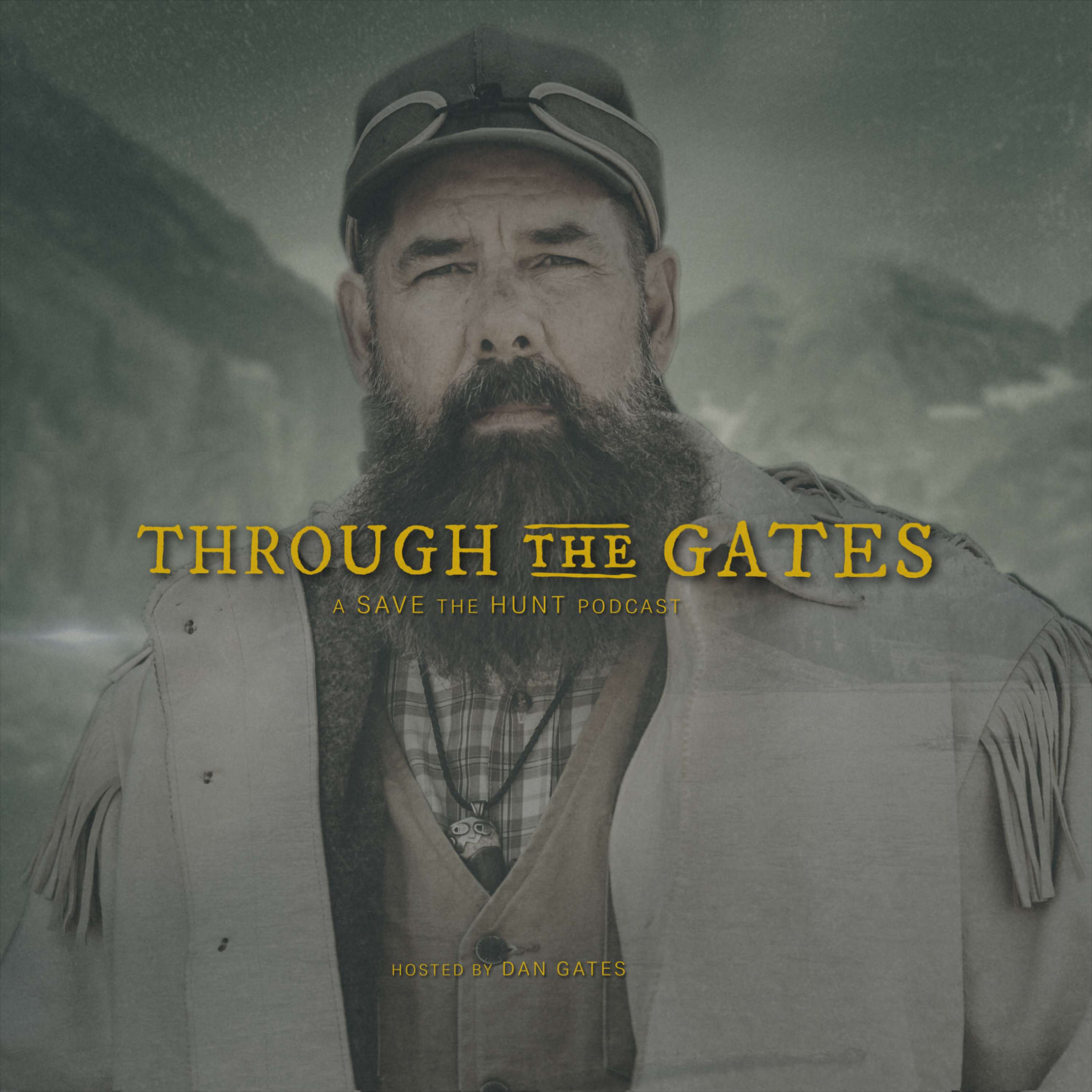
Through the Gates · Dan Gates - Save the Hunt
What happens when wildlife policy is driven by politics instead of science? In this episode of Through the Gates, Dan Gates joins the Wild Sheep Foundation's Sheep Fever Podcast for one of the most important conversations happening in conservation today. From Colorado's proposed Constitutional Right to Hunt and Fish amendment to Oregon's sweeping IP28 initiative, this episode exposes how organized animal-rights campaigns are reshaping wildlife policy across North America—and why sportsmen, conservationists, ranchers, anglers, and anyone who values science-based wildlife management should be paying attention. Dan explains how Colorado has become ground zero for ballot-box biology, politically appointed wildlife commissions, predator management controversies, trapping restrictions, wolf reintroduction, and coordinated efforts to replace decades of professional wildlife science with ideology. More importantly, he explains what can be done to protect the future of hunting, fishing, conservation funding, and the North American Model of Wildlife Conservation before similar efforts spread to additional states. 🔔 SUBSCRIBE for more conversations exploring conservation, wildlife policy, hunting, fishing, and the future of the North American Model. SUPPORT THE RIGHT TO HUNT AND FISH IN COLORADO Sign the Initiative 302 petition: savecoheritage.org Donate to CRWM: savethehuntcolorado.com/support-us Learn more: savethehuntcolorado.com Follow CRWM on Facebook: facebook.com/savethehuntcolorado Follow CRWM on Instagram: instagram.com/c.r.w.m 00:00 Introduction: Why Colorado Is Ground Zero for Wildlife Politics 02:42 Meet Dan Gates & The Conservation Fight 06:15 The Growing Animal Rights Movement Across America 10:48 Oregon's IP28 Explained 15:30 How Activists Test Messaging Before Ballot Measures 19:40 Why Colorado Became the Blueprint 24:15 The Constitutional Right to Hunt & Fish 30:18 Why This Amendment Matters 35:55 Science vs Politics in Wildlife Management 41:20 Ballot Box Biology Explained 46:50 The North American Model of Wildlife Conservation 51:35 Why Hunting & Fishing Fund Conservation 57:42 What the Amendment Actually Does 1:03:12 Does It Change Hunting Regulations? 1:08:15 Colorado's History of Ballot Initiatives 1:14:02 Why Wildlife Commissions Matter 1:19:40 Political Appointments vs Wildlife Science 1:25:12 The Fur Ban Controversy 1:30:45 Colorado Parks & Wildlife Commission 1:37:10 The Cost of Political Wildlife Management 1:42:55 Wolves, Predators & Wildlife Policy 1:49:20 Why Science Must Lead Wildlife Decisions 1:54:48 Conservation Funding Challenges 2:00:15 Who Should Pay for Wildlife? 2:05:50 Public Education Is the Missing Piece 2:11:30 Why Hunters Must Tell Their Story Better 2:17:42 Conservation Beyond Hunters 2:23:08 Creating a National Conservation Message 2:29:10 Building the Future of Hunting Advocacy 2:34:15 Protecting Wildlife for Future Generations 2:38:40 Final Thoughts & Call to Action
Sean Ender: Welcome everybody to another episode of Wild Sheep Foundation's Sheep Fever Podcast. ⁓ rare occurrence for us. We're in studio today with with a guest. ⁓ and not just any guest, our good friend Dan Gates with Coloradans for successful wildlife management. Dan, we've had you responsible. Responsible. What did I successful? Successful. Well see, I'm jumping ahead. I I am successful with that, but it is responsible. Okay. Sorry about that. We always talk about supporting businesses that support our efforts to be able to save the hunt in Colorado. Well, the Colorado Shed Company in Pembroke, Colorado, just outside Canyon City, is one of those partners. Colorado Shed has been building sheds in the state of Colorado for the last 10 years and is actually owned by sportsmen and women. They support the efforts of what the Coloradans for Responsible Wildlife Management has done, and they also support all the organizations that you're probably a member of. Whether you're looking for small modular type buildings, In the world of throwaway furniture, the folks at Rustic Living are creating heirloom furniture the right way. Each of their over 3,000 designs start with hand-selected aspens milled and kiln-dried in-house to ensure your piece, whether it's a bed, table, dresser, or anything else, lasts forever and beyond. Their artisans hand-sand, hand-fit, and hand-finish each piece. It's craftsmanship that you can see and feel. I personally own a number of the pieces and absolutely recommend Rustic Living to anyone If you're looking to explore your opportunities to hunt out West, maybe try Colorado. If you're trying to get information about bighorn sheep, elk, deer, private land, public land, maybe it's everything that you want to do as far as pack-in trips. Maybe it's just having a pack trip decided for you. And then when you get there, you just hunt out of a drop camp. Make sure you check out the Colorado Outfitters Association. Colorado Outfitters Association here in the state of Colorado has got a numerous amount of outfitters that are members. and they can supply you with whatever you're looking to try to acquire and what you want to do for the hunt of a lifetime. For more information, check out the coloradooutfitters.org and make sure that you let them know that you heard about them through the gates and let them know that you're trying to continue to save the hunt in the state of Colorado. who wants to turn their cabin or farmhouse into a true mountain home. At Through the Gates, we constantly talk about sustainable use of the resource. Rustic Living has a long-standing relationship with the U.S. Forest Service, hand-selecting stands and trees to ensure our forests remain healthy and your furniture lasts for generations. Rustic Living, right out of Alamoso, Colorado. Stop in on your next adventure through the great San Luis Valley or visit their website at rusticliving.com. sheds for your property to store the extra hunting equipment, or maybe just to turn around and put that freezer in for all the meat that you've got, check out Colorado Sheds. They also do pole barns and can do custom manufacturing to whatever your heart desires. She sheds, man caves, it doesn't matter. Check out coloradosheds.com. Responsible wildlife management. So Dan, welcome. I guess you're on a summer fun tour here in Bozeman. Yeah. Something that is continually come up an opportunity since Mo twenty twenty four. And ⁓ just appreciate the opportunity to sit down with you. And and I know Gray's been kinda prodding me a little bit and Corey as well and and trying to get everybody's schedule together to align is like chasing peck and peanuts in a windstorm. Yeah, the old the old The old herd and cats deal. Yeah. But anyway, ⁓ appreciate you having you on. We always have a great discussion. Thanks. ⁓ lots going on. Obviously, you know, Colorado's kind of become ground zero for a whole host of things, challenges to the North American model, science-based wildlife management, wolf reintroductions, mountain lion management, hunting and trapping, the value of fur. Restructuring of state wildlife management agencies, missions and policies, ⁓ you know, anti people, anti wildlife, anti hunting, policy over science. That's just to name a few. I mean, it's it's ⁓ it's a bucket. Yeah, and and if you throw a whole truckload full of other stuff in there, you've covered it all. I guess we're done. Yeah. Well, we're we're gonna we're gonna roll into a a bunch of these ⁓ things. I think it's important for you know, anyone that Values, wildlife values are outdoor traditions, hunting, angling, trapping, to be, you know, aware of what's going on, where these pressure points are, where they're coming from, what can be done about them, why why they're coming, ⁓ seemingly at a increasing rate. you know, I just had a recording session ⁓ two days ago with a gal, ⁓ Amy Patrick. Talking about what's going on over in Oregon with IP twenty eight. Mm-hmm. ⁓ you know, more craziness over there. And ⁓ actually I learned on that podcast that ⁓ the the folks behind IP twenty-eight are actually exports out of Colorado. Yep. Yep. And we and we've got a bunch of people in Colorado now that have come from Washington and Oregon that have been, you know, a burr underneath our saddle since. Well, probably since twenty twenty to some degree, but specifically since twenty twenty three. And it's this cross pollination of of transient extremism that, you know, they they accomplish a little bit in one state, they move to another state, and then nobody really realizes, you know, who they are and where they are until it's until it it's too late. I probably missed something on this list, but it for you and you know, your supporters and your people, it's almost like whack-a-mole. I mean, what's next? Yeah. Yeah. And and because of our gubernatorial administration because of the animal rights extremist mentality ⁓ that Governor Polis and his spouse Marlon Reese have brought to the table since twenty eighteen. We've gotten to a point to where it is whack a mole and we've done very six we've been very successful, very victorious on multiple levels, but they just don't stop. They just keep bringing more people. It's the long game ⁓ for these folks. ⁓ that's the other thing that I learned. talking about I P twenty eight with Amy was, you know, they're testing messaging, they're testing marketing tactics, they're testing ⁓ you know, the various ways they're they're duping people into getting signatures for these ballots ⁓ in in Oregon in this particular case. They wrapped it around some sort of, you know, primate, ⁓ chimpanzee testing ⁓ thing and and people said, Well, yeah, we don't want testing on animals, I'll sign it. Well, it had nothing to do with that. Yep. Or very little. And this is the other thing that we talked about with Amy is I look at states like Colorado, that's you know, hugely rural, rural communities, economy based on livestock, food production, ⁓ traditional outdoor activities, hunting, angling, trapping, yet You've got a population center in Denver, and that's where seemingly these folks set up shop. And ⁓ same scenario in in in Oregon. ⁓ Portland is where the most people live. And ⁓ you know, that's that's leverage. ⁓ they're they're able to infiltrate there. And I assume the same thing's happening in Colorado where you just have people that are, you know, disconnected with where food comes from and you know, what science based wildlife management actually is and what it does and what it does for wildlife, not only hunted species, but non non game species and the economies that are built around that. And you just got people coming in saying, Hey, ⁓ we don't like how this goes, so we're gonna we're gonna change it all and you know, Arizona's an another one. You know, you've got Phoenix, Tucson. You know, there there's a there's an urban center where they can gain some traction and get stuff on the ballot and, you know, away they go. Yeah, it's gotten to the point, Keith, that ⁓ it's it's like a nineteen forties vacuum cleaner salesman. They just go from place to place seeing what they can sell. And and somebody that had dirt floors didn't need a vacuum, but they were turning around and trying to sell it to We've gotten to a point to where the the turnover of the extremist movement in Colorado understands that they need to piecemeal things. They need to be able to turn around and take it apart individually, one piece at a time. What Oregon is doing is an attempt to create a animal welfare sanctuary state, so to speak. Colorado's attempted to do that, but in incremental steps, a little bit here, a little bit there. Let's see what we can get. Let's see how we can divide and conquer. Oregon. I mean that's the we we want it all. We want we want your soul and we want it now. Yeah, they're they're shooting for the moon over there. That's you know, the el elimination of ranching, farming, animal husbandry, veterinary, artificial insemination, pest control, rat control, hunting, fishing, trapping, you know, anything that has to do with wildlife, whether it's it's a an elk or a cricket. Mm-hmm. It's it's it's hands off. Yeah, they don't want you to raise Chickens, they don't want you have eggs, they don't want you to do pork, they don't want you to turn around and do cattle, they don't want you to do anything for a consumptive lifestyle. And whether it's domestic or wild, well, you know, when the governor got in Colorado, I mean, the first thing he did, one of the first things in his early term was have a meat out day. ⁓ that, you know, that stop eating meat for a day. Well, it just blew the agricultural up, agricultural industry up to the point that we're like, where the hell did this come from? And I think that that mentality has continued to to shape a lot of the policies and politics of what Colorado Parks and Wildlife is doing, what the Department of Ag is doing. And you have to outlive some of these things. You have to outlive the ideologies. You have to outlive the people that are put into those positions, whether they're elected or appointed. And you got to figure out a way to hold the line well enough until you get into the next pendulum swinging back and forth. Oregon hasn't figured out a way to do that yet. Because of one individual up there that is adamant, you know, they they they went from IP t IP three to IP twenty eight. And my understanding from a meeting that I had yesterday in Colorado, ⁓ you know, they gathered another six thousand signatures last week. They've got the signatures to get on the ballot, but they need more to break that threshold for certification. But, you know, we're in the process of gathering signatures in Colorado for the constitutional right to hunt and fish. It's those thresholds and those barriers that you have to go through through the legal process. But if we're successful on that, then we still have to fight to get it across the finish line. I want to emphasize that if they're successful and get it on the ballot in Oregon, I really believe that they think the proponents of that measure, they get it on the ballot. It doesn't matter to them whether they win or lose because they gain support. They gain interest, they gain funding, they gain this camaraderie of influencers that come behind them and say, This is look at the momentum we're building. And if we can't get it all, maybe we can go back and we can start to get a little bit at a time, maybe like Colorado has. And that was a a little bit of a joke that I had with Amy is, you know, they're looking to criminalize fishing, but this is their fishing expedition. Exactly. Yeah. And theirs didn't catch and release. None of that. Well, you you mentioned ⁓ and there's a a lot of things obviously to cover ⁓ on what's going on with Colorado, but let's let's talk about the constitutional right to hunt and fish. I know that's that's on the on the menu over the years. I watched other states attempt this. Several of them have gotten it. Mm-hmm. Quite honestly, I can't I don't have direct knowledge of You know, what that's done in that state, how it's held off some of this nonsense, you know, how durable that is in being challenged in the courts and stuff like that. But it's certainly an important step and obviously must be because that's something that you and others are pursuing. Yeah, we didn't do this out of out of the the initial choice. We g we did it out of ⁓ an opportunity, an opportunity of individual ⁓ affluent individuals out of Colorado that decided to run the language for the constitutional right to hunt and fish. And they went they reached out to a group called the 76 Group, who then who who's a a strategy company, a lobbying company. And they do ballot initiatives in candidate forums and campaigns. And they reached out to the International Order of T. Roosevelt about language. Now, the International Order, their mission is to ⁓ accomplish this goal, hopefully throughout all 50 states. And While I had very minimal conversations on the periphery, it wasn't something that we were wholeheartedly behind because w the the financing of this is astronomical. And we just got done with ballot initiatives. We were still fighting everything at the commission level and the legislative level. And, you know, our our stakeholders, our constituents, always were griping and complaining about something on the offense. Well, you can't just you know, hockey is offense and defense, but football Is offense and defense. You can't play both at the same time. And especially when you don't have any money in the pot to be able to turn around and do to the tune of eight or ten or twelve million dollars. I mean, this stuff just doesn't fall from trees. When I got approached by the international order to engage with them about running the ground game, ⁓ the infantry, as they called it, and they would supply the sea and the air support. We were pessimistic to start with because we've been told for years and years. Don't worry about the funding. Don't worry about this. Don't worry about that. And a lot of that just kind of fell through the cracks on things because politics is about the most boring thing when it comes to conservation management and sporting representation and advocacy that you could possibly get. Nobody wants to talk about that. Nobody nobody's sitting in a deer blind saying, Well, what are we going to do next week? Unless you're a politician or a lobbyist. So when we got hit up, the sales pitch that was given to us by Luke Hilgeman. with international order of T. Roosevelt and Travis Thompson. They just got done running this in Florida, the ballot initiative down there. And the reason I'm up to speed on some of the language and so forth is because we just had a meeting yesterday in Denver with the powers that be that flew in from around the s around the country. And then we had a bunch of our team members that that were from in state. The ideology behind this is Colorado is the the epicenter of so many different things. And they've watched us fight tooth and nail for the last eight years and specifically the last three. And when the opportunity came to them, they said, there's some funding there. We have an opportunity to move forward. We hadn't looked at Colorado until 28 and maybe 2030. But this is something we ought to take advantage of given the gubernatorial elections that are happening and given the landscape that Colorado's had to deal with over the course of last eight years because of the political appointments. So when they came to us, they said, We want you to be a participant And guide the troops on the ground, but you don't have to worry about the money. Well, as you recall, one of our biggest challenges back in 2023, 2024 was trying to come up with enough money to defeat Prop 127 and Ordinance 308 in Denver. That money just doesn't fall from trees. That was the the ban of Mountain Lion and Bobcat and Lynx, which were huntable anyway. Yeah. And then and then the fur ban in Denver, which was something we're still fighting at the commission level at this point in time. Listening to what they had to say and how they built that strategy up, it wasn't hard to convince us. We didn't need convincing. We just needed reassurance that we had team support as opposed to walking in the door going, hey, you guys should do this, and then walking out after you already you put your feet in it. And so the meeting we had yesterday with the team members, it was very explicit and very defined. And we had this pretty much back in the back of our head, but this gives an opportunity to codify what we already have currently in state statute, which under the Colorado revised statutes is 331101. And it it shows that hunting and fishing shall be hunting, fishing, and trapping shall be the primary means of wildlife management. This not only supports and codifies that, it actually makes it almost defensible enough to where you can say it's in the state constitution. And you can't do this without justified, legitimate science that says that you need to do that. This does not take away the science-based wildlife management. It does not take away property rights. It does not take a It does not give you the ability to go out and hunt from January first to December thirty first without a license and ⁓ you know, do what you want. Free for all. Yeah. And and so when this has been challenged in some level across the country in any one of the other twenty four states that have it. And going all the way back to seventeen seventy seven, when Vermont made it a constitutional amendment, when you turn around and put these things together, you could see and I've been explaining it like this because sometimes we need to explain things in layman's terms and and I'm I'm one of the biggest layman that you'll have to explain things to. I look at this as a it's almost like a windshield on a car going down the highway at 80 miles an hour. You can still have the side windows down to get the fresh air when it's seventy degrees outside. Maybe it's 90 degrees in Phoenix or whatever. It stops the the rocks from hitting you in the face. It stops for the the bugs, but that's doesn't prohibit anything from coming in the side to try to circumvent that windshield. Without the windshield, and I think the constitutional right to hunt and fish is a windshield. It's a barrier. It's a be it's a A device that can create obstacles in people's attempts to try to take away hunting and fishing and wildlife traditional wildlife management opportunities. Doesn't make it bulletproof, nor does a windshield. But it's something where we can turn around and utilize over the course of time and say, this is what the people voted on. This is in the constitution. And if we're going to alter that in some way, shape, or form, there has to be some legitimate hard stance sideboards. For our managing agency, which is not the problem, it's always the appointments and the politicalization of it. For that agency to turn around and say, we have science that says we need to do this on mule deer or bighorn sheep or fur bearers, you know, that has increasingly become more of a topic in Colorado. But if we don't have the science and data, you can't just turn around and run a bill. You can't just turn around and run a petition that has to go through the proper process. It gives us that higher threshold. And I think that once people fully understand that and comprehend the legitimacy of a constitutional right to hunt and fish, it doesn't give anybody any more than what they have. It gives them a barrier to help prevent the takeaway or the attempt to take that away. And I've got the I've got the language for that, if if I can read it. Yeah, absolutely. So it says shall there be an amendment to the Colorado Constitution creating a constitutional right to hunt, fish, and harvest fish and wildlife pr by traditional methods. Including all species of fish and wildlife managed by the state except non game species, endangered species, or any species that is illegal to hunt under federal law, and in connection therewith establishing hunting and fishing as the preferred means of managing fish and wildlife populations, and preserving the right of the state to regulate hunting, fishing, and wildlife management, if necessary for sound scientific wildlife conservation and management, public safety, or to preserve the future of hunting and fishing opportunities home. For all species. Doesn't give anybody any more than what they already have. No. Just helps codify it and make it a little bit more legitimate. Codifies it. I guess one of the things that pops into my head and because I keep going back, okay, why Colorado? Why Oregon? Why Arizona? Is it logic to say that this isn't in place so that makes Colorado a target? They they know that okay, the states that do have this constitutional, we're we're we're not gonna just be able to you know, hold up protest signs and run around with our hair on fire. We're we're gonna have to we're gonna have to bring it. Yeah, I think as much as what we've had to fight over the course of the last thirty some odd years, nineteen ninety two we had initiative ten which was banning the spring bear hunting. Spring bear hunting with hounds and bait, the spring bear hunting as a whole. Nineteen ninety six, four years after that, we had a constitutional amendment, amendment fourteen, that took away trapping, foothold traps, body gripping devices Cable restraint devices for recreational purposes. There is none of that. You want a trap in the state of Colorado, you've got to use a cage trap unless it has to do with agriculture damage or who the human health and safety. Then we had a little bit of a lull in there, and a lot of that I would attribute to the Colorado Wildlife Council being formulated by sportsmen and women in 1998. That was in the offense mechanism about public education to show the benefits of hunting and fishing. Now, coincidentally or ironically, back in 2014. 2016, I was appointed to the Colorado Wildlife Council. And when we ended up fighting the ballot initiative in 2024 on the Mountain Lion ban, I was the chair of the Wildlife Council, which was the messaging campaign, $3 million a year over the course of the preceding 26 years. People say on this constitutional right to hunt and fish, it's misguided. I say be and it's the anti's that are saying this. The people that don't like hunting, period. Hunting's not under attack. Hunting's not under assault. Then you give examples about previous ballot measures, previous attempts at legislation that have been defeated, previous attempts at the Colorado Parks and Wildlife Commission or the old division wildlife commission that have been defeated. And then you you say, How can you say that that's not under attack and assault? They say this doesn't have anything to do with banning or prohibiting or restricting hunting and fishing. Then you give examples, and then they give examples back of why that was okay. That's the problem, is they say, Nothing happened. And then when you say what happened, then they say that's okay. That's the mentality that they want is zero harvest, zero management, zero infusion of consumptive use. And you put it back onto them. That's an exact reason why we have to turn around and have the constitutional right to hunt and fish. If we're going to go down the road and put all our all of our apples in one basket about the managing agency, the managing agency can change over time. While some sportsmen and women in the state of Colorado and Montana and Utah and everywhere else might gripe about the managing agency. Would you rather have the managing agency that you can actually depend on science as best as what you can and infuse your positions from a consumptive use? Or would you turn around and just turn it over to what I would consider the village idiots that don't have any boots on the ground experience? They have their own science, but they don't have the science and the data and the statistics and the studies and the compilation of information like what your managing agency does. And if you look at the North American model of wildlife conservation, The government manages the wildlife on behalf of the people. Well, Keith, you and I can say this, but we are part of the people. The people that can consistently go up to in front of legislatures or in front of committees or in front of front of commissions say, This is for all the wildlife of Colorado, all the people in Colorado. Well, you and I are part of the people in those states. It doesn't say that we shouldn't consume things. It doesn't say that we shouldn't harvest things. It doesn't say that we shouldn't manage things. They They skew the words to the point to where this is what we interpret that as. And I think the constitutional amendment, written like it is in this ballot and ballot language, helps substantiate a barrier, a moat, some sort of a ladder or some sort of a fence that somebody has to go over to be able to turn around and get what they want, but there has to be science to be able to turn around and back it up. They don't have the science. That's why they that's why they're opposing things like this. They like citizens' petitions with no data. Go back to the March Commission meeting in Westminster, Colorado. Five individuals from the agency got up there, Colorado Parks and Wildlife, gave out all the facts and the data about the fur ban, the commercial fur ban, a letter of recommendation for denial from the new director of CPW and all of the staff from Colorado Parks and Wildlife was cast aside, ignored, and debunked as well, that's nice, but we don't really care. We're going to vote with our value mentality. This constitutional right to hunt and fish would help prevent this value-minded social science BS that is constantly being reverberated and regurgitated at so many different levels. You just laid out a whole bunch of stuff. Sorry. ⁓ no. Where where I'm going with this is this is a lot to unpack for people that are actually understand what the North American model is and what it isn't. and understand wildlife management and ecological realities and the fact that, you know, we're on the landscape, man's not leaving, we're not going to another planet. The need for conservation, ⁓ today and going forward is even greater than it was twenty or twenty five years ago because, you know, we are consumptive users of natural resources. That's going to continue. ⁓ we still need food. There's still gonna be ranching and agriculture and food production and animal husbandry and all that stuff. Where I'm going with this is if you're if you're just ⁓ the the average voter in Denver, I would assume it's easy for you to just read one toxic headline and that's my opinion. That's where I'm going. I don't want you know, I don't wanna see ⁓ mountain lions killed. Or I don't wanna see anything trapped or ⁓ I'm not down with hunting. I don't hunt. I don't know anybody that hunts. ⁓ so here I go. And so it's it's there's a lot of onion to peel in this stuff. ⁓ yeah. And you know, the education process and with with so much information coming at people, you know, phones, laptop, news, social media, you know, yada yada yada. It just seems to be easy anymore to, you know, throw out some believable toxic headline and There goes people's opinion. Yeah, and what's what's amazing to me is what we did in Colorado in twenty twenty-four was being able to turn around and educate the general public on the front range, specifically within twenty five miles east or west of the I twenty five corridor. And I drive up there regularly. I was there all session during the legislative session and look around and go, We messaged to where they voted against prohibiting Mountain lion and bobcat harvest. Most of those people are never going to see a mountain lion or a bobcat. They're not going to understand the legitimacy of science-based wildlife management and all the stuff that goes into it. And I think that trying to get people to fully comprehend and understand where we're at, what we could do, and how you get them to comprehend that there is a managing agency that has protocols that takes care of our wildlife resources and sets and establishes. seasons and harvest and quotas and bag limits for a reason, not just because of what you want or what I want, but for what anybody wants. And I think everybody wants wildlife to be sustainable. Everybody wants populations to flourish. But there has to be an acknowledgement of what we have is what we have because of the historical traditions and what we've had the build-off of. Get them to understand that Ballot box biology, checking the box of a yes or no is not the way to manage nine hundred and sixty one species of wildlife in any state, let alone seventy seventy-eight game species. We're just gonna let people turn around and check the box on everything. Pretty soon you got uneducated people making decisions about things they've never had anything other than an opinion on. And we all know what opinions are like. I mean, everybody's got one. ⁓ yeah. And I think that getting them to understand. That if we're going to disrupt the process of science-based wildlife managers, of which we've got 350 legitimate biologists in our agency in Colorado, other states don't have as many because they don't have as many employees and maybe they don't have as much public to deal with. We have the opportunity to be able to turn on and expand that message and say, trust the experts. If we're going to trust the experts on radioactivity or or jet streams or water pollution or Heart surgery. Heart surgery. Yeah. You know, let let the experts do what they've the what they've been schooled to do and what they've practiced to do over the course of their career. We got people like that panel I mentioned. We got people that on that entire panel, 125 to 150 years of combined expertise in this field of those individuals working for the same agency. And then the the director that comes in that didn't have the wildlife background, but had the Understanding of what wildlife management and science-based wildlife management took and then put that into place to where people could understand why they were recommending denial. Well, if if the general public saw that that agency came out and recommended for denial, I bet the the entire public would come and say we need to go with the experts. Six of those 10 commissioners didn't feel that way because they voted on their values and their morals and their ethics and their social science skills. They didn't rely on the experts. And I think that's a travesty if we're going to go down that road and continually do that sort of management. And a constitutional right to hunt and fish helps prevent that in a way that is a lot more manageable for the general public to comprehend and that's better for the wildlife resources and the people of those states. Yeah, I always ask myself, you know, th th these folks don't seem to be offering any realistic alternative, you know, other than stop. No. And and and and stop doesn't work. Zero is not a model. Zero is a prohibition. And you're with the Wild Sheep Foundation. You know, I had a meeting yesterday, and those people I mentioned, we had representatives from the National Wild Turkey Federation. We had representatives for the Rock Rocky Mountain Bighorn Society, had representatives of the Rocky Mountain Elk Foundation. They determine what their members need based upon the conservation availability. based upon the managing agencies. Now granted, like wild sheep, you guys work with game managers all around the world. ⁓ yeah. Have you ever been able to turn around and work with animal rights extremists to a extent that it was going to benefit sheep populations and habitat? No, they they they just want shut down. That's exactly what it is. Stop. Full stop prohibition, like you said, no alternative, no long term plan. know what happens if this gill gets off the rails. Exactly. ⁓ what you know, too many predators, populations, you know, decreasing, habitat loss, ⁓ environmental events that happen, bad winters, fires, droughts, no no plan for intervening on behalf of wildlife when those events happen. You know, no science to rely on that says, okay, ⁓ we need to you know, reduce opportunity or reduce tag in this particular area until that population recovers, or we need to do, you know, supplemental feeding, or we need to start paying attention to more to disease and how this is being transferred and why are we losing wildlife. Not all that stuff goes away. This is just dead stop and pat ourselves on the back. I hunted in Russia in nineteen ninety eight for a Russian brown bear. That's where this claw came from. And one of my conversations that I had Although it was a lot of stick figure drawing and through an interpreter about their management of brown bears there, Russian brown bears. ⁓ up until about 1991, they essentially admitted to the fact that they killed about every bear that they saw. That there was no value to it. The bears were trying to eat their sheep, the bear bears were trying to eat their reindeer, the bears were killing people. And when they came across a bear, their job in their mind was to kill the bear. Well, something happened about ⁓ from what my recollection about perestrika and about the the change into the guard, the the wall coming down and and the communist country turning into Russia from the the communist Soviet Union. ⁓ I'm not a historian on on any of that, but I was I was there and dealt with the people for quite some time. And what they alluded to was the fact that there was a economic value that was put on the bears that superseded the value of the reindeer and the sheep and the Management of what they were trying to do, because they could turn around and salvage bears for people to come hunt, not to come shoot, for people to come hunt. And that economic value provided tenfold of what they would get out of their out of their crop or out of their livestock. Their livestock's different than our livestock. But the guy that was my guide had a 16-gauge double barrel shotgun and he had kamikaze marks on this on this stock. And he had killed like 12. Bears at point blank range with slugs out of that 16 gauge shotgun, slugs that he loaded himself in a little yurt that he was living in. And he's he said since 1994, and I was there in ninety-eight, since nineteen ninety-four, he had not killed a bear with that gun unless there was a hunter in jeopardy that they were actually trying to turn around and pursue that bear for. Before that, he said it wasn't uncommon to turn around and kill eight or ten bears a year for himself. That he didn't do anything with besides turn around and try to protect his stock. That's just one small example, but those are stories of subsistence and a level that the economic side and the management side of wild game across the world, not just in North America, has been determined by a value added bonus that local economies and communities can figure out that this wildlife is worth something. We see that all over the place. The wildlife watching tourism side of things doesn't provide that sort of boost. It doesn't provide that sort of economic input to it. That doesn't mean that's the only reason why we should have it. But if we're not there to supply some of those things, as far as sportsmen and women across the globe, whether it's out of Italy or Peru or Spain or wherever the hell it's at, if we don't have that mechanism, that conduit there. Those individual communities are going to take this in their own control. And that's one reason why they don't have sustainable wildlife populations at different locations because it doesn't provide a value to them. It's a burden. You mentioned pest in Oregon. Well, I'm a pest control operator in Colorado. We do wildlife and pest control work. People don't want it in their house. They don't want it around their livestock. They don't want it in their business. They don't want it for human health and safety purposes. That's one job for us to be able to turn around and take care of. People that live with these things on a daily basis will continue to treat bears or wolves or lions or jaguars or whatever the hell it is, wherever it is, as vermin, as a pest, unless there's some sort of economic addition. Now, the constitutional right to hunt and fish doesn't protect any of that in a sense, but it creates another mechanism to where when somebody wants to take it away for it for ill means without science, it gives you that opportunity to say No, you don't have the data. You don't have the statistics. You don't have the science. And if you're going to turn around and try to do this, then we're going to be able to turn around and go to court because we have the constitutional amendment to do so. You asked earlier about the the court, the precedence that has been set on court issues. I think there's there's quite a bit that could be referred to. In my conversations yesterday, it actually happened in Florida since they've actually done the constitutional right to hunt and fish down there in twenty four. But The bigger thing is I think it creates that barrier, that windshield to where all these animal rights extremist organizations go, Well, if we go there, maybe it's going to be harder for us to attain. Maybe we're going to have to spend more money. Maybe we're not going to get what we want. Maybe there's the easy, easier pickings and we need to go to other states. Yeah. We need to go to other states where they don't have it yet. That's why they're they're griping and moaning and groaning about it. You look at the social media posts that come out about all this stuff. They don't want you to have it because it creates a barrier for them to try to get what they want, which is a complete prohibition, not a restriction, a prohibition on legitimate regulated harvest of abundant species. You know, you mentioned, and I didn't know this, Vermont. What year would it did they get their deal? Vermont was 1777. I mean, they they were pretty proactive back then, you know. And I I would imagine that had to come from from the the the British mentality, the British Empire. ⁓ of of you know the the British lords or whatever to be able to turn around and take things. This is this beyond be belonged to the crown and not to the people. This is before the public trust doctrine and exactly the the oysters and all that stuff that led to the public trust doctrine. Exactly. And I think that some of the states that have actually done this, they've done it legislatively. They've done it through the ballot. They've done it at different levels to where maybe All of them don't have the same teeth as what some other states have. But when you put it up to the ballot to the constitutional amendment, the constitutionality of this, it creates something that is a precedent. It's something that you could turn around and say, We have cause. So we have, and I'm not an attorney, nor am I a Russian interpreter, like I mentioned. But there it gives you that barrier there to you can turn around and say, I have this as a protection. And it also helps substantiate your game management. It ha actually gives, I think, another level of protection and education to your legislature. We have a ton of people that are elected in this country that they don't understand wildlife, they don't understand habitat, they don't understand management of our natural resources. And the first interaction that they might have might become something from an animal rights group or community. That's an agenda-driven mentality. It's not trying to sustain something in perpetuity. It's trying to take things away. I would just like people to be able to have the education to go along with the agency and some sort of a document besides statutory regulation type things to go back and give the agency, the managing individuals and the agency a sideboard that the general public can say, I've got the constitutionality, the right to hunt and fish this because. And unless you come up with a science that says we shouldn't, we can't, then we should continually be able to do that. What ⁓ not shifting gears here completely, but where where are we with the fur bears and trapping? Well, that brings up another thing for sure. ⁓ the rulemaking recommendations suggestion that was given to the agency from the commission. was done so because they didn't have enough acid or britches to actually vote on what they were trying to get accomplished at that time. They didn't really know. If you listen to the to the the podcast, or you listen to any of the ⁓ YouTube channel stuff that was on that particular commission meeting, and listen to the commissioners themselves, I'm confused. I'm not sure what we're voting on. Can we re explain that? I'm confused. I'm not sure what this is. But then they turn around and kind of punted six of the ten punted And then turn around and kick it back to the agency. The agency's coming up with rulemaking recommendations that should be heard on July 16th or 17th at the July Commission meeting, with a vote likely to happen in some capacity in the September Commission meeting and September second and third in La Hunter, Colorado. The reason that stuff's important is because the current chair of the Colorado Parks and Wildlife Commission, now, after this last May meeting, is Commissioner Jay Touchston. He's the chair. For those who haven't paid attention, and I've criticized Mr. Tutson, and I would say this on a hot mic, and if Mr. Tutson listens to this, fine. He's a nice guy. You can have a conversation with him. Wouldn't mind having a beer with him. You don't want to turn around and invite him to your house for Christmas. At least I wouldn't. But he is an animal rights attorney. He worked for Wild Earth Guardians, Humane Society of the United States, and a plethora of other individuals suing game agencies across the country on threatening endangered species or predatory management. Or a variety of things that those animal rights extremist groups wanted to try to accomplish. He was the hired gun. Now he's the chair of the Colorado Parks and Wildlife Commission, setting agendas, setting process and procedure, and trying to get done what he, as he said during the last meeting in March, he voted with his values. He didn't vote on the science. He ignored the data. He ignored the statistics. He didn't even listen or give questions back to the agency that had anything to do about their perceptions or their presentation. That should be an eye-opening experience for anybody that's paying attention, not just to Colorado, but Oregon, Washington, Arizona, New Mexico. You have an animal rights extremist that did that for 30 years, who's now the chair governing the agency, who's making directions and recommendations against what they want. Well, for those who don't know, how did he get this position? That was elected by the other individuals, and that happened because the governor himself put enough of those individuals in those places. To look at those perspectives and vote on behalf of the governor's wishes, wants, or desires, which Governor Polis might say that's not the case, but then tell me how those other people ended up getting in those positions that had didn't have the qualifications, didn't have the justification to be in those positions, which is proven, and for anybody that hasn't paid attention, which is proven by the last round of commission appointments that the entire sportsman community in the state of Colorado, the county community, the agriculture community. Came out in opposition to those two last appointments, and we forced them to re resign the day of confirmation that they had to go through the commit the entire Senate confirmation. They were not qualified. They did not represent the legitimate spots that they were supposed to be in. They had ulterior motives and agendas that was done by the governor, but that's been done for the last seven years in most capacities. And this time we were actually able to get two to resign. Previously, we got Commissioner Gary Skiba to step down because He again was supposedly, in quotations, the the supposed sportsperson's rep. Gary's no more of a sportsperson than than I'm a lesbian. ⁓ I mean he he should not have been there and he stepped down. Commissioner Chris Sisko, he did the same thing. He is not a sports person. You might turn around and say he's a nice guy and he might be able to represent one sector, but he was not a legitimate representative of the sports per people, sportsmen and women. And then Commissioner John Emmerich helped file a petition To the agency about the Wolf introduction, and his better half, his spouse, whatever you might want to call her, is Delia Malone and she's with the Sierra Club. You just look at the appointments that get into these positions. And I gotta say, elections have consequences, and people need to understand fully that when you put somebody in there or you don't vote, those people are gonna vote on your behalf, whether you put them there or not. Nothing could be more true when you start looking at Department of Ag positions and commission appointments. Department of Fish and Game, no matter what state it is, Department of Health, Human Health and Safety, Environmental Services, Roads and Bridges for that matter, whatever. You get people to be put into places whether you don't want them there or not, because of the elected officials and the ability for them to make those appointments and to make those hirings and speak on your behalf when you thought you were getting a decent guy at the top. He doesn't have to be the bad guy on everything. He didn't have to be the guy with the the mask and the cape. He can appoint whoever the hell he wants. And that's exactly how Commissioner Touchdown got in. And his predecessor, Commissioner Rich Reading, was the chair of the butterfly pavilion, CEO. And you just look at the the inner working relationships of Colorado and Washington as an example. And everybody's been paying attention to those two states about commissions. They're all appointed by governors. They're all appointed by an individual, one individual that has an ideology and an agenda to. To change the makeup of our management of our wildlife and natural resources. And no matter how long they can screw it up, it takes a significant amount of time, effort, and money to turn around and try to swing that pendulum back and reverse it. And I think those are things that people need to be fully comprehensive of and understand that if I don't engage, somebody's engaging for me. Mm-hmm. And if I don't turn around and try to pay attention, somebody's paying attention on my behalf. And it's probably not necessarily in my best interest. ⁓ Back to ⁓ a genuine concern for wildlife. You're talking time, treasure, energy being moved away from actual wildlife conservation, wildlife management, and put into these battles. ⁓ God, yeah. And and that's gotta be a huge drain. I know it's a huge drain. That's a rhetorical question. You know, that's another layer to this that doesn't really necessarily rise to the surface is, you know We know that sportsmen contribute greatly to the finance of wildlife management and conservation. But seeing these agencies being pulled off to these meetings and this, that and the other thing, instead of actually doing what they're hired to do to go fight this stuff off, the wildlife resource itself has got to be taking it on the chin. When you figure that the average lifespan of a bighorn sheep is somewhere between eight and ten years. Mule deer, somewhere around six or eight. And I'm not a scientist or biologist. I'm just going on what we've, you know, addressed over the last 30 years of my life. And you get an administration that comes in for an eight-year period, two terms, and wants to change that whole makeup through predator management or through the lack of hunting or through the lack of science and data and agenda-driven mentality. Most people can't pay a car off in five years, but they expect the governor to be able to solve in everything in four, but he's going to be there for eight. The average lifespan of a director for a game and fish agency in the in the United States is 2.3 years. There's a hell of a lot of turnover. There's a hell of a lot of different perspectives and ideologies. When you're talking about something that lives and breathes and is a resource, a financial asset to the states and to the country, for people to say that they want something the way they want it, they really don't know what they want. Except for the fact that you get the animal activist extremists on one side that they want no harvest, and the agenda driven individuals that want no harvest, and the people that are trying to manage the resource that know that we need to have a harvest and we need to have the economic boon that goes along with it and we need to have the financial capabilities and the management capabilities. You look at that pendulum swinging back and forth. It doesn't swing back and forth like it does on the political side. It's short spurts going back and forth so quickly because there's so much turnover and so much different perspective. I would love to see better system of solidarity, uniformity, consistency, and longevity to where when somebody started to enact a five-year big game season structure somewhere, you actually had a chance to turn around and make it work. When you had a chance to turn around and do a 10-year wildlife strategic plan in whatever state it is, let it go through the process before the politics get involved to start changing the ideologies. And screwing up what you just did two or three years ago before this guy got elected. Now he's gonna be there eight years. And then you're gonna have three ballot initiatives, four petitions, and seven pieces of legislation in the process trying to disrupt and and create upheaval in all of that process. And I think it's a travesty, not the way we're managing wildlife, is that politics has become the driving force of what my wildlife has managed. Yeah, I just saw something coming out of Colorado again where Whether it was a commissioner or, you know, somebody high up in in office there said, nah, yeah, we're gonna do we're gonna do policy. Policy is going to drive our decision making in wildlife management, not science. Mm-hmm. Basically just flat out said it. Yeah. We don't care about the experts. We don't care about the data. And the average lifespan of a commissioner is four years. We've got some that last less than four. We got a bunch that last eight. But when you come in there and you have an ideology of I'm going to stop this because I was appointed by such and such and I'm going to be there for four to eight years, that creates a a a a conundrum of circumstances to be able to turn around and try to get anything that is sustainable in perpetuity and do it long term past what that individual is going to be in that particular location or that that position. I mean, look at, you know. Take any business, for example. Here's our business model. This is what we we manufacture this product or we offer this service. You get a new CEO comes in and says, No, we're not gonna do that anymore. We're not gonna make cars, we're gonna make baby carriages. Okay. How'd that work out for Bud Light? Yeah. How'd that work out for Cracker Barrel? I mean, you know, you you look at those are those are those are money making economic capitalist business industries. Sure. But this is this is wildlife. I mean, you you mentioned the lifespan of some critters and you know, I know from my experience here with the the sheep foundation, ⁓ we just did a you know, a five year conservation vision twenty thirty plan that, you know, charts a course for, you know, where we see opportunities, where we see threats, where we see areas of greatest needs. We're gonna get it all done in year one. No, it's gonna take you know, it's a building block process, it's it's well thought out, it's based on science, it's like you said, we work with biologists, we work with trained professionals, we work with wildlife agency experts, we're tribal experts, people on the ground that have the experience, the know how, the passion, they studied it, it's their it's their life's work. And you can't just go changing course no Le left and right. Wild wildlife is complex. Ecosystems are complex. Yeah, this is the we know ex the these things have disaster written all over ⁓ I was gonna mention I just saw a thing this morning about ⁓ the first citizen killed wolf in Colorado. Somebody protecting their their calves and their calving grounds. Yeah. And, you know, how that is You know, how how that is permeating through, unfortunately, you know, not a great system for the wolves. They're again allowing somebody to check the box on something that has science and data and years of expertise behind them on. I I think that, you know, I say this, I say this frequently. The flower shop gal or the donut guy or the Uber driver or Professional league, baseball player, whoever it is, they've all got their opinions. But we have experts in those positions for a reason. When we have a carnivore fur bearer biologist who essentially sets strategic plans and management decisions on all the carnivores and all the fur bearers in the state of Colorado, then we've got aquatic biologists, and then we've got other mammalian biologists and other avian biologists. They all have their levels of expertise. But they all intertwine together because something eats something somewhere along the line or has to live in somebody else's ecosystem somewhere along the line. You get these individuals on the outside, all they care about is prairie dogs. And the next person all they care about is burrowing owls. And the next person all they care about is swift fox. But all three of those live together. I want the guy or the gal or the agency or the division that is managed on our wildlife resources to be able to have that direct and indirect connectivity with the landscape and the landowners. And the scientists and the experts and the harvester, because that's part of human wildlife interaction and conflict resolution. But management, I say this all the time too, Keith. If people didn't want us to harvest something and there was facts and data that said there's something being really detrimental about the harvest on wildlife pertaining to these specific species, with the Colorado trappers and predator hunters. Coloradoans for responsible wildlife management and all the other coalition members that we have under the Colorado Wildlife Conservation Project, we would sit down, have a discussion and say what is best for that species, what is best for that resource, what is best for that landscape, and agree with or disagree with for whatever reason the CPW came back with, but to put it in front of six agenda-driven commissioners that are going to vote. with the governor's wishes, wants and desires and go against the agency every single time that something comes up that has to do with restrictions or prohibitions. I find that to be a travesty in itself. And I think that most people in the United States want their wildlife appropriately managed. They want to know that it's being taken care of in perpetuity and sustainable. And that they understand, for the most part, that hunting and fishing and science based wildlife management is the only reason that we got to where we're at, and the only reason we're going to continue to do that. Is bec because of the dollars that come in from hunting and fishing dollars. Checking the box is not a way of prosperity. ⁓ another thing I wanted to ask you, I mean, we know it should be well known. Unfortunately, it's not, but within our community, within our space, that sportsmen pay for the the bulk of wildlife management. That's what funds the wildlife agencies, you know, licenses, user pay, public benefit, all that good stuff. Wouldn't you think that the opponents to this, call ⁓ animal rights extremists, what have you, wouldn't they figure out that, okay, we need to adjust the funding model in our favor and displace sportsmen as the primary funders. I don't want to put ideas in their heads, but I was going to ask you about this ⁓ deal that just got passed in Oregon, back to Oregon again, where they're they're raising a significant amount of money taxing ⁓ tourism. Carving that off for wildlife conservation, which great. You know, the more the merrier. I mean, we're all for wildlife conservation and want to see good things happen and have durable funding to do that and make sure that our our agencies and our experts are well funded and they're not scratching and and chimping. Is that a good thing or a bad thing? Well, I think there's a combination of perspectives and depending on what state has the issues, you know, Missouri has a different model than a lot of other states, and that's often referenced by the anti extremist, the anti-hunting community. And and for Missouri that might work, but Missouri doesn't have the natural resources of what a state like Colorado or Wyoming or Montana has. They don't have a limited supply on some things, like whitetailed deer. Though they've got a hell of a turkey population. Outside of that and a few bears, there's not a hell of a lot of other big game species to be able to hunt in the state of Missouri. Well what what you're referring to for our listeners is Missouri is There's an income tax that's that's carved off. Everybody's paying into the system. Yeah. And I and I see I see some value to sections of that. But I also find in through our discussions through our coalitions is if you put too much value onto that while at the same time t trying to degrade and erode the economic, the influence or the pipeline that goes into the conservation side of things, pretty soon You start to degrade and erode the value of sportsmen and women because there's more emphasis on recreation and there's more emphasis on outdoor enthusiast, ⁓ enthusiasts. I mean, you know, we've we've contemplated proposing at different levels a mountain bike tax or a backpack tax or something along that line, which funny enough, most of those groups then oppose a dollar, dollar and a quarter, two dollars, whatever the hell it is. I don't know, but they don't want to pay 25 cents. They don't want to pay two dollars. Prime example is we've got the habitat stamp fee in the state of Colorado. We've also got the wildlife council fee in the state of Colorado. Wildlife Council was for the education campaign. That's a buck and a half per license. It's about almost $11 for the Habitat Stamp fee, but because of the state wildlife area access program that has been paid for by hunting and fishing licenses, sportsmen and women, there's a lot of the community, transient community, newcomers to the state. They wanted to know why they couldn't utilize these properties. Why can't they turn around and walk their dog? Why can't they camp? Why can't they hike? Why can't they mountain bike? Because they were bought with wildlife dollars, and that's why they're called state wildlife areas. So when we created the state wildlife area access plan to where you could get a pass, unless you bought a hunting or fishing license for those properties, which they were opposed to. They didn't want to buy a hunting and fishing license, but they might consider buying a pass. The total passes that were sold the first two years weren't enough to pay for the management of one state wildlife area in the state. And there's 350 of them. And they could only have access during times when there was no legitimate hunting season going on. You couldn't walk your dog, you couldn't camp, you couldn't do this, you couldn't do that. There were restrictions because they were state wildlife areas. I find it almost impractical to think that the majority of the public is going to say, in case I want to use. Or I want to restrict, I'm willing to pay. That's not been the case historically, and that's why Missouri and only one or two other states has that model that's in that's been an instituted. The pay-to-play mentality is something to where people have to find value in it. And they have to say, I'm willing to contribute to this whether I use it or not. And the interesting thing is, sportsmen and women do not pay to harvest. They're not buying a a buy we're not buying animals. No, you're buying the opportunity. Most people that we engage with do not want to pay for the opportunity to participate in something that they think is their God given right. There again, their God given right. And that's what we're trying to codify on this, is to make sure that we have the right to hunt and fish, just like they have the right to do what they do, but there's fees and there's taxes and there's there's protocols and licenses and stuff that go into that. The average person that we have found does not the average person does not want to go into that discussion. Although some of the opposition that we deal with says we should do this, well then you come up with the funding to be able to turn around and do that. And maybe there's an opportunity or an opening to do so. Wow. Welcome to the centennial state. Yeah. Well, let's ⁓ you know, as as we kind of wrap up on time here, my my takeaway, I mean, this is fascinating conversation. Obviously, I'm I'm into it. I want to see good things happen for wildlife and good thing happens for for sportsmen and I want to see good things happen for the our food producers and ranchers and farmers and you know everybody involved and I mean this just begs education. Even on the sportsman side. ⁓ you know there's a there's a lot of a lot of history you know going back to the the birth of the conservation movement you even just mentioned you know paying for something that you're not gonna use. mean that's the definition of conservation its itself. And conservation's not only restricted to wildlife, it's, you know, turn the water faucet off when you're not using it and you know, recycling and and being conscious, you know, goes back to the old Aldo Leopold, ⁓ you know, conservation creeps into your your consciousness while you're sitting there chopping down a tree. How do we educate more people? Obviously you're gonna have people that are just, you know, dyed in the wool, anti Sustainable use. Anti hunting, anti fishing, and an anti harvest. But there's a whole lot of people that are, you know, kind of in the middle, if you will. There's all kinds of studies that, you know, that are been done about, you know, support for hunting and all this good stuff. And it's still fairly strong, seventy plus percent. People say, No, I'm fine with that. ⁓ there's some conditions, certainly. But educating people, you know, you almost hate to think that it's a ballot initiative process is the opportunity to educate. What can we do in between times? So we're not up against a deadline, up against some craziness, getting people to engage, look a little bit deeper than the headlines, you know, call it proactive, whatever. But it just seems like that's there's there's this gap and the the gap is getting wider. with more and more people, you know, growing up in, you know, urban surroundings without a connection to nature, without a connection to where their food comes from, without an understanding of wildlife management and, you know, this critter eats that critter, which eats this critter, and it's, you know, th this stuff is all connected. I I don't know anybody, ⁓ in in the hunting community that wants to see the last wolf or the last grizzly bear or Any of that stuff that's being purported out there that are that are, you know, trying to turn sportsmen as the enemy to wildlife. ⁓ that that seems to be the ultimate challenge here is is getting people to pay attention, understand the facts, not check boxes, ⁓ like you said. So good things can ultimately happen for everybody, wildlife included. I think and what I have to say is probably gonna irritate some people or organizations. But I also believe that there has to be a level of accountability that we have to have in our community. And while the community as a whole has been the sky is falling type of deal more often than not, I can say this because me spending eight years on the Colorado Wildlife Council, which is one of two in the country. You got Michigan and Colorado. Colorado's been there since nineteen ninety eight. It was started by sportsmen and women. I think that the the conservation sporting community Has done a very piss poor job overall of talking to the general public about the need of science-based wildlife management and conservation efforts, about what those organizations do. And I'll call out, you know, wild sheep because I'm sitting here. Not to say that anything's been done bad. It's just that maybe some of it hasn't been done good enough. RMEF, NWTF, Muleer Foundation, Millie Fanatics, whatever it, whatever it is. We've got a plethora of organizations out there, but we often often talk in an echo chamber. ⁓ yeah. We often talk to ourselves, which is great for the conservation effort, but it's not great for the education effort of the general public. We talk about 10%. I think these numbers are probably inflated to some degree, 10% of sportsmen, 10% of anti-extremists, and 80% in the middle. We're fighting for that 80%. But how many times, and slap me out of this chair if you want? This is your this is your podcast. No. But how many times? Have we seen outside of the pursuit channel or the outdoor channel or anything else, a commercial that comes on and talks about the legitimate need for conservation-based efforts on a national level when everybody enjoys what we have for our natural resources? But you see ASPCA commercials, you say World World Wildlife Fund commercials, you see Humane Society or Humane World for Animal Commercials. Save us $19 a month, give us some more money. You can get this little plus toy and you can do this and you can do that. And it all happens in October, November, December. 'Cause that's the giving season. I would like to see a national effort in the campaign to where instead of saying the sky is falling, that chicken little is running around trying to dodge hailstones, if we did what we did what we're talking about on a small level, we're not doing it on any level really, but if we did it on a small level, there was that subliminal messaging to get people to understand that this conservation movement, the hunting and fishing side of this, happens three hundred and sixty-five days a year. It happens twenty four hours a day. It happens in every state, in every country for the most part, at least on the North American continent to the level to where people could understand that from Tuscaloosa, Mississippi, or from Cave Creek, Arizona, and have that conversation to where something just comes up and starts to plant a seed because we're seeing more ballot initiatives, we're seeing more pieces of legislation, we're seeing more pieces of citizens' petitions. What does it take for that person to understand that checking that box should be positive for the science-based wildlife managers. And if that's the first interaction they've ever had with anything that had to do with wildlife, besides maybe what they've seen in the news that resonated with some of them and the rest of them didn't pay attention because they're never going to see a wolf. They're never going to see something eat a cow. They're never going to see disease and destruction of habitat degradation. If we don't start advertising to the general public, how do we expect the general public every time a ballot initiative comes up to check the box right, except for us trying to compete for airtime and dollars and value to talk to that general public six weeks before every November an election comes up. I find that that is a harder and harder task for organizations like Wild Sheep, RMEF, Hunter Conserve, which is the C4 that RMEF created, Colorado's for Responsible Wildlife Management, Mule Deer Foundation. We have the tools available to us. We're spending money talking to not necessarily the wrong people, but not enough people. Yeah, you'll get no argument out of me. I just ⁓ you know Shane Mahoney very well. ⁓ had him on a podcast ⁓ that'll be coming out here shortly talking about hunting's future. And that's exactly what we were talking about is you know, we're you know, our model is talking to our people. They're trusting us with their their their passion and their treasure to put more wild sheep on the mountain. Pretty straightforward model. ⁓ and same thing with elk and turkey and ducks and, you know, all these other groups. These people are passionate about that particular critter and they wanna see plenty of ⁓ and they wanna see see ⁓ healthy, what they wanna see him thrive. They wanna know that that organization is on the case, got their back representing them. And we're I don't wanna say we're stuck in that model, but so pretty much that's the way it is. Mm-hmm. And and how do we break out? Where where is that group? ⁓ That is focused on what you just talked about, not preaching to the choir, talking to the general public at a at a grander scale. ⁓ we need that, period. It it's it's I mean, it's good we're having these conversations. We're kind of being forced down this road. ⁓ and that's you know, that's how movements happen. And it's a movement. They, you know, things move. And we're seeing that more. ⁓ states are starting to see it more. I'm I'm hopeful that within our community more of these conversations are gonna start happening and saying, Hey, you know, believe it or not, money's not the problem. No. The funding is out there. ⁓ you know, whether it's, you know, do we hire some ad agencies to help us with our messaging and you know, we're gonna focus on wild sheep over here and elk's gonna focus on on on elk over here and grouse over there. But, you know, can we pool some resources together and and give it to some ex you know, public relations experts and say, hey, we need help getting the broader public to understand who we are, what we do, our values. You know, we're not bloodthirsty, knuckle dragging thugs. ⁓ and we really do care about wildlife. And and here's what they can do. Here's what they can do to support that cause. Here's what conservation really means. Here's what preservation means. Here's a place for both. You know, all of that type of stuff, you know, can be messaged. I mean, there was zero of it 20 years ago. There's little hints of it here and there. You know, Dan Cabellas has got his deal on the Discovery Channel. ⁓ Ivan Carter's doing some things. You know, people are starting to realize: okay, talking to sportsmen's great. They love us, but We need to do exactly what you're talking about is is broadening our scope, you know, planting these seeds so that when something like this check a box thing comes up, they go, Mm, no, wait a minute. That that that doesn't pass the sniff test here. I know that there's a whole other science based system going on here that's looking after wildlife and you're telling me we're not gonna use science, we're gonna use policy. Mm-hmm. When you and I were growing up, and probably me before you It's getting to that point now. We won't we won't share birth we're not gonna share birth dates on this yeah. Yeah. ⁓ I grew up in the ⁓ Marlon Perkins Mutual of Omaha's Wild Kingdom on Sunday nights. I did as well. And ⁓ and ⁓ that was you know, you at that time, with all due respect, you had f about four or five channels to pick from. It was either Lawrence Welk on Saturday nights or Marlon Perkins on Sunday nights, and you had PBS. ⁓ Today you've got, you know, nineteen hundred channels that you can turn around and and decipher what you wanna what you wanna watch and how many times you wanna watch it over and over. I think that mutual Omaha's deal on it's on is on like Saturday mornings now for kids, which is good, but it does have a different flavor. But a lot of people grew up in the Marty Stauffer area that era that that it it it it connected people with something of interest that they strived to want to engage with. None of it was really hunting side, but there was always a hunting flavor involved because of the conservation and wildlife management. But they didn't turn around and go out like Jim Shockey or or the Eastmans or whatever and and show the hunt, but they showed the conservation side exactly what we're doing. And hunting was a practical application of that in the day. I don't think that we need to do it in 30 minute increments, although I think it would be cool and I think it would probably resonate good enough, but you probably wouldn't You wouldn't know where to put it. Is it on Paramount? You have to stream it. Do you put it on national television? I think that the the commercial side of things, the education campaign side of things, is probably the best benefit. But just like what we did on the wildlife council side. And look, I'm not a ⁓ I I want to emphasize to everybody. I've got eight years of experience with one council and I've been doing this twenty five years, and I've been doing this as a living in some capacity from a wildlife resource human conflict resolution deal for the last almost forty-five years. I've got perspectives like anybody else, but I got a lot of facts and data and experiences to back it up. If we had the ability to turn around and say we're going to do a messaging campaign to show the benefits of hunting and fishing, it's not recruitment, it's not reactivation, it's not retention. It's showing that you, as a non-hunter, benefit off of me buying a license and being unsuccessful 91% of the time when it comes to elk, or you know, 77% of the time when it comes to a deer, that you get what you want. By allowing me and supporting me to be able to turn around and contribute to the system on your behalf because you're not. If everybody wanted to kick in $77 for a deer license and never ever use it, maybe that's the way to go. But I don't think people are going to continually do that. And I see that sportsmen and women, for an example, that aren't bought into this entire conservation concept, they don't draw what they want. Pretty soon they're gribing and moaning and groaning and complaining, I'm not going back there. I'm not doing this anymore. This is a bunch of BS. It's madness for these particular agendas. What's kind of like voting? If you don't participate in the election, don't expect to get what you want. And if you don't participate in the draw, you're not always going to get what you want. We have a supply and demand issue when it comes to wildlife resources, especially big game. There's more people that want to pursue it than what's available scientifically for the landscape to be able to promote and to produce. Shane is exactly right. And I just admire the hell out of his productions and his perception of it with the Wild Harvest Initiative and conservation visions. I use this a lot because he said it on one of our video recordings that we did at the Colorado State Capitol. Wildlife does not happen by accident. Mm-hmm. The general public needs to understand that it does not happen by accident. You're not going to convince the Antis, or at least most of them. You don't need to turn around and continually sing the song and dance to all the sportsmen and women, even though some of them need a little bit of an upgraded education when it comes to conservation. It's that middle of the road, whether it's 75% or 80% of the general population that needs to know that Colorado Parks and Wildlife is not Colorado Parks and Rec. They need to know that these game management agencies do the job 365 days a year so they can have a one-month or a month and a half season to turn around and produce. An opportunity to take some of the cream of the crop, some of the offtake, to be able to continually produce wildlife resources in whatever species they are, to where when that box comes up for them to check, they make the right decision. And if we continually try to get the right to hunt and fish, the constitutional right throughout the country, maybe that box to be checked doesn't come up as frequently and they can support that ideology to know that our wildlife resources are managed appropriately in perpetuity. I'd hope we'd end up with you changing your name to Successful Wildlife Management. That that was that was my my fumble at the beginning, but we we want to see you be successful. Well and and with the partnerships that we've built and the friendships like with Wild Sheep and and Rocky Ment Bighorn Society, you know, those guys in Colorado are just I mean, they're they're essentially affiliates of of you guys and work hand in hand because of the the the task at hand. But you know, I if I went through and tried to name every organization that has undertaken our ideology of our umbrella mentality of representation and advocacy, I'd leave somebody out. So I don't want to piss anybody off. But at the same time, we need more organizations like CRWM, in my opinion, to help guide individuals, organizations, and states through trials and tribulations of things that the big conservation groups, the C three groups, don't necessarily have the time. The expertise or the resources to be able to divide and conquer the small attacks that become bigger attacks. And so if anybody's interested in trying to turn around and formulate something and they have an ideology in their head about what they want to do, I would encourage them to reach out to us and let us give them some direction on what they could do because we're not a membership organization. We don't have members. Yeah. We got advocacy groups that are partners that allow us as a C4 to participate at a higher level of. Boots on the ground fight. We've got lobbyists at the Colorado State Capitol. We've got partners throughout the industry. We ride the coattails to piggyback off a lot of entities and or organizations, but we've got a good track record. But saying that, we need more of that. But more importantly than that in itself is we need things like the constitutional right to hunt and fish. And we need, in my mind, an education-based national campaign that is going to emphasize the importance. Of science-based wildlife management and hunting and fishing and consumptive use is the primary and preferred means to be able to attain that because of the historical side of the funding, the management, and the opportunities that we want to do, not just for today's generations of wild sheep and elk and turkeys, but for future generations of those animals and the people that would maybe like to pursue it and the other ones that want to sit on the sidelines just knowing that it's been appropriately managed and taken care of. Well, I think you use the proper term, infantry. Mm-hmm. We need more infantry. That's yeah. I never thought I'd be the infantry. I always thought I was gonna be like the the screen blocker or something. And ⁓ Well, we've used windshields, we've used infantry. A lot of analogies. You know, I'd like to think that while Cheap Foundation can provide air support, you get no argument out of me. I've I've watched this for, you know, my career in this space is forty years. Mm-hmm. And I've I've watched this and twenty years ago I said, Hey, we we we need another entity that's not mission focused on a critter, that's mick mission focused on the future of hunting and sustainable use and wildlife management, conservation, and all the other good stuff. I I understand, you know, why we do what we do and we're very successful at it, and other groups are as well. But we we've got to have that understanding that we're not necessarily built for it. We can we can help with the funding, we can provide air cover, but you know, our mission statement is mostly wild sheep focused, but we do have we do have hunting advocacy there. And I think almost every C three has that in their mission statement, you know, support hunting, sportsman, wildlife conservation, but it's critter first. And, you know, how much of our dollars get moved around that we're fortunate enough to be able to raise. Of course, the line size share of it's going to on the ground wild sheep projects. We give a little bit here and a little bit there where we can, but you know, I said the money's out there. I'd know it is. I there's we've got people buying opportunity to hunt one sheep for one point three million dollars. Mm-hmm. You know, I'd love to be able to go to that group and say, we appreciate that. But here's this that's needed protecting the future of hunting. Exactly. You know, would you stroke us a check for that? Mm-hmm. Love to be the salesman on that, but like plucking chicken scalded twice. We did a deal post 127 campaign that we had some leftover money after the election. And our campaign strategist Mark Truex says, you know, you got a little bit of money left over. We spent everything we po could possibly spend that was going to get out at the time. So we could win. We had a it was a minimal amount, but we approached the news outlets, the TV stations in Colorado along the front range, and we we came up with a commercial and it thanked people for what they voted on to vote down 127. And the production that we did with that was stuff that we'd compiled over the course of the campaign. It was video compilations and information. And there was a small stint where I got on there and thanked people for supporting. The efforts of science-based wildlife managers and the experts within our game agency. That in itself, ⁓ it generated about as much money as what it took to produce, three to four times more by us thanking people for their vote. Now, going on two years later, and now that we're doing the right to hunt and fish constitutional amendment, the amount of people that have come out of the woodwork and said the reason I'm supporting you is because when I vote. I never hear anything from anybody. I would just gripe and complain. You came out and thanked me for what I did, and I see that you're trying to do something different that is going to support what I can I'm concerned about. I've never seen anybody and this is not just one person, this was stations themselves. Never seen anybody thank anybody for their vote and then turn around and be able to back it up to try to do something progressively and proactively and be proficient at it. I gotta give kudos out to the International Order of T Roosevelt. For coming to us to be able to give us the opportunity to participate and help help convince us that they were in this for the long haul and give us the infantry tagline, so to speak, to reach out to a lot of these other organizations. And I believe that the the country as a whole, sportsmen and women as a whole, whoever listens to this podcast, if they would understand the volatility and fragility of the landscape and understand the importance of what. we're having to deal with when it comes to fighting the fight to keep these things solvent and fluid like. You can't do it without Big Brother. You can't do it without game agencies that you could rely on. You can't do it without partnerships. And more importantly, you can't do it without intestinal fortitude and finances to be able to do so with a plan of action to move forward. What we did in twenty twenty four was a compilation of efforts of when we started in twenty sixteen by getting Lobbying representation of the Colorado State Capitol. It took us eight years to get to that level. And we beat a ton of things back at the commission and the legislature, but it prepared us for the inevitable ballot initiative. If anybody's listening to this and they think that something is coming to their state in Ohio or Montana or Arizona or Washington or Oregon or in New Hampshire or wherever, don't wait for it to happen. Get off your ass and make it happen to where you prepare for it. as opposed to you're standing there with your head head in the sand or your pants down around your ankles going, I I I should pull my pants up and get to work on this. It's coming. You can you can see that. That's yeah, I just see it. It's it's happening at an accelerated rate. That's the other thing that that Shane and I talked about is, you know, we've been watching this over the years and and now it's just progressively getting more aggressive, showing up in more places and more states. Different tactics, different messaging, ballot initiative, stacking game commissions. You know, it it it it's not lunatic fringe, you know, protesting a bear hunt with some signs to get on the news anymore. No, and the and the and Keith, it's often the same organizations with the same people that move from state to state like a band of gypsies in the nineteen twenties, and they they do the damage that they can do. before they lose all favor of their support because of the legislative side, the political side, because positions change. We don't have the favor of the governor anymore. We have to move on. We don't have this legislators on our side. So we have to go find new ones, maybe in as in that state or maybe another state. We have the opportunity to prep prepare for the inevitable. And I think that the general public wants to maintain what we have. We just have to figure out a way to convince them to do that and get out there and vote. And make the decisions that are necessary when the time is necessary. I don't know what we're going to do 25 years from now. I'll be dead and gone. Maybe you will be too. But I think that there's an opportunity that if we can codify some of this stuff, it makes it easier for our successors to come behind us organizationally and individually and collectively to say, we have this tool in the toolbox. I didn't know what it was for until they came to get it. But you can't build a house with a hammer and you can't turn around and build a house with a saw. You have to have all the tools in the toolbox to be able to do that. And I foresee the organizations that are now strong advocacy organizations, conservation advocacy organizations coming together for a common goal of messaging and collectivity to make sure that when wild sheep is under attack, that a bunch of other organizations come, just like what everybody came to our rescue in Colorado for CRWM to fight 127 and 308. In 2024. I think that we have that, but if we had a better armament in place, a better bunch of tools in the toolbox, maybe we wouldn't have to do it as regularly, and maybe we wouldn't have to do it as significantly as what we've had to become. They've laid their playbook out for us. It's up to us to pay attention. That's exactly right. Yeah. I want to give a plug real quick for more information. Two different websites you can go to. You can go to save the huntcolorado.com, just like anything else. I'm not a very good fundraiser. But we need money. Everybody needs money. If you supported our efforts on one twenty seven, we'd love to be able to turn around and have your continued support. Save the hunt Colorado dot com. For the specific ballot initiative on the constitutional right to hunt and fish, you can go to save coheritage dot org. And we always tell people to follow us on Instagram and Facebook 'cause we're sharing everybody else's stuff and ⁓ remarkably. I mean, we're getting five hundred thousand to a million views a month on different things and That's not where we started. As if you recall, we never had a Facebook or Instagram until January of twenty four. Who are these guys? Yeah. Yeah. So we we we kind of came out of the woodwork, but we did it with the support of the community and the partnerships that we've been able to build. I just appreciate opportunities like this with you and and Gray and Corey to come in and sit down and have these conversations and the partnerships. And and the the gratitude that I have to give you guys being as gracious as what you have been. Be able to turn around and support us at different levels and helping us, you know, with the women, the women of conservation calendar that you continue to support, ⁓ the opportunities to participate in the ⁓ sheep show, the Wild Sheep Foundation show. next year's your 50th anniversary. 50th anniversary. And ⁓ we're gonna be there. And we're just looking forward to turning around and continue to fight the fight locked arms and step with everybody because sometimes you feel like you're on an island until you realize that there's a lot of people and organizations out there that Maybe they're on the same island, they're just on other parts of it, and you didn't realize they were there until you walk into each other. ⁓ well said. Thank you very much. Dan, appreciate it. Rarely get to shake the hand of my guests. So I'm gonna take that off community. A wave. Yeah, it's usually a wave. ⁓ Godspeed. Appreciate you coming on. anything we can do, you know you know how to get a hold Gray, you know how to get a Corey, you know how to get a hold of me. Yes, sir. Appreciate it. I always say, say aim small, miss small, stay the course. And ⁓ we just we just continue to save the save the hunt. Let me know when you're gonna change that name to successful. I'll do so. Thank you, sir. Thank you, Dan.