
Think Like A Game Designer · Justin Gary
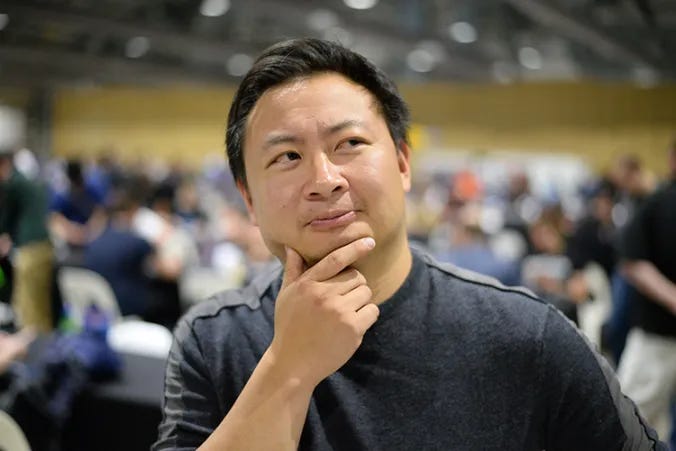
About Ben Seck Ben Seck is an absolute titan of global game development and competitive play whose career path is an masterclass in strategic execution. Ben and I go back nearly 30 years to our early days on the Magic: The Gathering Pro Tour circuit, where he won a Grand Prix in Cape Town and scored a legendary Pro Tour top eight. Unlike most of our old-school peers, Ben is still actively crushing tournaments competitively today. We worked shoulder-to-shoulder in the R&D trenches at Upper Deck Entertainment during the wild-west era of the Versus System card game, both eventually shifting from pure game design into brand and product management . While I left to bootstrap Stone Blade, Ben strategically expanded his toolkit by jumping into the digital free-to-play explosion at Zynga. Since then, he has served as a senior leader and executive at some of the biggest entertainment powerhouses on earth (including Walt Disney, King, and Scopely) and is currently the Head of New Games at Gram Games in London. He has managed teams of hundreds and launched massive digital projects played by tens of millions of users globally. In this episode, we break down how to treat your creative career like a game you intend to win, the massive structural differences between tabletop and digital monetization, and what real leadership looks like when you’re managing massive teams across corporate environments. If you are interested in working with me directly on your project, and learning from my mistakes rather than making your own, you can join my Think Like a Game Designer: Design Lab. Ah-ha! Justin’s Takeaways * How to "Game" Your Career: To game your career, you have to be completely at peace with the fact that games are a commercial art form where understanding how to sell your product is a vital piece of the puzzle. Don't let yourself get stuck in a comfortable routine . Push your boundaries by chasing high-growth markets, and whenever you hit a gap in your knowledge, relentlessly ask questions and learn on someone else's dime. Ben and I took completely different paths (him in corporate mobile and me bootstrapping an indie studio) but we both used calculated risks to minimize dead draws and massively increase our surface area for positive luck. Ultimately, the true metric of success isn't a fancy corporate title; it's whether you effortlessly get out of bed because you're genuinely excited about the work you get to do. * The Lifespan and Cadence of Digital Complexity: A massive misconception in tabletop circles is that free-to-play mobile titles are inherently “simple” games. The reality is that digital titles don’t have less complexity; they just allocate their complexity points across a much longer timeline. Up front, your onboarding funnel is brutally tight, and if you don’t hook a casual player in the first two minutes, they delete the app forever. That said, once a user is plays regularly after a month or two, their tolerance for systemic depth...
0:00SPEAKER_01Hello and welcome to Think Like A Game Designer.
0:03SPEAKER_01I'm your host, Justin Gary.
0:05SPEAKER_01In this podcast,
0:06SPEAKER_01I speak with world-class game designers and creative pioneers
0:10SPEAKER_01across multiple industries.
0:11SPEAKER_01Each episode takes you on a deep dive into the creative process
0:15SPEAKER_01exploring the nuances of game design and the extensive cultural,
0:19SPEAKER_01technological, and business factors influencing various creative fields.
0:23SPEAKER_01Tune in for practical tips and inspiring insights
0:26SPEAKER_01that will expand your creative perspective,
0:28SPEAKER_01whether it's inside the gaming realm or beyond.
0:31SPEAKER_01Justin Gary justingarydesign.com
0:51SPEAKER_01It is a step-by-step system that I have created and tested with dozens
0:56SPEAKER_01of other creators and other aspiring designers that includes over 60 lessons
1:00SPEAKER_01to take you from generating ideas to building prototypes to finding playtesters,