
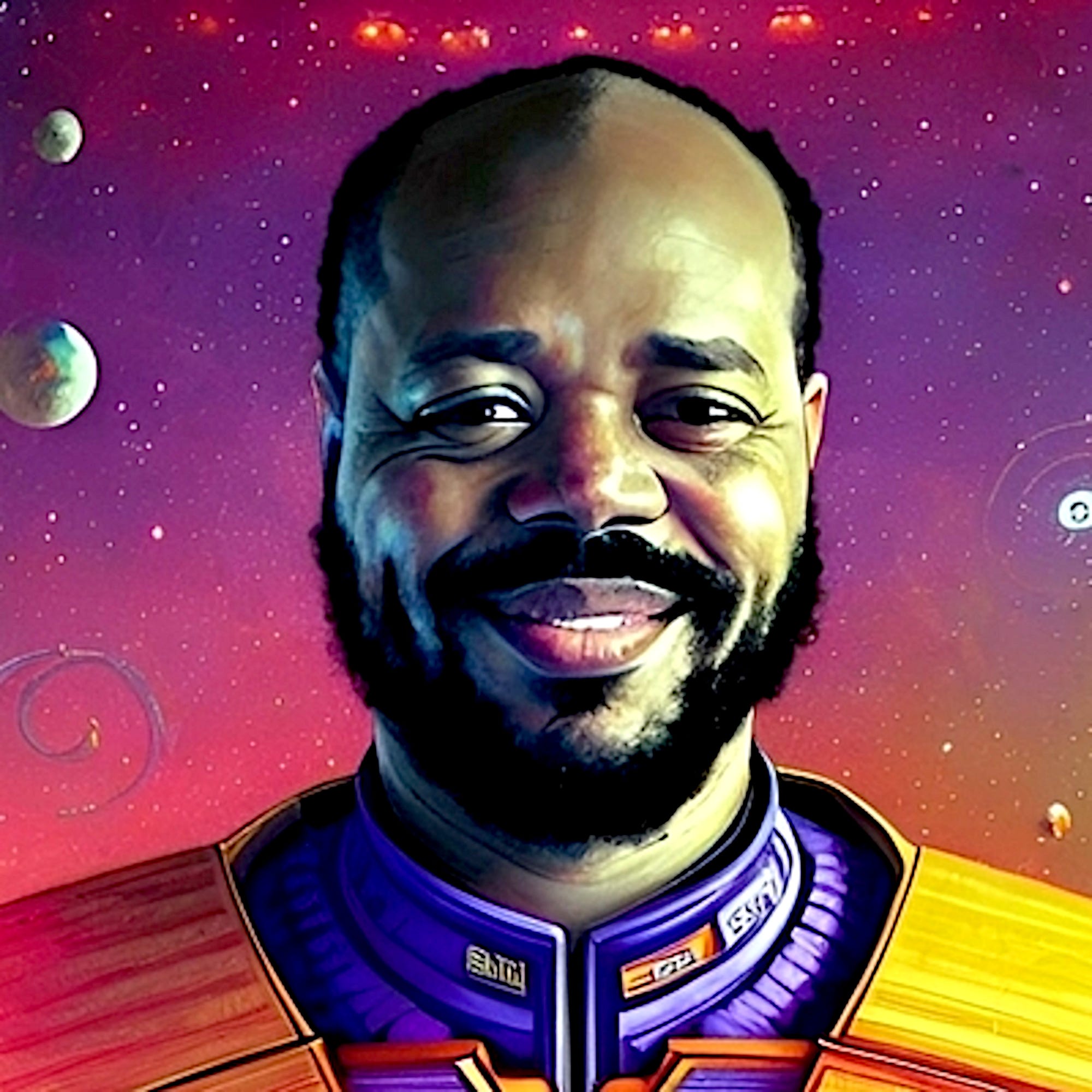
The Xero for Hire Podcast · J. K. Slaughter
In this episode of The Xeroforhire Podcast, Xeroforhire shares the lessons, frustrations, and discoveries from building an AI-assisted anime trailer for Harbinger: Legend of the Seven Brothers. After weeks of experimenting with local AI models, downloading massive files, troubleshooting workflows, and generating hundreds of seconds of footage, he breaks down what actually works—and what doesn’t. The episode begins with an important distinction: artificial intelligence isn’t one technology. Large language models, diffusion models, and AI agents serve different purposes, and understanding those differences is essential when building a creative workflow. Using ComfyUI on a consumer-grade laptop, Xeroforhire experiments with several video-generation models, including MiniMax H3, Wan, and LTX 2.5. He discusses the limitations of each, the importance of matching software to available hardware, and why polished YouTube demonstrations often create unrealistic expectations for independent creators. Much of the conversation focuses on practical techniques developed through trial and error. Character reference sheets, carefully structured prompts, visual starting frames, and consistent style instructions become the foundation of his animation process. He explains how overly complicated prompts can produce unexpected results, including an amusing problem where nearly every scene contained a campfire because fire and smoke had been included in his general style instructions. He also explores the challenge of achieving a specific visual aesthetic. Although his goal is the detailed, hand-drawn appearance of 1990s anime OVAs, H3 frequently produces imagery resembling older television anime. Rather than abandoning the project, he uses stronger visual references and alternative models to improve individual shots. One of the episode’s most useful discoveries involves random seeds and iteration. By duplicating ComfyUI workflows across multiple browser tabs, assigning individual scenes to each tab, and generating several variations with different seeds, he develops a more efficient production process. This allows him to queue multiple shots, compare results, and select the strongest takes without constantly rebuilding his workflow. The discussion concludes with practical advice about render times, managing exported files, and using Syncthing to review generated footage on a phone while the computer continues working. Throughout the episode, Xeroforhire emphasizes the difference between demonstrating AI technology and actually using it to complete a creative project. His first Harbinger trailer is far from perfect, but it represents a working foundation that can be refined through experience. The central takeaway: Learning AI filmmaking isn’t about finding a magical model that does everything. It’s about understanding the tools, developing a repeatable workflow, managing expectations, and being willing to experiment until the results serve the story. The episode...
0:02SPEAKER_00Hey, what's up, guys?
0:03SPEAKER_00It's Xeroforhire, and this is The Xeroforhire Podcast.
0:08SPEAKER_00And I am talking about everything that I've learned working with AI.
0:16SPEAKER_00I've made a very long list,
0:17SPEAKER_00and I think I could easily go an hour, but that's not a luxury that I have.
0:21SPEAKER_00So I'm going to make an attempt to explain everything in about half an hour or less,
0:29SPEAKER_00about 20 minutes like usual.
0:31SPEAKER_00And we'll see where this goes.
0:32SPEAKER_00But I may end up having to re-record or do a second part or something.
0:36SPEAKER_00We'll see at the end.
0:38SPEAKER_00So, everything I learned about AI.
0:43SPEAKER_00At the top, there's one thing I do need to tell you guys that I didn't plan or put on my list.
0:48SPEAKER_00And that is that AI is kind of a catch-all term for general automations
0:54SPEAKER_00of different types that are not interchangeable and
0:57SPEAKER_00that do not necessarily work well together.