
The Whitespark Local Update · Darren Shaw & Claire Carlile
Darren Shaw and Claire Carlile are back with another roundup of the biggest updates, insights, and conversations shaping local SEO and AI search, including: 📝 Google Business Profiles Asking Businesses For EIN (Barry Schwartz) 📝 A masterclass on how to set up AI prompt tracking the RIGHT way (Elizabeth Linder) 📝 More control over the ordering links on Google (Lisa Landsman) 📝 How to build topic clusters for SEO and AI search (Adam Tanguay) 📝 Google Business Home - New Google Business Profiles Home (Barry Schwartz) 📝 You need to update your About Us page (Lily Ray) 🔥 Whitespark Webinar Whitespark Local Ranking Grids
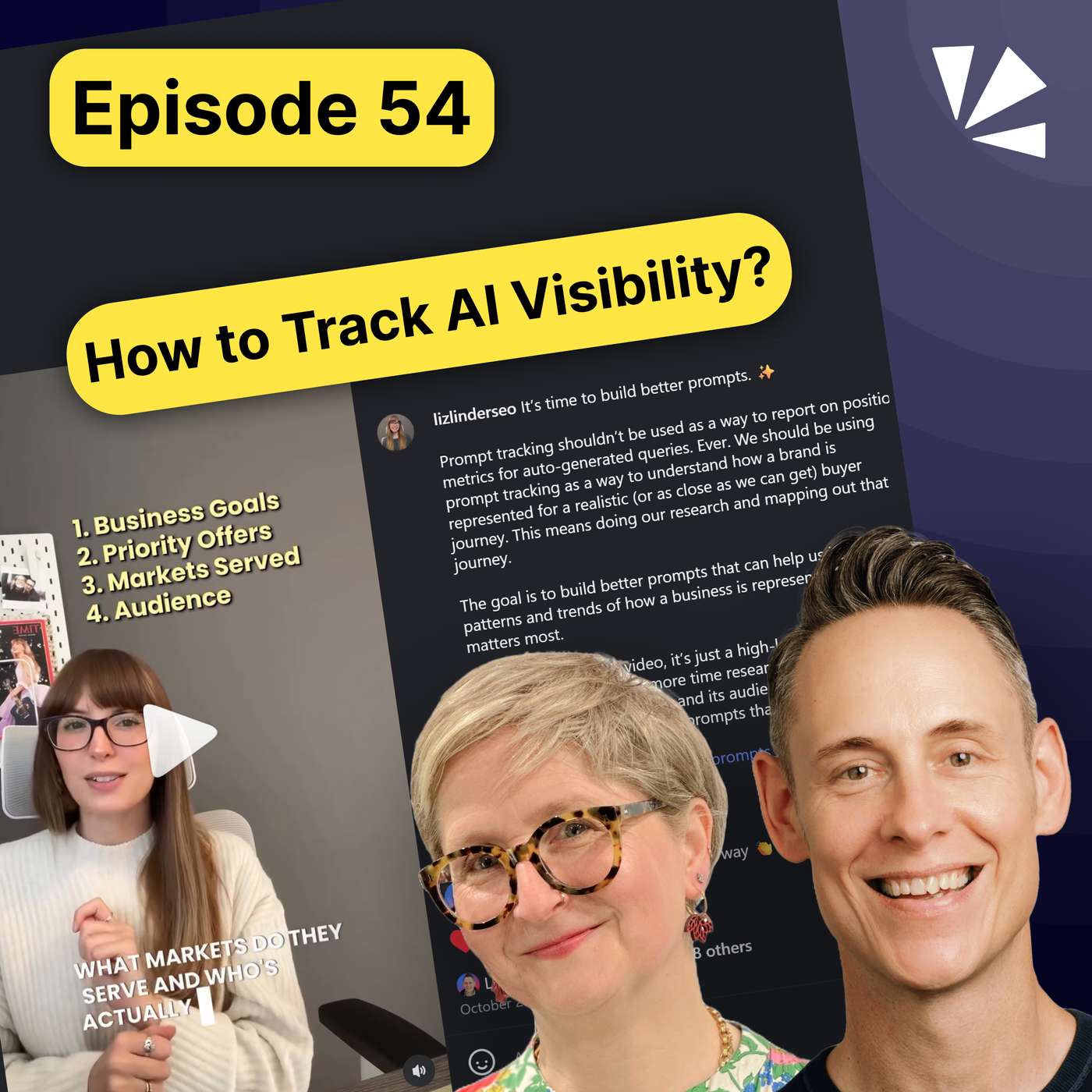
[Darren Shaw] Welcome to another episode of the Whitespark Local Update podcast with me, Darren Shaw. [Claire Carlile] And with me, Claire Carlile. And we are here again. It is the podcast where we talk about exciting things in the world of local search and local visibility. And we have links and then we tell you all about them to save you time. And so we can all have a jolly jape together. [Darren Shaw] A jolly jape. Yeah, this is what we do on this podcast. The, you know, I think we undersell it. We say we share the links. We don't share the links. We give you actionable tips that you can then use to improve your SEO and your AI SEO. That's really what we're doing here. [Claire Carlile] It's true. I'm going to go. I have got a link here, which is from, again, from our good friend, Barry Schwartz, who is like more trustee than a slice of bread. If you listen to the last podcast, you'll remember the Barry Schwartz open sandwich. And so Barry is talking about another thing that has been spotted because Barry talks a lot about things that have been spotted and that might be new. And it is a guy called Syed Amir, who is sharing a screenshot. And Barry says, Google is asking some businesses to provide their EIN, which stands for employer identification number and a link to their privacy policy when updating parts of their Google business profile, and then gives the screenshot. So I think the thing here is that it isn't a general, this isn't a verification workflow. And do you know why I know that? Because I got the same screen. So if you work with a business that has got access to, I don't think it's in beta anymore. It must be a thing, but you can't turn it on. You have to be invited and you'll either see it in the NMX or you'll get an email from Google, which invites you to turn on AI powered messaging. So if you do that, I don't know if you remember a while ago, some of us were seeing screenshots of some messaging regarding AI powered messaging, which Google then quickly turned off. So that was precursor to this. So if you do have the option to do that, and you are a business that chooses to do that, one of the screens that you need to go through is it asks you to provide your business details. So for me, I'm in the UK, I was offered company registration number, which isn't like, there's not that much clarity with what that means. But in the UK, that would actually mean you'd have to have a limited company. So it would be from company's house, because otherwise there is no such thing as a company registration number or personal ID. Okay. And Barry says, I will say this makes a lot more sense than asking for government ID, which might be the case, but we need to note that the fact this is a different workflow, it isn't to do with a verification workflow. And what you're asked for is going to be different depending on what workflow it is and where you are in the world. Because obviously, different countries will need different supporting documentation. One, to prove that it's a business. And two, when we're going down all these different paths towards AI integration, we've got lots of privacy concerns and all sorts of hoo-ha going on. So anyway, lots of things are happening. And I have not yet played around with AI powered messaging. So if anyone has turned that on and has tried it, then let us know, because I would like to know how terrible it is or how great it is. [Darren Shaw] It's going to start hallucinating the services you offer and that yes, you'll be there in 10 minutes. [Claire Carlile] Yeah, that's what we all hope for. [Darren Shaw] That's right. All right. My first comment is that I've been playing around with WhiteSpark's MCP in a local ranking grids. This is next level because we're the only local ranking grid tracker that tracks to 100. We have so much competitive data in local ranking grids. It's just insane. And it's awesome what you can do with the MCP connection. And good job, Troy, you've made it so easy. You just press a button. It's like a connector directory, connect local ranking grids. Done. And then you can be like, which competitors moved up this week? Which competitors got the most reviews? How are my rankings tracking against that one competitor across the street that pisses me off? So you can actually ask all these amazing questions. It just opens up this insane world of analysis. So anyways, if you don't have a local ranking grid account, you should go and get one because it's awesome. And now the MCP is really cool and you can do cool stuff with it. And then my first link, Elizabeth Linder, WhiteSparker. Elizabeth is tasked with building our AI SEO program at WhiteSpark and she's doing a very fantastic job at that. And she is quite brilliant, if you didn't know. She made a video on Instagram. She's been very busy, so she hasn't really gotten back into her video game, but she is excellent at these videos. And so she made a really good, I'm calling it a master class on how to set up AI prompt tracking the right way. Because you know what most people do? They go to Peak or Gumshoe or whatever they're using for prompt tracking. And then they'd be like, okay, here's my website URL. The system generates what are called synthetic prompts. And then they're like, okay, yeah, sure. It looks good. And then they go with it. Elizabeth is saying, no, no, no, you cut that out. What you need to do is you need to do it properly. You need to understand the buyers, the buyer's journey. Those are really critical if you want to build real prompts that actually reflect what people might be searching on AI and the synthetic ones, they don't get it. They don't, they suck. So go a little bit further. And she gives you the exact steps on how to do it. You need to interview the business first, you can understand their goals, their offers, their market serve their audience, then you're going to research topics and you're going to review the brand's online sentiment, you're going to mind their reviews, you're going to look at the customer support tickets, you're going to look at online comments, you want to understand what are the pain points and the decision criteria. She talks about this really critical thing. And then you want to do that on your competitors, mind their data too. And so once you have all that, then you can create audiences. She talks about using Spark Toro, which is a fantastic tool, you run them in there, and they'll generate sort of like prompt ideas, then you turn those prompt ideas based on the audience into your actual prompts down that cover the full journey. So from awareness to conversion, and now you actually have real prompts that reflect what customers care about. So this is crazy that she's able to kind of give you this whole process and what looks like about a two minute video on Instagram. So I would highly recommend you go and watch the video, take notes and improve your prompt tracking because you're probably doing it the bad way. [Claire Carlile] So out of it, you get brilliant prompts, but you've actually done some like proper marketing as well. So even if you are not using this for prompt tracking, why don't you just do this? And that's what I love about Elizabeth because she's a real marketer. She is a real good live marketer. Or is she? I don't know. [Darren Shaw] I did see her in person, you know, many times. So I think I'm pretty sure she's real. [Claire Carlile] I have met her in real life. And it was either an incredible prosthetic, or she's a real person. My second link is from our very, very lovely friend, Lisa Lansman at Google. And I do like her little LinkedIn posts because they cheer me up because a lot of the time they're about some sort of functionality that's been launched that we've been waiting for. And I think this is a really good one. So Lisa says, one of the most frequent requests we hear from restaurant operators is simple, more control over their ordering links. And the good news is you now have direct control over which third party links you choose to keep in your Google business profile, you know, imagine. And direct control, zero back and forth. You decide which partners represent your brand on your profile. If an integration no longer fits your operation margins or kitchen flow, you can turn it off yourself. And then a couple of reminders under that from Lisa, the power of diner choice. And she's saying while direct ordering is always a priority, keeping a mix of trusted providers can be helpful. And then she just reminds you to check your menu and keep it fresh. So in the, let's just say olden days, let's just talk about the iteration before this new iteration. What you had to do, we wanted to remove a third party link that had been pushed into your Google business profile, probably because of some API integration somewhere. You had to then fill in the third party request to move form. Then they either had to honor it or they didn't honor it. And then you had to do it again. And then you had to go back and forth and back and forth and back and forth. And then at some point, hopefully someone went in and broke the API connection. But it could take you a long time and a lot of back and forthing. So now you can do that straight from the NMX. And if they don't do it, it says once a business makes a request, providers must remove third party links from a profile within five working days. If a provider doesn't process your request, you can report a violation. So I would imagine those providers then must remove the link between the businesses. And that's great. I haven't seen this. I don't like most of the businesses that I work with always choose to just have their own links in their profile. So I don't work with a lot of businesses that have third party. But I went into the NMX myself for a restaurant. And I saw how easy it is now to turn these on and off and to say who your priority provider is, whether it's yourself or whether it's the third party. So anyway, completely welcome addition and easy functionality to turn this on and off. Thank you. And goodbye. [Darren Shaw] That was crazy. Actually, for the longest time, like restaurants would be so frustrated because they might have their own ordering system. And then freaking DoorDash just appears on their profile. And they were like, I don't want my orders to go through DoorDash. What are you doing? And so that was very annoying. But now they can control it. Great. Good job. Google always making things better for the small business. My next article is from Adam Tangway and on Search Engine. He published an article there, how to build topical clusters for SEO and AI search. And so the idea here is, let's give you context. Imagine you are a plumber in Denver. And you're thinking to yourself, how do I? Sorry, if you're new to the podcast, this is a running gag. That's my only example. Denver plumber. [Claire Carlile] Darren is obsessed with plumbers in Denver. [Darren Shaw] That's my retirement plan. When I quit White Spark, I'm just going to move to Denver and become a plumber. I will know how to do SEO very well. You want to figure out what content do you need to add to your website. And so this is the whole thing about how do you build your topic clusters. And so a lot of this thinking comes from the world of e-commerce and big sass and people are building huge sites of lots of content. But I actually think there's a huge application for small businesses and for local businesses where you do this exercise. And so this article explains how to do this exercise to figure out what should you write about, what should you put on your website and what shouldn't you put on your website. And so it's a great companion piece to Elizabeth's video that I mentioned before, because it's very similar. Like the same work is kind of involved here. You're doing the research, you're digging through. So like gather the data, I would say interview the business owner. What are the list of service? What are the sort of sub services that they offer? Go to Google Trends, get keyword volume, pull in your current site map, pull in your competitor's site maps, look at all your customer feedback. So mine, your support and sales call info, like what are questions that people are asking? Look on Reddit forums and YouTube comments. I think that's a smart one. People don't talk really about mining YouTube comments for the kinds of questions that people are interested in your industry. And then look at those follow up questions that AI mode asks. And then once you have all that data, you can figure out what are the most important topics to cover. He doesn't give the really clear roadmap on what to do. But I actually just went to Claude and I said, turn this article into a prompt that if I gave you all the data, you would then generate a topic cluster map for me. And Claude was like, okay, I can do it. And then that's what I would do. So he doesn't really say to do that. But I'm telling you, if you read the article, you're like, okay, I got all the data. Now what? That's what you do. And then so he gives a great example that like, let's say your hub piece is the dog grooming guide. Then what are the spokes? The concept is your topical hub and spoke. And so the hub is the dog grooming guide, spokes are things like dog skincare allergies. And each one of these is a page. Dog skincare allergies, grooming in wet climates, hypoallergenic shampoo product page. So those are examples. Let's say you're a dog groomer. I should have really done that for the primary example. But then he says, you got to stay on topic. And so stay focused. So best dog breeds for apartments does not live in this content space because you are dog grooming. So let's stay on topic. And as you said, this is a big mistake that a lot of people make. They're just like they go all over the place with anything tangentially related, stay focused. And then of course, you internally link all these pages properly. And then you are the biggest winner in AI and SEO. And you make millions of dollars. So read the article. [Claire Carlile] Okay. All right. I just like in our, in our zero click world, isn't that content just going to feed the machine and not allow us to become recommended that will just be repurposed as question and answer content in LLMs? But who knows? [Darren Shaw] It's a good question. I think you still want to surface that. You still want, I think it elevates your relevance here across the board. [Claire Carlile] It does. But how does it make it more unique? I think we need to also have an angle on that content where we come up with something. So we're not like, I'm just going to write this about like dog grooming for curly hair. There needs to be something unique. You know, we come back to that non-commodity content. It's a good idea, but it needs to be non-commodity. [Darren Shaw] Well, isn't that where you kind of get by mining your customer support and you're like, you're trying to pull your own takes on stuff. Like obviously you're not going to just generate this via AI because that'd be trash, but you've got to put your own spin on it for sure. [Claire Carlile] Yeah, for sure. Yeah. Working out where that sits. [Darren Shaw] Yeah. [Claire Carlile] Anyway, good. [Darren Shaw] That's good. Those are good comments. You're right. [Claire Carlile] Um, again, Barry. [Darren Shaw] Again? Barry? Barry Schwartz. That guy never misses a news. He is on it. [Claire Carlile] He does not. So Barry is talking about business home, Google business home. [Darren Shaw] Oh yeah. [Claire Carlile] You might think to yourself, okay, wow, another iteration of a thing that used to be a thing. But, uh, this is a different thing. So Barry says, um, this beta experience brings together your business profile, merchant center, YouTube, and ads accounts together all in one place. With business home, you can turn insights about your business and customers into quick actionable steps to help you grow. So I do not have access to this because it is only available to select business categories in the US and the UK. Um, and so also some people have had access to sort of like, um, a brand business manager profile, which also includes merchant center, YouTube, and Google business profiles. So I was a bit like, I can't remember what that interface used to look like because some of my clients also used to have that. Now I can't find it, but anyway, I could be wrong, but something used to exist a bit like this, which was brand profile. Um, and this appears to be another way that they are tapping into Gemini and integrating the same way that integrated Gemini, um, with Google business profiles. Um, this is applying Gemini to do lots of things, ask questions, analyze your data, produce horrible AI images for your business, um, all sorts of things. If you go to the help documentation, um, you've got along the top that gives you some clues about what's going to live in here. Obviously Barry didn't, um, include some screenshots, but it's about setting it up, creating posts and content. So customizing content, creating and managing your posts. Um, so I imagine there'll be elements of automation and, um, AI wizardry to make some very special content, uh, managing your locations in there, tracking your business performance. So bringing in elements of insights. Um, so I'm imagining, will it be Google business profile insights, but will it also bring in YouTube insights, but will it also bring in merchant center insights? What will it do? Get AI powered assistance, uh, and other things. So, um, it sort of begs the question, is this made specifically again for small businesses, single location, because Google does say in there, um, it says you must be the owner or manager of a verified Google business profile with fewer than 10 locations for the same business. Um, even though you can swap between businesses. So this isn't made for huge, like, uh, enterprise businesses. Again, this is sort of serving the needs of the, um, the, the smaller business owner or a few locations, but basically just pulling Gemini in and doing loads of stuff. So we don't know what it's going to do yet, but I am hoping to find out more because it could be useful and it could be interesting. [Darren Shaw] Uh, this to me looks like the replacement for the NMX, which is the worst name Google ever came up with. What is the NMX? The new merchant experience. What did they, who is naming stuff at Google and they need to be fired. So the NMX is when they used to have a Google business profile dashboard. Oh, it was great. You just go to, you know, business.google.com and you have a dashboard, you can manage your locations in the dashboard. And that was great. And then they were like, Oh, I got an idea. Let's make it really hard for people. All they got to do is search in Google for their business name. And then if they type it in the right way, then maybe we'll put these extra controls right in the search results. So I think that the business home is going to bring a proper dashboard back rather than this in search. [Claire Carlile] Yeah. And again, the, the, the, the thing with the NMX is it was very much for individual locations and small businesses rather than having to go into a dashboard and make changes from there. I guess the thinking was, let's make this all insert so they can easily do it or whatever. But yeah, that was the thinking. And you can still do most things from there. Obviously it is difficult to manage multiple businesses from there. They're just thinking that agencies will manage Google business profile and functionality from a third party dashboard one would imagine. So. [Darren Shaw] Well, I wouldn't mind seeing the NMX go away and that this become the ultimate replacement. And I do like the idea that it's pulling out of stuff in it. It's very interesting to me that YouTube is connected there because I do think that this is, this is coming. Most small businesses need to start really thinking about a YouTube strategy. Video is important and it's valuable. And I think there's benefits from a marketing perspective to get started now. Yeah. The next thing I would like to talk about is your about us page. I'm talking to you listener, your about us page sucks, and you need to fix it. And there is huge opportunity to fix this. Lily Ray posted on LinkedIn and I was like, ding, ding, ding, this is it. And I felt pangs of, ugh, we got to do this because white sparks about us page is absolute trash. It is like, we like coffee. So if someone is looking for a local SEO tool provider that enjoys coffee and they go to the LLM, they're going to find us. Otherwise they won't find us. And so your about us page is so powerful. And so what she discovered while auditing an enterprise brand is that the most cited page on this company's website in AI overviews and AI mode, five times more sites than their homepage was their about us page. And why? Because they had a killer about us page. They went into detail. They talked about their history. It's comprehensive. The background, the evolution over time, the timeline. They're like, why they exist, what their goals are, their mission. You go into that detail on your about us page and it will be beneficial. So go read Lily's post on LinkedIn. And then say, yes, we're going to do this, put it on the agenda, do it next week and become a better company on the internet. [Claire Carlile] Love it. Do it. [Darren Shaw] Yeah. Love it. Do it. And we got to do it too. [Claire Carlile] I'll add it to the list. Okay. Thank you very much. That was it. [Darren Shaw] All right. Well, thanks for listening, everybody. I remind you to go and sign up for White Sparks Local Ranking Grids and then also leave us a review anywhere you listen to your podcast and live your best life and enjoy some delicious treats. [Claire Carlile] Coffee. Okay. Thank you. Bye. [Darren Shaw] Bye everybody.