
The Upside Newsletter · Julien blin
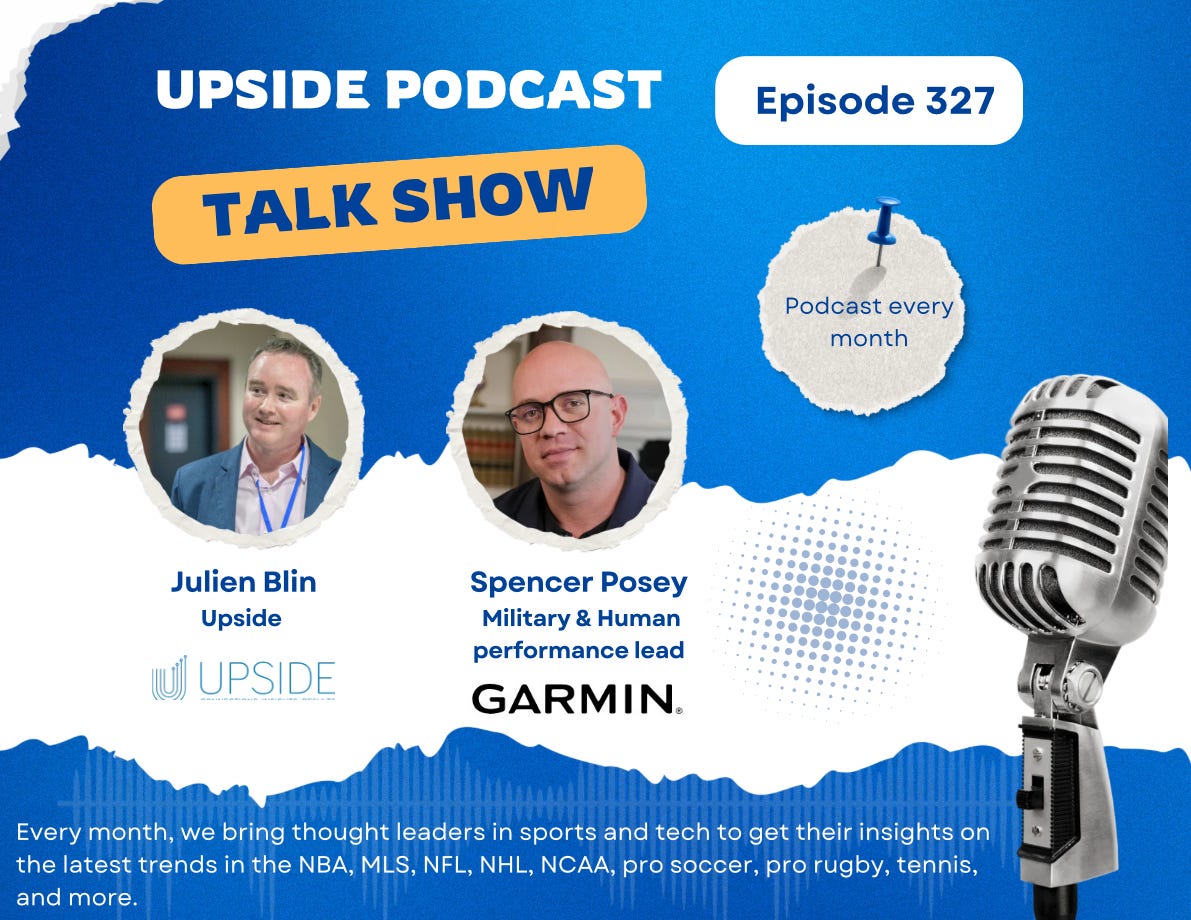
Today we have the honor to interview Spencer Posey, the Military & Human Performance Lead for Garmin. Spencer will also be speaking at the Austin Peay State University Health and Performance Summit on October 17, 2026. You can check out the agenda of the Austin Peay State University Health and Performance Summit, get your ticket for the summit by clicking on the link below and select register now: For sponsorship information, attendees can visit the event website or contact Dr. Tim Leszczak, Chair of the APSU Health and Human Performance Department, at [email protected]. You can watch the video interview below or you can listen to the audio interview above: You can read the full transcript of the podcast interview located at the top of this blog post. Here are some of the best quotes of our conversation with Spencer: Q1. Background & Career Journey “I clawed myself out of that hole through these principles of taking care of oneself in a holistic manner. I put effort into what I put into my body, into my mind, how I trained myself, how I slept — and that investment in those areas helped me claw out of that space.” “As I read that historical document — Field Manual 7-22 — I realized that the program the US Army was trying to implement, essentially I had done in my own private practice in industry and academics for the better part of a decade.” “The mission and vision of Garmin is they exist to help people beat yesterday. And that simple sentence aligns with my entire life’s work. Hands down.” “When I came back in at the US Army, my sole goal was to give. Give whatever I could to the institution.” Q2. Role at Garmin Health “My role is part relationship building, part strategic vision and direction for the organization, and part translating science into real world application for different opportunities.” “Across a week, I can work with military organizations, researchers, tactical professionals, strength and conditioning coaches, and also healthcare providers to help them understand what problems they’re actually trying to solve, what questions they’re trying to answer, and what interventions they can make based off those data points.” Q3. Training, Recovery & Rehabilitation “I see the biggest change in the space going from reactive decision-making to proactive.” “The best organizations are finding which metrics — and I’m gonna say just a couple, not all of them — they zoom in on a couple metrics that they find have the strongest correlation or causation to their genre of people or population, and they focus on those.” “Context matters. When organizations start to understand that all this data matters, but then having the individual of whose data you’re taking provide the context of what goes on the 23 hours outside of training — that’s where the magic happens.” “With heart rate variability, there’s a lot of folks that haven’t dove into what that means over time, and they’re looking at it in a very acute sense. In reality, you need to look at...
0:01SPEAKER_00Welcome to The Upside Podcast,
0:02SPEAKER_00powered by Upside Global and hosted by Julian Blin,
0:05SPEAKER_00founder and CEO of Upside Global.
0:08The Upside Podcast is listened to weekly by over 6,000 sports
0:11and tech executives
0:12SPEAKER_00from all sports leagues and teams in the United States and around the
0:16Julien has been developing technologies for professional sports
0:19teams for over 10
0:20years and has worked for major tech companies along with sports
0:24tech startups.
0:25SPEAKER_00In each episode,
0:26SPEAKER_00Julien interviews global leaders in sports to share knowledge on emerging
0:30technology in the sports industry and how these technologies
0:33can help improve the
0:34performance of individuals and organizations both on and off