
The Upside Newsletter · Julien blin
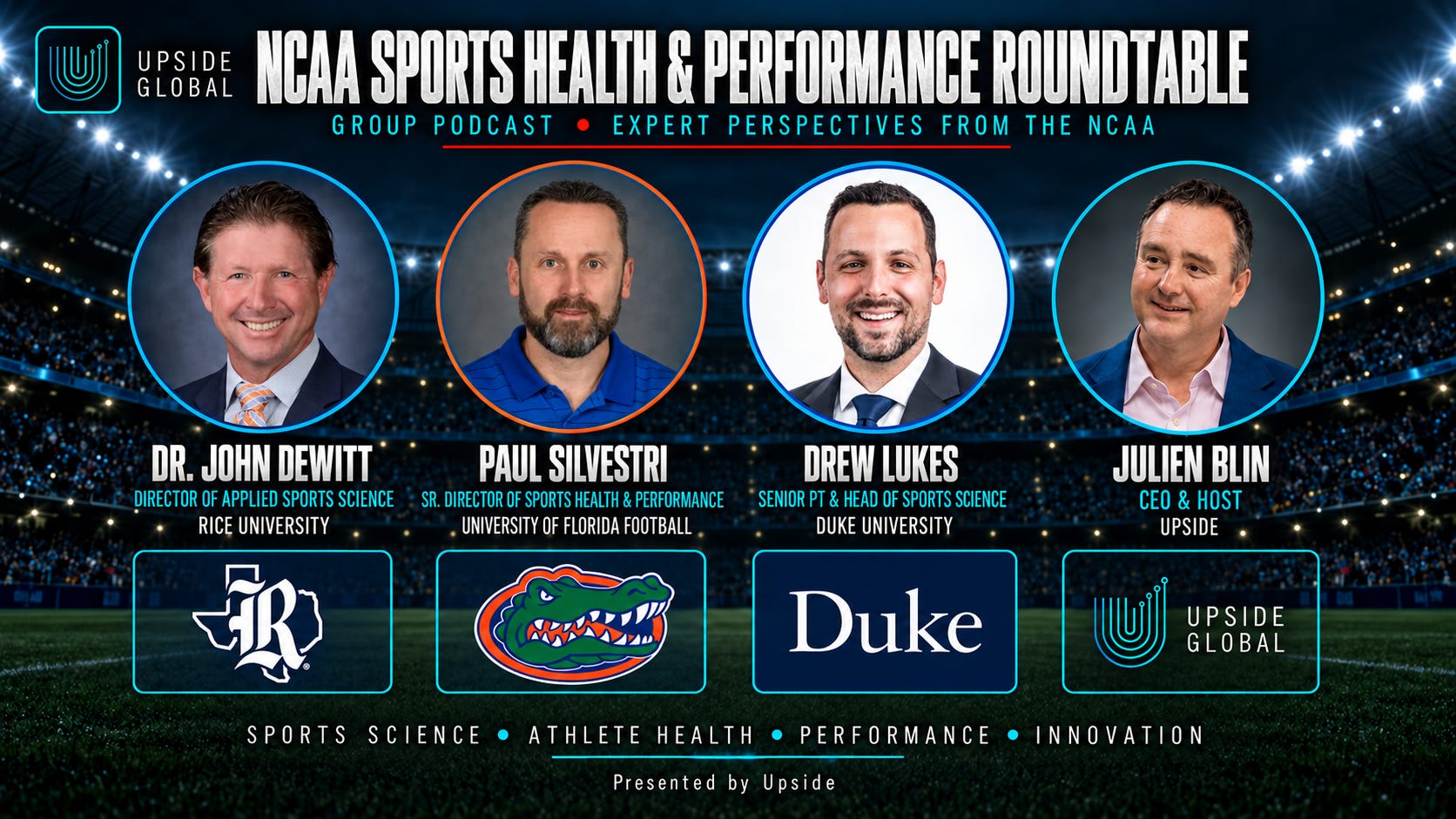
Today we have the honor of interviewing a group of NCAA sports performance experts. * Dr. John DeWitt, Director of applied sports science in the athletic department and a faculty member, Rice University (NCAA team). * Paul Silvestri, Sr director of sports health and performance, University of Florida football (NCAA team). * Drew Lukes, Senior PT at Duke University and the head of sports science, Duke university’s women soccer team (NCAA team). 📝Show Notes: Through this interview, we touched on the following questions and topics: * Optimizing athlete availability * How do you define and measure athlete availability, and how are your medical, performance, coaching and nutrition teams working together to keep athletes healthy throughout the season? When an injury occurs, how do you balance an efficient return to play with the risk of returning too soon? * The effect of roster limits on athlete health * Could smaller roster limits unintentionally increase workloads, reduce recovery opportunities and make injured athletes more vulnerable to losing their positions? How are programs adapting their health and availability strategies following the House settlement? * Are universities collecting too much data? * Are programs measuring athletes because the information changes decisions—or because the technology is available? What information have your programs stopped collecting because it created noise rather than value? What are the top metrics you like to collect on your athletes? * Are we protecting injured athletes after college? * Who should be financially responsible when an athlete develops chronic pain, neurological problems or another long-term condition linked to college participation after eligibility ends? You can read the full transcript of the podcast interview located at the top of this blog post. You can also watch the full video interview below: You can leave a comment by clicking on the button below: Here are some of the best quotes of our conversation with them: Q1. Optimizing athlete availability Drew Lukes “There’s a difference between return to play and return to performance. My baseline is that the athlete is safe to return to play and begin reintegrating into training and lifts. From there, it becomes a fluid discussion about how much the athlete can do. There’s no perfect test that can provide 100% reinjury mitigation, but we can establish objective checkpoints that allow us to say, to the best of our ability, that the athlete is safe to begin returning to specific activities.” Paul Silvestri “You have to work backward. You need to understand the physical demands athletes will face during the season and ensure that their weight-room and conditioning programs match those demands. The days of two-and-a-half- or three-hour grinder practices are starting to go away. You can get the necessary work done more efficiently and give athletes the recovery time they need. Eighteen- to 22-year-old athletes will recover well if you allow them...
0:01SPEAKER_00Welcome to The Upside Podcast,
0:02SPEAKER_00powered by Upside Global and hosted by Julian Blin,
0:05SPEAKER_00founder and CEO of Upside Global.
0:08SPEAKER_00The Upside Podcast is listened to weekly by over 6,000 sports and tech executives
0:12SPEAKER_00from all sports leagues and teams in the United States and around the world.
0:16SPEAKER_00Julien has been developing technologies for professional sports teams for
0:20SPEAKER_00over 10 years and has worked for major tech companies along
0:23SPEAKER_00with sports tech startups.
0:25SPEAKER_00In each episode,
0:26SPEAKER_00Julien interviews global leaders in sports to share knowledge on emerging technology
0:30SPEAKER_00in the sports industry and how these technologies can help improve the performance
0:35SPEAKER_00of individuals and organizations both on and off the playing field.
0:39SPEAKER_00And now here's your host, Julien Blin.
0:43SPEAKER_01So today we have the honor of interviewing a group of NCA sports performance experts.
0:48SPEAKER_01So let me make some quick introductions around the table.