
The Upside Newsletter · Julien blin
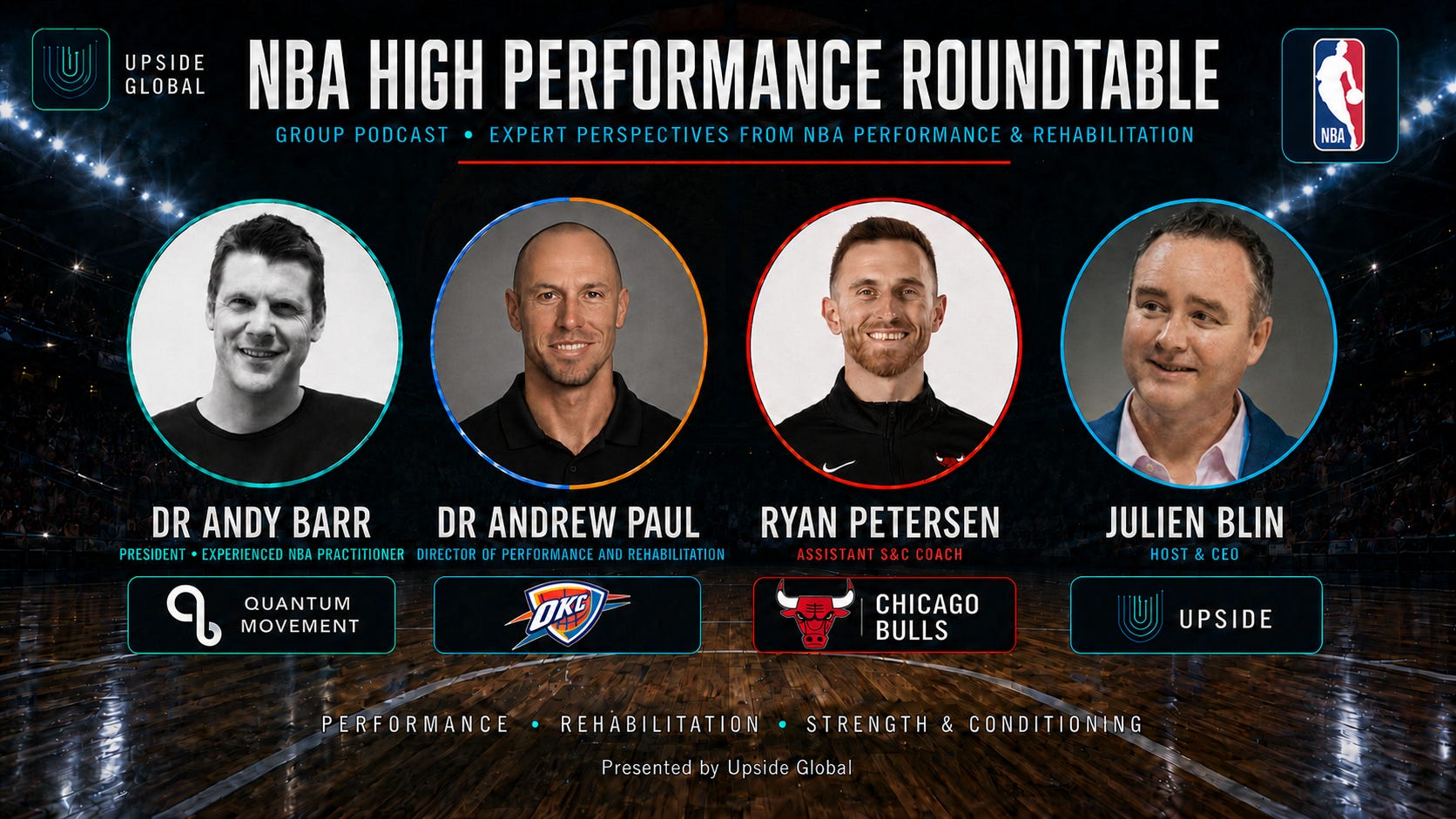
This week we have the honor to interview again a group of NBA sports performance executives to talk about the latest trends in the world of sports performance and rehabilitation. * Dr Andy Barr, president of Quantum Movement. Andy has worked in the NBA and professional soccer for 25 years for teams such as New York Knicks (NBA), NY Liberty (WNBA), the Brooklyn Nets (NBA), Manchester City (Premier League), Chelsea (Premier League), and NYFC (MLS). * Dr Andrew Paul, the Director of Performance and Rehabilitation for OKC (NBA). * Ryan Petersen, the assistant S&C coach for the Chicago Bulls (NBA). Here are the topics that we covered during the video interview: * Q1. With training camp approaching, what should an ideal final few weeks of the offseason look like for an NBA player—physically, technically, and mentally? * Q2. Many players work with private coaches during the offseason. What does strong collaboration between a player’s private coach and NBA team staff look like, and where can problems arise? * Q3. What are the biggest offseason mistakes you see players make—such as overtraining, playing too much live basketball, chasing social-media workouts, or neglecting recovery? * Q4. How should offseason preparation be individualized based on a player’s age, injury history, role, expected minutes, and the way their team plans to use them? * Q5. When you look at players who consistently have successful, healthy seasons, what habits or decisions during the offseason separate them from everyone else? * Q6. If you could give every NBA player one piece of advice before training camp begins, what would it be? You can watch the video interview below by clicking on the Youtube link. You can also listen to the audio interview by clicking on the link at the top of the page: Here are some of the best quotes of our conversation with Andrew, Andy and Ryan: Q1. With training camp approaching, what should an ideal final few weeks of the offseason look like for an NBA player—physically, technically and mentally? Dr. Andy Barr “The player has to go into camp fresh and prepared. They don’t want to be fatigued, but they need to be ready for the work they’re going to face and in the shape required to cope with the preseason.” “Players often peak too soon in their offseason work. They need to be in shape to handle the demands, but they don’t want to peak too soon.” “They might not be out of shape—they may have trained too much of the wrong things, or things that don’t align with the team’s philosophy.” Dr. Andrew Paul “Nowadays, I see players who are almost overprepared. They hit it so hard through August and September that they’re nearly overtrained when training camp begins.” “If you’re even slightly mentally fatigued coming into October, then by January or February, you’re in a really tough spot.” “One strategy I encourage is taking a vacation in late August or early September. It gives players a mental reset before the season.” Ryan Petersen “Showing up at your...
0:01SPEAKER_02Welcome to The Upside Podcast,
0:02SPEAKER_02powered by Upside Global and hosted by Julian Blin,
0:05SPEAKER_02founder and CEO of Upside Global.
0:08SPEAKER_02The Upside Podcast is listened to weekly by over 6,000 sports and tech executives
0:12SPEAKER_02from all sports leagues and teams in the United States and around the world.
0:16SPEAKER_02Julien has been developing technologies for professional sports teams for
0:20SPEAKER_02over 10 years and has worked for major tech companies along
0:23SPEAKER_02with sports tech startups.
0:25SPEAKER_02In each episode,
0:26SPEAKER_02Julien interviews global leaders in sports to share knowledge on emerging technology
0:30SPEAKER_02in the sports industry and how these technologies can help improve the performance
0:35SPEAKER_02of individuals and organizations both on and off the playing field.
0:39SPEAKER_02And now here's your host, Julien Blin.
0:43SPEAKER_03So today we have the honor of interviewing again a group
0:46SPEAKER_03of NBA sports performance executives to talk about the latest trends in the world