
The Unhidden Minute · James Edward Mills
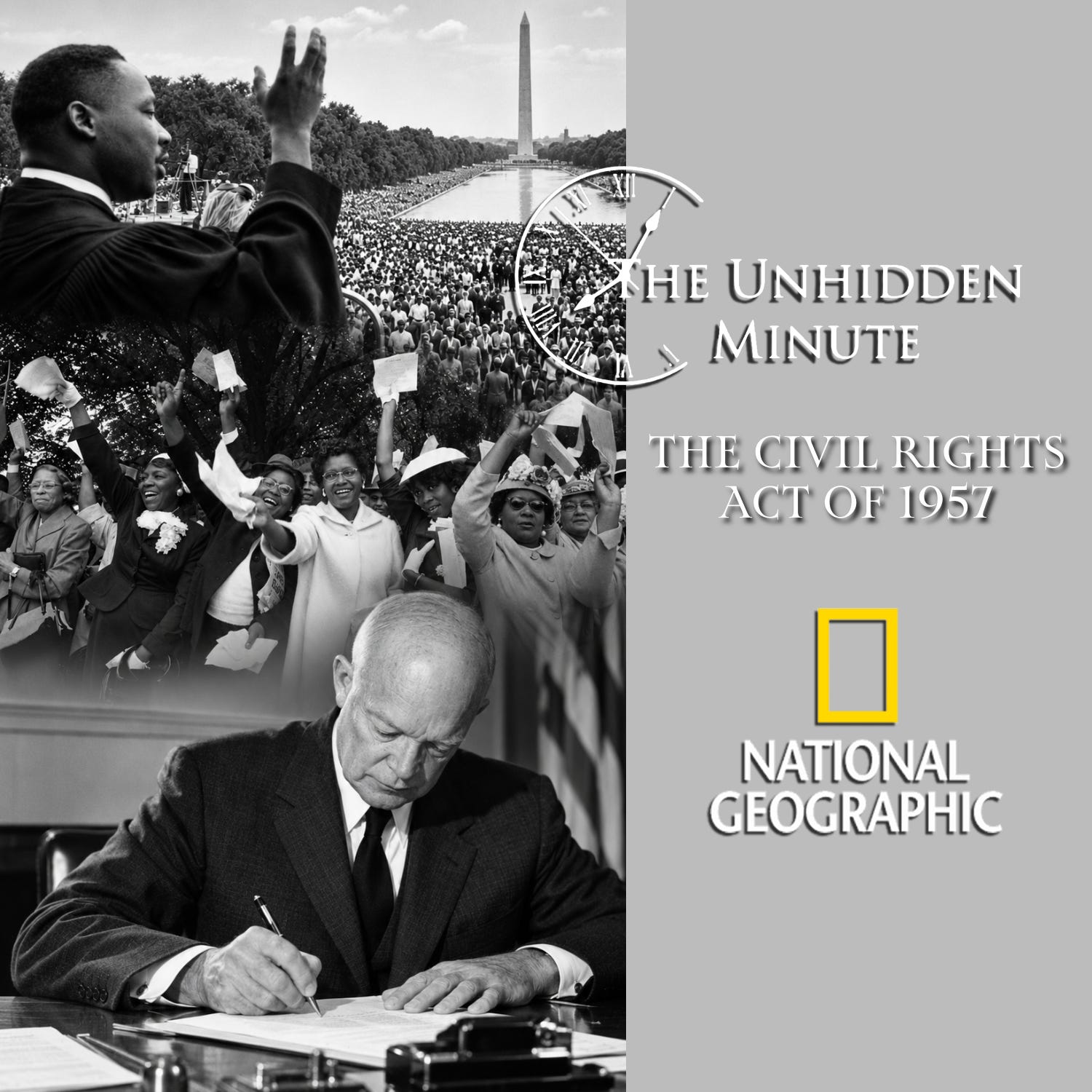
After Reconstruction, Southern states systematically stripped Black Americans of their voting rights through literacy tests, intimidation, economic retaliation and violence. But on September 9, 1957, President Dwight D. Eisenhower signed Public Law 85-315, the first federal civil rights legislation enacted since 1875. Known as the Civil Rights Act of 1957, the legislation came amid mounting pressure for voting rights. In May of that year, Dr. Martin Luther King Jr. joined thousands of protesters at the Prayer Pilgrimage for Freedom in Washington, D.C., where he delivered his “Give Us the Ballot” speech. The new law created the U.S. Commission on Civil Rights and a Civil Rights Division within the Justice Department, while giving the attorney general new authority to challenge voter suppression in federal court. The law was limited, and discrimination continued. But after generations of retreat, the federal government had reentered the fight to protect Black voting rights. The Joy Trip Project celebrates the enduring legacy of Black American History. The Unhidden Minute is part of the Unhidden Podcast Project supported through a National Geographic Explorer Grant from the National Geographic Society, with the cooperation of the National Park Service. This series elevates the untold stories of Black American historical figures, events and cultural contributions. #unhiddenblackhistory #NationalParkService #yourparkstory #NationalGeographic #unhiddenminute Become a paid subscriber to the Unhidden Minute Podcast for one year and receive a free copy The Adventure Gap: Changing the Face of the Outdoors 10th Anniversary Edition by James Edward Mills. This is a public episode. If you'd like to discuss this with other subscribers or get access to bonus episodes, visit jamesedwardmills.substack.com/subscribe
0:00SPEAKER_00For 82 years, Congress failed to pass a major civil rights law, but that changed in 1957.
0:06SPEAKER_00Give me a minute and let me tell you a story.
0:11SPEAKER_00After Reconstruction,
0:12SPEAKER_00Southern states systematically stripped Black Americans of their voting rights
0:16SPEAKER_00through literacy tests, intimidation, economic retaliation, and violence.
0:21SPEAKER_00But on September 9, 1957,
0:23SPEAKER_00President Dwight D.
0:25SPEAKER_00Eisenhower signed Public Law 85-135,
0:28SPEAKER_00the first civil rights legislation enacted since 1875.
0:33SPEAKER_00Known as the Civil Rights Act of 1957,
0:36SPEAKER_00the legislation came amid mounting pressure for voting rights.
0:40SPEAKER_00In May of that year, Dr.
0:42SPEAKER_00Martin Luther King Jr.
0:43SPEAKER_00joined thousands of protesters at the Prayer Pilgrimage for Freedom in Washington,
0:48SPEAKER_00D.C., where he delivered his Give Us the Ballot speech.