
The Trans-Atlanticist · Andrew Sola
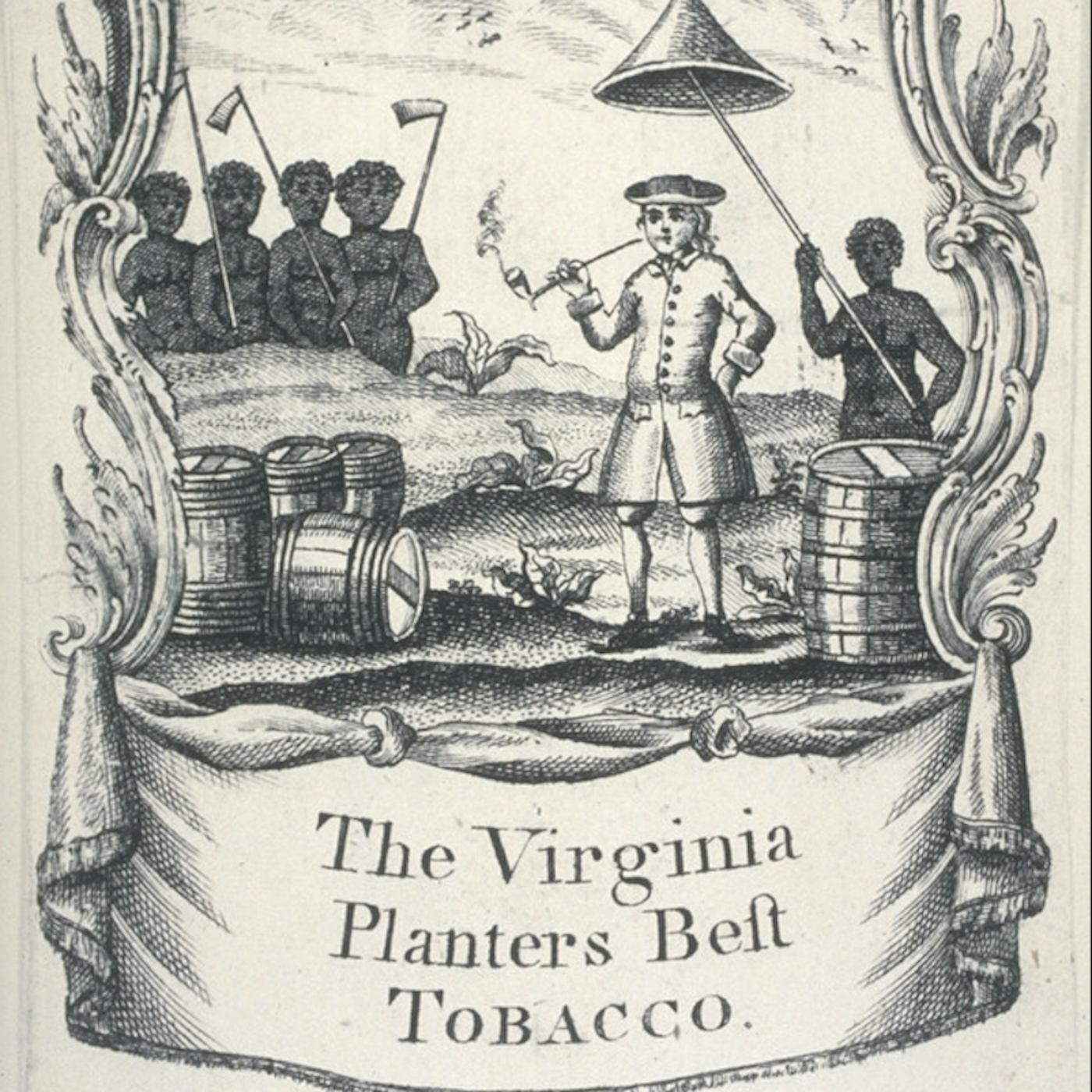
"He has waged cruel war against human nature itself, violating its most sacred rights of life and liberty in the persons of a distant people who never offended him, captivating & carrying them into slavery in another hemisphere or to incur miserable death in their transportation thither. This piratical warfare...is the warfare of the Christian King of Great Britain. Determined to keep open a market where Men should be bought & sold, he has prostituted his negative for suppressing every legislative attempt to prohibit or restrain this execrable commerce. And..he is now exciting those very people to rise in arms among us, and to purchase that liberty of which he has deprived them, by murdering the people on whom he has obtruded them..."--the famous deleted passage about the slave trade from the Declaration of Independence This episode explores plantation economies and slave labor on plantations throughout British North America and the British Caribbean. Topics include the following: -efforts to curb the slave trade in Virginia in 1769 and 1772 -the difference between colonists' opposition to the slave trade and their acceptance of the institution of slavery -the origins of the integrated planation model in the Caribbean, specifically Barbados, in the 16th century -the expansion of the plantation model throughout the Caribbean and the 13 Colonies -an overview of the tobacco trade which stretched from the Chesapeake to Scotland and to continental Europe -the debt crisis facing Virginia tobacco planters in the middle of the 18th century -Jefferson's and Madison's competing visions of the economic future of America -the constant fear of slave rebellions and differing attitudes about British troops in the sugar islands versus the 13 Colonies -Dunmore's proclamation (1775), which offered freedom to enslaved people who joined British lines during the Revolutionary War -debates in the new US about the role slavery should take in the economic future of the country -the emergence of the cotton industry and the role of the Haitian revolution in providing economic rationale for the continuation of slavery in the US after the Revolutionary War Prof. Musselwhite's most recent book can be found here: [Urban Dreams, Rural Commonwealth](https://press.uchicago.edu/ucp/books/book/chicago/U/bo28952507.html) The cover image, courtesy of the Colonial Williamsburg foundation, is likely from 1750.
0:07Speaker 1: He has waged cruel war against human nature itself, violating its most sacred rights of life and liberty in the persons of a distant people who never offended him.
0:17Speaker 1: Captivating them carrying into slavery another hemisphere.
0:21Speaker 1: This piratical warfare is the Warfare Of The Christian King of Great Britain determined to keep an open market where men should be bought and sold.
0:50Speaker 0: Welcome to Life, Liberty and the Pursuit of Happiness.
0:53Speaker 0: a podcast commemorating The show is sponsored by the American Centrum in Hamburg, Germany and I'm your host Andrew O'Soula.
1:04Speaker 0: We often forget that there were twenty-six British colonies in the Americas not just the thirteen colonies that became the United States.
1:12Speaker 0: The British also colonized islands throughout the Caribbean including Jamaica Barbados, the Leeward Islands Granada and Tobago St Vincent and Dominica.
1:23Speaker 0: What united all of these islands besides was that they all adopted the plantation economic system with its near total reliance on enslaved labor.
1:35Speaker 0: These island colonies and continental colonies were deeply interconnected, perhaps even more so than today.
1:42Speaker 0: Don't forget in this period of time, the vast majority of people living within the thirteen colonies lived within two hundred miles of the Atlantic coasts.
1:56Speaker 0: Every day ships set sail from Boston, Philadelphia or Charleston heading to Jamaica Barbados Or St.
2:03Speaker 0: Vincent.
2:04Speaker 0: Far from preventing commerce and communication the Atlantic Ocean was actually The easiest way for the North American colonies To interact with their fellow Caribbean islands.
2:16Speaker 0: So today we will be discussing the origins And development of the plantation system both in the British Caribbean and also In the north american colonies.
2:25Speaker 0: What were the similarities between the colonies?