
The Trans-Atlanticist · Andrew Sola
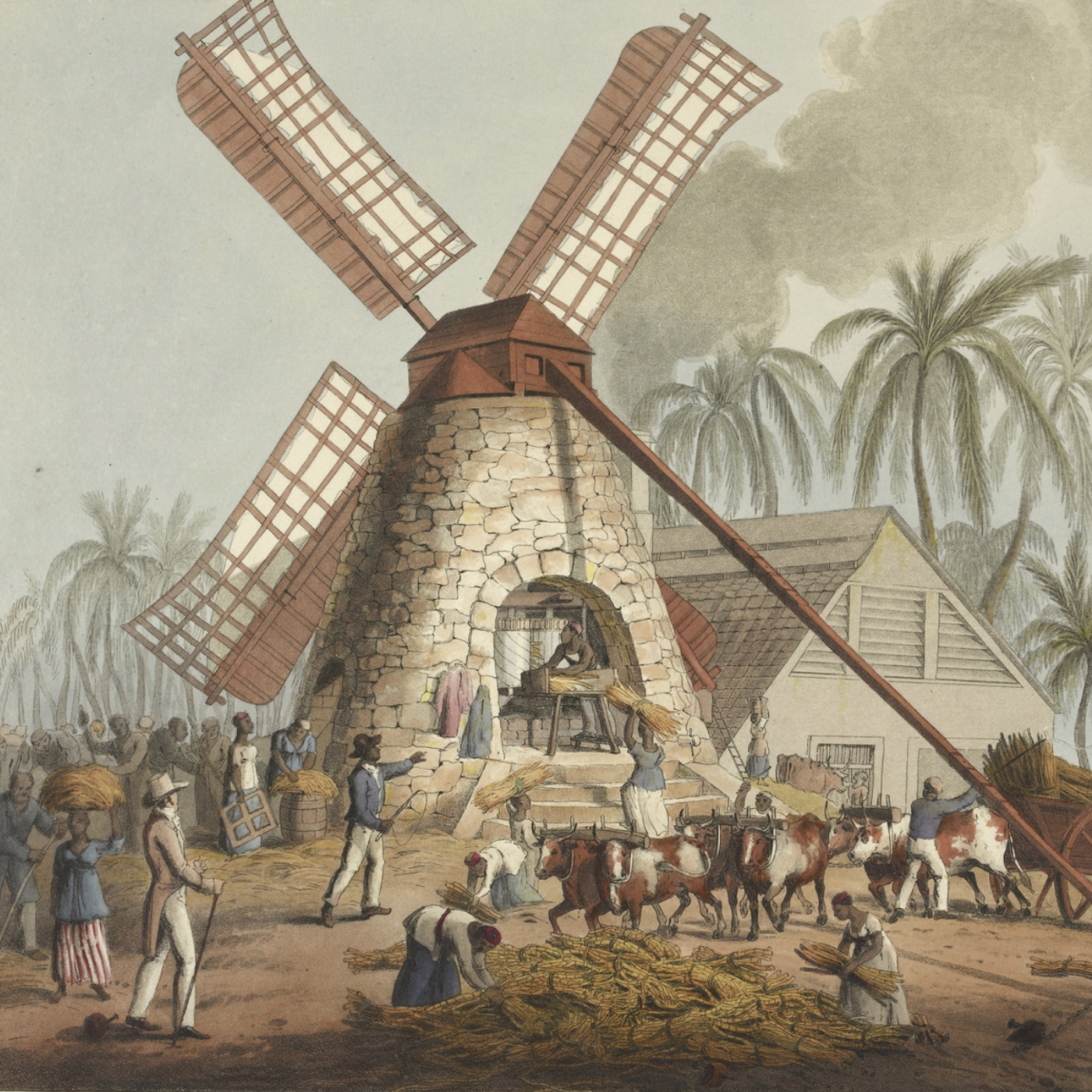
In this episode, we discuss the rum industry in connection with grievances #16 and #17 in the Declaration of Independence: "For cutting off our Trade with all parts of the world" "For imposing Taxes on us without our Consent" Topics include the following: -an explanation of rum production, from sugarcane to the finished product -the origins of sugarcane and rum production in Barbados in the early 1600s -the development of distilleries in the Colonies, particularly Massachusetts, in the late 1600s -rum consumption in the Colonies by people in cities, slave traders, fishermen, and native Americans -the use of rum as a form of payment in the triangular slave trade -the imperial mercantilist competition between British rum and French brandy -the moral and religious history of rum and alcohol consumption -the Colonial activist movements that aimed to create political change, for example, by refusing to consume products made by enslaved people or by boycotting tea -the Molasses Act of 1733 and the Sugar Act of 1763 -the rise of rum smuggling and the association between rum and piracy -the deleted passage in the Declaration condemning slavery and its connection to the rum industry -the state of the rum industry, slavery, and the abolition movement after the formation of the United States -the development of the maple syrup industry as a moral alternative to the sugar and rum industry, which was driven by the immoral institution of slavery Prof. Smith's book can be found here: [The Invention of Rum: Creating the Quintessential Atlantic Commodity](https://www.pennpress.org/9781512828184/the-invention-of-rum/) His article in Commonplace can be found here: [Where's the Pirate?](https://commonplace.online/article/wheres-the-pirate/) The cover image features a sugarcane plantation with a mill and enslaved people in Antigua.
0:10Speaker 0: He has cut off our trade with all parts of the world.
0:36Speaker 1: a commodity that fueled sailors and seamen, diplomats and drunks priests and pirates.
0:50Speaker 1: It was prized by planters in Jamaica, traders in Boston, and slavers in Africa.
0:58Speaker 1: it was such an important commodity that taxing helped cause the American War of Independence.
1:04Speaker 1: It's been known throughout history as Tot, Grog, Screech, Pirate Juice, Demon Water, Nelson's Blood and Kill
1:12Speaker 0: Devil.
1:13Speaker 1: Of course I'm not talking about tea—I am talking about rum!
1:17Speaker 1: And our episode today is about rum... ...and the Declaration of Independence.
1:23Speaker 1: What IS rum?
1:24Speaker 1: How has it made...?
1:25Speaker 1: Who drank from
1:26Speaker 1: them?!
1:26Speaker 1: Where did they drink it?
1:28Speaker 1: Why was such an important commodity throughout The Atlantic
1:31Speaker 1: World?...