
The Trans-Atlanticist · Andrew Sola
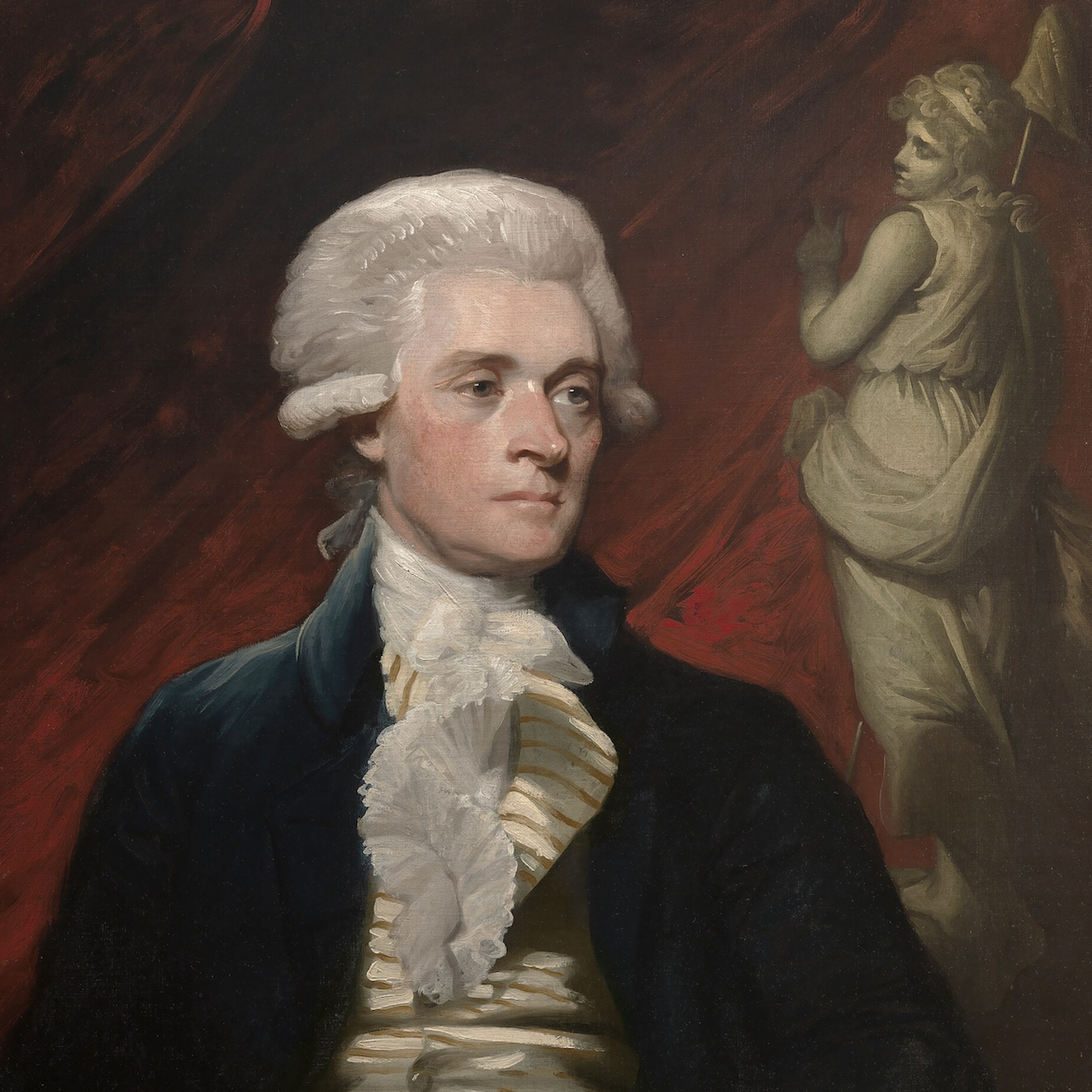
"When in the Course of human events, it becomes necessary for one people to dissolve the political bands which have connected them with another, and to assume among the powers of the earth, the separate and equal station to which the Laws of Nature and of Nature's God entitle them, a decent respect to the opinions of mankind requires that they should declare the causes which impel them to the separation." In this episode, we discuss the historical and philosophical origins of the Declaration of Independence. Topics include: -an explanation of the importance of John Locke, natural rights, and natural law -references to the state of nature and the social contract in the Declaration -the right of revolution and the duty of revolution against an unjust government -how the right of revolution applies to enslaved people -Jefferson's intellectual conundrum: how can slavery be allowed to exist when all men are created equal, when all men are created free, and when all men have the right to rebel against a tyrannical government--at least according to natural law theory -reframing the "pursuit of happiness" as the right of the people to abolish a government or to leave a nation in order to form a new one--that is to say, the natural right of expatriation -understanding the Declaration as a pragmatic and practical political document as opposed to an abstract and idealistic philosophical document -grievances #5 and #6 in the Declaration -an explanation of the exclusions of in the Declaration -Jefferson's justifications why Native Americans and enslaved people should not be a part of the new American social contract Prof. Sarson's book can be found here: [The Course of Human Events: The Declaration of Independence and the Historical Origins of the United States](https://www.upress.virginia.edu/title/10151/) The cover image depicts Jefferson in 1786. The painting is by Mather Brown.
0:08Speaker 0: When in the course of human events, it becomes necessary for one people to dissolve political bands which have connected them with another and assume among powers on earth a separate equal station.
0:22Speaker 0: A decent respect to the opinions of mankind requires that they should declare causes which impel them into separation.
0:35Speaker 1: Welcome to Life, Liberty and the Pursuit of Happiness.
0:37Speaker 1: a podcast commemorating The Two Hundred Fifty Year Anniversary Of The Declaration of Independence.
0:43Speaker 1: This show is sponsored by The American Centrum in Hamburg Germany And I'm your host Andrew Sola.
0:49Speaker 1: Thomas Jefferson as we all know was the primary author of The Declaration Of Independence.
0:55Speaker 1: Not only was Jefferson an eloquent and persuasive writer He also botanist An economist A lawyer and an architect.
1:05Speaker 1: Furthermore, he was a farmer—and politician!
1:09Speaker 1: Of course, also as slaveholder with the complex and confusing understanding of men's
1:14Speaker 1: rights."
1:16Speaker 1: He is religious too but how it is hard to tell.
1:21Speaker 1: But let us not forget that he was also a historian…and philosopher.
1:27Speaker 1: In short, man has many talents...and many contradictions.
1:32Speaker 1: But for today's episode, I want you to focus just on two of Jefferson's careers.
1:37Speaker 1: His career as a historian and his career as philosopher more specifically as political philosopher.