
The Trans-Atlanticist · Andrew Sola
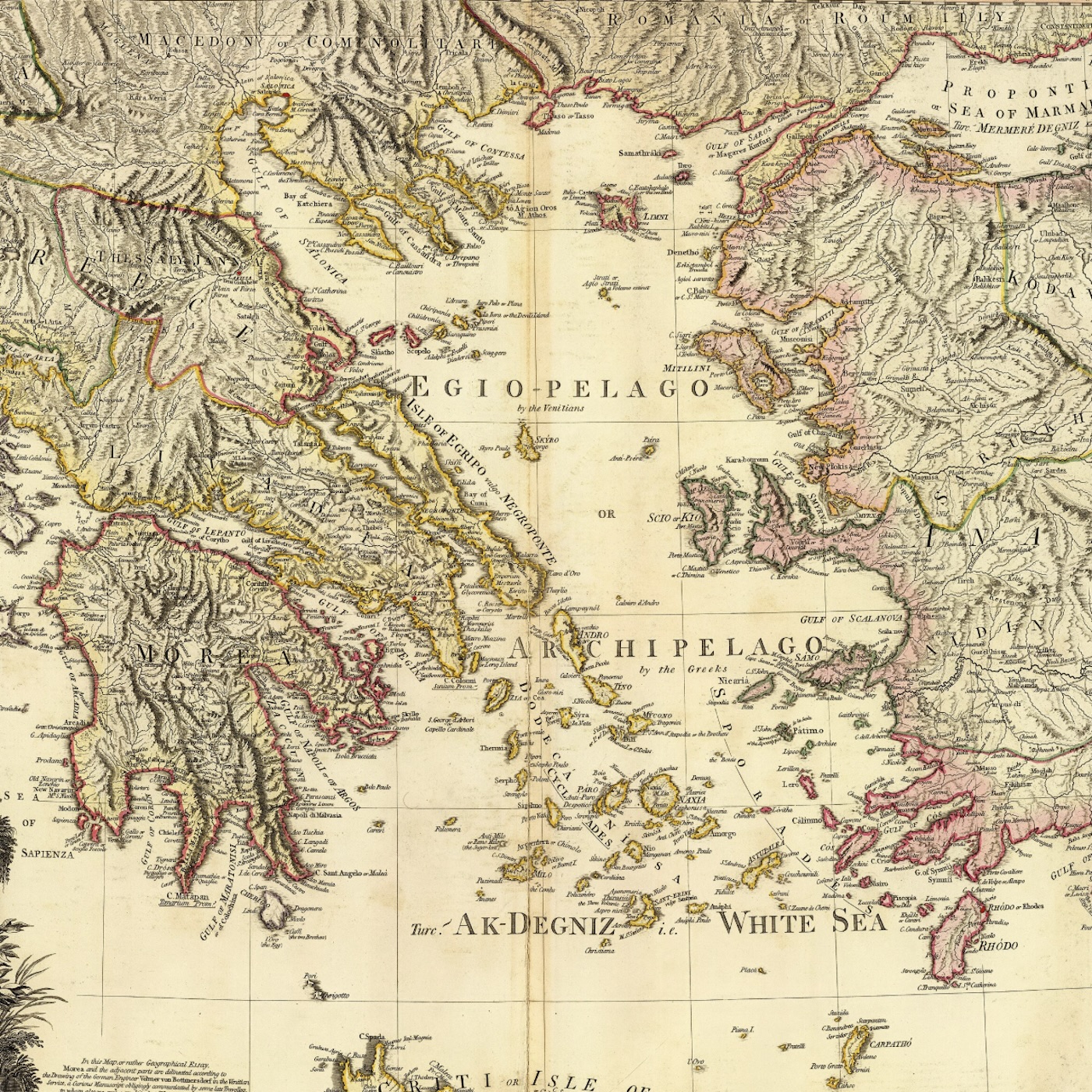
In this episode, we explore the links between the Greek War of Independence (1821-1829) and the American War for Independence. Topics include the following: -Thomas Jefferson's life-long interest in Ancient Greek philosophy and political thought -the broad influence of Ancient Greek thinkers on all of the American Founders -an overview of Greek history, including the Orlov Revolt from 1770-1771 -the state of "Greece" in 1776 -Ottoman control over Greek/Christian communities and the slow realization in the 18th century that as the might of the Ottoman Empire declined there were opportunities to seek independence, particularly with the help of other European Christian powers -the limited but significant contribution of Greeks in the American Revolution, such as Michel Dragon (Dracos) -the reintroduction of Classical political ideas as well as the introduction of Enlightenment political theory into Greek territories, particularly by Greeks abroad -the Greek Enlightenment -factors leading to the outbreak of the Greek War for Independence in 1821 -conflicts among factions within the Greek patriot movement -the unfolding challenges of the war, including the deployment of the Egyptian Army to crush the rebellion as well as the eventual acknowledgment of Christian European powers that they should assist the Greek patriots -the official position of the new United States on Greek Independence, which was non-alignment and non-involvement with European entanglements -the sympathetic view of the American people, who as private citizens provided money, aid, refuge, and military assistance to the Greek patriots -the complicated and shifting boundaries and form of the new Greek state and the development of the modern Greek state over the course of the 19th century Prof. Doumanis' books can be found here: [Myth and Memory in the Mediterranean](https://link.springer.com/book/10.1057/9780230376953) [A History of Greece](https://www.bloomsbury.com/us/history-of-greece-9781350457683/)
0:09Speaker 1: Welcome to Life, Liberty and the Pursuit of Happiness a podcast commemorating The Two Hundred Fifty Year Anniversary Of The Declaration of Independence.
0:17Speaker 1: This show is sponsored by America Centrum in Hamburg Germany And I'm your host Andrew Soler.
0:23Speaker 1: Today we'll be continuing our assessment on the impact.
0:36Speaker 1: We know that ancient Greece was the cradle of democracy, and Greek or Hellenic culture is an anchor in what we call Western civilization.
0:46Speaker 1: And most of us are familiar with names from great figures like Socrates and Plato, Epicurus and Epictetus Aristotle Alexander Thucydides and Thrasymachus.
1:00Speaker 1: The founders were also familiar with the philosophy and culture.
1:05Speaker 1: In fact, they were besotted with ancient Greece.
1:09Speaker 1: They were Phil
1:10Speaker 1: Hellenes.".
1:11Speaker 1: For example here's a passage from Thomas Jefferson's letters The Greeks by their laws took care to put into the hands of their rulers no such engine of oppression as a standing army.
1:28Speaker 1: Their system-the Greek system was to make every man a soldier and oblige him to repair whenever that was reared.
1:38Speaker 1: This made the Greeks invincible and this same remedy will make us so
1:44Speaker 1: too.".
1:45Speaker 1: So here we see, The early American support of local militias And opposition to standing armies Was very much influenced by ancient Greek practices.
1:56Speaker 1: Here is a more personal note on Jefferson's affinity for specific greek philosopher Epicurus.