
The Timberline Letter · Produced by Ed Chinn, Narrated by Kara Lea Kennedy
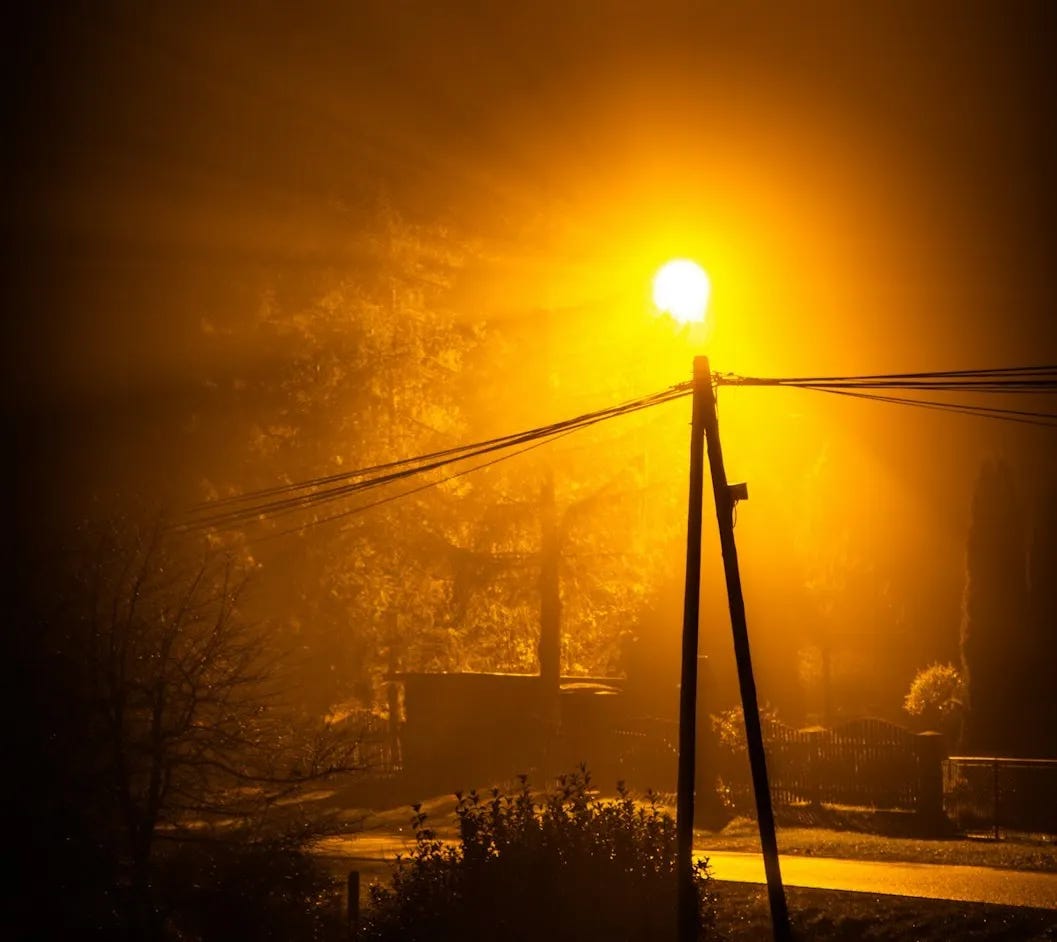
A tiny trespass onto a neighbor’s property can seem harmless. Nobody will notice. It is only a shortcut. But eventually, others follow that route. In time, a private intrusion becomes a well-worn path. Recently, my neighbor introduced an intrusion into my life. His newly installed security lights poured bucketfuls of lumens through my bedroom window each night. So, I quickly planted tall bushes to block the light. When they proved ineffective, I erected a six-foot-high, finest-quality fence, finally blocking his solar blast. When physical or psychological boundaries are crossed, we become intruders, taking what is not rightfully ours. England’s invasion of Ireland in the fourteenth century had become a failing and regrettable trespass. Many of the English Norman invaders had “gone native,” assimilating into Irish life. The land still under English control had dwindled largely to the region surrounding Dublin. To mark the boundary of that shrinking territory, the English erected fence posts, or “pales,” an old word for stakes or barriers. The territory outside English control was said to be “beyond the pale.” Most incursions in our own lives do not resemble territorial warfare. They begin more quietly, subtly disrupting our routines and nudging the boundaries that make us comfortable. A college student with little money once needed a place to stay while he searched for work. Sympathetic to his situation, I invited the charming and intelligent young man to use our extra bedroom. The act of welcoming strangers, according to a biblical text, could mean we’re unknowingly entertaining angels. At first, we did seem to be hosting an angel. Our guest was kind and affable—and especially punctual at mealtimes, accepting every meal we placed before him. As he became more comfortable in his new residence, however, the boundaries began to shift. He gradually displaced me from my favorite armchair. His music produced mini-tsunamis in our fish tank. Our once-tidy home began to resemble a thrift-store donation center. When others place us on the wrong side of the pale, the neat fence separating what is ours from what is theirs has been breached. It can feel like discovering that someone has mixed the colored laundry with the whites. Each incursion differs, and each kind calls for a different response. Did we create the intrusion? Are we its victim? Or did we invite it? In the first instance, we are the trespassers. Like the pathway, we have entered, uninvited, into something that is not ours—another person’s property, privacy, belongings, or heart. Our intrusion carried us into a place where we had no claim and did not belong. Such trespasses often bring consequences. In the second instance, like the unwanted glare from my neighbor’s security light, we are the victims of an intrusion. We are not the transgressors; someone else has crossed the boundary. We have two choices: retaliate against the encroachment or pursue the more arduous path of understanding and...
0:00SPEAKER_00You're listening to The Timberline Letter, High Country Commentary.
0:05SPEAKER_00Beyond the Pale by Craig Dahlberg.
0:09SPEAKER_00Read to you by Kara Lea Kennedy.
0:13SPEAKER_00A tiny trespass onto a neighbor's property can seem harmless.
0:17SPEAKER_00Nobody will notice.
0:19SPEAKER_00It is only a shortcut.
0:21SPEAKER_00But eventually, others follow that route.
0:24SPEAKER_00In time, a private intrusion becomes a well-worn path.
0:30SPEAKER_00Recently, my neighbor introduced an intrusion into my life.
0:34SPEAKER_00His newly installed security lights poured bucketfuls of lumens
0:38SPEAKER_00through my bedroom window each night.
0:41SPEAKER_00So I quickly planted tall bushes to block the light.
0:45SPEAKER_00When they proved ineffective,
0:47SPEAKER_00I erected a six-foot-high, finest-quality fence, finally blocking his solar blast.
0:55SPEAKER_00When physical or psychological boundaries are crossed,