
The Think Wildlife Podcast · The Think Wildlife Podcast
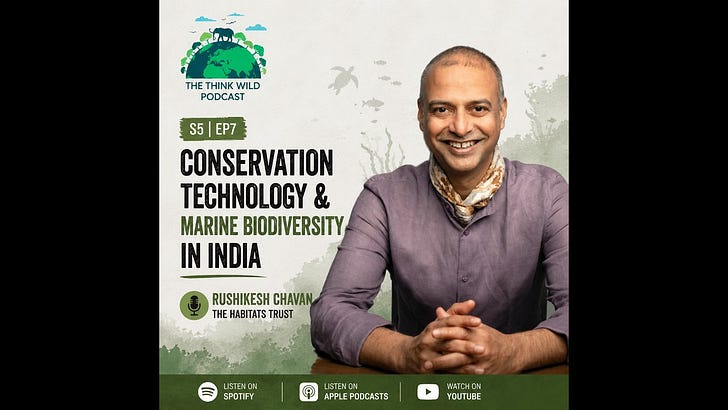
In this episode of the Think Wildlife Podcast, I am joined by Rushikesh Chavan, Director of The Habitats Trust, one of India’s leading conservation philanthropy organizations. Together, we explore how philanthropy, conservation technology, and systems thinking are transforming biodiversity conservation across India, with a particular focus on marine ecosystems, conservation innovation, and strategic conservation funding. India’s marine ecosystems support extraordinary biodiversity and millions of livelihoods, yet they continue to receive comparatively less conservation attention than terrestrial landscapes. In this conversation, Rushikesh discusses why strengthening Indian marine biodiversity conservation is essential, the ecological significance of coral reefs, and how marine conservation requires an integrated understanding of interconnected ecological, social, and economic systems. The discussion examines The Habitats Trust’s work on coral reef conservation in Lakshadweep, the ecological importance of coral reef ecosystems, and the Sardine Initiative, which seeks to better understand one of India’s most ecologically and economically significant fish species. We also explore the complex relationship between fisheries, livelihoods, ecosystem health, and sustainable resource management within India’s marine environment. A major focus of the episode is the rapidly evolving field of conservation technology. Rushikesh explains how technologies such as remotely operated underwater vehicles (ROVs), artificial intelligence, computer vision, GIS, bioacoustics, and autonomous marine systems are expanding our ability to explore, monitor, and conserve marine ecosystems. Rather than viewing technology as an end in itself, the discussion highlights its role as a practical tool for addressing complex conservation challenges and improving biodiversity research. The conversation also explores the importance of making these technologies and the resulting datasets accessible to researchers and conservation organisations through open collaboration and capacity building. The episode also provides an in-depth overview of The Habitats Trust Grant Program, discussing the philosophy behind conservation philanthropy, funding priorities for lesser-known species and critical habitats, and the challenges associated with financing effective conservation action. Rushikesh reflects on emerging trends in conservation funding, identifies taxonomic groups and ecosystems that remain underrepresented, and discusses how India’s conservation funding landscape can continue to evolve. Finally, Rushikesh shares thoughtful advice for early-career conservationists, emphasizing the importance of systems thinking, interdisciplinary collaboration, technological literacy, and understanding the diverse roles played by governments, NGOs, communities, researchers, corporations, and funding agencies in achieving long-term conservation outcomes. He concludes by reflecting on the reasons for...
0:01SPEAKER_00Today I am joined by Roshikish Chavan,
0:03SPEAKER_00Director of the Habitat Trust,
0:05SPEAKER_00one of India's leading conservation philanthropy organizations.
0:09SPEAKER_00Through initiatives spanning marine conservation,
0:12SPEAKER_00coral reef research,
0:14SPEAKER_00sustainable fisheries,
0:16SPEAKER_00conservation technology,
0:17SPEAKER_00and grants for lesser known species and critical habitats,
0:21SPEAKER_00the Habitat Trust is helping shape the future of conservation in India.
0:26SPEAKER_00In this episode,
0:27SPEAKER_00we'll discuss the conservation of India's marine ecosystems,
0:32SPEAKER_00how conservation technology can make conservation science more impactful and
0:37SPEAKER_00the Habitat Trust Conservation Current Programme.
0:40SPEAKER_00Don't you name today's very insightful episode and do not forget to share
0:44SPEAKER_00and subscribe on whichever platform you are listening to the podcast on.