
The Think Wildlife Podcast · The Think Wildlife Podcast
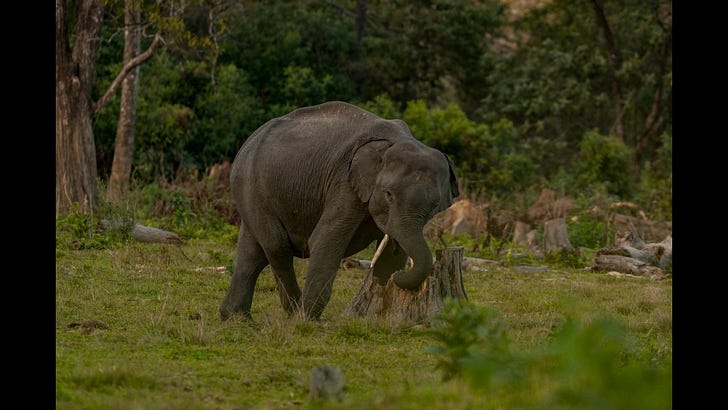
In this episode of The Think Wildlife Podcast, Anish Banerjee speaks with elephant conservationist Nitin Sekar about the ecological role of Asian elephants, the causes of human–elephant conflict, and the difficult choices involved in conservation and coexistence. Nitin begins with his doctoral research in Buxa Tiger Reserve, West Bengal. Using camera traps, feeding and germination trials, and animal movement data, his team examined how elephants disperse the seeds of large-fruited trees. He explains why other animals cannot always replace elephants as seed dispersers: even when they consume the same fruit, they may move viable seeds much shorter distances. We also discuss whether elephant populations concentrated within restricted habitats can alter vegetation in ways that disadvantage other species.The conversation then turns to human–elephant conflict. Nitin describes three interacting groups of drivers: “push” factors that make natural habitat less suitable; “pull” factors, such as accessible crops and water; and “collide” factors that increase the likelihood of dangerous encounters between people and elephants. He explains why habitat loss matters, but cannot by itself account for when and where conflict intensifies.What can reduce conflict in practice? We examine compensation for crop losses, changes in cropping patterns, community crop guarding, barriers and early warning. Nitin considers whether compensation is adequate and fair, whether a crop that deters elephants is suitable for farmers, and whether protecting one village simply shifts crop raiding to another. He also discusses practical measures that can reduce dangerous encounters, including safer travel routes and clear information for people unfamiliar with elephant presence.In the second half of the episode, we discuss Nitin’s book, The Elephant Jungle: A Story of Conservation and Coexistence. Through the experiences of people living around Buxa, the book examines livelihoods, forest access and the limits of conservation policies developed without sufficient attention to local realities. Nitin reflects on how his field assistant, Netra, challenged some of his assumptions about the relationship between people, livestock, and forests.Finally, we consider the trade-offs between ecological protection and local rights, the importance of implementing conservation measures effectively, and why the welfare of individual animals deserves a place in conservation decisions. Nitin closes with a memorable encounter between an elephant and a displaying peacock, and a broader question: what should conservation ultimately seek to protect? Timestamps00:00 Elephant conservation and coexistence: introduction01:17 Welcome to Nitin Sekar01:25 Nitin’s path into wildlife conservation03:21 Elephants as dispersers of large-fruited trees06:25 Can elephant populations alter vegetation?08:28 Push, pull and collide drivers of human–elephant conflict13:11 Can severe human–elephant conflict be prevented?15:59...
0:00SPEAKER_00How do we conserve large elephant landscapes while promoting coexistence with
0:04SPEAKER_00the local communities residing in such landscapes?
0:08SPEAKER_00In this episode of The Think Wildlife Podcast,
0:11SPEAKER_00I am joined by Nitin Seker,
0:13SPEAKER_00a leading elephant conservationist,
0:16SPEAKER_00to discuss the role of Asiatic elephants as keystone species and the key drivers
0:21SPEAKER_00of human-elephant conflict across Asia.
0:26SPEAKER_00We begin with Nitin's doctoral research in Paksa Tag Reserve on the role
0:30SPEAKER_00of elephants in dispersing seeds of large fruited trees.
0:35SPEAKER_01We then examine human-elephant conflict patterns,
0:38SPEAKER_00including how changing landscapes and access to crops influence elephant movement
0:43SPEAKER_00and conflict.
0:45SPEAKER_00We also discuss whether changes in cropping patterns,
0:48SPEAKER_00compensation,
0:49SPEAKER_00crop gardening,