
The Starting Block · The Block
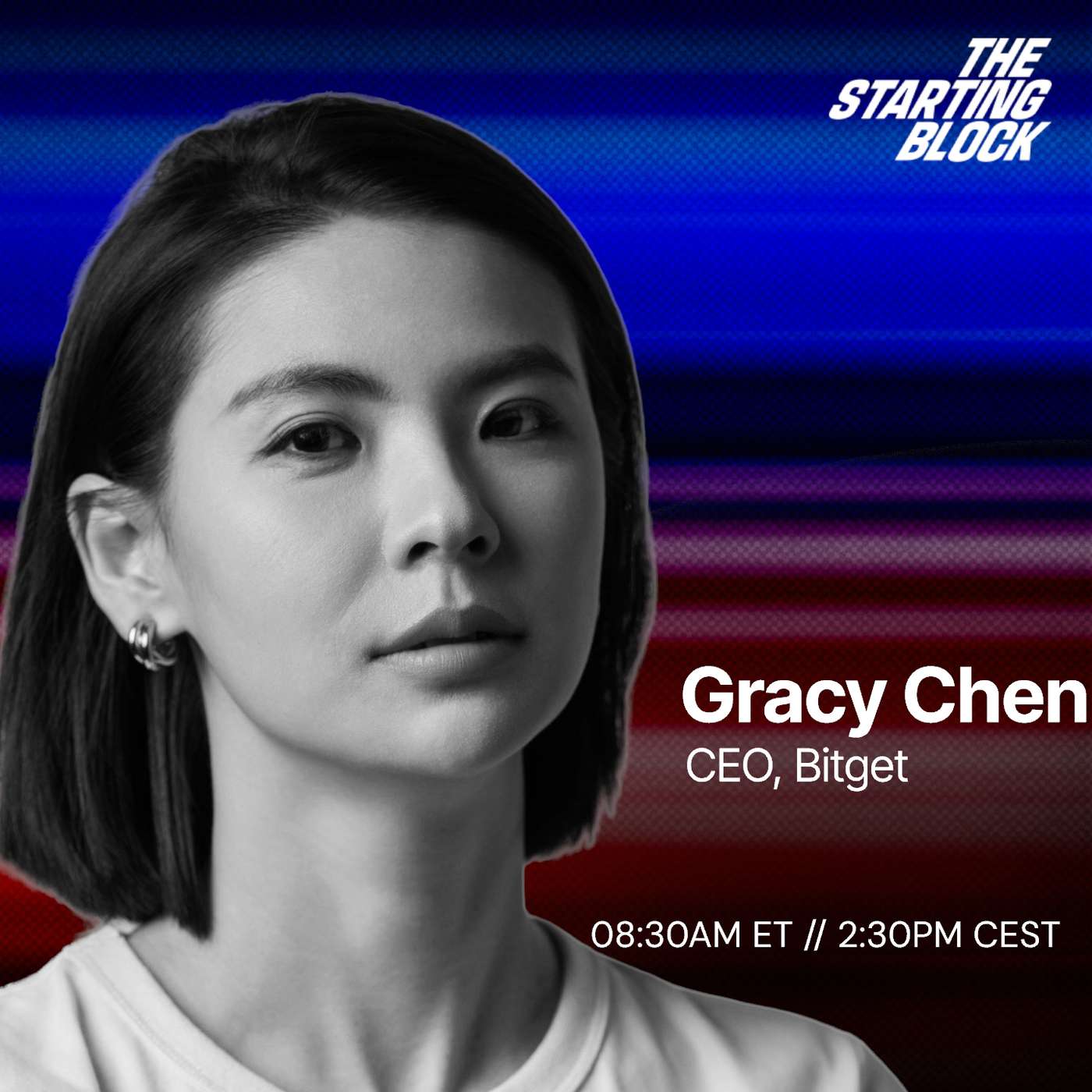
Episode 42 of The Starting Block, hosted by The Block's Gareth Jenkinson, was broadcasted live with Bitget CEO Gracy Chen. Bitget CEO Gracy Chen joins Gareth Jenkinson on The Starting Block to discuss the $388 million hack of Bitget's hot and warm wallets, how attackers exploited a third-party zero-day vulnerability to bypass risk controls, and how the exchange is using its protection fund to cover all user losses. The attack began at 6:31 PM UTC on September 24, 2026, with two small test transactions of 0.84 ETH and 93 TRX that fell below alert thresholds. About 30 minutes later, the attacker initiated 17 large transfers across Ethereum, XRP, ZEC, BSC, Base, Arbitrum, Optimism, and Avalanche, draining approximately 361 million USDT equivalent before Bitget's reconciliation system detected the discrepancy at 7:05 PM and automatically blocked user-initiated withdrawals. The attack unfolded in three steps: exploiting a zero-day vulnerability in a third-party security product to obtain high-level internal credentials; using those credentials to insert fraudulent withdrawal commands directly into the wallet backend, bypassing risk controls entirely; and then deleting all traces of those commands to slow forensic investigation. Private keys were not compromised and cold wallets were unaffected. Mandiant and SlowMist have been engaged as independent investigators, and Bitget published attacker wallet addresses and on-chain tracing data on day one. Chen said a formal incident report will address the attacker's identity, and declined to name a suspect before it is published, though she said her earlier suspicion has not changed. Chen addressed her public appeal to ThorChain to block the stolen funds, saying the protocol responded that, like Bitcoin and Ethereum, it could not intervene. She expressed frustration with that answer while acknowledging her respect for decentralization, and called out ThorChain as a repeated route for laundering stolen funds, including in Bybit's case. She gave shoutouts to Tether and Circle for quickly freezing a portion of the stolen assets, to Mandiant and SlowMist for their investigative work, to volunteer white-hat group SEAL 911 for alerting her team within 90 minutes of the attack, and to peer exchanges including Binance and OKX for public and private support. On the financial side, Chen confirmed that all user balances are fully protected and will be covered by Bitget's user protection fund, established in 2022 and valued at approximately 465 million USDT equivalent on the day of the incident. The fund will be replenished to at least 300 million within a week using corporate reserves, which a Bitget audit as of August 31 showed totalling more than 1.4 billion. Chen said the 388 million loss falls entirely within that buffer and does not threaten day-to-day operations. In the immediate term, the team is focused on processing withdrawals chain by chain, with Bitcoin withdrawals opening smoothly on Monday and Ethereum...
0:08Welcome back to The Starting Block.
0:09Happy Monday to you wherever you are
0:11around the world.
0:12Welcome back another edition of the
0:14show. If this is the first time
0:15joining us, my name is Gareth
0:16Jenkinson. I'm the head of
0:17multimedia here at The
0:19Block and the host of The Starting
0:21block, our daily show that we've
0:23been broadcasting for the last three
0:24months already. It's crazy to think
0:26we've already been on air for three
0:28months. If you are joining us and
0:29you're wondering, things look a