
The Starting Block · The Block
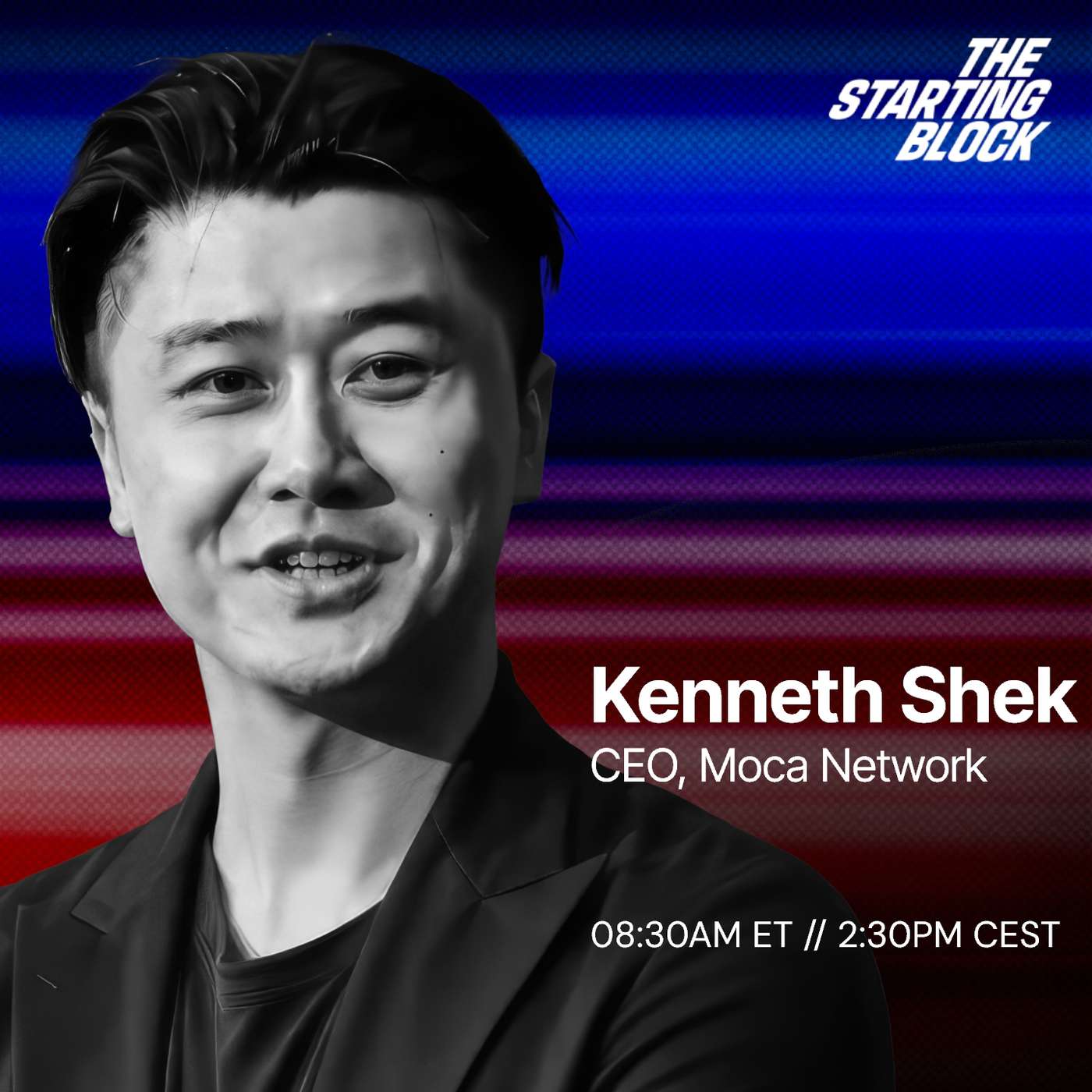
Episode 43 of The Starting Block, hosted by The Block's Gareth Jenkinson, was broadcasted live with Moca Network CEO Kenneth Shek and the Head of Operations at Bitfinex Securities, Jesse Knutson. Moca Network CEO Kenneth Shek joined Gareth Jenkinson on episode 43 of The Starting Block, to announce Moca Network's mainnet going live. Shek discussed the various use cases for Moca Network, seeing it as digital identity blockchain that aims to assist in AI agent credentialing that seeks enterprise partnerships. For the Market Pulse, Gareth was joined by the Head of Operations at Bitfiniex Securities, Jesse Knutson. Knutson explained how his platform serves as the capital raise and secondary market trading arm within the Tether and Bitfinex ecosystem. Knutson made the case that tokenization may simply be evolutionary rather than revolutionary, that is, the next logical step in capital market infrastructure, and added that anyone accustomed to 24/7 Bitcoin trading finds legacy settlement timeframes to feel outdated by comparison. He added that emerging and frontier markets, including Bitfinex Securities' licensed jurisdictions of El Salvador and the AIFC in Astana, Kazakhstan, are uniquely positioned to leapfrog established financial centers by building on current technology from scratch. Knutson also previewed the Future of Capital Markets Summit in Lugano on October 22, co-hosted with Blockstream Capital Partners and featuring speakers including Tether CEO Paolo Ardoino and Adam Back. In the Hot Seat, Kenneth Shek described Moca Network as a purpose-built layer-one blockchain focused exclusively on digital identity — not a general-purpose chain — designed to enable decentralized, privacy-preserving data storage and sharing for enterprises, humans, and AI agents. Shek cited the rollout of government e-ID schemes globally, tightening GDPR-style regulations, and the removal of third-party cookies by Apple and Google as the conditions that make now the right moment for launch. Enterprise partners already live on the network include companies in telecom, loyalty, airlines, ticketing, and entertainment, as well as Delivery Hero, owner of Foodpanda, which uses Moca to verify in-game spending data for gamers. Shek outlined three data-verification methods available on Moca Network: zero-knowledge proof, selective disclosure, and full disclosure — with the user holding the private key and retaining control at all times. He framed the AI agent use case as the network's clearest near-term growth driver: as agents begin booking travel, completing purchases, and handling KYC on behalf of users, Moca allows a human to cryptographically delegate a scoped, revocable key to an agent rather than handing all personal data to a centralized platform. Shek described the company's adoption curve as moving from a stage where enterprises shut the door, to one where they welcome Moca in, with the third stage — enterprises knocking on Moca's door — expected as the network...
0:06Welcome back to the starting block.
0:08It is a Tuesday, and we've got a
0:09jam-packed show today.
0:10Two guests joining us.
0:12We've got Jesse Knudsen, who's head
0:14of operations at Bitfinex
0:16Securities, joining us for the
0:17Market Pulse this afternoon.
0:18Then we've a very special
0:19announcement with Kenneth Sheck
0:21from Mocha Network.
0:22I'm not going to say any more than
0:23that, because I might be
0:25breaking the embargo.
0:26So we'll stop there.